Skip to Content Facebook Feature Image

DH Invites Mainland Experts to Introduce Latest Chinese Pharmacopoeia Revisions in Hong Kong

HK

DH Invites Mainland Experts to Introduce Latest Chinese Pharmacopoeia Revisions in Hong Kong
HK

HK

DH Invites Mainland Experts to Introduce Latest Chinese Pharmacopoeia Revisions in Hong Kong

2026-09-03 18:15 Last Updated At:09-04 12:19

DH invites experts from Chinese Mainland to brief local industry on latest revisions to Chinese Pharmacopoeia, helping them procure high-quality Chinese Materia Medica

The Government Chinese Medicines Testing Institute (GCMTI) of the Department of Health (DH) today (September 3) organised a training seminar for the Chinese medicine industry and relevant stakeholders. The seminar provided an update on the latest revisions and testing technologies in the 2025 edition of the Pharmacopoeia of the People's Republic of China (Chinese Pharmacopoeia). A team of experts from the Guangzhou Institute for Drug Control was cordially invited to Hong Kong to deliver the lecture, helping the industry procure high-quality Chinese Materia Medica (CMM) and keeping abreast of the latest developments in national regulations. Over 200 representatives from local Chinese medicines (CM) traders, testing institutions, laboratories, universities, and research institutions participated in the seminar either in person or online.

The Chinese Pharmacopoeia is an integral part of national drug standards and serves as a statutory technical standard that must be followed by entities involved in drug research and development, production (including imports), distribution, use, and regulatory oversight. The 2025 edition of the Chinese Pharmacopoeia was fully implemented at the end of last year, introducing revisions to numerous technical standards for the quality control and safety regulation of CM. This seminar focused on some salient revisions and core changes to the standards for CMM and CM decoction pieces set out in Volume I of the new edition.

In addition, the experts from the Guangzhou Institute for Drug Control provided an in-depth analysis of the testing methods and the latest maximum limits for exogenous harmful residues, including pesticide residues, heavy metals and harmful elements, and mycotoxins. Through sharing real-world case studies, the experts deepened participants' understanding of regulatory requirements.

Regarding testing methods, the experts provided a detailed introduction to the various new methods in the 2025 edition of the Chinese Pharmacopoeia. A DH chemist also presented the high-throughput screening and analytical techniques for detecting exogenous contaminants in complex CM samples. Industry professionals praised the seminar as practical and highly informative. They noted that it deepened their understanding of the latest national drug regulations and provided clear guidance for implementing compliance transformation, from which they benefited greatly.

The DH expressed its sincere gratitude to the Guangzhou Institute for Drug Controlfor the sharing. This practical technical exchange helped the local CM and testing industries align precisely with national standards and reduce the risk of non-compliance.

The seminar also exemplified the joint efforts to advance the inheritance and innovation of CM under the Co-operation Arrangement signed in July last year between the Guangzhou Municipal Market Regulatory Administration and the DH of the Hong Kong Special Administrative Region. Both sides will continue to deepen exchanges and collaborations in the regulation of medical products and CM testing technologies to achievecomplementary strengths and synergistic progress.

The GCMTI of the DH has all along been committed to establishing internationally recognised reference standards and testing methods for CM. It will continue to promote the quality enhancement of the local CM industry through technical exchanges and technology transfer. Going forward, the DH will continue to align withnational strategic planning, deepen close collaborations with regulatory and testing institutions in the Mainland, and dovetail with the guiding directions in the National 15th Five-Year Planon promoting the inheritance, innovation and high-quality development of Chinese medicine. The DH is committed to enhancing the professional standards and quality control system of CM testing in Hong Kong, and will spare no effort in promoting the high-quality development of Chinese medicine in Hong Kong.
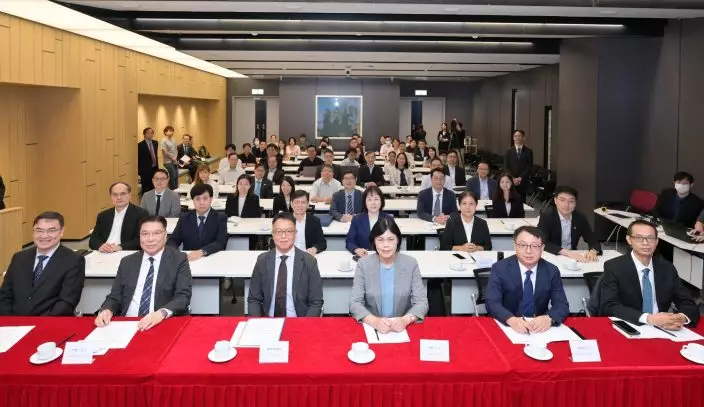
The Government Chinese Medicines Testing Institute (GCMTI) of the Department of Health (DH) today (September 3) organised a training seminar for the Chinese medicine industry and relevant stakeholders. The seminar provided an update on the latest revisions and testing technologies in the 2025 edition of the Pharmacopoeia of the People's Republic of China. Photo shows the Assistant Director of Health (Chinese Medicine), Dr Darwin Mak (first row, third left); the Deputy Director of Guangzhou Institute for Drug Control, Ms Lin Tong (first row, third right); the Chief Pharmacist (Chinese Medicine) of the DH, Mr Robert Law (first row, first left); the Chairman of the Advisory Committee of the GCMTI, Mr Tommy Li (first row, second left), and other participants. Source: HKSAR Government Press Releases
The Government Chinese Medicines Testing Institute (GCMTI) of the Department of Health (DH) today (September 3) organised a training seminar for the Chinese medicine industry and relevant stakeholders. The seminar provided an update on the latest revisions and testing technologies in the 2025 edition of the Pharmacopoeia of the People's Republic of China. Photo shows the Assistant Director of Health (Chinese Medicine), Dr Darwin Mak (first row, third left); the Deputy Director of Guangzhou Institute for Drug Control, Ms Lin Tong (first row, third right); the Chief Pharmacist (Chinese Medicine) of the DH, Mr Robert Law (first row, first left); the Chairman of the Advisory Committee of the GCMTI, Mr Tommy Li (first row, second left), and other participants. Source: HKSAR Government Press Releases

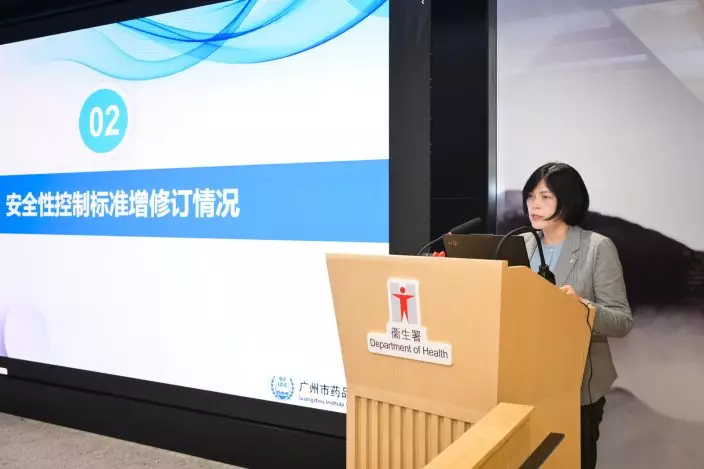
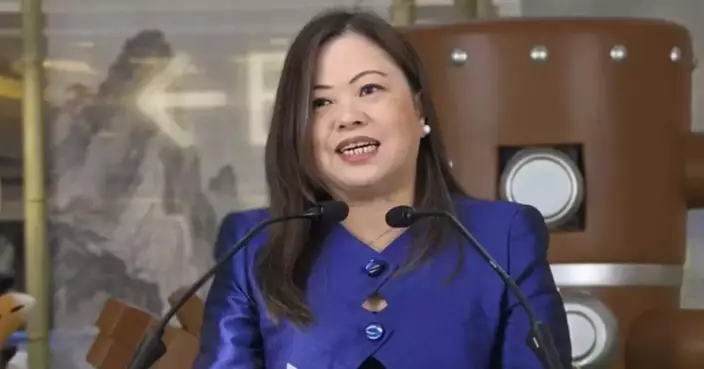
The Government Chinese Medicines Testing Institute of the Department of Health today (September 3) organised a training seminar for the Chinese medicine industry and relevant stakeholders. The seminar provided an update on the latest revisions and testing technologies in the 2025 edition of the Pharmacopoeia of the People's Republic of China. Photo shows the Deputy Director of Guangzhou Institute for Drug Control, Ms Lin Tong, giving a speech at the training seminar. Source: HKSAR Government Press Releases
The Government Chinese Medicines Testing Institute of the Department of Health today (September 3) organised a training seminar for the Chinese medicine industry and relevant stakeholders. The seminar provided an update on the latest revisions and testing technologies in the 2025 edition of the Pharmacopoeia of the People's Republic of China. Photo shows the Deputy Director of Guangzhou Institute for Drug Control, Ms Lin Tong, giving a speech at the training seminar. Source: HKSAR Government Press Releases

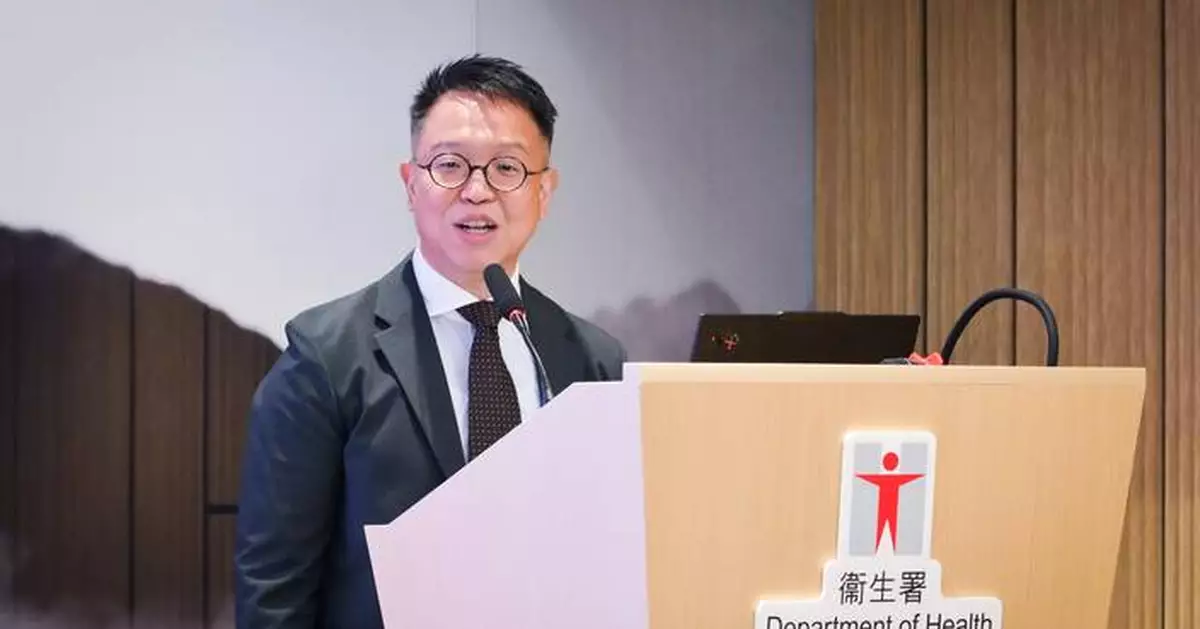
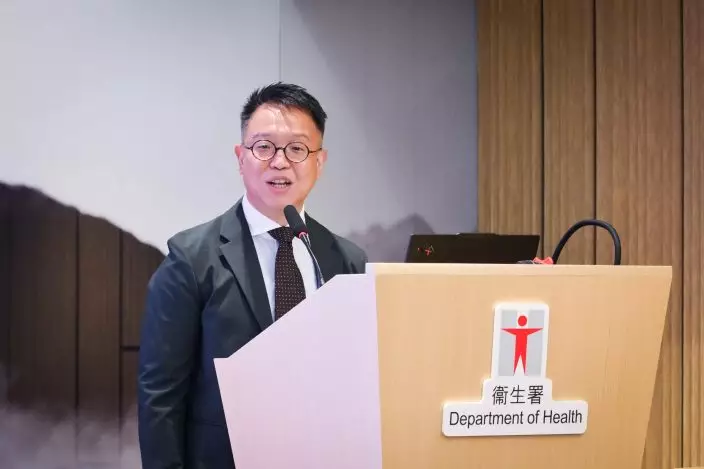
The Government Chinese Medicines Testing Institute of the Department of Health today (September 3) organised a training seminar for the Chinese medicine industry and relevant stakeholders. The seminar provided an update on the latest revisions and testing technologies in the 2025 edition of the Pharmacopoeia of the People's Republic of China. Photo shows the Assistant Director of Health (Chinese Medicine), Dr Darwin Mak, giving a speech at the training seminar. Source: HKSAR Government Press Releases

The Government Chinese Medicines Testing Institute of the Department of Health today (September 3) organised a training seminar for the Chinese medicine industry and relevant stakeholders. The seminar provided an update on the latest revisions and testing technologies in the 2025 edition of the Pharmacopoeia of the People's Republic of China. Photo shows the Assistant Director of Health (Chinese Medicine), Dr Darwin Mak, giving a speech at the training seminar. Source: HKSAR Government Press Releases
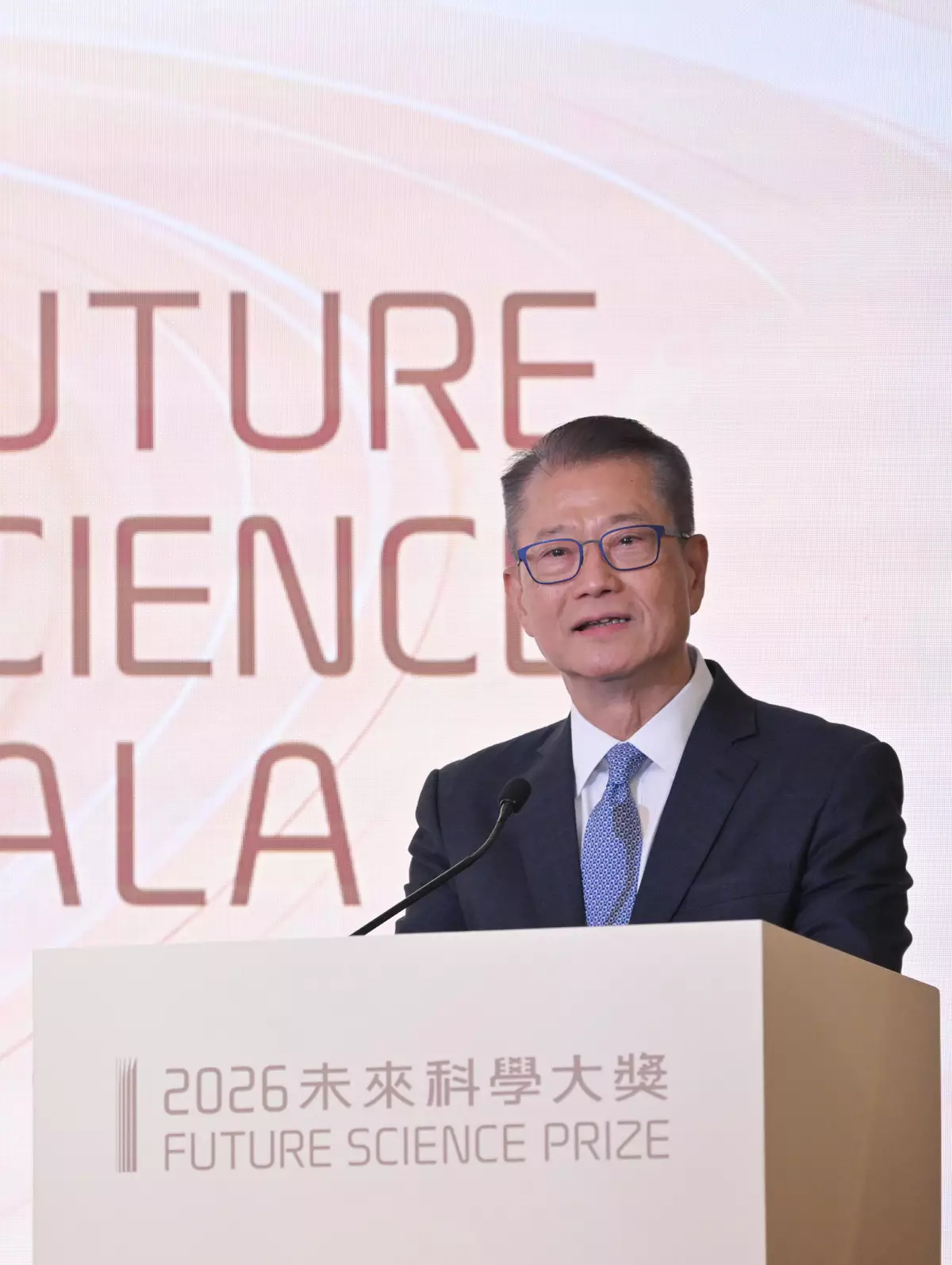
Speech by FS at Future Science Prize Science Gala Dinner

Following is the speech by the Financial Secretary, Mr Paul Chan, at the Future Science Prize Science Gala Dinner today (November 8):

Professor Dennis Lo (President of Hong Kong Academy of Sciences), Mr Zhang Yichen (Rotating Chairman of the Council of the Future Forum 2026), Future Science Prize Laureates, distinguished guests, ladies and gentlemen,

Good evening. It is a great pleasure to join you tonight, at the Future Science Prize Gala Dinner, celebrating the 10th anniversary edition of the Future Science Prize and this year's Laureates.

I am honoured to welcome to Hong Kong some of the world's finest scientists, many of whom have devoted decades to solving science's most complex theoretical questions and its most challenging practical problems.

There is a classic observation in business: great companies often lose their lead not because they are poorly run, but because they focus too closely on what already works. They serve their biggest customers and improve their best products, while new and innovative technologies quietly take root elsewhere.

Consider the smaller hard-disk drives that emerged in the 1980s. They stored less and seemed to hold little appeal for consumers. Yet they improved, found new markets and eventually transformed the industry. The incumbents saw the technology, but underestimated its promise. By the time its value became clear, it was already too late.

The same challenge confronts science. The most disruptive discoveries may initially offer little hint of their significance. If basic research has a customer, it is the future. And the future takes time to fully reveal itself. What seems obscure today may become the accepted starting point for the next generation.

The Future Science Prize understands that scientific and societal evolution. In 2016, a group of scientists and entrepreneurs committed their own resources to establish the first privately funded science prize in China. Ten years on, it has honoured 49 scientists and become a highly anticipated event on the international scientific calendar.

Tonight, we pay tribute to three outstanding laureates. Professor Zhang Hong has uncovered how autophagy works in multicellular organisms. Professor Zhao Dongyuan has pioneered mesoporous materials. Professor Yuan Xinyi has made foundational contributions to arithmetic geometry. Their trailblazing research is a reminder that the full significance of a discovery often takes time to emerge. And this is more the rule than the exception.

That is why the Future Science Prize matters. It celebrates groundbreaking research that has yet to fully unfold and reveal itself. It reflects the wisdom of science, the openness of society, determined to pursue what it cannot yet understand or foresee.

Hong Kong has deep ties to the Prize. The Future Science Awards Foundation is registered here in this city, and we are proud to host the four-day Prize Week. Over the past decade, six Hong Kong scientists have been named laureates of the Prize. We are part of this scientific community. And we will continue to develop Hong Kong as an international innovation and technology centre, where even the most modest beginnings can be recognised, nurtured and given room, and time, to flourish.

Tonight, we celebrate both remarkable discoveries and the possibilities that lie ahead. Let us salute our Laureates, the spirit of science and a future rich with promise.

I know you will enjoy this memorable evening. And the rest of Future Science Prize Week, right here in Hong Kong, Asia's world city.

Thank you.

Source: AI-found images

Source: AI-found images

Speech by FS at Future Science Prize Science Gala Dinner Source: HKSAR Government Press Releases
Speech by FS at Future Science Prize Science Gala Dinner Source: HKSAR Government Press Releases
Source: AI-found images

Source: AI-found images

Recommended Articles