Skip to Content Facebook Feature Image

Proud of their oil, Venezuelans view US stake in their reserves as a surrender

News

Proud of their oil, Venezuelans view US stake in their reserves as a surrender
News

News

Proud of their oil, Venezuelans view US stake in their reserves as a surrender

2026-09-04 00:24 Last Updated At:00:31

CARACAS, Venezuela (AP) — Nothing has shaped what it means to be Venezuelan today more than oil.

For more than 100 years, in good times and bad, Venezuelans’ identity has been built around the belief that their country’s bountiful oil resources belong to the people, not a government or a company.

More Images
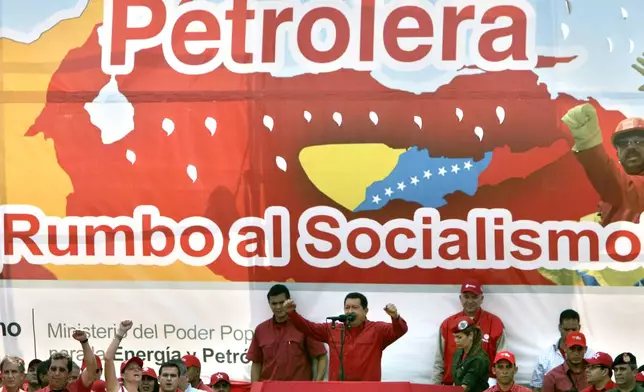
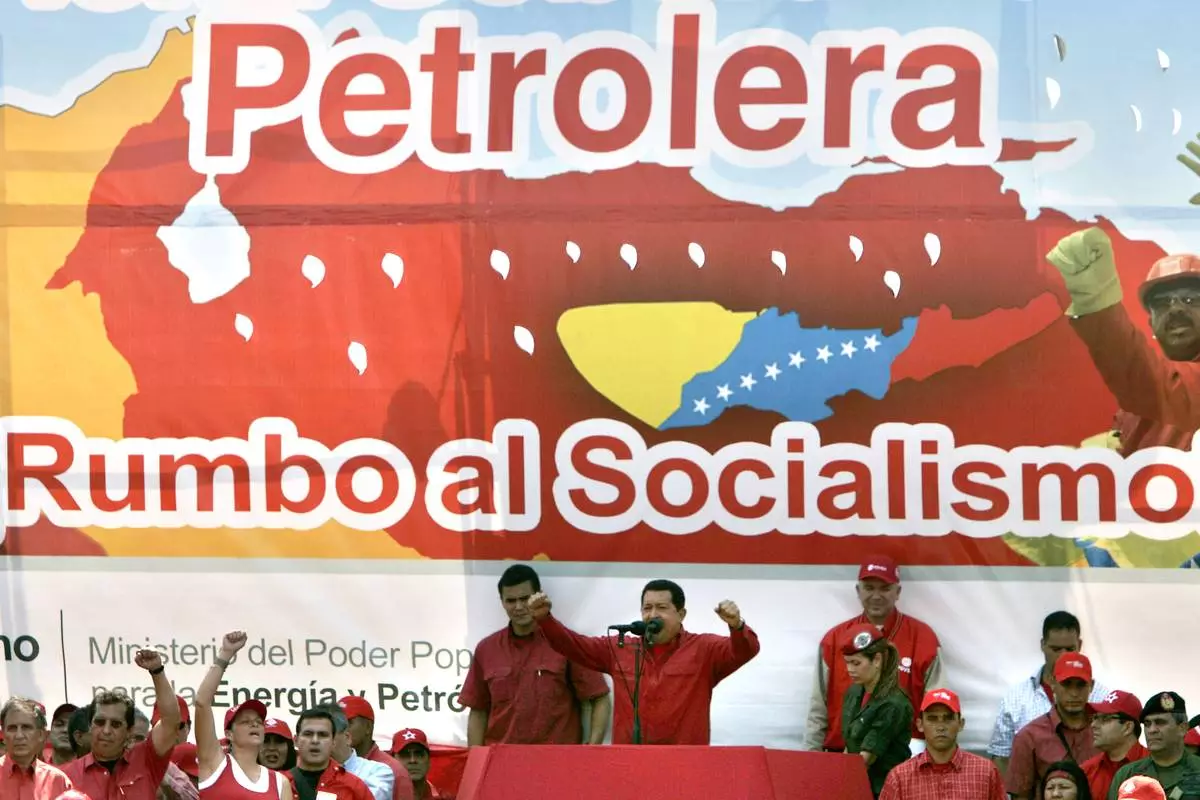
FILE - Venezuela's President Hugo Chavez, center, delivers a speech in front of a banner that reads in Spanish "Oil Company on its way to socialism", to oil workers in Barcelona, Venezuela, Tuesday, May 1, 2007. (AP Photo/Fernando Llano, File)
FILE - Venezuela's President Hugo Chavez, center, delivers a speech in front of a banner that reads in Spanish "Oil Company on its way to socialism", to oil workers in Barcelona, Venezuela, Tuesday, May 1, 2007. (AP Photo/Fernando Llano, File)

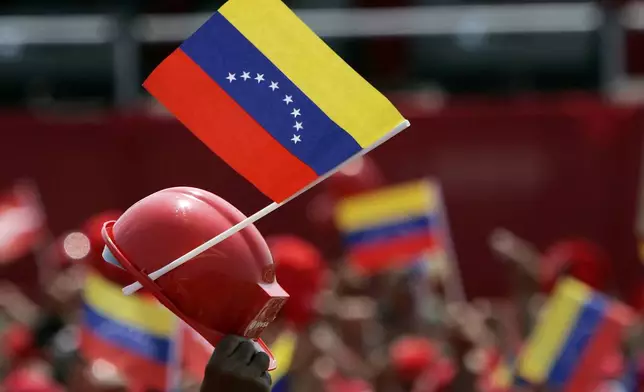
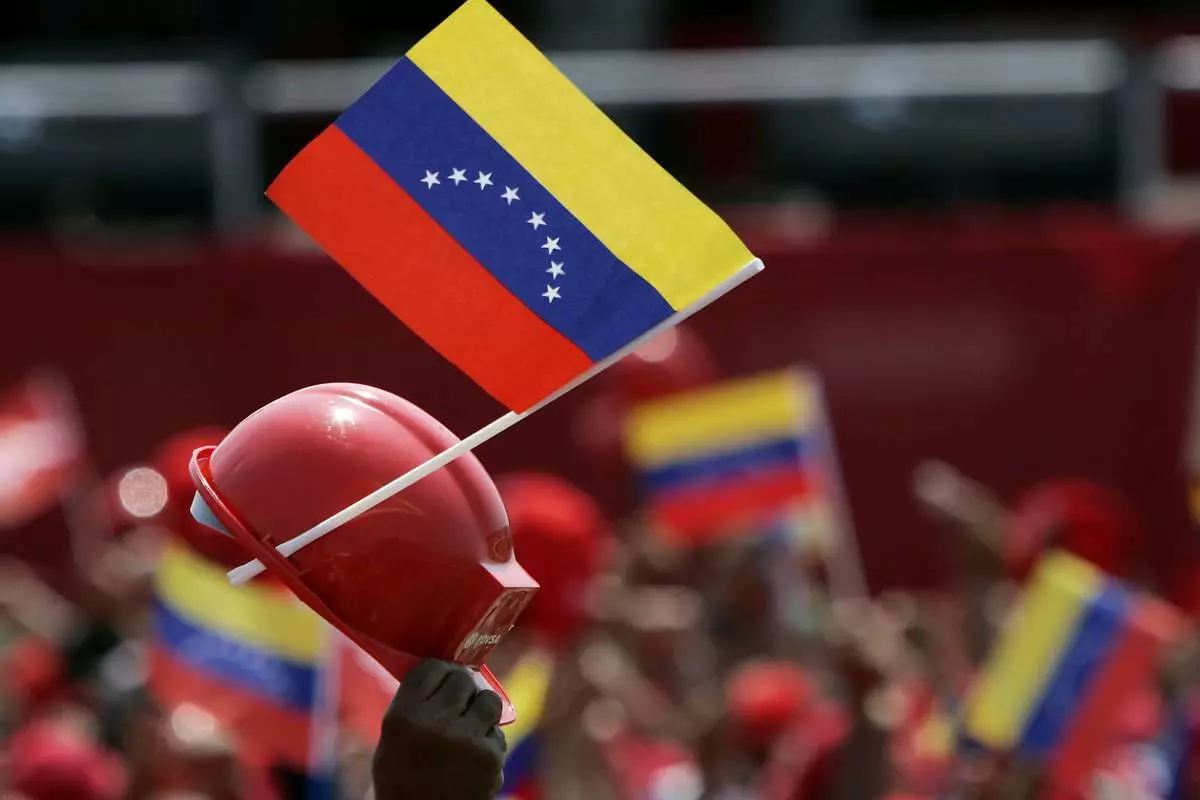
FILE - Venezuelan oil workers wave their helmets and national flags as President Hugo Chavez, unseen, delivers a speech at Jose Antonio Anzoategui oil complex in Barcelona, Venezuela, Tuesday, May 1, 2007. (AP Photo/Fernando Llano, File)
FILE - Venezuelan oil workers wave their helmets and national flags as President Hugo Chavez, unseen, delivers a speech at Jose Antonio Anzoategui oil complex in Barcelona, Venezuela, Tuesday, May 1, 2007. (AP Photo/Fernando Llano, File)

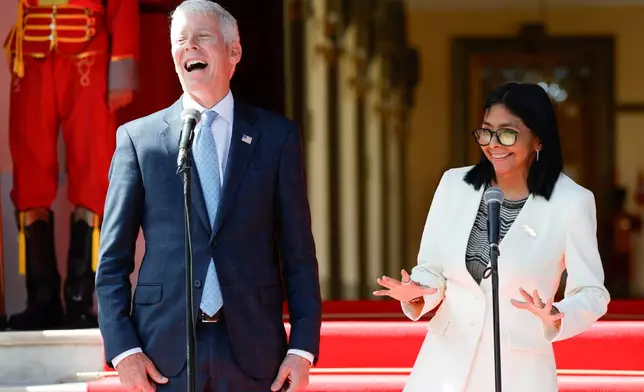
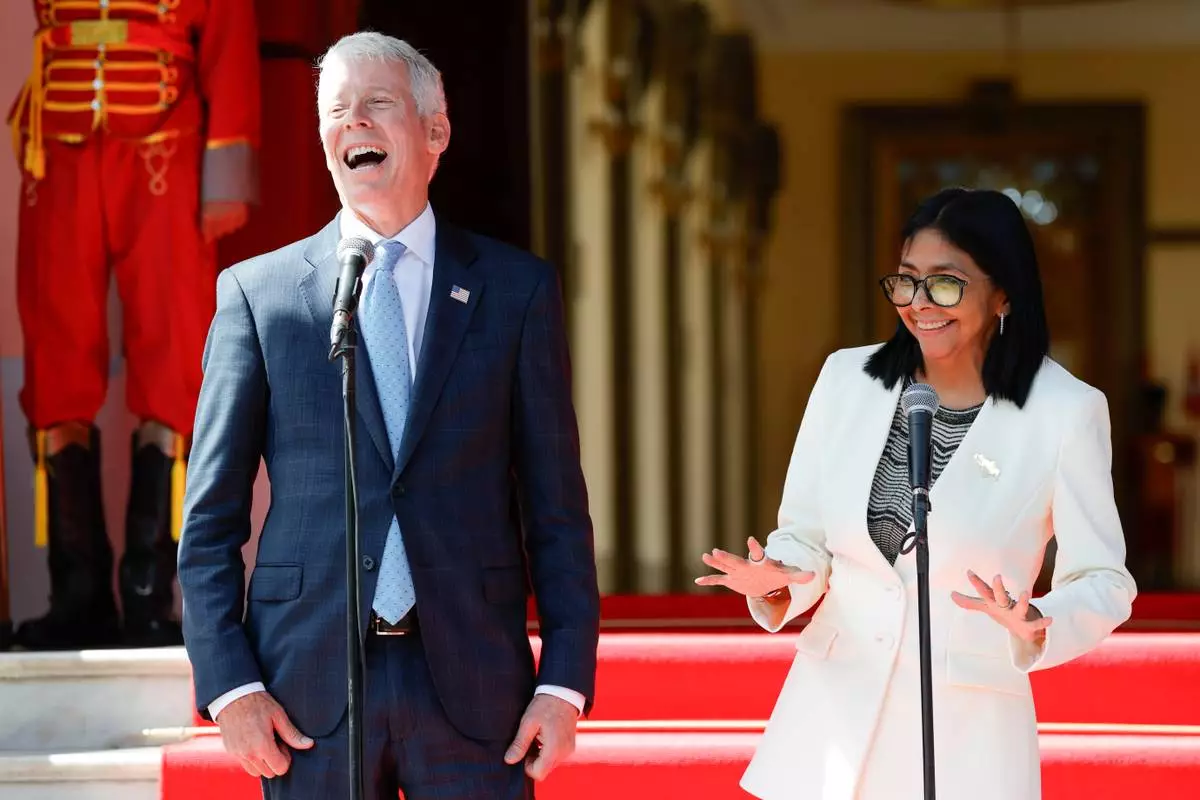
U.S. Energy Secretary Chris Wright, left, and Venezuelan acting President Delcy Rodriguez smile during a press conference after the signing of an oil agreement at Miraflores presidential palace in Caracas, Venezuela, Wednesday, Sept. 2, 2026. (AP Photo/Pedro Mattey)
U.S. Energy Secretary Chris Wright, left, and Venezuelan acting President Delcy Rodriguez smile during a press conference after the signing of an oil agreement at Miraflores presidential palace in Caracas, Venezuela, Wednesday, Sept. 2, 2026. (AP Photo/Pedro Mattey)

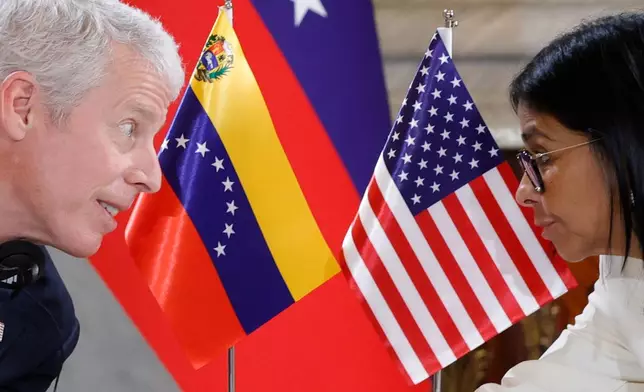
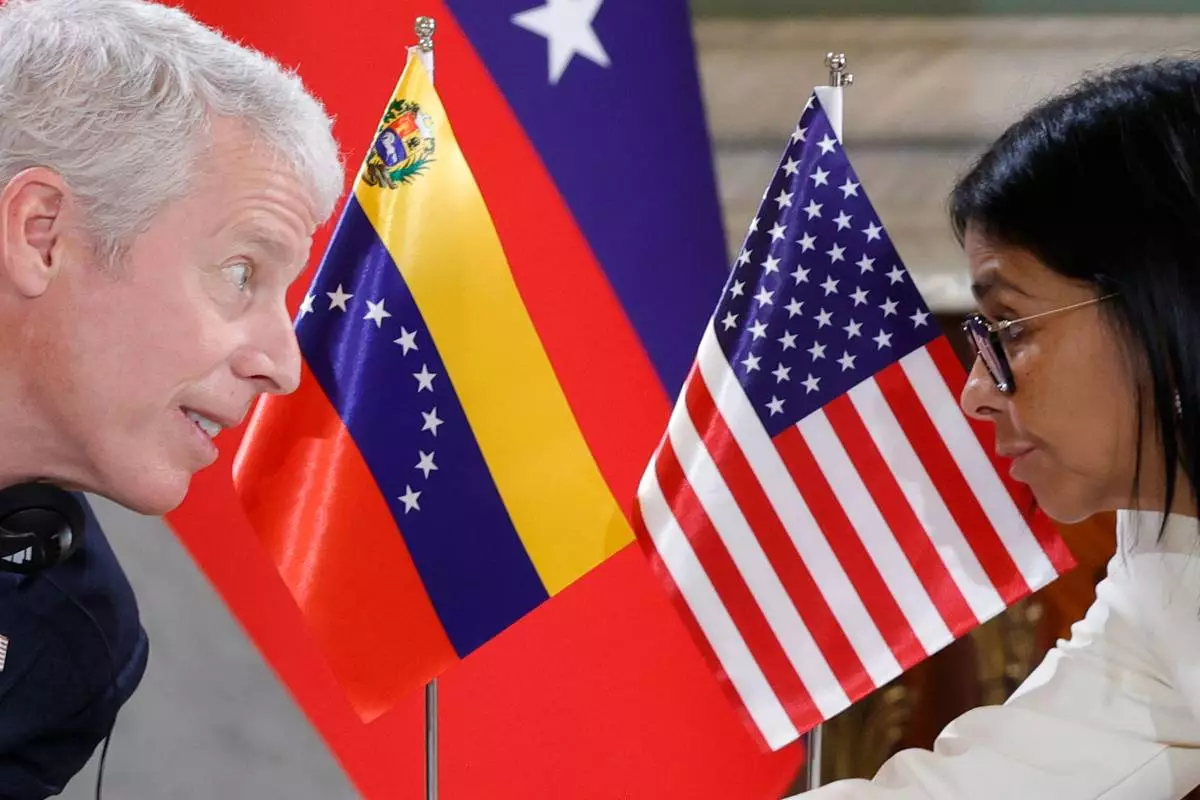
U.S. Energy Secretary Chris Wright, left, meets with Venezuelan acting President Delcy Rodriguez at Miraflores presidential palace in Caracas, Venezuela, Wednesday, Sept. 2, 2026. (AP Photo/Pedro Mattey)

U.S. Energy Secretary Chris Wright, left, meets with Venezuelan acting President Delcy Rodriguez at Miraflores presidential palace in Caracas, Venezuela, Wednesday, Sept. 2, 2026. (AP Photo/Pedro Mattey)

This belief, and a troubled nation’s pride, took a bruising last week when acting President Delcy Rodríguez agreed to give the United States control of roughly one-fifth of Venezuela’s oil reserves – the largest in the world.

While the deal could eventually generate billions of dollars for an oil industry and economy wrecked by years of mismanagement, many Venezuelans see it as a surrender. Some say they are not surprised; they believe that gaining control of Venezuelan oil was the ultimate objective when President Donald Trump ordered U.S. forces to capture then-President Nicolás Maduro at the beginning of the year, leaving Rodríguez in charge.

“It’s not just worrying, it’s outrageous, because we, like a drop in the ocean, have no power to intervene,” Lisandro Castro, an architect in the capital, Caracas, said referring to fellow citizens. “There is genuine collective concern in Venezuela right now about what we are witnessing.”

The 1920s discovery of oil in northwestern Venezuela sparked a booming industry that transformed a poor, agrarian country into an urbanized regional power.

U.S. energy company employees working in the South American nation went on to popularize baseball. The companies built ball fields in oil-producing areas, boosting the sport among working-class Venezuelans who then took it to the rest of the country.

Europeans facing post-World War II hardships headed to Venezuela looking for economic opportunities created by the oil riches. The Portuguese established bakeries that are still open. The Italians designed buildings that are still standing.

A democracy in its infancy, Venezuela got most of its revenues from oil exports rather than from taxing local citizens and businesses, and politicians tried to buy the will of citizens, said Ronal Rodríguez, a researcher at the Venezuela Observatory at Colombia’s Universidad del Rosario.

The country co-founded OPEC, and by the ’70s, when it boasted of the highest per-capita income in the region, the government nationalized the industry with the creation of the state-owned Petróleos de Venezuela S.A.

PDVSA, as it is commonly known, only allowed foreign companies to operate as minority partners in joint ventures. Its revenues subsidized cheap gas for Venezuelans, scholarships to study abroad, free surgeries and many more benefits.

“Every Venezuelan sees oil as something they have the right to claim,” Rodríguez, the researcher, said.

Plummeting oil prices globally in the 1980s devastated Venezuela's economy, necessitating an International Monetary Fund bailout. The state ended key subsidies, and social unrest followed. A military officer named Hugo Chávez attempted a failed coup.

Once elected president in 1998, Chávez expanded social services, including health, housing and education, thanks to resurgent oil prices that generated an estimated $981 billion in revenues for PDVSA between 1999 and 2011. The government handed out homes, refrigerators and medicines, and many families benefited from well-paid jobs in the public and private sectors.

Emboldened by popular support, Chávez tightened his grip on the national oil company — to the detriment of U.S. oil companies such as ExxonMobil and ConocoPhillips.

But PDVSA’s fortunes eventually turned as oil prices fell once again. Corruption and mismanagement further eroded profits and hurt production, first under Chávez, and then Maduro, his hand-picked successor.

By 2013, when Maduro became president following Chávez's death, the country fell into a dire economic crisis. Sanctions imposed by the U.S. over democratic and human rights concerns crippled the industry and the economy further.

Instead of attracting migrants, Venezuelans became migrants; the economic turmoil led to severe food shortages, among other deprivations, prompting millions to leave the country.

Even though markets and stores are now well-stocked, people struggle to afford the basics because of soaring inflation.

Many of today's public sector workers earn roughly $160 per month, while the average private sector employee earned about $237 per month last year.

“Something is better than nothing,” former oil worker Romel Abreu said referring to the roughly 1 million barrels of oil per day that Venezuela currently produces. “If we didn’t have it, we would be fried.”

Abreu works as a security guard in Cabimas, in the country's northwest, the heart of the oil industry. Like many there, he pines for another oil boom and the jobs it would bring.

Venezuelans had hoped the capture of Maduro in January would end the ruling party’s 27-year hold on power. When that did not happen – Trump chose Rodríguez over Venezuela’s opposition – people at least were optimistic about potential economic improvements from the easing of crippling sanctions.

In February, a legal overhaul opened the path to private investment in the oil industry, which some saw as a prelude to bigger changes.

“Everything that happened on Jan. 3 was simply a strategy to get where we are today,” Castro, the architect, said of Trump’s Venezuela policy. “That is, to fully immerse themselves in the country’s energy affairs for their own personal gain and benefit, not for a purpose that would truly benefit us Venezuelans.”

Under the deal, the U.S. is entering a joint venture with Venezuela’s North American Blue Energy Partners, the second-largest private oil company operating in the country, behind Chevron.

Rodríguez is giving the joint venture 100-year rights over 17 oil fields with proven reserves of 65 billion barrels. The nation's total reserves have been estimated at roughly 300 billion.

Because Venezuela’s energy infrastructure has been severely degraded, it will take years before new investments will lead to significantly higher oil production, experts say.

Speaking in Caracas on Wednesday, U.S. Energy Secretary Chris Wright said Trump’s mission in Venezuela “is to bring peace, freedom, opportunity and prosperity to the people.” In an address to the nation Saturday, Rodríguez defended the agreement — and said she wants her country to be an “energy powerhouse.”

Cabimas residents can only hope.

“Well, on the one hand, one feels and thinks that one of the largest oil reserves has been handed over,” Erwin Ayala, an oil company worker, said outside his home. “But if it’s for the good of the country and for future generations, then yes, we agree with that, because what good is having so much oil ... if there’s no machinery, no technology, to extract it?”

Associated Press video journalist Juan Pablo Arraez contributed to this report from Cabimas, Venezuela.
FILE - Venezuela's President Hugo Chavez, center, delivers a speech in front of a banner that reads in Spanish "Oil Company on its way to socialism", to oil workers in Barcelona, Venezuela, Tuesday, May 1, 2007. (AP Photo/Fernando Llano, File)
FILE - Venezuela's President Hugo Chavez, center, delivers a speech in front of a banner that reads in Spanish "Oil Company on its way to socialism", to oil workers in Barcelona, Venezuela, Tuesday, May 1, 2007. (AP Photo/Fernando Llano, File)

FILE - Venezuelan oil workers wave their helmets and national flags as President Hugo Chavez, unseen, delivers a speech at Jose Antonio Anzoategui oil complex in Barcelona, Venezuela, Tuesday, May 1, 2007. (AP Photo/Fernando Llano, File)
FILE - Venezuelan oil workers wave their helmets and national flags as President Hugo Chavez, unseen, delivers a speech at Jose Antonio Anzoategui oil complex in Barcelona, Venezuela, Tuesday, May 1, 2007. (AP Photo/Fernando Llano, File)

U.S. Energy Secretary Chris Wright, left, and Venezuelan acting President Delcy Rodriguez smile during a press conference after the signing of an oil agreement at Miraflores presidential palace in Caracas, Venezuela, Wednesday, Sept. 2, 2026. (AP Photo/Pedro Mattey)
U.S. Energy Secretary Chris Wright, left, and Venezuelan acting President Delcy Rodriguez smile during a press conference after the signing of an oil agreement at Miraflores presidential palace in Caracas, Venezuela, Wednesday, Sept. 2, 2026. (AP Photo/Pedro Mattey)

U.S. Energy Secretary Chris Wright, left, meets with Venezuelan acting President Delcy Rodriguez at Miraflores presidential palace in Caracas, Venezuela, Wednesday, Sept. 2, 2026. (AP Photo/Pedro Mattey)
U.S. Energy Secretary Chris Wright, left, meets with Venezuelan acting President Delcy Rodriguez at Miraflores presidential palace in Caracas, Venezuela, Wednesday, Sept. 2, 2026. (AP Photo/Pedro Mattey)
BEIRUT (AP) — A Lebanese man who had been held prisoner in Israel was released Thursday, the first such handover since the outbreak of the latest Israel-Hezbollah war six months ago, the International Committee of the Red Cross and Lebanese officials said.

The office of Israeli Prime Minister Benjamin Netanyahu said in a statement that Israel had agreed to release five Lebanese civilians detained by Israeli forces in southern Lebanon after Lebanon provided assistance in searching for the bodies of Lebanese Jewish leaders who were “abducted and murdered by terrorist organizations” in the 1980s, during Lebanon’s civil war.

The first released prisoner, identified as Malek Ghazi, was handed over to the Lebanese army via the Red Cross, a Lebanese security official said. A second official said they were anticipating the release of the other four prisoners Friday. They spoke on condition of anonymity because they were not authorized to comment publicly.

Ghazi was handed over to the ICRC at the border crossing in the coastal town of Naqoura on Lebanon's southern frontier and was then transferred to a Lebanese army intelligence office in the city of Tyre, Lebanon’s state-run National News Agency reported.

Netanyahu's statement said the five Lebanese captives after interrogation were found not to be “members of a terrorist organization” or “involved in terrorism.”

Lebanese Prime Minister Nawaf Salam thanked the U.S. and its ambassador to Lebanon, Michel Issa, for assisting in the release.

“We will continue working until all our prisoners are released, the fate of the missing is revealed, and a complete Israeli withdrawal from Lebanese territory is achieved,” he said in a statement.

In Washington, the U.S. State Department said the releases were the “result of U.S.-led mediation between two legitimate governments” and were finalized during Issa’s recent trip to Israel.

“We commend the Government of Israel and the Government of Lebanon for demonstrating good faith through these initial steps, and hope this will serve as the basis for expanded discussions on other civilian issues," it said.

Dozens of Lebanese prisoners are believed to be held in Israeli detention centers, including civilians as well as Hezbollah militants captured during fighting in southern Lebanon.

The circumstances of Ghazi’s capture were not immediately clear, but one of the Lebanese officials said he was a civilian.

On the same day as the prisoner release was announced, Israeli forces took more Lebanese citizens captive.

Lebanese state media reported that Israeli forces had entered the town of Halta in southern Lebanon earlier Thursday and seized three men “after the force surrounded several houses and prevented residents from leaving.” The Israeli military did not immediately respond to a request for comment.

The prisoner release came as talks between Lebanese and Israeli officials had appeared to reach an impasse. Lebanon and Israel in June signed a U.S.-mediated framework deal under which Israeli forces were to withdraw from areas they are occupying in southern Lebanon in exchange for disarmament of the Iran-backed Lebanese militant group Hezbollah, but little progress has been made in implementation on the ground.

Another round of talks is expected to take place in Rome later this month.

“However difficult the negotiation process may seem, we will continue to mobilize all necessary efforts to safeguard Lebanon’s rights and the interests of the Lebanese people,” Salam's statement said.

An official involved in the negotiations said Lebanon had not made its participation in the next round of talks conditional on the prisoner release, but that the release of captives was an “integral part of the implementation” of the Lebanon-Israel agreement.

The Lebanese “are actively searching for the bodies of the Lebanese Jewish leaders,” including in Jewish cemeteries, said the official, who spoke on condition of anonymity because they were not authorized to comment publicly.

Lebanon once had a thriving Jewish community. As many as 15,000 to 22,000 Jews lived in Lebanon in the mid-1960s, but the various Arab-Israeli wars and Lebanon’s own 1975-90 civil war caused waves of emigration and today, almost none are left in the country.

While the release of the prisoners marks a step forward in the negotiations, other issues remain difficult to resolve.

Hezbollah is not a party to the Lebanon-Israel talks and has said it will not give up its weapons in any area north of southern Lebanon's Litani river. Israeli officials, meanwhile, have said they will not withdraw unless Hezbollah is disarmed throughout the country.

The Lebanese state has been reluctant to attempt to forcibly disarm the militant group, which is also a political party and social services provider with a large popular base in the country's Shiite Muslim community.

Lebanon fought a brutal civil war from 1975 to 1990, and many fear that any clash between the Lebanese army and Hezbollah could spiral into another devastating civil conflict.

Hezbollah and Israel have fought a series of wars since the militant group was founded with Iranian support in the 1980s to combat Israel's occupation of southern Lebanon at the time. Their latest war began on March 2, when Hezbollah fired missiles over the border, two days after the U.S. and Iran attacked Iran.

Saeed reported from Herzliya, Israel. Associated Press staff writer Matthew Lee in Washington contributed.

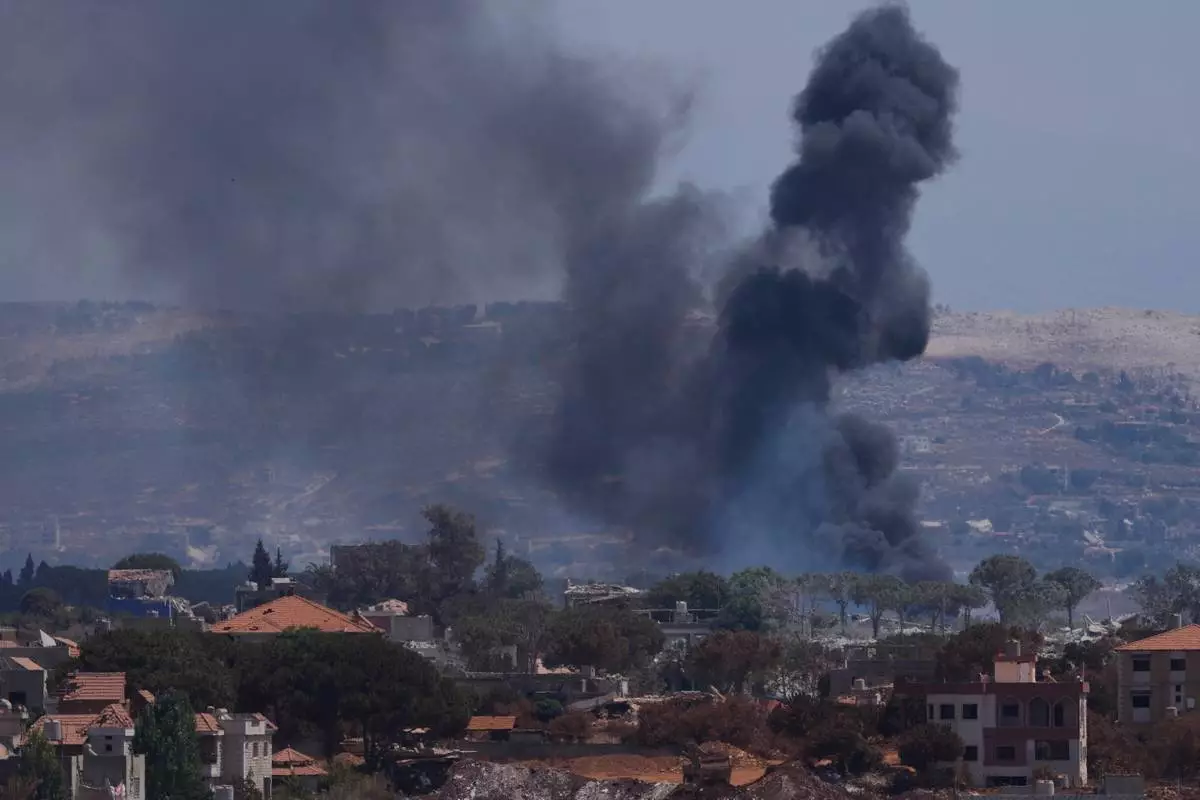
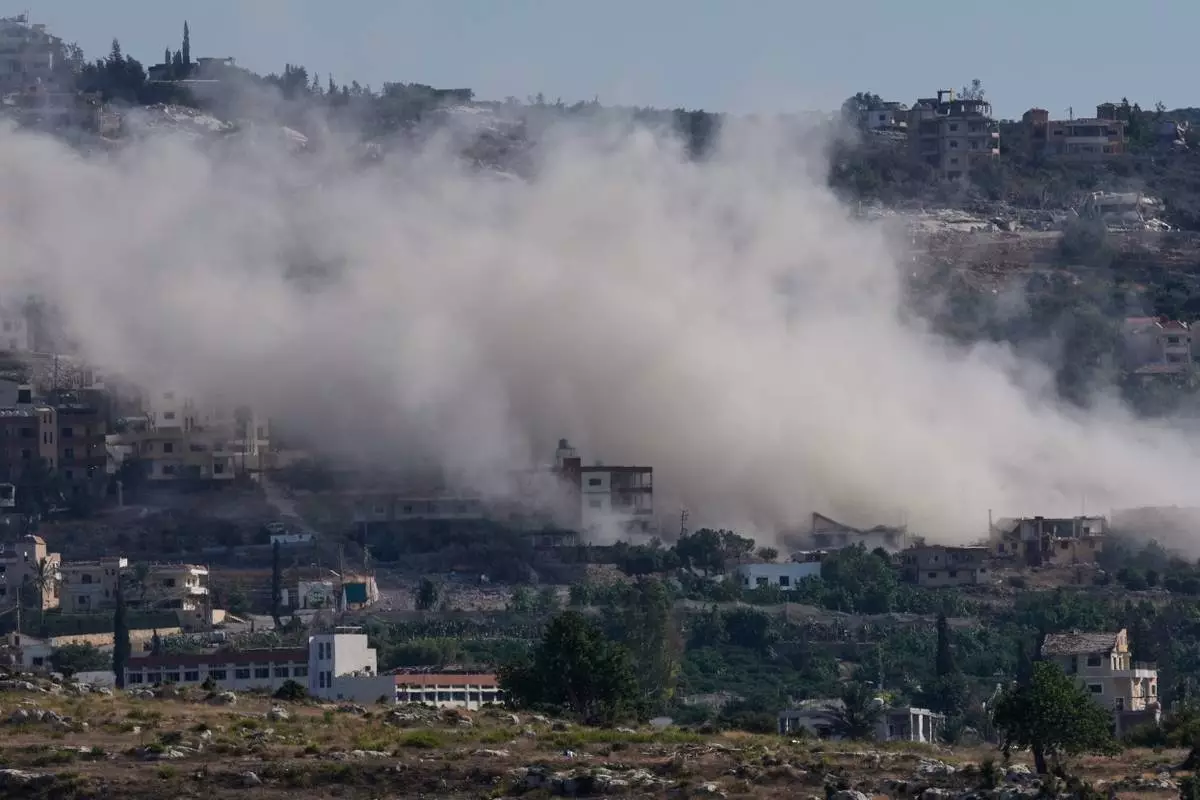
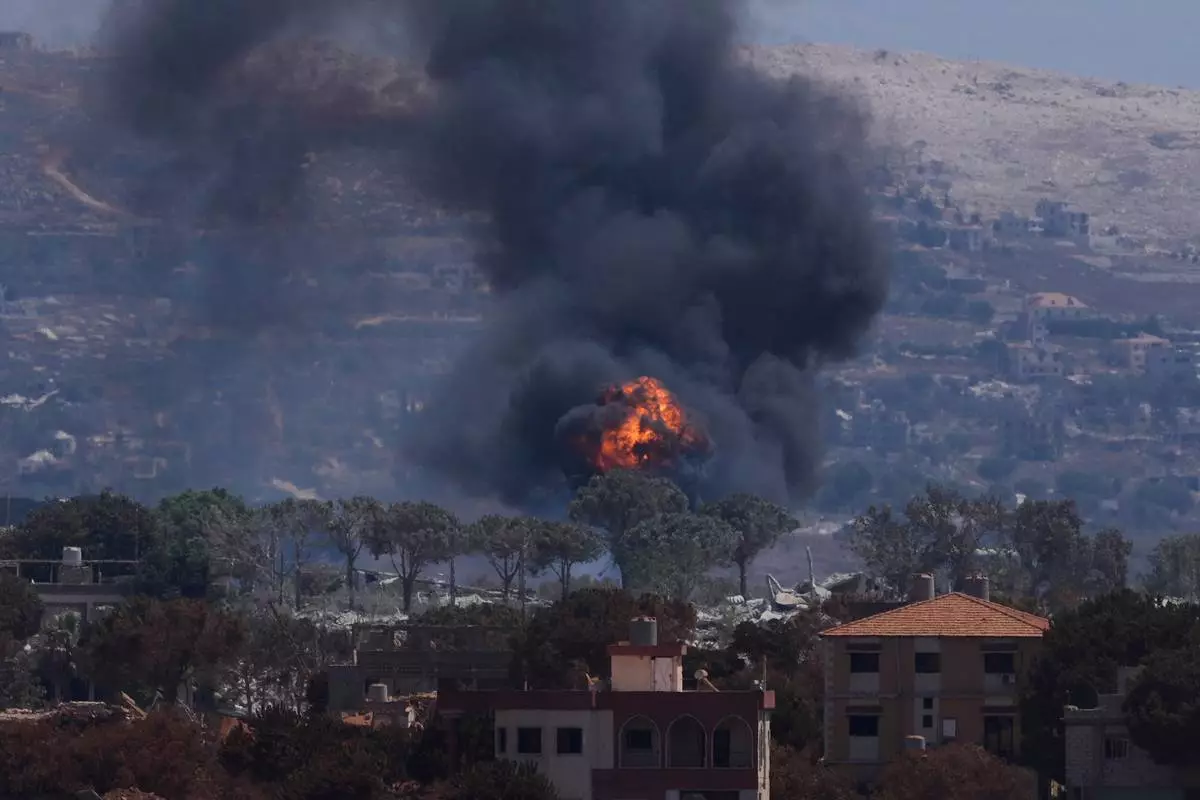
Smoke rises as Israeli forces demolish homes in Mansouri village, southern Lebanon, Thursday, Sept. 3, 2026. (AP Photo/Mohammed Zaatari)

Smoke rises as Israeli forces demolish homes in Mansouri village, southern Lebanon, Thursday, Sept. 3, 2026. (AP Photo/Mohammed Zaatari)

Smoke and flames rise as Israeli forces demolish homes in Zawtar al-Sharqiyah, southern Lebanon, Sunday, Aug. 23, 2026. (AP Photo/Mohammed Zaatari)

Smoke and flames rise as Israeli forces demolish homes in Zawtar al-Sharqiyah, southern Lebanon, Sunday, Aug. 23, 2026. (AP Photo/Mohammed Zaatari)

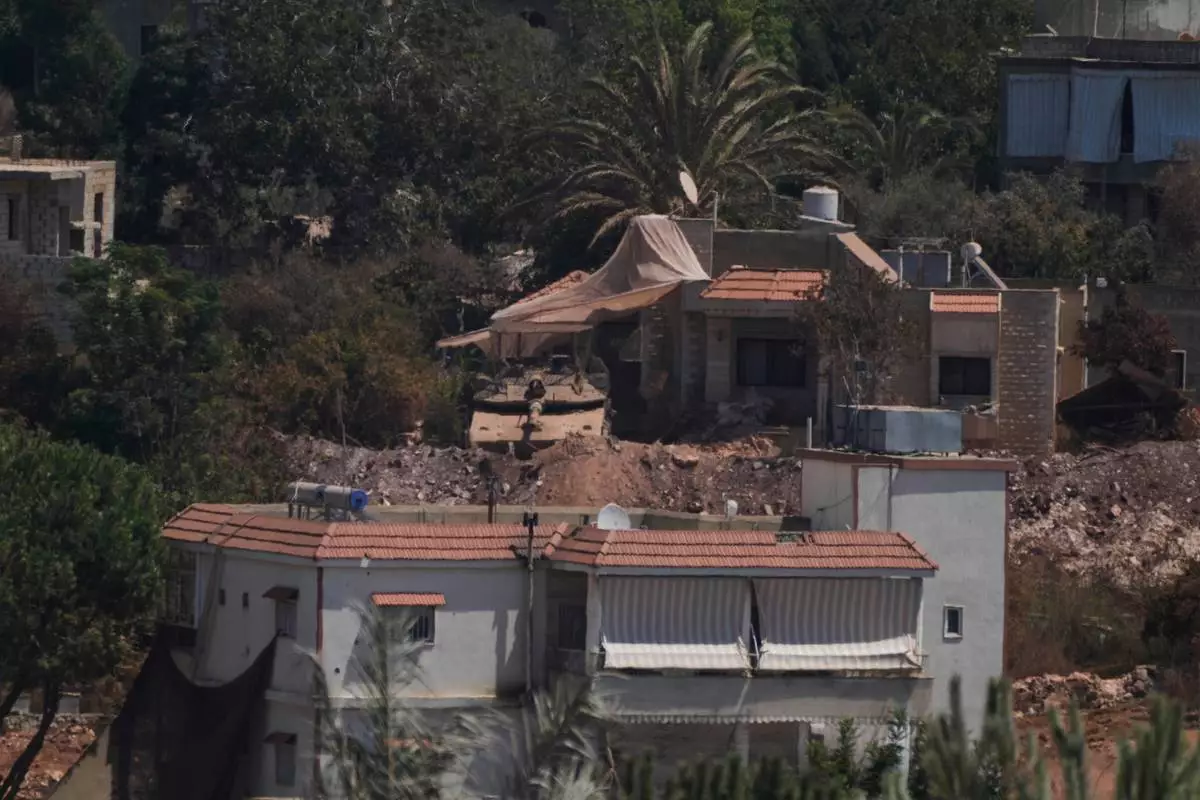
An Israeli tank takes a position in Zawtar al-Sharqiyah, southern Lebanon, Sunday, Aug. 23, 2026. (AP Photo/Mohammed Zaatari)

An Israeli tank takes a position in Zawtar al-Sharqiyah, southern Lebanon, Sunday, Aug. 23, 2026. (AP Photo/Mohammed Zaatari)

Smoke rises as Israeli forces demolish homes in Zawtar al-Sharqiyah, southern Lebanon, Sunday, Aug. 23, 2026. (AP Photo/Mohammed Zaatari)

Smoke rises as Israeli forces demolish homes in Zawtar al-Sharqiyah, southern Lebanon, Sunday, Aug. 23, 2026. (AP Photo/Mohammed Zaatari)

Recommended Articles