KYIV, Ukraine (AP) — For much of the war, Russian drone and missile attacks in Kyiv followed a particular rhythm. They almost always came at night.
The warnings would begin on monitoring channels on Telegram in the late evening. They announced drones moving south, missiles being launched, air defenses working. Ukrainian civilians judged whether it was prudent to stay indoors or make for shelter in the metro based on the severity of the threat.
Click to Gallery
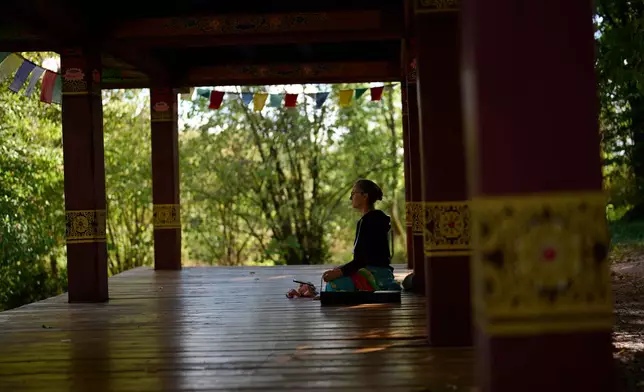
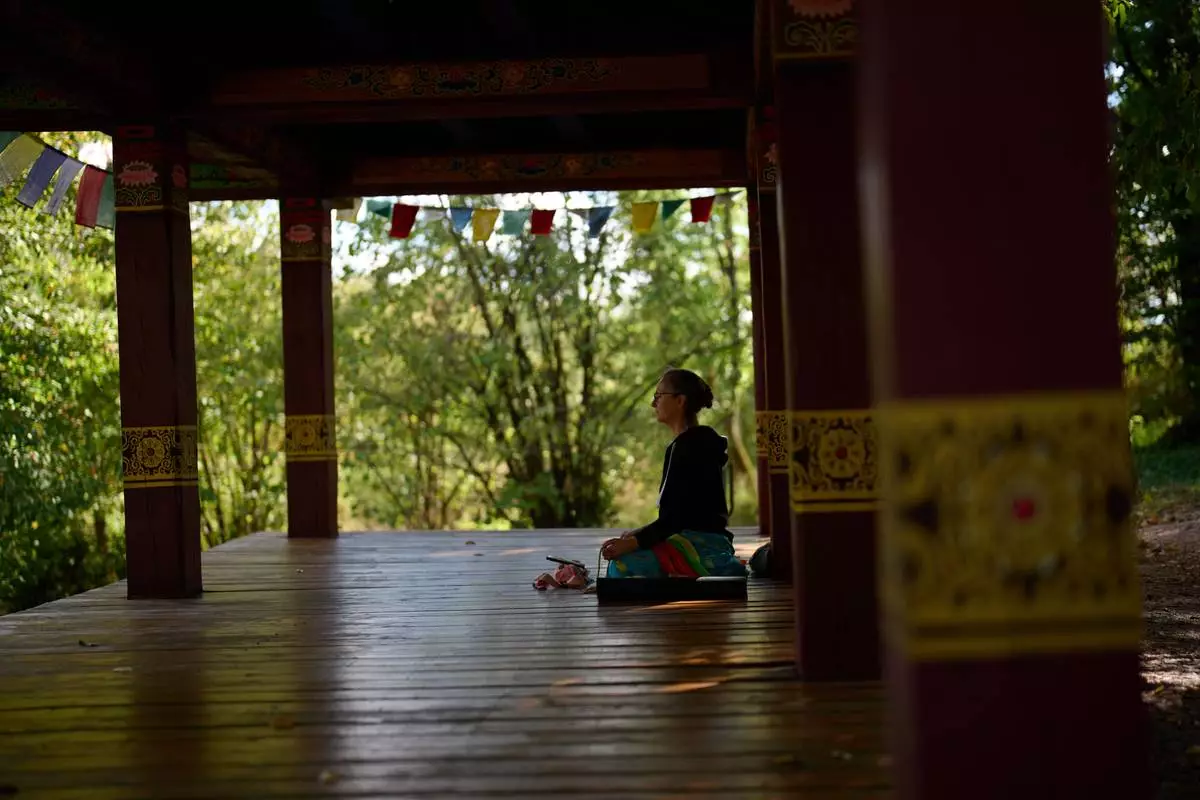
Tetyana Shevchenko meditates in the botanical gardens during an air raid alarm in Kyiv, Wednesday, Sept. 2, 2026. (AP Photo/Francisco Seco)

Newlyweds Iryna Baranova, right, and Evhen Mytsyk leave after their wedding portrait session at the botanical gardens, on their wedding day in Kyiv, Wednesday, Sept. 2, 2026. (AP Photo/Francisco Seco)
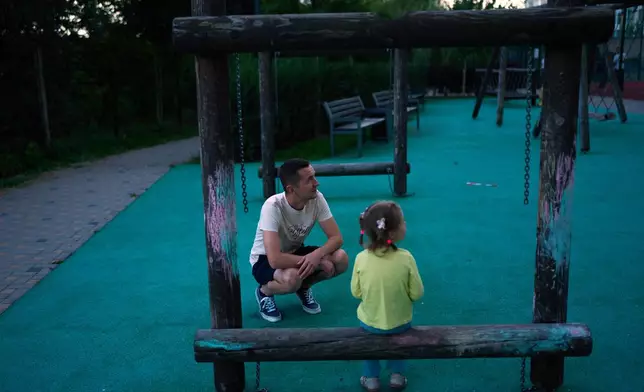
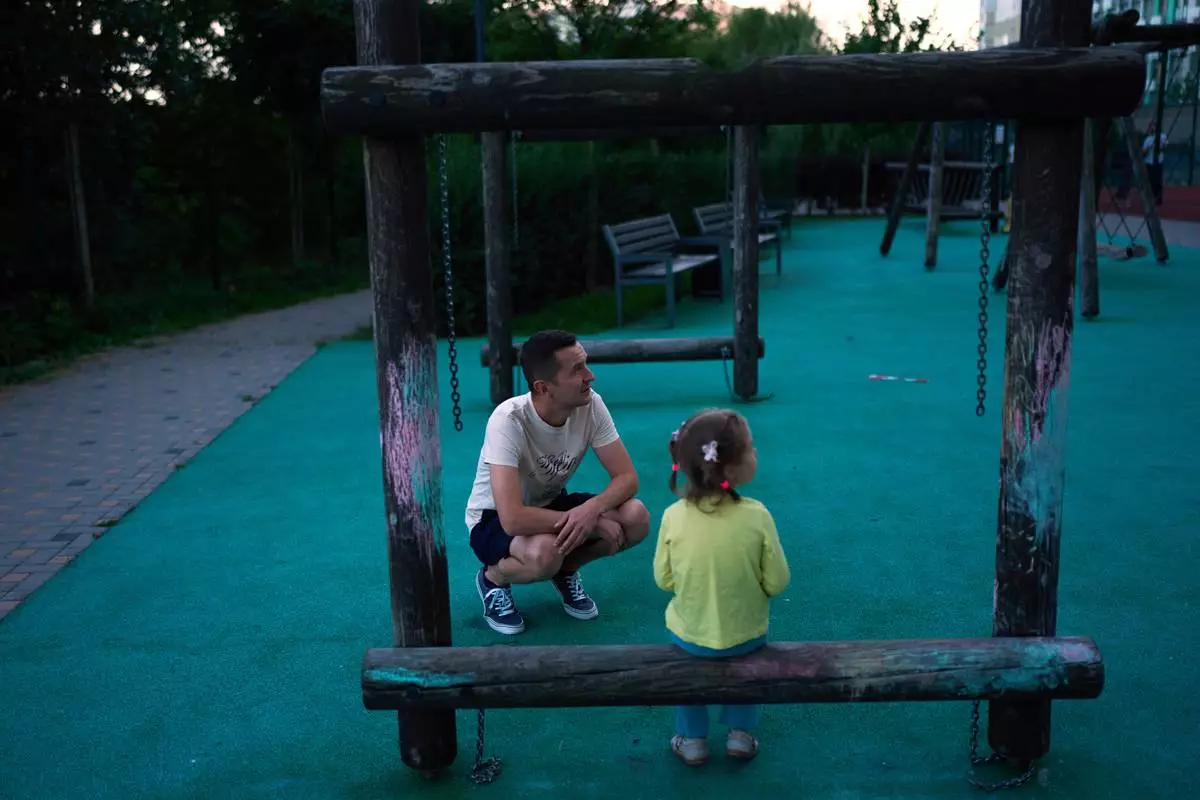
Volodymyr Bovsunovskyi talks to his daughter at the children's playground of their residential complex, the day after a Russian drone attack struck one of the buildings, in Kyiv, Wednesday, Sept. 2, 2026. (AP Photo/Francisco Seco)
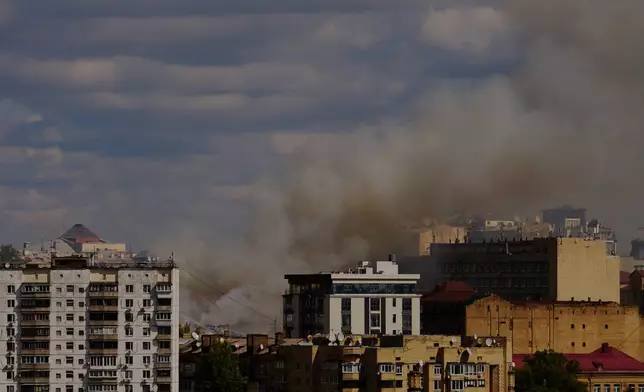
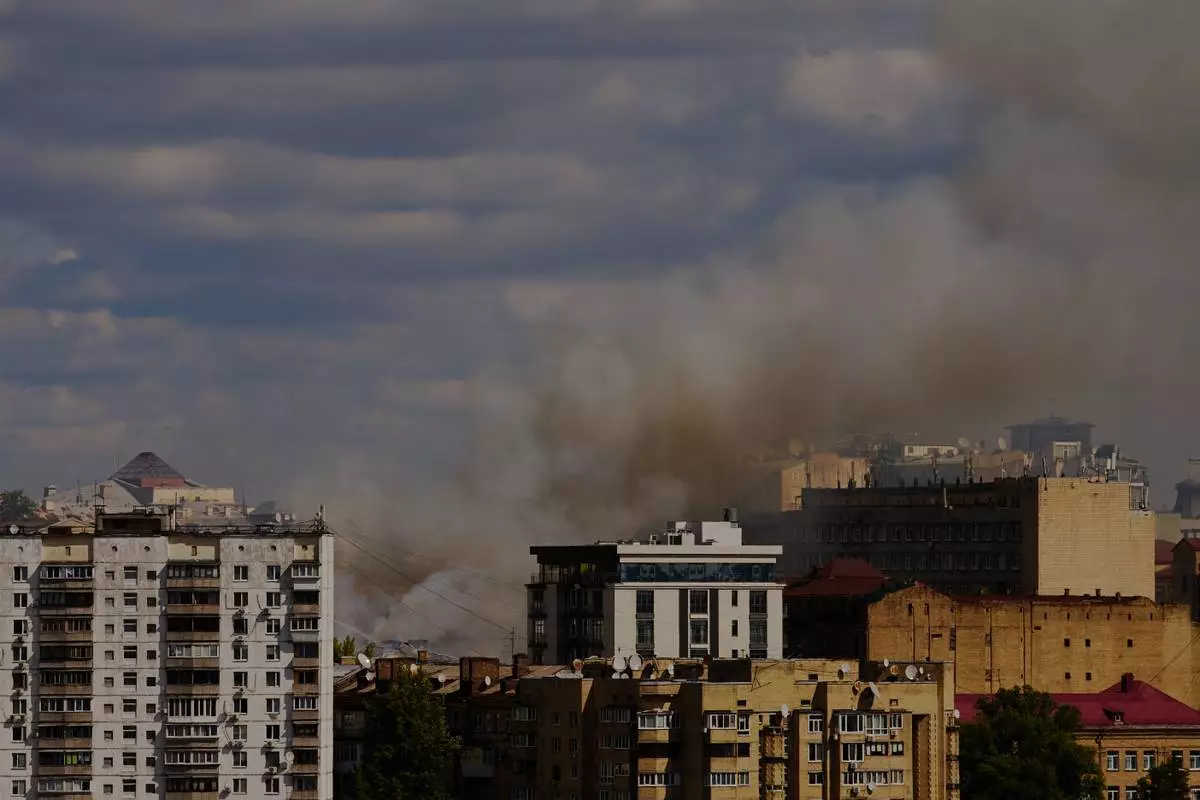
Smoke rises after a Russian drone attack in downtown Kyiv, Wednesday, Sept. 2, 2026. (AP Photo/Francisco Seco)
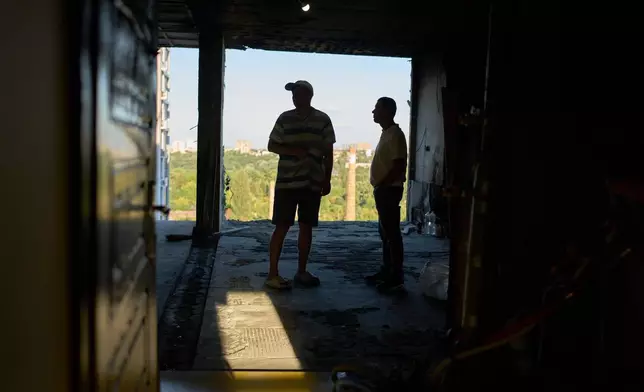
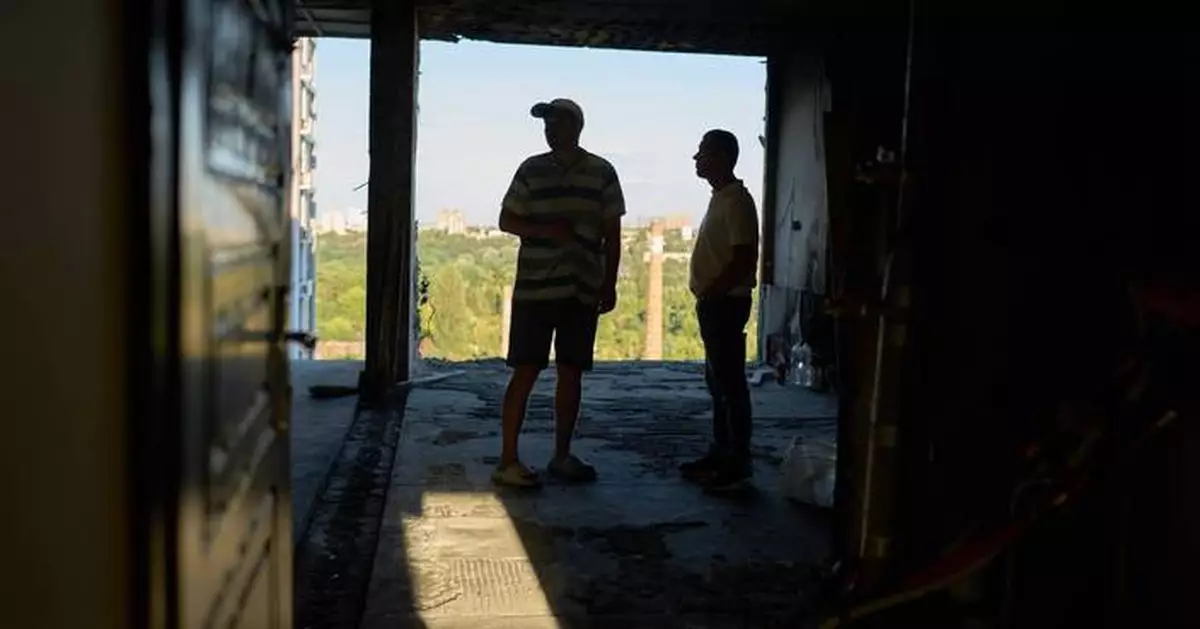
Ivan Datsiv, left, talks to a friend inside his apartment the day after a Russian drone attack struck his building in Kyiv, Wednesday, Sept. 2, 2026. (AP Photo/Francisco Seco)
Now, Russia has changed tactics with the use of fast-flying, jet-powered drones, and the expectation that daylight brings a return to normal life has been shattered. Since last week, attacks have come day and night, compounding the terror of overnight strikes with the exhaustion of constant daytime disruption.
In Kyiv, the recurring wail of air-raid sirens has become part of daily life. It has interrupted commutes, shopping trips and children’s school, intruded on life’s biggest moments, from weddings to funerals, and, as these attacks always have, taken lives. The relentless alerts are exhausting residents, leaving some wondering how long they can stay.
An alert sounds. People look at their phones or up at the sky. Moments later, in the distance, the familiar sounds of air defenses intercepting drones resound.
Plumes of smoke can often be seen rising in the distance. Photos quickly spread across Telegram channels, showing where the destruction has occurred.
An hour or two later, another siren echoes.
In malls, banks and other businesses, air-raid protocols require customers and staff to leave when an alert sounds. A bank transaction can be interrupted midconversation; a shopping trip can become a cycle of entering a store, evacuating, returning and evacuating again.
Getting the shopping done has become a nightmare for Volodymyr Bovsunovskyi, who recounts a recent family trip to a mall to buy clothes for his nearly 4-year-old daughter. They had been inside for about 20 minutes when the alert sounded. They rushed out and saw smoke rising nearby.
They never got to purchase the clothes.
“A lot has changed in the last seven days,” he said. Like many residents, he hopes the attacks will relent. But, they have not yet, as Ukraine struggles to find an effective way to counter them.
Train journeys that would normally take a few hours have stretched much longer. In some cases, passengers have found themselves walking for hours through grassy fields after trains stopped on the tracks, carrying their belongings while one air-raid alert followed another.
The same uncertainty extends to getting around the city.
When GPS signals are disrupted to jam drones, using a taxi app becomes an absurd process. A car that appears to be nearby can suddenly appear to be on the other side of the world.
A pickup that seemed imminent suddenly shows an arrival time of thousands of minutes.
One Kyiv couple went ahead with their wedding despite the sirens. On Wednesday morning, when Iryna Baranova, 38, returned home from hair and makeup to finish getting ready, explosions were sounding across the city.
“We heard two explosions, the alarm ended, we got together and went to the registration ceremony," she said, wearing a white satin gown with strands of pearls draped around her neck.
Afterward, she and Evhen Mytsyk walked hand in hand in a botanical garden in the city.
Mytsyk, 40, said the attacks did not diminish the day.
“If you wake up in the morning, you have to make the most of that day, because there might not be another chance," he said. "At a time like this, you appreciate life and the love of your family more, and you give love more openly yourself."
In the same garden, Tetyana Shevchenko meditated inside a small wooden gazebo modeled on a Buddhist prayer space. She has practiced for years, and she says it helps her remain calm even as air raids sound around her.
“When the air raids first started, we couldn’t stand the sound at all. It was very loud, disturbing, depressing," she said. "The body works in a way, it gets used to everything, including nighttime attacks, spending the night on the floor in the corridor, and insomnia.”
Meditation has also helped her stay calm as she navigates the tedium of bureaucracy, made even more difficult by the attacks.
Shevchenko has been trying to obtain documents to recover state funds owed to her mother, who died last year. While she waited in a long line for an appointment on a recent day, an air-raid alert sounded, causing her to miss her slot. She was sent to the back of the line and forced to start the process again.
“In this period of adjustments and grieving all of us are united, united in our suffering,” she said.
As she spoke, a siren blared. Moments later a thud was heard in the distance.
Ivan Datsiv, an IT worker, was in his apartment in Kyiv’s Podil district when a Russian drone tore through the floor on Tuesday, charring the ceilings and walls of his apartment and completely destroying the one next door.
Datsiv tries to joke about it, saying he had been meaning to repaint the walls anyway.
The alerts have become so frequent that he no longer sees the point of repeatedly going to a shelter. At this rate, he said, the only alternative would be to live in the basement.
“The alarms sound constantly,” he said. “You don’t even have time to go down and come back up. It’s just a waste of time running back and forth."
He is thinking of leaving Kyiv. “I’m thinking of living in another city, somewhere quiet and without this danger,” he said.
From the blown-out apartment next door, the view looks down onto a playground and basketball court where children are still playing.
Then a siren sounds again. Minutes later, the white zigzagging trail of an intercepted drone can be seen against the sky.
Bovsunovskyi is also considering leaving the city for a while, hoping to give his family — including his pregnant wife — a chance to rest.
The kindergarten his daughter attends must move the children to a shelter whenever an air-raid alert sounds. The alerts have become so frequent that he now simply picks her up halfway through the day.
“There is no stability,” he said.
Tetyana Shevchenko meditates in the botanical gardens during an air raid alarm in Kyiv, Wednesday, Sept. 2, 2026. (AP Photo/Francisco Seco)

Newlyweds Iryna Baranova, right, and Evhen Mytsyk leave after their wedding portrait session at the botanical gardens, on their wedding day in Kyiv, Wednesday, Sept. 2, 2026. (AP Photo/Francisco Seco)
Volodymyr Bovsunovskyi talks to his daughter at the children's playground of their residential complex, the day after a Russian drone attack struck one of the buildings, in Kyiv, Wednesday, Sept. 2, 2026. (AP Photo/Francisco Seco)
Smoke rises after a Russian drone attack in downtown Kyiv, Wednesday, Sept. 2, 2026. (AP Photo/Francisco Seco)
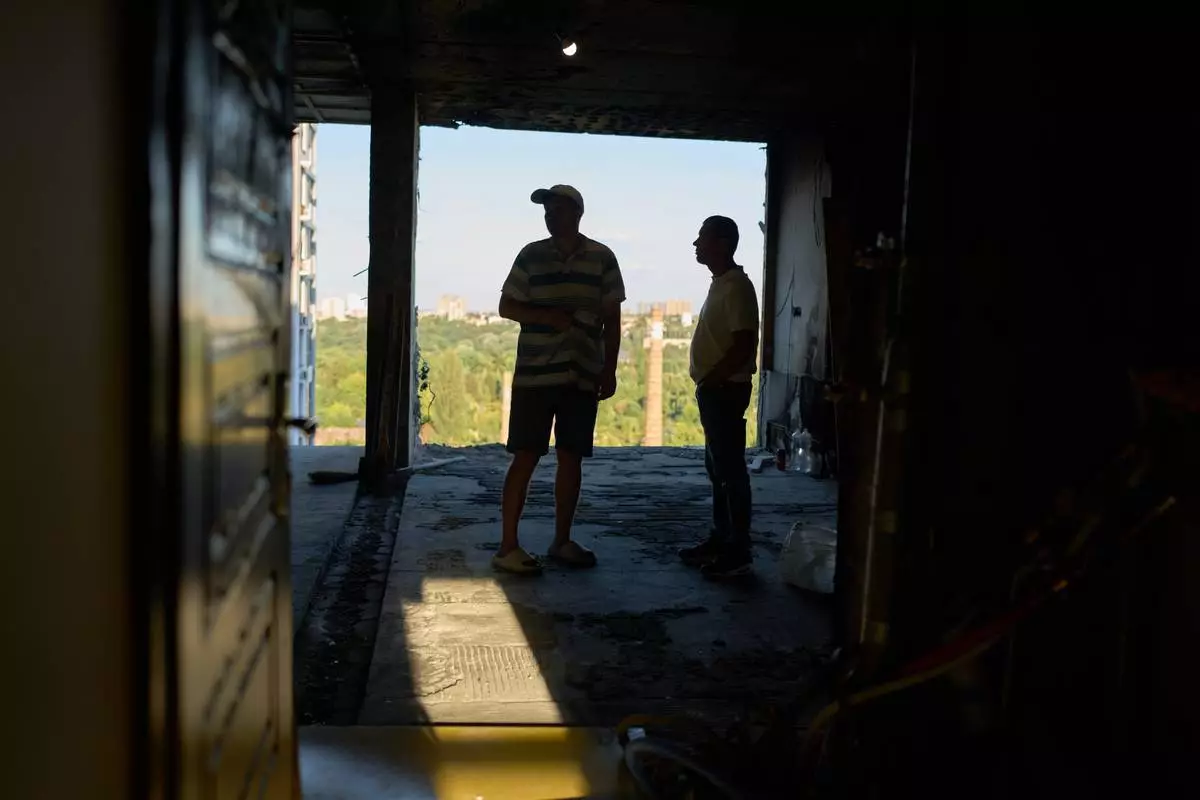
Ivan Datsiv, left, talks to a friend inside his apartment the day after a Russian drone attack struck his building in Kyiv, Wednesday, Sept. 2, 2026. (AP Photo/Francisco Seco)