BERLIN--(BUSINESS WIRE)--Sep 4, 2026--
ECOVACS, cited as the No.1 Brand in Global Home Robotics by Forbes China 2026, today announced the launch of the DEEBOT X12S OmniCyclone at IFA 2026. The X12S takes over whole-house floor cleaning with a sealed dust-mite carpet chamber that pushes down into the pile rather than riding along the top. In SGS-certified testing, the X12S removed an average of 97.44% of dust mite allergens and 95.45% of dust mites from carpet.
This press release features multimedia. View the full release here: https://www.businesswire.com/news/home/20260904370071/en/
“A dust mite allergy isn’t something you just get over. You clean around it,” said Michelle Jones, associate brand marketing director at ECOVACS Americas. “Most robots skim the top of a carpet. We built the X12S to get down to where the dust actually sits.”
The X12S is the latest flagship from the global No. 1 in household service robots, a category leader that continues to define the future of home robotics.
Dust mites live in soft materials. In most homes, the biggest expanse of soft material is the carpet underfoot, and it traps dust, mites and the allergens they leave behind deep in the pile, beyond the reach of a conventional vacuum head. That’s the layer the X12S is built to get into.
Privacy by Design, Built Into the Hardware
Home robots perceive more of the house each year, and control over what they see has mostly lived in software. The X12S builds one into the hardware. The Privacy Shield physically covers the AIVI camera, and when it’s closed, the lens is blocked.
“A cover you can see is easier to trust, because you can look at it,” Jones said. “As these robots take in more of the home, people will want to ensure they have their privacy.”
Even More Vacuuming Power
The DEEBOT X12S OmniCyclone delivers 53 air watts of effective suction, 60% more than the previous-generation X12, for handheld-vacuum-level cleaning power. A retuned fan and airway pull out more dust without adding noise.
A Sealed Chamber Built for Carpet
SGS Testing & Control Services Singapore certified the results in July 2026, measuring carpet removal rates in the robot’s Ultra Strong Suction mode. Across three runs on Wilton carpet, the X12S removed an average of 97.44% of dust mite allergen (Der f 1) and an average of 95.45% of dust mites (Dermatophagoides farinae). Carpet dust removal efficiency improves by 224% over previous models.
A Mop That Washes Itself While It Mops
The OZMO Roller 3.0 inside the X12S is a leap forward in mopping technology. Older mops dragged a flat mop across surfaces. This evolved into rotating dual pads. Now, the OZMO Roller 3.0 is continuously self-washing.
Fresh water continuously wets the roller as it scrubs the floor, and a scraper pulls away the dirty water and debris, so the roller keeps cleaning on a fresh surface. The mop is cleaned while it mops the floor, rather than getting steadily dirtier until the robot returns to the station.
OZMO Roller 3.0 also carries FocusJet stain spray, an industry first, that targets embedded, dried-on stains.
The Station That Cleans Itself
ECOVACS pioneered the self-cleaning station category in 2022 with the X1 OMNI. The X12S’ OMNI Station handles more of what a user would otherwise do by hand. After every mop-washing cycle, it pressure-washes the OZMO Roller 3.0 with a 40 kPa high-pressure pump and rinses the mop tray with a 26 kPa high-pressure air pump, clearing away debris and sediment.
On the robot itself, a propeller spinning up to 6,000 rpm scrubs out the dirty water tank. It also hot-air dries the air duct and dustbin. Drying after every cycle helps prevent the damp, odor and bacterial buildup that can turn a neglected station into a hygiene problem.
The station refills the robot’s clean water tank with hot water and doses the cleaning solution, so there are no tanks to fill and no detergent to measure. A user can go up to 48 days without emptying the dustbin, and the mop tray only needs maintenance about every 150 days. A bagless PureCyclone auto-empty system keeps suction steady and consumables lasting longer.
“A robot that cleans your floors but requires you to clean the station all of the time hasn’t saved you much,” Jones said. “Like we say, ‘Clean floors. Cleans itself.’ We mean both halves of that.”
PowerBoost Charging Plus System
The X12S ships with PowerBoost Charging Plus, a fast-charging system that tops off the battery during short mop-washing dock cycles. That keeps the robot moving from room to room with minimal downtime between sessions.
Precision Cleaning That Carries Through
The rest of the cleaning system carries over from the X12. 15 mm auto-mop lifting and the Mop Roller Smart Cover keep the mop clear of the carpet. AIVI 3D 4.0 dual obstacle avoidance pairs camera vision with 3D laser sensing to navigate cluttered rooms while cleaning. TruEdge 3.0 uses a 3D edge sensor to clean close to walls and baseboards without leaving gaps.
Smarter, Simpler Control
With AGENT YIKO 3.0, users can set cleaning preferences by voice at any time. The assistant works out whether that’s a one-time request or a long-term preference to remember.
Availability
The DEEBOT X12S OmniCyclone is available in the United States at an MSRP of $1,299.99. Buyers can order it on Amazon or at ecovacs.com. From Sept. 4 through Sept. 11, an Amazon launch deal brings the price to $999.99. From Sept. 12 through Sept 18, the coupon price will be $1,099.99.
ECOVACS.com carries the full suite of 2026 ECOVACS robots for indoor and outdoor use.
About ECOVACS
ECOVACS. Created for ease. Founded in 1998, ECOVACS ROBOTICS builds indoor and outdoor home robots that take routine chores off people’s hands, guided by the mission Robotics for All and the corporate philosophy, Never Follow. Always Define. Cited as the No. 1 Brand in Global Home Robotics by Forbes China in 2026, ECOVACS is trusted by 38M homes across the globe. It holds 2,500 patents across a product line spanning robotic cleaners from vacuum and mops, window cleaners, lawn mowers, and pool cleaners. It sells its products in 180 countries and has earned consistent industry recognition for design and performance.

SGS-certified dust mite removal, a physical Privacy Shield, a self-washing OZMO Roller 3.0, FocusJet stain spray, PowerBoost fast charging and AGENT YIKO 3.0 voice control
BELOIT, Kan. (AP) — Bryce Black kneels in a wheat field battered by intense drought. He holds two strands, remarking on how small the seed head is compared with what's normal.
After a late October rain last year, the fourth-generation farmer was optimistic about his 1,800 acres (728 hectares) of winter wheat. But a dry winter and spring brought extreme drought when the wheat needed moisture to establish itself. He ended up harvesting about 1,500 acres (607 hectares), but the yield was the lowest he's had since taking over his family's farm in 2017.
“It was just a grit your teeth and get through it type of deal,” said Black, who also grows corn, soybeans and milo on his family’s 4,500-acre (1,821 hectare) farm. “It is disheartening, you know? And it’s kind of hard to know what to do.”
When these weather events occur, farmers often look for new ways to protect their crops and their bottom line.
A small number are putting perennial grains in rotation to build resilience against extreme weather like drought and intense rainfall. Researchers are working to develop perennial versions of common annual grains like wheat, sorghum and rice, but the work is slow. And widespread adoption by farmers is challenging because perennial crops don’t yield as much, harvesting can be difficult and the market is still developing.
Despite the challenges, Black is intrigued.
“I’m in survival mode,” he said. “If you can plant something and then you don’t have to go back for four or five years … that would save so much money, so much labor, everything. That’s what makes it enticing.”
Five years ago, David Mueller planted a 12-acre (5 hectare) field of Kernza, a perennial grain similar to native grasses found in parts of Europe and western Asia.
Perennial grains don’t require yearly planting, harvesting and replanting. Instead, they are planted once every few years.
Researchers say their root systems, which can reach several feet down, can access water deeper in the ground. That helps them better withstand short-term drought. And when heavy rain hits, the larger root structures can absorb excess water that would otherwise run off and erode the soil. Those deeper roots also sequester more carbon, reducing pollution in the atmosphere.
Kernza is one of several perennial grains under development at The Land Institute in Salina, Kansas, about an hour’s drive north of Mueller’s farm. The institute, which formally began domesticating Kernza in 2001, works with researchers and farmers around the world to develop perennial versions of wheat, rice, sorghum and other grain and oil seeds.
Some farmers in Southeast Asia and parts of Africa have started planting and harvesting perennial rice in their fields. Kernza, though, is furthest along and was first harvested on a farm in 2010.
In the U.S. last year, Kernza was cultivated on 3,511 acres (1,421 hectares), compared with 37.2 million acres (15.1 million hectares) of winter, spring and Durum wheat harvested or planted in 2025-26.
Mueller's Kernza field is one of almost 100 acres (40 hectares) he has planted since 2018. He's used the crop to rebuild soil with drainage issues or to reestablish organic matter on his family's farm in Halstead, Kansas, where they also farm about 600 acres (243 hectares) each of corn and soybeans.
He also said Kernza uses about a third of the fertilizer that wheat needs, and because it's planted once every few years, he doesn't have to run gas-burning farm equipment as often.
“Not only are we able to utilize those acres profitably, but then we also build up that soil and work on some benefits to make it hopefully profitable to raise other crops on those fields in the future,” Mueller said.
A 2024 United Nations report suggests that by 2050, soil degradation could cause more than $20 trillion in losses to the global economy. Farming perennials is less disruptive to that carbon-capturing soil.
Soil serves as a reservoir, capturing planet-warming carbon dioxide from the atmosphere that plays a role in climate change, experts say. Annual cultivation — the plow, plant, harvest and repeat cycle — strains soil formation, which takes thousands of years and rapidly degrades the farmland. Perennial roots can also bring that carbon deeper into soils, where it is less likely to be disturbed, said Laura van der Pol, The Land Institute's lead soil ecologist.
And soil that has more carbon in it tends to be better for plants.
“Incorporating perennials into our agriculture seems like really the only option to have soil for generations if we want to continue to grow food,” van der Pol said. “It’s hard to imagine getting to a place where we could have soil and abundant food without a perennial option.”
Pilot programs involving perennial grains are in the works around the world, testing how to grow them in different regions, climates and soils, but the research is early and slow-moving.
Chief among the challenges is the crops' grain yield, said Lee DeHaan, who leads the Institute’s Kernza domestication program. Kernza farmers are getting yields of about 20 to 40% of what they might get from a wheat crop in the area. That's because a perennial crop has to use energy not only to grow seeds for grain, but also to grow roots to penetrate the soil so it can survive for more than a year. That contrasts with annual crops, which are engineered to put as much energy as possible into making as much seed as they can in one growing season.
Researchers at Cornell University also have found that establishing a Kernza field can be difficult as it contends with weeds in its first year. Finding the right seeding rate to maximize yield is also still being studied, said Matthew Ryan, a sustainable cropping professor at Cornell University.
Mueller said new varieties of Kernza are yielding more than previous ones, but the yield can decline as the crop ages. Yields on perennial rice are similar to annual ones, officials at The Land Institute said.
Harvesting Kernza specifically can be challenging. The grain is smaller than wheat, for example, and farmers and researchers are still finding the best ways to adapt farm equipment so the kernel isn't damaged during harvest.
Still, Ryan said farmers who experience crop loss due to drought or major flooding may be prompted to think about ways to build more resilience into their operations.
“I think farmers, more than other people, realize that the climate is changing,” he said. “They prompt people to think, and I feel like they are driving farmers to practice this.”
Even as perennial grain development steadily improves and more farmers sign on to grow it, there are still issues with consumer interest, federal support and research infrastructure.
Aaron Gaeddert, the owner of Prairy in Newton, Kansas, sells Kernza products and develops food products in his test kitchen. The grain has a sweeter flavor than wheat and can be found in products like baking mixes and beer. Building awareness is challenging, Gaeddert said, but he's hopeful interest will grow as new products are developed.
“We still have customers that shop here all the time who don’t know what Kernza is, and we’ve had it on our shelves for three or four years,” he said. “I truly think that it’s gonna take some bigger industry players to adopt a new grain like this.”
And while farmers receive federal bridge payments and other assistance for traditional crops amid market disruptions and increased production costs, federal funding for perennial grains is lacking. The value of a farmer's land and the loans they can get to subsidize operations are directly connected to what they grow.
Brandon Schlautman, a perennial crop scientist and farmer at Sustain-a-Grain, a supplier and distributor of Kernza, said he constantly hears from farmers who want to grow it, but he turns away almost all of them because the market isn't developed enough.
“What farmers really need is access to the product or the grain itself,” Schlautman said. “And stable markets that allow them to grow Kernza and sell it profitably and sustainably.”
Mueller contracts with Sustain-a-Grain, which sells him Kernza seed and buys back his crop at a fixed price. That guaranteed price means he doesn’t have to worry as much about the risk of planting an alternative crop. Mueller agrees the market for Kernza is small, but that means farmers who grow it can be paid a premium, sometimes 5 to 10 times the price of a pound of wheat, he said.
Pricing the grain low enough to open up a larger market for consumers is the main challenge.
“The fact that it has the potential to be profitable as opposed to some other alternative crops, that was intriguing too,” Mueller added. “Because at the end of the day, ideas are great, but you need to make money if you want to do this again next year.”
St. John reported from Detroit. Follow her on X: @alexa_stjohn. Reach her at ast.john@ap.org. Follow Joshua A. Bickel on Instagram, Bluesky and X @joshuabickel. Reach him at jbickel@ap.org.
Read more of AP’s climate coverage.
The Associated Press’ climate and environmental coverage receives financial support from multiple private foundations. AP is solely responsible for all content. Find AP’s standards for working with philanthropies, a list of supporters and funded coverage areas at AP.org.
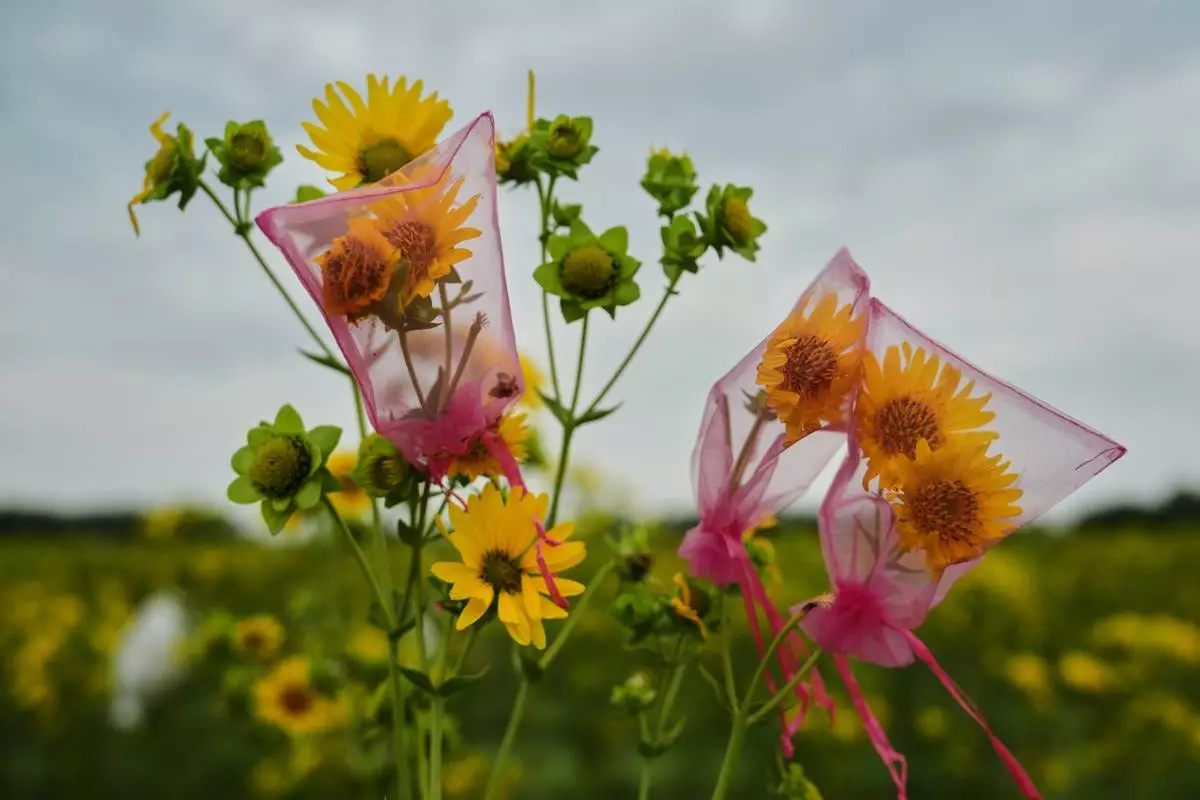
Mesh bags cover silflowers, an oilseed crop, after hand pollination in a research field Tuesday, July 28, 2026, at The Land Institute in Salina, Kan. (AP Photo/Joshua A. Bickel)
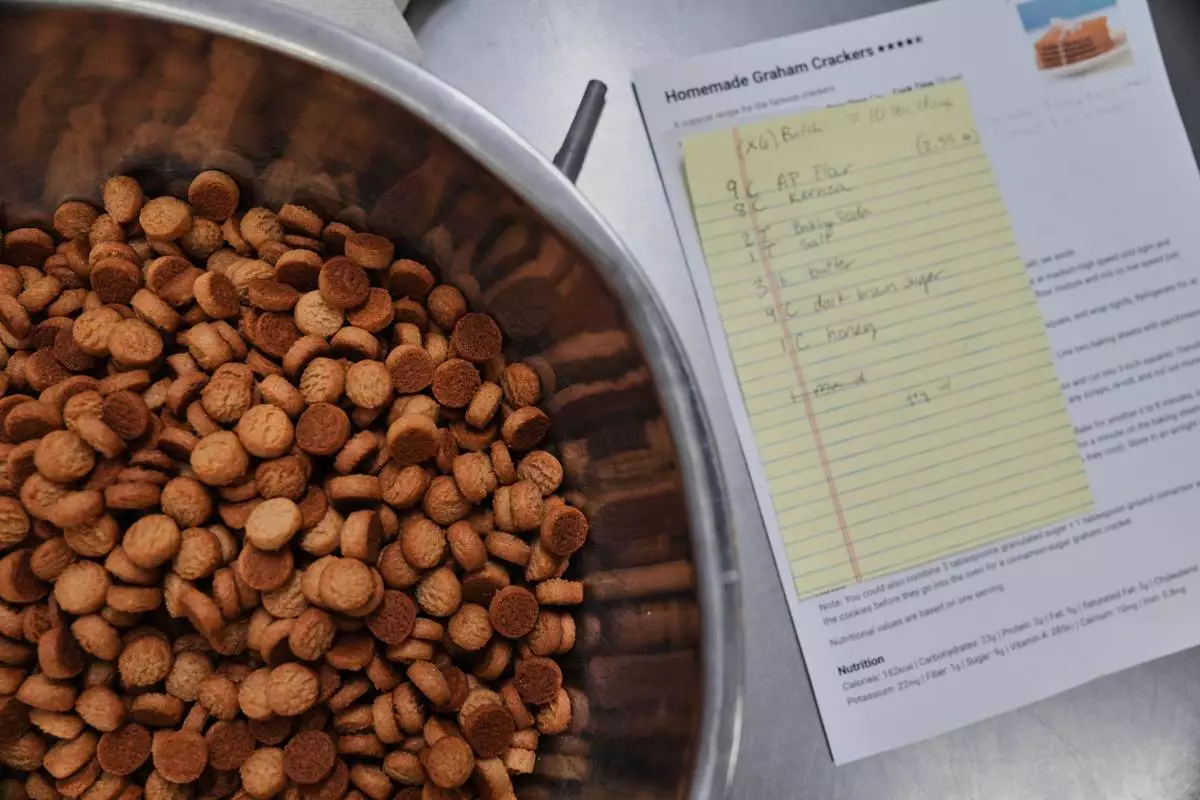
Small crackers made with Kernza flour sit in a bowl after baking in a test kitchen Tuesday, July 28, 2026, at Prairy in Newton, Kan. (AP Photo/Joshua A. Bickel)
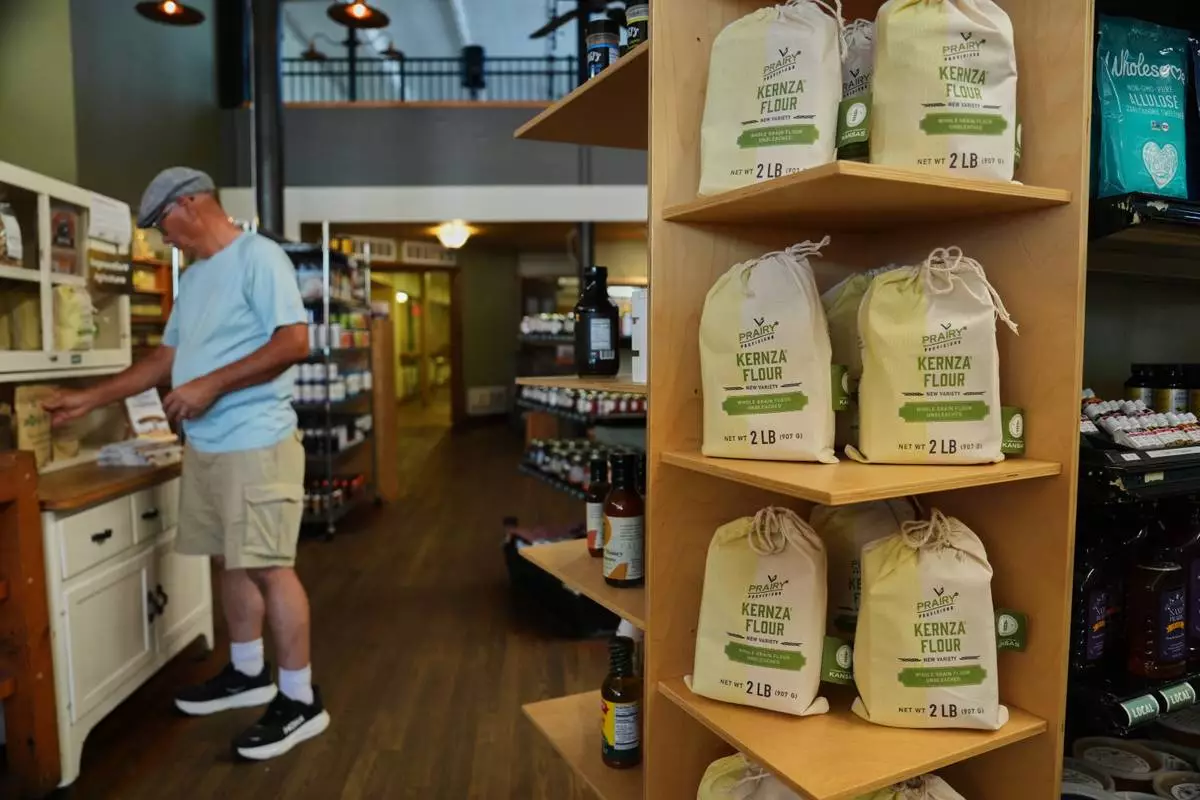
Bags of Kernza flour sit on display, Monday, July 27, 2026, at Prairy in Newton, Kan. (AP Photo/Joshua A. Bickel)
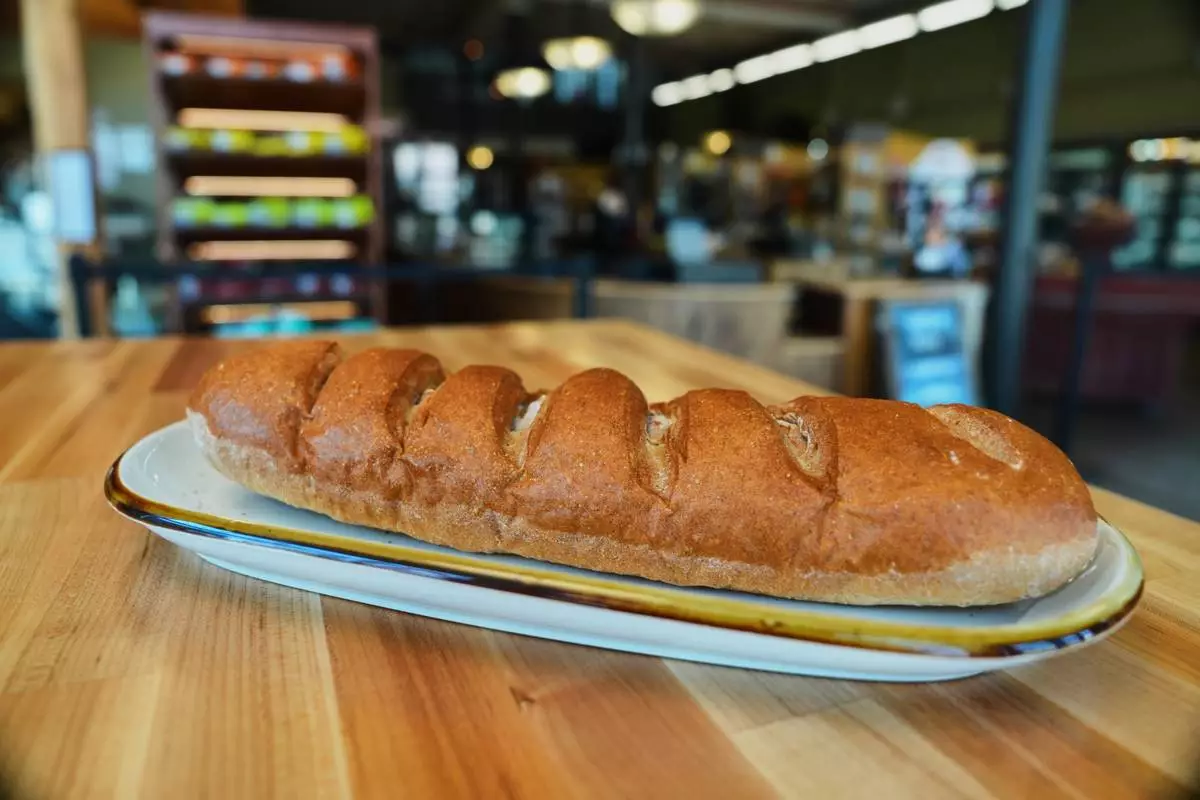
A loaf of Kernza bread is seen at Prairy, Monday, July 27, 2026, in Newton, Kan. (AP Photo/Joshua A. Bickel)
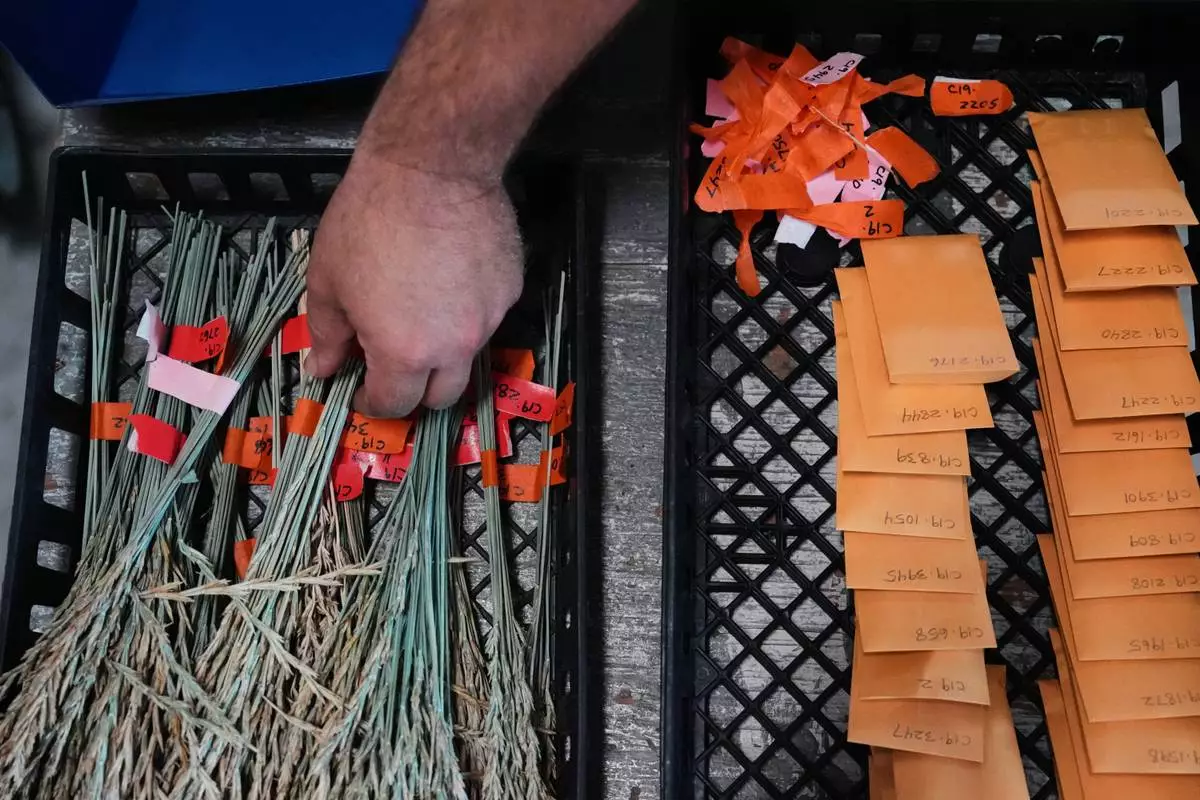
Marty Christians grabs a bundle of Kernza for cleaning and weighing Tuesday, July 28, 2026, at The Land Institute in Salina, Kan. (AP Photo/Joshua A. Bickel)
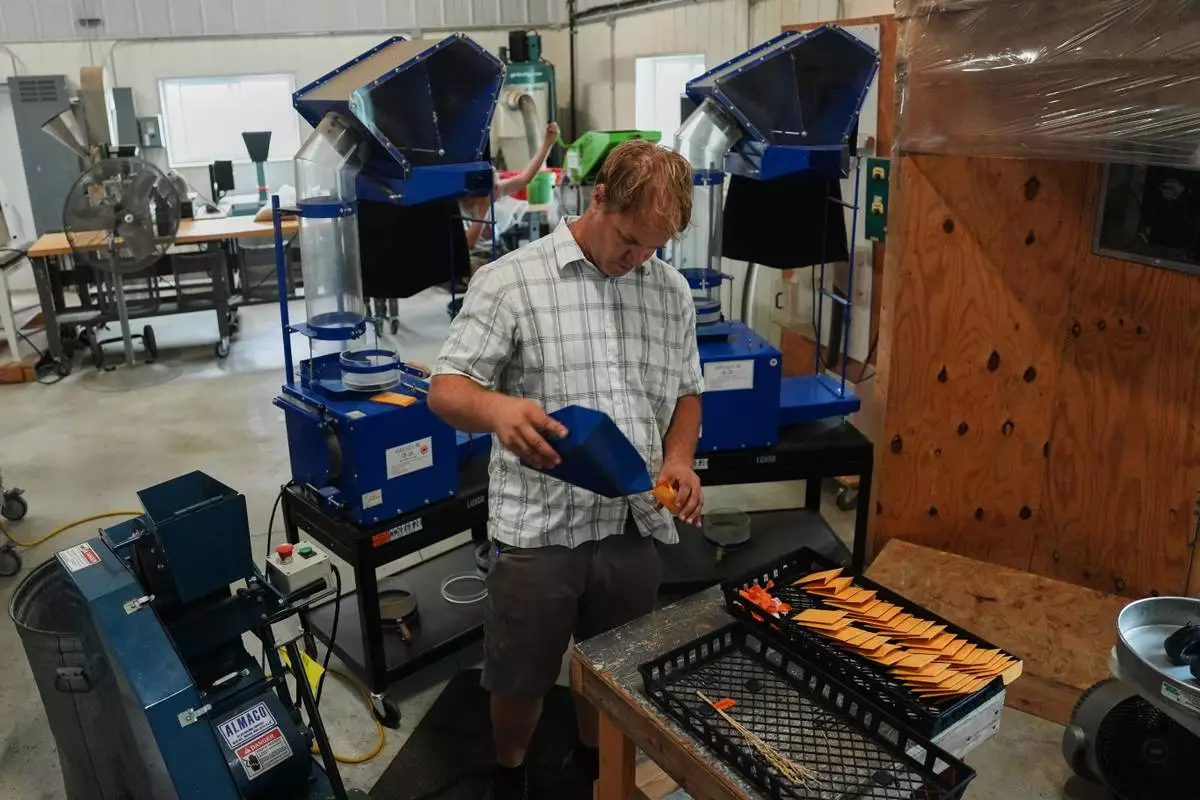
Marty Christians pours Kernza grain into an envelope after threshing Tuesday, July 28, 2026, at The Land Institute in Salina, Kan. (AP Photo/Joshua A. Bickel)
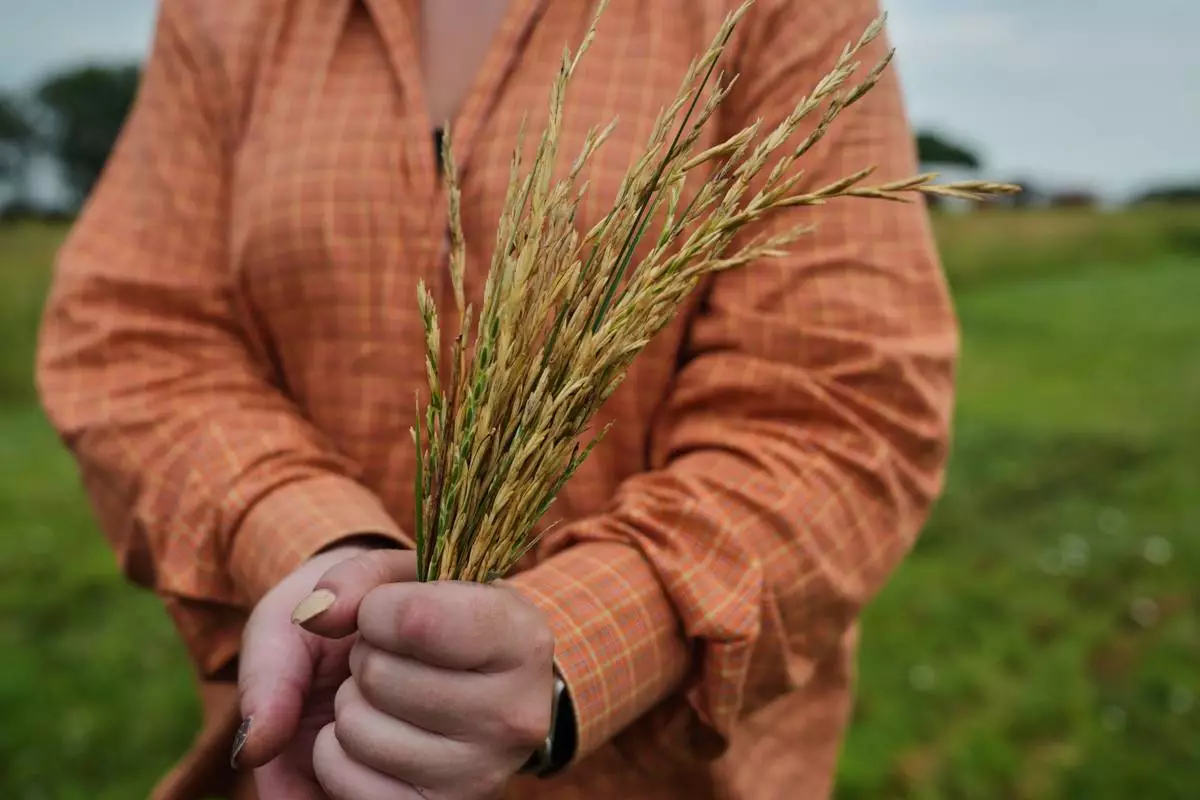
Skyler Grove holds a bundle of Kernza, Tuesday, July 28, 2026, at The Land Institute in Salina, Kan. (AP Photo/Joshua A. Bickel)
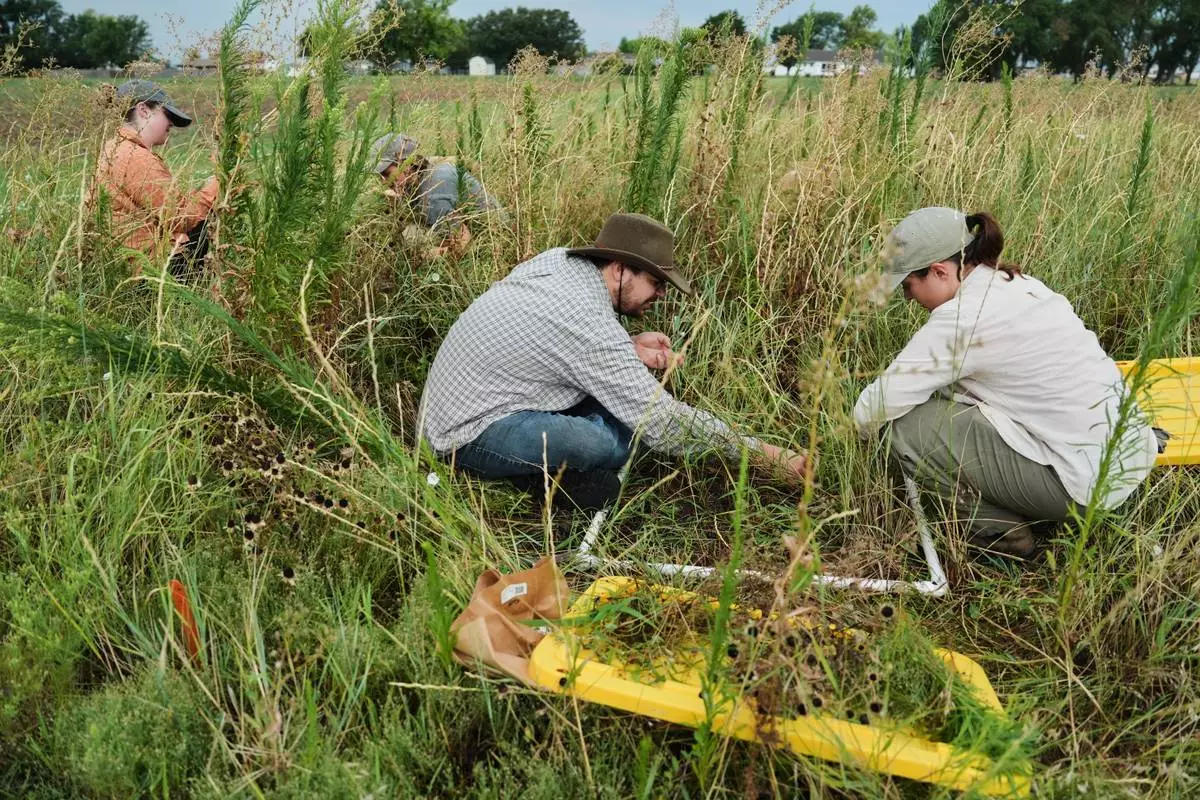
Kate Fitzsimmons, right and Jacob Barefoot, center, gather plant material from a Kernza research field Tuesday, July 28, 2026, at The Land Institute in Salina, Kan. (AP Photo/Joshua A. Bickel)
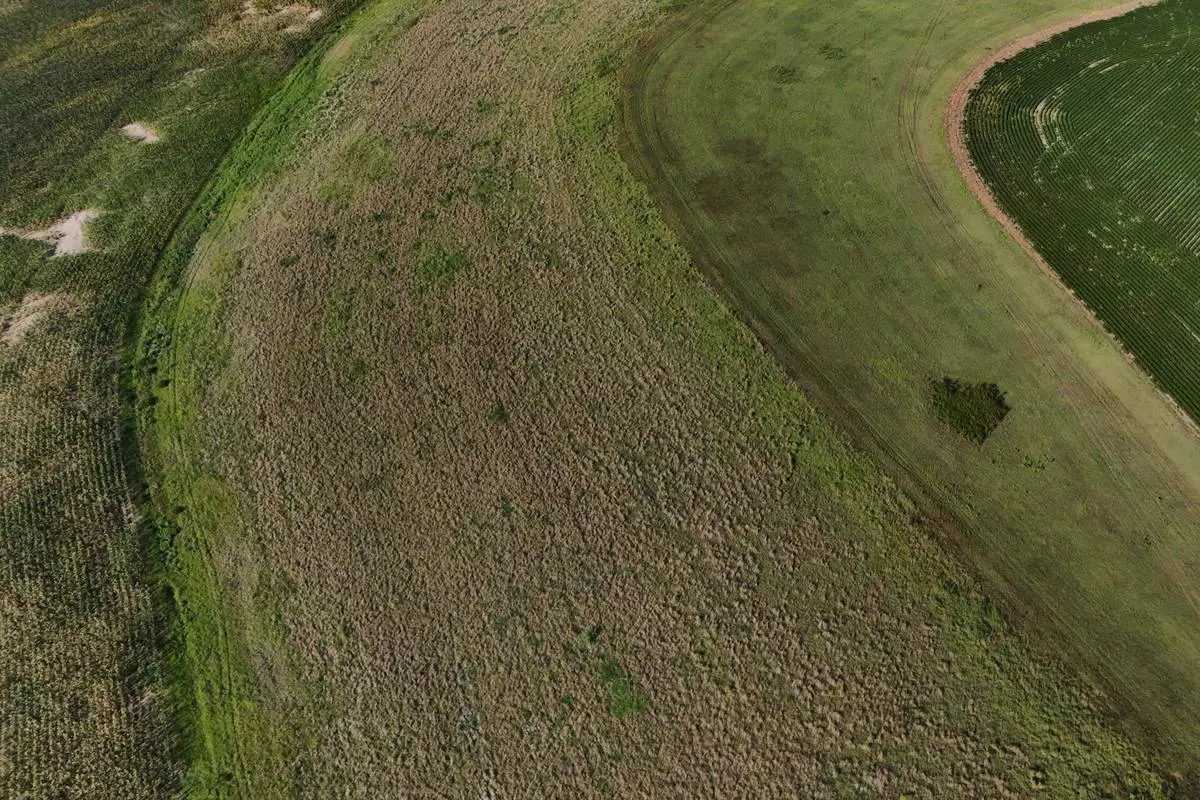
A field of Kernza, center, grows Tuesday, July 28, 2026, at a farm in Halstead, Kan. (AP Photo/Joshua A. Bickel)
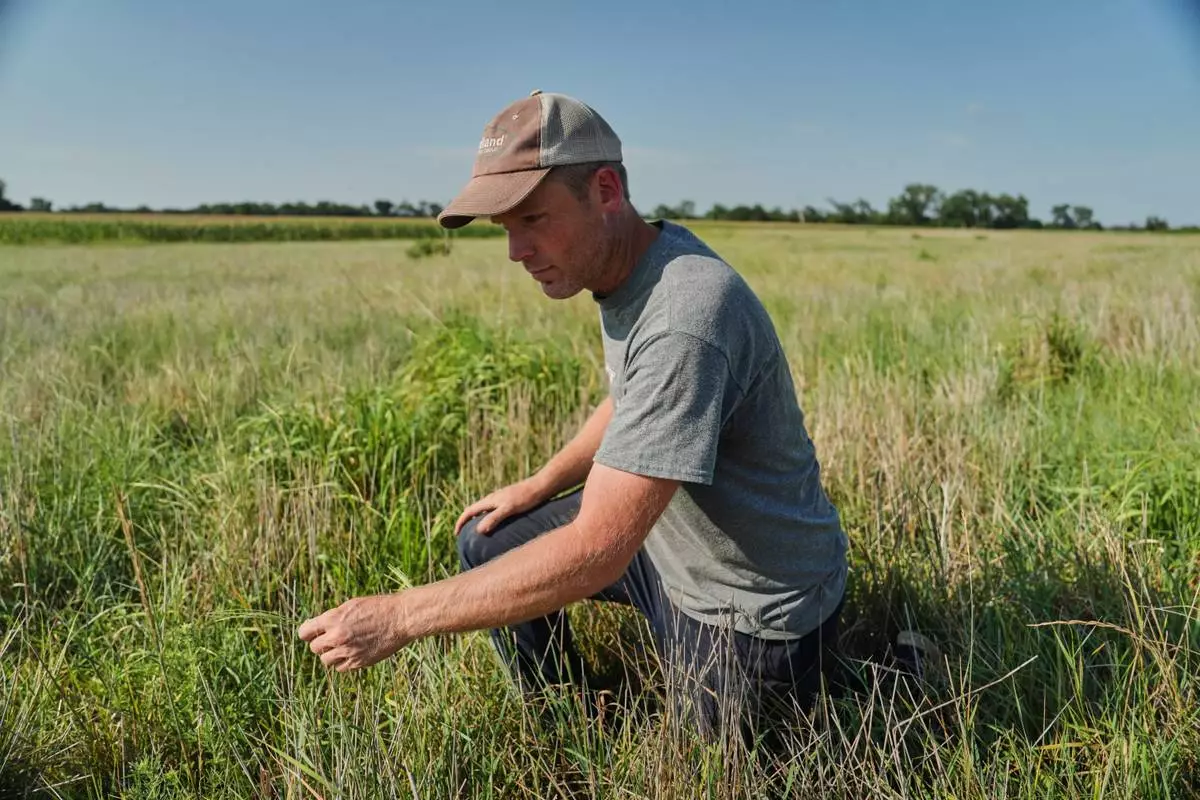
David Mueller kneels down in one of his Kernza fields Tuesday, July 28, 2026, at his farm in Halstead, Kan. (AP Photo/Joshua A. Bickel)
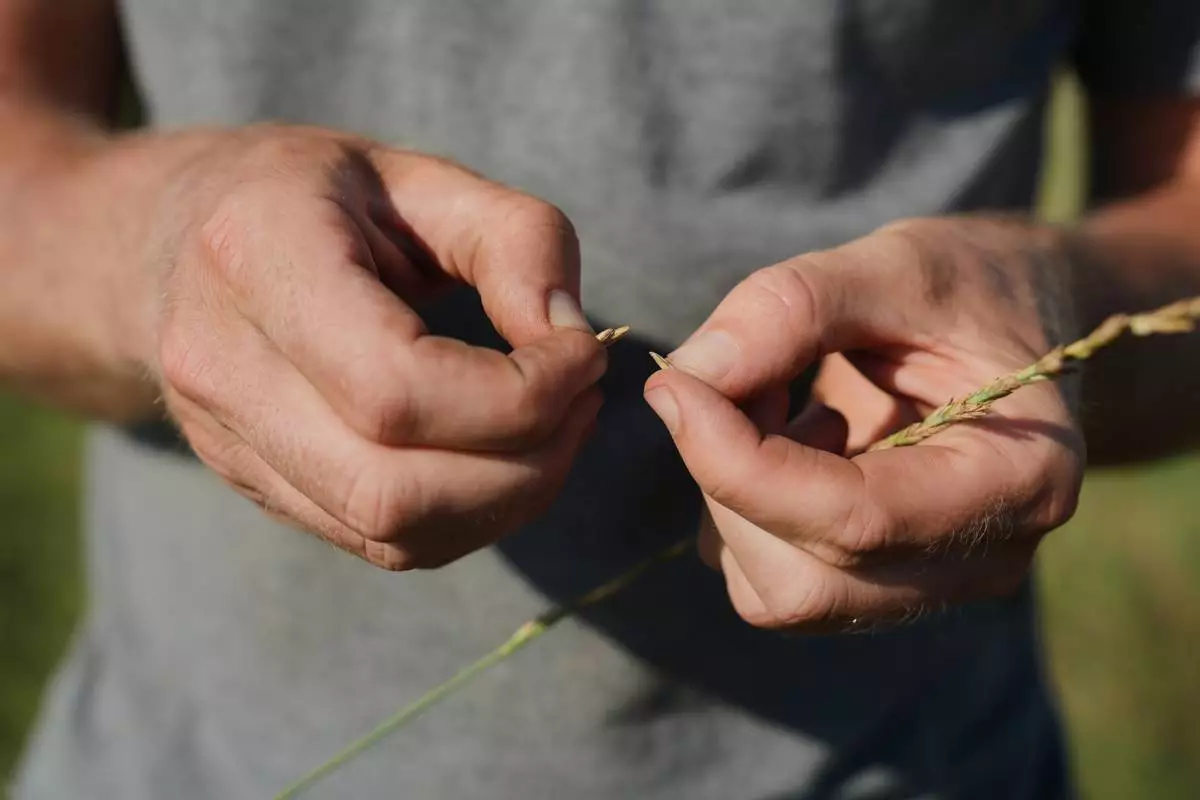
David Mueller pulls a Kernza seed out of its husk Tuesday, July 28, 2026, at his farm in Halstead, Kan. (AP Photo/Joshua A. Bickel)
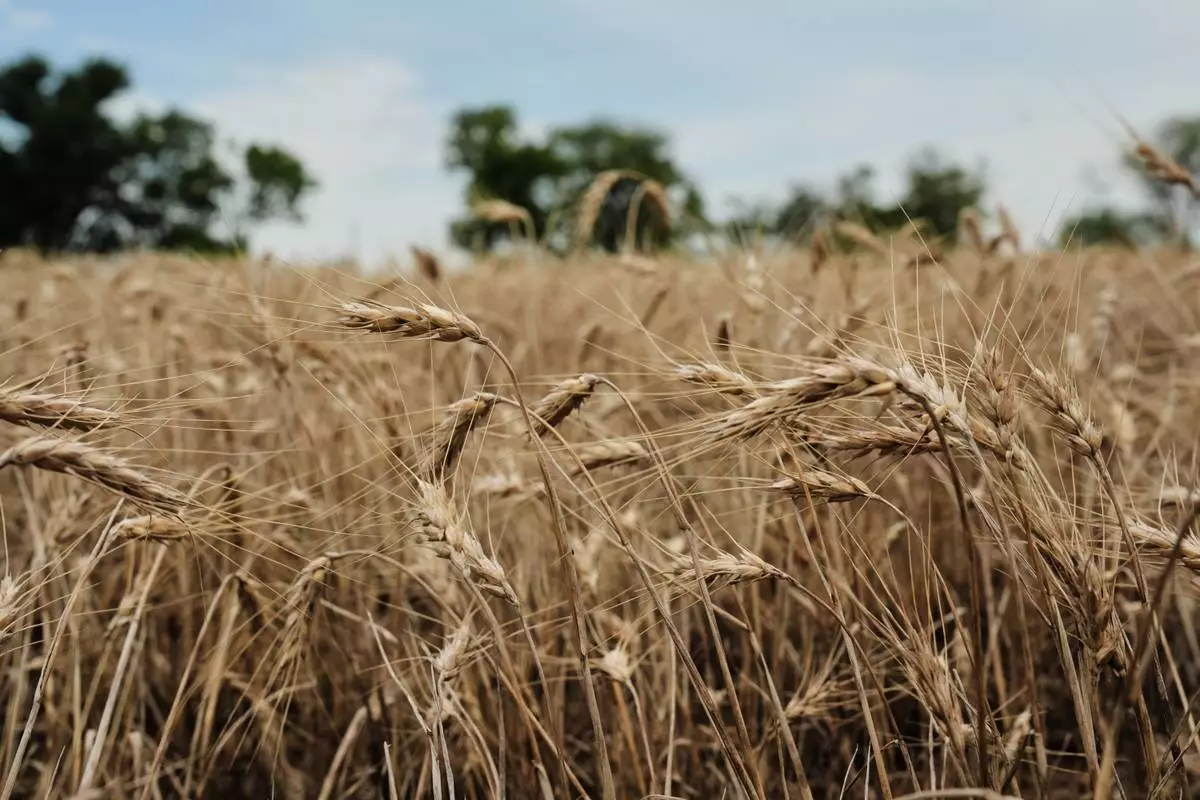
Unharvested wheat affected by extreme weather sits in a field Wednesday, July 29, 2026, in Beloit, Kan. (AP Photo/Joshua A. Bickel)
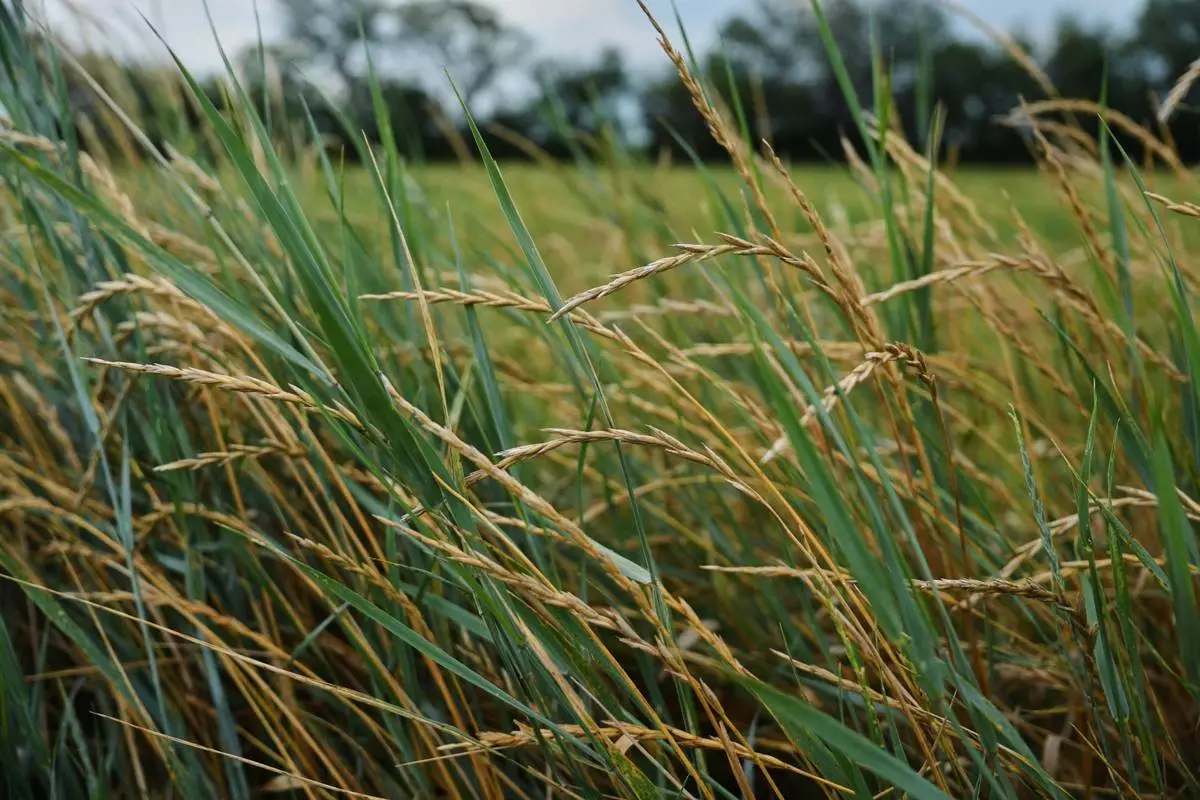
Perennial wheat grows in a research field Tuesday, July 28, 2026, at The Land Institute in Salina, Kan. (AP Photo/Joshua A. Bickel)
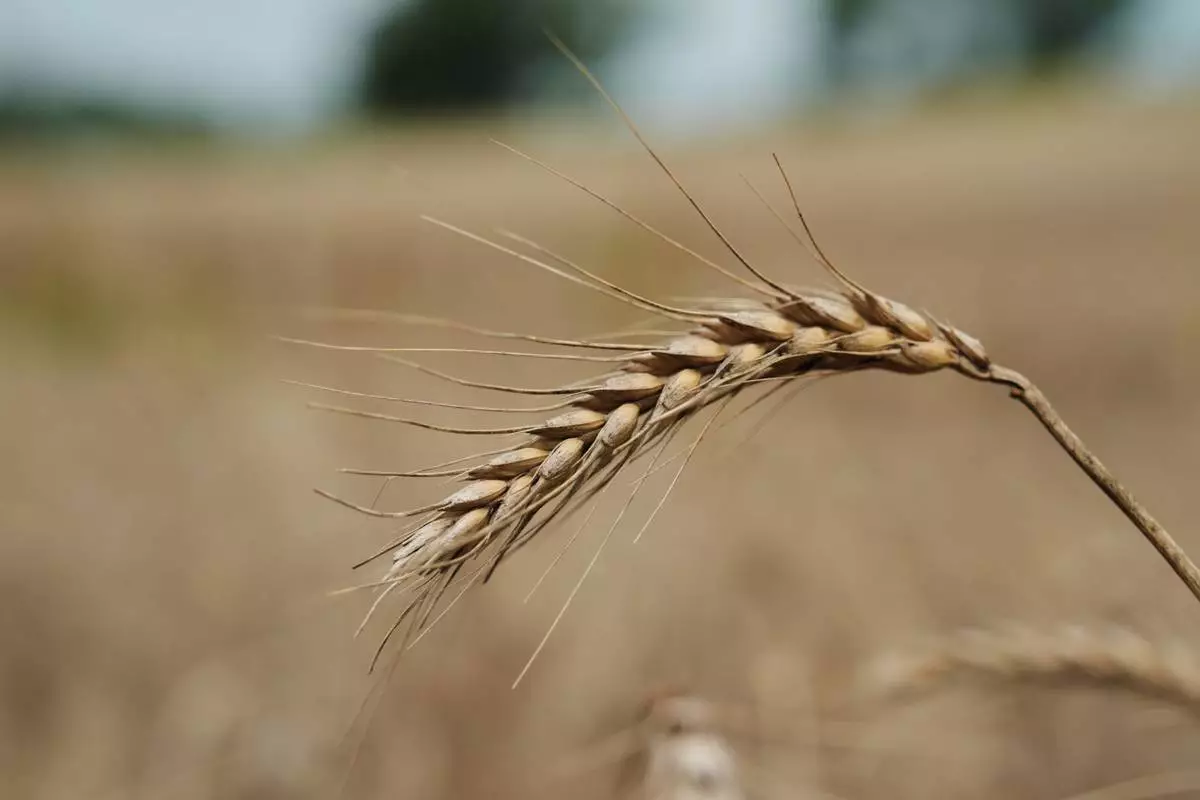
Unharvested wheat affected by extreme weather sits in a field Wednesday, July 29, 2026, in Beloit, Kan. (AP Photo/Joshua A. Bickel)

Kernza grows in a farm field Tuesday, July 28, 2026, in Halstead, Kan. (AP Photo/Joshua A. Bickel)
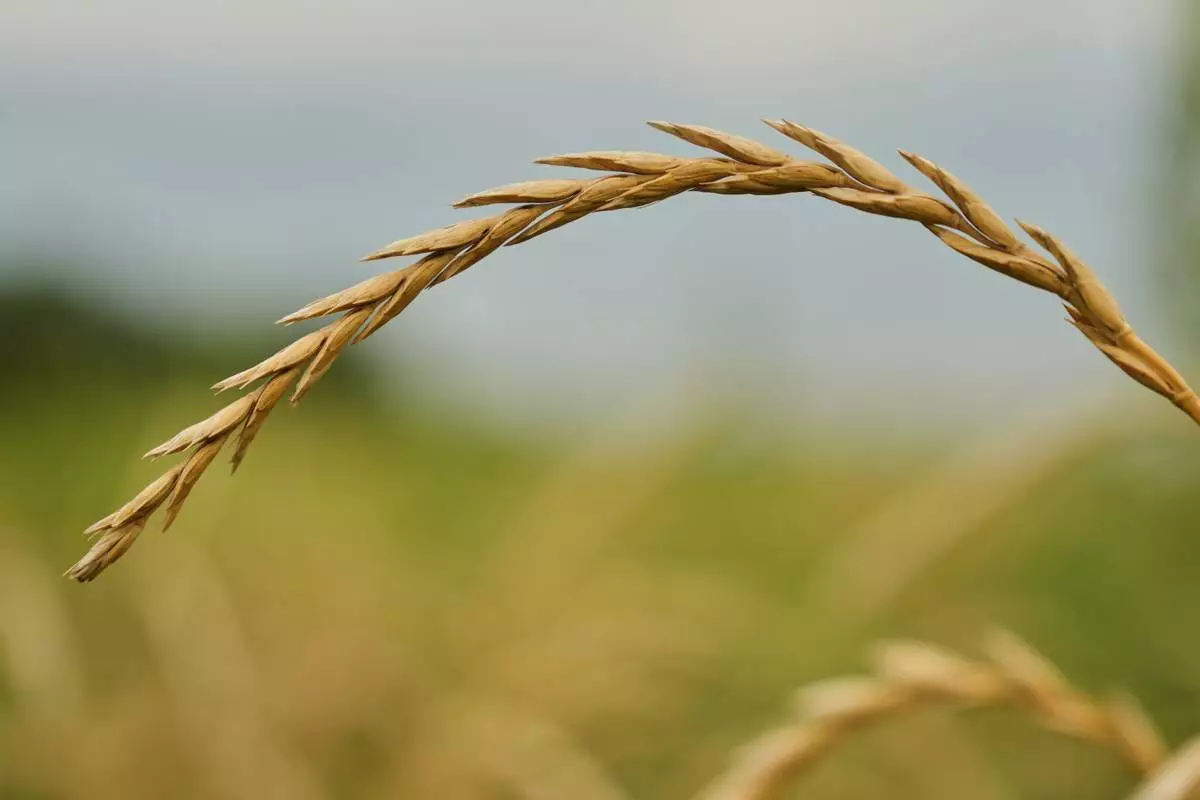
Perennial wheat grows in a research field Tuesday, July 28, 2026, at The Land Institute in Salina, Kan. (AP Photo/Joshua A. Bickel)
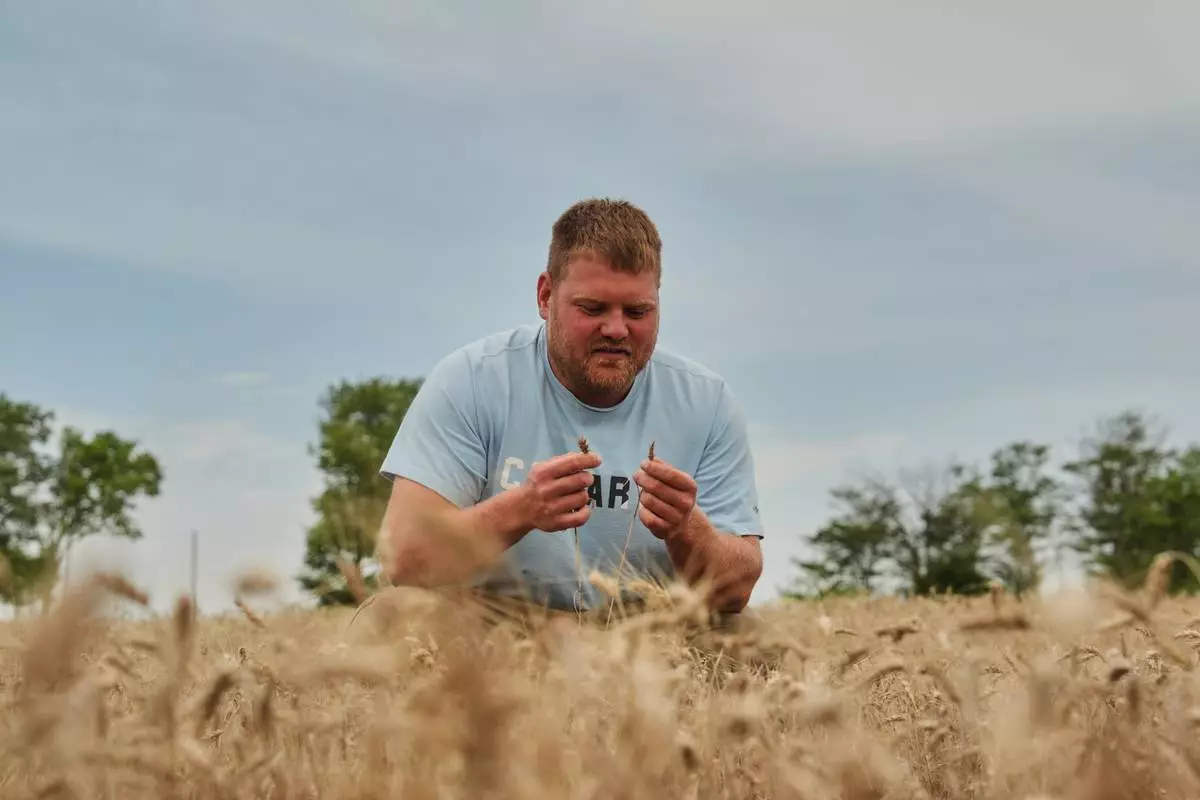
Bryce Black inspects two strands of weather-stressed wheat Wednesday, July 29, 2026, at his farm in Beloit, Kan. (AP Photo/Joshua A. Bickel)
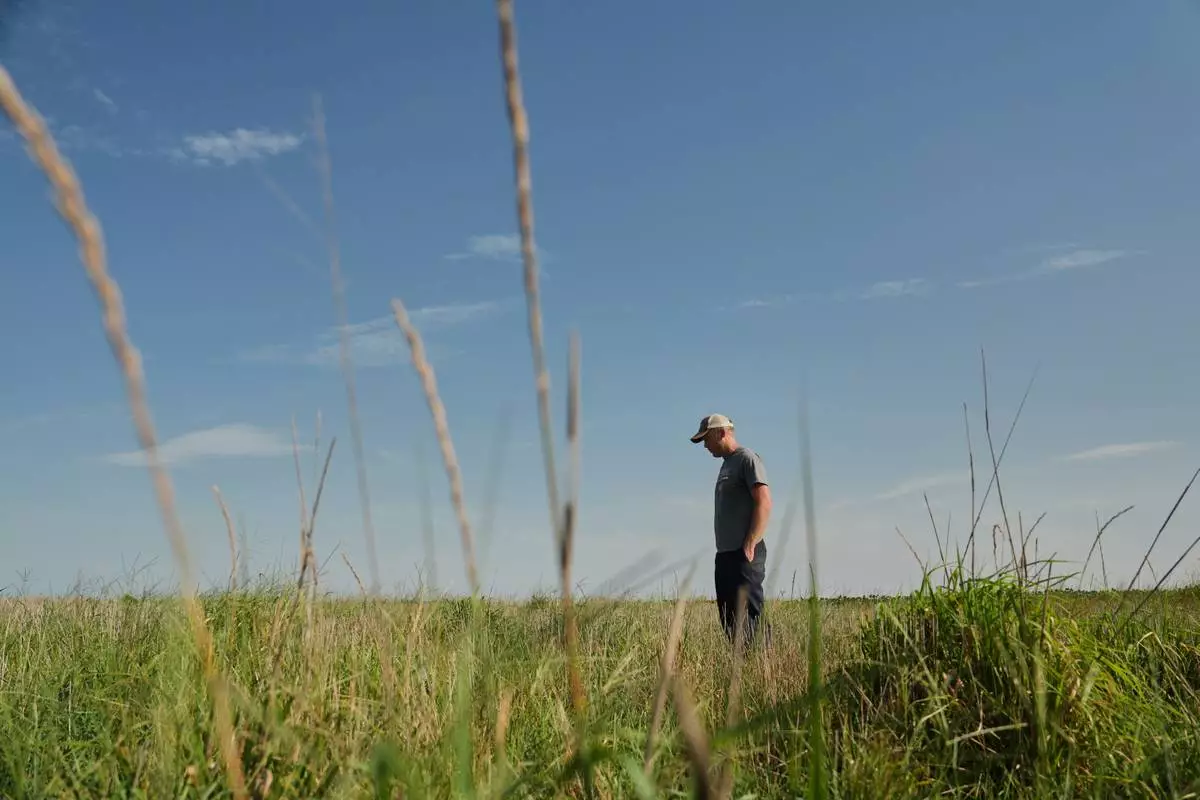
David Mueller stands in his Kernza field Tuesday, July 28, 2026, at his farm in Halstead, Kan. (AP Photo/Joshua A. Bickel)