MEXICO CITY (AP) — Drug cartels across Mexico are increasingly turning to car bombs, explosives-laden drones and improvised explosive devices, a trend that could further strain Mexico’s already tense relationship with U.S. President Donald Trump, who has repeatedly threatened military action against the cartels.
The latest incident occurred Sunday night outside a police station in Ojocaliente, a town in the north-central state of Zacatecas, about 360 miles (580 km) northwest of Mexico City. No one was killed, but the explosion of 200 kilograms (440 pounds) of explosives injured 11 people and damaged more than 60 homes in the city center, Mexico's security chief Omar García Harfuch said Friday during a visit to Zacatecas with President Claudia Sheinbaum.
So far this year, Zacatecas has recorded 23 attacks involving explosives, including six involving cars or motorcycles packed with explosives, state Attorney General Cristian Paul Camacho said.
The Jalisco New Generation Cartel, or CJNG, and the Sinaloa Cartel have fought for years over control of Zacatecas.
Here’s what to know about why the car bombings are raising concern in Mexico, even though their scale remains far below the violence seen in countries such as Colombia.
Victor Manuel Sánchez, a University of Coahuila professor who has tracked car bombings in Mexico in recent decades, said an early period of such violence included a 1994 attack in Guadalajara by the Tijuana Cartel targeting Sinaloa Cartel co-founder Ismael “El Mayo” Zambada, who was later convicted in the United States.
More recently, he said the Jalisco New Generation Cartel has increasingly used explosives as it expands its reach across Mexico.
Authorities have attributed two recent bombings in the centers of small cities to the group: one in Michoacán in December that killed five people and Sunday’s attack outside a police station in Zacatecas. The CJNG is among the Mexican criminal organizations designated as foreign terrorist organizations by the Trump administration.
Mexican cartels began using explosives more extensively about five years ago, dropping them from drones to attack security forces or rival groups and burying explosive devices in the ground to defend or control territory.
In 2023, roadway bombs planted by drug cartels in the western Jalisco state killed six people and injured another 14. A month later, the military acknowledged the growing threat and released its first figures, saying it had seized about 2,800 explosive devices nationwide over the previous 4 1/2 years.
The following year, authorities deactivated nearly 3,200 explosive devices in Michoacán state alone. In 2025, an explosive device there killed eight soldiers in one of the deadliest such incidents in Mexico. Authorities have not released more recent nationwide figures.
“It is all a bad development in Mexico," said Vanda Felbab-Brown, an organized crime expert at the Brookings Institution, a U.S. think tank. “We are facing steady intensification of violence," she said. “This certainly greatly intensifies the atmosphere of fear and retaliation.”
Sheinbaum said Friday that the nationwide decline in killings was clear evidence that the government strategy against cartels was working.
Experts say cartels use car bombs to intimidate rivals and authorities, pressure the government and spread fear among civilians.
Carlos Pérez Ricart, an international studies professor at Mexico’s CIDE university, said car bombs also draw attention and can be used to pressure authorities into negotiations, particularly when criminal groups feel under siege.
Mexico has long resisted describing cartel violence as terrorism, in part because of concerns that the designation could invite foreign intervention and hurt tourism and investment, Felbab-Brown said.
Another official argument is that terrorism generally involves political or ideological aims, while cartels are primarily motivated by profit.
Still, civilians have been deliberately targeted. In 2008, grenades thrown into crowds celebrating Independence Day in Morelia, the capital of Michoacán, killed eight people and wounded dozens. Three years later, gunmen set fire to a casino in northern Mexico, killing 52 people.
The Trump administration’s designation of eight Mexican cartels as foreign terrorist organizations — and its use of that framework to justify military action — has made the terminology more consequential, particularly as the legality of such actions is challenged in the United States and abroad.
Pérez Ricart cautioned against applying counterterrorism strategies to organized crime. “The answer to terrorism is the disappearance of the enemy,” he said, while in the drug trade the adversary is not simply an armed group but an entire illegal market.
Follow AP’s coverage of Latin America and the Caribbean at https://apnews.com/hub/latin-america

A municipal police station, top, and other buildings are damaged after a car bomb exploded the previous night in Ojocaliente, Zacatecas state, Mexico, Monday, Aug. 31, 2026. (AP Photo/Eduardo Pesci)

Police stand outside a municipal police station damaged after a car bomb exploded overnight in Ojocaliente, Zacatecas state, Mexico, Monday, Aug. 31, 2026. (AP Photo/Eduardo Pesci)
PLYMOUTH, Mass. (AP) — Lindsay Clancy's trial judge declared a mistrial Friday after an emergency defense appeal was denied. Judge William Sullivan ended the trial after jurors on Friday sent a note for a third time saying they couldn't unanimously decide whether to hold her criminally responsible for killing her three young children in 2023.
Deliberations took a dramatic turn Thursday when the foreperson told the judge that a lone holdout was refusing to follow the court’s instructions about reasonable doubt. Clancy’s defense has argued that the judge’s refusal to remove the juror undermines the trial.
Clancy, a 36-year-old former labor and delivery nurse, doesn’t deny strangling her children in the basement of their home. Defense attorney Kevin Reddington blamed postpartum psychosis. Jennifer Sprague said Clancy knew what she was doing.
Postpartum psychosis is estimated to afflict 1 to 2 per 1,000 women after delivery. Experts at the Cleveland Clinic describe it as a mental health emergency affecting someone’s sense of reality. Though most people with postpartum psychosis don’t harm their children, mothers with severe cases may try to do so.
Here’s the latest:
Outside the courthouse, Reddington blasted the juror who he believes stood in the others’ way of an acquittal.
“They know they were robbed by one man, for whatever his agenda was, who stole seven weeks of the life of these other jurors that were so attentive, so beautiful, so wonderful,” he said. “You could see how defeated they were sitting there. I got a funny feeling they would have gone on for another week if they had to. So I hope that guy can sleep well at night.”
Cruz praised trial prosecutors Shanan Buckingham and Jennifer Sprague, “both mothers themselves.”
“They went home to their families after each long day in court. They embraced the most difficult trial assigned to them with utmost professionalism,” he said.
The president said he followed television news coverage of the Lindsay Clancy trial in Plymouth, Massachusetts.
“It’s a terrible situation. Look, she did a horrible, horrible thing,” Trump said. “Can’t be worse. But you’ll find out what the price to pay is. There’ll be a price — a mental institution or jail or something.”
“I have never been swayed to act a certain way or make certain decisions based upon public sentiment,” he said.
“This was and has always been about getting justice for those three little babies. We’re here at this courthouse today because those children are not. ... Children were murdered, and it’s our job to seek justice,” District Attorney Timothy Cruz said.
“This case is not about the healthcare system, or about how women are treated in it,” or the diagnosis of different medical conditions, he said. “Those are all important issues. They stir emotion. Sometimes they stir anger.
“I understand that postpartum depression has impacted the lives of countless women and families, and I sympathize with their struggles. The investigation in these heinous killings, however, did not establish that they were caused by such depression,” Cruz said.
“You only cared when the kids were dead. Why didn’t you care about the mother?” someone yelled.
Someone else yelled, “God bless those children,” as the press conference wrapped up.
“I understand that this has been an emotional trial for everyone,” Plymouth District Attorney Timothy Cruz said.
“This case was about Lindsay Clancy and what she did ... the cruel and calculated killing of three innocents.”
“This was and has always been about getting justice for those three little babies,” Cruz said. “Children were murdered and it’s our job to seek justice.”
Cruz said there would not be an immediate decision about a second trial.
— Correction: This post was updated to correct that Cruz referred to Clancy’s children as “three little babies,” not “beautiful babies.”
Shira Diner, a lecturer at Boston University law school and former public defender, told The Associated Press however that “it seems very unlikely that this judge would agree to overrule what the jury decided, which was nothing, and enter his own opinion.”
After the jury was dismissed, the judge and lawyers discussed their next steps.
The judge set a hearing for Sept. 29 at which Reddington likely will ask Sullivan to declare Clancy not guilty, a rare step but one that is allowed under state law.
The hearing could also reveal details about a possible second trial.
Neither the jury nor Clancy nor her family shows any emotion as the judge announces the mistrial.
Judge Sullivan called court back into session and confirmed that the emergency defense appeal was denied.
The judge said he would declare a mistrial as planned, but Reddington continued to object, saying federal law protecting criminal defendants was being violated.
He again requested a jury inquiry.
And again, the judge denied it, declaring a mistrial and calling jurors into the courtroom.
He then thanked the jurors for their service and dismissed them.
The appeal petition said removing the juror “is particularly important because the juror’s reasoning reflects a bias against those who suffer from debilitating mental illness, a protected category under both the Fifth and Fourteenth Amendments and Article 114 of the Massachusetts Constitution.”
Defense attorneys wrote the top court in Massachusetts in their emergency request for relief that the reasoning of one of the jurors “reflects a bias against those who suffer from debilitating mental illness.”
The defense brief says the high court has held that just one juror who is not impartial violates a defendant’s right to have an impartial jury.
It says the trial court judge “need not simply accept the juror’s professions of fidelity and impartiality,” but rather can determine whether the juror is credible in light of the other jurors’ statements.
“The judge appears to be abdicating the responsibility” to weigh the evidence of juror malfeasance, the defense argues. “This is not abuse of discretion; it is failure to exercise discretion at all.”
A member of Massachusetts’ highest court has quickly heard arguments in a last-ditch effort by Clancy’s lawyers to stop a judge from declaring a mistrial.
The defense team wants the court to order the trial judge to further question a juror about applying the law and following instructions during deliberations in the high-profile trial.
Justice Dalila Argaez Wendlandt heard arguments over video conference and then said, “I need to make a decision.”
She said she’s taking the appeal “under advisement,” and offered no timeline for her decision.
The defense appeal asks the top court in Massachusetts to require the trial judge to do two things:
″(1) to inquire into the ability of the identified juror to apply the law or (2) prohibit the further deliberations of a juror identified by the jury foreperson as biased and refusing to follow the court’s instructions on reasonable doubt unless and until the court determines by individual voir dire that the juror is willing and able to follow the court’s instructions.”
“The judge appears to be abdicating the responsibility to weight the evidence of juror malfeasance. In other words, this is not abuse of discretion; it is failure to exercise discretion at all,” the brief says. “A mistrial at this point is entirely avoidable, but only if the court does its job.”
Participants were told the lunch break would be from 1 p.m.-2 p.m.
Attorney Dana Goldblatt said she filed the emergency appeal on behalf of Lindsay Clancy’s defense attorney Kevin Reddington at 12:29 p.m. on Friday.
Trial judges don’t often allow a defense attorney to file such emergency petitions, said Joseph Perullo, a criminal defense attorney in Massachusetts.
The petition will be considered by a single justice of the Massachusetts Supreme Judicial Court who will look at whether the trial judge abused his discretion, committed a reversible error of law or did something that is “egregious and should be corrected prior to a mistrial being announced.”
The justice could initially grant a stay pausing the trial court proceedings and then consider the merits of the defense attorney’s petition in a process that would give the prosecutors a chance to present their arguments.
But “that is a high bar,” Perullo said. He doubts the justice will pause the trial proceedings to consider the merits.
More than an hour has passed since the judge gave the defense one hour to file an emergency appeal of his pending mistrial declaration.
Reached for comment, the clerk’s office for the Supreme Judicial Court of Massachusetts told The Associated Press that it is in the process of receiving all the documents related to the emergency appeal.
The case would essentially go back to the same status as before the trial — Clancy could be charged with murder and held at a psychiatric hospital awaiting a resolution of the criminal case.
Prosecutors would have to decide whether to try again with a new jury. If they do, the jury selection process would begin again and a new trial would be scheduled.
Prosecutors could also offer a plea deal to Clancy, said Brad Bailey, a Boston defense attorney and former prosecutor who is not involved in the case.
“Any time the threat of a retrial with murder one hanging over the client is re-interjected, defense lawyers will, at the very least, explore whether or not there’s any interest in a resolution,” Bailey said.
▶ Read more
Prosecutor Jennifer Sprague told the judge a mistrial was required because he had already read to the jury the legal instruction sometimes known as a “dynamite charge.”
Reddington argued the judge still had discretion: “The court has the ability to send the jury back,” he said.
Sounding exasperated, the judge said “I don’t feel I have any choice but to declare a mistrial at this time.”
Reddington then requested that the jurors be polled “as to whether or not there has been a decision reached on murder one, murder two, manslaughter or anything like that.” If they did reach such a decision, prosecuting her again on those charges would be double jeopardy, he said.
Sprague objected, saying the court can’t delve into jury deliberations. “I don’t think anything else is required at this point other than a declaration of mistrial unfortunately.”
Sullivan then said, “Over the defendant’s objection, I am going to declare a mistrial at this point.”
Then Reddington pushed back, and the judge gave him one hour to appeal to the Massachusetts Supreme Judicial Court.
Criminal defense attorney Joseph Krowski, who has been observing the trial, commented about Friday’s developments outside the court in Plymouth, Massachusetts. He said the defense wants a judge on the state’s highest court to consider an emergency stay because Reddington believes there “is a structural defect to this trial by the failure to remove the juror or do an inquiry.”
Judge Sullivan read the jury foreperson’s note aloud in open court: “It is with a heavy heart that we report we are unable to come to a unanimous decision and will not be able to.”
Sullivan and Reddington went back and forth after the judge signaled that he would declare a mistrial and summon the jury to break the news.
Then the judge suddenly gave Clancy’s lawyer time to seek an appeal to stop his mistrial order.
“What I’m asking for is time to file a single-justice appeal for this travesty,” said Reddington, who was upset over Sullivan’s refusal to remove a juror.
“I’ll hold off for an hour,” the judge said.
The clock began around 11:30 a.m.
Clancy’s parents, Paula and Mike Musgrove, and her sister, Allison Ozga, showed no reaction but stared straight ahead. Clancy’s expression wasn’t visible to the gallery.
The defense then raised objections and the jury was not brought in.
Prosecutors and Reddington are being brought up to a podium and the court clerk showed them something. It is unclear what it was.
Now they’ve returned to their tables and the judge has returned to the bench.
With nearly 100 people packed inside, a court officer told the public outside “there is no more room” and closed the courtroom doors.
First the media and now members of the public are re-entering the courtroom.
The prosecutors are at their table. Reddington is sitting next to Clancy. Clancy’s parents and her sister are two rows back.
There’s a line for media seats that’s 15 people deep, with journalists either standing or sitting on the floor behind an orange cone after court security moved them back from the door.
The benches outside the courtroom are filled with about 20 members of the public, some dressed in pink to show their support for Clancy. Many are waiting to get a seat in the courtroom, which has been filled to capacity.
Reddington urged Sullivan to “forcefully” explain the jury instruction about how to apply reasonable doubt to deliberations, and not use a “soft” approach.
“What do you want me to do? Get a brass band?” the judge responded. “The fact that I perhaps didn’t give it my full inflection — I’m sorry about that but I’m not an actor. I’m just giving the instruction.”
Sullivan then promised to give the instruction again “with more pizzazz,” a remark that caused laughter in the courtroom.
The judge ultimately gave the jurors one more reminder about following his instructions before sending them back to the jury room.
“That juror told you that he would be able to apply the law to the fact as you asked him. Based on this note from this juror it clearly and unequivocally indicates they are 11-1 and this person will not apply reasonable doubt to the evidence to return a not guilty verdict.”
Sullivan disagreed, saying law only allows a juror to be discharged for personal reasons having nothing to do with the case or their relationship with the other jurors.
Before the jury was brought into the courtroom Friday, Reddington beseeched the judge to deal with the juror referenced in the foreperson’s note on Thursday.
“I have never seen a situation like this where a foreperson on the jury is so courageous as to speak on behalf of 11 jurors and indicate that a juror, number which I will not mention, and I quote, ‘has made statements acknowledging doubt but refuses to apply it to the verdict,’” Reddington said.
Reddington said the juror “looked you in the eye and lied” when the judge questioned him after receiving the note.
Criminal defense attorney Joseph Krowski Jr. has been following the trial and commented outside court about the judge’s challenge at this point in the deliberations.
“The jurors aren’t saying that there’s just a factual disagreement with the holdout — they’re saying that that juror is refusing to follow the law,” Krowski said Thursday evening.
“Now, I don’t want to speculate. I’m not in there, and I don’t know what the disagreement is, and how do we know that that juror’s even right or wrong on the law, but you could see the visceral reaction from attorney Reddington, and it looked like to me that he’s frustrated.”
“Judges have to be careful into inquiring into what’s being discussed during deliberation. So if he gets another communication, then I’m sure he would have a very, very confined, carefully constrained voir dire,” Krowski said. “One more communication that they’re at an impasse would mandate a hung jury, mistrial.”
“I wanted to remind you, as I instructed you earlier, it is your duty as jurors to accept the law as I gave it to you,” he told them. “You must follow the law as I give it to you whether you agree with it or not.”
“With that, you may now resume your deliberations.”
Sullivan acknowledged to the jury that he got a note from the jury on Thursday.
“If there are any notes in the future ... make sure we don’t put down where everybody is numerically,” Sullivan told them.
Despite a request from Reddington, Sullivan has ruled that he will not do a further inquiry of the juror.
Court has reopened and reporters and the public have filed in. There is not an empty seat.
The judge is now here and lawyers are discussing further instructions to the jury.
Reddington filed a motion Friday requesting a standing order so there will “be no further sidebars” and that “all related proceedings will be handled in open court.”
Sullivan has often used sidebars to discuss legal issues with the defense and prosecution, especially during jury deliberations. During those sessions, no one in court can hear what is being discussed.
Defense attorney Kevin Reddington told reporters after leaving court Thursday that the foreperson’s note identified the holdout juror to the judge.
He said he’s hoping that before the judge questions that juror on Friday, attorneys on both sides will get to argue over the specifics of that inquiry.
Reddington wants that debate out in the open, not in a private sidebar conversation.
A deadlocked jury returns Friday for the seventh day of deliberations in the Lindsay Clancy trial, a day after the jury’s foreperson informed the judge that a single juror wasn't following the court’s instructions about reasonable doubt.
The extraordinary disclosure made Thursday in the form of a note delivered to the judge offered the clearest glimpse yet of what may be keeping jurors from reaching a verdict on whether the Massachusetts mother is criminally responsible for killing her three children.
The jury has twice told Judge William Sullivan that it is unable to agree on a verdict. On Thursday, Sullivan brought in each juror individually and questioned them in private. The judge then reread his instructions on reasonable doubt before sending them back to continue deliberating. Soon thereafter, he sent them home.
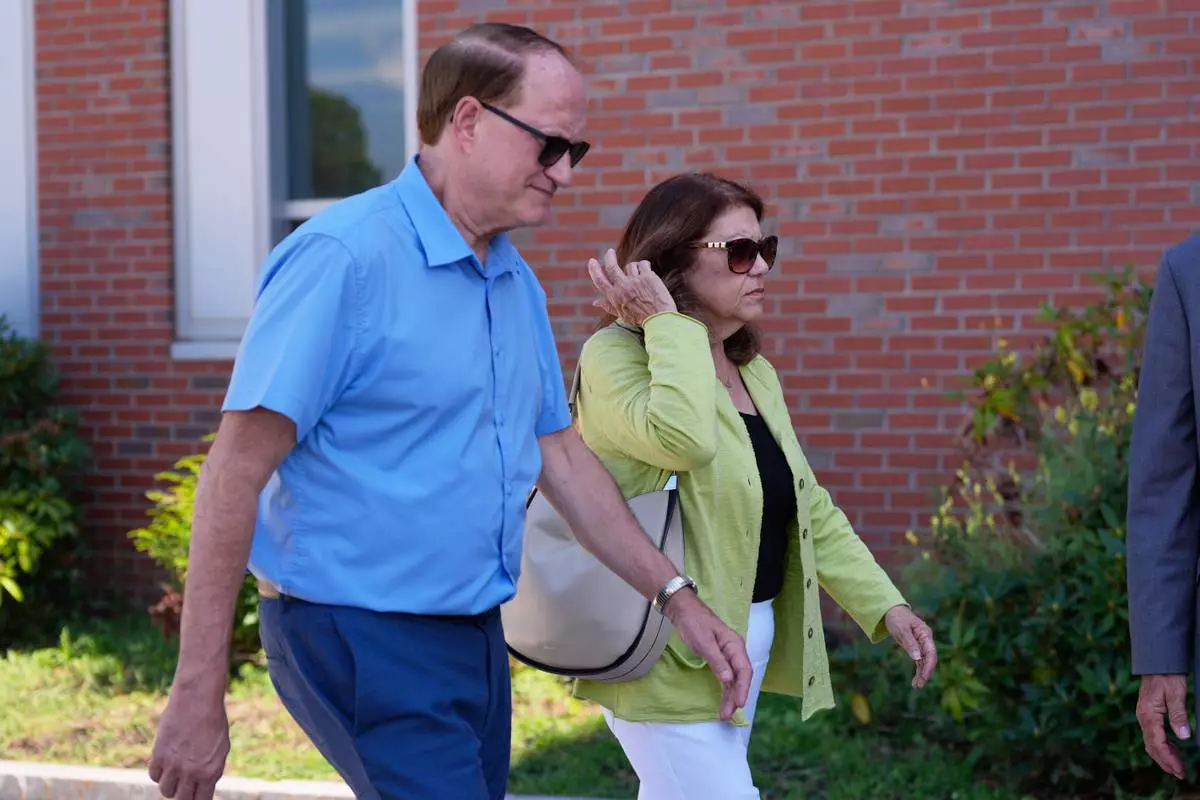
Lindsay Clancy's parents, Mike Musgrove, left, Paula Musgrove walk back to Plymouth County Superior Court after a recess for lunch in Lindsay Clancy's murder trial Friday, Sept. 4, 2026, in Plymouth, Mass. (AP Photo/Charles Krupa)
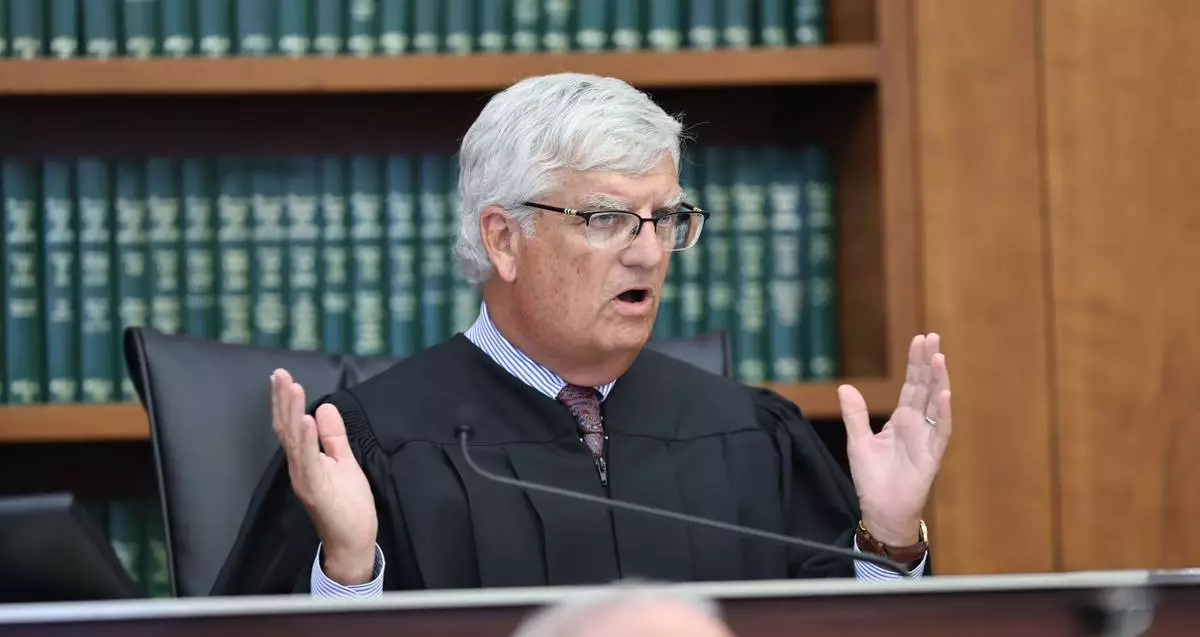
Judge William Sullivan indicates he was going to declare a mistrial before changing course and giving Lindsay Clancy's defense attorney one hour to appeal as the jury in the case has indicated they they are unable to reach a verdict on Friday, Sept. 4, 2026, in Plymouth, Mass. (Greg Derr/The Patriot Ledger via AP, Pool)
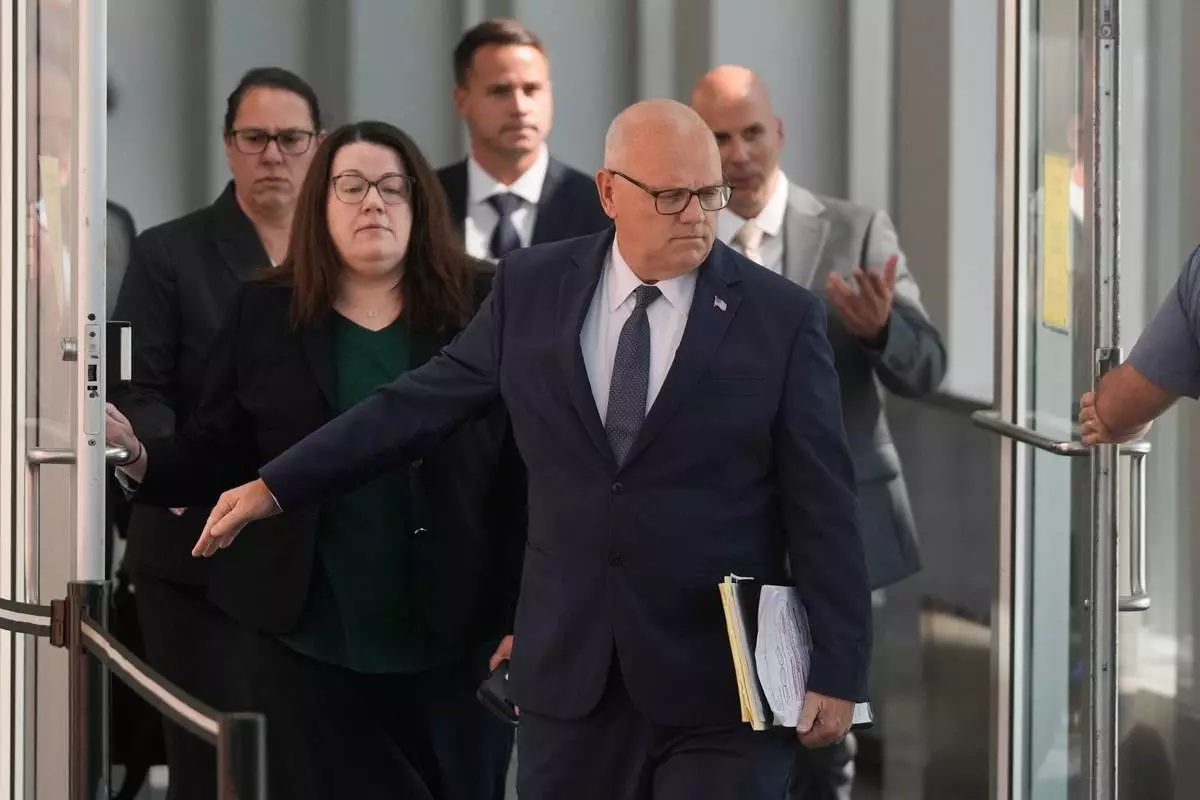
District Attorney for Plymouth County Timothy Cruz, front, leaves court after the judge declared a mistrial in Lindsay Clancy's murder trial at Plymouth County Superior Court, Friday, Sept. 4, 2026, in Plymouth, Mass. (AP Photo/Charles Krupa)
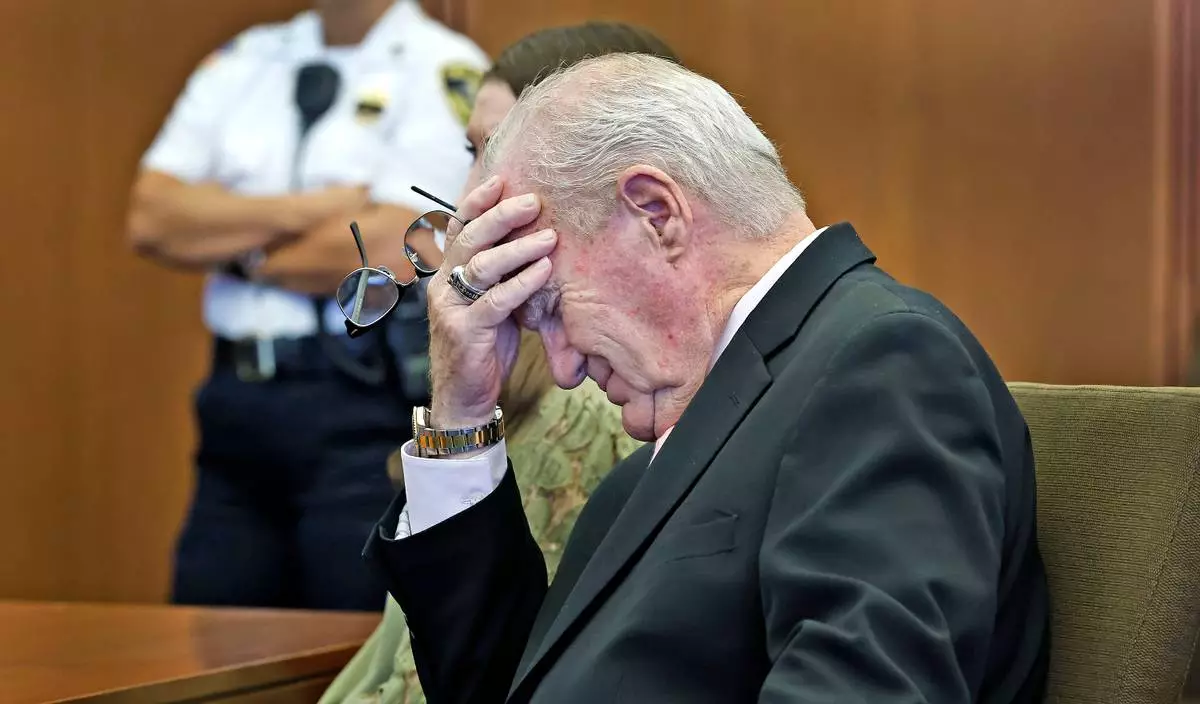
Defense attorney Kevin Reddington reacts to the judge's decision to declare a mistrial in the Lindsay Clancy murder trial on Friday, Sept. 4, 2026, in Plymouth, Mass. (Greg Derr/The Patriot Ledger via AP, Pool)
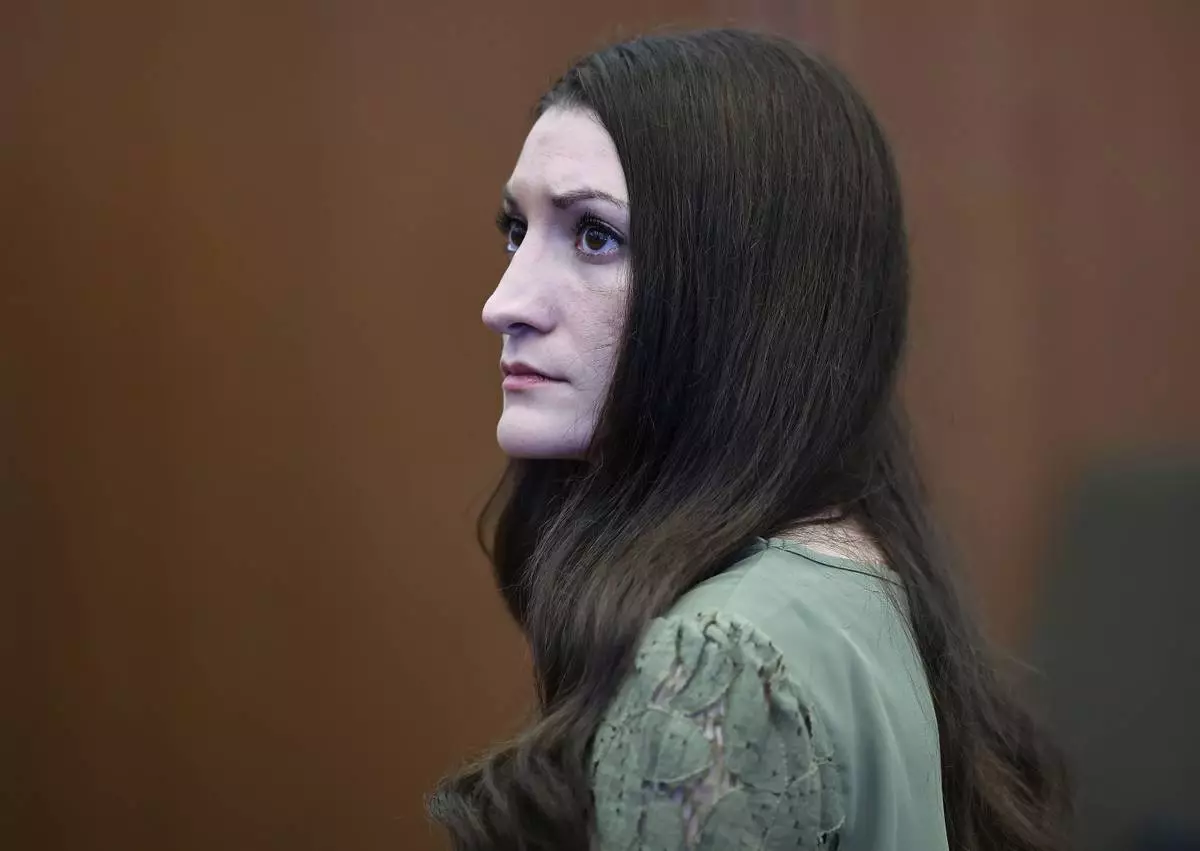
Defendant Lindsay Clancy looks at the jury after Judge William Sullivan declared a mistrial in Clancy's murder trial on Friday, Sept. 4, 2026, in Plymouth, Mass. (Greg Derr/The Patriot Ledger via AP, Pool)
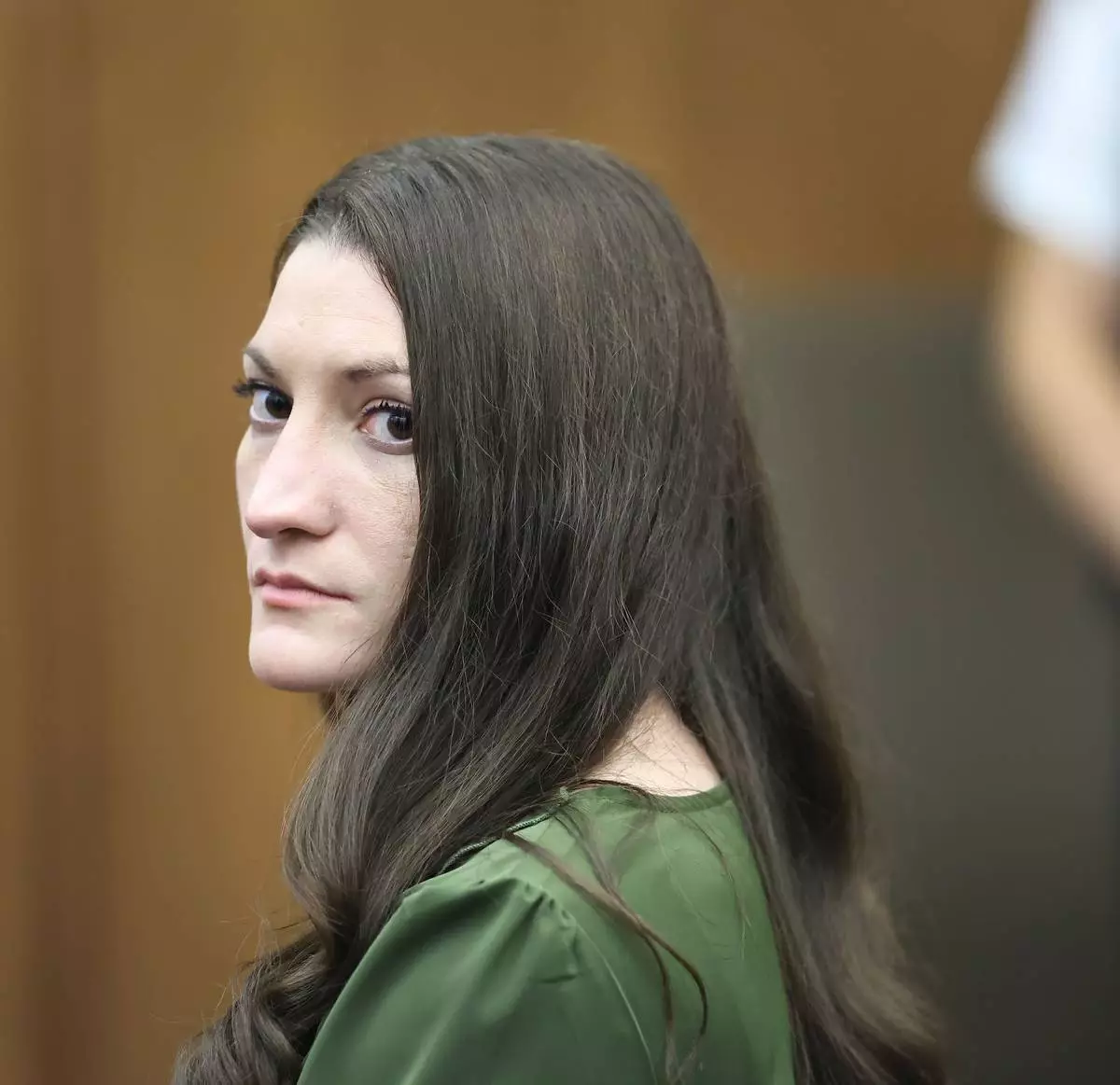
Lindsay Clancy watches jury members as Judge William Sullivan polls them during her murder trial at Plymouth Superior Court in Plymouth, Mass., Monday, Aug. 31, 2026. (Greg Derr/The Patriot Ledger via AP, Pool)
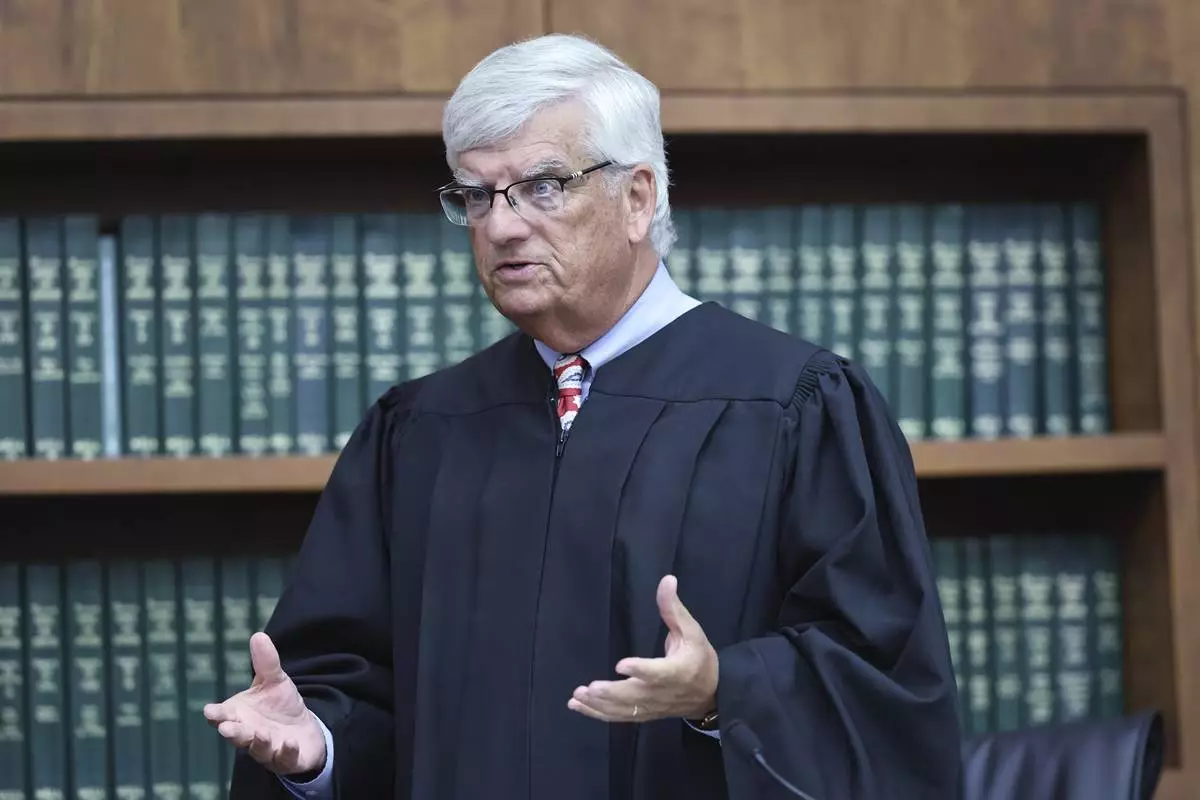
Judge William Sullivan asks the jury to continue deliberations during Lindsay Clancy's murder trial at Plymouth Superior Court in Plymouth, Mass., Tuesday, Sept. 1, 2026. (Greg Derr/The Patriot Ledger via AP, Pool)
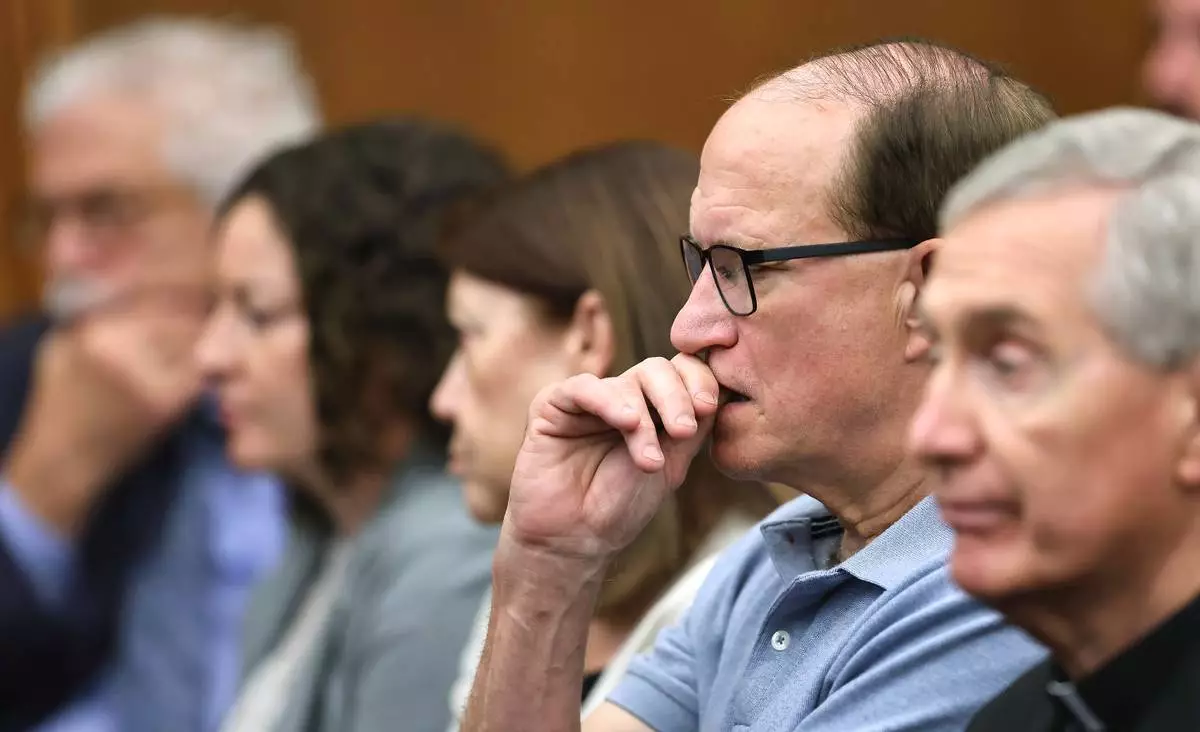
Mike Musgrove, father of Lindsay Clancy, center right, sits with family as they listen to the judge tell the jury to keep discussing a possible verdict after jurors said they couldn't agree for a second time whether Clancy is criminally responsible for killing her three children in 2023, Wednesday, Sept. 2, 2026, in Plymouth, Mass. (Greg Derr/The Patriot Ledger via AP, Pool)
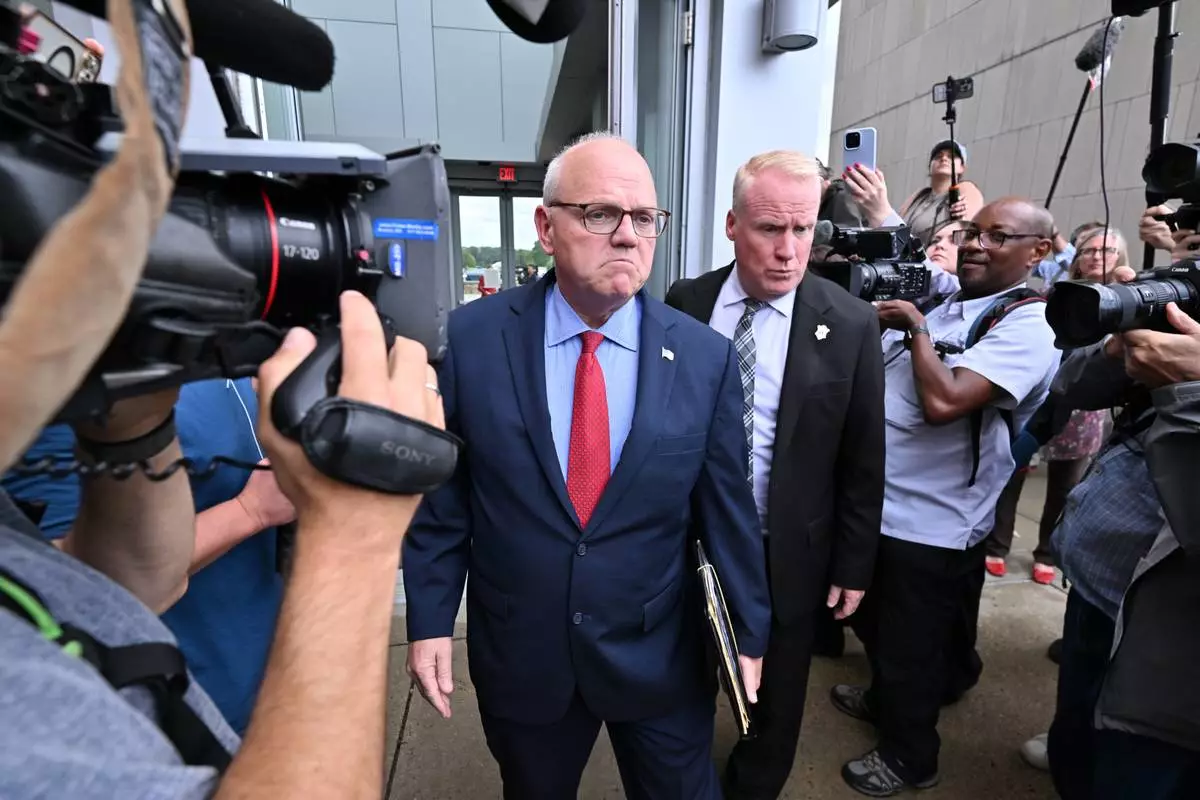
Timothy Cruz, Plymouth County District Attorney, center, leaves Plymouth Superior Court, Thursday, Sept. 3, 2026, in Plymouth, Mass. (AP Photo/Josh Reynolds )
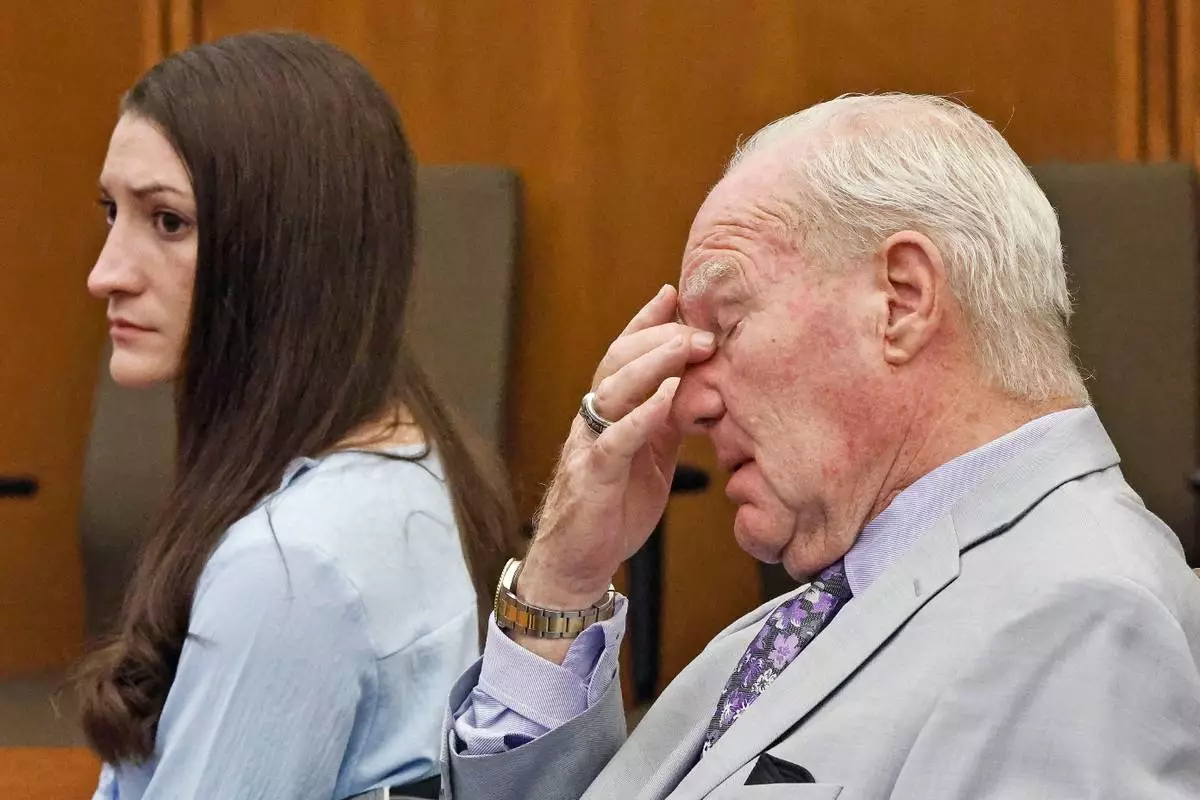
Lindsay Clancy and attorney Kevin Reddington watch as Judge William Sullivan tells the jury to keep discussing a possible verdict after jurors said for a second time they couldn't agree whether Lindsay Clancy was criminally responsible for killing her three children in 2023, Wednesday, Sept. 2, 2026, in Plymouth, Mass. (Greg Derr/The Patriot Ledger via AP, Pool)