KATHMANDU, Nepal (AP) — Rescuers in Nepal pulled out a Chinese man and a woman in separate operations Saturday, 10 days after devastating floods hit the country, as teams continued searching for thousands of missing people.
The man was rescued from a hydropower tunnel, according to a social media post by the country’s prime minister’s office, bringing the total to three workers pulled alive from the Trishuli hydropower project. Two Nepalese workers were rescued on Friday.
Nepal's army said a joint rescue team of Nepalese military personnel and South Korean disaster experts rescued the man from a 225-meter (about 740-foot) tunnel and that he was undergoing a health assessment. Images showed him being evacuated by helicopter, with an army medic checking on him during the flight.
A photo released by Chinese state broadcaster CCTV showed two rescuers carrying the man out of the tunnel.
CCTV shared audio of the man talking to an officer, saying how he repeatedly shouted whenever he saw the rescue crews’ lights, but they could not hear him.
“When they rescued me today, when they shone (the light) before my eyes, I couldn’t believe it,” he said.
The man was taken to a hospital and was in stable condition, according to CCTV.
Rescue efforts have increasingly focused on 12 hydropower projects across Nepal, where about 900 workers are missing and roughly 500 are believed to be trapped in various tunnels, authorities said. Specialized rescue teams from India, China, South Korea and the United States have been searching through debris, damaged structures and tunnels at the projects, hoping to find survivors.
In flood-hit Nuwakot town, a woman was rescued alive from a house, Nepal's army spokesperson said Saturday. Officials said she was airlifted to Kathmandu for treatment.
Images released by Nepal’s army showed rescuers finding the woman covered in mud inside the damaged house. They gave her bottled water before pulling her to safety, wrapped in a gray blanket.
At least 1,300 people were killed in the Aug. 26 floods, which were likely caused by a glacier collapse, and more than 5,000 remain missing, according to Nepal’s disaster management agency.
Saaliq reported from New Delhi. Associated Press journalist Kanis Leung in Hong Kong contributed to this report.
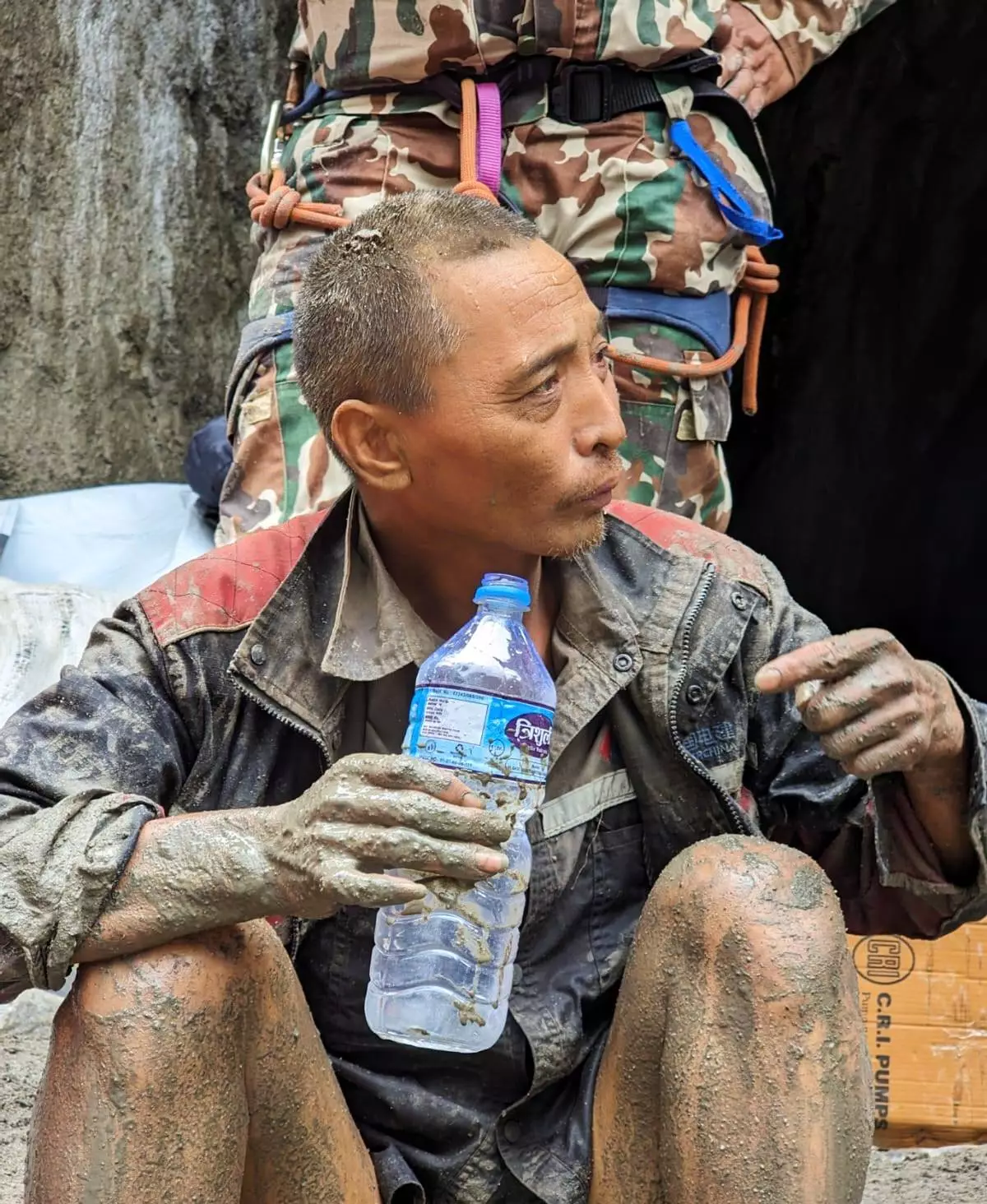
In this photo provided by the Nepal Army, a Chinese national is seen drinking water after being rescued by soldiers during an ongoing operation at the Trishuli-3A hydropower project in Nepal's Rasuwa district, Saturday, Sept. 5, 2026. (Nepal Army via AP)
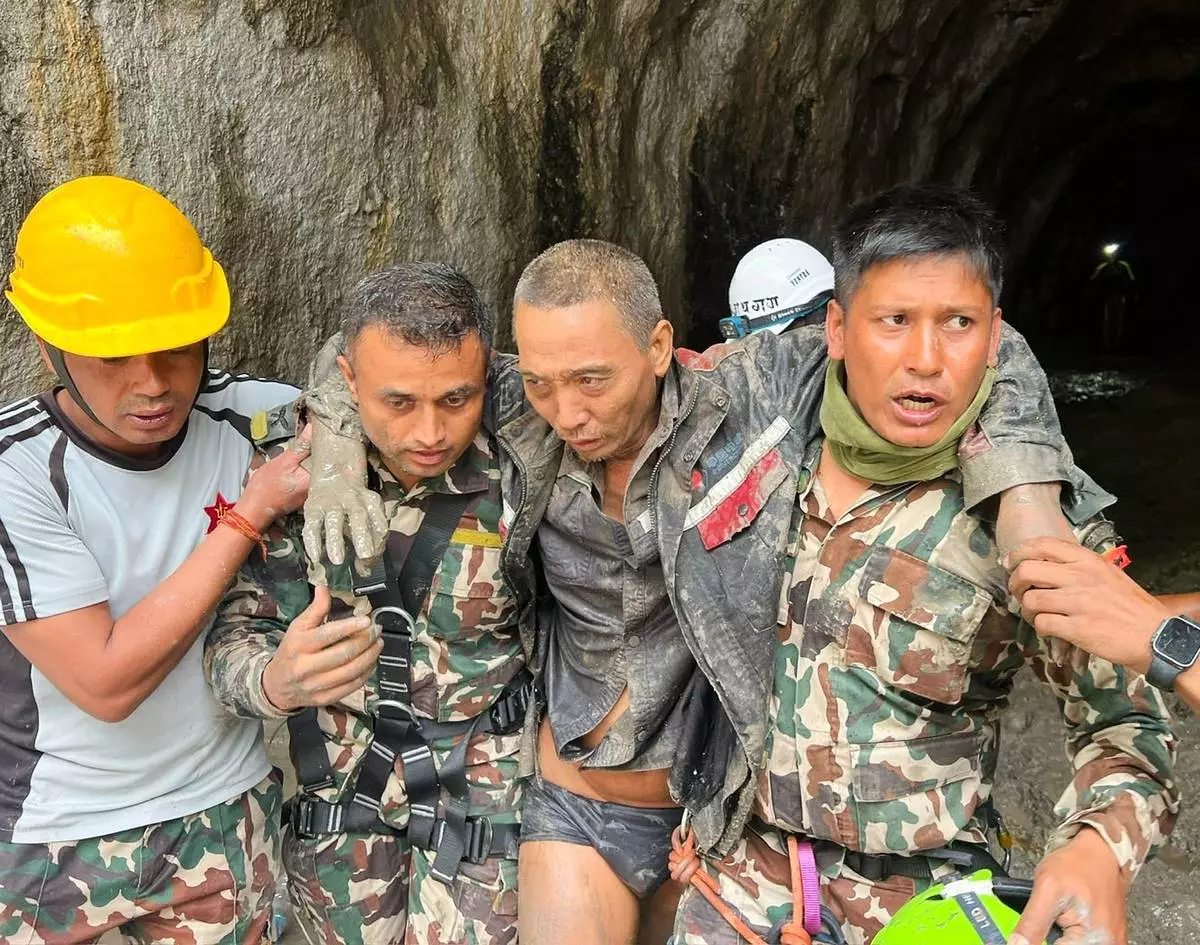
In this photo provided by the Nepal Army, a Chinese national is seen after being rescued by soldiers during an ongoing operation at the Trishuli-3A hydropower project in Nepal's Rasuwa district, Saturday, Sept. 5, 2026. (Nepal Army via AP)
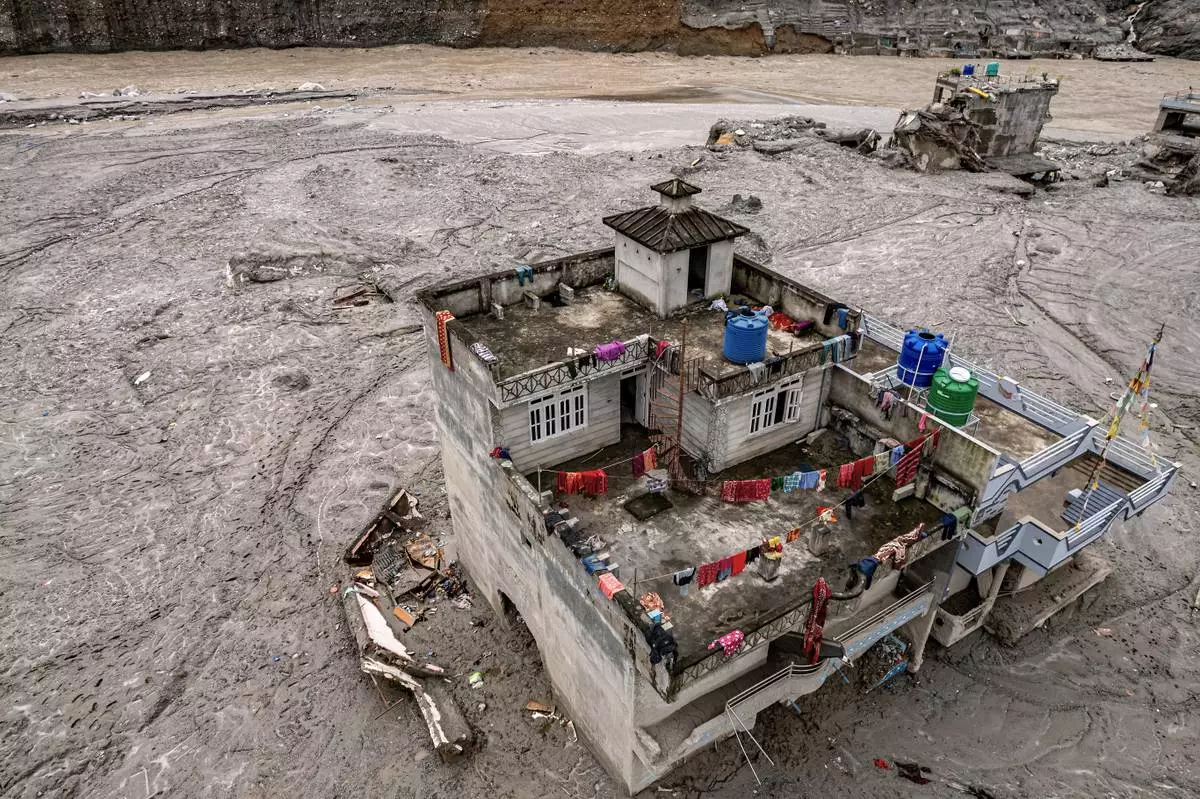
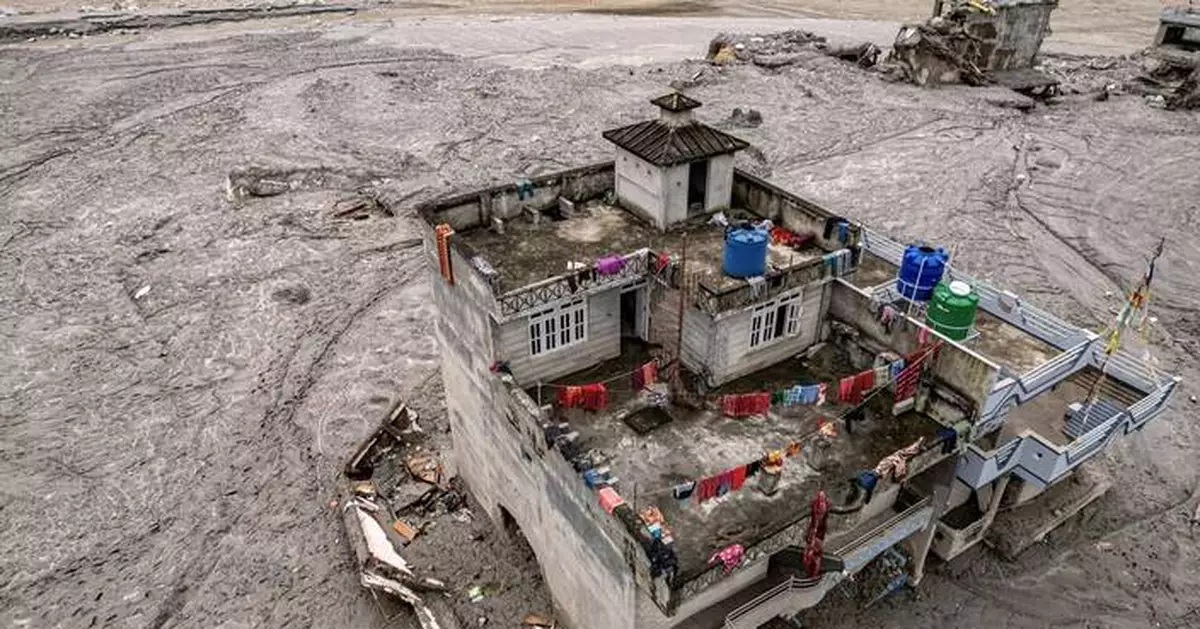
A drone view shows a damaged residential building along the swollen Trishuli River in the aftermath of flash floods in Nepal's Nuwakot district, Thursday, Sept. 3, 2026. (AP Photo/Rajesh Kumar Singh)
CAIRO (AP) — The U.S. military on Saturday said it struck three Iranian oil tankers after Navy warships were targeted with missiles, warning that it would “if necessary, destroy Iran’s limited and exposed oil fleet.”
The strikes — a day after President Donald Trump sought to minimize the conflict as “small potatoes” — keep up a new tilt back toward fighting after six months of on-again, off-again war that began with U.S. and Israeli attacks on Feb. 28. Both sides have sought to inflict both military and economic pain, and negotiations have collapsed.
The military’s statement said a U.S. aircraft carrier and a destroyer evaded “multiple unprovoked Iranian attacks” while patrolling in the region and no U.S. personnel were hurt. It said two Iranian oil carriers were “permanently disabled” and the third, unladen one, was destroyed.
The U.S. statement said the tankers were part of a shadow network helping to fund Iran’s powerful Revolutionary Guard and its armed proxies in the region.
Earlier, Iranian state TV had said four U.S. missiles struck a tanker about six miles (10 kilometers) from Kharg Island, home to a terminal through which the country exports most of its oil. Kharg Island been repeatedly targeted during the war, including U.S. strikes on military sites there in March.
The U.S. said one tanker was struck off Kharg Island and another was struck near Jask, east of the Strait of Hormuz. The unladen tanker was hit in the Gulf of Oman. The statement shared what it called video footage of the strikes.
“We will not hesitate to defend American forces, and if necessary, destroy Iran’s limited and exposed oil fleet,” the head of U.S. Central Command Adm. Brad Cooper said.
The strikes came nearly a week after the U.S. and Iran resumed attacks following a month of relative calm, with the strait and Iranian communities along it again being targeted. At least five people were killed earlier in the week during a U.S. bombardment of southern Iran. One strike hit a wedding.
The resumption of fighting came after new U.S. efforts to apply economic pressures on Tehran, whose hard-line new senior leaders have signaled the willingness to dig in after weathering decades of sanctions.
Meanwhile, the issue that helped lead to the war — Iran's nuclear program — was meant to be addressed in negotiations that fell apart soon after the U.S. and Iran signed a memorandum of understanding in mid-June. Instead, Tehran's new leverage focuses on the strait that is crucial to global oil and natural gas shipments and was seen as an international waterway before the war began.
The U.S. military has been helping to guide ships through the strait as Tehran asserts control and targets some vessels, but overall traffic remains low.
Anna reported from Jerusalem.
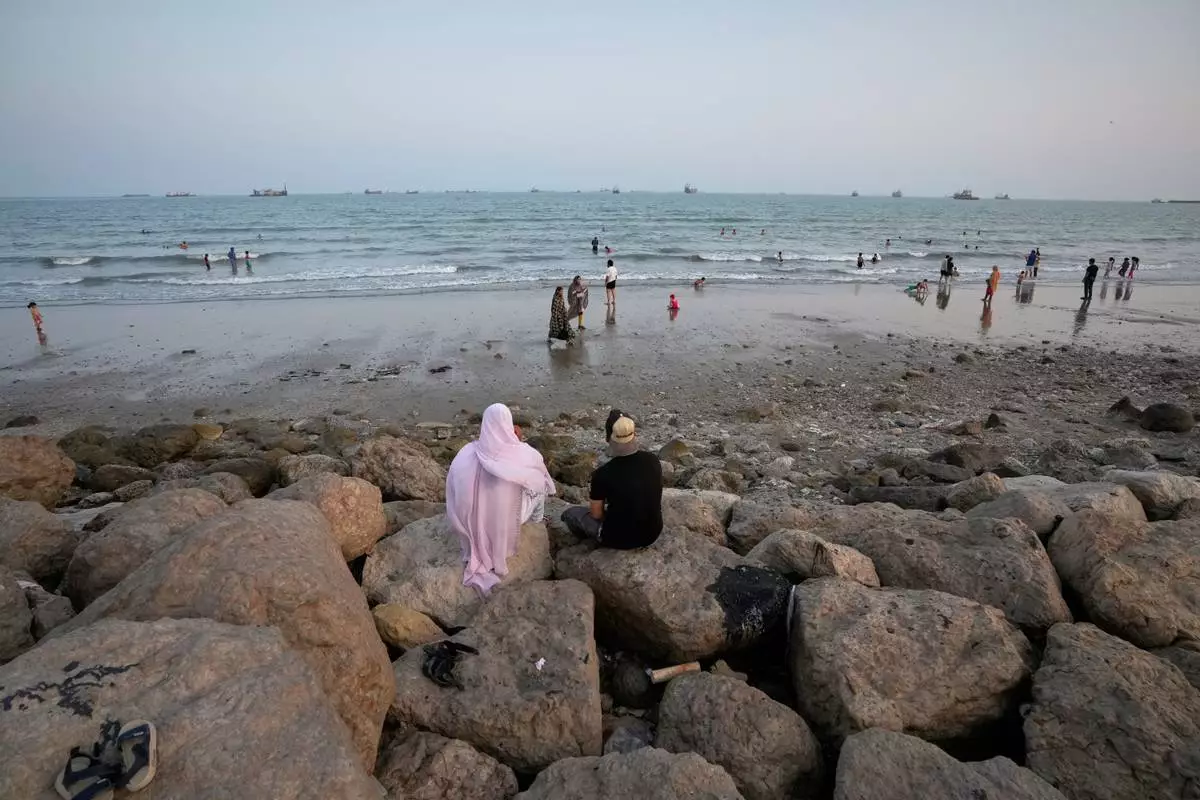
Two people sit on rocks overlooking a beach as others swim and commercial vessels lie anchored in the Strait of Hormuz off Bandar Abbas, Iran, Friday, Sept. 4, 2026. (AP Photo/Vahid Salemi)
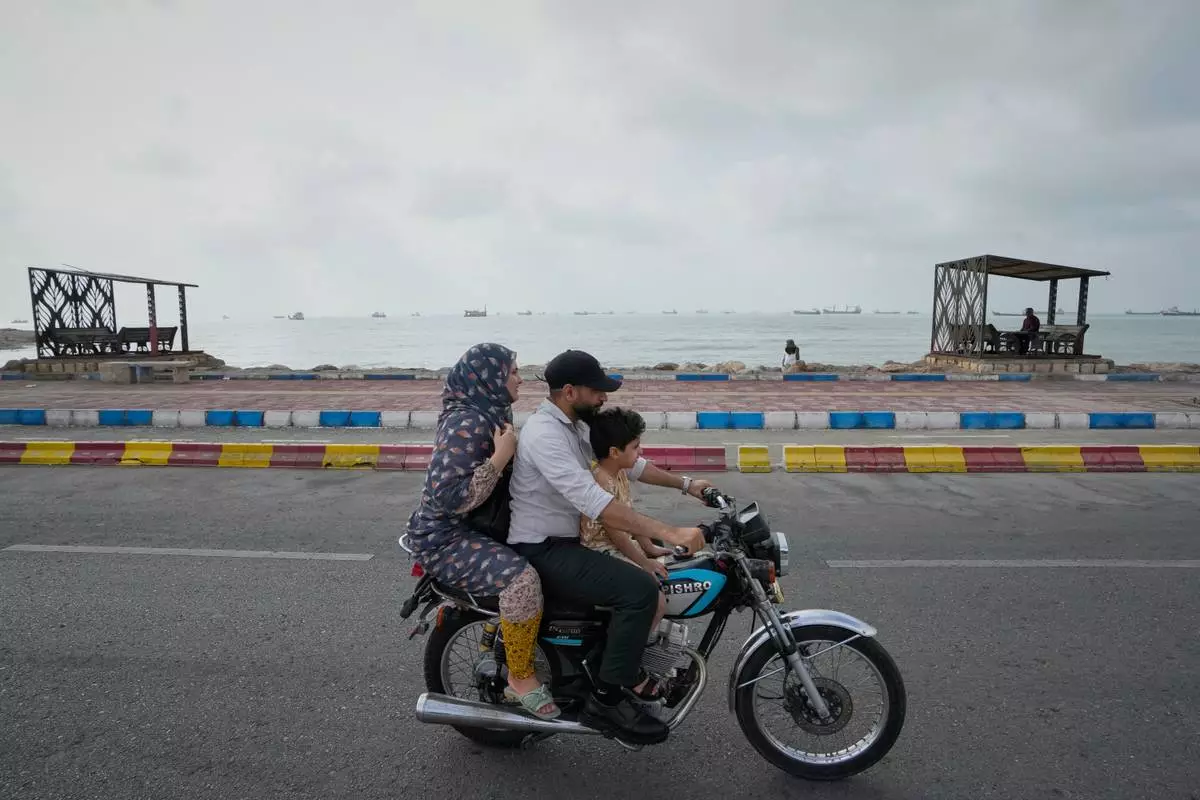
A man, woman and boy ride a motorcycle along the waterfront as commercial vessels lie anchored in the Strait of Hormuz off Bandar Abbas, Iran, Friday, Sept. 4, 2026. (AP Photo/Vahid Salemi)
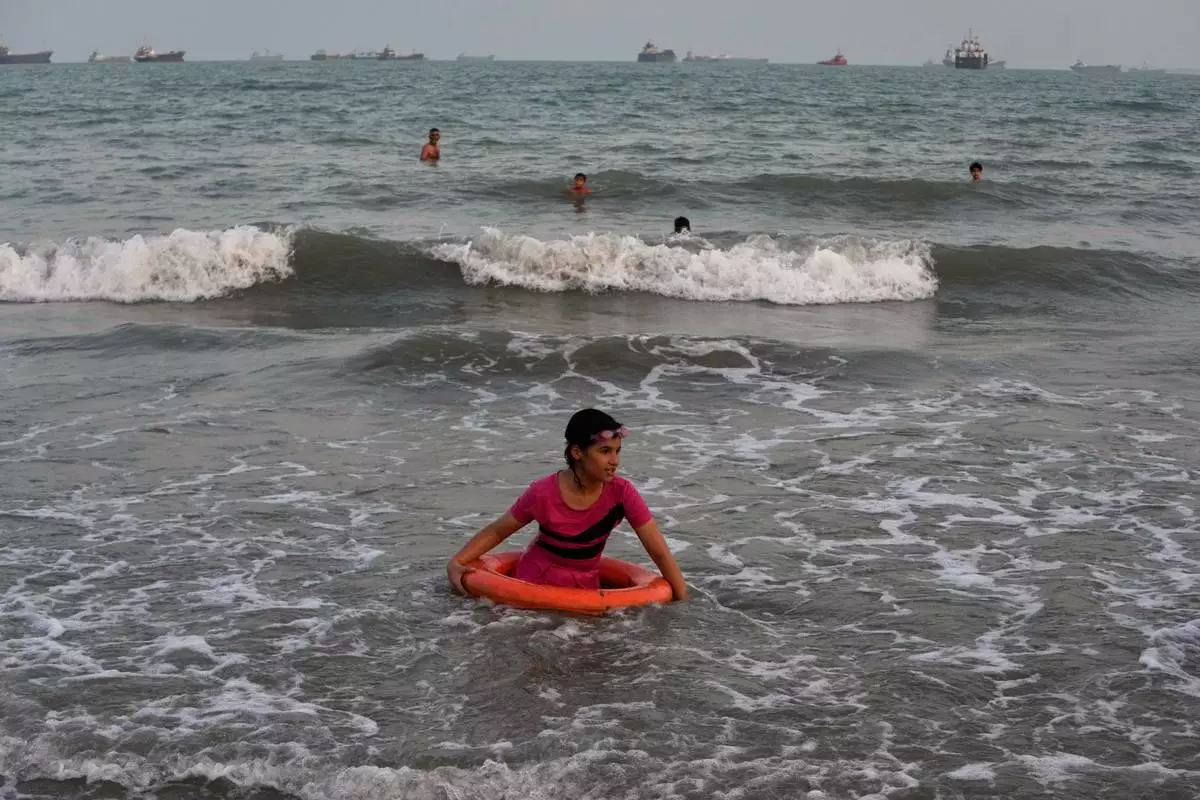
A girl plays in the water with a swim ring as commercial vessels lie anchored in the Strait of Hormuz off Bandar Abbas, Iran, Friday, Sept. 4, 2026. (AP Photo/Vahid Salemi)
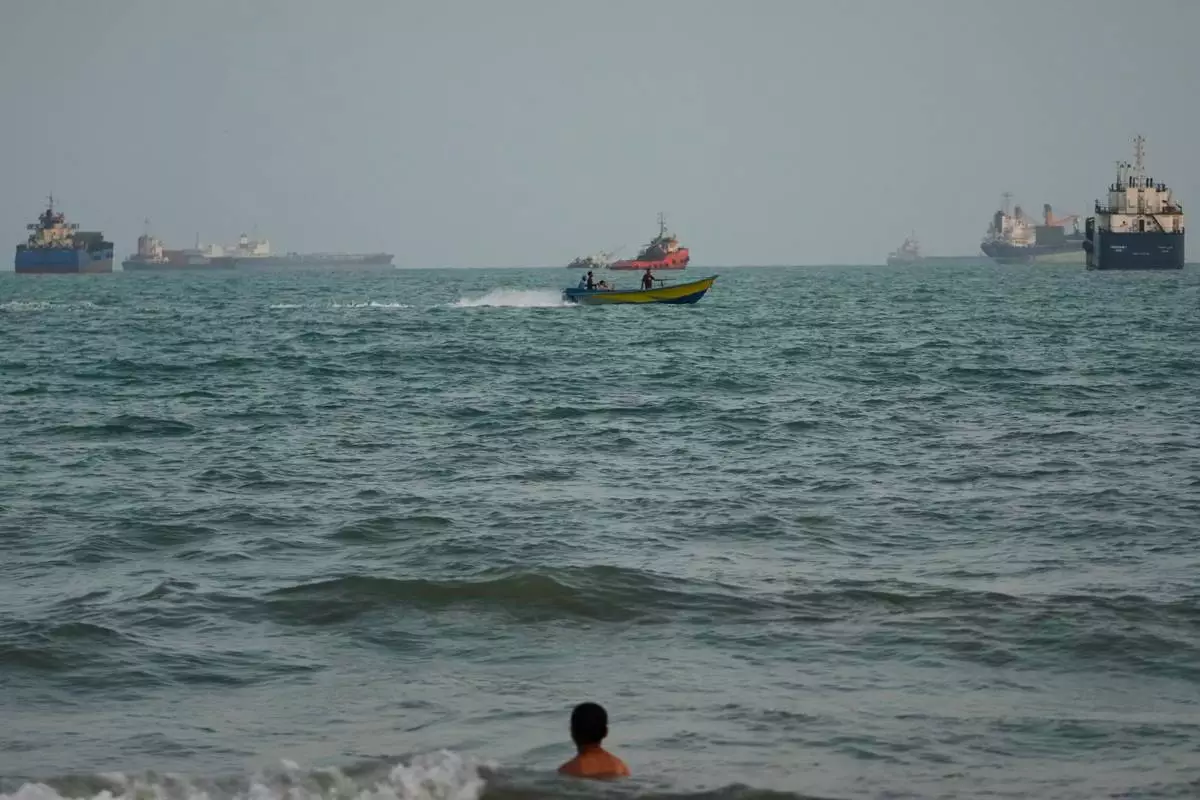
A swimmer remains near the shore as a motorboat passes commercial vessels anchored in the Strait of Hormuz off Bandar Abbas, Iran, Friday, Sept. 4, 2026. (AP Photo/Vahid Salemi)