The 11th Eastern Economic Forum concluded in Vladivostok, Russia, on Friday, with 285 cooperation agreements worth 6.66 trillion rubles (around 7.7 billion U.S. dollars) signed during the event, according to Deputy Prime Minister and Presidential Plenipotentiary Envoy to the Far Eastern Federal District Yury Trutnev.
The four-day annual event brought together more than 7,000 participants from 70 countries and regions.
The forum featured five major themed sections on its business agenda, with over 150 business activities held; more than 1,000 guests gave speeches, and representatives from all sides conducted 1,200 business negotiations on Far East development projects.
During the event, multiple business dialogues were held among entrepreneurs from China, India, Mongolia and ASEAN countries, as well as special sub-events such as forums on the creative industry and small and medium-sized enterprises.
A dedicated exhibition area was set up at the forum to showcase a variety of technical solutions that support the development of the Far East region, with a focus on problems such as complex local logistics conditions, special climate and environment, energy supply gaps, lagging digital transformation, and heavy infrastructure construction tasks.
Meanwhile, the event also featured the Far East Street exhibition and various supporting cultural and sports activities.
Speaking of the achievements at the forum, Trutnev said Friday that the signed agreements involved major projects such as an international transport corridor through the Republic of Sakha and the Trans-Arctic Transport Corridor.
Nine new enterprises were put into operation in the Far East during the forum, covering key areas such as mining, logistics, high-tech, and energy.
Launched in 2015, the Eastern Economic Forum is a leading platform for developing Russia's Far East economy and expanding international cooperation in the Asia-Pacific region.
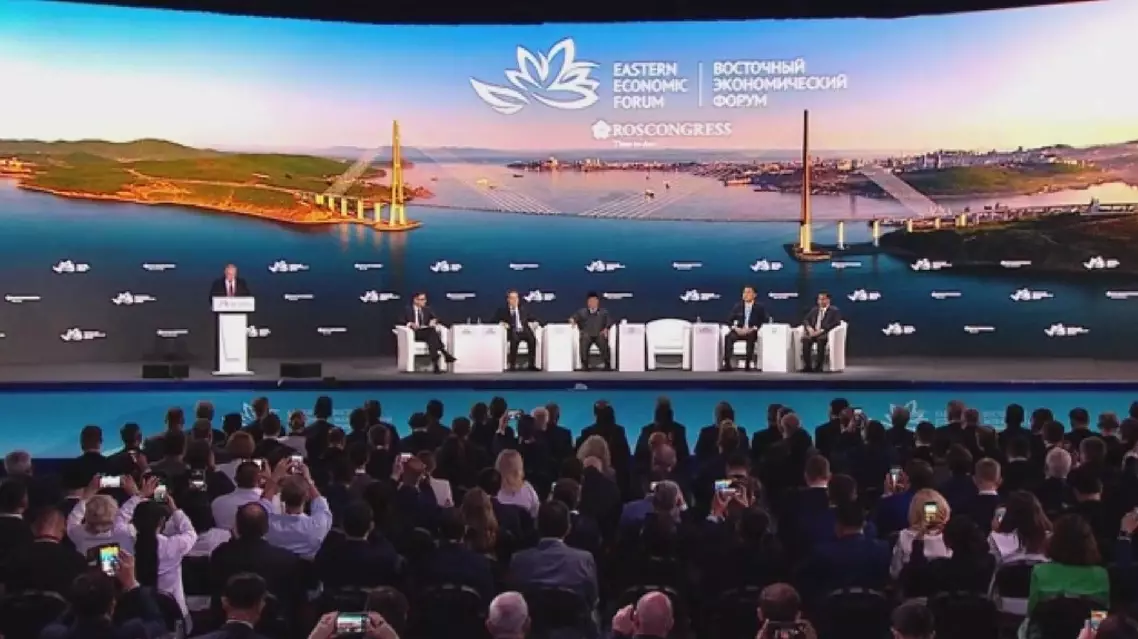
11th Eastern Economic Forum concludes in Vladivostok