PROVIDENCE, R.I. (AP) — Four years ago, Rhode Island Gov. Dan McKee was celebrating his narrow victory in the Democratic primary surrounded by supporters, when someone handed him phone — it was his opponent simply calling to concede.
“That’s not going to happen," he said, waving the phone away. “Hang up on them.”
Now, the woman he dismissed, Helena Foulkes, is challenging him to a rematch. And McKee is desperate to avoid not only becoming the first U.S. governor to lose a primary since 2018 but also the first Rhode Island governor to lose a primary in more than 30 years.
Foulkes, a former executive at CVS Health, has outraised the incumbent and flooded the airwaves with campaign ads.
And unlike four years ago, Democratic voters this election year have increasingly shown a willingness to oust incumbents. McKee, 75, will also have to overcome simmering anger over a bridge repair project that has dragged on longer than expected.
“I think that what I’ve really learned in the last four years, in a deeper way, is how much people feel like state government just works with a powerful few,” Foulkes, 62, said in an interview. “They also hear the leader of the state saying ‘everything’s great’ and they’re saying, ‘I really worry about a good paying job.’”
The winner of the Sept. 9 primary in Democratic-leaning Rhode Island will be the heavy favorite to win the general election.
Beside Foulkes, McKee’s other nemesis in the campaign is a critical bridge in Providence, Rhode Island — New England's third-largest city.
In 2023, McKee closed the westbound side of Washington Bridge after state officials flagged a “critical failure" and announced repairs would take several months.
The partial closure quickly rippled throughout the region. The bridge carries Interstate 195 over the Seekonk River from Providence to East Providence, as well as the south coast of Massachusetts and Cape Cod. Nearly 100,000 vehicles cross it every day, which now must pass through entirely on the reconfigured eastbound side.
Repairs have since taken much longer than promised as costs have increased from initial estimates, creating plenty of material for Foulkes to criticize McKee’s leadership.
McKee has fought back that he kept people safe and that the bridge construction will be finished by 2028.
He often points to Maryland, saying the Washington Bridge will be complete ahead of the replacement of Baltimore’s Francis Scott Key Bridge, which is set to be done in 2030 after it collapsed and killed six construction workers in 2024 when a massive container ship crashed into it.
But bridge sagas have a way of haunting governors, said Adam Myers, a political scientist at Providence College. Thorny issues like crime, immigration and cost of living often can be difficult to pin down because they involve complicated systems.
“In the case of a bridge, people know that state government is responsible for that,” Myers said. “And so there appears to be a very clear place on which to put all the blame.”
While fending off criticisms over his handling of the bridge, McKee has gone on the attack, accusing Foulkes as an out-of-touch corporate executive trying to buy her way into the election.
Foulkes has robust political family ties. Her grandfather and uncle, Thomas and Chris Dodd, were both Democratic senators in Connecticut. She worked at CVS for 25 years, eventually becoming president of the company’s pharmacy division between 2014 and 2018. She then became chief executive officer of the Canadian retail giant Hudson’s Bay Company before leaving that job in 2020.
McKee has accused Foulkes of helping fuel the opioid crisis during her time at CVS, an allegation Foulkes denies.
“Who’s the option here? It’s a corporate person that the Democrats can’t stand,” McKee said in an interview. “She’s shown evidence that she’s put profits ahead of people over and over and over again.”
When pressed on her time at CVS, Foulkes argues that CVS reduced its opioid dispersal by 40% when she was president of CVS’ Pharmacy division. In 2022, after Foulkes had left CVS, the company agreed to pay $5 billion to settle lawsuits nationwide over the toll of opioids, without admitting wrongdoing.
Foulkes has also warned that McKee's attacks have angered the thousands of employees who work at Woonsocket, Rhode Island-based CVS, saying that his criticisms of her are often taken to be criticism of the retail giant.
"The 50 largest companies' business leaders in this state wrote a letter to you, asking you to stop criticizing CVS,” she said during an August debate. “You are going to drive them out of the state.”
McKee touts that he represents the interests of working class voters by pointing to the many labor endorsements he’s received along the campaign trail, though notably Rhode Island’s Democratic Party and the state AFL-CIO chose not to endorse in the race.
Foulkes, meanwhile, points to her growing base of supporters, which include Democrats from McKee's hometown of Cumberland — where he once served as mayor.
“It’s a great moment to be an outsider,” Foulkes said.

FILE - Diverted traffic passes a closed portion of Washington Bridge, March 8, 2024, in East Providence, R.I. (AP Photo/Charles Krupa, File)
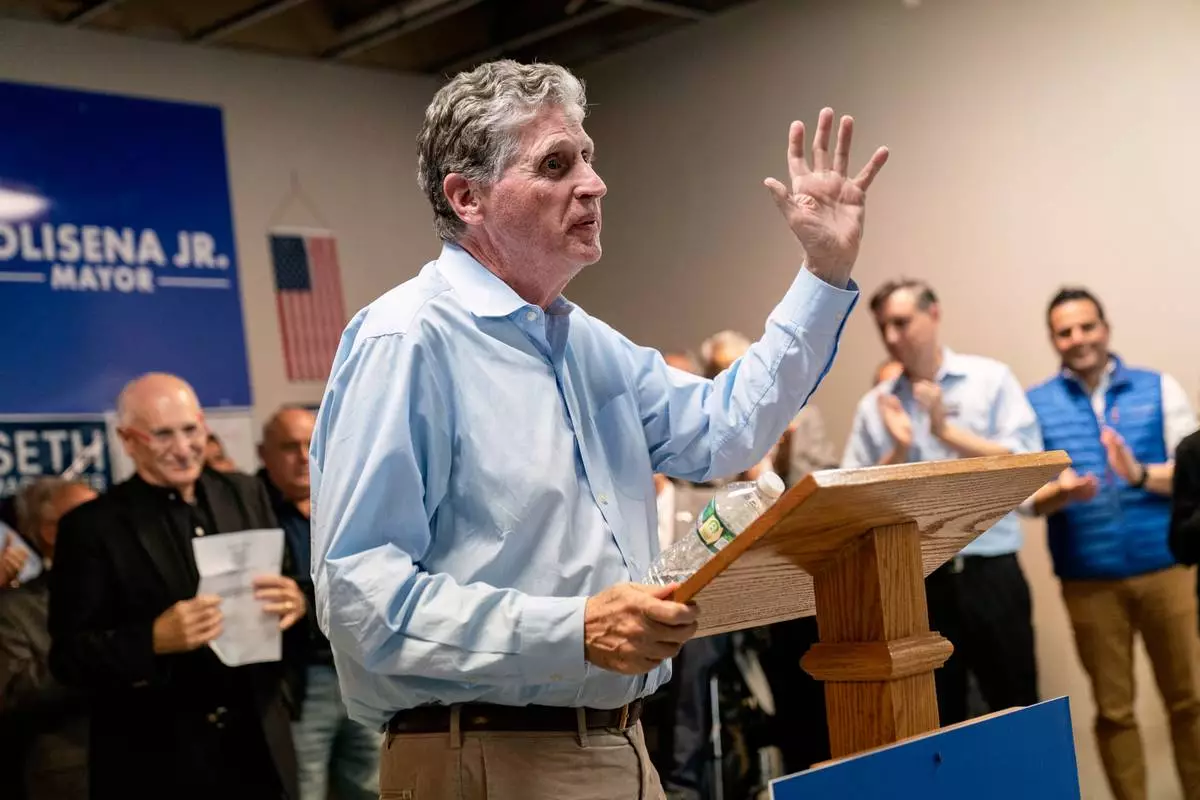
FILE - Rhode Island Gov. Dan McKee speaks at the local Democratic Party headquarters in Johnston, R.I., Nov. 7, 2022. (AP Photo/David Goldman, File)
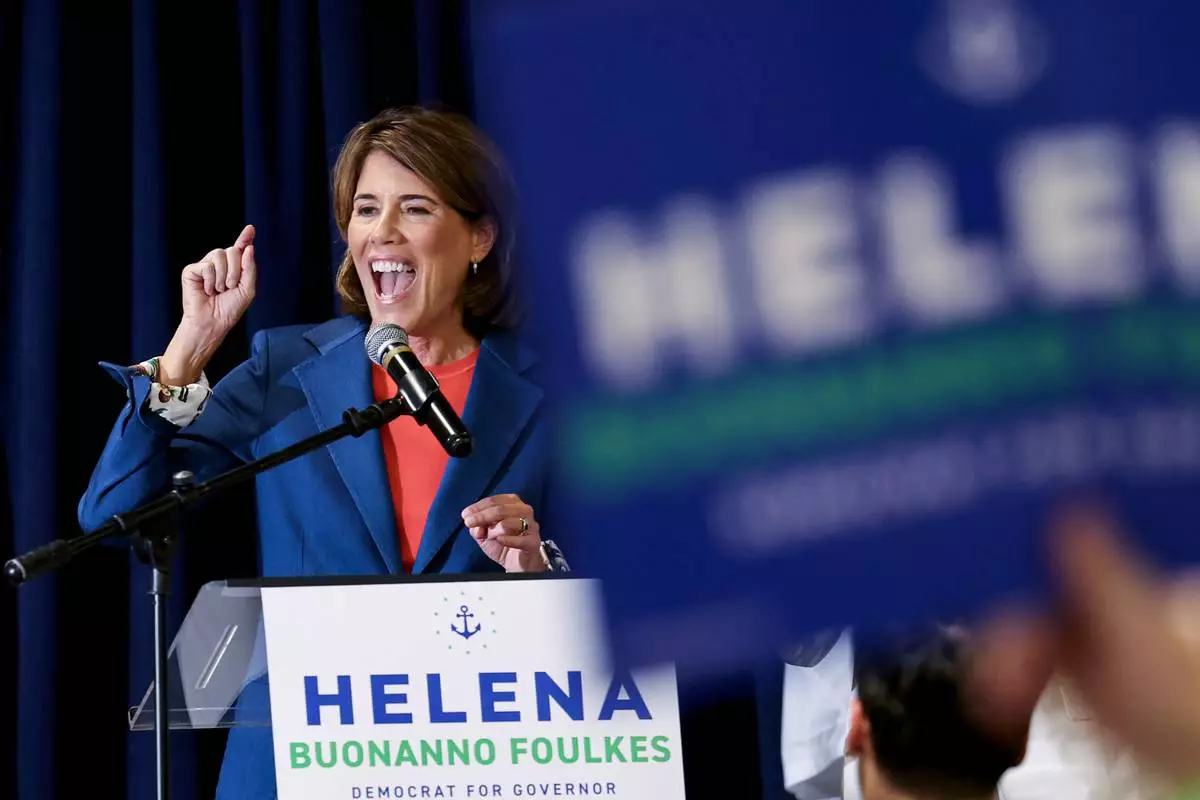
FILE - Candidate for Rhode Island governor Helena Buonanno Foulkes speaks during a Get Out the Vote event, Aug. 30, 2026, in Providence, R.I. (AP Photo/Mark Stockwell, File)