And to think, Kyle Whittingham said he wanted to put an end to all the drama around Michigan.
Nobody could have scripted a more dramatic finish to the former Utah coach’s Michigan debut Saturday night.
Click to Gallery
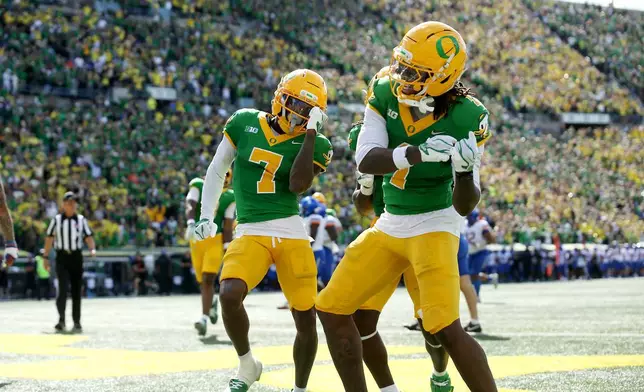
Oregon wide receivers Evan Stewart (7) and Dakorien Moore (1) celebrate Moore's touchdown during the second half of an NCAA college football game, Saturday, Sept. 5, 2026, in Eugene, Ore. (AP Photo/Lydia Ely)
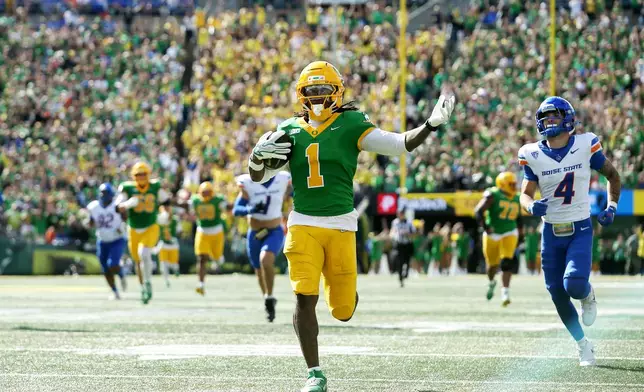
Oregon wide receiver Dakorien Moore (1) celebrates his touchdown run during the second half of an NCAA college football game against Boise State, Saturday, Sept. 5, 2026, in Eugene, Ore. (AP Photo/Lydia Ely)
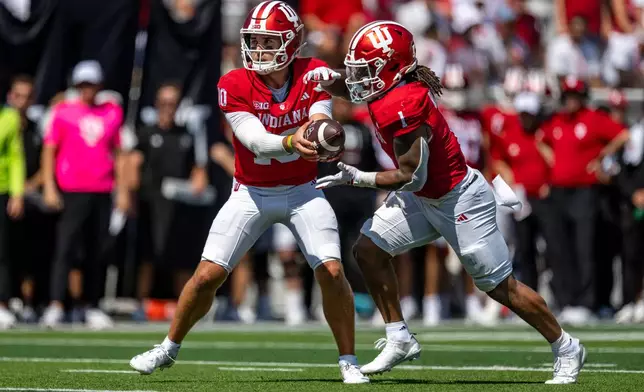
Indiana quarterback Josh Hoover (10) hands off to running back Turbo Richard (1) during the first half of an NCAA college football game against North Texas, Saturday, Sept. 5, 2026, in Bloomington, Ind. (AP Photo/Doug McSchooler)
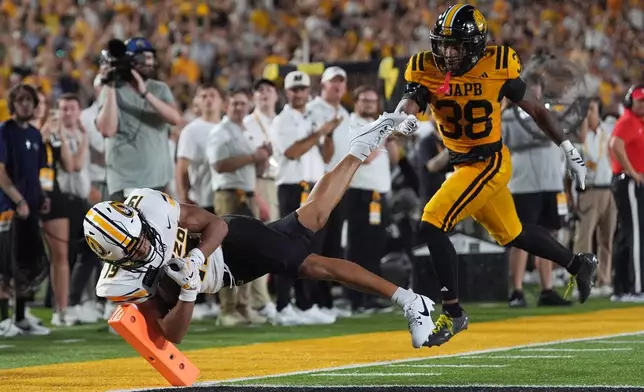
Missouri wide receiver Cayden Lee, left, scores past Arkansas-Pine Bluff defensive back Na'il Johnson (38) during the first half of an NCAA college football game Thursday, Sept. 3, 2026, in Columbia, Mo. (AP Photo/Jeff Roberson)

The Colorado team celebrates a win over Georgia Tech after an NCAA college football game, Thursday, Sept. 3, 2026, in Atlanta. (AP Photo/Mike Stewart)
No. 16 Michigan beat Western Michigan 13-12 on Saturday only after it was ruled that a second remained following Bryce Underwood’s unsuccessful Hail Mary attempt, even though the scoreboard clock indicated no time was left. Given a second chance, Underwood and JJ Buchanan connected on a remarkable 47-yard touchdown.
Just like that, an opening weekend filled with snoozers and blowouts got a moment worth talking about.
The second-chance Hail Mary led to the incomprehensible scene of the Michigan Stadium crowd storming the field to cheer the winningest program in Bowl Subdivision history eking out a victory over a Mid-American Conference school. It also capped an eventful opening weekend for new coaches.
Michigan brought Whittingham in to stabilize a program following the firing and arrest of Sherrone Moore, who lasted just two seasons. That followed the tumultuous tenure of Jim Harbaugh that included a 2023 national title as well as a spying scandal and NCAA sanctions for recruiting violations.
Whittingham spoke on multiple occasions this offseason about ending all that off-field drama. On the field, it appears he still has work to do.
Michigan committed three turnovers without forcing any, and the Wolverines allowed Western Michigan to have possession for over two-thirds of the game. Perhaps the spectacular finish will spark Underwood, who struggled for much of the night and had an inconsistent freshman season after arriving at Michigan as the nation’s No. 1 prospect in his class.
At least Whittingham won his debut. Oklahoma State's Eric Morris wasn't so fortunate.
Oklahoma State is coming off a 1-11 season but seemed a likely candidate for improvement after Morris added 91 newcomers, including 21 who had played for him at North Texas. The headliner was Drew Mestemaker, who threw for a Bowl Subdivision-leading 4,379 yards at North Texas last season.
But the Cowboys lost 24-10 to Tulsa, an indication Morris' rebuild could take some time. Mestemaker went 29 of 49 for 241 yards with two interceptions and one touchdown.
One coach who did have a successful debut at his new school was LSU's Lane Kiffin, who had been the center of attention throughout the offseason. When the NCAA’s new eligibility rules blew up in courtrooms all over the country, LSU made no secret of its interest in bringing back not just fifth-year players who went to court but players who had signed professional contracts.
This issue lingered late into the week, including the surreal spectacle of the SEC battling LSU in multiple courtrooms. LSU eventually decided against placing onetime pros Dae’Quan Wright and Zxavian Harris on its roster in advance of its season opener.
No. 11 LSU didn't need the extra help as it steamrolled Clemson 51-10, handing Dabo Swinney the most lopsided loss of his head coaching career.
It's the latest setback for Swinney as Clemson attempts to bounce back from its 7-6 finish last year. Those 2016 and 2018 national titles seem so long ago now.
No. 2 Oregon faced an early 10-point deficit before rallying to beat Boise State 34-27. Dante Moore threw a tiebreaking 62-yard TD to Dakorien Moore with 8:45 left.
The game was reminiscent of their 2024 matchup, when Oregon needed a field goal as time expired for a 37-34 home victory over a Boise State team featuring Heisman Trophy runner-up Ashton Jeanty.
That Broncos team went on to reach the College Football Playoff, and Oregon remained unbeaten until a Rose Bowl quarterfinal loss to eventual national champion Ohio State.
It wouldn’t be a surprise if both teams are back in the playoff this year.
Boise State's early-season schedule could go a long way toward sorting out which team has the best shot at earning the Group of Six's playoff berth.
Memphis (2-0) had a notable season-opening win at UNLV last week and will travel to Boise State next weekend. Defending MAC champion Western Michigan, which made quite an impression in its narrow loss to Michigan, will host Boise State on Sept. 26.
No. 6 Indiana’s new faces helped the defending national champions roll to a 52-16 victory over North Texas in their opener.
Former TCU quarterback Josh Hoover went 13 of 16 for 231 yards with four touchdowns in his first game stepping in for Heisman Trophy winner and No. 1 overall draft pick Fernando Mendoza. Boston College transfer Turbo Richard scored twice and Michigan State transfer Nick Marsh got the Hoosiers’ first touchdown with a one-handed grab.
One sign of concern for Indiana is that a defense that allowed the second-fewest points per game of any FBS team last year struggled to slow down North Texas.
Ohio State’s Jeremiah Smith and Miami’s Malachi Toney have wasted no time launching their respective Heisman Trophy campaigns.
Smith caught eight passes for 151 yards and two touchdowns in the first half alone as No. 1 Ohio State opened its season with a 56-3 blowout of Ball State on Saturday. Smith celebrated his second touchdown by doing a Heisman pose.
One night earlier, Toney performed a similar celebration during his three-touchdown performance in the seventh-ranked Hurricanes’ 45-6 victory at Stanford. Toney set a school single-game record with 234 yards receiving.
They're not the only Heisman contenders from their own teams.
Ohio State's Julian Sayin, who finished fourth in the Heisman voting last season, went 21 of 25 for 320 yards with three touchdowns. He also ran for a touchdown.
Miami's Darian Mensah, who led Duke to an Atlantic Coast Conference title last year, threw five touchdown passes in his first game with his new team..
Sunday's lineup includes an early Apple Cup between No. 17 Washington and Washington State before prime-time showdowns: No. 4 Notre Dame against Wisconsin at Lambeau Field in Green Bay, Wisconsin, and No. 9 Mississippi faces No. 24 Louisville in Nashville, Tennessee. The Labor Day capper sees Mike Norvell and Florida State hosting No. 19 SMU and dynamic quarterback Kevin Jennings.
The next AP Top 25 rankings to sort it all out will be released Tuesday.
Sign up for Top 25 poll alerts here, visit the Top 25 here and see AP’s full college football coverage here
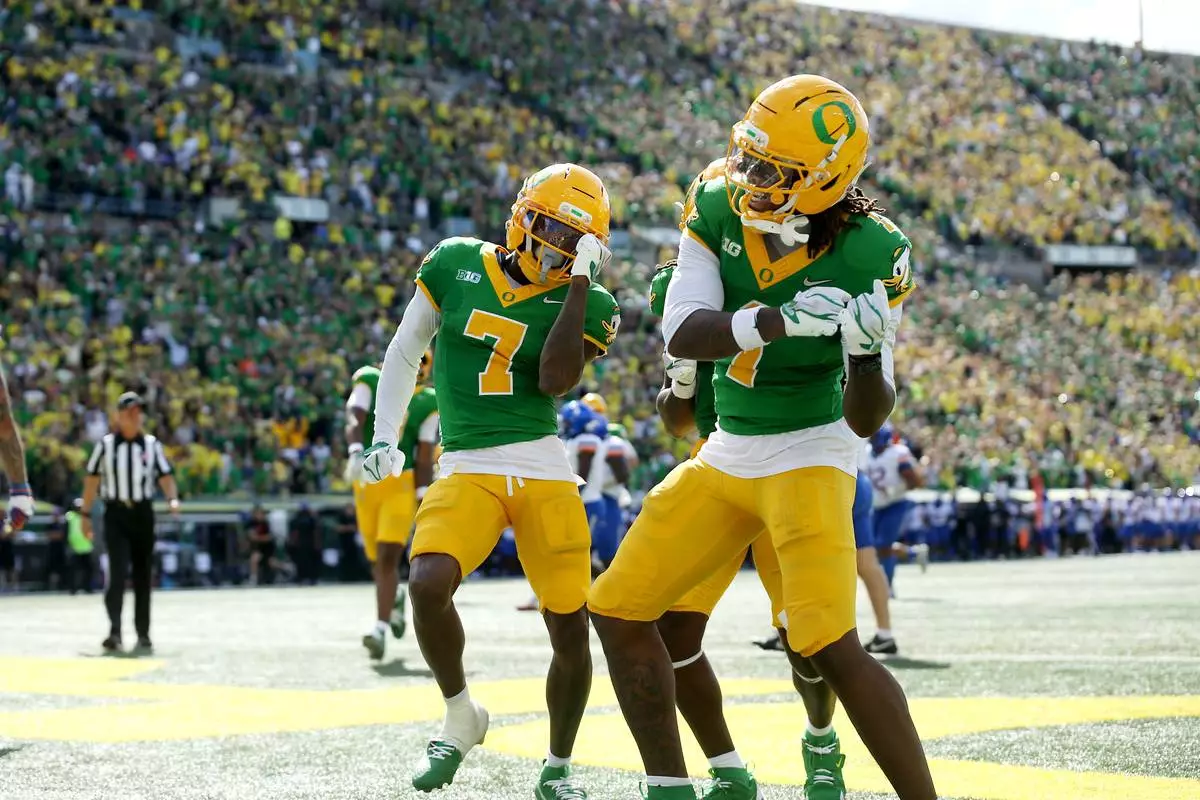
Oregon wide receivers Evan Stewart (7) and Dakorien Moore (1) celebrate Moore's touchdown during the second half of an NCAA college football game, Saturday, Sept. 5, 2026, in Eugene, Ore. (AP Photo/Lydia Ely)
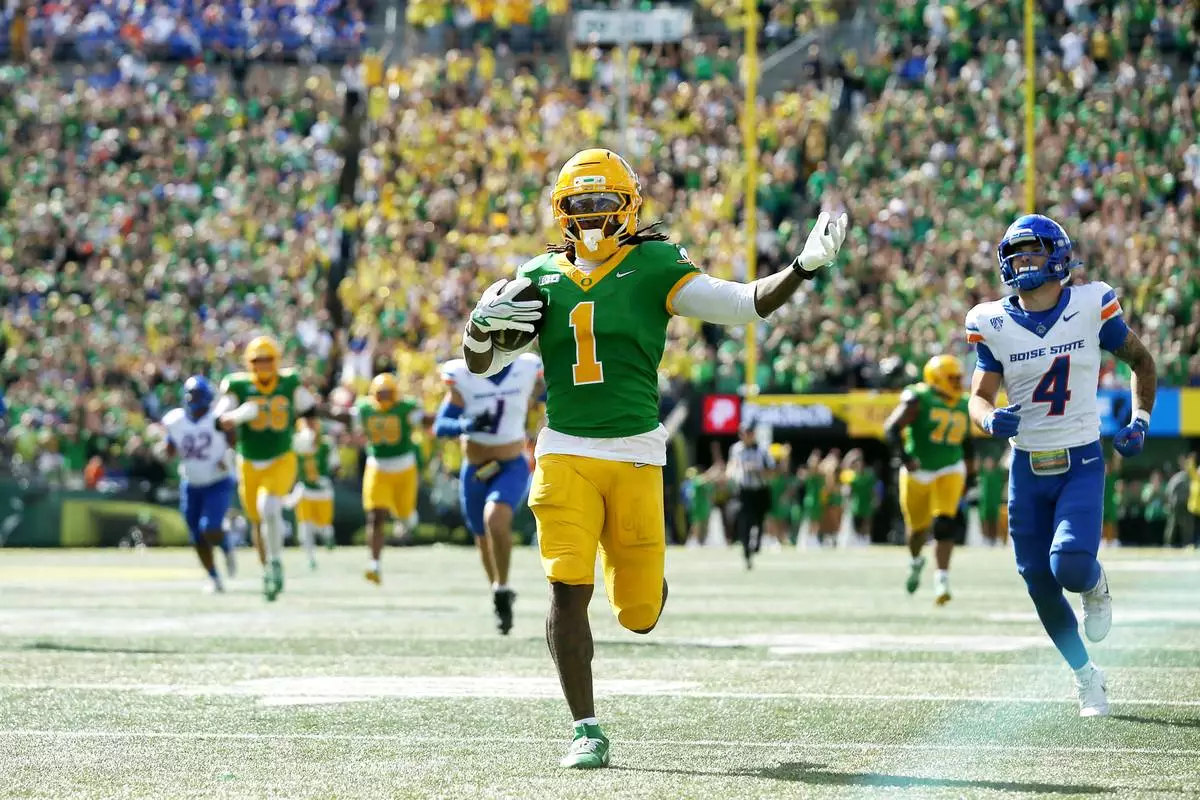
Oregon wide receiver Dakorien Moore (1) celebrates his touchdown run during the second half of an NCAA college football game against Boise State, Saturday, Sept. 5, 2026, in Eugene, Ore. (AP Photo/Lydia Ely)
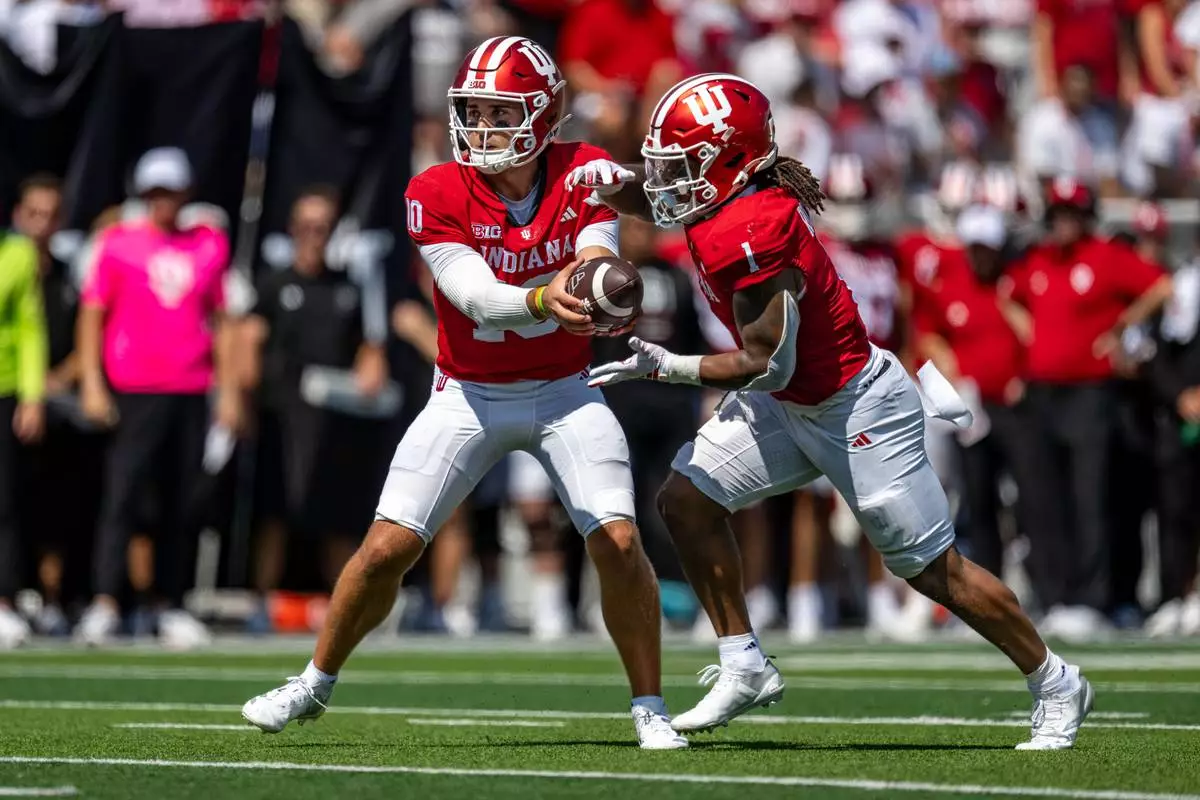
Indiana quarterback Josh Hoover (10) hands off to running back Turbo Richard (1) during the first half of an NCAA college football game against North Texas, Saturday, Sept. 5, 2026, in Bloomington, Ind. (AP Photo/Doug McSchooler)
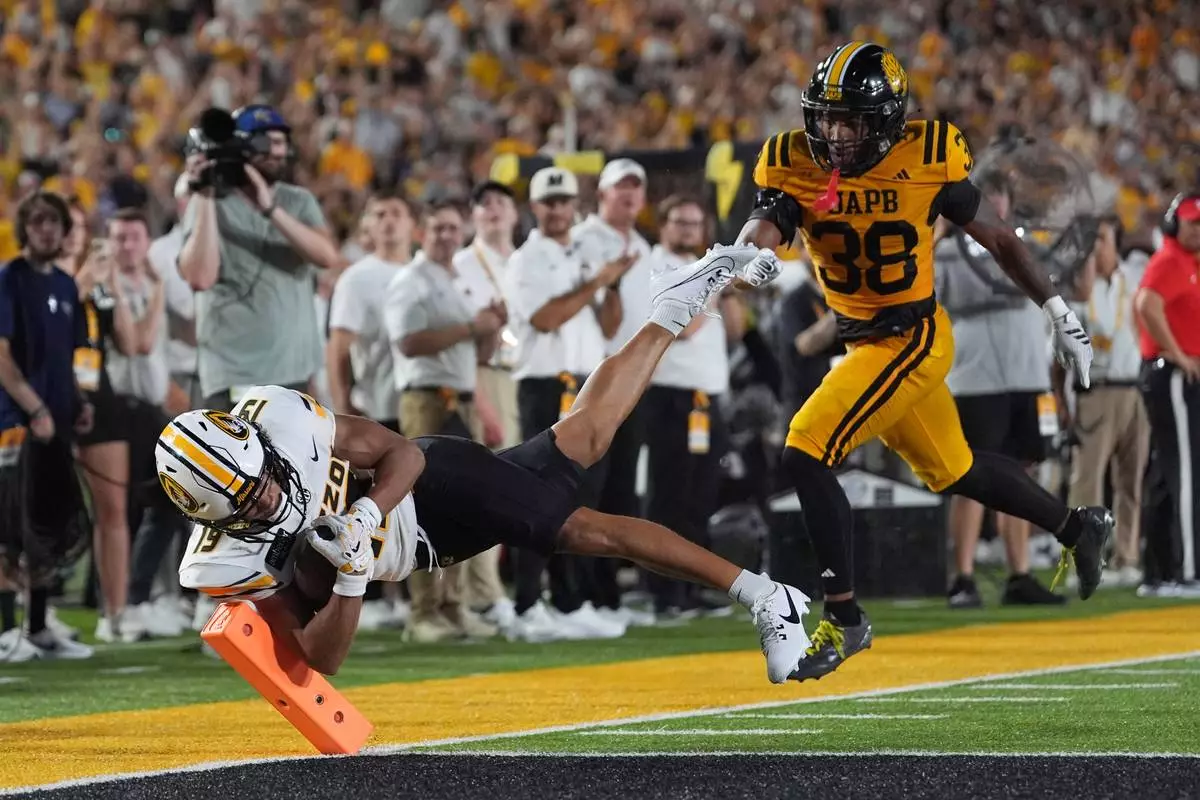
Missouri wide receiver Cayden Lee, left, scores past Arkansas-Pine Bluff defensive back Na'il Johnson (38) during the first half of an NCAA college football game Thursday, Sept. 3, 2026, in Columbia, Mo. (AP Photo/Jeff Roberson)

The Colorado team celebrates a win over Georgia Tech after an NCAA college football game, Thursday, Sept. 3, 2026, in Atlanta. (AP Photo/Mike Stewart)