HANFORD, Calif. (AP) — For years, Rep. David Valadao benefited from voting patterns that shifted toward Republicans in his rural, heavily Latino district in Central California, deep in the state’s farm belt where highways crisscross boundless stretches of almond groves, cornfields and dairy feed lots.
This time, that could change.
Click to Gallery
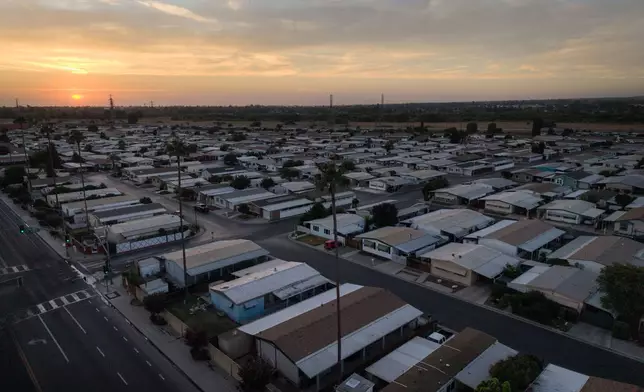
A mobile home park is seen in Bakersfield, Calif., Thursday, Aug. 20, 2026. (AP Photo/Jae C. Hong)
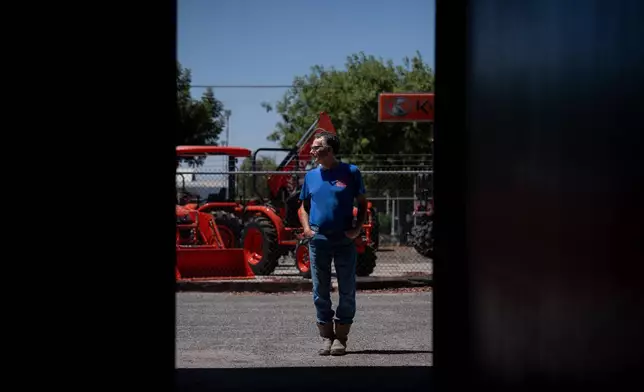
Scott Alcoser, a parts manager at a farm equipment retailer, stands for a photo in Hanford, Calif., Friday, Aug. 21, 2026. (AP Photo/Jae C. Hong)
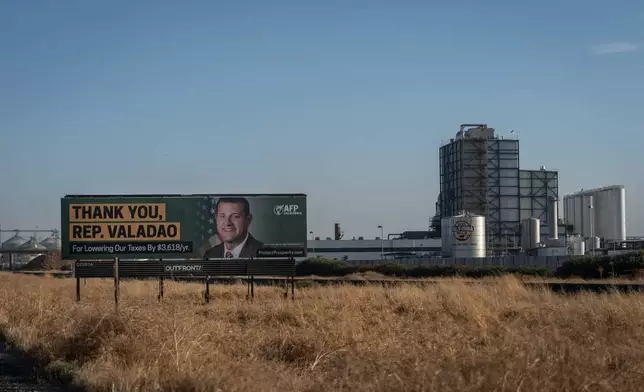
A billboard thanking U.S. Rep. David Valadao, R-Calif., stands near a dairy facility in Pixley, Calif., Friday, Aug. 21, 2026. (AP Photo/Jae C. Hong)

Volunteers take part in phone bank training at a National Republican Congressional Committee office in Hanford, Calif., Friday, Aug. 21, 2026. (AP Photo/Jae C. Hong)
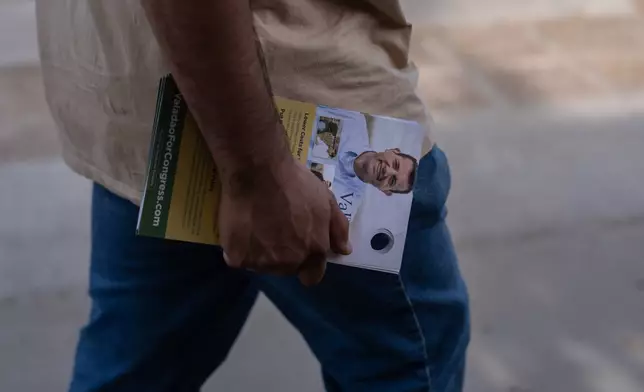
Volunteer Jesus Hernandez carries campaign door hangers while canvassing for U.S. Rep. David Valadao, R-Calif., in Hanford, Calif., Friday, Aug. 21, 2026. (AP Photo/Jae C. Hong)
Across the country, there are signs that Latinos have grown disenchanted with President Donald Trump, especially as the price of gas, fertilizer and groceries keep climbing while funding for healthcare services is declining.
It's Republican lawmakers like Valadao that could pay the price. He's no Trump acolyte — if reelected, Valado will be the last member of his caucus who voted for Trump's impeachment after the Jan. 6 attack on the U.S. Capitol — but his fortunes are inevitably tied to the leader of his party.
Two out of three voters in Valadao’s district are Hispanic, and AP-NORC polling shows that Trump’s national approval rating among Hispanic adults fell by 18 percentage points between March 2025 and July 2026. By comparison, approval among U.S. adults overall dropped 9 points.
Valadao said he isn’t panicking.
“I’ve won in these types of races. I can win again,” he said in an interview with The Associated Press. “I think we should be fine.”
Valadao is trying to maintain a strategic distance from Trump to defy political gravity. His campaign literature says he will “put people before political parties.” At the same time, volunteers at a phone bank in his hometown of Hanford asked wavering voters if it was important to complete Trump’s agenda in Washington, a pitch clearly aimed at partisans.
Few Republicans have frustrated Democrats in election after election like Valadao, a dairyman whose family emigrated from Portugal's Azores Islands. He's routinely overcome steep voter registration deficits by honing an independent streak and focusing on local issues like water for farmers. Valadao won a congressional seat in 2012, lost it in 2018, then won it back in 2020.
Last year's redistricting made his swing district even more blue, and national organizations are pouring in money, making it one of the five most expensive races in the country in terms of advertising. Republicans have spent or booked more than $13 million of airtime and digital messaging through Election Day, while Democrats are slightly behind at $12.6 million, according to data compiled by AdImpact.
To win, Valadao is trying to portray his Democratic challenger — Randy Villegas, a progressive endorsed by Sen. Bernie Sanders — as too extreme to represent California's 22nd Congressional District. He said many of his constituents are immigrants that fled countries with socialist-leaning governments “and you are seeing him run on these same kind of policies.”
At a town hall in Bakersfield, where U.S. and Mexico flags adorned the walls, hands shot up in the audience when Villegas asked how many people used Medicaid or crossed the border to get less expensive medical care and drugs.
“This should not be happening in the richest country in the history of the world,” said Villegas, who is campaigning on Medicare for All, a universal healthcare concept popularized by Sanders. “Nobody should have to choose between groceries and seeing a doctor.”
In a year when control of the House could come down to a single district, Valadao can’t afford to lose voters like Scott Alcoser.
A parts manager at a farm equipment retailer in Hanford, where children ride a 1930s-era carousel under towering palms and trendy coffee shops dot downtown streets, Alcoser is a Republican who has backed the Valadao in previous elections.
But this year he’s undecided. Alcoser said he wants to hear more from Valadao about how he will “care for the community” at a time when working-class families are struggling. According to census data, nearly one in four people in the district live below the poverty line.
"He can understand the times people are going through right now,” Alcoser said. “Any politician should just be really honest with you.”
Valadao has already lost Elena Van Overbeek.
Although the Republican law enforcement retiree has voted for him before, she's disappointed that prices haven't come down and she's worried that health care cuts supported by Valadao “would hurt too many people.”
She plans to cross the aisle to back Villegas.
Valadao still remains popular with some longtime voters in his hometown. Seated in a downtown salon getting her hair styled, retired nurse Margie Lopez called him “a decent man.”
“I don't trust Democrats,” said Lopez, a Trump supporter.
The salon's owner, Celestina Rodriguez, is a registered Democrat who describes herself as conservative and plans to vote for Valadao.
“He's from the area and I know some of his family," she said.
Villegas prevailed in a caustic primary over state lawmaker Jasmeet Bains, a moderate who was backed by the Democratic Congressional Campaign Committee.
The son of Mexican immigrants who grew up on Medicaid, Villegas accuses Valadao of betraying the district by voting last year for Trump's “big beautiful bill,” which delivered $4.5 trillion in tax breaks but also cuts more than $1 trillion over a decade from federal health care and food assistance, largely by imposing work requirements on those receiving aid and by shifting certain federal costs onto the states.
Valadao's district has one of the highest Medicaid enrollment rates in the nation, and Democrats in Congress have estimated that as many as 57,000 of his constituents could lose coverage once new requirements go into effect. Valadao calls such projections “overstated.”
Democratic Rep. Ro Khanna, an outspoken progressive who is considering a 2028 presidential run, said a Villegas victory in a swing district would be a potent national statement that could ripple across the country.
“Everyone understands that the Latino vote is the swing vote," Khanna said before a rally for the candidate in Bakersfield. “We win the swing vote of the Latino vote, we win Arizona, we win Nevada, we win Georgia.”
Mike Madrid, a Republican strategist who is an expert on Latino voting trends, said the political climate might be impossible for Valadao to survive.
"That district has pretty much everything you could imagine working against the Republican,” Madrid said. “The fundamentals of the race point toward an anti-incumbent mood based off of souring economics.”
On paper, Valadao’s district should be a Democratic cakewalk — there is a 16-point registration edge for the party after voters in 2025 approved Gov. Gavin Newsom's blueprint for redrawing the state's congressional map.
But the region is far from the coastal metropolises that have made California synonymous with liberal governance.
The Central Valley is known as America’s salad bowl, for its vast production fruits, vegetables and nuts that stock refrigerators and kitchen tables across America. Virtually all the pistachios grown in the country come from California.
“Analysts often underestimate what the people who live and work in the Central Valley of California are about,” said Republican consultant Cathy Abernathy of Bakersfield, who thinks Valadao will prevail. “They think differently than the metropolitan Southern California and San Francisco Bay Area Democrat voters.”
While many receive government assistance, “most think about keeping the job they have, keeping their family lifestyle going and not rocking the boat just to throw their fist in the air," she wrote in an email.
Valadao didn’t support Trump in 2016, backed him 2020 and declined to say how he voted in 2024.
He demurred when asked about his impeachment vote in 2021.
“I’ll let history decide on how to interpret anything I’ve done,” he said. “I’ve got nothing more to add to that.”
Jeffrey Cummins, who teaches political science at California State University, Fresno, said Democrats will need to closely tie Valadao to Trump to defeat him in a toss-up race.
If they don't succeed this year, Cummins said, they “may lose hope of ever knocking off Valadao."
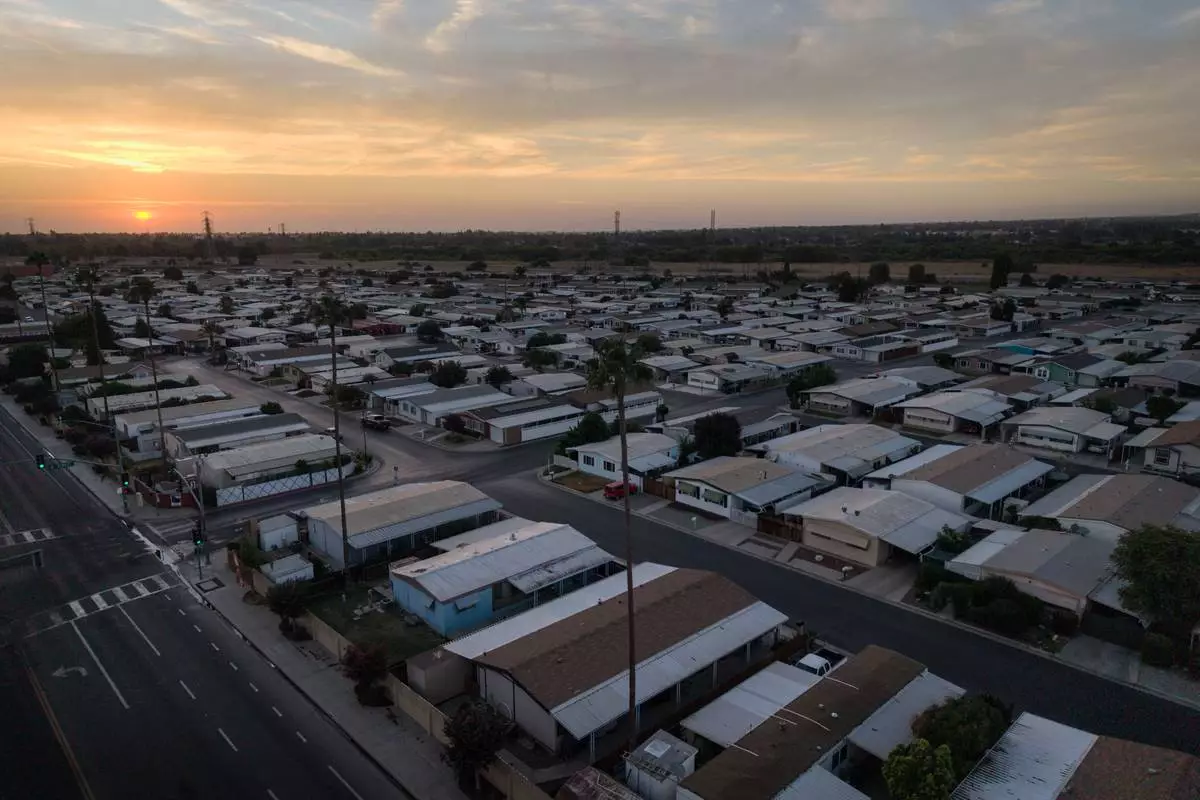
A mobile home park is seen in Bakersfield, Calif., Thursday, Aug. 20, 2026. (AP Photo/Jae C. Hong)
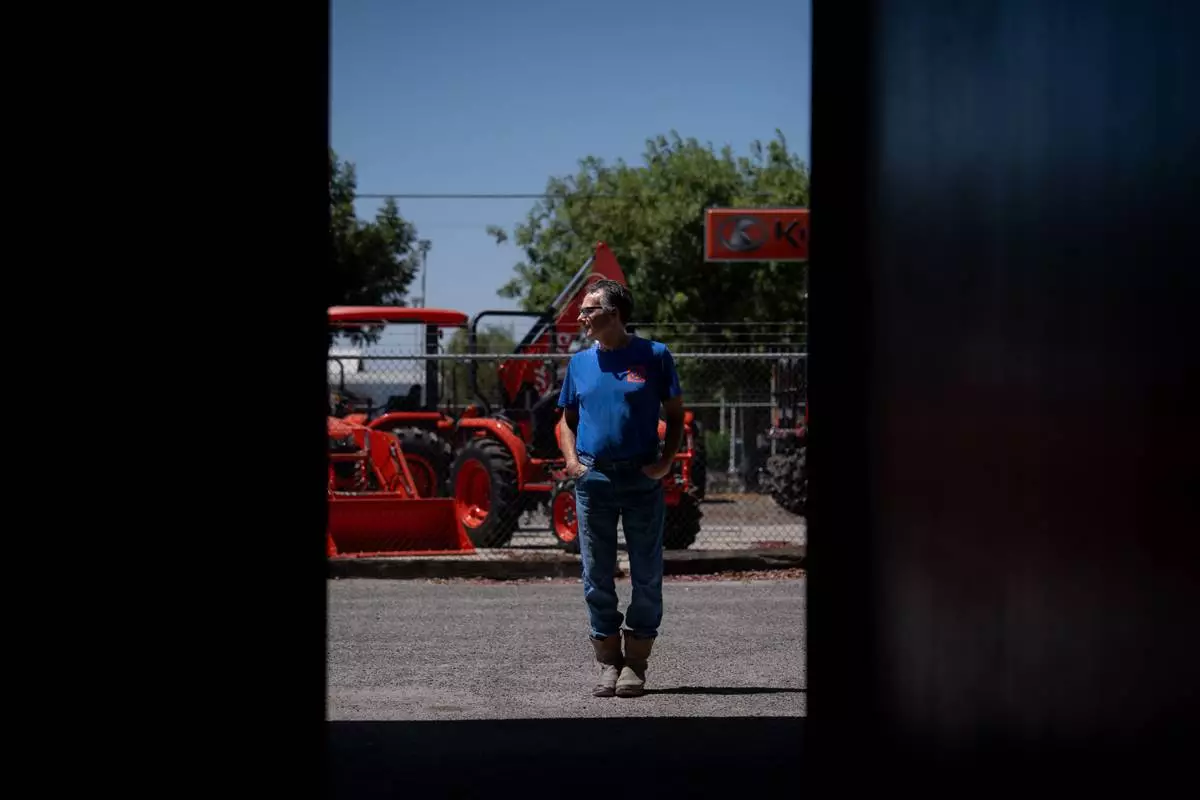
Scott Alcoser, a parts manager at a farm equipment retailer, stands for a photo in Hanford, Calif., Friday, Aug. 21, 2026. (AP Photo/Jae C. Hong)
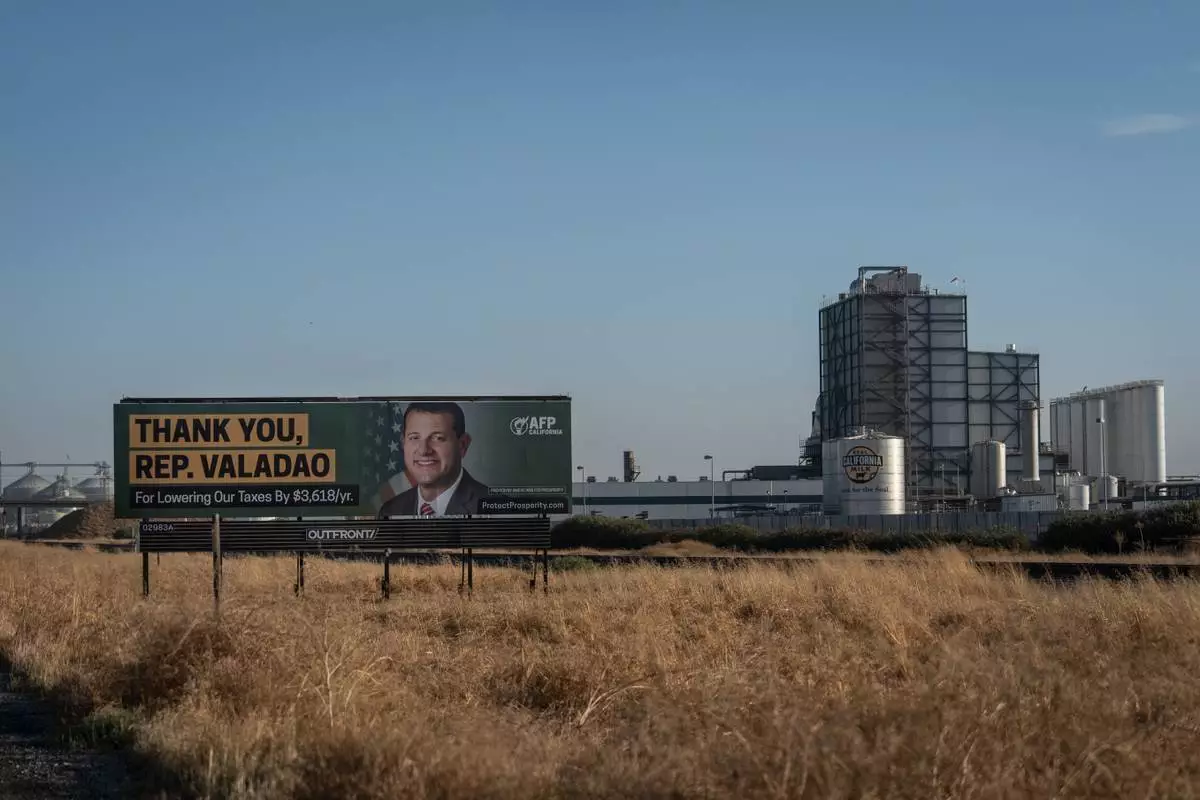
A billboard thanking U.S. Rep. David Valadao, R-Calif., stands near a dairy facility in Pixley, Calif., Friday, Aug. 21, 2026. (AP Photo/Jae C. Hong)

Volunteers take part in phone bank training at a National Republican Congressional Committee office in Hanford, Calif., Friday, Aug. 21, 2026. (AP Photo/Jae C. Hong)

Volunteer Jesus Hernandez carries campaign door hangers while canvassing for U.S. Rep. David Valadao, R-Calif., in Hanford, Calif., Friday, Aug. 21, 2026. (AP Photo/Jae C. Hong)