China has turned difficult-to-use waste cooking oil into sustainable aviation fuel, making large-scale utilization a reality with homegrown catalysts and technological breakthroughs.
A tour of Henan Junheng Industrial Group Biotechnology Co., Ltd. in central China’s Henan Province best exemplifies how it is achieved.
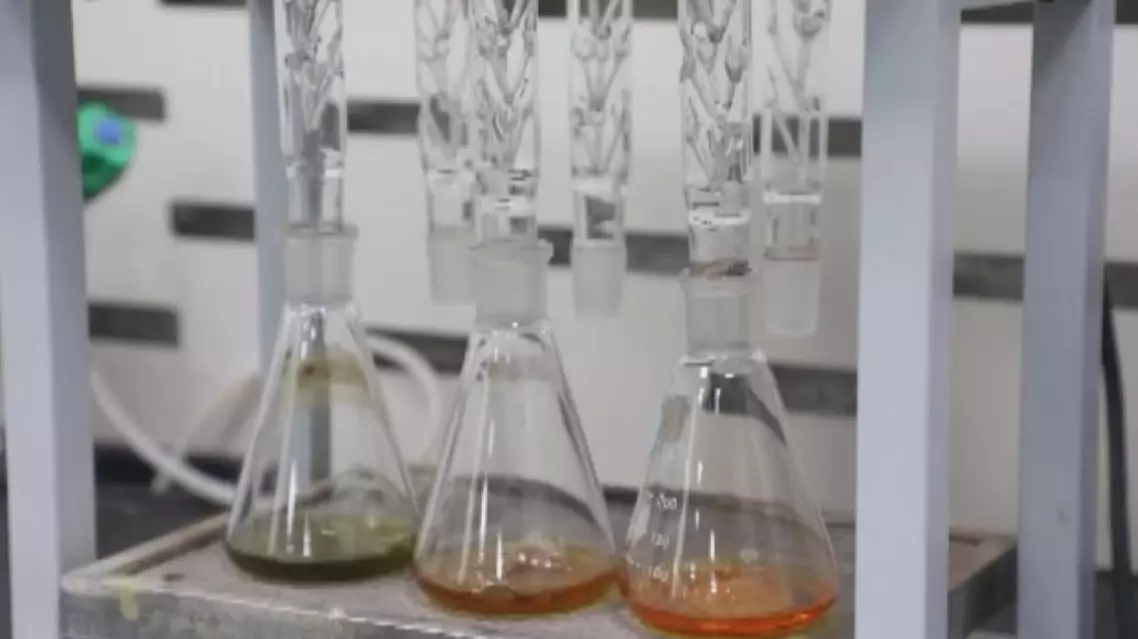
A row of glass jars in the company’s exhibition hall shows the full journey of waste cooking oil—from dark, murky used cooking oil to light-yellow industrial-grade mixed oil, and finally to clear-as-water aviation fuel.
Upon arrival at the facility, waste oils undergo multiple pretreatment steps to significantly reduce levels of metal, phosphorus, chlorine, nitrogen, and other impurities, yielding purified, industrial-grade mixed oil. Subsequently, in a hydrodeoxygenation reactor, the oil molecules are "segmented" and "reassembled" using a proprietary catalyst, producing bio-jet fuel with properties identical to those of conventional aviation kerosene. The final product is fully compatible with existing aircraft engines and requires no modifications for direct use.
"After years of technical research, we have developed a catalyst system that resists both acid and water. Once the 'gutter oil' enters the reactor, the catalyst acts like a 'gluttonous snake' -- it devours the metals in the oil while simultaneously converting the oil into aviation fuel," said Du Zhisheng, a researcher at the technical department.
Bio-based aviation fuel offers an 80 percent reduction in carbon dioxide emissions over its entire life cycle compared to conventional jet fuel.
China pioneers large-scale conversion of waste cooking oil into sustainable aviation fuel