A vast majority of Canadians support their government's counter-tariffs against the United States, according to a poll released on Saturday.
Four in five Canadians either support (59 percent) or somewhat support (21 percent) putting dollar-for-dollar tariffs on imports from the U.S. in response to U.S. President Donald Trump's tariffs, according to a new Nanos Research survey conducted for CTV News.
The proportion of those who outright support the counter-tariffs (59 percent) is the highest it has been.
Meanwhile, about 85 percent of respondents expressed backing for their government's decision to walk away from negotiations and reject the trade deal with the U.S., and only about 12.2 percent of those surveyed opposed the stance.
The poll also revealed concerns about the relationship between Canada and the U.S., and about 74 percent of respondents disagree that the U.S. is a trustworthy ally of Canada.
The United States and Canada failed to reach a trade deal on August 21. Washington imposed a 50-percent tariff on 20 billion U.S. dollars' worth of Canadian goods on August 22, which came into effect just after midnight (0400 GMT).
In response to the U.S. measure, Canadian Prime Minister Mark Carney said Canada would match those tariffs "dollar for dollar" to protect its workers and businesses.
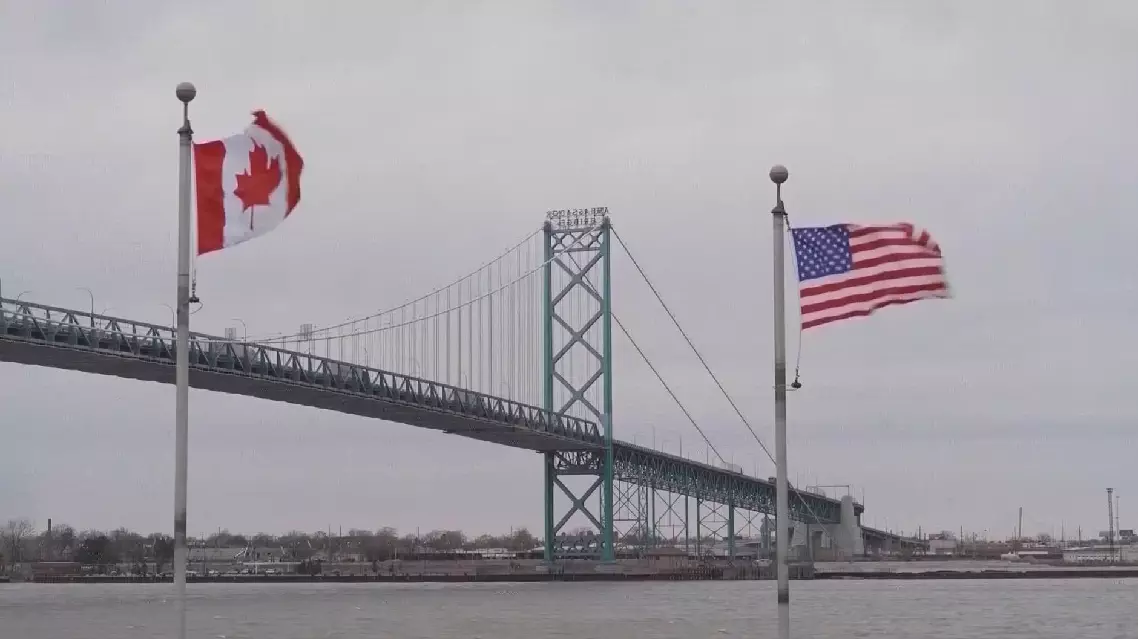
Majority of Canadians back trade countermeasures against U.S.: poll
U.S. Democratic Senator Chris Murphy said on Tuesday that the Pentagon had barred him from entering a key U.S. military base during his recent visit to Qatar, which he said reflected an effort by the U.S. government to conceal the costs of the conflict with Iran.
Murphy made the remarks while visiting Riyadh, capital city of Saudi Arabia, the second stop on his current trip to the Middle East.
He told reporters that the trip had reinforced his belief that the U.S. administration was making an unprecedented and unconstitutional effort to withhold information about the war's costs and consequences from Congress and the American public.
The United States and Israel launched military strikes against Iran in late February, prompting Iranian retaliation against U.S. military installations across the Middle East. Al Udeid Air Base, southwest of Qatar's capital Doha and one of the largest U.S. military facilities in the region, was among the major targets of the Iranian attacks.
A September 14 report by the U.S. Defense Department's inspector general, Office of Inspector General of the U.S. Department of Defense (DoDIG), said the conflict had caused significant damage to U.S. military bases and diplomatic facilities across the region, with hundreds of buildings and other structures damaged or destroyed and more than 50 U.S. aircraft damaged or destroyed.
Members of Congress have repeatedly called on the administration to provide more information about the financial costs and casualties resulting from the conflict.
Murphy, who serves on the Senate Foreign Relations Committee, said he had never encountered such restrictions during his time in the Senate when discussing the Pentagon's decision to prevent him from accessing the U.S. military facility in the Middle East.
During his visit to Saudi Arabia, Murphy also saw extensive damage to the U.S. Embassy in Riyadh caused by a drone attack. He warned that the incident could have resulted in mass casualties had it occurred during working hours.
According to data from the Defense Casualty Analysis System of the U.S.Department of Defense, U.S. forces had recorded 838 casualties in the conflict as of September 8, including 18 deaths and 820 injuries.
The Pentagon has faced criticism over delays in releasing information about wounded U.S. service members during the conflict, while officials have cited security concerns as the reason for withholding or delaying some details.
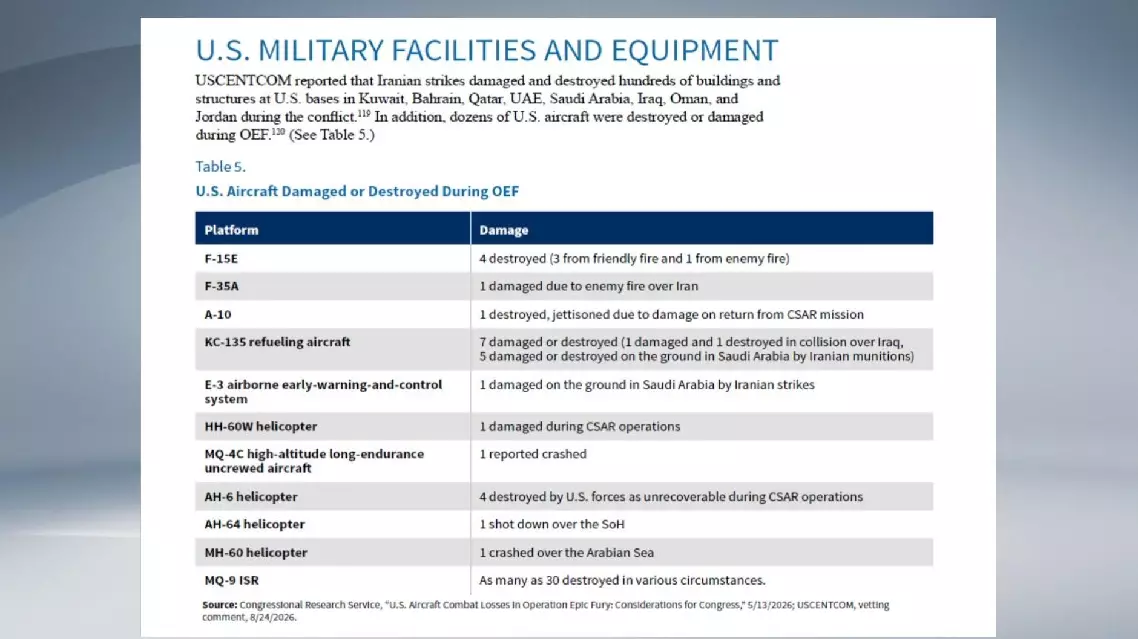
US senator accuses government of concealing Iran war costs