The Asia‑Pacific Media Forum opened Saturday in Shenzhen, south China's Guangdong Province, drawing media representatives from across the region and beyond as China is ready to host the 33rd APEC Economic Leaders' Meeting in November.
More than 400 representatives from over 40 countries and regions, as well as from United Nations agencies and international organizations, attended the event.
The forum is positioning media as a tool for consensus‑building and shared development at a time of geopolitical strains and uneven growth across the Asia‑Pacific.
Participants say progress begins with people, strengthening ties among societies, and stress that trust and cultural understanding must come before technology or economic expansion can deliver lasting cooperation.
"The Asia-Pacific coming together and walking the talk. We have been talking about [that] in a world where AI is leading generations today, I want this summit to focus on the importance of humanity, telling human stories and bringing civilizations together. Be inconsiderate of our size, where we stand in development, and I understand that we in every society has something to offer and every society has something to learn," said Aminath Namza, chairperson of the Public Service Media of Maldives.
"APEC has the ability, through its consensus of regulation, of discussion and cooperation, to reestablish trust within the region. That's trust both in terms of trade relationships, trade settlement, trade processes. So, that's the important feature of bringing together everybody here at APEC," said Guppy Daryl James, former national board member of the Australia China Business Council.
"The knowledge and everything should be disseminated among all the countries, and we expect collaboration, more networking, because it's a huge gathering. So, we learn from each other and the best practices should to be shared. So, we learn, and we'll develop simultaneously," said Syeda Lasna Kabir, professor of public administration at the University of Dhaka.
For many participants, the priority is to find common ground at a time of growing global divisions.
"It gives them a big opportunity to find some consensus among them, especially during a time like this, where you have a lot of fragmentation in the international order. So, I believe the leadership China have brought into it, bringing all the member economies together, would be very beneficial, especially during this time, to find the trust among the nations so that they could operate and negotiate the issues that they are having," said Yasiru Bandara Ranaraja, founding director of the Belt and Road Initiative Sri Lanka.
"I think we're looking at areas where the United States and China can get along. So, areas like that can be the environment, can be energy, can be health care. Those are areas that we need to work on together," said Rebecca Amelia Fannin, founder of the U.S.-based Silicon Dragon Ventures.
The forum also produced concrete outcomes, including a media partnership initiative, new cooperation agreements and the Shenzhen Consensus on Asia-Pacific media cooperation.
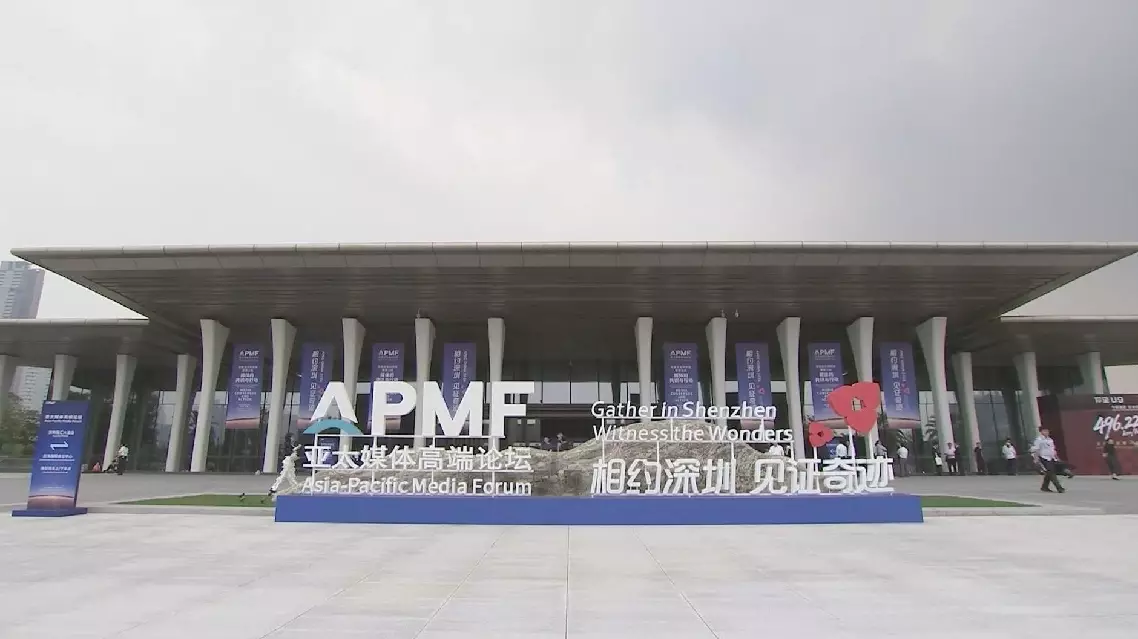
Forum in Shenzhen spotlights media's role in consensus‑building ahead of APEC leaders' meeting