KYIV, Ukraine (AP) — U.S. envoys Steve Witkoff and Jared Kushner arrived in Kyiv on Sunday in their first official visit to Ukraine as part of a renewed push for peace after Russia’s full-scale invasion of Ukraine.
Their trip follows a meeting with Russian President Vladimir Putin in Moscow on Saturday, seeking to revive peace talks during escalating aerial attacks by both sides.
Click to Gallery
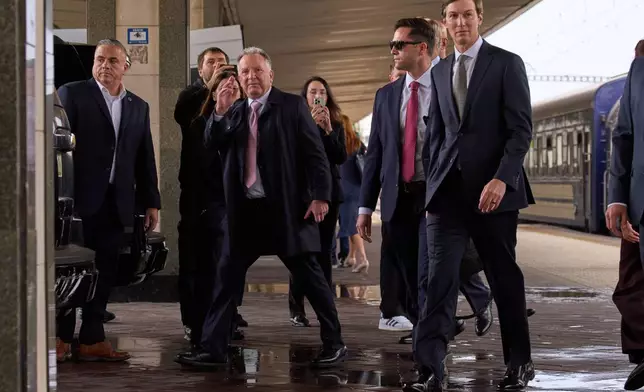
U.S. President Donald Trump's envoys Steve Witkoff, center, and Jared Kushner, right, arrive in Kyiv, Ukraine, Sunday, Sept. 6, 2026. (AP Photo/Francisco Seco)
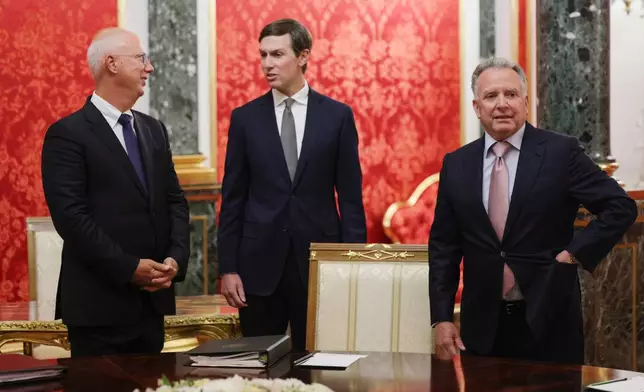
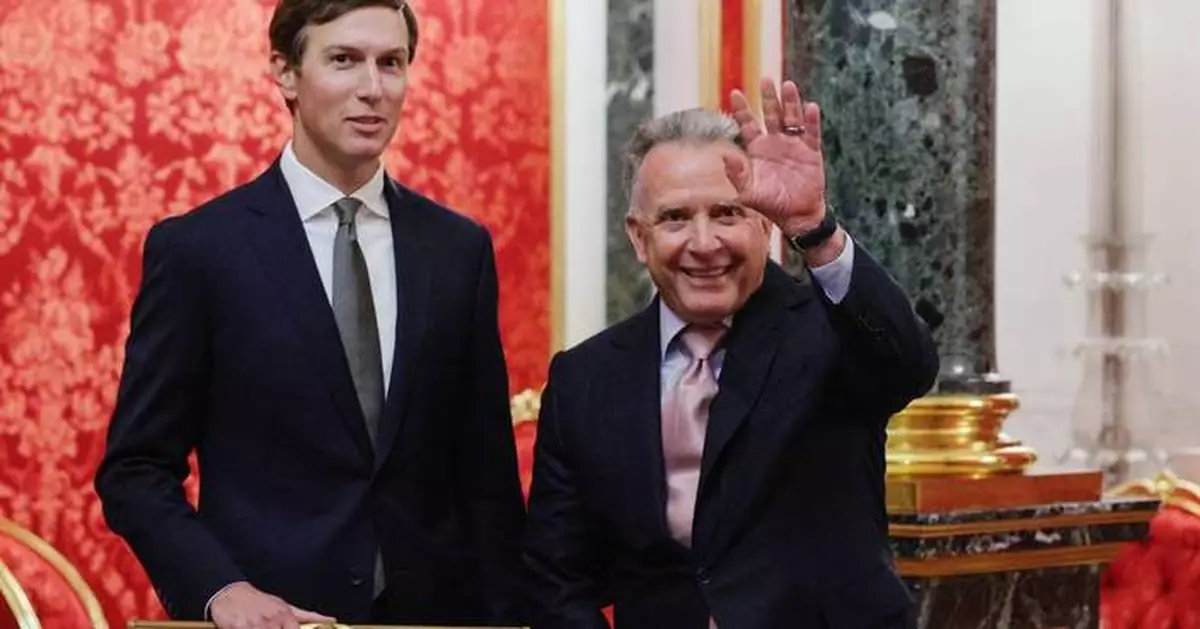
U.S. President Donald Trump's envoys Steve Witkoff, right, Jared Kushner, center, and Presidential Envoy Kirill Dmitriev stand prior to talks at the Senate Palace of the Kremlin in Moscow, on Saturday, Sept. 5, 2026. (Gavriil Grigorov/Sputnik/Kremlin Pool Photo via AP)
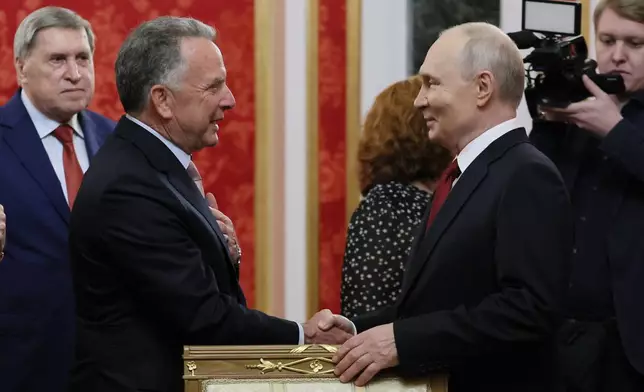
President Vladimir Putin, right, greets U.S. President Donald Trump's envoy Steve Witkoff, prior to talks at the Senate Palace of the Kremlin in Moscow, on Saturday, Sept. 5, 2026. (Mikhail Metzel/Sputnik/Kremlin Pool Photo via AP)
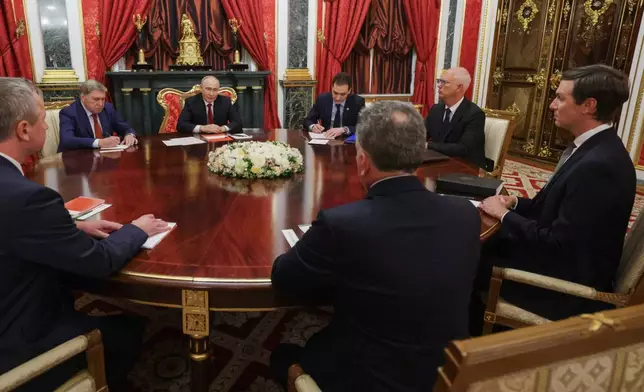
President Vladimir Putin, background center left, speaks to U.S. President Donald Trump's envoys Steve Witkoff, center foreground, back to a camera, and Jared Kushner, right, as Kremlin foreign policy adviser Yuri Ushakov, second left, and Presidential Envoy Kirill Dmitriev attend the talks at the Senate Palace of the Kremlin in Moscow, on Saturday, Sept. 5, 2026. (Gavriil Grigorov/Sputnik/Kremlin Pool Photo via AP)
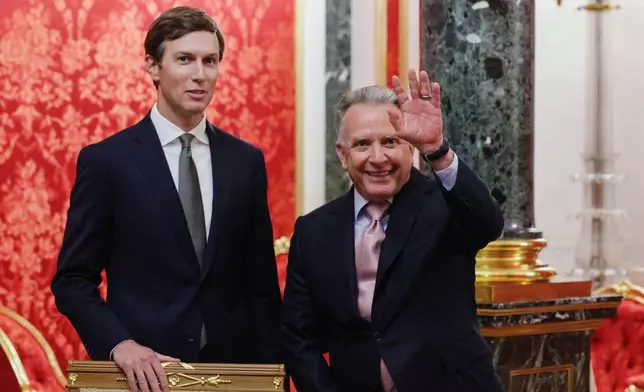
U.S. President Donald Trump's envoys Steve Witkoff, right, and Jared Kushner wait to attend the talks with Russian President Vladimir Putin at the Senate Palace of the Kremlin in Moscow, on Saturday, Sept. 5, 2026. (Gavriil Grigorov/Sputnik/Kremlin Pool Photo via AP)
Ukrainian President Volodymyr Zelenskyy said Sunday that Kyiv is ready for a “constructive” discussion with U.S. representatives.
“We are interested in bringing the end of the war closer. Peace is needed. Security guarantees are needed. A just and sustainable postwar peace is needed. Our proposals are prepared,” he said in a post on Telegram.
Washington’s push to end the fighting has lost momentum, with the United States focused for the past six months on the Iran war. The last known visit to Moscow by Witkoff and Kushner, U.S. President Donald Trump’s son-in-law, was in January when they also held talks with Putin at the Kremlin.
Saturday's meeting in Moscow lasted more than three hours behind closed doors and ended without announcements of any breakthroughs. Putin’s foreign policy adviser, Yuri Ushakov, described them afterward as constructive, frank, and useful but didn’t discuss specific outcomes.
While Moscow offered its “comprehensive assessment” of the battlefield situation in Ukraine, Ushakov said, the talks were not purely focused on the war in Ukraine.
“Economic issues and potentially large, mutually beneficial joint projects for Russia and America were discussed in considerable detail,” he said.
The air war between Russia and Ukraine has intensified as troops have struggled to make progress along the 1,250-kilometer (775-mile) front line. Russia has recently been using fast-flying, jet-powered drones, and the recurring wail of air-raid sirens has become part of daily life in Kyiv.
Putin and Zelenskyy had agreed to pause strikes on each other’s capitals while the talks take place. Still, the two traded fire overnight into Sunday, officials said.
Russian attacks across multiple Ukrainian regions killed one person and injured at least 10 others overnight into Sunday, Ukraine’s State Emergency Service said.
In Zaporizhzhia, drone strikes killed a 74-year-old man and wounded three people, while a drone damaged an apartment building, injuring seven people, in the Khmelnytskyi region.
Ukraine’s air force said Sunday that it intercepted 82 drones out of the 108 launched by Russia overnight, along with six missiles.
In Russia, a man was killed and a woman seriously wounded when a Ukrainian drone struck a vehicle, local authorities in the Belgorod border region said.
The Russian Defense Ministry said Sunday that its air defenses overnight shot down 258 Ukrainian drones over 14 Russian regions, occupied Crimea and the waters of the Black and Azov seas.
In Kyiv on Sunday, dozens gathered for a nationwide 9 a.m. moment of silence honoring Ukraine’s fallen soldiers, a daily ritual held in cities across the country.
Among them was Nataliia Lipei, 67, whose son Viktor was killed in December 2022. Despite a health condition, she has traveled from city to city to take part, and she said she hopes the talks in Moscow and Kyiv will finally bring an end to the war.
“I hope these steps and these meetings will definitely produce results, because there has been so much bloodshed and so many deaths here that we have to stop all of this,” she told The Associated Press.
Not everyone shared her hope for the talks. Oleksandr Pastukhov, 27, a video editor who joined the commemoration, was skeptical the envoys’ visit would change anything.
“We’ve already seen delegations like this come here before,” he said. “We’ve seen this so-called ceasefire for three days, which ended after just a couple of hours, and now we’re supposed to naively think that two people will come and change something.”
Follow the AP’s coverage of the war in Ukraine at https://apnews.com/hub/russia-ukraine
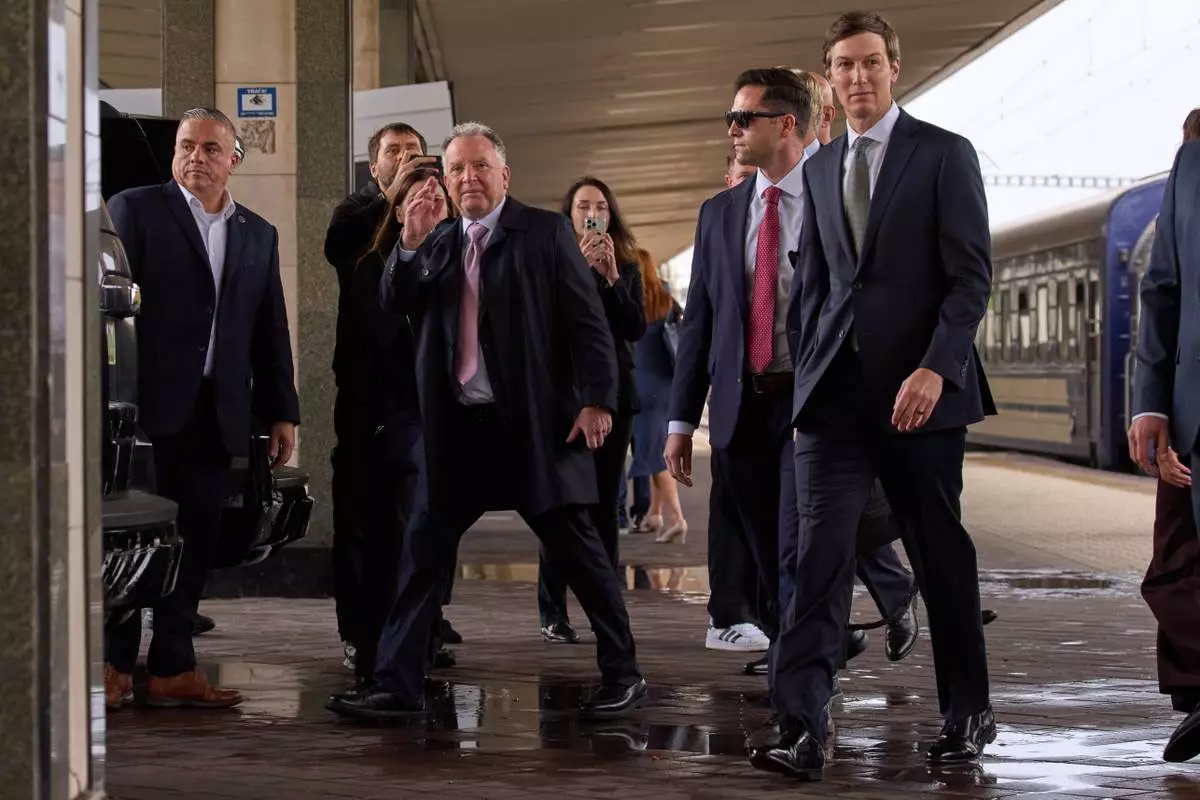
U.S. President Donald Trump's envoys Steve Witkoff, center, and Jared Kushner, right, arrive in Kyiv, Ukraine, Sunday, Sept. 6, 2026. (AP Photo/Francisco Seco)
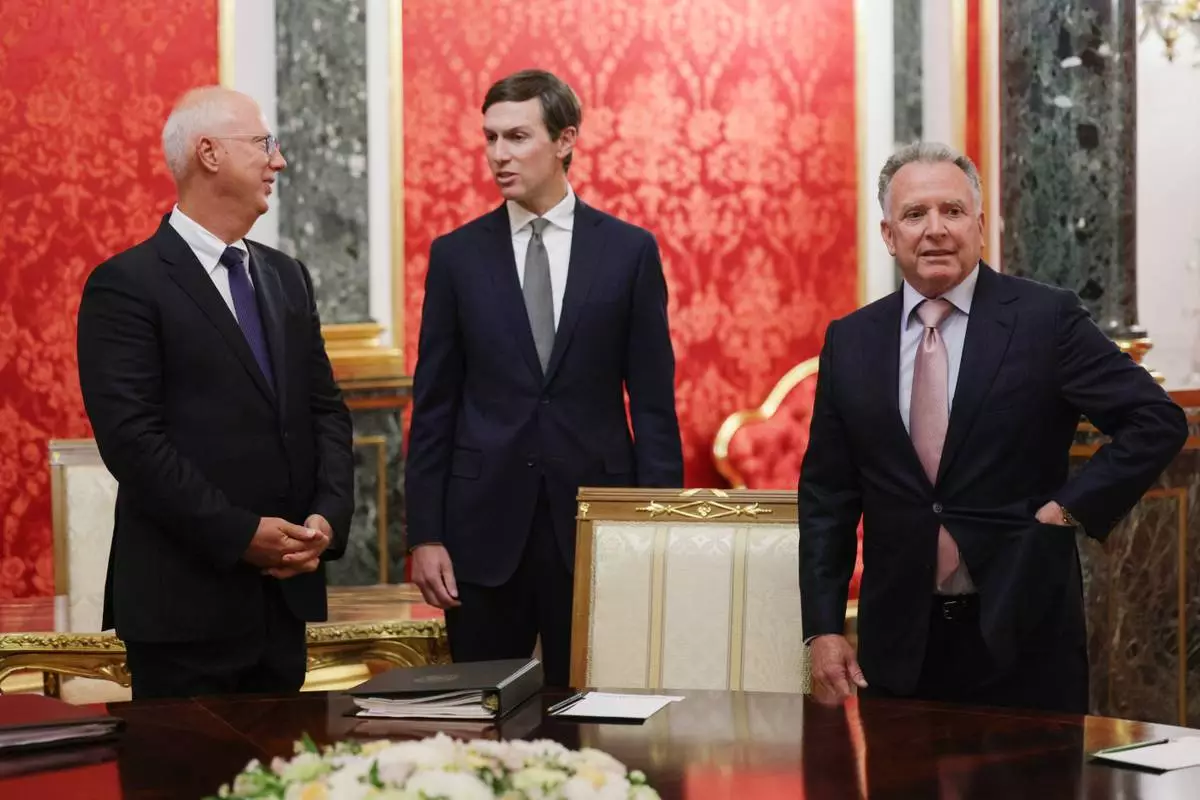
U.S. President Donald Trump's envoys Steve Witkoff, right, Jared Kushner, center, and Presidential Envoy Kirill Dmitriev stand prior to talks at the Senate Palace of the Kremlin in Moscow, on Saturday, Sept. 5, 2026. (Gavriil Grigorov/Sputnik/Kremlin Pool Photo via AP)
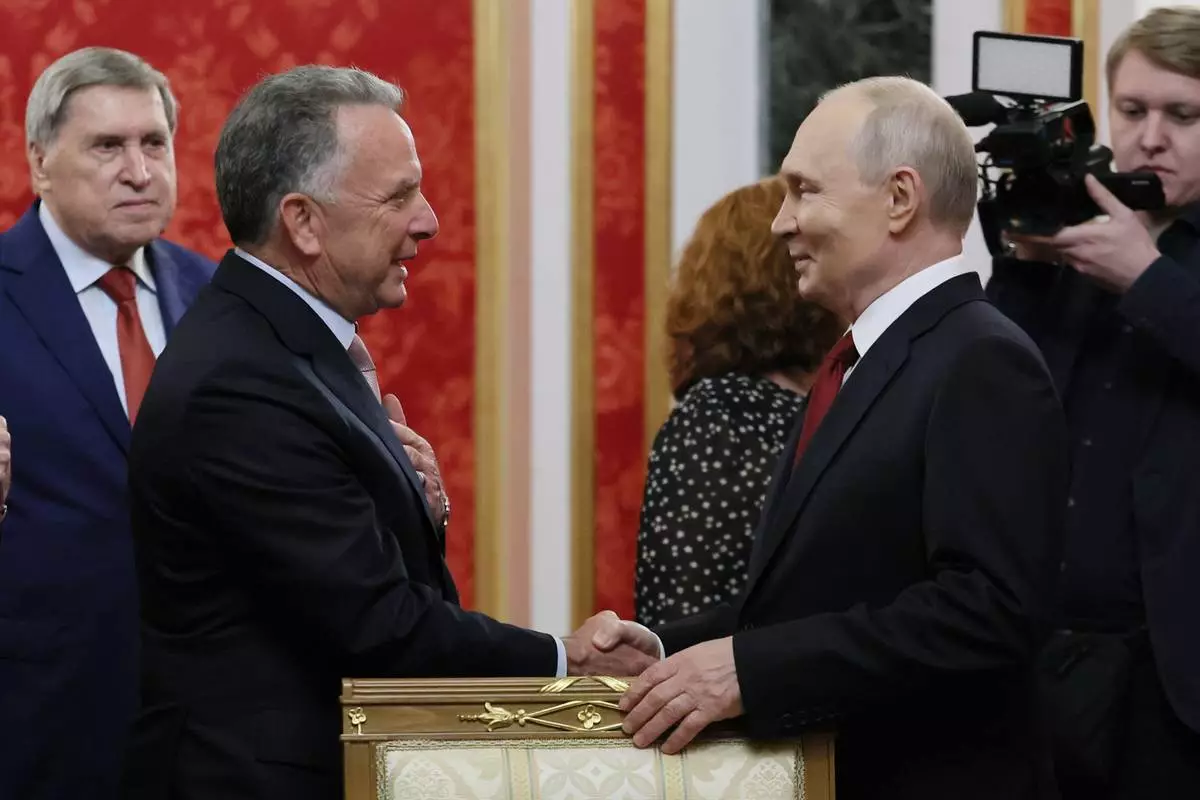
President Vladimir Putin, right, greets U.S. President Donald Trump's envoy Steve Witkoff, prior to talks at the Senate Palace of the Kremlin in Moscow, on Saturday, Sept. 5, 2026. (Mikhail Metzel/Sputnik/Kremlin Pool Photo via AP)
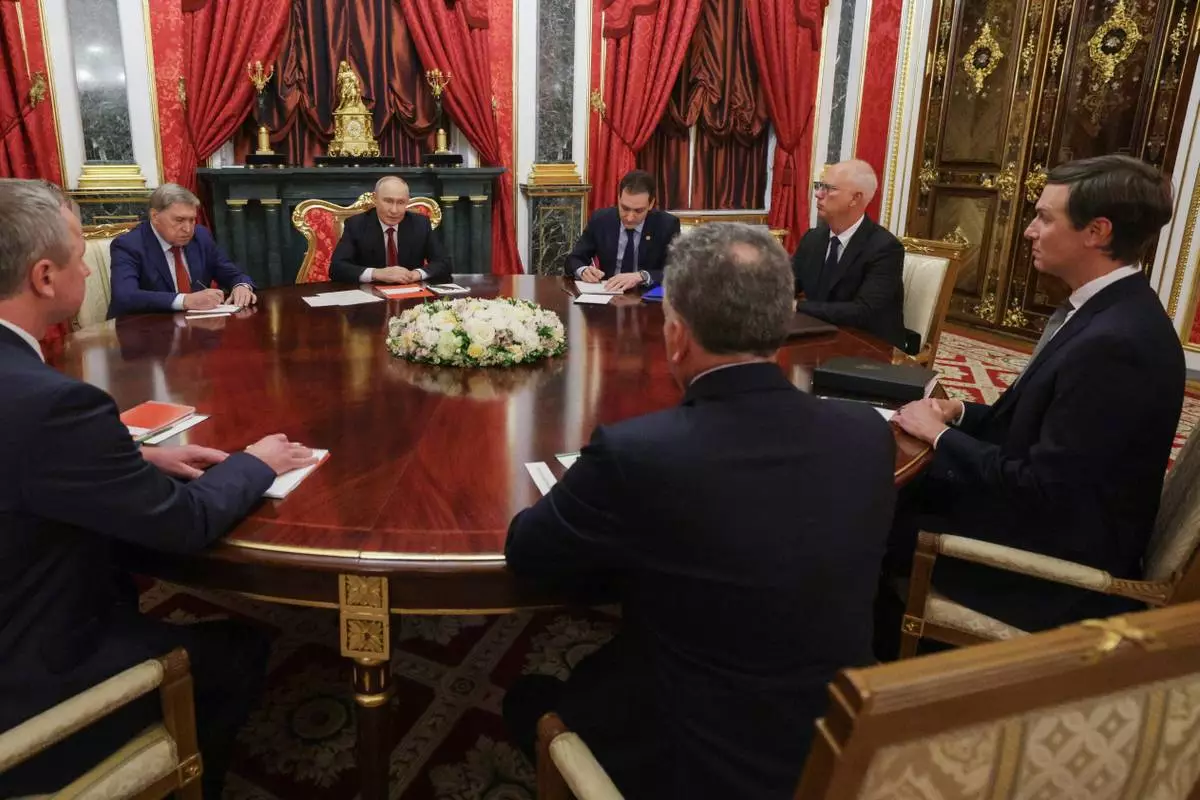
President Vladimir Putin, background center left, speaks to U.S. President Donald Trump's envoys Steve Witkoff, center foreground, back to a camera, and Jared Kushner, right, as Kremlin foreign policy adviser Yuri Ushakov, second left, and Presidential Envoy Kirill Dmitriev attend the talks at the Senate Palace of the Kremlin in Moscow, on Saturday, Sept. 5, 2026. (Gavriil Grigorov/Sputnik/Kremlin Pool Photo via AP)
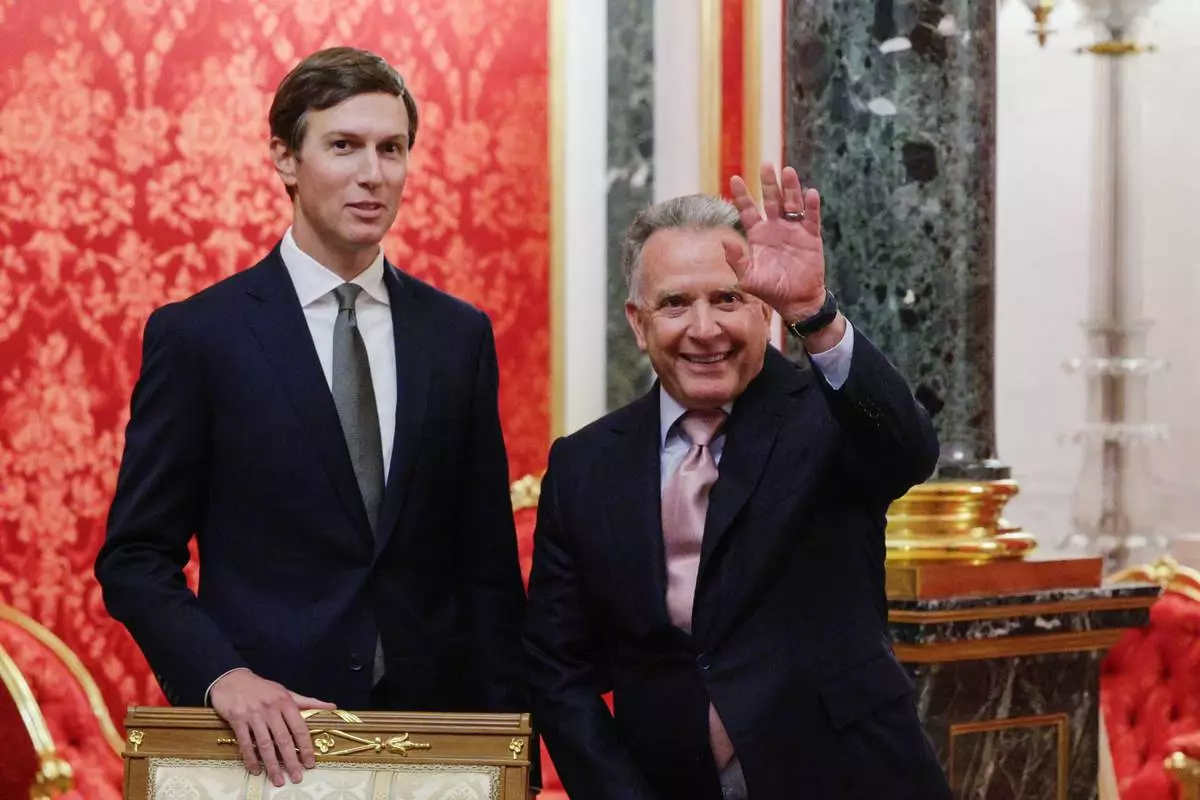
U.S. President Donald Trump's envoys Steve Witkoff, right, and Jared Kushner wait to attend the talks with Russian President Vladimir Putin at the Senate Palace of the Kremlin in Moscow, on Saturday, Sept. 5, 2026. (Gavriil Grigorov/Sputnik/Kremlin Pool Photo via AP)