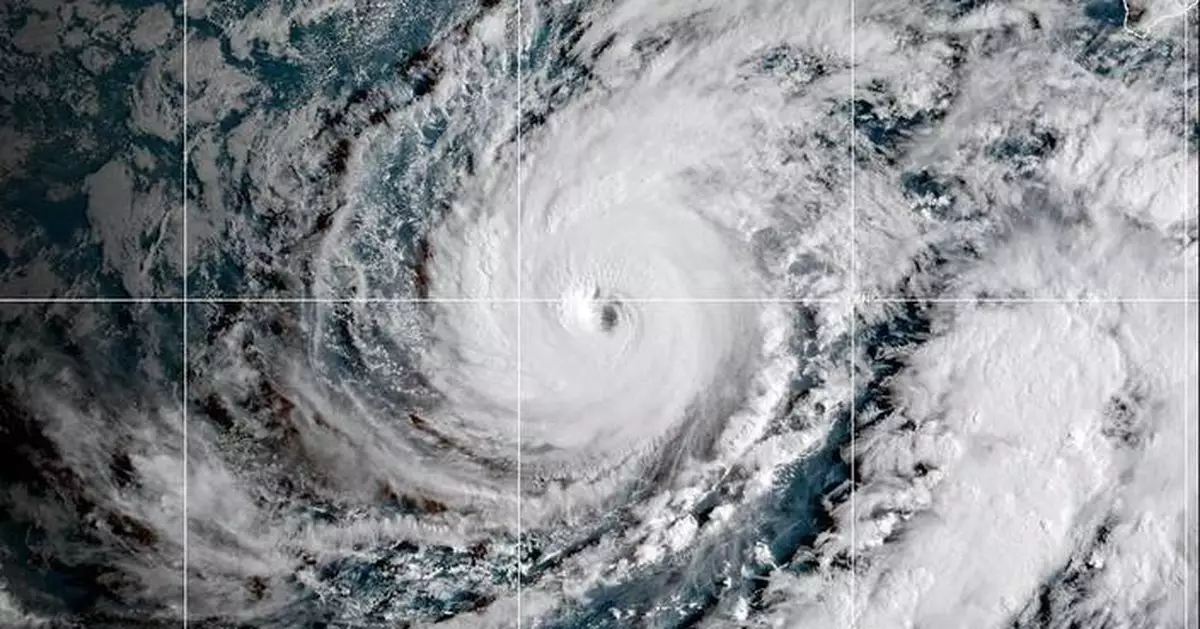
LIHUE, Hawaii (AP) — Officials in Hawaii urged residents and visitors to prepare for heavy rains, flooding and possibly mudslides as Hurricane Lowell, a major Category 3 storm, prompted the National Hurricane Center to issue a tropical storm warning for two islands on Sunday.
The Miami-based center issued the warning for Kauai and Niihau as Lowell was forecast to pass the islands to the west late Monday while traveling north. Forecasters said rainfall totals of 6-10 inches (15-25 centimeters), with maximum totals of 14 inches (36 centimeters), were possible.
Hawaii's Big Island is expected to see 4-8 inches (10-20 centimeters) of rain, with some areas getting as much as 12 inches (30 centimeters).
Lowell had maximum sustained winds of 120 mph (195 kph) and was located about 535 miles (860 kilometers) south-southwest of Lihue, or about 555 miles (895 kilometers) southwest of Honolulu. It was moving north at 6 mph (9 kph), the hurricane center said.
Hurricane-force winds extended outward up to 50 miles (85 kilometers) from the center, and tropical storm-force winds extended outward up to 175 miles (280 kilometers), the center said.
The rainfall could produce significant flash flooding and mudslides, the center said. A combination of storm surge and tides will likely cause normally dry areas near the coast to be flooded by waters of up to 3 feet (1 meter) on Kauai.
The Kauai Emergency Management Agency urged residents to fill gas tanks, charge devices, refill prescriptions and have enough water and food ahead of the storm. It also said residents should be prepared to stay home for several days.
In Lihue, a town of 8,000 with Kauai’s primary airport, residents were stocking up on food and water as supermarket shelves emptied.
Real estate agent Lori Benkert bought an extra 10-pound (4.5-kilogram) container of propane so that she can cook on the barbecue if power shuts off. Benkert manages dozens of properties in Kauai and has boarded up two houses on the western side of the island. “We’ll lose some power, probably have some trees, a bunch of tree limbs coming down,” Benkert said. “Everybody is probably going just to hunker down.”
Meanwhile, Hurricane Marie created dangerous surf conditions along the coast of Mexico's Baja California and Southern California. The Category 1 storm was located about 695 miles (1,120 kilometers) south-southwest of San Diego with maximum sustained winds of 75 mph (120 kph). Forecasters said Marie was moving northwest at 7 mph (11 kph).
Although no coastal watches or warnings were in effect, swells generated by Marie will continue to affect portions of southwest Mexico, the Baja California peninsula and Southern California for the next few days, the hurricane center said. These swells are likely to cause life-threatening surf and rip current conditions.
Associated Press writers Wufei Yu in Phoenix and David Fischer in Miami contributed to this report.
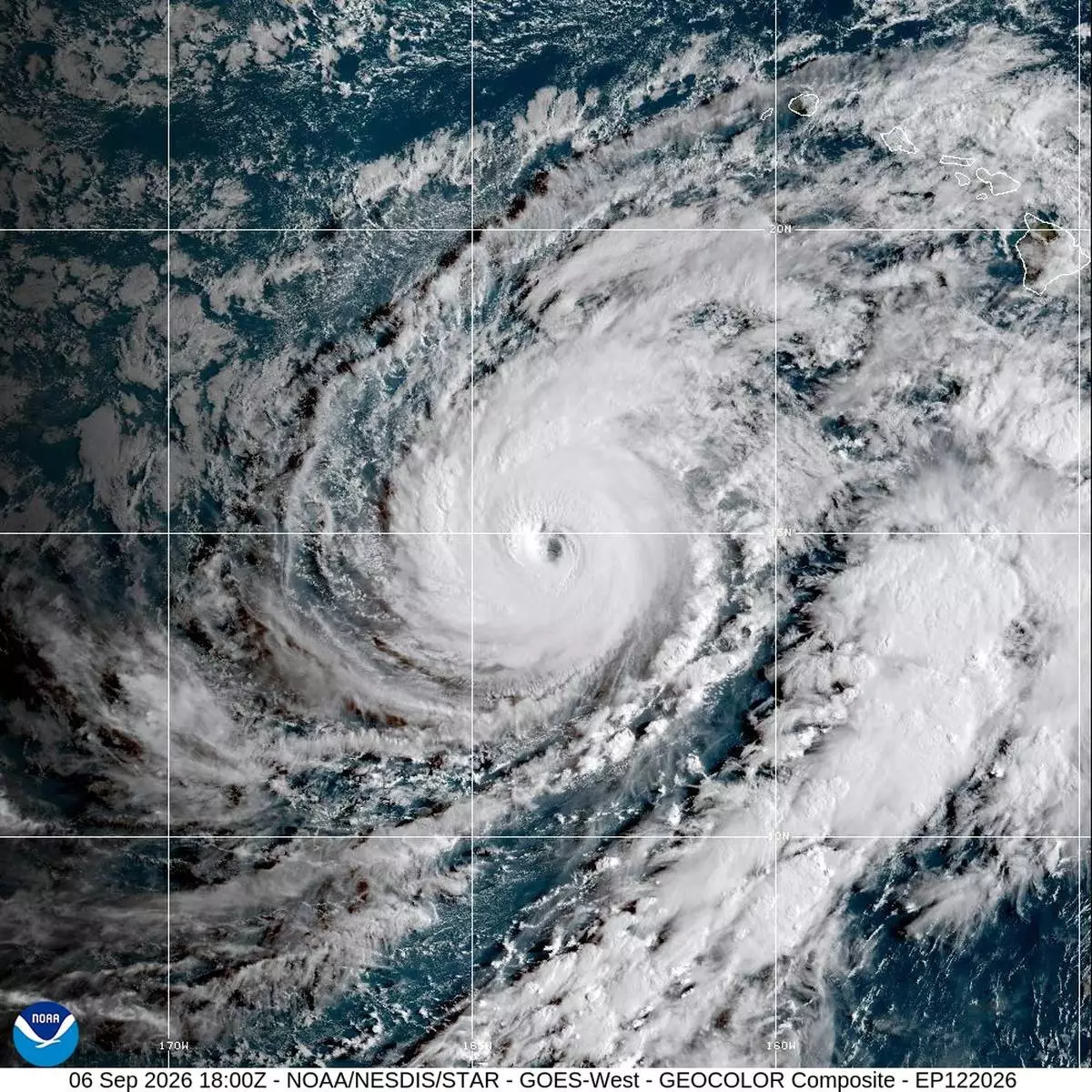
This satellite image released by NOAA shows Hurricane Lowell approaching Hawaii, Sunday, Sept. 6, 2026. (NOAA via AP)
MIAMI (AP) — An Amazon cargo plane barreled off a runway at Miami International Airport on Sunday, killing at least five people and injuring five others as it struck vehicles and was engulfed in flames, authorities said.
The aircraft overran the runway around 2 p.m. after arriving from San Juan, Puerto Rico, and plowed across a road used by warehouse workers and other businesses that surround the airport. Five people were killed, three critically injured and two others hospitalized with less severe injuries, Miami-Dade County officials told a news conference.
Miami officials said Sunday afternoon that it was too soon to say whether the people who died were on board the plane or in the vehicles the plane hit.
The crash, which sent thick black smoke billowing into the sky, trapped the pilot and copilot in the cockpit and some occupants in cars, said Miami-Dade Rescue Fire Chief Ray Jadallah. The agency said crews also had to extricate a person who was trapped under a vehicle.
The crash halted flights at the busy travel hub for much of the afternoon. Some 200 emergency personnel responded, finding the plane with heavy flames and smoke from a complex engine compartment fire, the department said. Firefighters used foam from specialized airport firefighting units to extinguish the fire, and crews were still dealing with a fuel leak on the plane hours later.
The Prime Air plane came to rest beside a roadway near two semi-trucks, images showed. The aircraft appeared to be resting on its belly and was largely intact despite the fire.
The cause had yet to be determined, and it was not clear if weather had played a role. Thunderstorms and wind gusts up to 30 mph (48 kph) were recorded in the area at the time, according to the National Weather Service.
The flight had been operated by 21 Air, a cargo carrier based in North Carolina. The 32-year-old Boeing 767 was originally built to carry passengers and flew for several airlines for more than two decades before being converted to a cargo plane in 2015, according to flight-tracking site Flightradar24.
More than 160 flights were canceled and nearly 325 delayed by late Sunday, according to FlightAware, a website that tracks flight disruptions. Officials from Orlando International Airport, more than 200 miles (320 km) north of Miami, said some flights were diverted there.
The National Transportation Safety Board said it was sending a team to Miami led by Chairwoman Jennifer Homendy to investigate.
Amazon said in a statement that it would cooperate with any investigation.
“We’re heartbroken to learn that five people lost their lives in today’s incident at Miami International Airport," the company said. “Our deepest sympathies go out to the families, loved ones, and all those affected by this devastating loss.”
Last year, a UPS plane crashed after losing its engine while accelerating down the runway at Louisville’s Muhammad Ali International Airport. The crash killed all three pilots and 12 people on the ground. Twenty-three more were injured.
Aviation safety expert Steve Arroyo said that a 767 cargo aircraft would typically be staffed only by a pilot and copilot on domestic flights. A third pilot would be added for an international flight, and a long-haul international flight would require a fourth pilot.
Arroyo, a retired longtime United Airlines pilot, said he wants to know whether the Amazon plane landed in the touchdown zone of the runway, and if it was beyond that area why it didn’t simply abort that landing and go around to line up for another attempt. Typically, the landing zone is within the first 3,000 feet (914 meters) of a runway.
“Did the aircraft land within the required touchdown zone? If it did, what happened? Was it weather related or mechanical related?” Arroyo said. “If it did land beyond the touchdown zone, why didn’t it go around? That is a standing practice around the world.”
Jackson Lee, who runs an electronics shop near the crash site, went outside with four colleagues after the crash and saw smoke rising near the airport’s fences, Lee said.
“We hear planes taking off and landing every five minutes. I thought I’d got used to it,” Lee said. “I never thought it could come this close to us.”
Funk reported from Omaha, Nebraska. Associated Press writers Tim Reynolds in Miami, Rio Yamat in Las Vegas and Wufei Yu in Phoenix contributed.
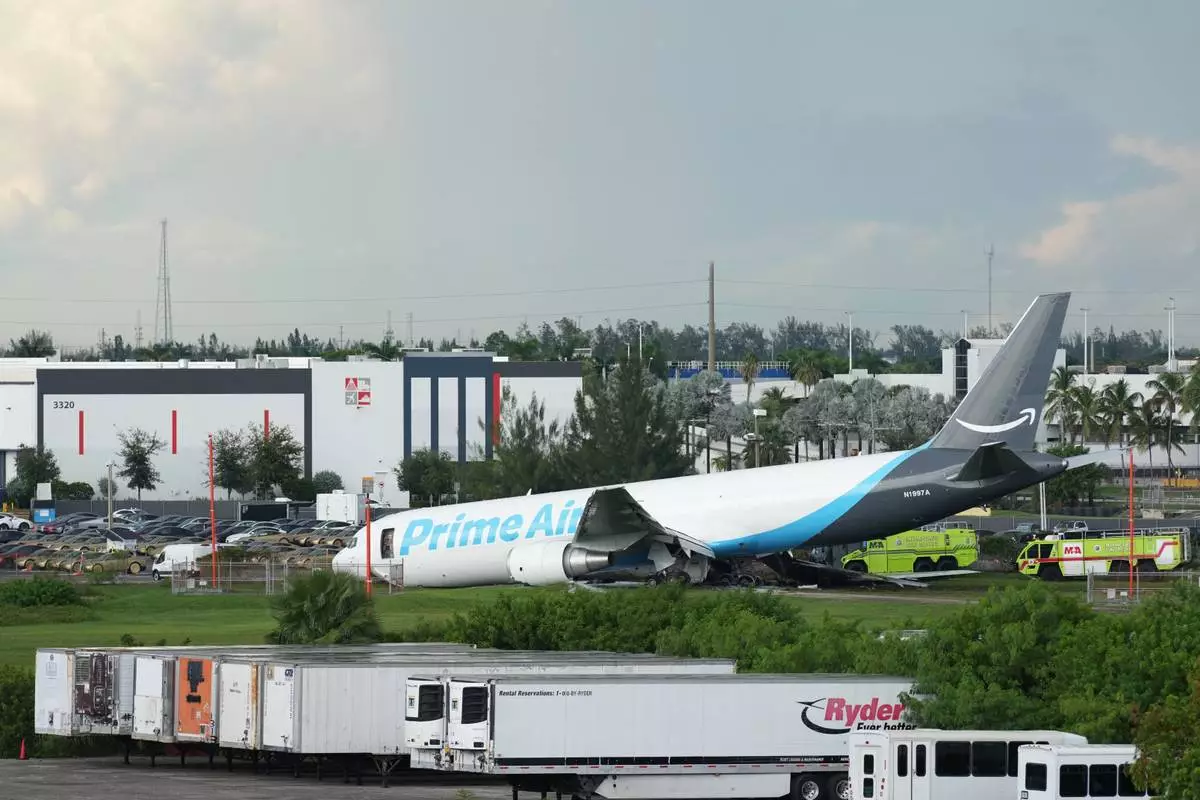
An Amazon cargo plane sits at the Miami International Airport (MIA) after it overshot the runway, Sunday, Sept. 6, 2026. (AP Photo/Lynne Sladky)
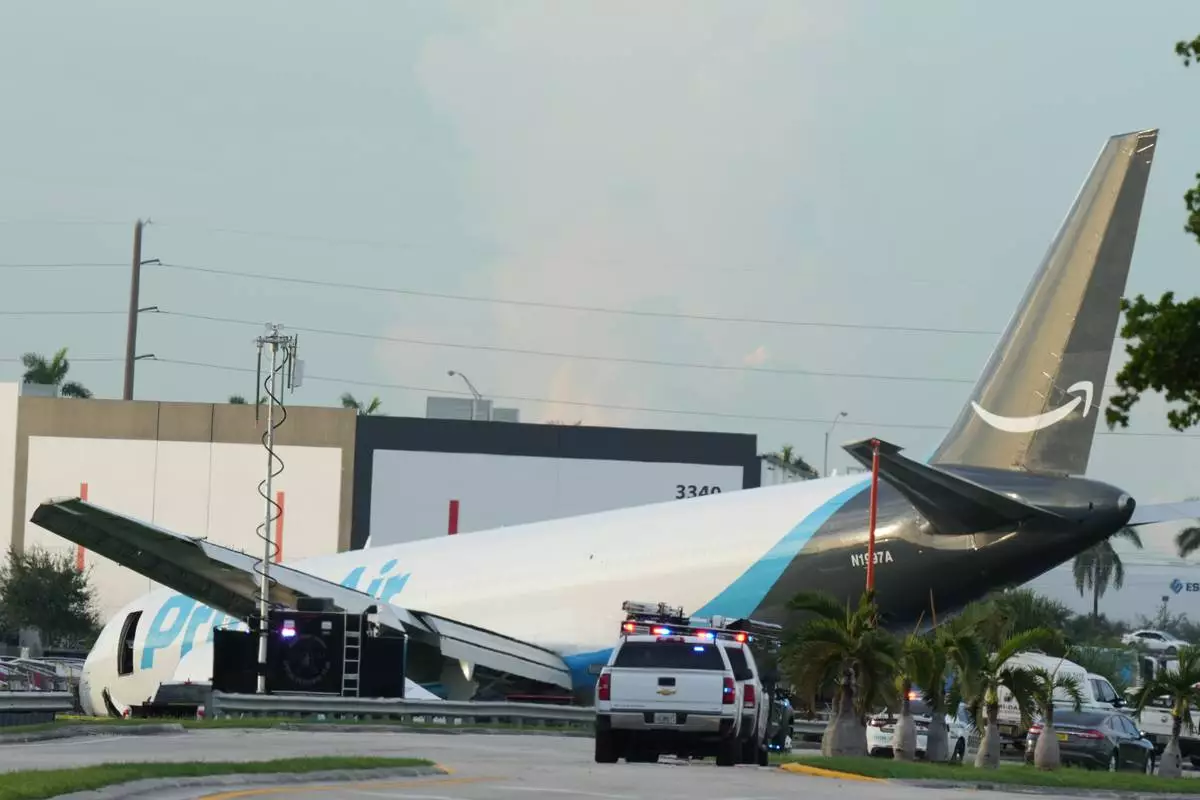
An Amazon cargo plane sits at the Miami International Airport (MIA) after it overshot the runway, Sunday, Sept. 6, 2026. (AP Photo/Lynne Sladky)
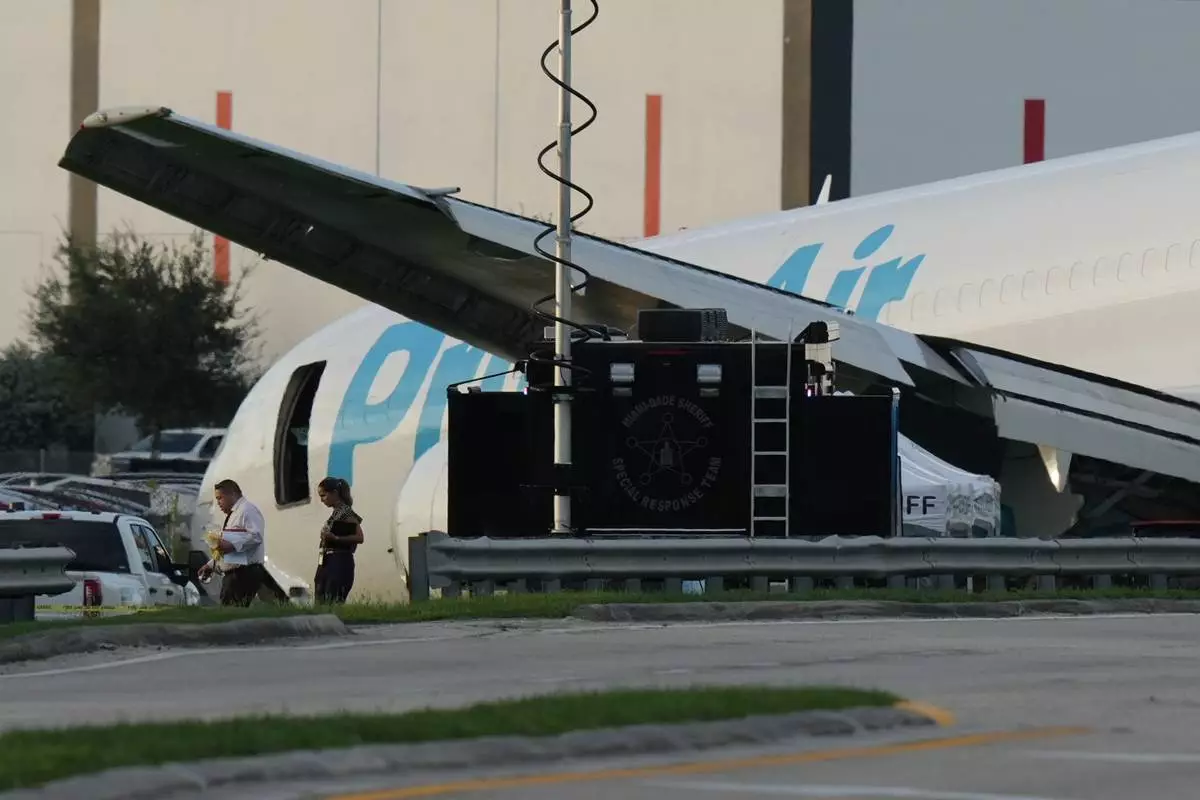
An Amazon cargo plane sits at the Miami International Airport (MIA) after it overshot the runway, Sunday, Sept. 6, 2026. (AP Photo/Lynne Sladky)
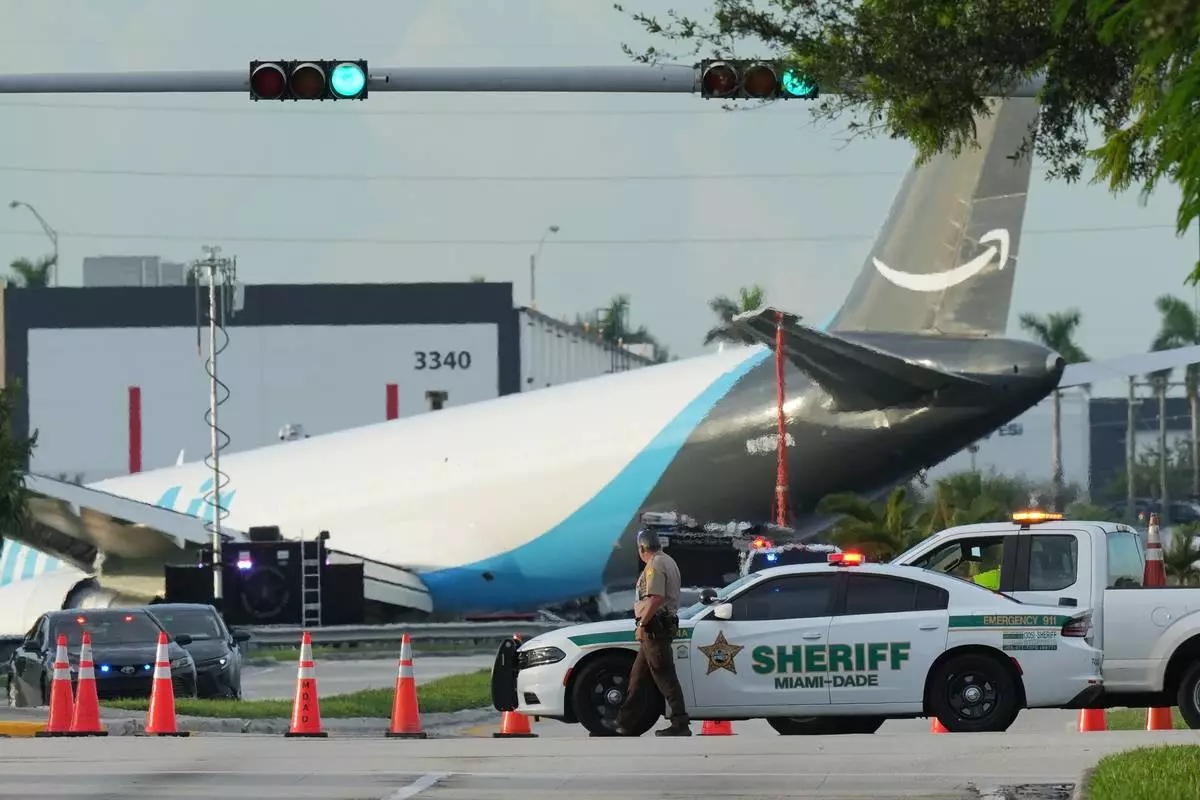
An Amazon cargo plane sits at the Miami International Airport (MIA) after it overshot the runway, Sunday, Sept. 6, 2026. (AP Photo/Lynne Sladky)
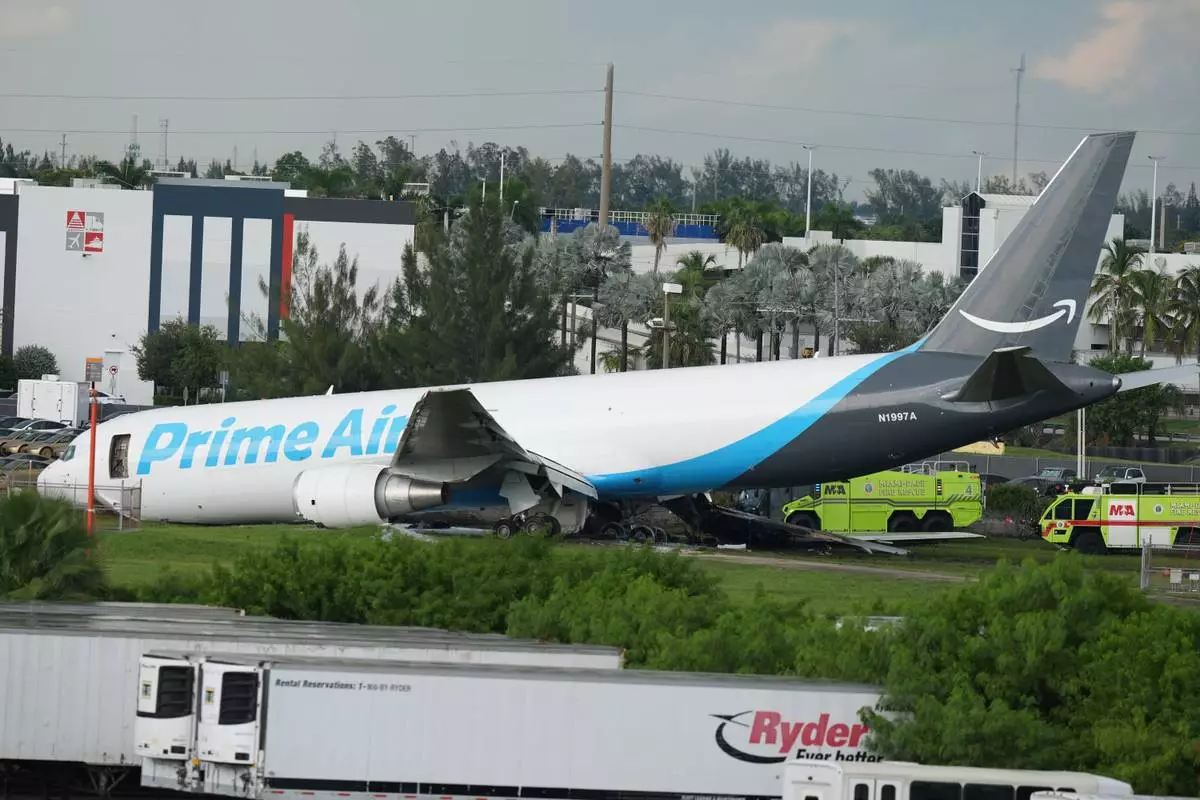
An Amazon cargo plane sits at the Miami International Airport (MIA) after it overshot the runway, Sunday, Sept. 6, 2026. (AP Photo/Lynne Sladky)
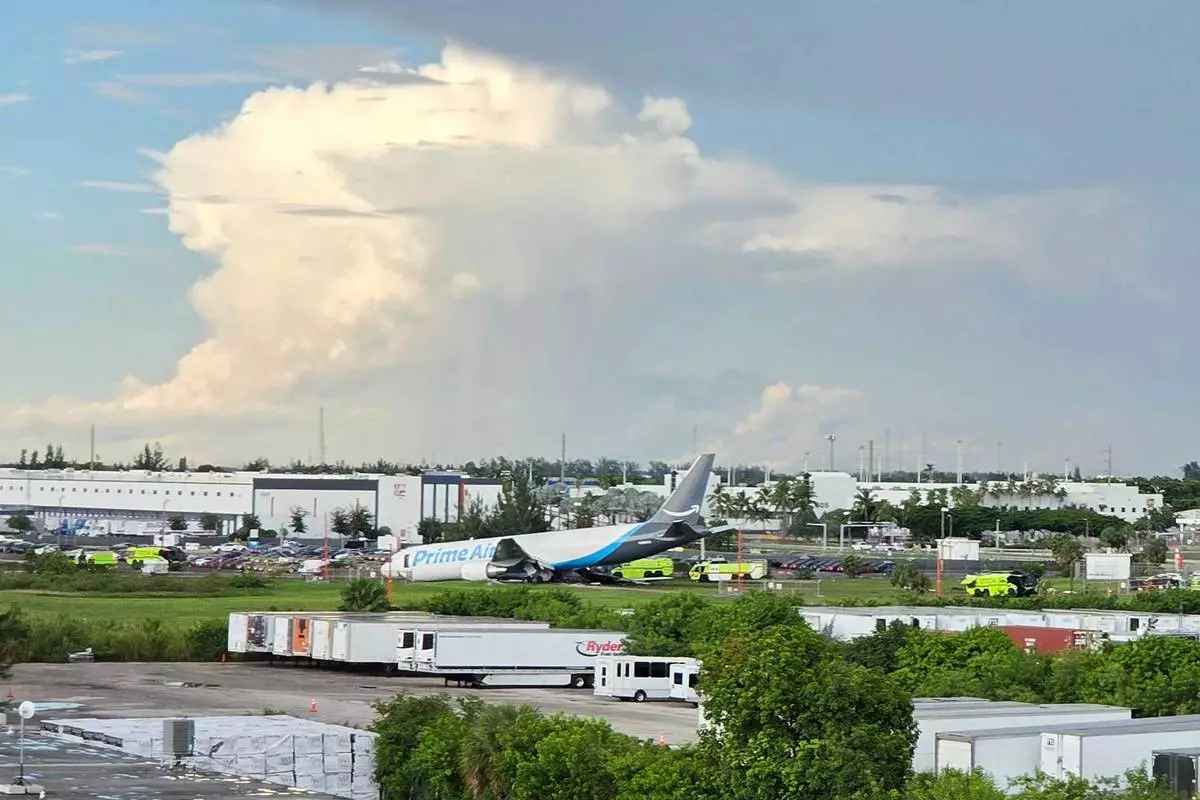
An Amazon cargo plane sits at the Miami International Airport (MIA) after it overshot the runway, Sunday, Sept. 6, 2026. (AP Photo/David Fischer)
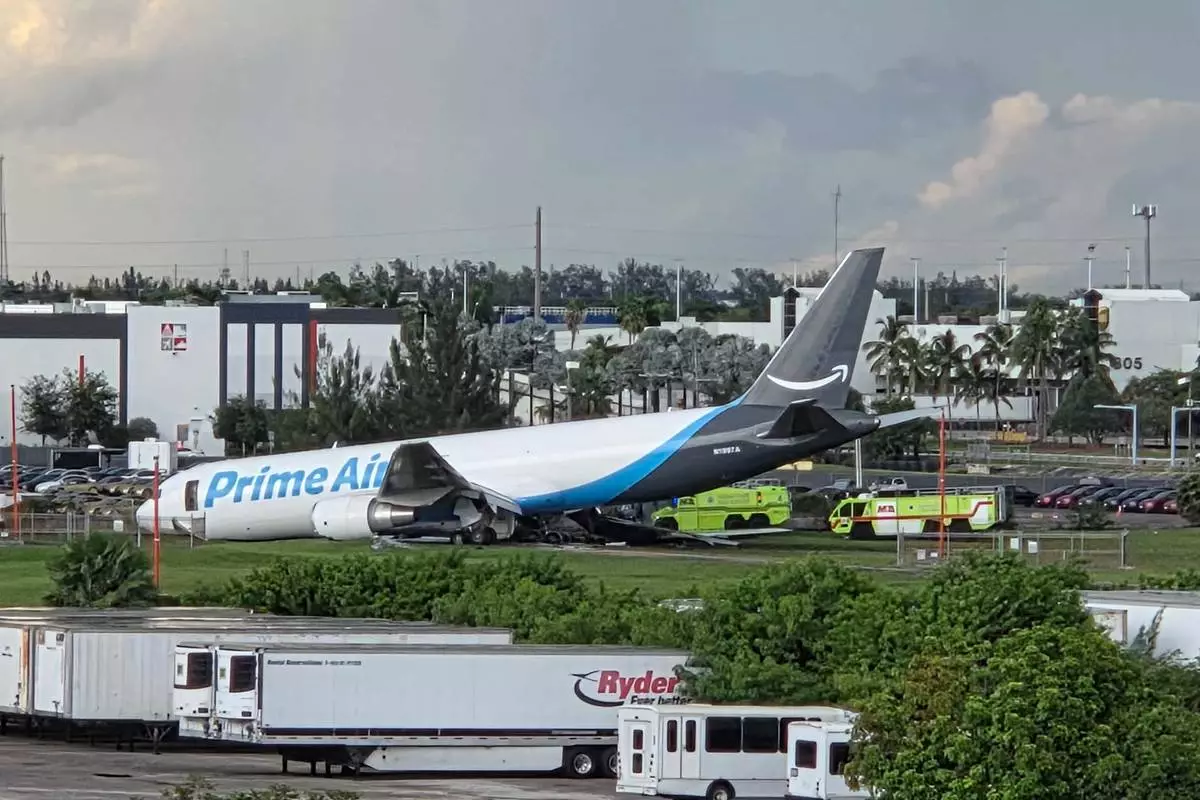
An Amazon cargo plane sits at the Miami International Airport (MIA) after it overshot the runway, Sunday, Sept. 6, 2026. (AP Photo/David Fischer)
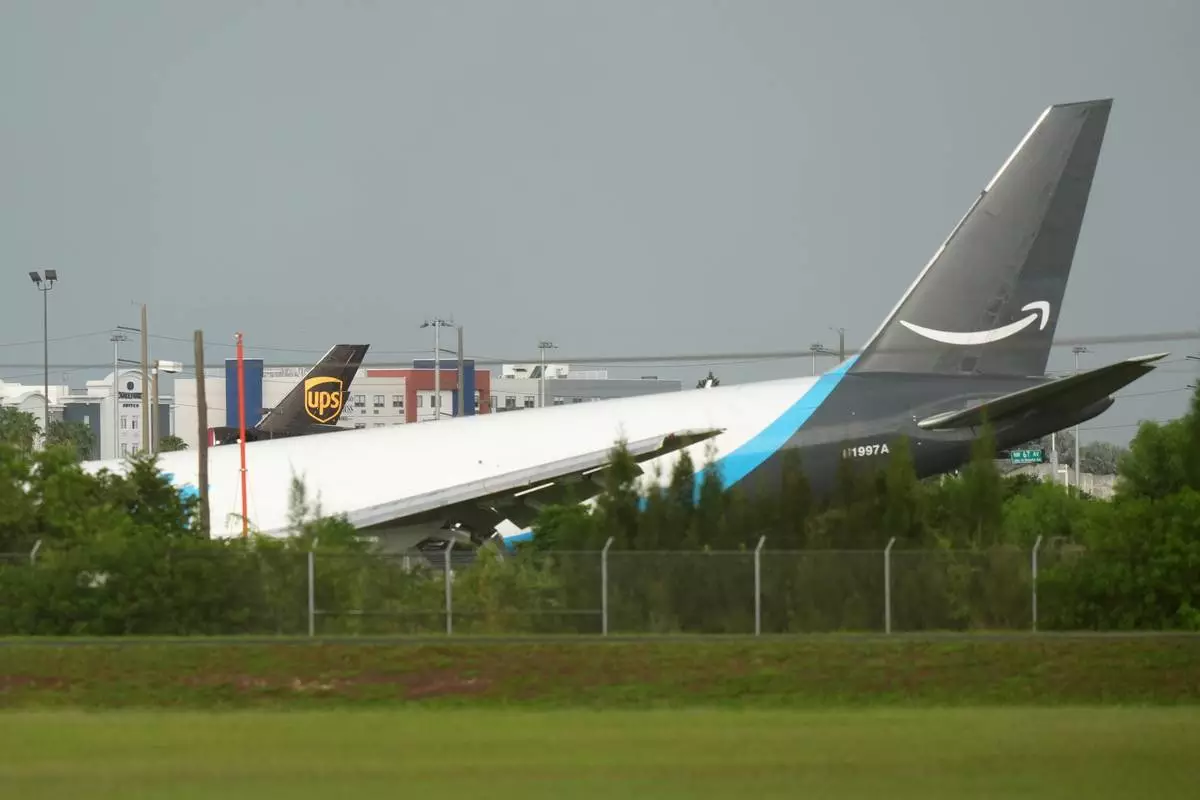
An Amazon cargo plane sits at the Miami International Airport (MIA) after it overshot the runway, Sunday, Sept. 6, 2026. (AP Photo/Lynne Sladky)