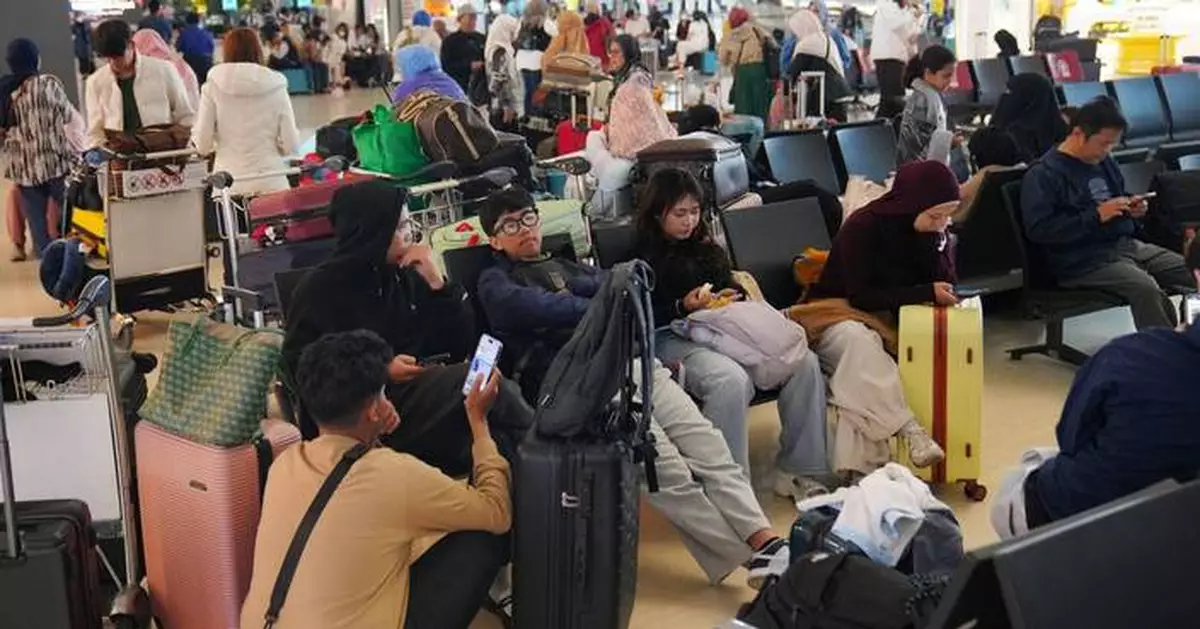
JAKARTA, Indonesia (AP) — Indonesia kept several airports closed and shifted schools to remote learning Monday though the volcanic eruption that has halted 2,300 flights and coated areas with ash was subsiding.
The continuous, 25-hour eruption of Anak Krakatau that produced a fountain of lava and a boom heard 700 kilometers (435 miles) away ended Sunday, the country's Geological Agency said. But it remained active Monday with moderate, intermittent eruptions, dark ash emissions and small, localized earthquakes, the agency said in a statement. Weather was obscuring visual observations of the eruption.
Click to Gallery

People look at an information board as flights are disrupted due to the eruption of Mount Anak Krakatau, at Soekarno-Hatta International Airport in Tangerang, Indonesia, Monday, Sept. 7, 2026. (AP Photo/Tatan Syuflana)
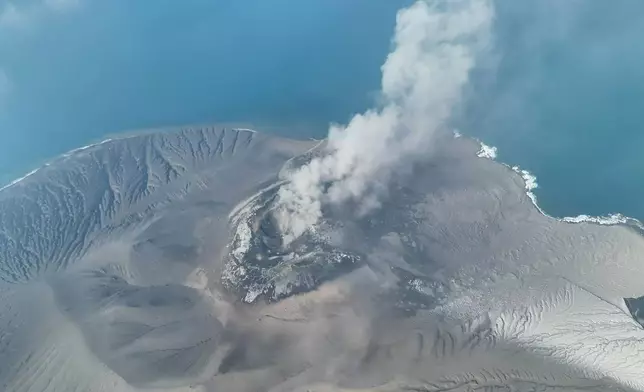
In this drone photo released by the Geological Agency (Badan Geologi) of Indonesia's Ministry of Energy and Mineral Resources, Mount Anak Krakatau spews volcanic smoke in Sunda Strait, Indonesia, Saturday, Sept. 5, 2026. (Badan Geologi via AP)
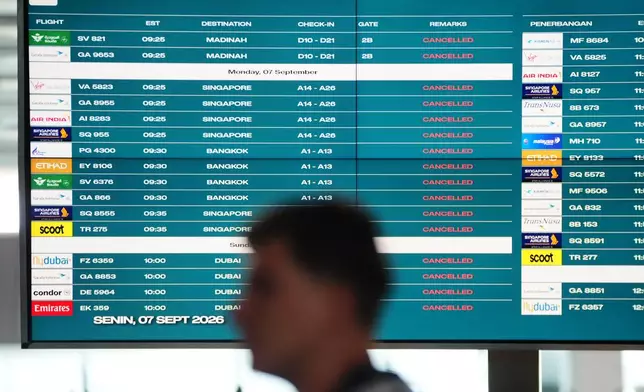
A man walks past an information board showing cancelled flights due to the eruption of Mount Anak Krakatau, at Soekarno-Hatta International Airport in Tangerang, Indonesia, Monday, Sept. 7, 2026. (AP Photo/Tatan Syuflana)
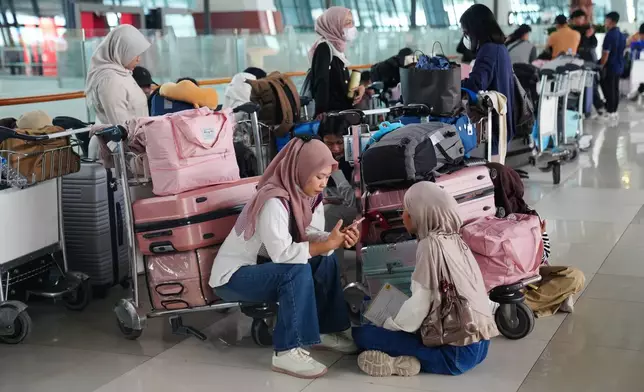
People wait as flights are disrupted due to the eruption of Mount Anak Krakatau, at Soekarno-Hatta International Airport in Tangerang, Indonesia, Monday, Sept. 7, 2026. (AP Photo/Tatan Syuflana)
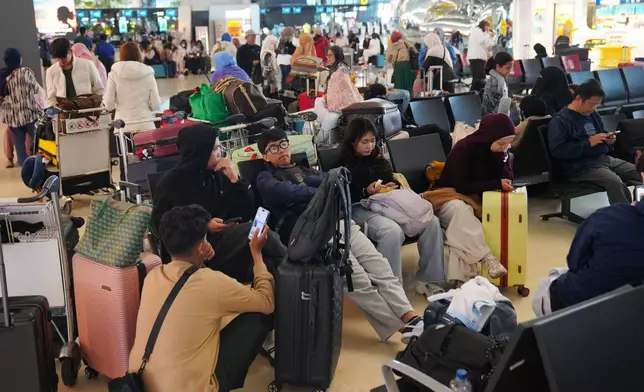
People wait as flights are disrupted due to the eruption of Mount Anak Krakatau, at Soekarno-Hatta International Airport in Tangerang, Indonesia, Monday, Sept. 7, 2026. (AP Photo/Tatan Syuflana)
AirNav Indonesia said tests showed volcanic ash present in the airspace around Jakarta and several other cities, prompting authorities to close eight airports until 6 p.m. Monday, including the four commercial airports managed by state-owned operator InJourney Airports: Jakarta's international airports of Soekarno-Hatta and Halim Perdanakusuma, Husein Sastranegara in West Java and Radin Inten in Lampung on the southern tip of Sumatra.
The closure has disrupted about 2,300 flights and affected 268,539 passengers at the four airports managed by InJourney Airports, the company said.
The eruption’s impact extended beyond air travel. The government authorized schools in areas affected by volcanic ash, including in Jakarta, West Java, Banten and Lampung provinces, to temporarily move to online learning at home to reduce students’ exposure to ash.
“The probability of additional eruptions in the coming days remains high,” said Lana Saria, head of the Geology Agency. “The main hazards include volcanic bombs, heavy ashfall and possible lava flows if sustained eruptive activity resumes," she said.
Anak Krakatau is a volcanic island in the Sunda Strait between Indonesia's main Java and Sumatra islands. Its name means “child of Krakatau,” and the volcano is the offspring of the infamous Krakatau, whose monumental 1883 eruption triggered a period of global cooling.
An eruption of Anak Krakatau in 2018 caused a tsunami that killed at least 430 people in Sumatra and Java. Researchers believe volcanic activity triggered an underwater landslide and caused a large chunk of Anak Krakatau’s southwest slope to collapse and displace a large volume of water.
Indonesia has more than 120 active volcanoes and frequently experiences eruptions due to its location along the Pacific “Ring of Fire,” the ring of seismic faults around the Pacific Ocean where most global seismic activity occurs.
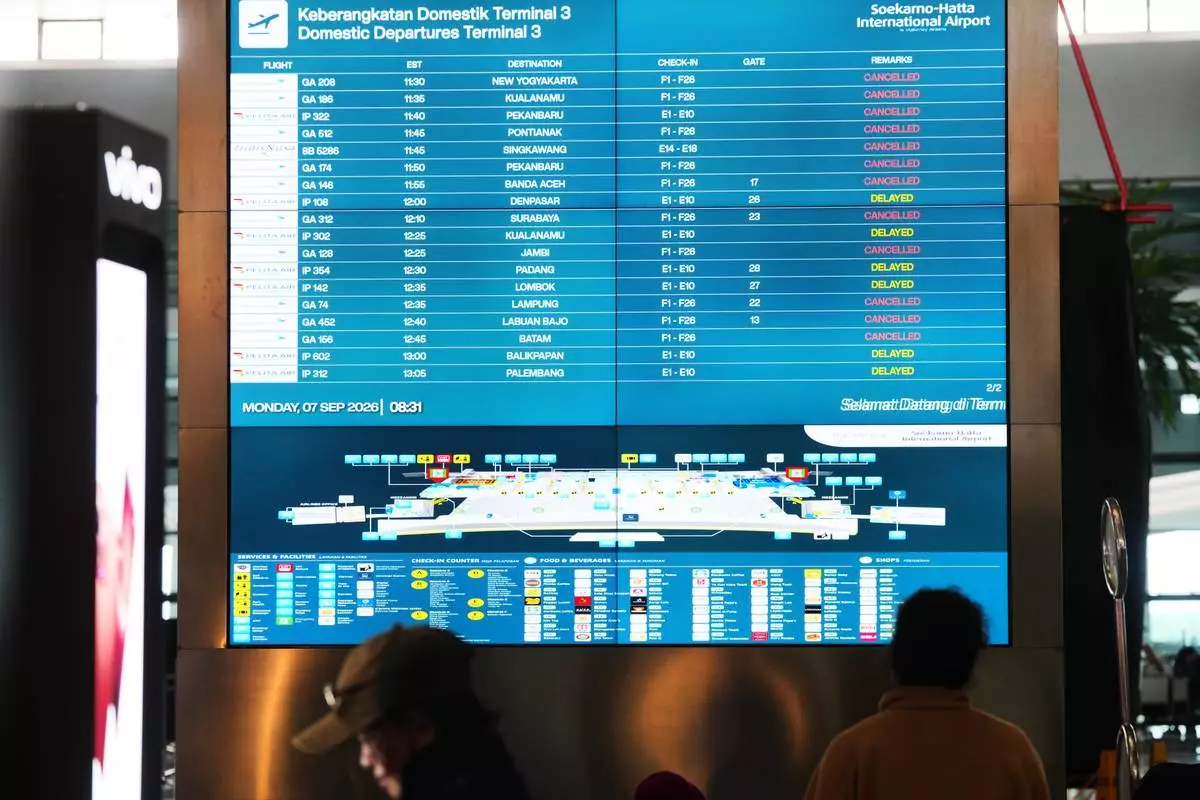
People look at an information board as flights are disrupted due to the eruption of Mount Anak Krakatau, at Soekarno-Hatta International Airport in Tangerang, Indonesia, Monday, Sept. 7, 2026. (AP Photo/Tatan Syuflana)
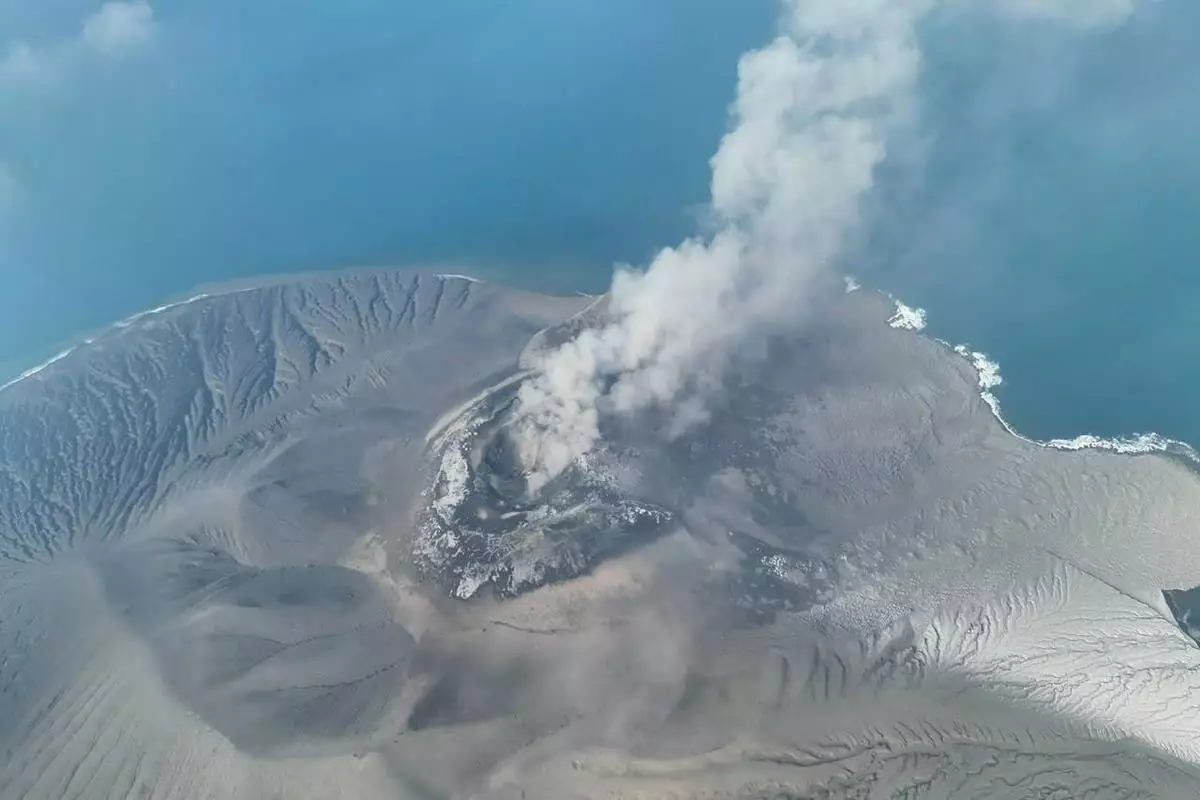
In this drone photo released by the Geological Agency (Badan Geologi) of Indonesia's Ministry of Energy and Mineral Resources, Mount Anak Krakatau spews volcanic smoke in Sunda Strait, Indonesia, Saturday, Sept. 5, 2026. (Badan Geologi via AP)
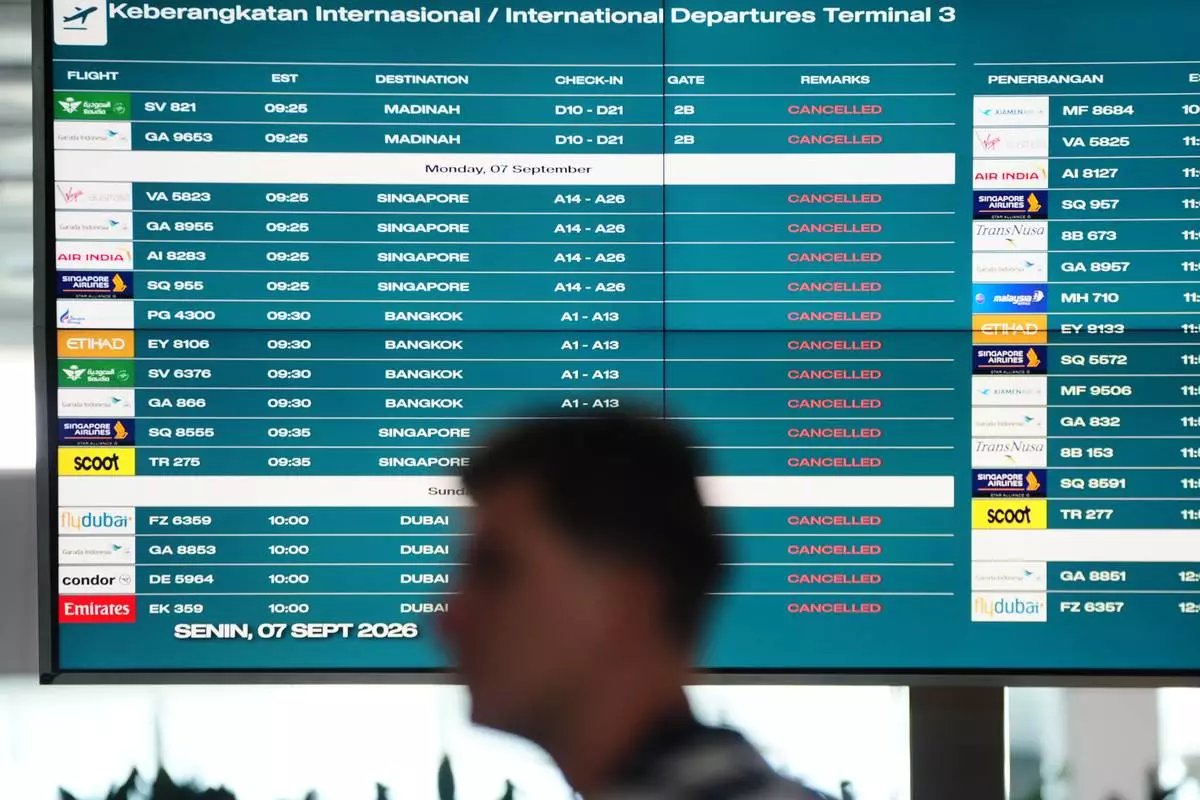
A man walks past an information board showing cancelled flights due to the eruption of Mount Anak Krakatau, at Soekarno-Hatta International Airport in Tangerang, Indonesia, Monday, Sept. 7, 2026. (AP Photo/Tatan Syuflana)
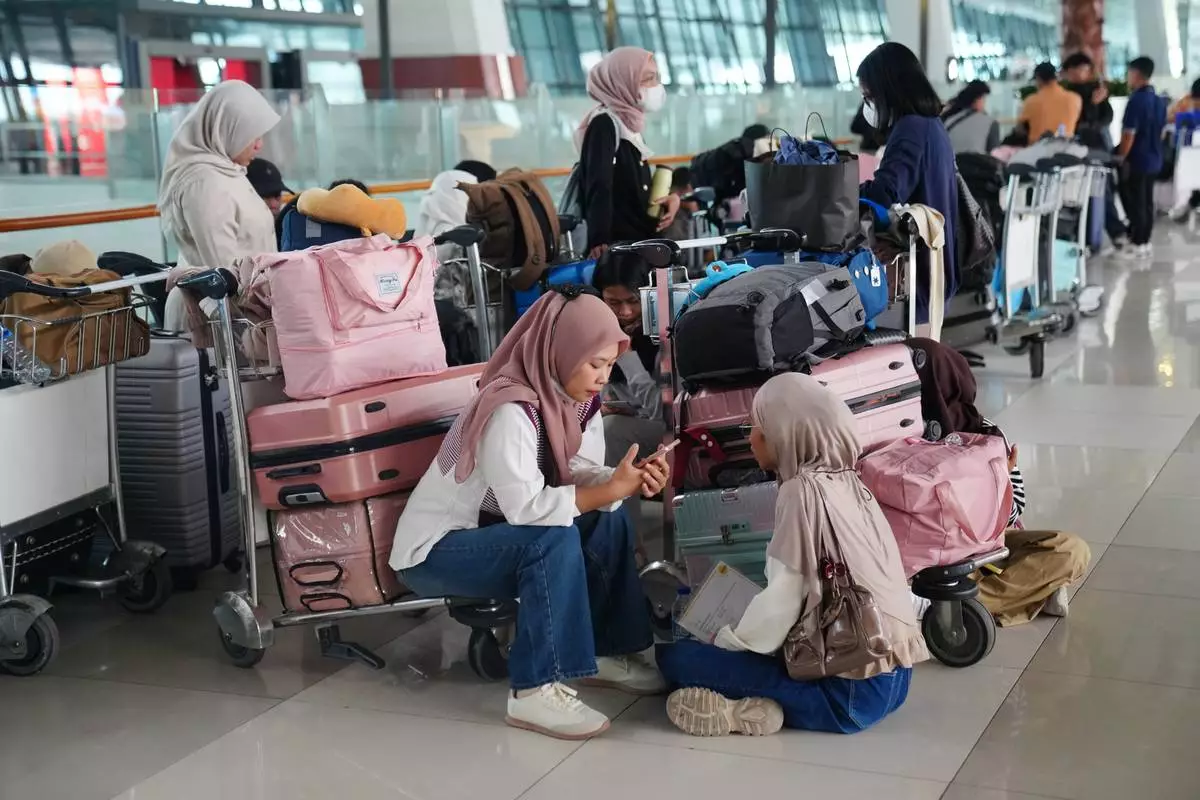
People wait as flights are disrupted due to the eruption of Mount Anak Krakatau, at Soekarno-Hatta International Airport in Tangerang, Indonesia, Monday, Sept. 7, 2026. (AP Photo/Tatan Syuflana)
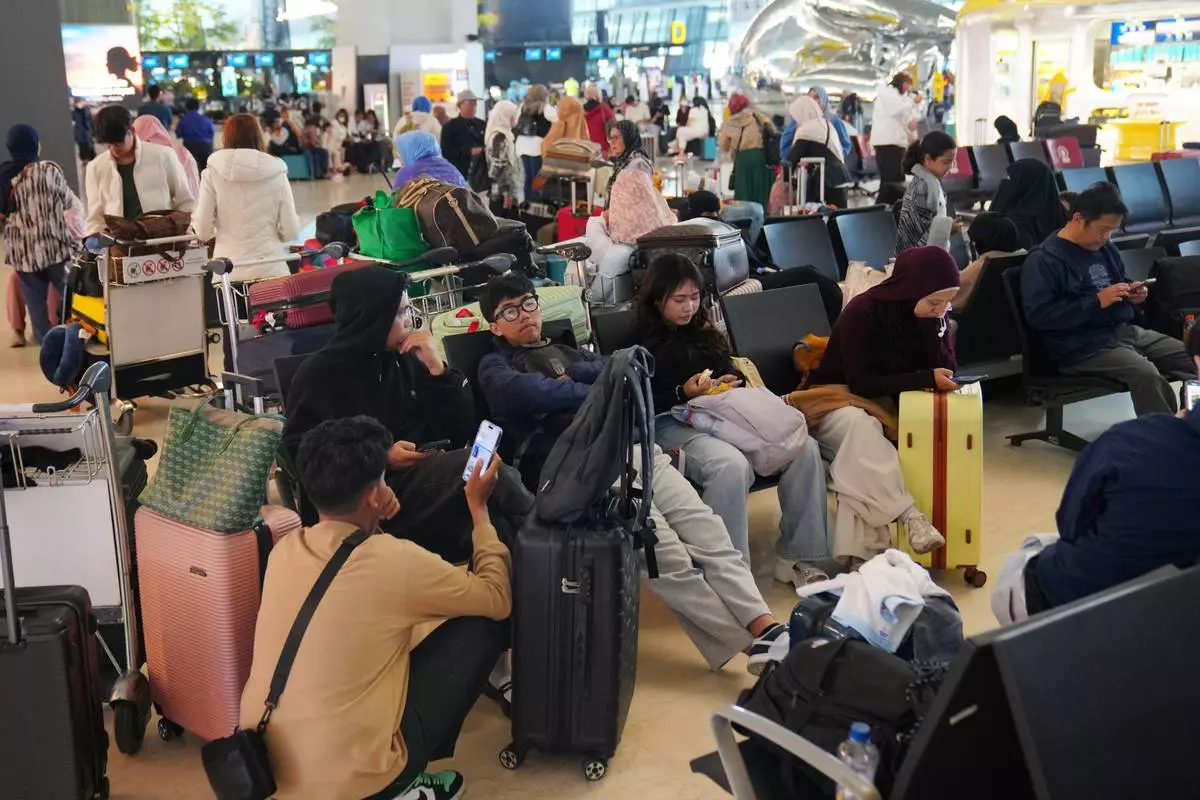
People wait as flights are disrupted due to the eruption of Mount Anak Krakatau, at Soekarno-Hatta International Airport in Tangerang, Indonesia, Monday, Sept. 7, 2026. (AP Photo/Tatan Syuflana)