Skip to Content Facebook Feature Image

AI can write news -- where does that leave traditional media?

Business

AI can write news -- where does that leave traditional media?
Business

Business

AI can write news -- where does that leave traditional media?

2026-09-07 17:58 Last Updated At:18:25

SHENZHEN, China, Sept. 7, 2026 /PRNewswire/ --  A news report from Shenzhen Daily:

For years, conversations about media transformation centered on platforms, distribution channels and traffic. Artificial intelligence has changed the terms of that debate. It can generate content faster and at lower cost, translate it into multiple languages, and adapt it for different platforms in seconds.

For traditional news organizations, the question is no longer whether AI will enter the newsroom. It is where human journalists can continue to create irreplaceable value — and how they can actively reshape their work.

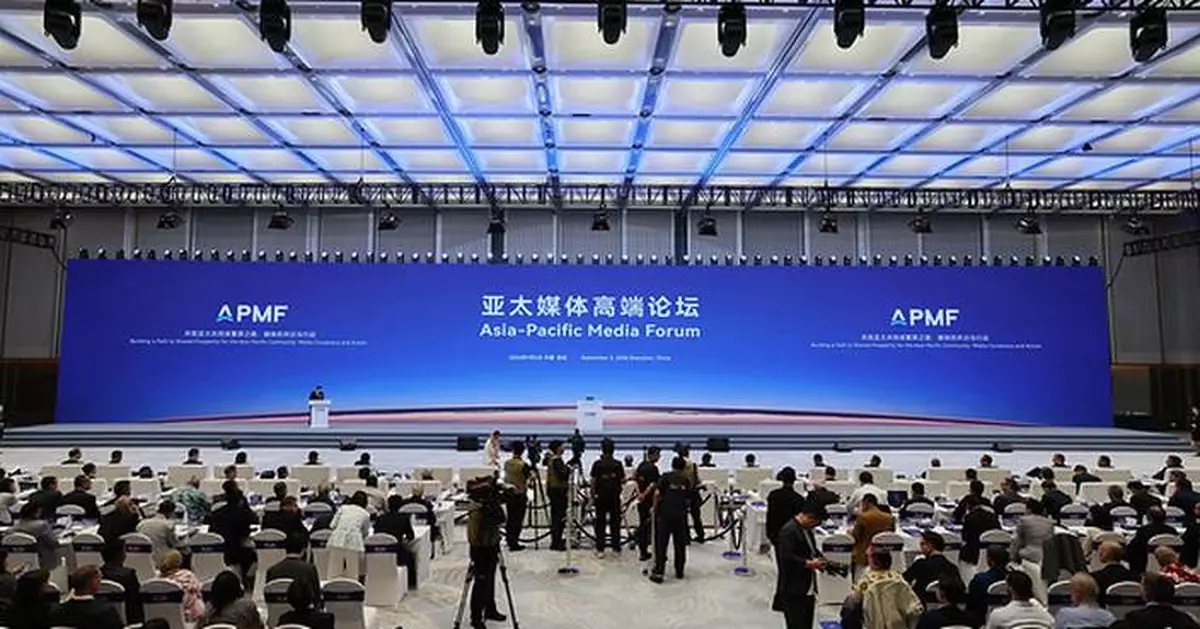
That question was put to media professionals attending the Asia-Pacific Media Forum, which opened in Shenzhen, Guangdong, China on Sept. 5 under the theme "Building a Path to Shared Prosperity for the Asia-Pacific Community: Media Consensus and Action." More than 400 representatives from over 40 countries and regions, as well as U.N. agencies and international organizations, attended the event.

Their answers revealed neither blind optimism nor simple fear.

Zahir Shah Sherazi, head of BOL News in Pakistan, acknowledged that AI can drive innovation and make reporting easier, but stressed that it cannot genuinely tell audiences what is happening without journalists on the ground.

"You still need physical presence to put in emotions,...Machines cannot replace humans," he said. Rather than fearing the technology, he believes journalists should receive training and become well versed in AI-assisted reporting.

Donovan Ralph Martin, CEO and editor-in-chief of Canadian outlet The Daily Scrum News, described himself as a strong advocate for AI. News organizations that fail to use the technology, he warned, risk being left behind.

Yet enthusiasm must come with a clear understanding of AI's limitations. It "is as good as the people using it," Martin said, adding that human interaction will remain essential to journalism.

AI may accelerate production, but it cannot independently decide which questions matter, recognize what is left unsaid, or take responsibility for the consequences of publication.

Adaptation, according to Muhammad Ashraf, editor-in-chief of Pakistan's Daily Mashriq Lahore, is no longer optional.

"Change is the only permanent thing in the world," Ashraf said. "So accept the challenge of change, and go with it."

That requires more than purchasing new tools. Journalists must learn about AI, adopt it and keep pace with its development. Newsrooms also need to help reporters understand how the technology works, where it can fail and when its output must be questioned — without handing over their editorial judgment.

Nang Calyar Win, CEO of Myanmar's Asian Fame Media Group, offered a useful metaphor: "AI is like a reflection of everybody."

She said that a knowledgeable user can obtain stronger results, while limited knowledge and weak instructions can produce weak output.

"The AI depends on the user," Win said. The smarter the tool becomes, the more capable the journalist using it must be.

In an environment flooded with synthetic content, the value of professional media may increasingly lie in verified facts, first-hand observation, cultural understanding and accountability.

The real choice, then, is not between humans and machines. It is between journalism that uses AI responsibly and content production that allows automation to operate without judgment.

As the forum's theme suggests, consensus must lead to action. Newsrooms should share technology and experience, establish clear verification standards, and train journalists to use AI without surrendering the human qualities on which trust depends.

To counter the challenge, Shenzhen Daily and Daily Kasoti, a Pakistani media outlet, quickly signed a memorandum of understanding on content production cooperation less than 24 hours on Sept. 4, ahead of the Asia-Pacific Media Forum.

The Shenzhen's daily English newspaper and information platform have leveraged the forum to reach several agreements with media outlets from Canada, Pakistan, Russia and Myanmar.

** This press release is distributed by PR Newswire through automated distribution system, for which the client assumes full responsibility. **
AI can write news -- where does that leave traditional media?

AI can write news -- where does that leave traditional media?

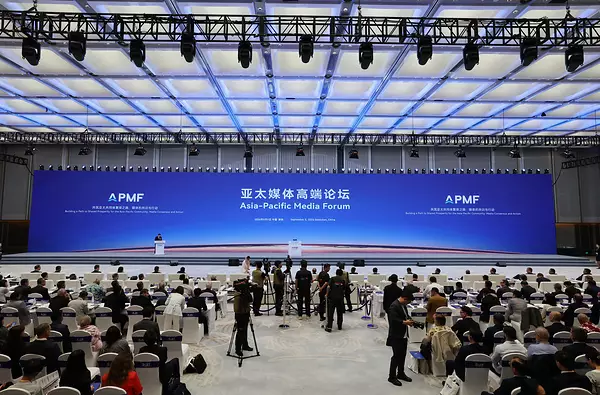
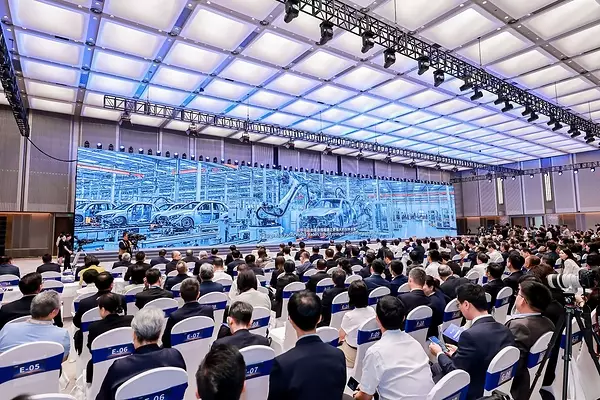
SHENZHEN, China, Sept. 7, 2026 /PRNewswire/ -- The Asia-Pacific Media Forum opened in Shenzhen, southern China's Guangdong province. Li Shulei, head of the Publicity Department of the CPC Central Committee, attended the opening ceremony and delivered a keynote speech. Huang Kunming, secretary of the CPC Guangdong Provincial Committee, also attended and addressed the ceremony. Held under the theme "Building a Path to Shared Prosperity for the Asia-Pacific Community: Media Consensus and Action," the forum brought together more than 400 representatives from over 220 mainstream media organizations, think tanks, government agencies, embassies and consulates in China, UN agencies and international organizations. They came from 42 countries and regions worldwide, with strong representation from the Asia-Pacific, to renew friendships and explore opportunities for cooperation.

China will host the 33rd APEC Economic Leaders' Meeting later this year. The development and cooperation in the Asia-Pacific region cannot be achieved without the active participation of media outlets across the region. It is important to tell the story of an open and interconnected Asia-Pacific, provide comprehensive coverage of progress and achievements in cooperation across all fields, and foster a favorable public opinion environment for the region's opening and development.

The forum produced a number of practical outcomes: the establishment of the Asia-Pacific Media Partnership Organizing Committee, the exchange of China-foreign media cooperation documents, the launch of the "Gather in Shenzhen, Create a Better Asia-Pacific" Media Cooperation Initiative, and the release of the Shenzhen Consensus of the Asia-Pacific Media Forum (Shenzhen Consensus). These outcomes mark a pivotal leap in Asia-Pacific media cooperation—from "scattered interaction" to "institutionalized collaboration." Against the backdrop of 2026 APEC "China Year," the forum has injected tangible and much-needed media strength into the building of an Asia-Pacific community with a shared future.

Ahead of the upcoming APEC Economic Leaders' Meeting, the Media Cooperation Initiative launched by Shenzhen stands out as the forum's most innovative and actionable outcome. The initiative forms a complete cooperation loop built on three pillars: technology sharing, joint content creation, and talent cultivation. On technology sharing, the Asia-Pacific Digital & Smart Media Intelligence Shenzhen Center will be established. Shenzhen is putting in place an advanced technological foundation for media, an open-source HarmonyOS (OpenHarmony) ecosystem, digital-intelligence laboratories and application scenarios, and stands ready to share technologies and outcomes with Asia-Pacific media counterparts, offering a "Shenzhen solution" for the systemic transformation and innovative development of mainstream media in the digital-intelligence era. On joint content creation, the "Witness Miracles, Seek Solutions" co-creation and joint broadcast program will be rolled out. It invites Asia-Pacific media partners to take Shenzhen as a case study and model, and to jointly plan and produce objective, truthful and multi-dimensional content products. On talent cultivation, the Training Base for Asia-Pacific Youth Media Professionals has been established. Each year it will invite Asia-Pacific media professionals—especially those under the age of 45—to Shenzhen for study tours, visits and training.

The Shenzhen Consensus released at the forum builds broad consensus on issues including open cooperation, digital, smart and green transformation, and media exchanges. It advocates safeguarding the multilateral trading system, deepening the application of AI, advancing mutual learning among civilizations, and contributing to Asia-Pacific prosperity.

** This press release is distributed by PR Newswire through automated distribution system, for which the client assumes full responsibility. **

Asia-Pacific Media Forum opens in Shenzhen, building a bridge of understanding and coexistence through media

Asia-Pacific Media Forum opens in Shenzhen, building a bridge of understanding and coexistence through media

Recommended Articles