MONZA, Italy (AP) — FIA President Mohammed Ben Sulayem has defended the wait for clarity over how this year's Formula 1 season will end amid uncertainty over the Middle East security situation but tells The Associated Press that drivers and team staff will not be put “at risk.”
The F1 season is still scheduled to end Qatar Grand Prix on Nov. 29 and the season finale in Abu Dhabi on Dec. 6, but F1 has been examining potential alternative venues. A replacement finale at the Imola circuit in Italy is widely considered the likeliest option.
Click to Gallery
Mercedes driver Andrea Kimi Antonelli of Italy celebrates on the podium after winning the Italian Formula One Grand Prix race, in Monza, Italy, Sunday, Sept. 6, 2026. (AP Photo/Antonio Calanni)
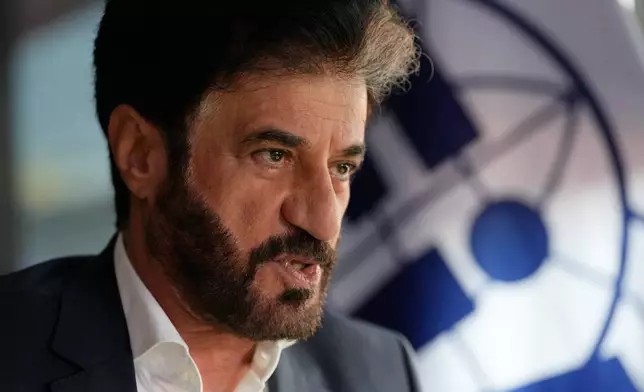
FIA President Mohammed Ben Sulayem talks with the Associated Press during an interview prior to the start of the Italy's Formula One Grand Prix, at the Monza racetrack, Italy, Sunday Sept. 6, 2026. (AP Photo/Luca Bruno)
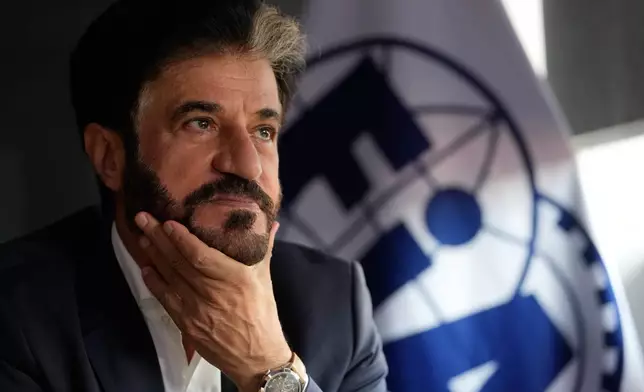
Mohammed Ben Sulayem President of the Federation Internationale de l'Automobile (FIA) gestures after the qualifying session ahead of the Italian Formula One Grand Prix, in Monza, Italy, Saturday, Sept. 5, 2026. (AP Photo/Luca Bruno)
FIA President Mohammed Ben Sulayem talks with the Associated Press during an interview prior to the start of Italy's Formula One Grand Prix, at the Monza racetrack, Italy, Sunday Sept. 6, 2026. (AP Photo/Luca Bruno)
Ben Sulayem told the AP it remains “business as usual. We are not changing anything unless we have to,” and said he's in regular communication with F1 chief executive Stefano Domenicali.
“Being from that part of the world, we can’t jump the gun and just say, that’s it, we are canceling and then cancel,” he added. “Are we going to allow our people, our staff, the drivers or the teams to go at risk? No, of course not. We will not. But we’ll have also to listen to the governments and to the local promoter there.”
F1 sets its own calendar and agreements with host venues, but as the governing body, the FIA must approve the schedule and any changes.
Iran has previously targeted Qatar and the UAE, which includes Abu Dhabi, as part of its response to U.S. airstrikes and F1 called off the other two Middle East rounds earlier in the season — in Bahrain and Saudi Arabia.
The Bahrain Grand Prix was rescheduled in Malaysia for Oct. 4, still with Bahrain branding.
“Do I feel disappointed? I think human lives are more important than motor sport,” said Ben Sulayem, who is from the United Arab Emirates, when asked about the impact on his home region of losing its events.
“And the well-being of my family being there and the UAE nationals and everyone that lives there comes as a priority.”
Ben Sulayem added that “for the time being, there is no emergency” in deciding a calendar for the 2027 season.
If the season does end in Imola, it would mean that Kimi Antonelli’s quest to become F1’s youngest champion could now end with the party of a lifetime, just down the road from his home city of Bologna.
When Antonelli raced there last year, he invited his family and his whole school class to see him at the track.
The 20-year-old Antonelli moved 66 points clear in the title race with a statement victory at the Italian Grand Prix on Sunday, after an epic fightback from the back of the grid.
Ellingworth reported from Duesseldorf, Germany.
See AP’s full auto racing coverage here

Mercedes driver Andrea Kimi Antonelli of Italy celebrates on the podium after winning the Italian Formula One Grand Prix race, in Monza, Italy, Sunday, Sept. 6, 2026. (AP Photo/Antonio Calanni)
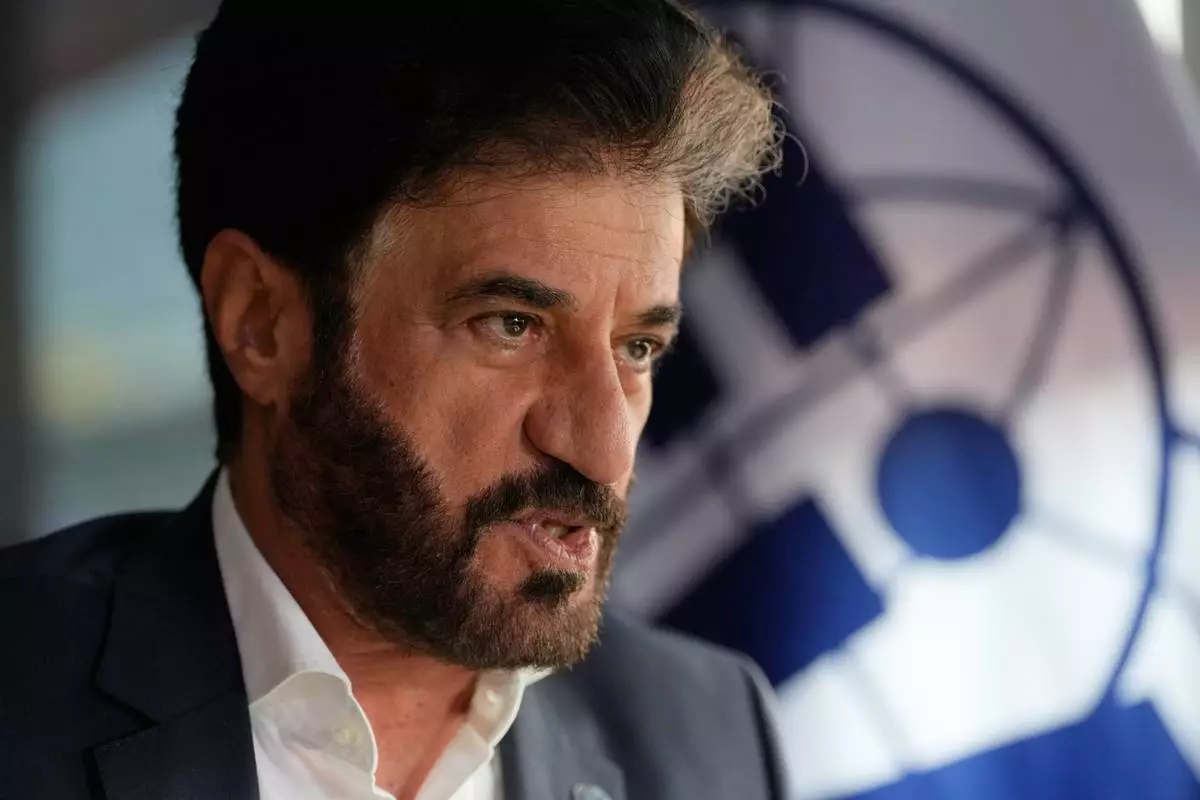
FIA President Mohammed Ben Sulayem talks with the Associated Press during an interview prior to the start of the Italy's Formula One Grand Prix, at the Monza racetrack, Italy, Sunday Sept. 6, 2026. (AP Photo/Luca Bruno)

Mohammed Ben Sulayem President of the Federation Internationale de l'Automobile (FIA) gestures after the qualifying session ahead of the Italian Formula One Grand Prix, in Monza, Italy, Saturday, Sept. 5, 2026. (AP Photo/Luca Bruno)
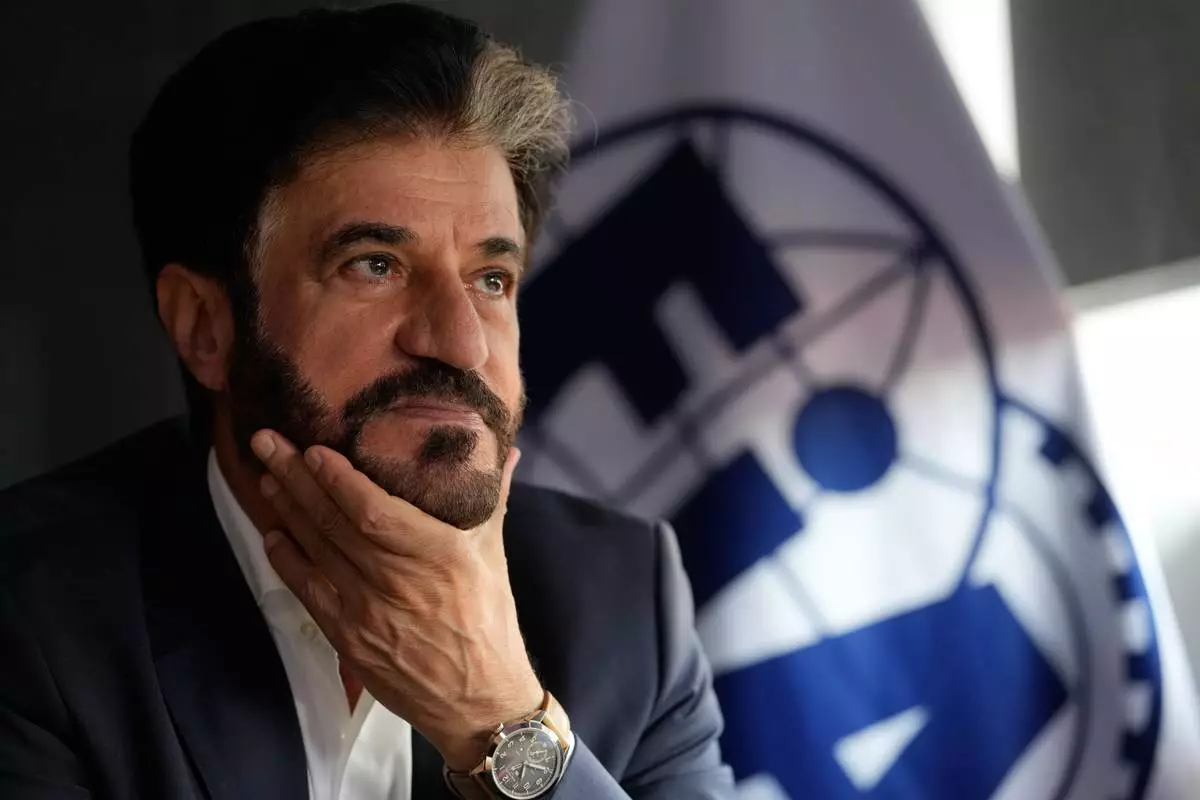
FIA President Mohammed Ben Sulayem talks with the Associated Press during an interview prior to the start of Italy's Formula One Grand Prix, at the Monza racetrack, Italy, Sunday Sept. 6, 2026. (AP Photo/Luca Bruno)
BERLIN (AP) — Alternative for Germany, or AfD, has established itself as a significant political force in the 13 years since its founding, but it has never been part of any state or federal government. That’s a result of what is often called a “firewall” against cooperation with the anti-immigrant, far-right party.
That firewall faces its biggest test after AfD won a landslide victory in Sunday’s election in the eastern German state of Saxony-Anhalt.
Germany's mainstream parties have long said they would not work with Alternative for Germany, which is classified by Germany’s domestic intelligence agency as an extremist group in some regions of the country — including the eastern state of Saxony-Anhalt. Any dealing by mainstream parties with AfD is particularly sensitive in view of Germany’s Nazi past.
That taboo has sometimes forced other parties into unusual alliances to keep AfD out of power — for instance, a three-party coalition straddling ideological divisions that governs the eastern state of Thuringia since AfD emerged as the strongest party for the first time in a regional election there two years ago.
In Germany’s national election last year, AfD achieved the best showing by a far-right party since World War II and became the strongest political force in parts of the country. AfD became the biggest opposition party in parliament after Chancellor Friedrich Merz's center-right Christian Democrats upheld the firewall and formed an unpopular coalition with the center-left Social Democrats.
AfD won 43.8% of the vote in Sunday's election, more than double its showing five years ago in the state, while Merz's party lost about half its support.
Merz has strictly rejected any kind of cooperation with AfD in the past and top officials reiterated that stance on Sunday. But other parties in the newly elected state parliament may be less likely to keep up the firewall.
The AfD candidate for governor, Ulrich Siegmund, aims to become the first far-right head of a state government and has already said he will reach out to all other parties and individual lawmakers to assemble a governing majority.
While Siegmund has rejected an AfD minority government, his party could possibly govern with the hard-left BSW party, which received 5.3% of the vote. The two parties share a Russia-friendly course and oppose immigration but do not agree on some other subjects.
On Monday, BSW’s lead candidate in the election, Thomas Schulze, expressed his party’s willingness to help an AfD governor take office in the state parliament.
Forming a government that excludes the AfD would only be possible if all the other parties that were elected worked together — CDU, Social Democrats, the Greens, the Left Party, and the BSW. However, a coalition involving five partners would be extremely unusual, very complicated and prone to instability.
It’s also possible that newly elected lawmakers from other parties could defect to AfD — it would only need three people to get a majority to govern.
Political analyst Volker Resing said AfD may be able to overcome the firewall after its strong showing in Saxony-Anhalt, with BSW potentially serving as the kingmaker.
“This tiny party could now play a decisive role in determining the future of Saxony-Anhalt," he told The Associated Press.
Resing said “it is still unclear” whether the parties will join forces based on their common view toward Russia to overcome the firewall and succeed in forming Germany’s first far-right state government since the end of the Nazi era.
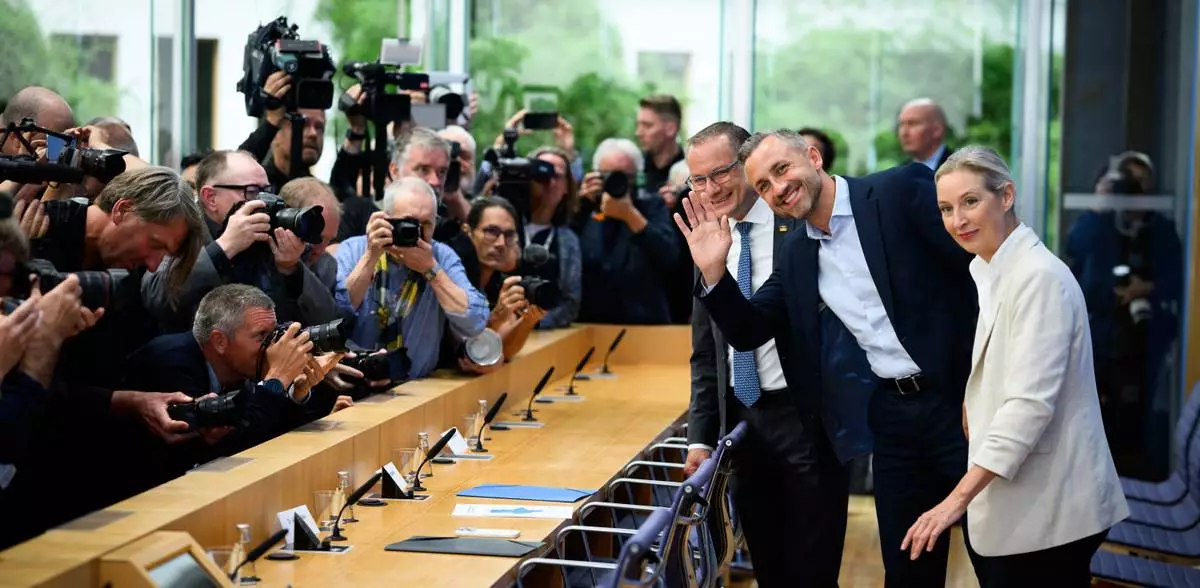
Co-leaders of Alternative for Germany party, or AfD, Alice Weidel, right, and Tino Chrupalla, left, and top candidate for the Saxony-Anhalt state elections Ulrich Siegmund, center, attend a press conference in Berlin, Germany, Monday, Sept. 7, 2026. (Bernd von Jutrczenka/dpa via AP)
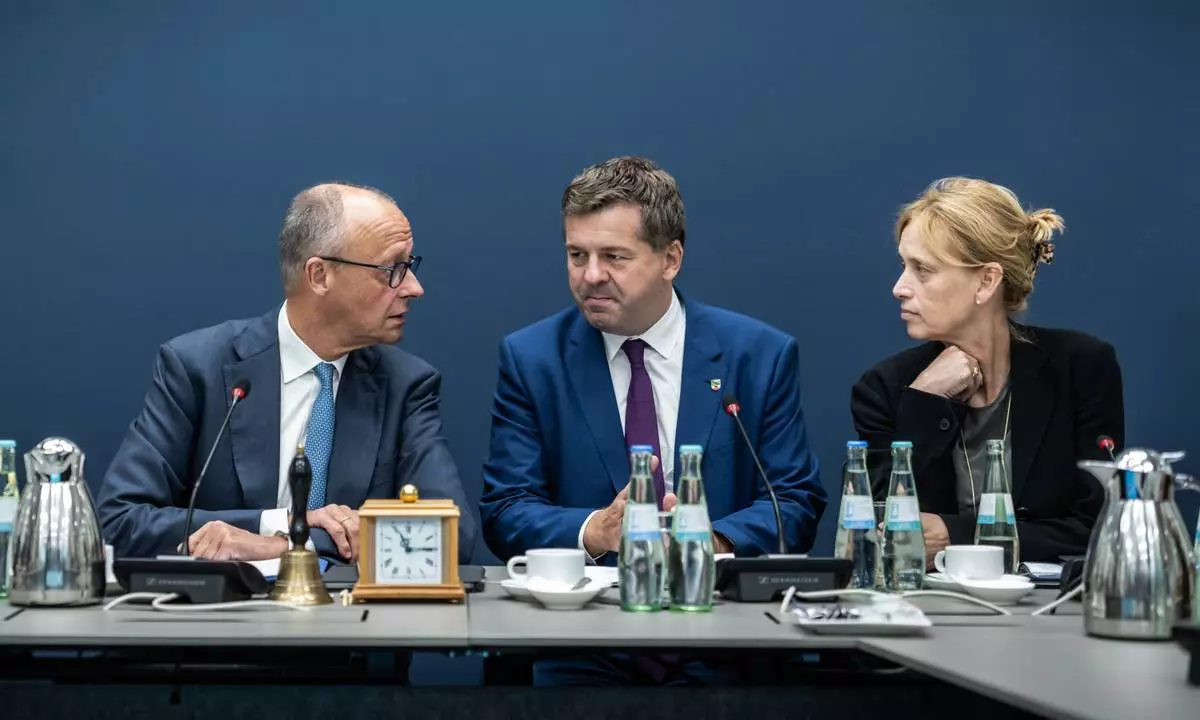
From left, Chancellor Friedrich Merz, Sven Schulze, Minister-President of Saxony-Anhalt and state chairman of the CDU in Saxony-Anhalt, his party's top candidate for the state election on Sept. 6, and Karin Prien, Federal Minister of Education, Family, Senior Citizens, Women, and Youth, and Deputy Chair of the CDU Federal Executive Committee, attend the meeting of the CDU Federal Executive Committee at the Konrad Adenauer House, in Berlin, Monday, Sept. 7, 2026. (Michael Kappeler/dpa via AP)
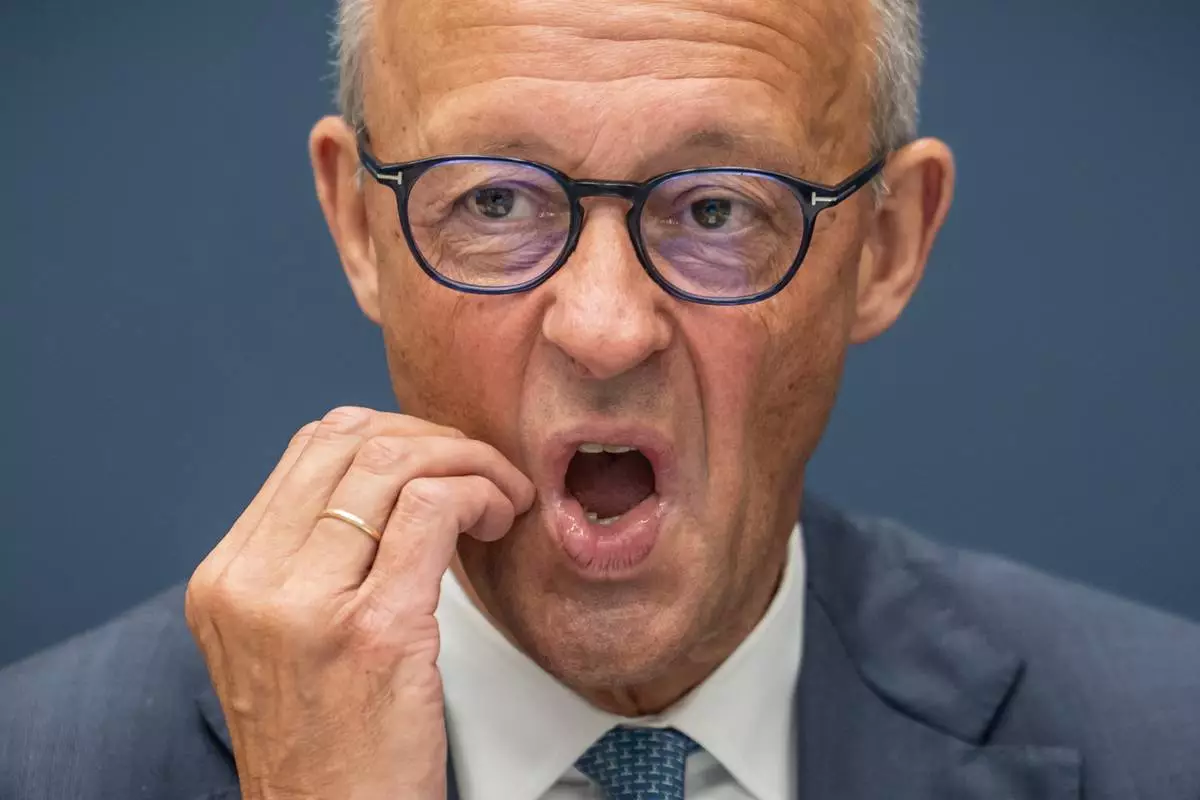
Chancellor Friedrich Merz is sitting in a meeting of the CDU Federal Executive Committee at the Konrad Adenauer House, in Berlin, Monday, Sept. 7, 2026, the day after AfD stunning success in elections. (Michael Kappeler/dpa via AP)
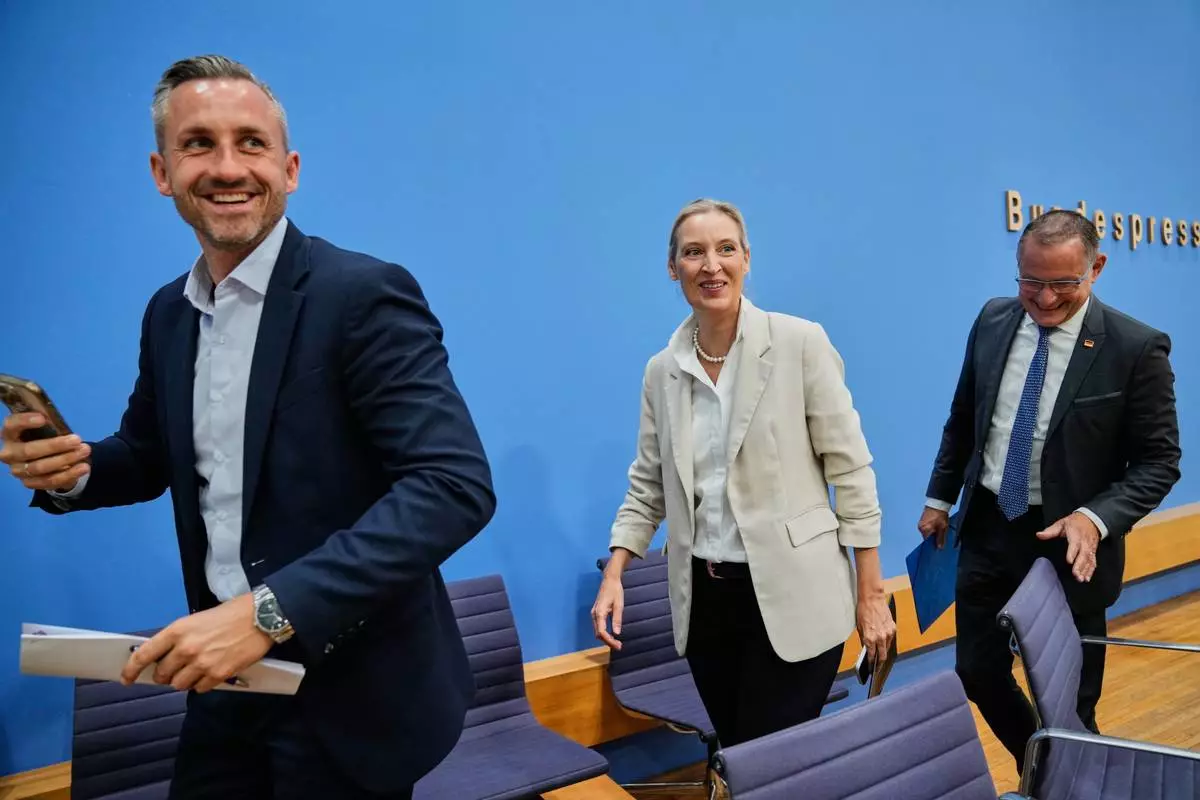
Co-leaders of Alternative for Germany party, or AfD, Alice Weidel, center, and Tino Chrupalla, right, and top candidate for the Saxony-Anhalt state elections Ulrich Siegmund, left, leave a press conference in Berlin, Germany, Monday, Sept. 7, 2026. (AP Photo/Ebrahim Noroozi)
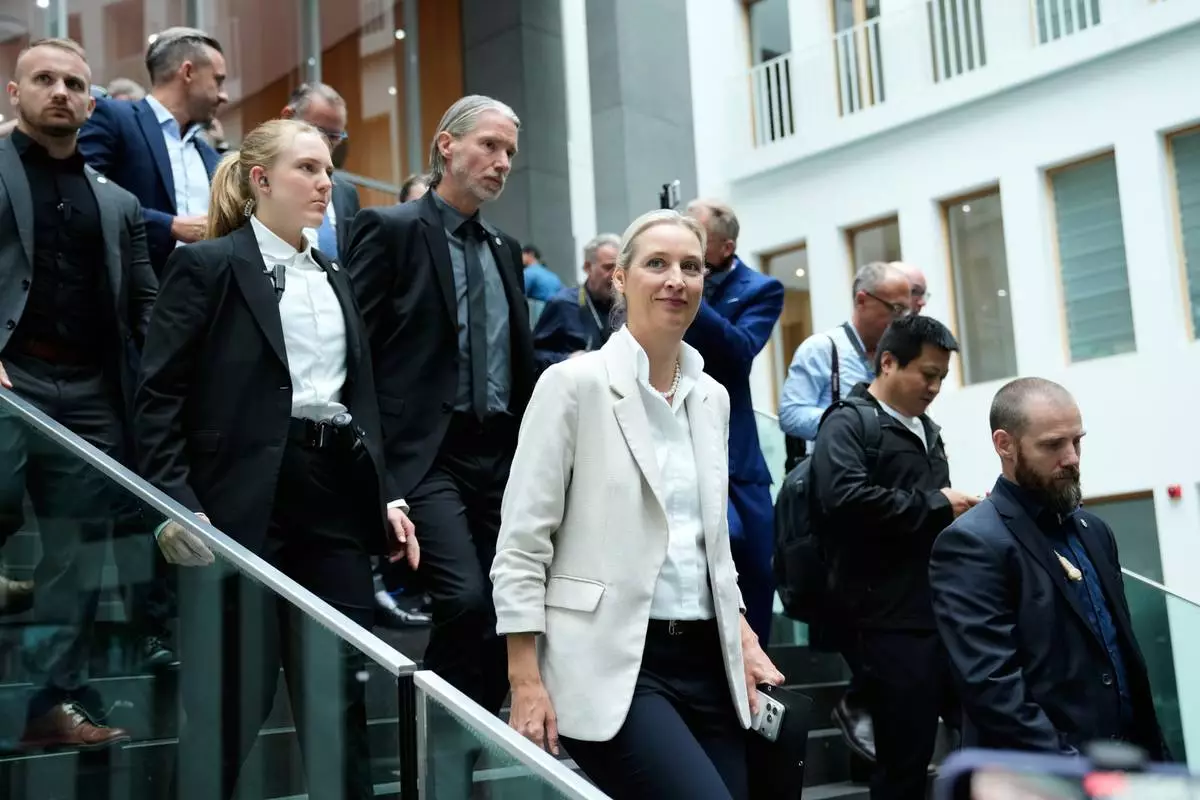
Co-leader of Alternative for Germany party, or AfD, Alice Weidel, leaves for a press conference in Berlin, Germany, Monday, Sept. 7, 2026. (AP Photo/Ebrahim Noroozi)