China is strengthening the recycling of used new energy vehicle (NEV) power batteries to address the rising number of end-of-life power batteries and fuel the country's green transition.
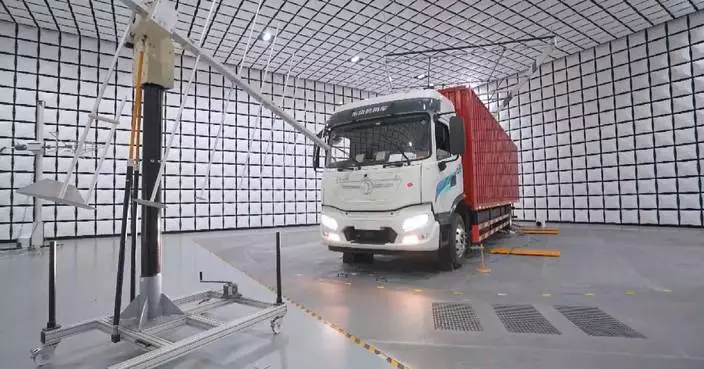
China's NEV industry has expanded rapidly. In 2025, NEV production and sales both exceeded 16 million units, accounting for over half of domestic new vehicle sales.
With power batteries from earlier NEVs reaching the end of their service life due to capacity degradation, relevant studies projected nearly 500,000 tons of retired batteries in China for this year alone.
Once dismantled, used NEV power batteries must be turned over to comprehensive utilization companies for standardized, full-scale handling, as improper disposal may lead to electrolyte leakage and heavy-metal pollution, posing risks of environmental damage.
At an NEV dismantling workshop in Nanjing of east China's Jiangsu Province, workers were taking apart power batteries from NEVs. Each removed battery was labeled with a unique QR code.
"After the batteries are disassembled, we scan the QR code in our traceability system to directly trace the vehicle information associated with that battery, thus forming a complete closed loop," said Wang Fengkui, technical lead of the workshop.
The workshop has also set up various safety facilities to respond to emergencies such as thermal runaway, fires and leaks.
The dismantled and decommissioned power batteries would be ultimately sent to specialized recycling companies, where chemical processing extracts recyclable materials such as nickel, cobalt, manganese and lithium from the batteries.
Recovery rates for nickel, cobalt and manganese are as high as 99.6 percent, while lithium recovery rate exceeds 90 percent. These reclaimed materials can be reprocessed into positive electrode materials and used in brand-new batteries.
In January, the Ministry of Industry and Information Technology and five other departments jointly issued interim measures on the recycling and comprehensive utilization of used NEV power batteries.
The measures, which took effect on April 1, 2026, provide that each NEV power battery must be assigned a digital identity.
Highlighting a "full-channel, full-chain, and full-lifecycle" management framework, the interim measures include establishing a national NEV power battery traceability information platform and a digital ID management system.
The measures also specify that if the power battery is missing, the NEV is treated as missing. Disassembled batteries must be handed over to approved recycling centers or comprehensive utilization companies, and illegal dismantling is strictly prohibited.
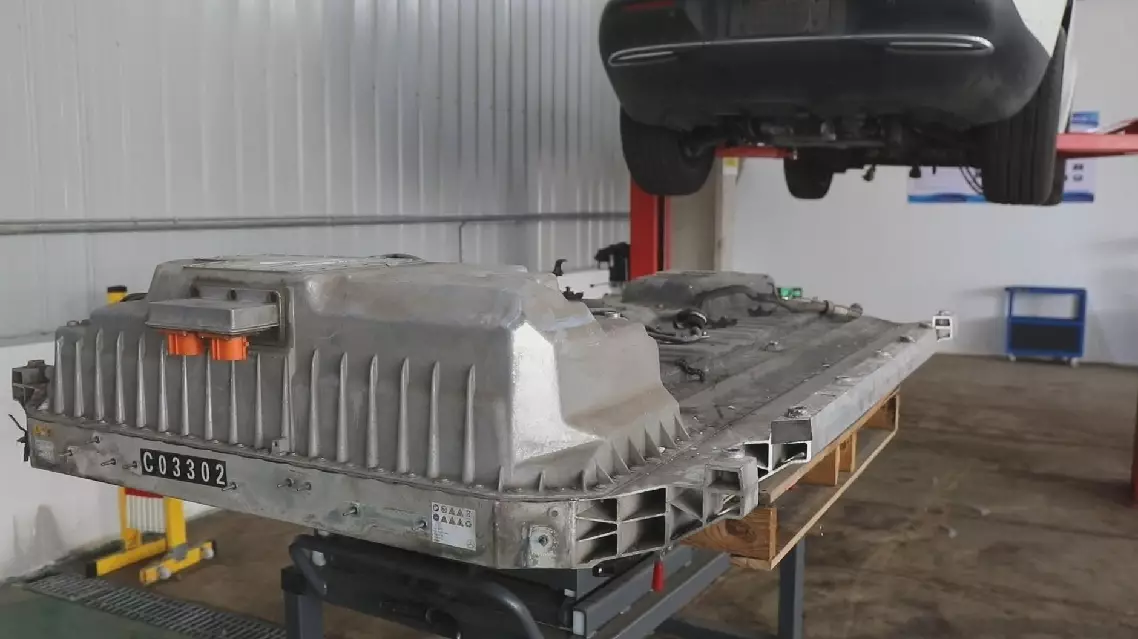
China strengthens recycling of used NEV power batteries