LONDON--(BUSINESS WIRE)--Sep 8, 2026--
Today, Globality launches Glo 2.0, an enterprise platform for autonomous sourcing that streamlines the entire intake-to-award process.
This press release features multimedia. View the full release here: https://www.businesswire.com/news/home/20260908880093/en/
Analysis shows that over half of all addressable enterprise spend is still not competitively sourced. Capacity limits force procurement teams to focus only on their highest-stakes events and leave the rest untouched, a tradeoff that costs businesses millions. Glo 2.0 removes that constraint: AI agents work as an extension of the procurement team, running entire sourcing events so teams can clear their backlogs.
Glo 2.0 is a single platform for procurement teams, with specialized AI agents that act as an extension of your team and run entire sourcing events, including negotiating with suppliers. Teams can choose to let AI run sourcing events fully autonomously or operate in collaborative mode with team members “in the loop” where specified.
AI That Reasons, Acts, and Negotiates Autonomously
Globality has long been the dedicated leader in agentic sourcing. Glo 2.0 is the next wave of that innovation with agents that reason, act, and make decisions on their own.
For years, AI in sourcing was limited to the early stages of an event; drafting an RFx and flagging relevant suppliers before handing off to a person. Procurement managers still had to run the actual event, and each could realistically manage only a handful at a time. This forced teams to prioritize which events to pursue.
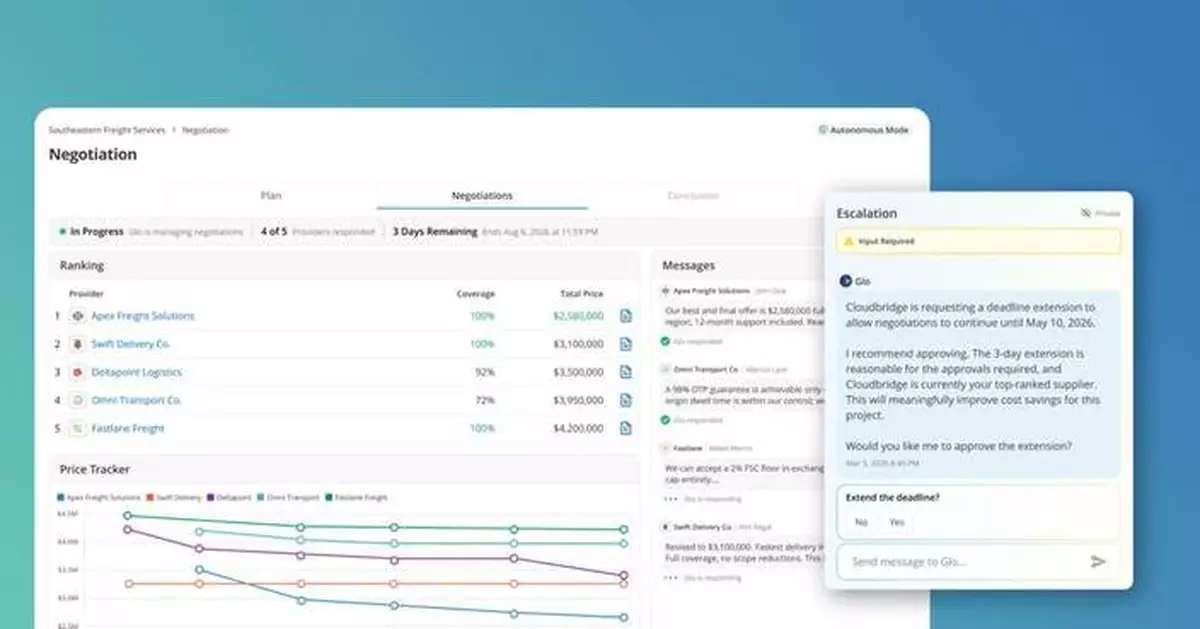
Now, AI can run the entire sourcing event, from intake-to-award. It generates the RFx, finds and invites suppliers, negotiates, and analyzes the results, without a person managing each step. Trained on current negotiation techniques, Glo 2.0 handles supplier negotiations autonomously and simultaneously on the terms that matter, including price, quality, delivery, service, and risk. After the negotiation, Glo conducts scenario analysis and recommends the best supplier and scenario.
"This is the first truly autonomous sourcing platform where AI runs the complete intake-to-award process. Our agents don’t just automate a workflow; they reason through the data, decide the right approach for what’s being sourced, and act on your behalf with suppliers."
— Joel Hyatt, Co-Founder and CEO, Globality
“Globality’s autonomous sourcing represents a meaningful opportunity to scale our sourcing work, enabling us to run more events efficiently and ultimately deliver greater value.”
— Samer Ijaz, Head of Strategic Sourcing, Dropbox
Autonomy, on Your Terms
Every sourcing event carries its own risk, value, and governance requirements, so Glo 2.0 lets teams decide how much of each event to hand over. Autonomy levels can be set organization-wide, by category, or for a single event.
In Collaborative Mode, Glo 2.0 works with the team: the team leads supplier interactions and makes the award decision, while the platform delivers the commercial reasoning, builds the RFx, and sets negotiation strategy. In Autonomous Mode, Glo 2.0 works for the team: procurement defines the objectives, sets the guardrails, and approves the final award, while the platform runs everything in between. No other solution offers both options.
Glo Intake: The Intelligent Front Door for Employee Purchasing
Sourcing opportunities are often lost before they begin, buried in disconnected, rules-based legacy systems that require extensive training and inadvertently misallocate spend. Business stakeholders want to purchase a good or service, not learn a purchasing process. Complicated tools and outdated forms leave users unsure which system to use or what the procurement rules are.
Glo Intake replaces this with a single conversational front door. It interprets what the stakeholder is asking for, applies the organization’s procurement policies, and routes the request to the right path, no training or system-hopping required.
The platform runs a should-cost analysis to measure the gap between what has been submitted and what the market supports, giving procurement the clarity to identify which purchases are worth competitively sourcing before any supplier commitment is made.
Your Best Event, Every Time
Most teams reserve their deepest commercial rigor for their largest events. With Glo 2.0, every event in the portfolio — strategic indirect, tail, and direct spend alike — gets the same depth as the best event the team has ever run. Categories once too small or time-consuming to source competitively now receive full competitive treatment. Every event carries a full audit trail with AI explainability, enforces policy and guardrails automatically, and runs on a platform certified to SOC 2 and ISO 27001.
Clear the Backlog, Capture the Savings
An event that typically takes six to ten weeks now closes in days. Customers report running five to nine times more sourcing events without adding headcount, and Global 2000 companies have achieved annual cost savings of 10 to 20 percent.
Early customers are already seeing the impact:
"We’ve been impressed by what Globality has delivered for our procurement organization over the years, and the early results from autonomous mode are the most exciting yet. We’re competitively sourcing spend we simply didn’t have the capacity to reach before."
— Steve Dyson, VP of Global Indirect Procurement, HP
Packaging, Availability and Resources
Glo 2.0 is available immediately as an upgrade to Glo.
Register for the Glo 2.0 launch webinar here.
About Globality
Globality is the autonomous sourcing platform that manages the complete intake-to-award process.
We deliver 60–90% faster cycle times, 10–20% annual cost savings, and bottom-line impact for leading enterprises including BT, Tesco, Swiss Re, Fidelity, Societe Generale, UPS, and HP.
For more information, visit Globality.com.
Procurement LIVE: The London Summit
September 8-9, 2026
QEII Centre
Booth #H3
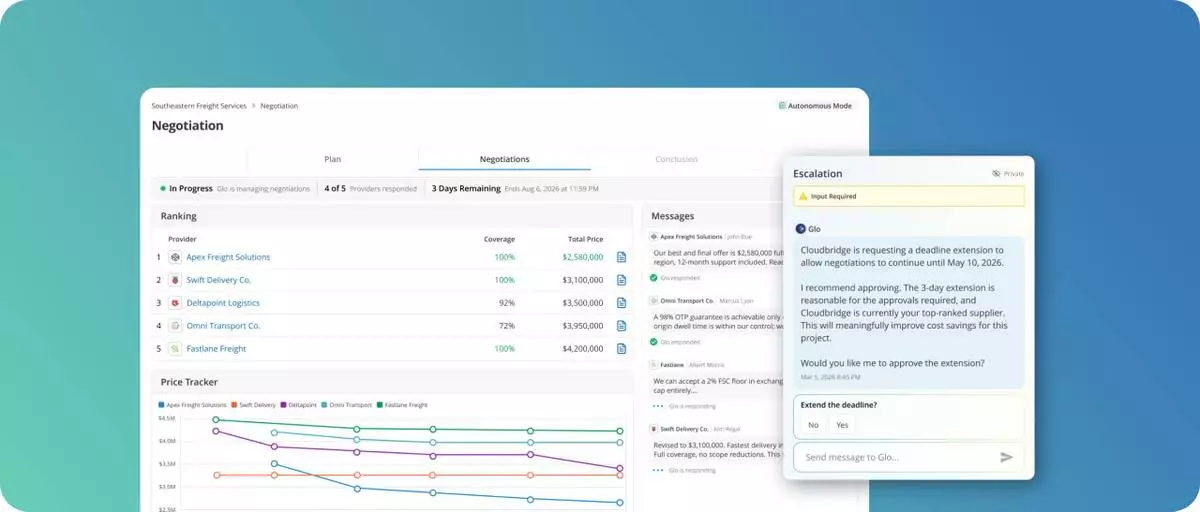
Glo 2.0 - Negotiation
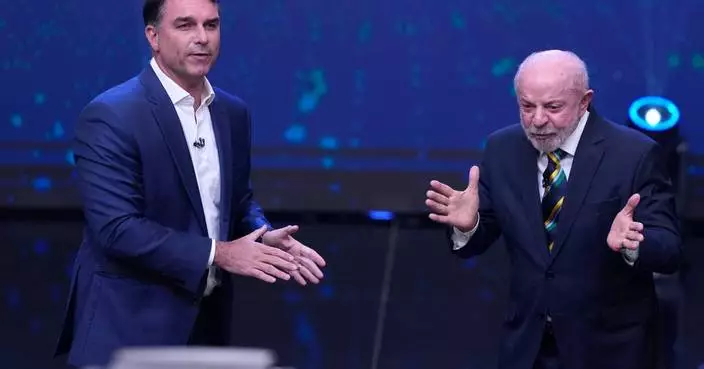
RIO DE JANEIRO (AP) — Brazilians began voting in Sunday’s polarizing presidential runoff between incumbent President Luiz Inácio Lula da Silva and Flávio Bolsonaro, a contest that will determine whether the U.S. will significantly expand its growing influence in Latin America.
Polls ahead of the vote showed the two candidates, who need more than 50% of the vote to become Brazil’s next leader in January, in a neck-and-neck race. The election pits the left-of-center veteran politician Lula against Bolsonaro, an ally of U.S. President Donald Trump and the son of imprisoned former President Jair Bolsonaro.
Flávio Bolsonaro bested Lula by more than 2.2 million votes in the first round of the election earlier this month. However, more than 33 million voters out of nearly 160 million did not turn out even though voting is compulsory.
Bolsonaro and Lula have opposing ideological views on issues ranging from U.S.-Brazil relations and climate change to social welfare.
A win for Bolsonaro would signify a pivot to the right by Latin America's most populous country and its largest economy, in a year when Trump allies have notched up victories in Chile, Peru and Colombia. A victory for Lula would leave Brazil and Mexico with left-of-center leaders.
In many ways, Brazil’s runoff vote is another tight rematch between the country’s two polarized political forces that trigger passion as much as loathing. Four years ago, Lula beat Bolsonaro’s father by the narrowest margin since the country’s return to democracy in 1985.
Lula, who first governed Brazil between 2003 and 2010, has faced a tough reelection battle because of concerns about the cost of living and security. Bolsonaro made a tough-on-crime approach the cornerstone of his campaign and pledged to bring down food costs.
Both have been hit by corruption suspicions involving family members and allies, with Bolsonaro implicated in a sprawling scandal rocking Brazil. Lula previously spent more than a year in prison on corruption convictions that were eventually annulled.
Bolsonaro’s admission that he accepted about $12 million from disgraced former banker Daniel Vorcaro to produce a film on his father’s life has cast a shadow over his campaign. He is under investigation for corruption, money laundering and tax evasion in connection with the case.
As Bolsonaro voted at a school in Rio de Janeiro around 8 a.m., his supporters shouted “Lula, thief, your place is in prison” while Lula’s supporters chanted in his support.
“The time of real change has arrived,” Bolsonaro told journalists. “Brazil can’t go on another four years on its current trajectory.”
In the lead-up to the vote, Lula frequently portrayed Bolsonaro, whose father is under house arrest for attempting a coup, as a threat to democracy. Bolsonaro has promised to seek an amnesty for his father if elected.
The next president will name at least three Supreme Court justices out of 11 due to upcoming retirements. Bolsonaro has long taken aim at the country's top court — which has been rocked by a corruption scandal of its own — and promised to push for judiciary reform.
Lula, trying to lure undecided voters, has invested in costly incentives since he lost the first round of voting. His government’s most recent moves have been endorsing a debt relief program for small businesses and promising free public transportation on weekends. A win for the incumbent came with the Senate's approval of the end of the six-day working week — a popular proposal backed by the government.
Lula thanked his voters for an outpouring of support in recent days as he voted in the city of Sao Bernardo do Campo, where he kicked off his political career as a union leader in the 1960s.
“It is a lot of generosity, a lot of care, a lot of love. I will be forever grateful,” Lula said.
Lula voters turned out to the polls Sunday driven by his history of supporting marginalized people and working to lift Brazilians out of poverty.
Luzia da Souza, who runs a bar in a middle-class neighborhood of Rio de Janeiro, is a long-time Lula supporter.
“Lula is a man of the people and he knows what it’s like to be poor,” she said. "I find it impossible not to vote for him.”
Anderson Falcão, a 43-year-old journalist in Brasilia who sported a red shirt in support of Lula, said he worried about Bolsonaro’s long-term political vision, which he called “exclusionary.”
“It’s a project that harms the less fortunate, harms the worker, women, the forest, the Amazon,” he said.
“It’s a project of destruction of what we understood Brazil could one day be and what we, with great difficulty, brick by brick, tried to build. … That’s why I’m voting for Lula, and for me, this vote has a lot of meaning.”
Bolsonaro voters, many who wore yellow and green Brazil jerseys in support of the senator, said they cast their ballots for change.
Fabianne Borges Santoro, a 45-year-old physiotherapist who lives in the neighborhood where Bolsonaro voted, once voted for Lula’s party but now associates it with corruption.
“The Workers’ Party has been in power for a long time and the voice of the people is saying that we need change to see improvements in security and the cost of living,” she said. “Things are really expensive and taxes are too high.”
Davi Vidal de Negreiros Nobrega Leite Andrade, a 20-year-old computer science student in Brasilia, said he prefers Bolsonaro’s economic plans over what Lula has done. “I just don’t think Brazil deserves the presidency that it has,” he said.
Kelvin Gomes Pimental, a 28-year-old data analyst in Brasilia, voted for a third-party candidate in the first round, making his vote a decisive one in this election. He ultimately decided to vote for Lula.
Although he said Lula was not a perfect candidate, he ultimately disagreed more with Bolsonaro’s approach.
“It’s not even about Flávio himself. It’s also very much about the management of the other Bolsonaro government. He wanted to stage a coup,” he said. “These issues scare me a little.”
Alisson Freitas, 67, who works at a bakery in São Paulo, said he didn’t vote in the first round because he was working that day too far from his polling station. But he requested the early shift this time to support Lula.
“I don’t think his government did well this time, things are expensive, but under Jair Bolsonaro it was much worse,” Freitas said. “
Lula criticized the U.S. president before Brazil's election, speaking about the risks of U.S. intervention in Brazilian elections after the Trump administration imposed high tariffs against Brazilian exports and classified drug-trafficking groups as foreign terrorist organizations. Experts say the moves may have been intended to make Lula look soft on crime.
Flávio Bolsonaro has touted his proximity to the White House and insisted that Brazil needs to strike better deals with the Trump administration, including in the rare minerals economy. Brazil estimates that its deposits hold up to 21 million tons, second only to China. He denies he's being helped by the U.S. government.
Voting in Brazil is conducted electronically and the result is usually available within hours after polling stations close at 5 p.m. (2000 GMT) in Brasilia.
Savarese reported from Sao Paulo. Brigida reported from Brasilia.
Follow AP’s coverage of Latin America and the Caribbean at https://apnews.com/hub/latin-america
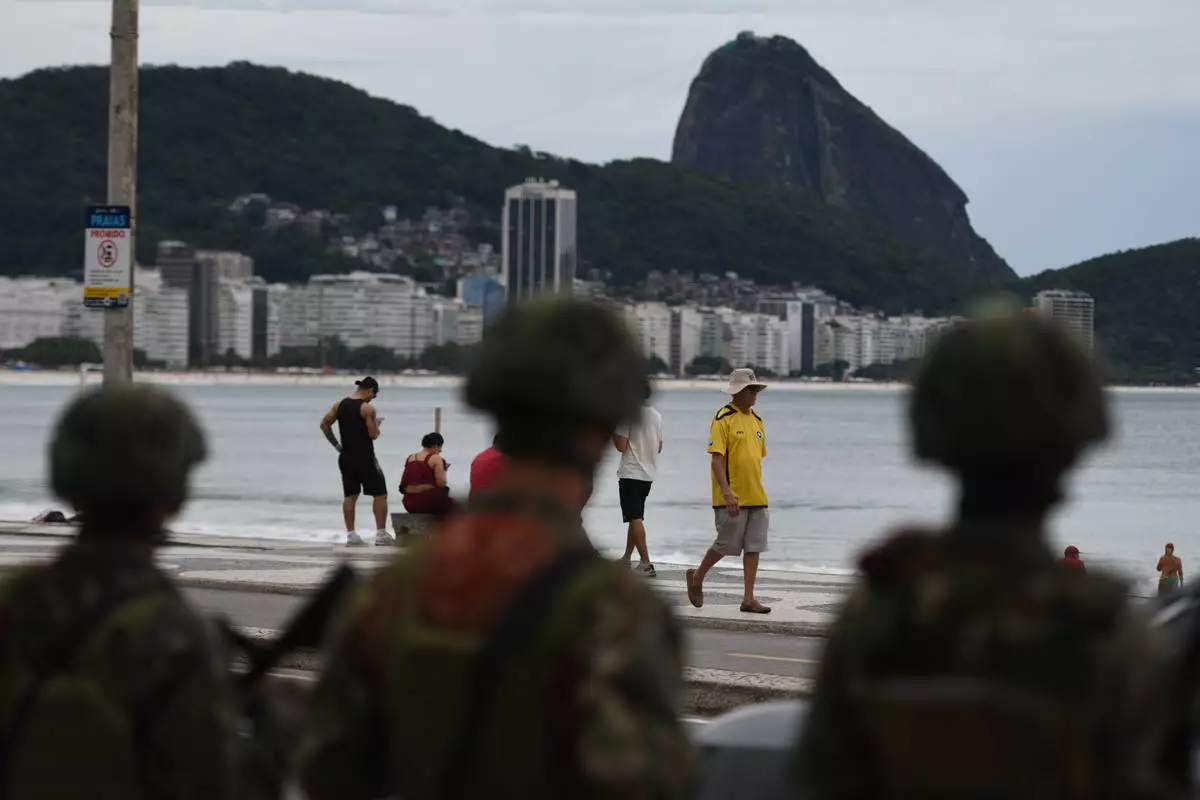
People walk along the beach during the presidential runoff in Rio de Janeiro, Sunday, Oct. 25, 2026. (AP Photo/Lucas Landau)
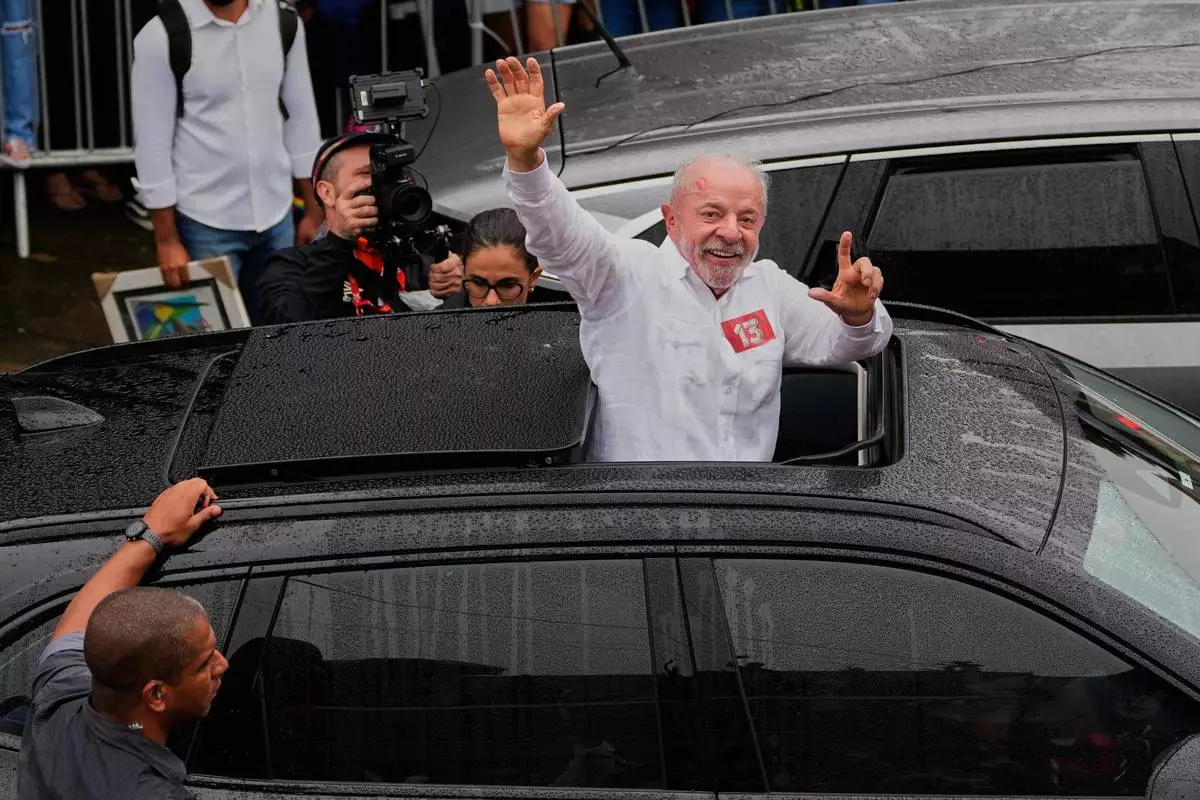
President Luiz Inacio Lula da Silva, who is seeking reelection, waves after voting in the presidential runoff in Sao Bernardo do Campo, Brazil, Sunday, Oct. 25, 2026. (AP Photo/Andre Penner)
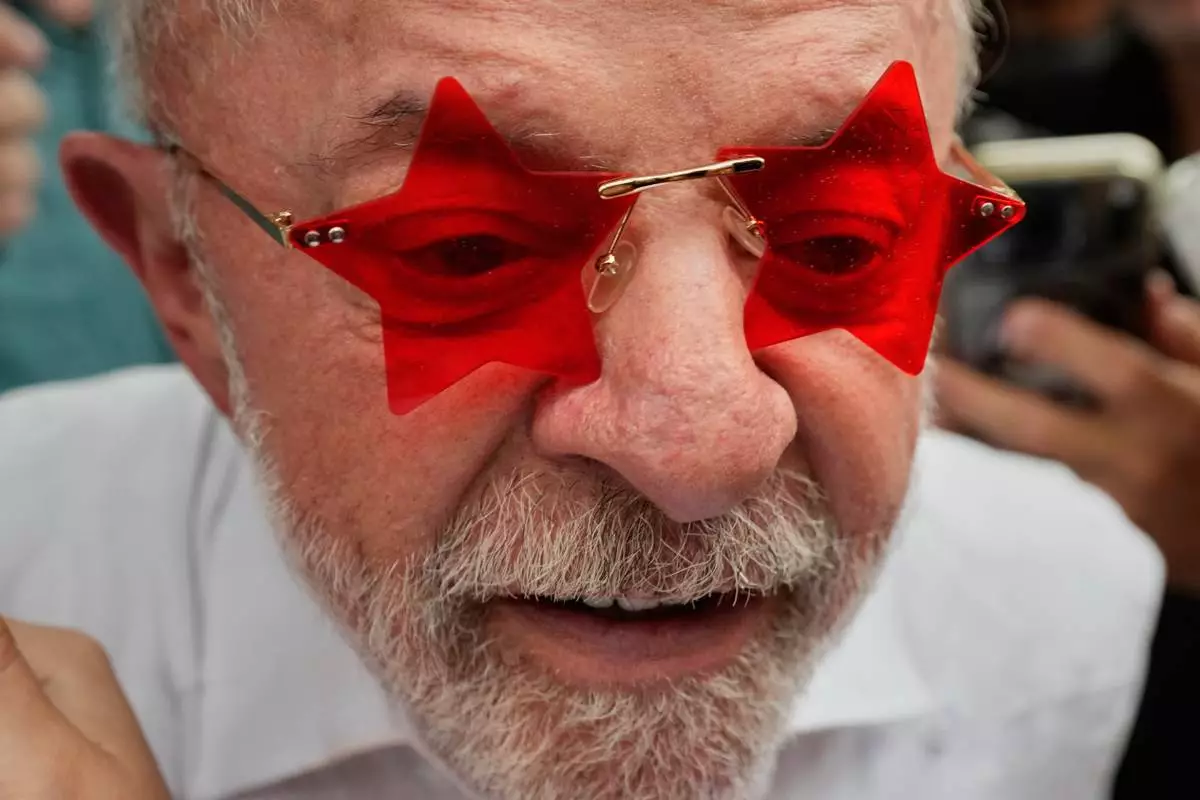
President Luiz Inacio Lula da Silva, who is seeking reelection, wears glasses given to him by a supporter after voting in the presidential runoff in Sao Bernardo do Campo, Brazil, Sunday, Oct. 25, 2026. (AP Photo/Natacha Pisarenko)
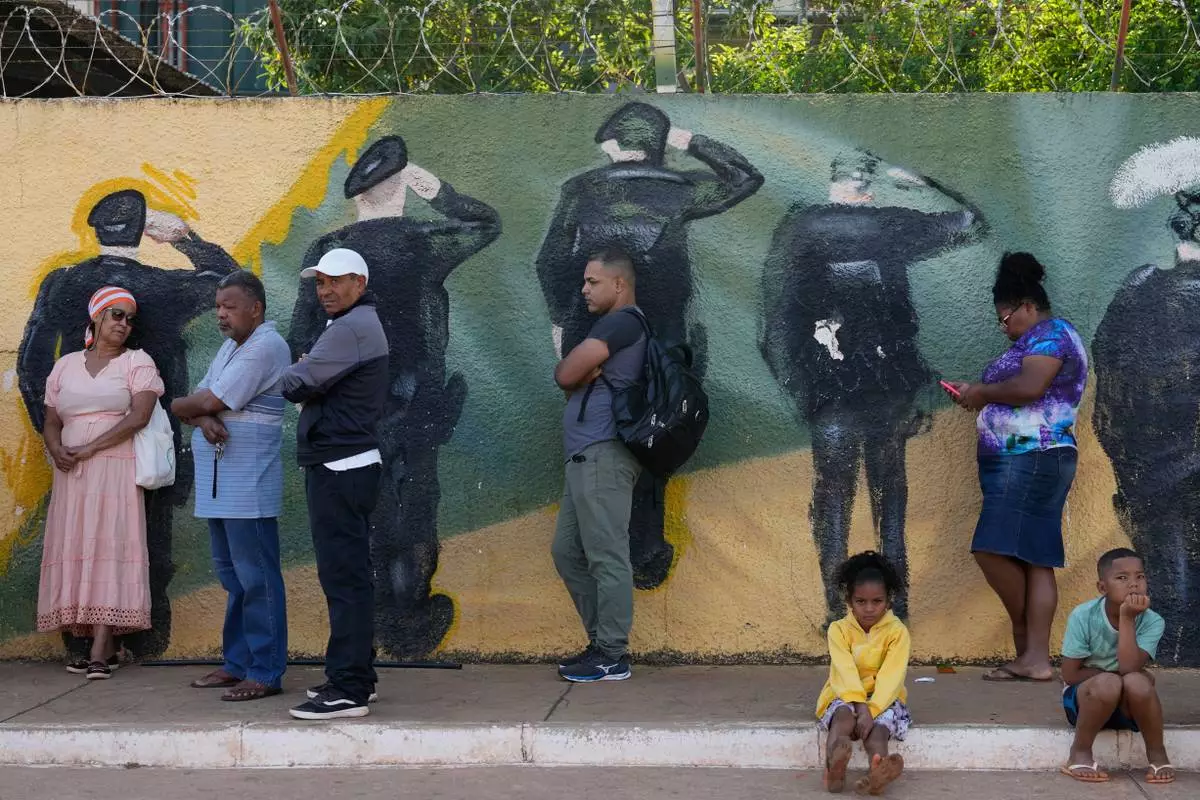
Voters line up at a polling station during the presidential runoff in Brasilia, Brazil, Sunday, Oct. 25, 2026. (AP Photo/Eraldo Peres)
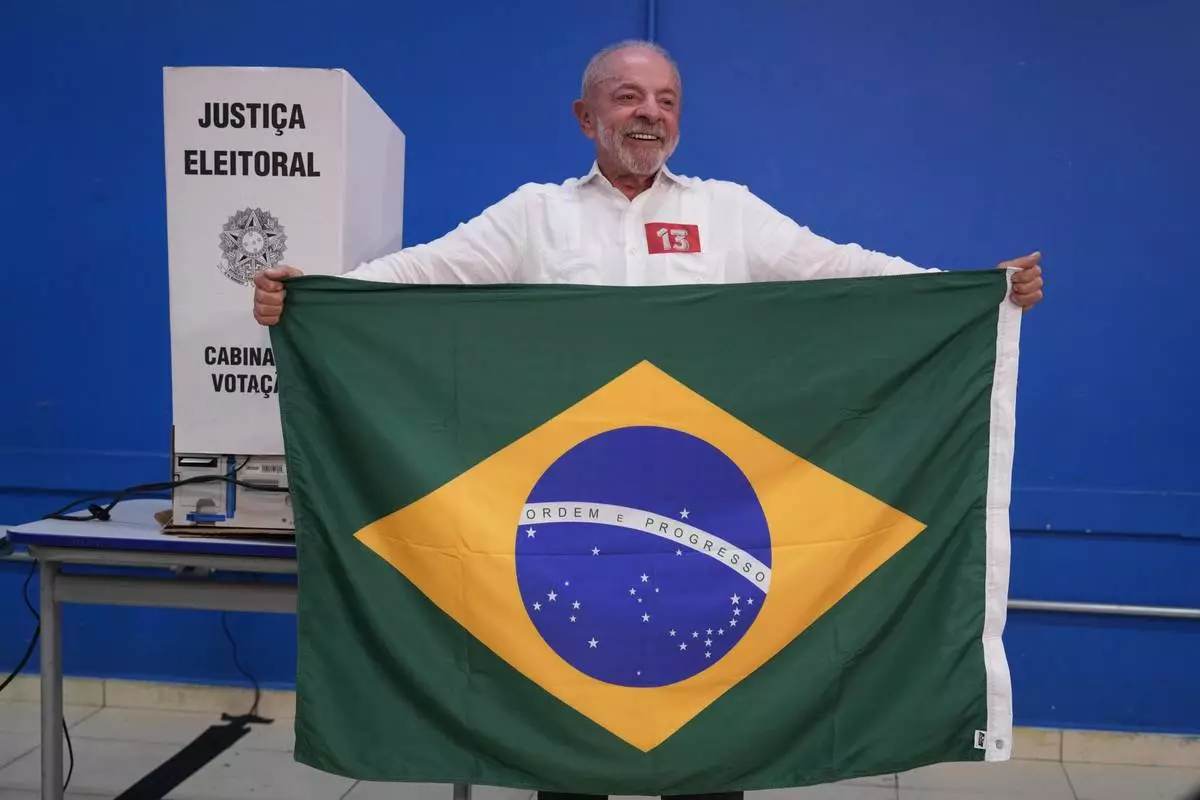
President Luiz Inacio Lula da Silva, who is seeking reelection, displays a Brazilian flag before voting in a presidential runoff in Sao Bernardo do Campo, Brazil, Sunday, Oct. 25, 2026. (AP Photo/Andre Penner)
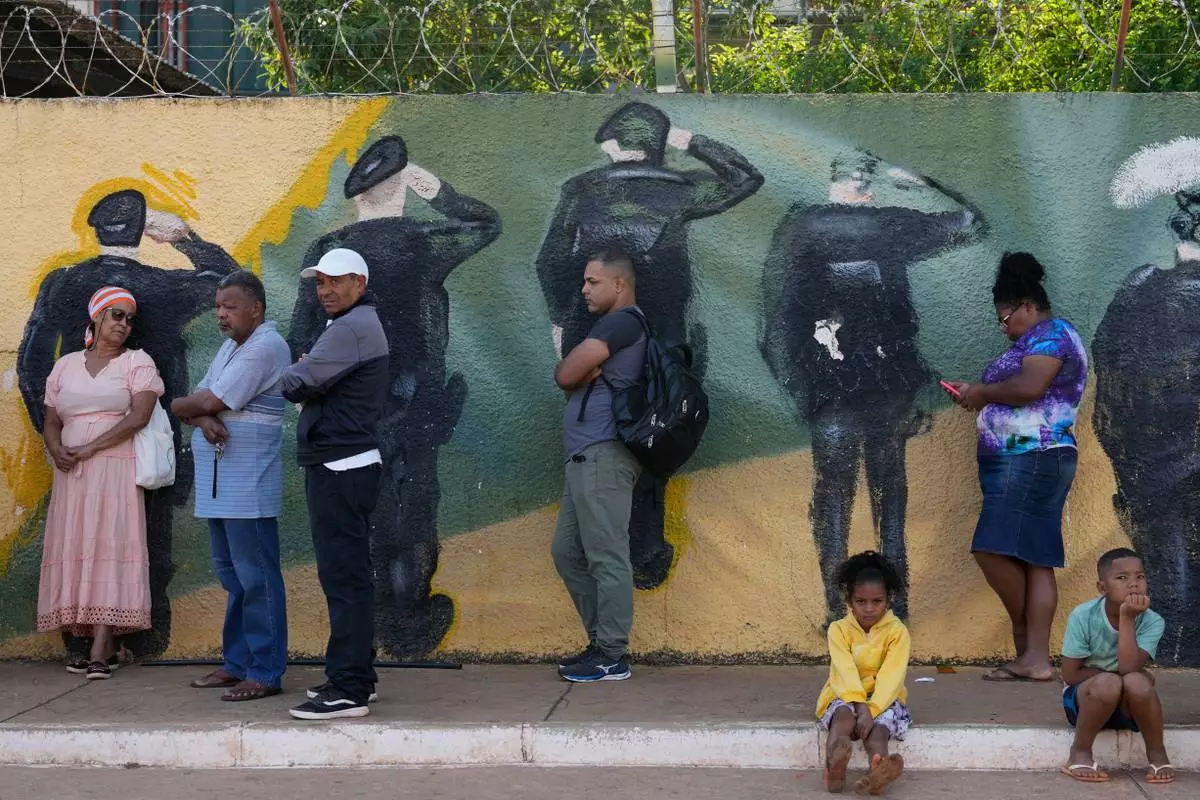
Voters line up at a polling station during the presidential runoff in Brasilia, Brazil, Sunday, Oct. 25, 2026. (AP Photo/Eraldo Peres)
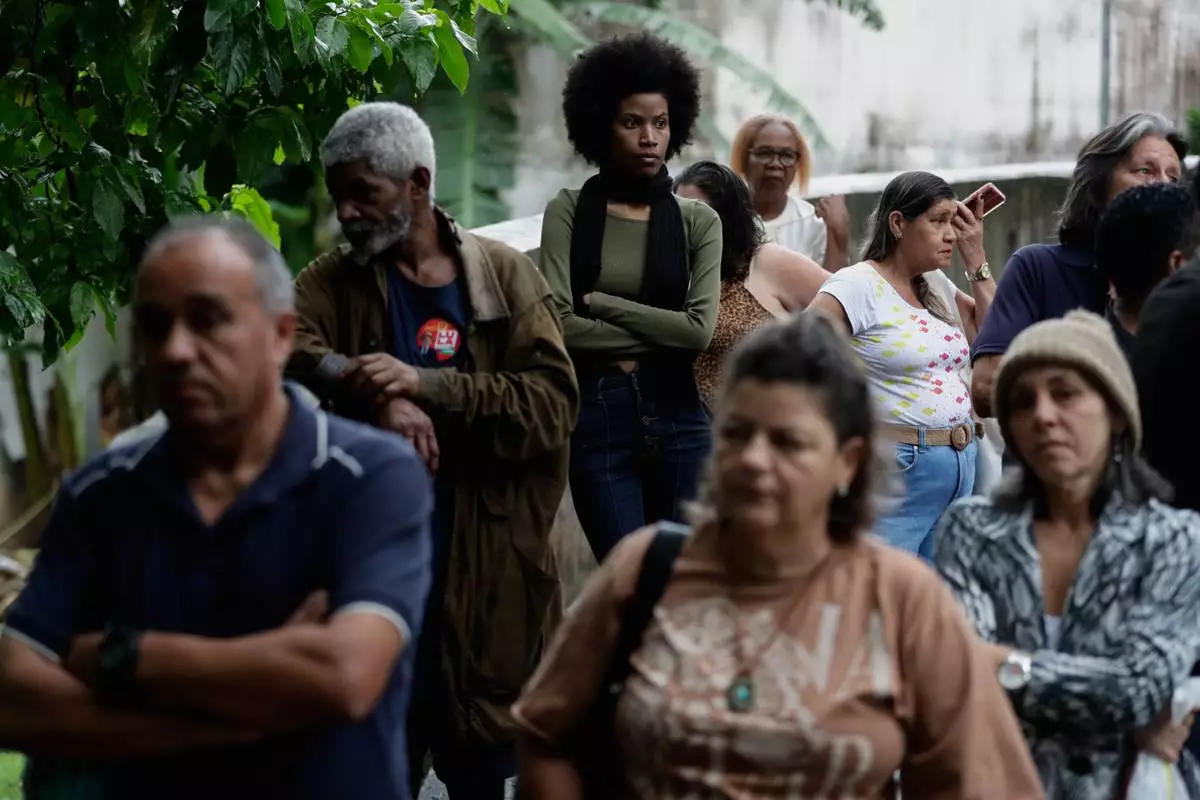
Voters line outside a polling station up during the presidential runoff in Rio de Janeiro, Sunday, Oct. 25, 2026. (AP Photo/Bruna Prado)
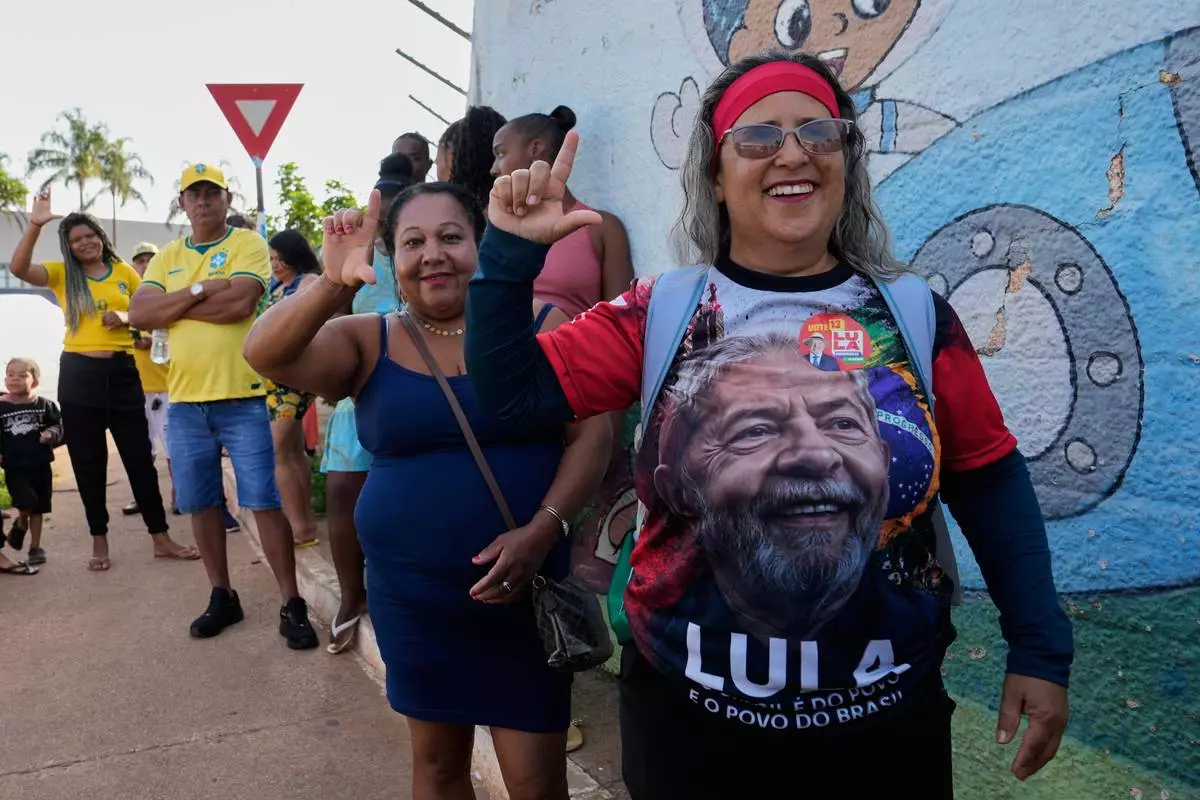
A supporter of President Luiz Inacio Lula da Silva, who is seeking reelection, lines up at a polling station during a presidential runoff in Brasilia, Brazil, Sunday, Oct. 25, 2026. (AP Photo/Eraldo Peres)
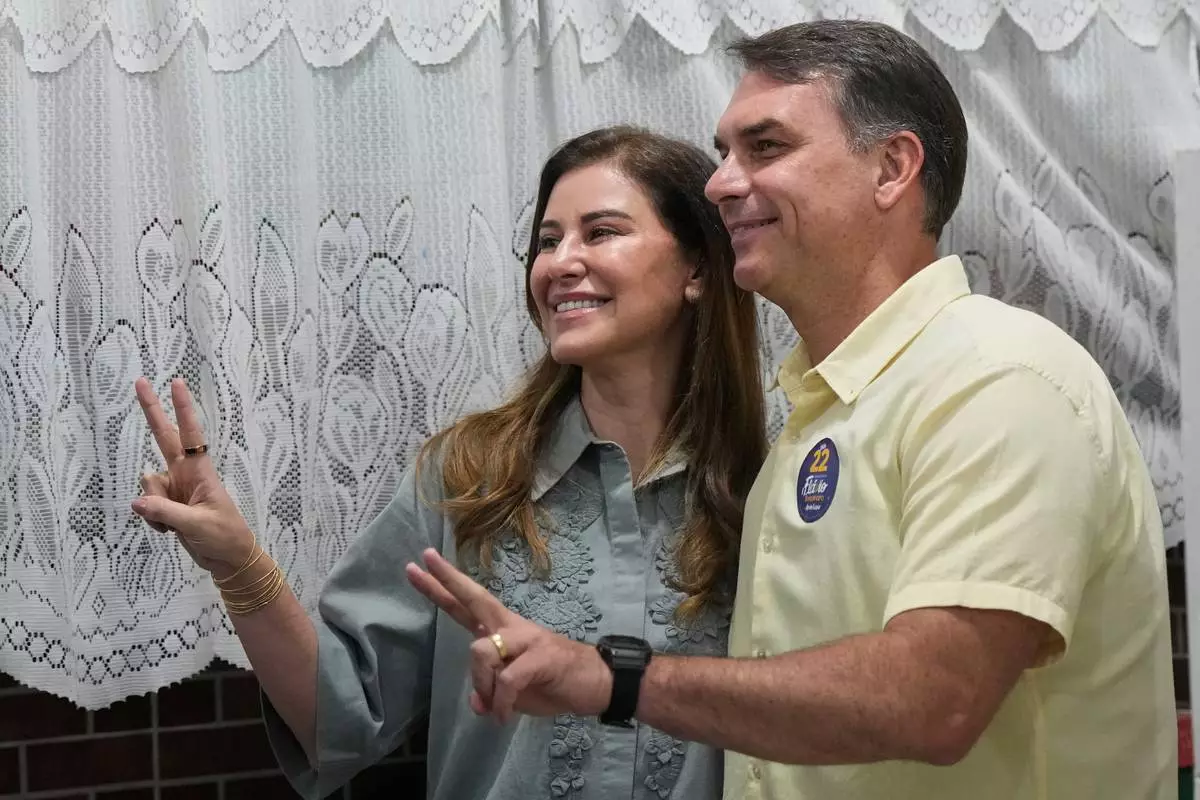
Opposition presidential candidate Sen. Flavio Bolsonaro and his wife Fernanda Bolsonaro give a thumbs during the runoff presidential election in Rio de Janeiro, Sunday, Oct. 25, 2026. (AP Photo/Silvia Izquierdo)
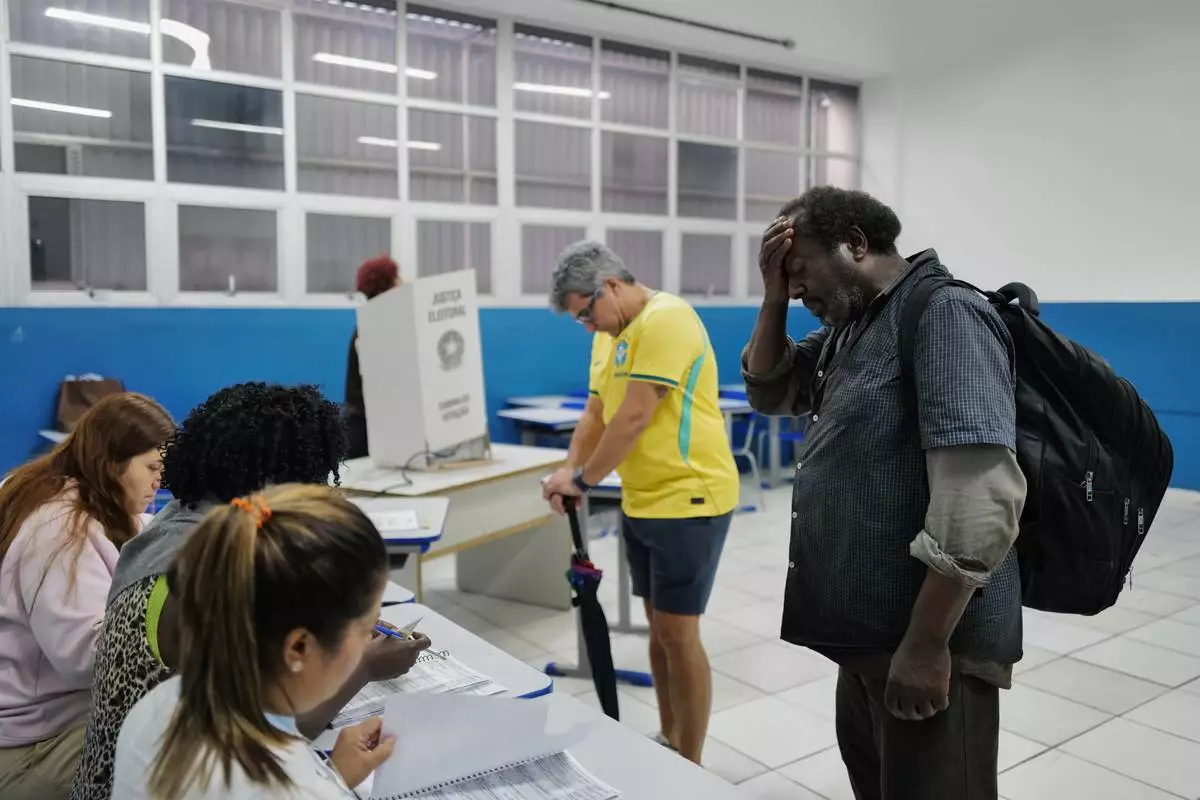
Voters wait to cast their ballots during a presidential runoff in Rio de Janeiro, Sunday, Oct. 25, 2026. (AP Photo/Lucas Landau)
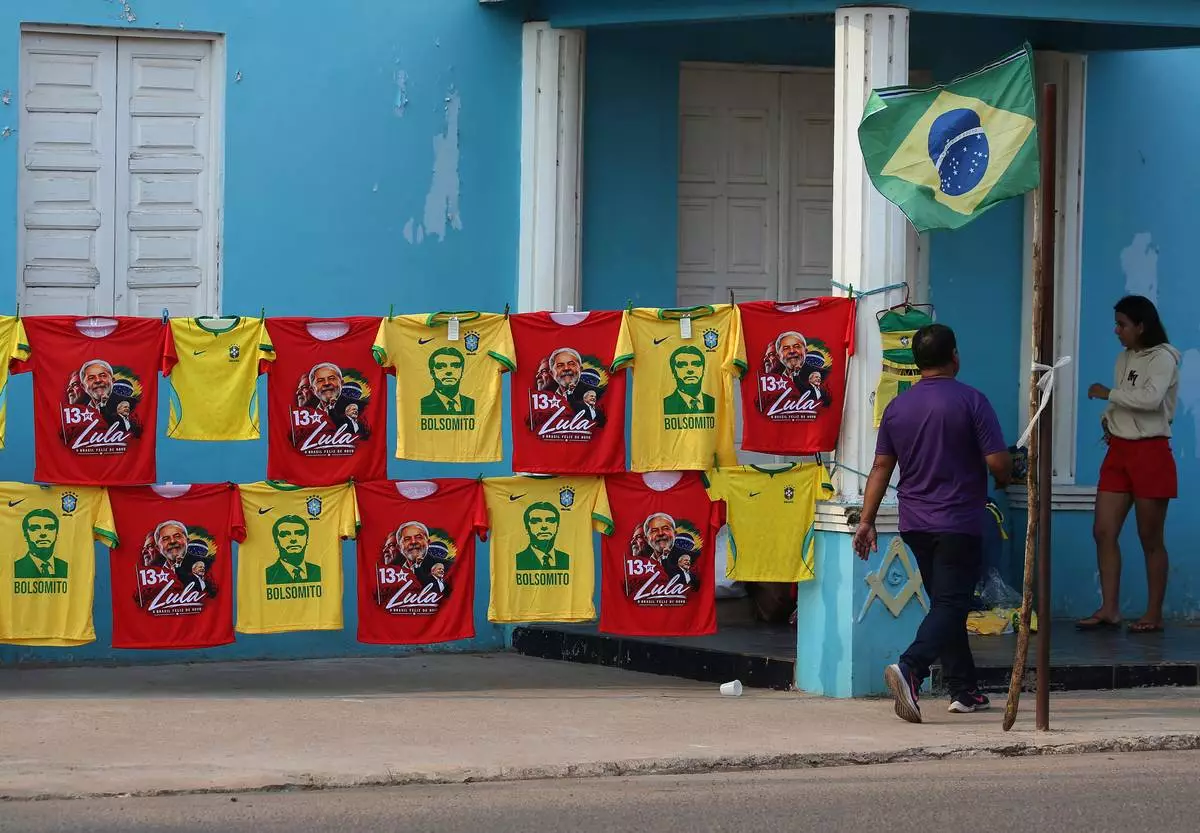
Red T-shirts depicting Brazilian President Luiz Inacio Lula da Silva, who is running for reelection, and yellow T-shirts depicting opposition presidential candidate Sen. Flavio Bolsonaro hang for sale outside a building ahead of Brazil's presidential runoff election in Autazes, Amazonas state, Brazil, Saturday, Oct. 24, 2026. (AP Photo/Edmar Barros)
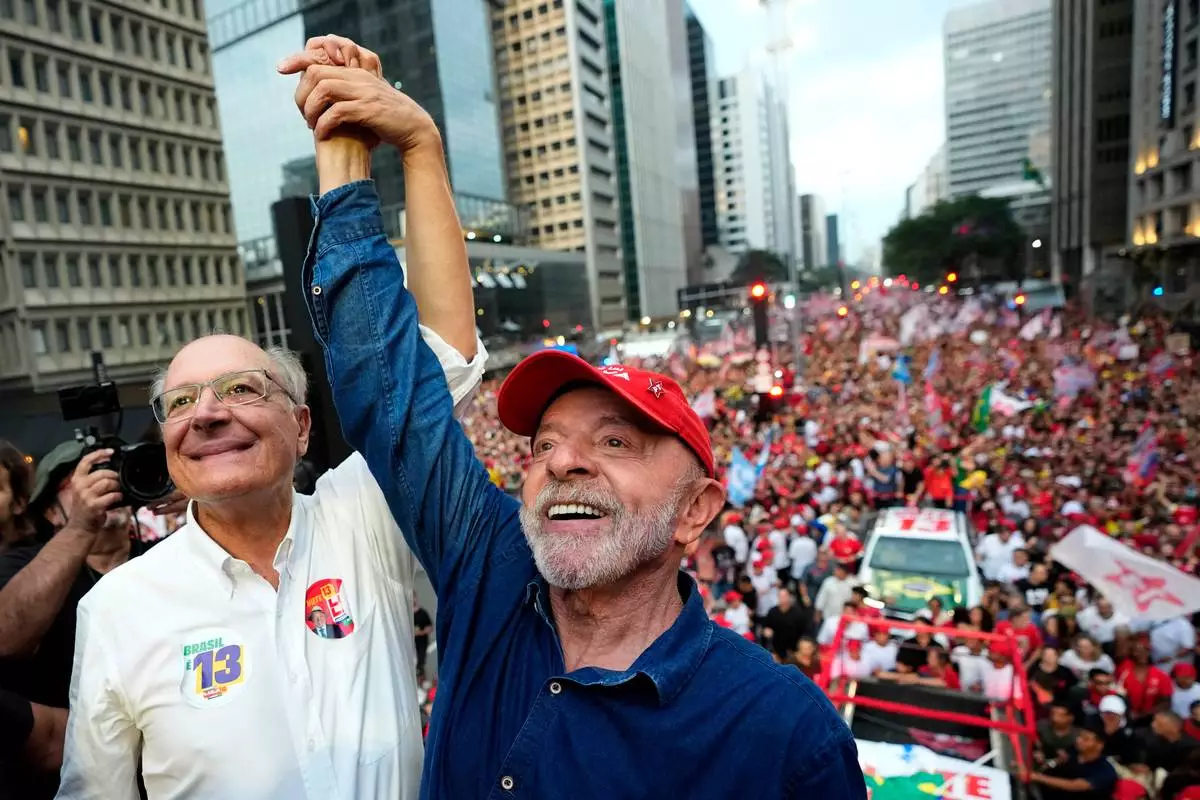
Brazilian President Luiz Inacio Lula da Silva, right, who is running for reelection, and his running mate Geraldo Alckmin raise their arms in unison at the end of their final campaign rally, a day ahead of the presidential runoff election in Sao Paulo, Brazil, Saturday, Oct. 24, 2026. (AP Photo/Natacha Pisarenko)
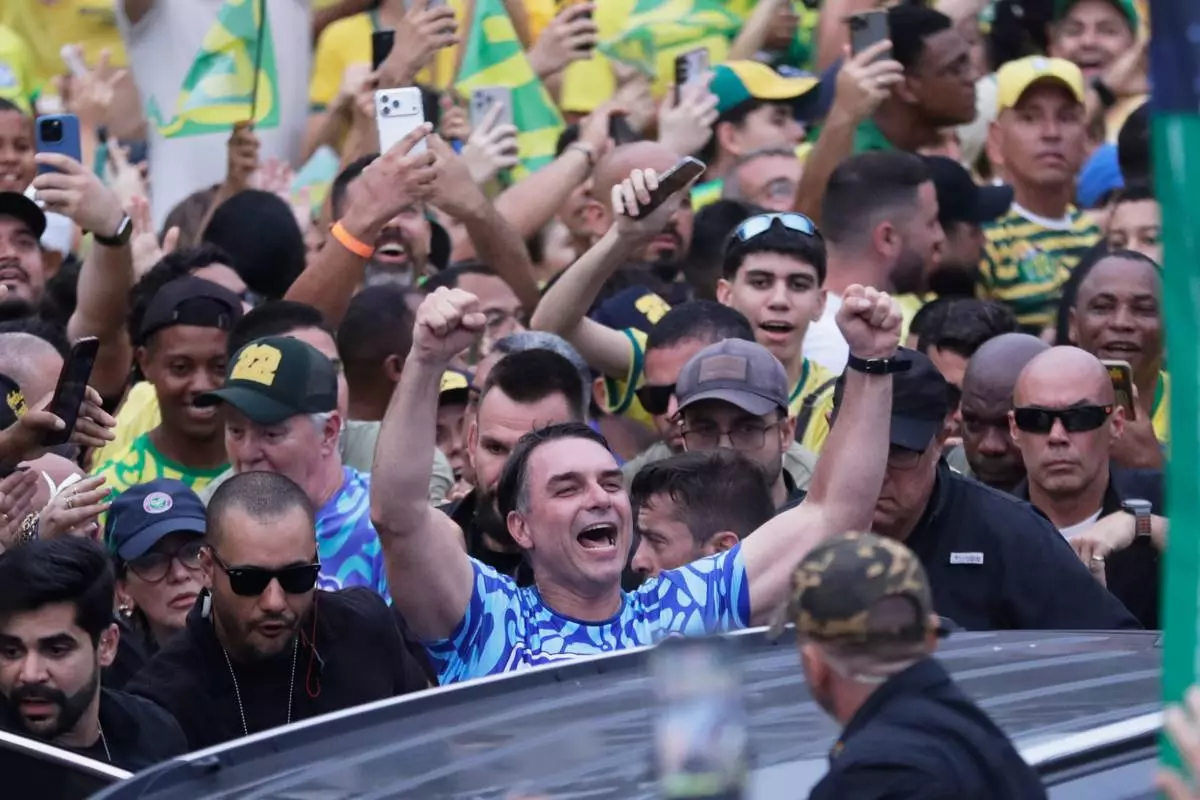
Opposition presidential candidate Sen. Flavio Bolsonaro, center, leaves after his final campaign rally a day ahead of the presidential runoff election in Rio de Janeiro, Saturday, Oct. 24, 2026. (AP Photo/Bruna Prado)
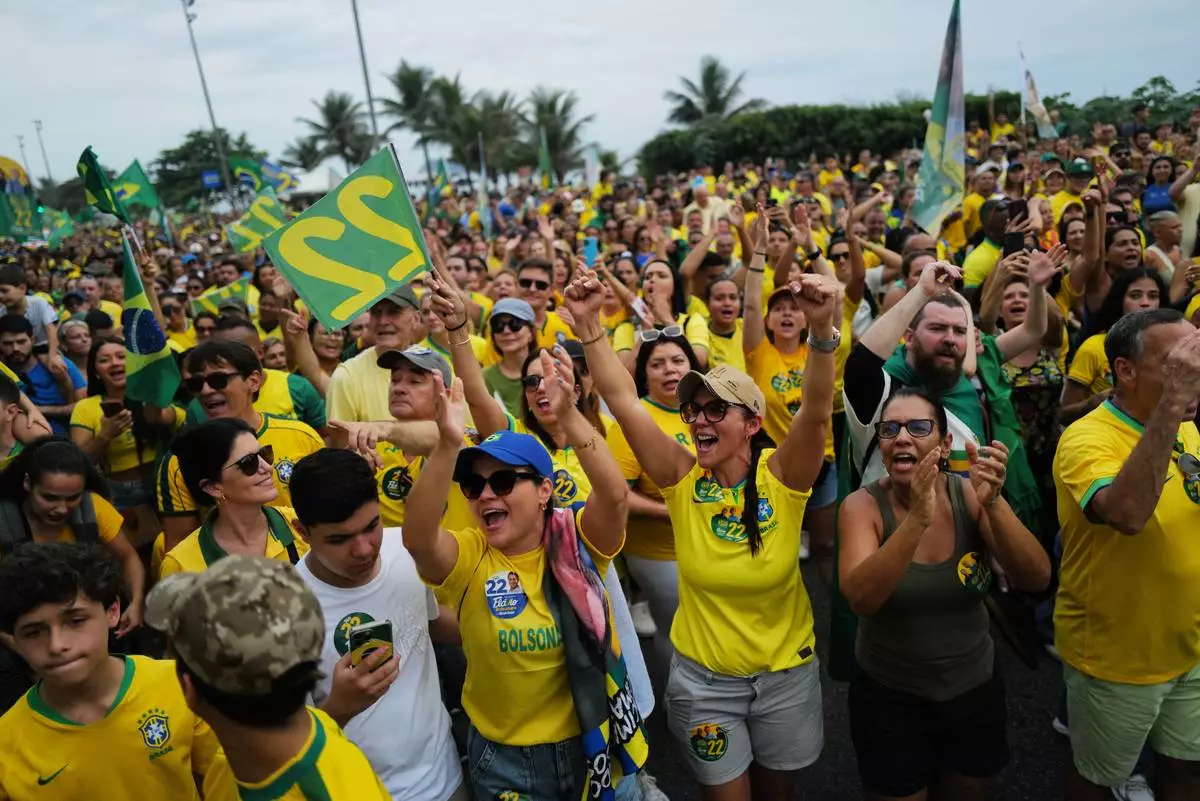
Supporters of opposition presidential candidate Sen. Flavio Bolsonaro cheer during his final campaign rally a day ahead of the presidential runoff election in Rio de Janeiro, Saturday, Oct. 24, 2026. (AP Photo/Lucas Landau)
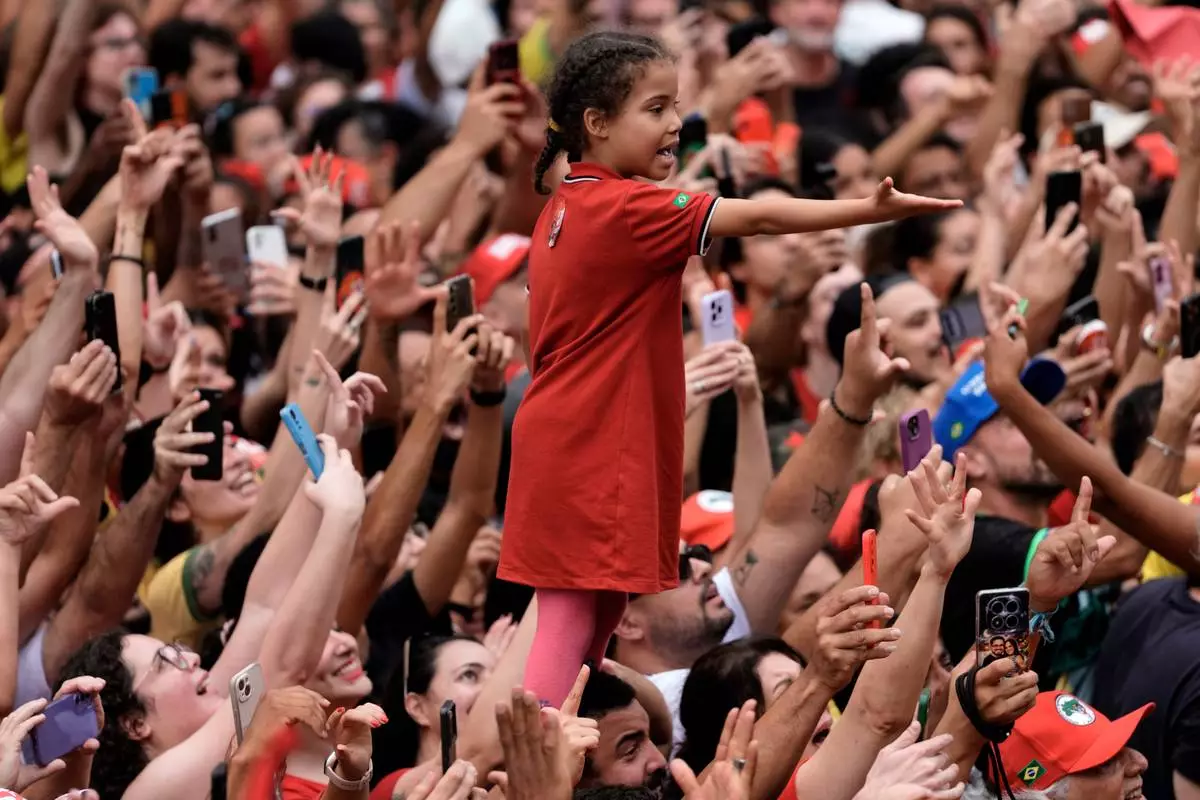
A girl standing on a man's shoulders reaches out amid a crowd of supporters of Brazilian President Luiz Inacio Lula da Silva, who is running for reelection, during his final campaign rally, a day ahead of the presidential runoff election in Sao Paulo, Brazil, Saturday, Oct. 24, 2026. (AP Photo/Natacha Pisarenko)