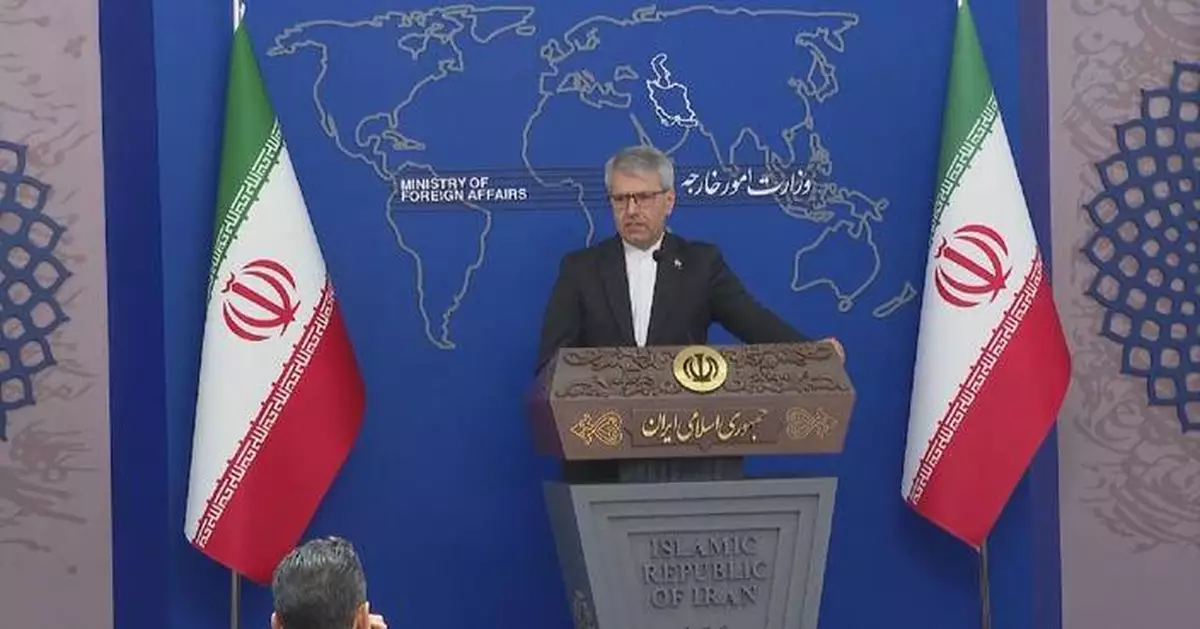
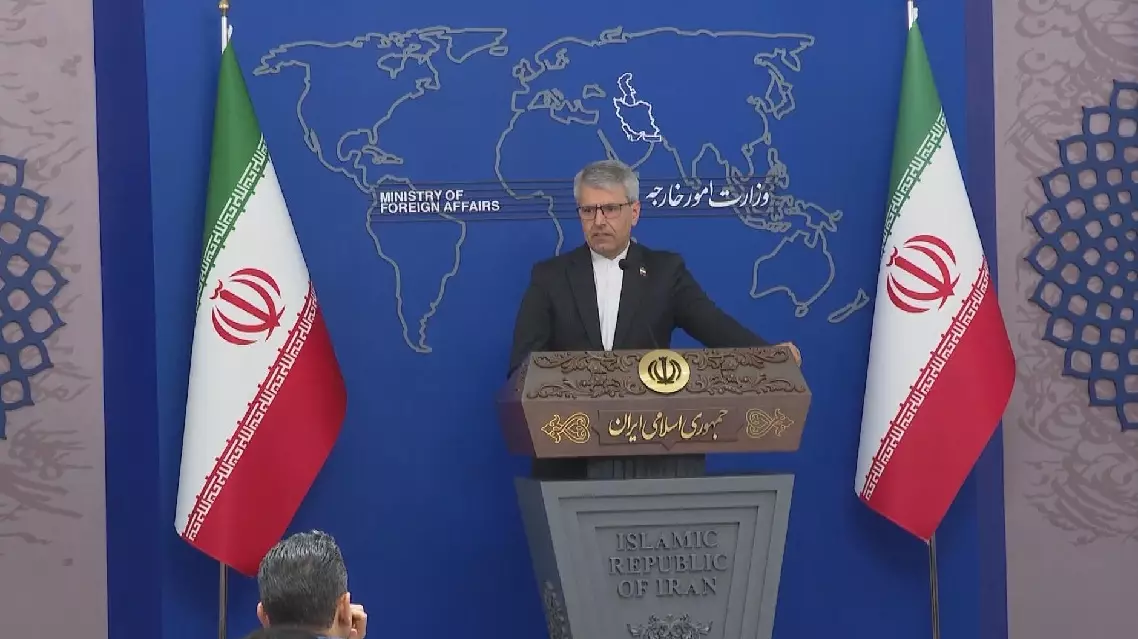
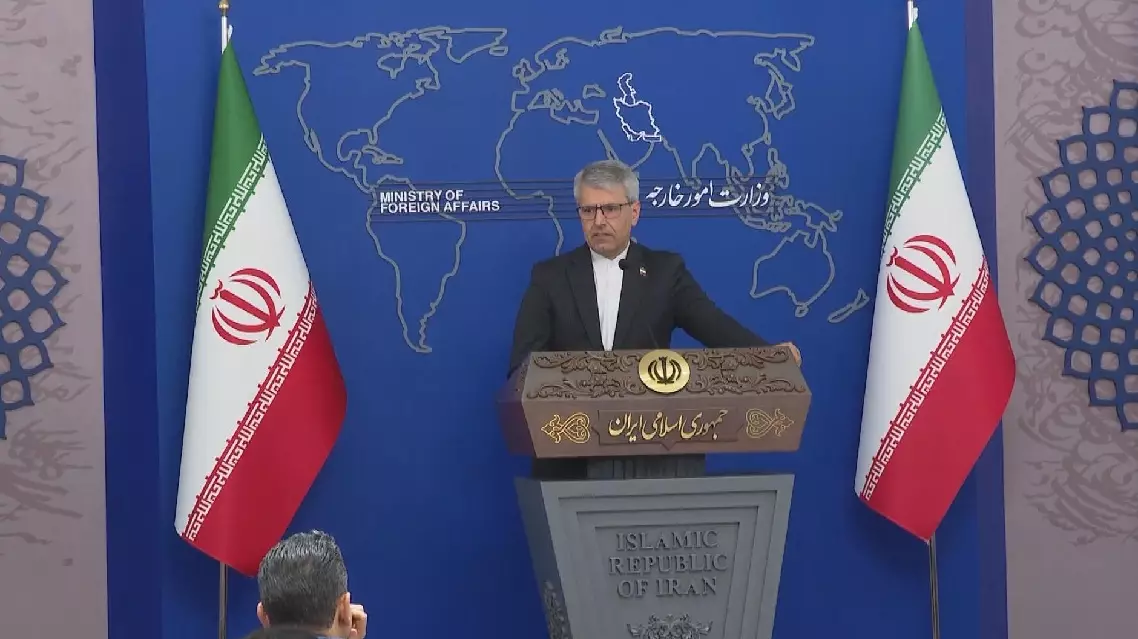
The U.S. military aggression and its "economic war" against Iran constitute a blatant violation of Iran's national sovereignty and international laws, and Iran will spare no effort to protect its national interests, said Foreign Ministry spokesman Esmaeil Baghaei on Monday.
Baghaei made the remarks when addressing several pressing issues, including Iran-U.S. relations and regional developments at a weekly press conference in Tehran, Iran's capital.
"As long as such [U.S.] action continues -- specifically the continued 'economic war' and naval blockade against Iran, it will be deemed an extension of U.S. military aggression. This, in turn, entitles Iran to take necessary measures in self-defense, both legally and operationally. Therefore, Iran's actions are purely defensive in nature, serving as a direct response to the relentless military aggression carried out by the U.S. and Israel," Baghaei said.
Iran will spare no effort to safeguard its national interests: FM spokesman
Iran will spare no effort to safeguard its national interests: FM spokesman
Arieh Warshel, a Nobel Laureate in Chemistry in 2013, has called for greater usage of artificial intelligence (AI) to drive breakthroughs in innovative drug development, while emphasizing the need to maintain strict safety standards.
Warshel on Friday attended a session on "International Drug Safety Governance and China's Drug Regulatory Reform" of the ninth Hongqiao International Economic Forum, held as part of the ninth China International Import Expo (CIIE) in Shanghai.
Speaking to China Media Group (CMG), Warshel praised China for its abundant clinical resources, complete industrial chain, and large pool of young research talent.
"I am extremely impressed from the rapid growth and the investment in this pharmaceutical direction. I am involved essentially with the two companies that try to do it. The people who are working on it, especially in the AI directions, are extremely knowledgeable. So there must be a future outcome from this," he said.
China's innovative drugs have gained rapid growth over the years. In 2025, more than 2,900 clinical trials for new drugs were registered nationwide, a rise of 18 percent year on year and a record high in scale. The number of clinical trials of cell and gene therapies grew by about 30 percent last year, highlighting strong activity in cutting-edge areas of drug development.
Warshel highlighted the potential of AI to accelerate research and development, while stressing holding the bottom line of safety.
"In this case, AI could be very useful, might accelerate the R and D, but first you have to show that this works. If you could do the drug test on a computer rather than on a mouse, and you prove that it works equally well. This is clearly a direction which is very promising," he said.
He also noted that computational science and AI have the potential to shorten the new-drug development cycle, while cautioning against the pursuit of quick results.
"Essentially one of the difficulties in big pharma is that they don't let you study the same problem for too long. If you do not find a solution, you move to another thing. In all the great discoveries like the Nobel Prize and so on, that I know well because people spend more than three years on the same problem they start, so you need support for it to stay on the same problem," said Warshel.
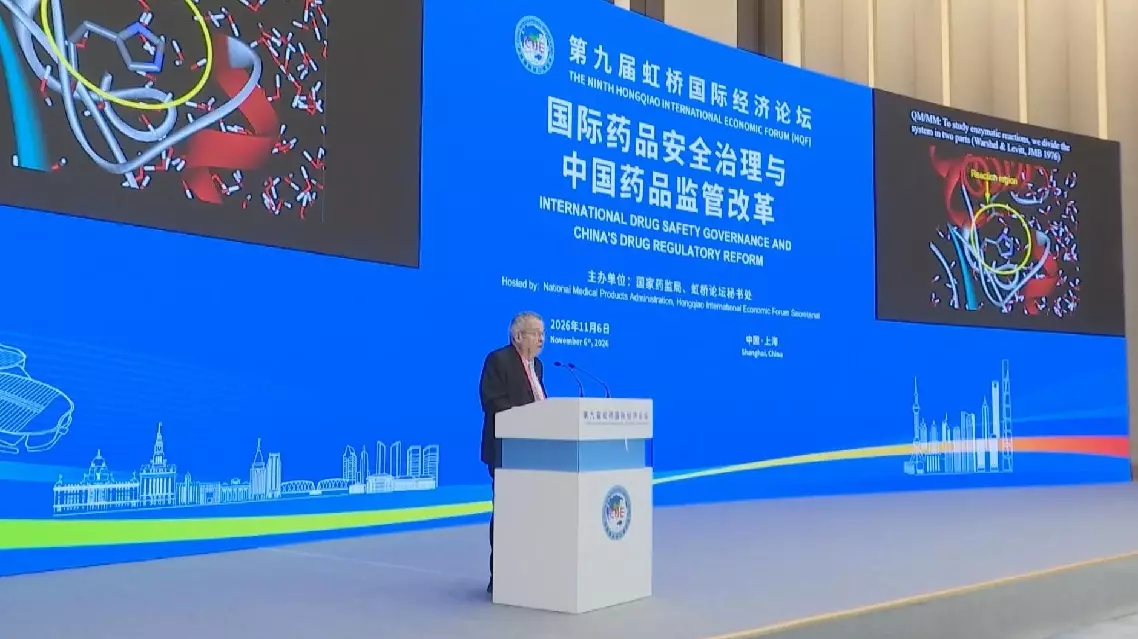
Nobel laureate calls for expanded AI use in drug development at CIIE