NEW YORK (AP) — Zheng Qinwen won't deny it. Having to qualify for the U.S. Open was tough.
The qualifying tournament is for up-and-coming players, or maybe ones who are on their way out. It's not a place to find players with resumes like Zheng's.
Click to Gallery
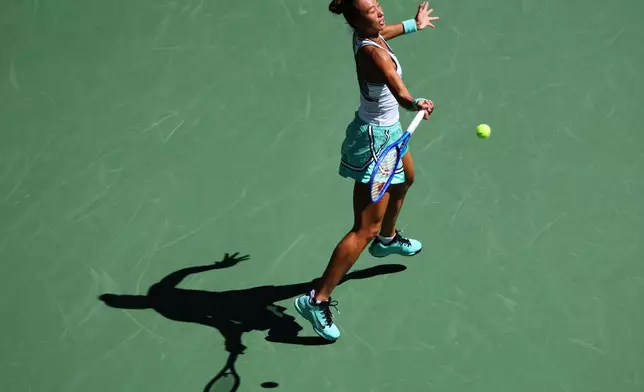
Qinwen Zheng, of China, returns the ball to Iga Swiatek, of Poland, during the fourth round of the U.S. Open tennis championships, Monday, Sept. 7, 2026, in New York. (AP Photo/Andres Kudacki)
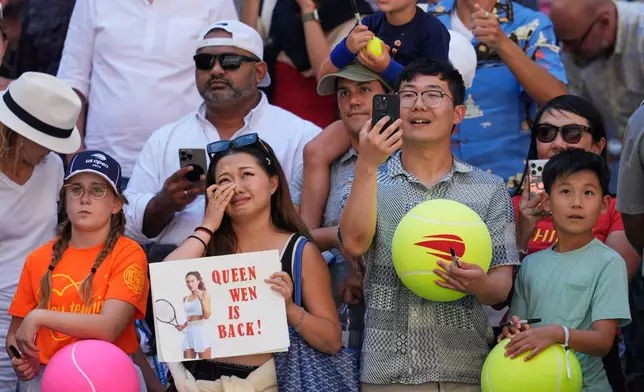
Fans react to Qinwen Zheng, of China, winning a match against Iga Swiatek, of Poland, during the fourth round of the U.S. Open tennis championships, Monday, Sept. 7, 2026, in New York. (AP Photo/Seth Wenig)
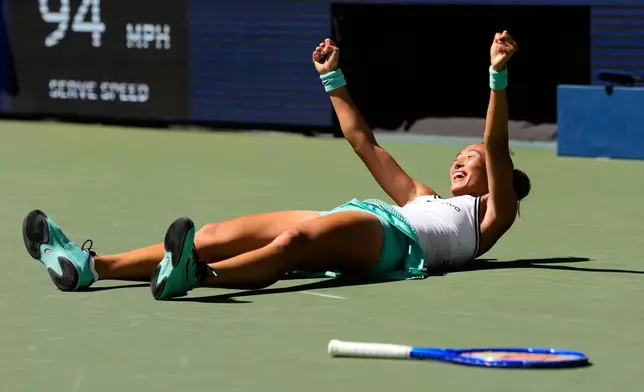
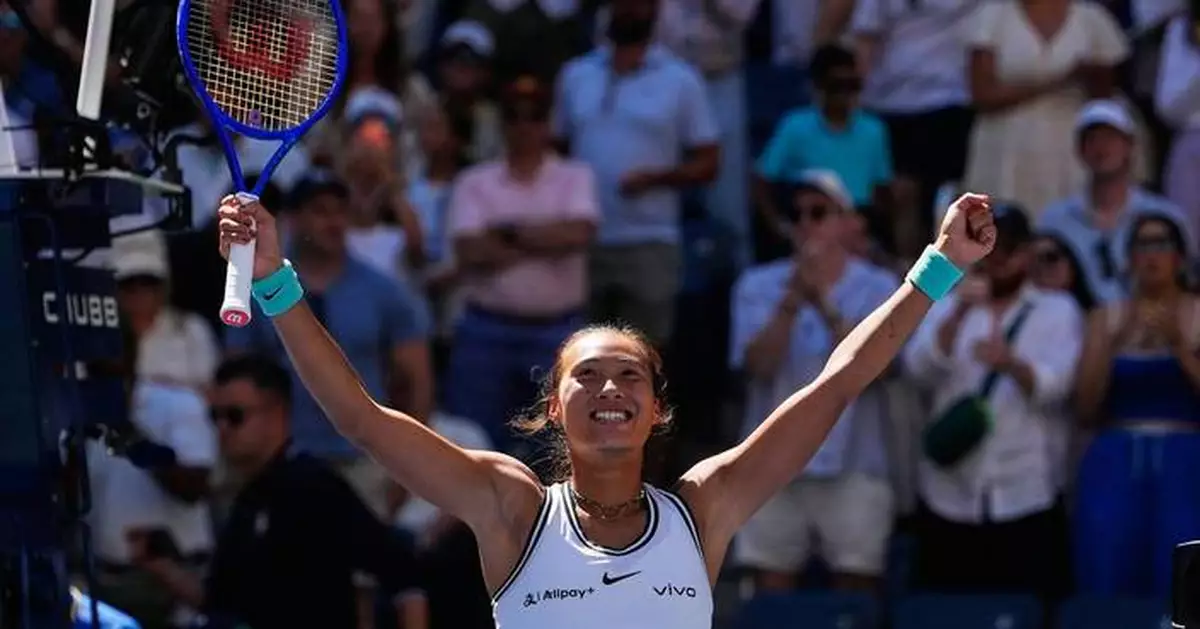
Qinwen Zheng, of China, celebrates after winning a match against Iga Swiatek, of Poland, during the fourth round of the U.S. Open tennis championships, Monday, Sept. 7, 2026, in New York. (AP Photo/Seth Wenig)
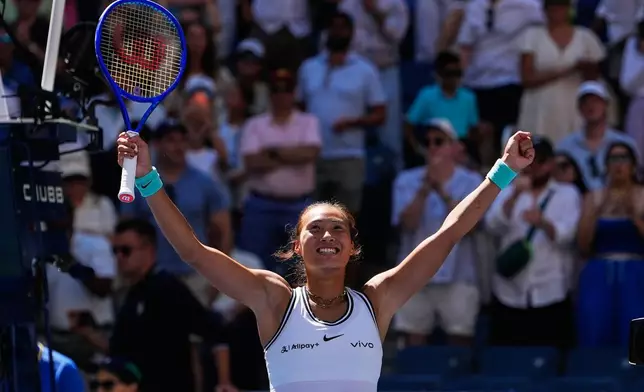
Qinwen Zheng, of China, celebrates after winning a match against Iga Swiatek, of Poland, during the fourth round of the U.S. Open tennis championships, Monday, Sept. 7, 2026, in New York. (AP Photo/Seth Wenig)
“Psychologically, it is very difficult to accept,” the 23-year-old from China said. “I mean, I used to be top 10, Olympic champion. I've played in the big stadiums since the beginning.”
Now she's back in them again after engineering comebacks from 5-0 deficits in her last two matches, first against No. 22 Madison Keys and then No. 8 Iga Swiatek, to reach the quarterfinals.
Zheng will play Wednesday against No. 2 seed Elena Rybakina, who will move to No. 1 in the WTA rankings with a victory.
Zheng was once ranked as high as No. 4. She reached the Australian Open final in 2024, made a second straight trip to the U.S. Open quarterfinals later that year, and in between won the first gold medal for China in tennis since the sport returned to the Olympics in 1988.
But elbow surgery and the subsequent time off — Zheng played only one tournament between July 2025 and February 2026 — dropped her way down the rankings. She is currently No. 121, no longer high enough to qualify automatically for the biggest tournaments.
“I couldn’t perform well the last three, four months. I know people had a lot of doubt about me, and it’s just really hard for me,” Zheng said. "I just need to keep positive every single day, telling myself just keep working and let’s see when the result is going to happen.
“It is a really, really tough process. I suffered a lot, and I have been through a lot of pain every single loss that I have.”
The one that sparked this turnaround came last month in Toronto, when Zheng was trying to qualify for the Masters 1000 tournament there. She was beaten by Lanlana Tararudee in straight sets, with Zheng saying she played “really a disaster there.”
“My coach sat down with me and we had a long talk together. He told me, ‘You can’t continue playing like this. You need to have a training block and find your tennis again,’” Zheng said. “I thought about it, it just took five seconds. I said, ‘OK, let’s do that.’”
They went to the IMG Academy in Bradenton, Florida, where Zheng said they spent the entire time on the courts or in the gym, working for 12 hours one day.
“It was really tough, but this is how sport shows,” Zheng said. “If you don’t work hard, you don’t have it.”
Zheng came to New York and won three matches in qualifying to make the main draw. Then, after two victories she found herself down 5-0 in the third set against Keys before erasing a match point and winning 1-6, 7-6 (3), 7-5.
Swiatek then raced out to a 5-0 lead Monday before Zheng, who said she initially had trouble adjusting to playing in Arthur Ashe Stadium again, recovered to oust the 2022 champion 7-5, 6-3.
“Well, she definitely found her form, and I feel like she’s playing now with a lot of confidence after so many wins in a row,” Rybakina said. “So she’s very dangerous.”
Zheng said she always had the confidence that she could make it back, and when it didn't happen as quickly as she hoped it meant she just needed to work harder.
Now she has become the first qualifier to reach the quarterfinals in Flushing Meadows since Emma Raducanu won the title in 2021.
“I’m just really happy to be back again,” Zheng said. “I mean, if that’s what God gives to me, all the losses before, I’m sure that he will give me something back, no?”
See AP’s full tennis coverage here
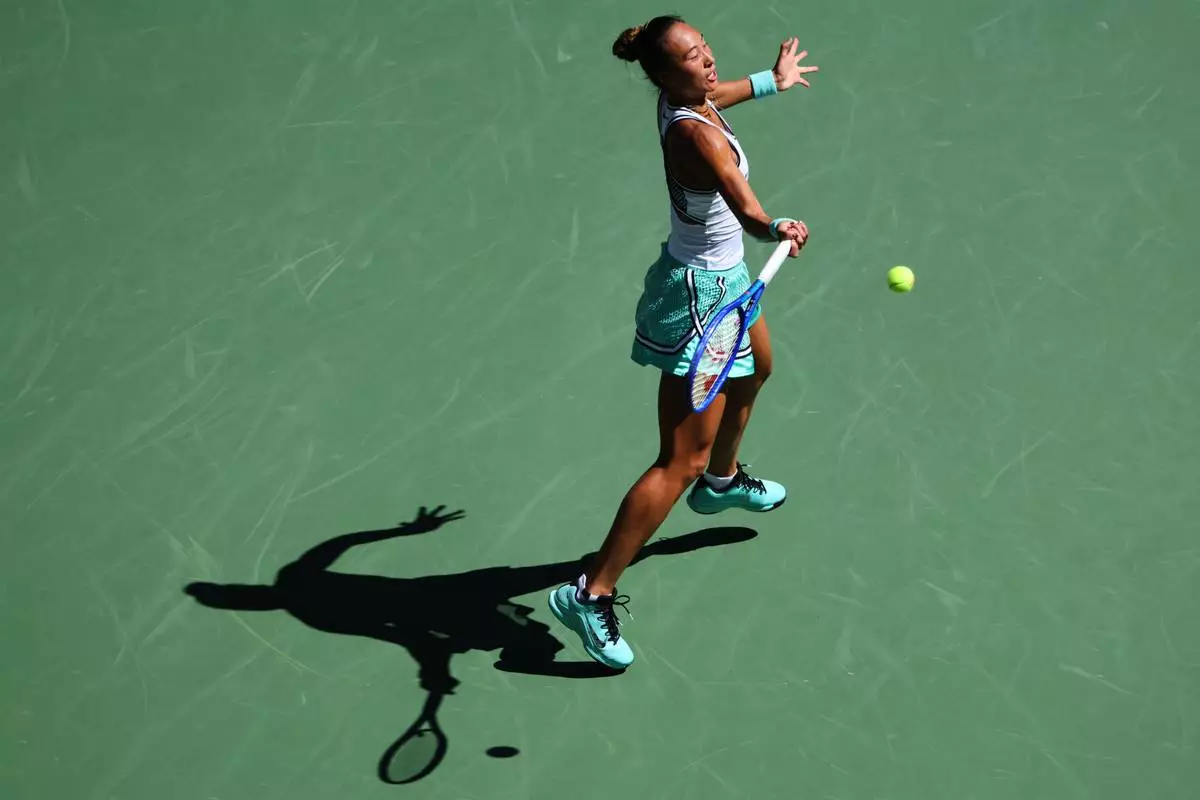
Qinwen Zheng, of China, returns the ball to Iga Swiatek, of Poland, during the fourth round of the U.S. Open tennis championships, Monday, Sept. 7, 2026, in New York. (AP Photo/Andres Kudacki)
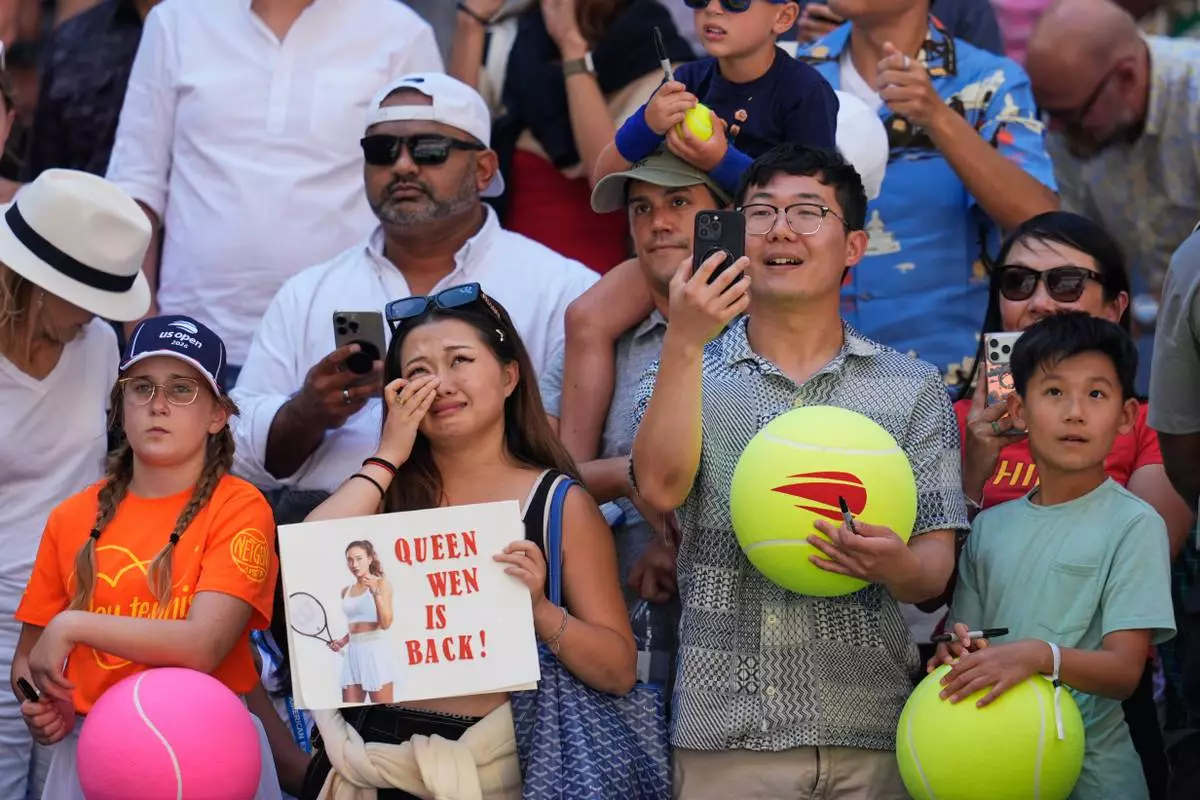
Fans react to Qinwen Zheng, of China, winning a match against Iga Swiatek, of Poland, during the fourth round of the U.S. Open tennis championships, Monday, Sept. 7, 2026, in New York. (AP Photo/Seth Wenig)
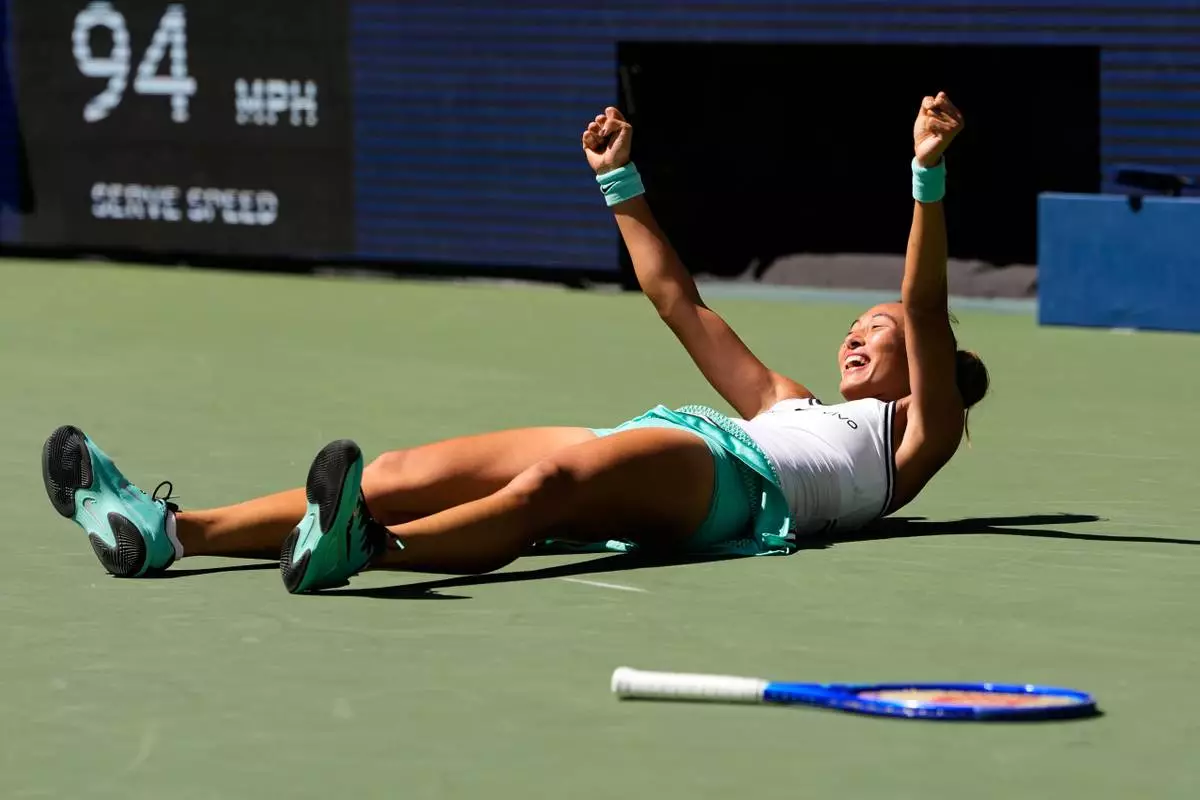
Qinwen Zheng, of China, celebrates after winning a match against Iga Swiatek, of Poland, during the fourth round of the U.S. Open tennis championships, Monday, Sept. 7, 2026, in New York. (AP Photo/Seth Wenig)
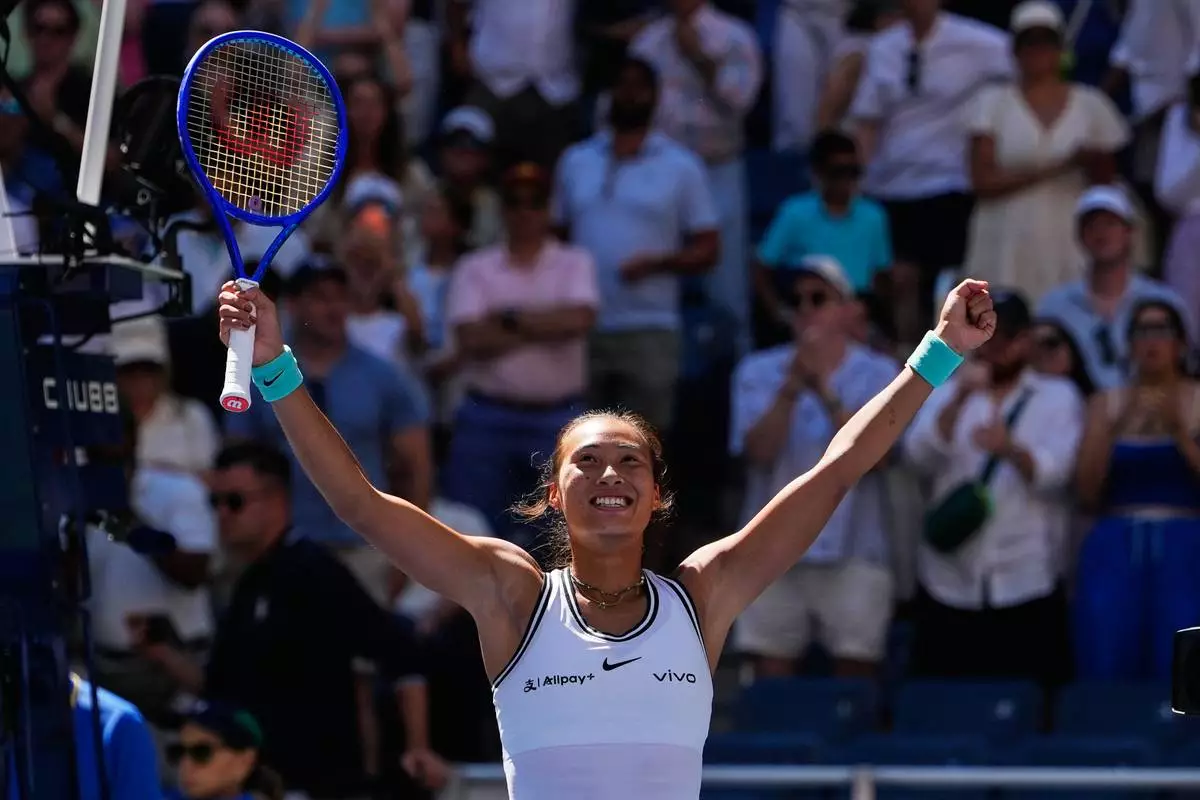
Qinwen Zheng, of China, celebrates after winning a match against Iga Swiatek, of Poland, during the fourth round of the U.S. Open tennis championships, Monday, Sept. 7, 2026, in New York. (AP Photo/Seth Wenig)