CHP records case of severe paediatric influenza infection
The Centre for Health Protection (CHP) of the Department of Health today (September 8) recorded a severe paediatric influenza infection case. The CHP urged the public to receive vaccinations as early as possible after the Seasonal Influenza Vaccination (SIV) Programmes commence on September 17 to safeguard their own health and that of their families. In addition, the public should maintain good personal and environmental hygiene at all times to prevent influenza and other respiratory illnesses.
The case involves a five-year-old boy with underlying illnesses who developed a fever and cough on September 6. He was taken to the Accident and Emergency Department of Tin Shui Wai Hospital because of shortness of breath on September 7, and was immediately transferred and admitted to the paediatric ward of Tuen Mun Hospital. As his condition deteriorated, he was transferred to the paediatric intensive care unit (PICU) of the hospital for further treatment. His respiratory specimen tested positive for influenza A (H1) virus. His clinical diagnosis was influenza A infection complicated with severe pneumonia. The patient remains hospitalised at PICU in stable condition.
The CHP's preliminary investigation revealed that the boy had no travel history during the incubation period. One of his household contacts, who recently developed mild upper respiratory symptoms, has now recovered. The CHP will continue to investigate the case.
"Hong Kong entered the influenza season in late June. The latest surveillance data showed that influenza activity increased further last week and remains at a high level. Since the end of June, a cumulative total of 17 cases of severe paediatric influenza infection have been recorded. Among these cases, nine patients have recovered and been discharged from hospital, three patients are in stable condition, two are in serious condition, two are in critical condition and one has passed away. The overall number of severe influenza cases among children is comparable to that of previous flu seasons. However, owing to widespread influenza transmission in the community in recent months and the substantial rise in infections, the number of severe cases has increased accordingly. We anticipate that influenza activity will remain at a high level during the initial period of the new school year, with possible influenza outbreaks in schools. Therefore, schools and parents must remain vigilant and take preventive measures," said the Controller of the CHP, Dr Edwin Tsui.
"The 2026/27 SIV Programmes, including the SIV School Outreach Programme (SIVSOP), will commence on September 17. The SIVSOP this year will introduce a new Electronic Consent Form (e-consent form) feature via eHealth. We have distributed school-specific QR codes to participating schools for distribution to parents. The QR codes have become effective. Parents are encouraged to fill out the e-consent forms for their children as soon as possible. This new measure not only facilitates the public to join the SIV Programmes but also streamlines the administrative procedures for healthcare service providers and schools, so that SIV outreach activities can start as early as possible. Around 80 schools have scheduled to organise SIV outreach activities in September so far, which is 16 times that of the same period last year. I appeal to all schools and parents in Hong Kong to work closely with the CHP and complete the consent process as soon as possible, so that students can be arranged to receive SIV earlier," he added.
Dr Tsui reminded parents that the health condition of children with influenza can deteriorate rapidly. Parents must pay close attention to their condition, and visit an accident and emergency department immediately if the child's condition deteriorates with symptoms such as shortness of breath, wheezing, blue lips, chest pain, confusion, a persistent fever or convulsions. Members of the public should seek medical attention as soon as possible if they develop respiratory symptoms. If they live with members of high-risk groups, such as children, the elderly and those with underlying illnesses or compromised immune systems, they should wear a surgical mask at home to reduce the risk of infecting them. Other effective ways to reduce the spread of the disease include maintaining household hygiene, frequently cleaning and disinfecting frequently touched surfaces, practising good hand hygiene, and ensuring proper indoor air circulation.
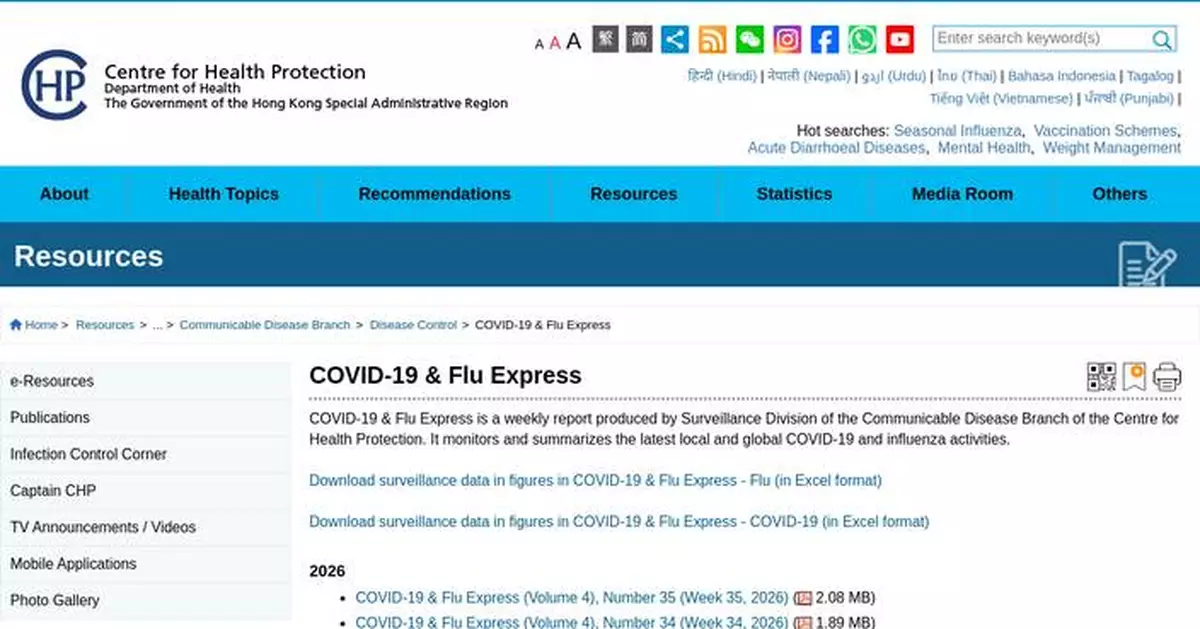
Members of the public may refer to the CHP'sCOVID-19 & Flu Express,Seasonal Influenza WebpageandVaccination Schemesfor the latest information.
Source: AI-found images