China has consolidated its diversified markets through high-level diplomacy and multilateral cooperation mechanisms, with steady progress in expanding the fundamentals of its emerging markets and mutually beneficial international economic cooperation in the first eight months of this year.
China's total goods imports and exports rose 17.6 percent year on year to 34.78 trillion yuan (about 5.13 trillion U.S. dollars) in the January-August period, the General Administration of Customs said on Tuesday.
The country's imports and exports with Belt and Road partner countries reached 17.74 trillion yuan in the period, up 15.9 percent year on year, while its trade with other Asia-Pacific Economic Cooperation (APEC) economies totaled 20.89 trillion yuan, a rise of 22.2 percent.
Its imports and exports with other Shanghai Cooperation Organization (SCO) member states reached 2.81 trillion yuan, rising 15.6 percent.
Trade with the Association of Southeast Asian Nations (ASEAN), Latin America, and Africa stood at 5.95 trillion yuan, 2.92 trillion yuan and 1.89 trillion yuan respectively, up 20.6 percent, 14.5 percent, and 18.5 percent.
By August, trade with the United States had posted growth for five consecutive months, with cumulative imports and exports in the January-August period reaching 2.76 trillion yuan, an increase of 1.3 percent.
"In the first eight months, China recorded growth in both exports and imports with 112 countries and regions, an increase of 17 compared with the same period last year. China's imports and exports with ASEAN grew by over 20 percent, and the two sides' positions as each other's largest trading partner remain solid. As the 23rd China-ASEAN Expo will be held in Guangxi (in south China) this year, Nanning Customs cleared the first batch of inbound exhibits on August 31. China-ASEAN economic and trade cooperation will continue to deepen and strengthen, supporting the shared development of both sides," said Lyu Daliang, director of the Department of Statistics and Analysis at the General Administration of Customs.
The country's foreign trade entities had been full of vitality in the January-August period.
Private enterprises recorded imports and exports of 19.79 trillion yuan, up 17.6 percent, accounting for 56.9 percent of China's total foreign trade value and maintaining their position as the largest foreign trade entity.
During the same period, foreign-invested enterprises posted imports and exports of 10.15 trillion yuan, a rise of 18.1 percent, while state-owned enterprises recorded 4.77 trillion yuan, up 16.9 percent.
"China is committed to building a modernized industrial system through opening up and cooperation, with a growing number of foreign-invested enterprises deeply integrating into China's industrial and innovation chains. They are 'creating with China' and embracing 'China Opportunity 2.0.' In the first eight months of this year, nearly 80,000 foreign-invested enterprises recorded imports and exports in China, and the growth rate of imports and exports by foreign-invested enterprises continues to lead," he said.
The term "China Opportunity 2.0" is aptly used to summarize China's more open, inclusive, and tech-powered economic interaction with the rest of the world, which comes after its integration into the global economy over 40-plus years of reform and opening-up.
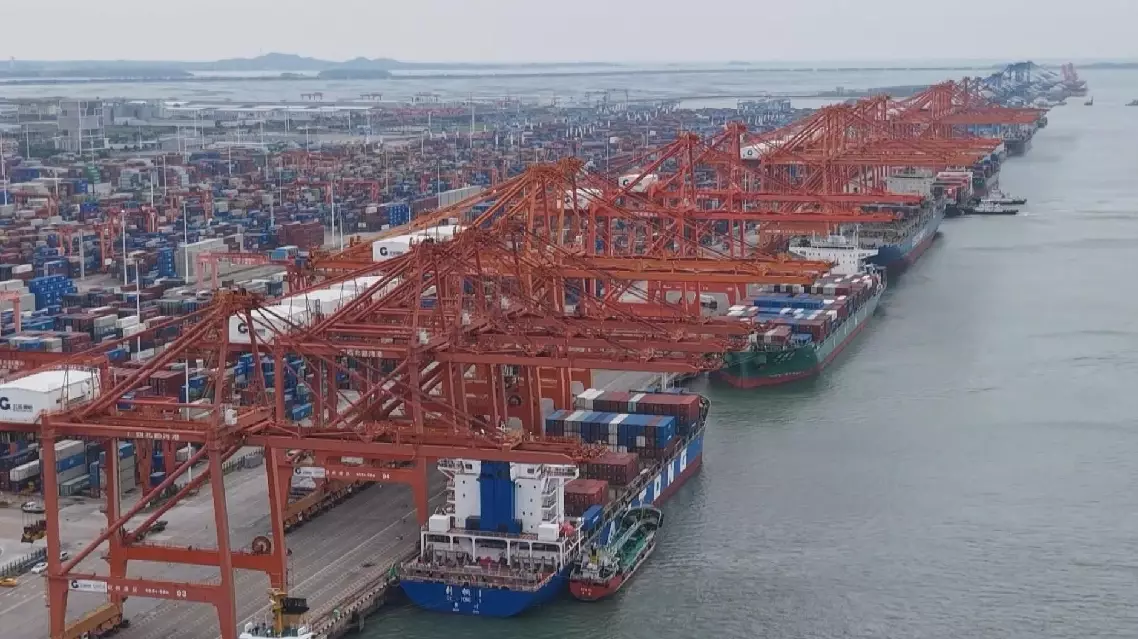
China consolidates diversified markets in Jan-Aug period