ADEN, Yemen (AP) — Yemen's Houthi rebels, who launched a wave of attacks on Saudi oil facilities on Tuesday, have become an increasingly disruptive force in the Middle East in recent years, striking Israel, Saudi Arabia and a global shipping route in solidarity with Iran and allied armed groups.
They have been at war with Yemen's internationally recognized government since 2014, when the rebels swept down from their mountainous heartland and seized much of northern and central Yemen. Saudi Arabia entered the war the following year on behalf of the government.
A ceasefire largely halted the fighting in 2022. The Houthis trained their fire on Israel and Red Sea shipping routes after Hamas' Oct. 7, 2023, attack triggered the war in Gaza. Those attacks subsided after the U.S. carried out a wave of airstrikes on the Houthis in early 2025.
The Houthis kept to the sidelines during the initial, heavy phase of the Iran war, but in July they resumed attacks on Saudi Arabia and declared a blockade against the oil giant. The Houthis have their own reasons for fighting the Saudis, but it also serves Iran's interests by ramping up pressure on an American-allied oil producer as Tehran seeks leverage against the United States.
The Houthis are members of Islam’s minority Shiite Zaydi sect, which ruled Yemen for 1,000 years until 1962. Their official slogan is “God is greatest; death to America; death to Israel; a curse on the Jews; victory for Islam.”
They battled Yemen's central government for years before launching the 2014 offensive, which soon ground into a stalemate. The war has killed an estimated 150,000 people and at times pushed Yemen to the brink of famine. Even before the war, it was the poorest country in the Arab world.
A Saudi-led blockade has largely isolated Houthi-run areas of Yemen — including the capital, Sanaa — deepening the misery there. The Houthis have also faced growing discontent over their campaign of detaining U.N. employees and aid workers.
The 2022 truce largely held until July of this year, when the Houthis resumed their attacks on Saudi Arabia in response to an airstrike on Sanaa's international airport that the rebels said prevented a flight from Iran from landing.
The Houthis also declared a blockade on Saudi shipping, threatening a major oil exporter at a time of soaring prices due to Iran's disruption of the Strait of Hormuz. They threaten another key trade route, running through the Bab el-Mandeb and the Red Sea, that carries 12% of the world's trade in peacetime.
Saudi Arabia has vowed to respond to such attacks, but seems keen to avoid a return to full-blown war.
The Houthis are a proud member of Iran's so-called Axis of Resistance, an alliance of armed groups hostile to Israel that includes Hezbollah in Lebanon, Hamas in Gaza and Tehran-backed militias in Iraq.
Iran denies arming the Houthis — which would violate a U.N. embargo — but Iranian weapons have been seized from ships bound for Yemen on a number of occasions.
The Houthis' profile rose after the outbreak of the Gaza war, when they began launching missile and drone attacks on Israel and targeting commercial ships in the Red Sea. The Houthis portrayed such attacks as a blockade on Israel, but most of the targeted ships had no known connection to Israel or the Gaza war.
Between November 2023 and December 2024, the Houthis targeted more than 100 merchant vessels with missiles and drones, sinking two and killing four sailors. Their campaign greatly reduced the flow of trade through the Red Sea corridor, which typically sees $1 trillion of goods move through it annually.
The U.S. and Israel eventually responded with waves of airstrikes in 2025, and the attacks largely ceased.
The Houthis have resumed their attacks on Yemeni government forces, killing dozens of troops and civilians. They have also fired on several Saudi oil tankers, disrupting shipping in the Red Sea.
The Bab el-Mandeb has worked as a pressure release valve since the start of the Iran war as Saudi Arabia has piped oil across the Arabian Peninsula to the Red Sea to avoid the Strait of Hormuz. Iran's effective closure of the strait has jolted the world economy, driving up the price of fuel and other goods far beyond the Mideast.
The Houthis say the attacks on Saudi tankers are aimed at lifting the Saudi-led blockade. But they also serve Iran's interests by opening a new front in a regional war with no end in sight.
Khaled reported from Cairo and Krauss from Ottawa, Ontario.
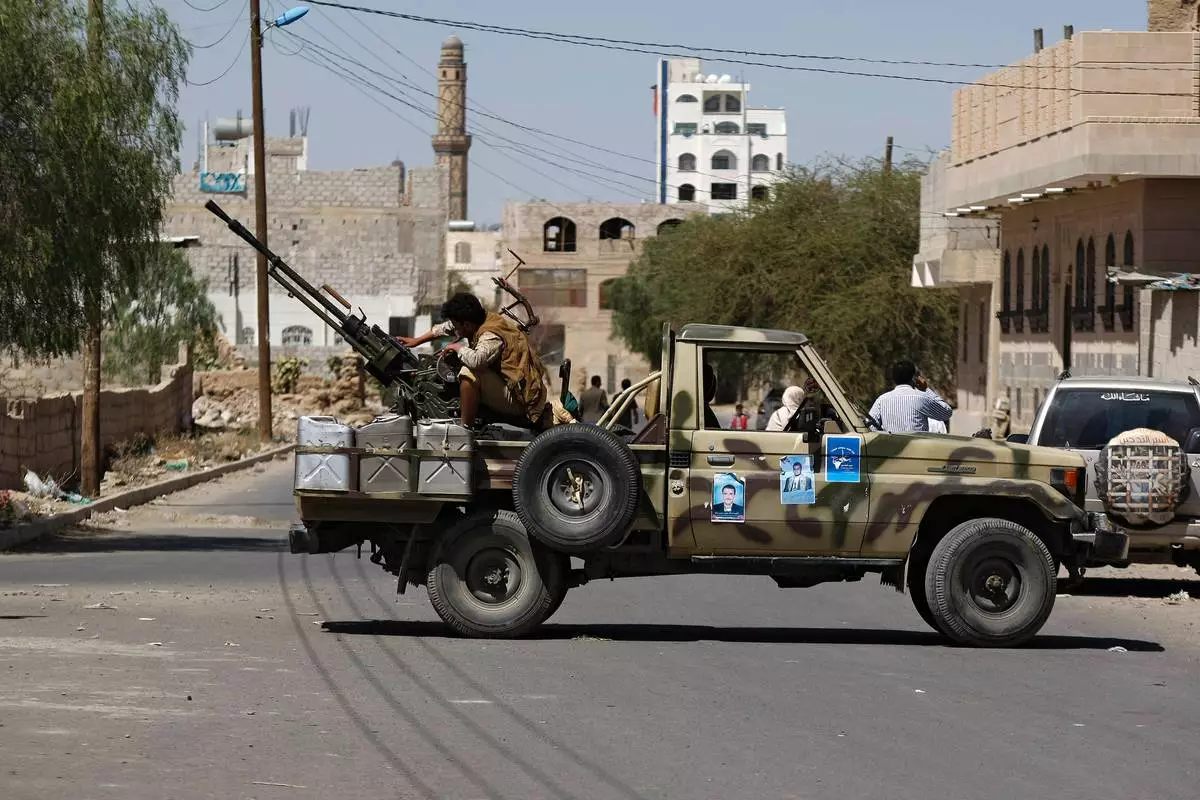
FILE - A Houthi Shiite rebel mans a machine gun mounted on a military truck in Sanaa, Yemen, Monday, Oct. 20, 2014. (AP Photo/Hani Mohammed, File)
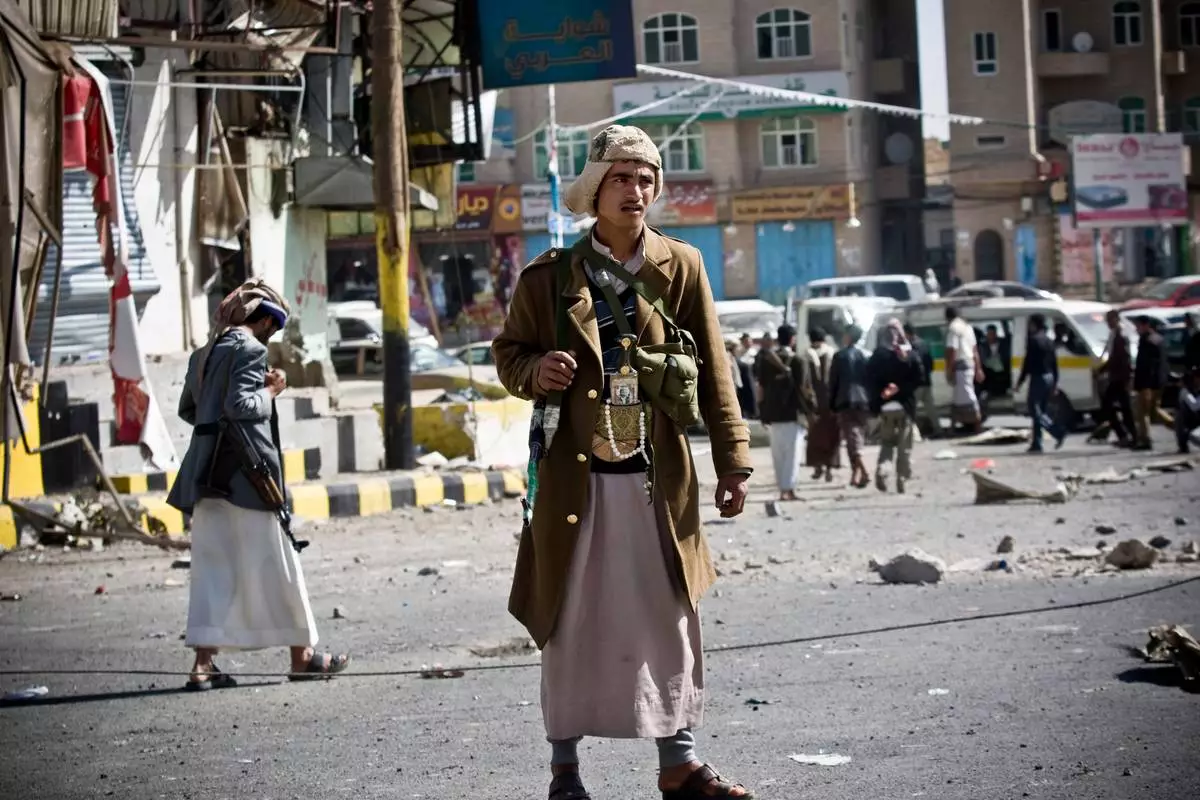
FILE - Houthi Shiite Yemenis gather while guarding a street leading to the presidential palace in Sanaa, Yemen on Jan. 20, 2015. (AP Photo/Hani Mohammed, File)
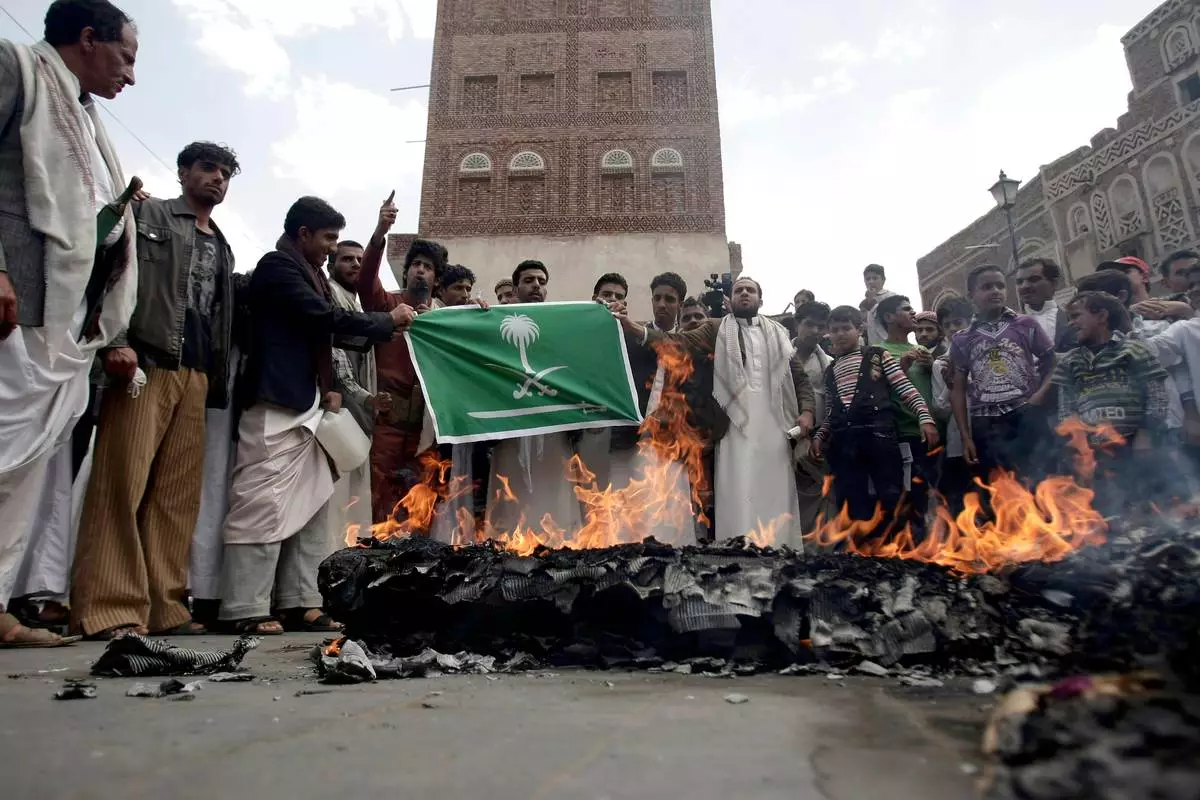
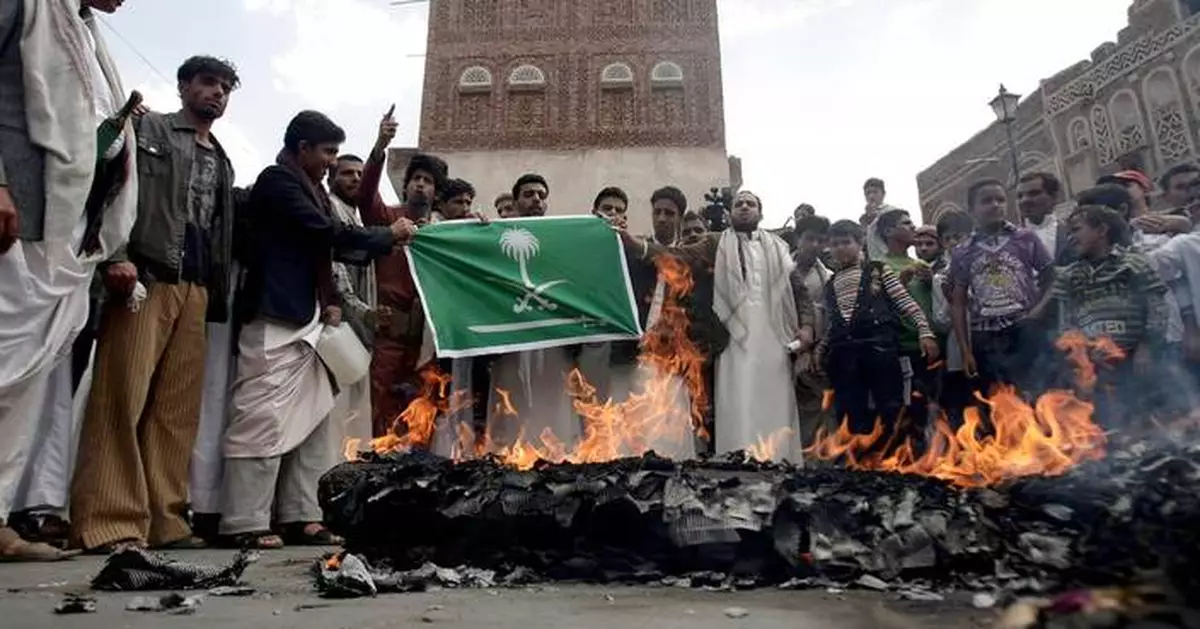
FILE - Members of the Yemeni al-Houthi Shiite rebel group burn an effigy of a U.S. aircraft and a Saudi flag during a demonstration against U.S. and Saudi interference in Yemen, after Friday prayer in Sanaa, Yemen, on April 12, 2013. (AP Photo/Hani Mohammed), File
Houthi attacks on Saudi Arabia have ignited fires at several oil facilities and wounded dozens of people, raising the stakes in renewed fighting between a U.S. ally and an Iranian proxy just days after deadly clashes in Iran, Lebanon and Gaza.
Meanwhile, Britain's government said it is banning goods from Israeli settlements in the occupied West Bank. Israel responded by saying it will close the British consulate in Jerusalem.
Here’s a look at the latest news in the Middle East. Full coverage can be found here.
A wave of Houthi attacks ignited fires at several oil facilities and utilities in Saudi Arabia’s southern region, injuring at least 73 people, officials said.
The attacks early Tuesday marked a major escalation in the renewed conflict between an important U.S. ally and the Iranian-backed rebels in Yemen. They follow weeks of intensifying clashes between the Houthis and Saudi-backed government forces in Yemen, which shattered a four-year truce in the country’s civil war.
The flare-up brings further instability to a region scarred by nearly three years of wars and threatens to squeeze shipping through the Bab al-Mandeb strait, a critical trade route that has helped cushion the blow from Iran's chokehold on the Strait of Hormuz.
The attacks hit “civilian and economic facilities” in the Saudi cities of Abha, Jazan, Najran and Khamis Mushait, said Maj. Gen. Turki al-Malki, a spokesperson for the Saudi-led coalition fighting in Yemen.
The U.K. announced it is banning trade with Israeli settlements in the occupied West Bank, saying an expansion program there is endangering efforts to establish a Palestinian state.
British Foreign Secretary Ed Miliband said that “settler terrorists” are carrying out “ethnic cleansing” of Palestinians. He said the U.K. will ban imports of all goods from the settlements as well as some services.
Israel will close the British consulate in Jerusalem, Israeli Foreign Minister Gideon Sa’ar said on Tuesday. He said Israel will also expel U.K. representatives from a joint military center monitoring the Gaza ceasefire and end U.K. training of the Palestinian Authority’s security forces in the West Bank.
Israeli Prime Minister Benjamin Netanyahu 's government has presided over a surge of settlement construction in the West Bank, which Israel seized in the 1967 Mideast war and which would make up the main part of a future Palestinian state.
The international community considers the settlements illegal or illegitimate, and the Palestinians say they are the main barrier to lasting peace. Netanyahu’s government views the West Bank as the biblical and historical homeland of the Jewish people and opposes the creation of a Palestinian state.
Iran’s navy captured one of the U.S. military’s underwater drones at the entrance to the Strait of Hormuz on Tuesday, Iranian state television reported, saying the unmanned vessel had been “seized as a prize.”
Asked about the report, U.S. Central Command spokesman Capt. Tim Hawkins said that an Anduril Dive-LD drone malfunctioned “more than a day ago” while surveying waters in the region and that the U.S. military no longer had possession of it.
Hawkins said the drone was a defective, older model that “neither collected sensitive data nor carried any classified sonar or radar equipment.”
“It was in a commercially available configuration so we aren’t concerned,” Hawkins said.
A child was among at least two people killed on Tuesday by Israeli troops in Gaza, according to hospital officials.
A 10-year-old boy died after forces opened fire near tents sheltering displaced Palestinians east of Khan Younis, according to Nasser Hospital. It said Israeli fire also killed a 69-year-old man south of Khan Younis.
Hospital officials said both victims died on the Palestinian side of the “yellow line” that separates areas of Gaza occupied by the Israeli military. Palestinians near the dividing line have faced heightened danger from Israeli fire.
Separately, an Israeli strike in Nuseirat refugee camp wounded 10 people, Al-Awda Hospital said.
Residents in several areas said they received evacuation warnings, followed by strikes in Khan Younis, Bureij refugee camp and Gaza City.
The Israeli military did not immediately comment on the attacks.
The Trump administration on Tuesday imposed additional sanctions on Iran’s aviation industry, targeting three dozen commercial and private airlines and foreign cargo service providers in its new push to isolate Tehran from trading partners.
The new penalties are part of the White House's “Operation Economic Outcast” campaign aimed at severing the Iranian government's financial lifelines. They focus on the remaining facets of Tehran’s aviation industry, which Washington has heavily sanctioned for years.
The U.S. accused 36 entities targeted this week of supporting Iran's efforts to use its aviation sector to move weapons, personnel, and illicit cargo.
This report will be updated throughout the day as new developments emerge.
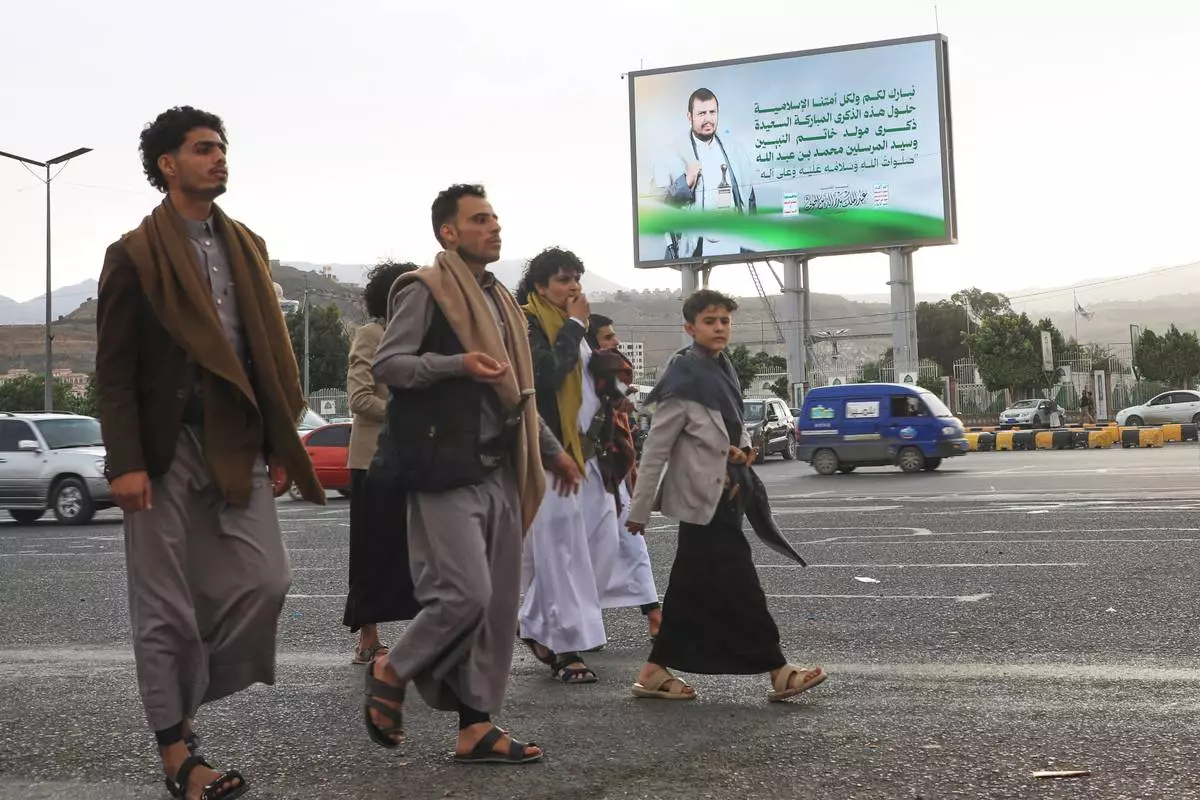
People walk under a billboard showing Houthi leader Abdul Malik al-Houthi with a phrase from the Islamic book Quran that reads in Arabic; "In the bounty of Allah and in His mercy - in that let them rejoice; it is better than what they accumulate" in Sanaa, Yemen, Sunday, Sept. 6, 2026. (AP Photo/Osamah Abdulrahman)