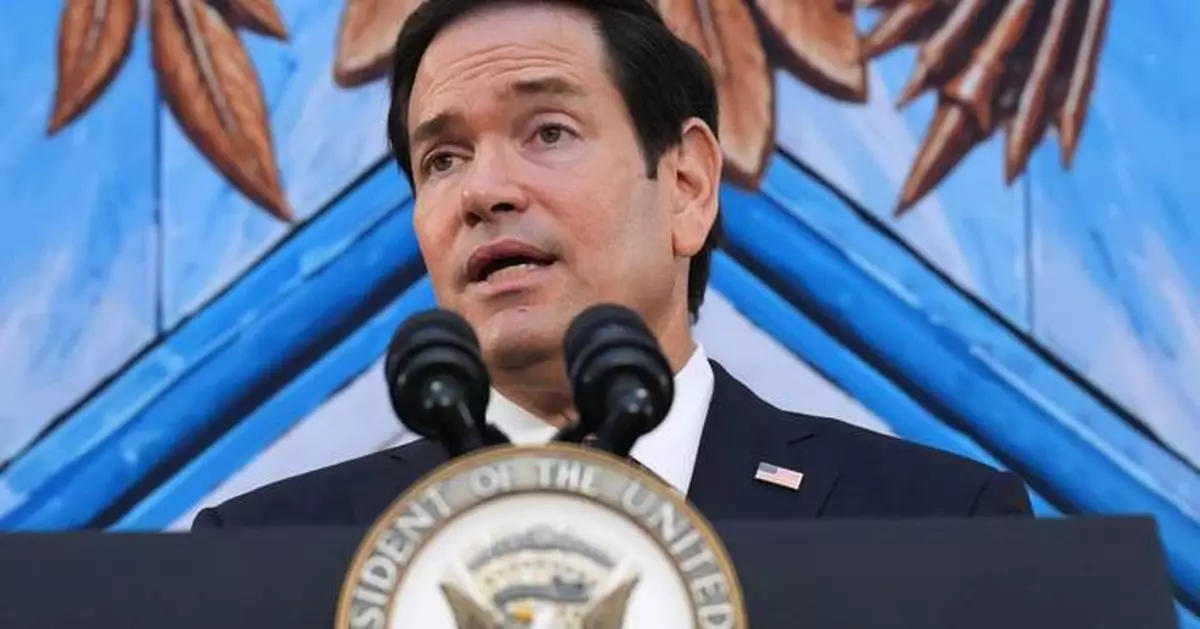
MIAMI (AP) — Secretary of State Marco Rubio begins a three-nation tour of Latin America on Tuesday, visiting U.S.-aligned conservative leaders as the Trump administration steps up military operations to combat drug trafficking and seeks further inroads in the Western Hemisphere aimed at improving America’s energy standing and combating illegal migration.
Just a week after sealing a massive oil deal with Venezuelan leaders after a U.S. military operation in January deposed then-leader Nicolás Maduro, Rubio was traveling to neighboring Colombia to meet President Abelardo de la Espriella. Colombia’s new leader has embraced President Donald Trump’s policies on issues ranging from drugs to immigration and energy.
De la Espriella is one of a new generation of right-wing conservatives to win election and show support for Trump’s muscular approach to a region that had tilted leftward in recent decades.
In announcing the trip last week, which also will take Rubio to Ecuador and Peru, the State Department said Rubio and all three leaders would be discussing "enhanced cooperation in the shared fight against narcoterrorism, which threatens our hemisphere."
The trip comes a day after U.S. forces intercepted and sank another Ecuadorian vessel that Washington accuses of links to the criminal group Los Choneros.
It was the latest action by the U.S. against boats and vessels in Latin America that it says are involved in drug trafficking. Expanded operations in the Caribbean Sea and eastern Pacific Ocean began a year ago, coinciding with an extreme crackdown on migrants in the U.S. illegally, many of them from Latin America.
The vessel sunk Monday was the fifth targeted by U.S. forces in the region in less than two weeks — in most cases with the cooperation or at least tacit support of the conservative leaders with whom Rubio will meet.
But unlike strikes on alleged drug-trafficking boats in Latin American waters that began in September 2025, those on board the vessel were removed and transferred to Ecuadorian authorities. It appears to be a shift after a series of strikes on boats over the year have killed at least 227 people, which the Trump administration accuses of being “narcoterrorists” but without providing evidence.
The U.S. military carried out at least two of those deadly strikes last month before starting to intercept floating refueling stations that it says support illicit drug trafficking operations at sea.
Colombian Foreign Minister Omar Bula said in a video released Tuesday that Rubio’s visit marks the beginning of “rebuilding a strategic alliance with the United States, our main partner in the region.” He affirmed that Colombia will focus on discussing security, which includes combating drug trafficking, trade, and the defense of "shared values.”
De la Espriella has promised to take a hard line against drug traffickers and pledges to deport thousands of migrants who are in Colombia without residence permits, mainly Venezuelans, as he tries to make significant changes to the nation’s immigration policies that he says will reduce crime.
After taking office last month, De la Espriella brought Colombia into the Americas Counter Cartels Coalition and strengthened long-standing security cooperation with the United States, following strained relations during the 2022-2026 administration of progressive Gustavo Petro.
In just a month in office, De la Espriella has carried out at least three bombings against illegal armed groups and increased military operations. However, several minors have died during the bombings, which has drawn criticism from opposition leaders.
As part of his security strategy, he has focused his efforts on showcasing the results of military operations. However, there was criticism from the opposition and the state-run Ombudsman’s Office after De la Espriella displayed the bodies of alleged criminals wrapped in white bags on the ground alongside seized ammunition.
After winning the election, De la Espriella identified several leaders of Colombia’s illegal armed groups as “military targets.” Last week, he announced that the first of these, Naín Andrés Pérez Toncel, alias “Bendito Menor,” one of the leaders of the Self-Defense Forces of the Sierra Nevada, an illegal armed group in the north of the country, had been killed by police.
Nicknamed “El Tigre,” or The Tiger, the president has shifted the country’s security policy, closing the peace negotiations initiated by Petro during his administration, which he considers a failed effort that only increased violence in Colombia.
Colombia grapples with illegal armed groups vying for control of territories strategically important for drug trafficking and illegal mining, despite the fact that a decade ago the state signed a historic peace agreement with the FARC rebel group.
After meeting De la Espriella in Barranquilla on the Caribbean, where he will sign a civil nuclear cooperation deal and a critical minerals agreement, Rubio will make a brief stop in Quito.
He will meet Ecuadorian President Daniel Noboa whose government has steadily increased counternarcotics operations conducted with the U.S. military.
Rubio will round out the visit with a stop in Lima, Peru, where he will meet new President Keiko Fujimori — the daughter of former leader Alberto Fujimori — as the government also has taken a rightward turn.
Suarez reported from Bogota, Colombia.
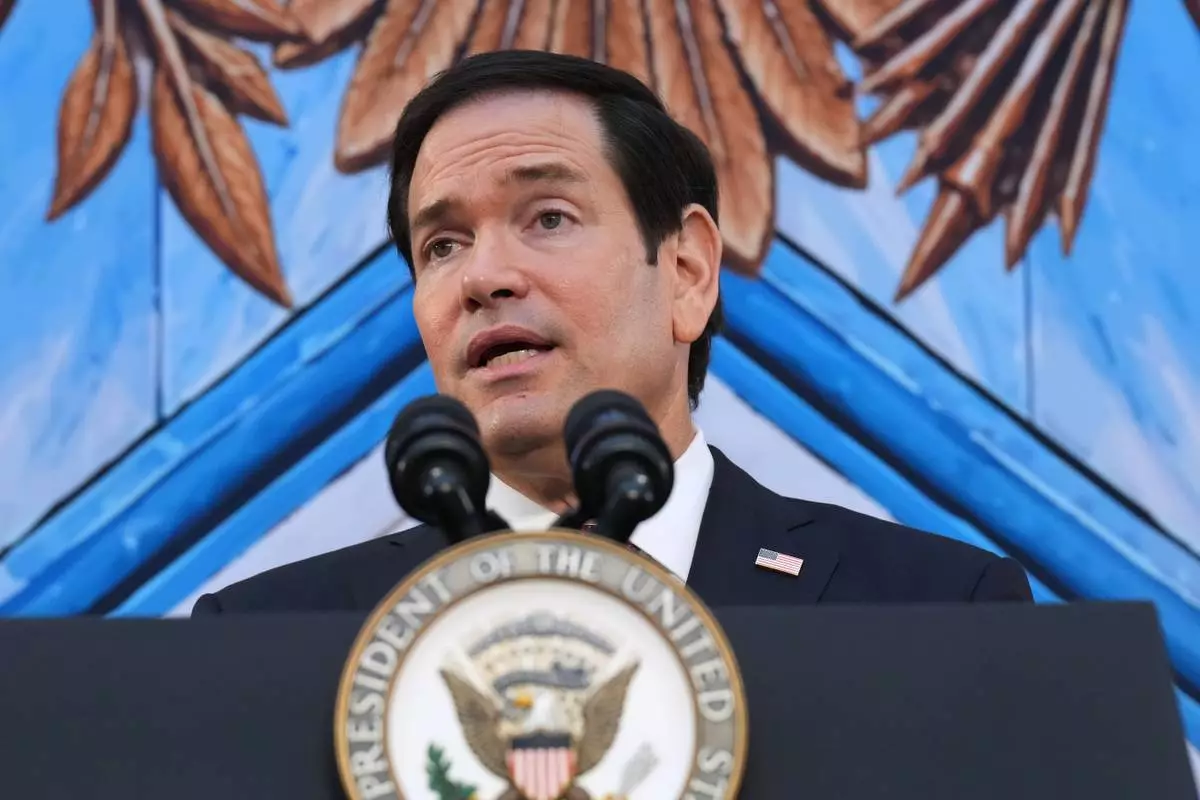
Secretary of State Marco Rubio, speaks during an event at the renamed Donald J Trump Institute of Peace, Thursday, Sept. 3, 2026, in Washington. (AP Photo/Jacquelyn Martin)
LONDON (AP) — Israel will close the British consulate in Jerusalem in response to U.K. sanctions on West Bank settlements, the country's foreign minister said Tuesday.
Israeli Foreign Minister Gideon Sa’ar announced the move as part of a series of countermeasures against the U.K. for its decision to ban trade with the Israeli settlements.
In a statement, Sa’ar said Israel would also expel U.K. representatives from a joint military center monitoring the Gaza ceasefire and end U.K. training of the Palestinian Authority’s security forces in the West Bank. In addition, Israel will prevent the entry into Israel of 12 elected U.K. officials, as well as other British citizens Sa’ar said were “involved in antisemitic and anti-Israel activity.”
THIS IS A BREAKING NEWS UPDATE. AP’s earlier story follows below.
LONDON (AP) — The United Kingdom on Tuesday banned trade with Israeli settlements in the occupied West Bank, where it says “settler terrorists” are carrying out “ethnic cleansing” of Palestinians.
Foreign Secretary Ed Miliband said the U.K. will ban imports of all goods from the settlements and bar companies from providing services for the settlements, including financing, construction, infrastructure, real estate and advertising. He said France and Canada would also ban trade in goods from settlements.
“I do not believe the British people want us supporting the occupation by accepting products from settlements in our shops and supermarkets," Miliband said.
The economic impact is likely to be limited, since the settlements produce only a small amount of largely agricultural exports. But the move is a symbolic expression of displeasure with Israel by some of its closest allies, and new sign of its growing isolation as a result of the Gaza war.
Miliband said that he feels “a deep sense of shame about what has unfolded in Palestine under the eyes of the international community.”
“We will not acquiesce in the destruction of the two-state solution,” he said.
Under the ultranationalist government of Israeli Prime Minister Benjamin Netanyahu, settlement construction in the West Bank — seized by Israel in the 1967 Mideast war — has surged. Netanyahu’s government views the West Bank as the biblical and historical homeland of the Jewish people and is opposed to the creation of a Palestinian state.
The international community overwhelmingly considers such construction to be illegal and an obstacle to peace. Britain and other countries have voiced particular concern about the E1 settlement project approved by Israel, which would effectively cut the territory in two. Palestinians and rights groups say it could destroy hopes for a future Palestinian state.
There have been marked increases in attacks by settlers on Palestinians, evictions from Palestinian towns, Israeli military operations and checkpoints that choke freedom of movement, as well as several Palestinian attacks on Israelis.
”The British government agrees that there is ethnic cleansing of Palestinians in areas of the West Bank, perpetrated by settler terrorists,” Miliband said. He said there had been “houses bulldozed, roads and public infrastructure destroyed, families displaced from their homes.”
The ban on trade will be in place in six to nine months, Miliband said. He said Canada and France will also announce a ban on goods from Israeli settlements, while Denmark, Finland, Iceland, Poland, Portugal and Sweden have pledged to “support further action.”
The Netherlands, Ireland, Belgium, Spain and Norway have either banned goods from settlements or are in the process of doing so, he said.
Miliband also tightened Britain’s embargo on weapons sales to Israel for use in Gaza to include arms “that materially contribute to the occupation” of Palestinian territories.
The United Kingdom, a longtime ally of Israel, recognized Palestinian statehood last year in an attempt to revive dwindling efforts to achieve a two-state solution.
The center-left Labour Party government has previously sanctioned some Israeli settlers and illegal outposts over violence against Palestinians and illegal development in the West Bank.
In a change of Britain’s position, Miliband said Tuesday that the U.K. regards Israel’s occupation of the West Bank, and not just the settlements, as illegal.
The tougher stance is likely to be welcomed by many Labour voters and lawmakers, who have urged the government to go further in sanctioning Israel and supporting the Palestinians.
But some Labour members expressed concern that the sanctions could boost support for Netanyahu, who is facing a tough battle for reelection in October, or lead to attacks on British Jews.
Opposition Conservative Party foreign affairs spokesman Tom Tugendhat said that "turning Israel into a pariah will risk sectarian division in own country and risk a further rise in antisemitic violence on our own streets.”
Israeli President Isaac Herzog called the ban “a grave miscalculation, a decision that will fall on the wrong side of history.
“In the current context, it would be a gross interference in the democratic elections of a sovereign nation,” he said.
Senior Israeli ministers also condemned the U.K. government’s position before the actual announcement was made. Foreign Minister Gideon Saar warned that “if Britain acts against Israel, Israel will act against Britain.”
Itamar Ben-Gvir, Israel’s hard-line public security minister and a settler leader, called on Netanyahu to recognize Argentina’s claim to the Falkland Islands, a British overseas territory in the South Atlantic known in Argentina as Islas Malvinas.
The move was also criticized by the U.S. ambassador to Israel, Mike Huckabee, a longtime supporter of the settlements, who said that it was “discrimination against the Jewish people.” He said the U.K. could face “repercussions or retaliations” from the U.S. if it imposed the sanctions.
Several U.S. states have laws banning contracts or investments with businesses that boycott Israeli firms, including those based in the West Bank. U.S. Rep. Randy Fine, a Florida Republican, said in a post on social media that the U.K. ban could put at risk “billions of dollars” in trade between British businesses and Florida.
Prime Minister Andy Burnham’s office said he spoke with U.S. President Donald Trump on Monday and set out “the U.K.’s commitment to working toward peace and security in the region” and achieving a two-state solution. There was no word on how Trump responded.
Associated Press writers Sylvia Hui in London and Megan Mineiro in Jerusalem contributed.
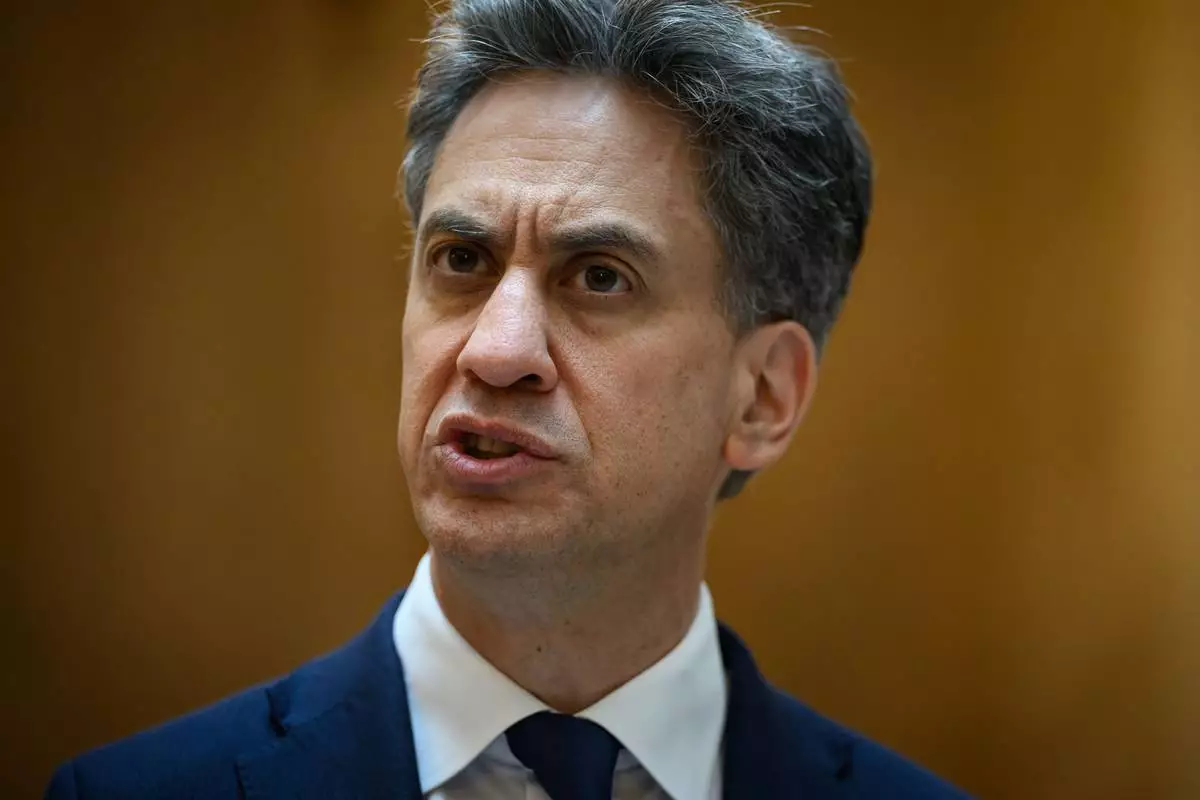
FILE - Britain's Foreign Secretary Ed Miliband speaks during a press conference in Madrid, Spain, on July 29, 2026. (Leon Neal/Pool Photo via AP, File)