REDWOOD CITY, Calif.--(BUSINESS WIRE)--Sep 8, 2026--
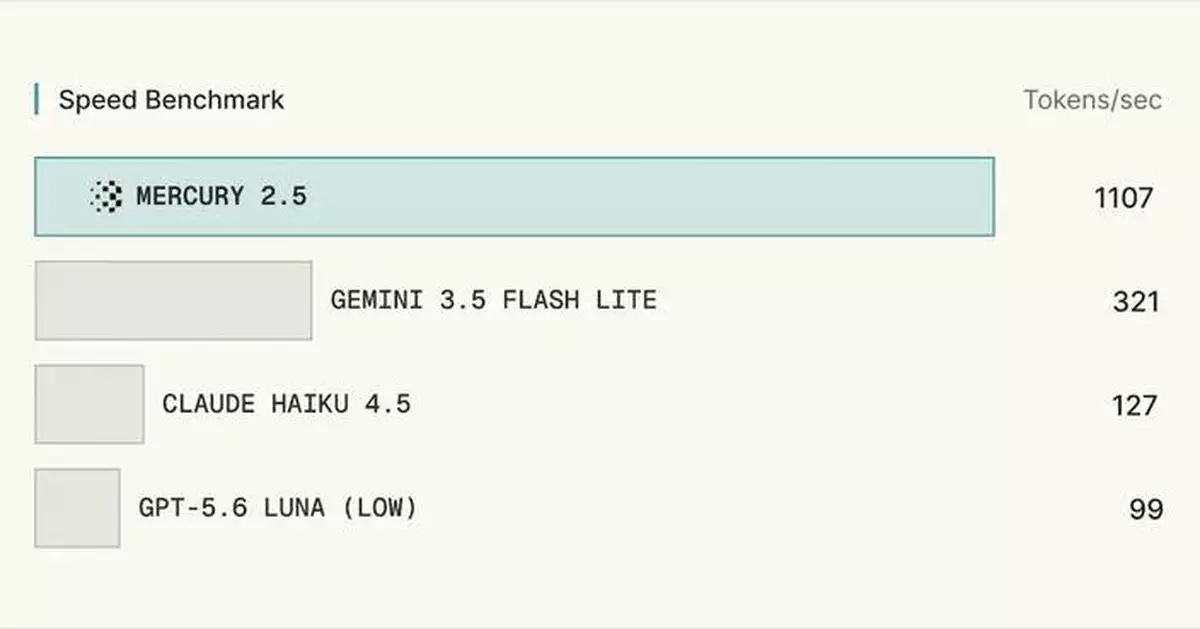
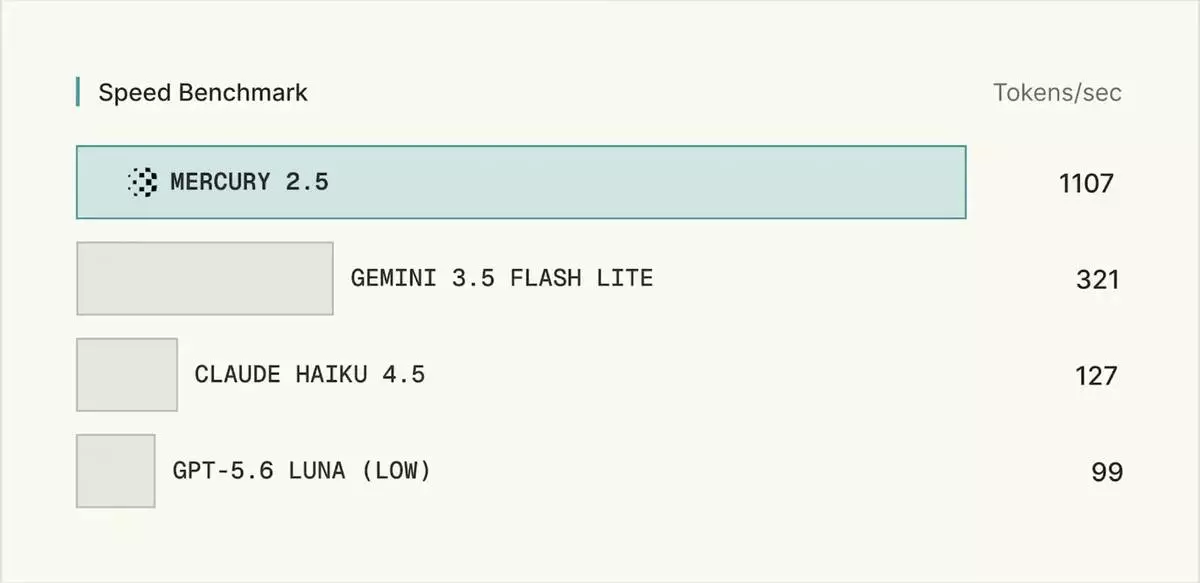
Inception, the company behind the first commercial diffusion large language models (dLLMs), today announced the launch of Mercury 2.5, the most capable dLLM and the fastest reasoning LLM in production. Mercury 2.5 delivers the next tier of intelligence for dLLMs and runs over 1,100 tokens per second in production.
This press release features multimedia. View the full release here: https://www.businesswire.com/news/home/20260908593295/en/
Most LLMs in production today still generate text autoregressively: one token at a time. That approach ties cost and latency directly to reasoning depth, so the more a model has to think, the slower and more expensive it becomes. dLLMs work differently, starting with a rough draft of the output and refining tokens in parallel.
dLLMs have moved from a research bet to a production workhorse. Enterprise Mercury usage is growing by over an order of magnitude, powering search, voice, and coding agents at scale. Inception proved that diffusion was enterprise-ready with Mercury 2, matching Claude Haiku and GPT Mini intelligence at roughly 10x the throughput, and Mercury models have since become the dLLM of choice for teams that can't afford to trade intelligence for speed, or speed for cost. Mercury 2.5 builds directly on that foundation: more intelligence, lower cost, and the same speedup over traditional models.
“Nobody in this industry thinks LLMs can get smarter, faster, and cheaper at the same time. It’s a limitation of autoregressive modeling,” said Stefano Ermon, CEO and co-founder of Inception. “Mercury 2.5 proves the switch to diffusion opens that door.”
Token Efficiency
As AI infrastructure costs climb and data centers strain to keep up with demand, token efficiency is under more scrutiny than it was even a year ago. Every token costs compute, power, and data center capacity, and autoregressive models spend all three generating one token at a time. dLLMs make fundamentally better use of each GPU cycle, generating many tokens per step instead of one, which means more intelligence per dollar. That efficiency runs on widely-available NVIDIA GPUs, not specialized silicon.
Smarter, Not Slower
Mercury 2.5 jumps 10 points in intelligence over Mercury 2, making it more intelligent than any previous dLLM, comparable to cost-optimized frontier models like GPT-5.6 Luna, Gemini 3.5 Flash-Lite, and Claude Haiku 4.5. Throughput is up to over 1,100 tokens per second, and pricing drops to $0.20 / $0.75 per 1M tokens. At launch, Mercury 2.5 is 80% off at $0.04 / $0.15 per 1M tokens. Mercury 2.5 extends the context window to 260K tokens, up from 128K, and it adds tunable reasoning, native tool use, JSON mode, and parallel tool calls.
“After switching to Mercury, our P99 response time dropped from several minutes to just one second, and P50 dropped from 0.4 seconds to less than 0.2 seconds, faster than any other provider we've seen on the market, including reasoning,” said Oliver Silverstein, Co-founder and CEO of OpenCall.
Where Diffusion Thrives
Mercury dLLMs are already running in production across the workloads that demand responsive inference:
Alongside Mercury 2.5, Inception also announced a preview of Mercury Voice and Mercury Router. Mercury Voice delivers time-to-first-token (TTFT) under 170ms and is a dLLM optimized for voice agents with the tightest latency budgets. Mercury Router understands incoming prompts with a dLLM and routes them to the best models (open and closed models) that offer the best mix of quality, speed, and cost. Interested customers can contact sales@inceptionlabs.ai to get preview access to Mercury Voice and Mercury Router.
Mercury 2.5 is enterprise-ready and available now on Inception’s API, OpenRouter, and Baseten. Get started with 100 million free tokens: https://platform.inceptionlabs.ai/
About Inception
Inception develops diffusion-based large language models (dLLMs) designed for efficient, low-latency AI applications. While traditional autoregressive LLMs generate text sequentially, Inception’s diffusion-based models generate outputs in parallel, enabling faster inference and improved reliability for real-time use cases like search, voice, and coding agents. Inception's Mercury models are available via the Inception API, OpenRouter, and Baseten. Based in Redwood City, California, Inception is backed by Menlo Ventures, Mayfield, Innovation Endeavors, M12 (Microsoft’s venture capital fund), Snowflake Ventures, Databricks Ventures, and individual backers including Andrew Ng, Andrej Karpathy, and Eric Schmidt. For more information, visit www.inceptionlabs.ai.
Inception Launches Mercury 2.5, the Next Tier of Intelligence for Diffusion LLMs
KYIV, Ukraine (AP) — Russian President Vladimir Putin assured U.S. President Donald Trump in a phone call Tuesday that Moscow doesn't harbor aggressive intentions toward Europe, a senior Kremlin official said, after European officials blamed Moscow for sabotage campaigns on their soil.
Ukrainian President Volodymyr Zelenskyy said meanwhile that U.S. envoys who visited Kyiv presented some “very good, worthwhile ideas” for ending Russia's 4 1/2-year-old war, adding that he hopes to meet with Trump within two weeks.
But Russia remains determined to accomplish its military goals and it believes it is close to winning, Kremlin spokesman Dmitry Peskov said. Ukrainian and Western observers, however, believe that Moscow has been unable to make any significant progress on the front line.
The war could yet drag on for years as Russia reconstitutes its forces and its defense industry, said U.S. Undersecretary of Defense Elbridge Colby.
“We must be prepared for a protracted conflict and for Ukraine’s requirements to persist in the months and years ahead,” Colby told an online meeting of countries helping Ukraine.
U.S. envoys Jared Kushner and Steve Witkoff visited Moscow and Kyiv for separate talks with Putin and Zelenskyy over the weekend. The meetings appeared to produce no substantial breakthrough on ending the fighting, and both countries resumed their deadly air war after a weekend truce in their capitals for the American visitors.
The attacks killed seven people and injured 28 in Kyiv and the surrounding region, authorities said, officials from Russia reported three people killed and 13 wounded in areas it controls.
Yuri Ushakov, Putin’s foreign affairs adviser, said the hourlong conversation between Putin and Trump was “constructive and quite frank.” Moscow has a positive view of the results of the weekend visit by Witkoff and Kushner, he added.
There was no immediate White House comment on the call.
Ushakov told reporters that “in view of the speculation about Russia’s alleged hostile intentions toward European countries, it was underlined that we don’t have any aggressive plans regarding Europe.”
That claim runs counter to European authorities' versions of recent incidents, such as the German government last week blaming Russia for an attempted attack at Leipzig/Halle Airport in August using a drone laden with explosives.
Ushakov said Putin told Trump about the combat situation in Ukraine and Russia’s plans to make battlefield gains and achieve its military goals in what Moscow calls its “special military operation,” not a war.
Zelenskyy said he is counting on meeting with Trump around Sept. 20 — about the same time that the U.N. General Assembly is being held in New York. Putin isn't expected to attend.
He indicated he will press Trump to provide more Patriot air defense systems that Kyiv needs to counter Russia's ballistic missiles.
Ukraine needs 300 Patriot missiles from its partners’ stocks, 500 air-to-air interceptors and $2 billion for more drones, U.K. Defense Secretary Wes Streeting told the meeting of countries providing help.
Also on Tuesday, the European Commission approved a loan of 3.2 billion euros ($3.7 billion) for Kyiv to purchase components for Patriot air defense systems, Ukraine’s Defense Ministry said on its Telegram channel.
Zelenskyy thanked U.S. officials for their efforts to unblock negotiations with Russia, which have been stuck since early this year with little progress.
“As for the peace package that Kushner spoke about and the new ideas, I’ll tell you frankly, there were indeed a couple of very good, worthwhile ideas,” Zelenskyy said in audio messages answering reporters' questions.
The proposals will remain under wraps for now, he said, but he expressed hope that talks involving delegations from Ukraine, Russia and the U.S. can take place in the fall.
Ukraine is “ready to find a compromise” on the issues of grain exports and energy, he said. Moscow and Kyiv have targeted each other’s grain ships in the Black Sea, raising concerns that two of the world's major suppliers won't be able to get their produce to market.
Ukraine has also battered Russian oil facilities while Russia has pounded Ukraine's power grid ahead of winter.
Peskov said he believed “victory is very close” on the battlefield.
"We’re very confident in our military potential,” he told reporters, while insisting Russia wants to find a peaceful solution and welcomes Trump's diplomatic efforts.
Putin has sought to portray Russia as negotiating from a position of strength. But European officials and Western analysts say its bigger army is unable to make significant progress on the 1,250-kilometer (800-mile) front line, where it is pushing to capture the Donetsk region of eastern Ukraine, part of its industrial heartland.
“Russian forces will not seize Donetsk ... until 2032 at their current rate of advance — if they can seize it at all,” the Institute for the Study of War, a Washington-based think tank, said Sunday. “The Russian rate of advance has slowed significantly across the theater since 2025, when Russia’s rate of advance had already begun to slow.”
With troops bogged down on the battlefield, both countries have intensified their aerial campaign of drones and missiles.
Russia’s main targets in its overnight attack were Kyiv and the Odesa region of southern Ukraine, Ukraine’s Interior Minister Ivan Vyhivskyi said.
Explosions were heard in Kyiv for nearly five hours, according to Vyhivskyi. More than 50 sites were damaged during the attack, including residential buildings, dormitories, schools, stores and gas stations, he said.
Ukrainian Foreign Minister Andrii Sybiha called it “a horrific attack” and accused Putin of undermining U.S. peace efforts.
The Russian Defense Ministry said its forces overnight launched a massive strike on Ukrainian military industry facilities.
It provided a detailed list of its targets. They included places storing Ukrainian drones and cruise missiles, as well as transport, logistics and distribution centers for military cargo in Kyiv and the Kyiv region, the ministry said.
Associated Press journalists Vasilisa Stepanenko in Kyiv, Ukraine, and Lorne Cook in Brussels contributed.
Follow the AP’s coverage of the war in Ukraine at https://apnews.com/hub/russia-ukraine
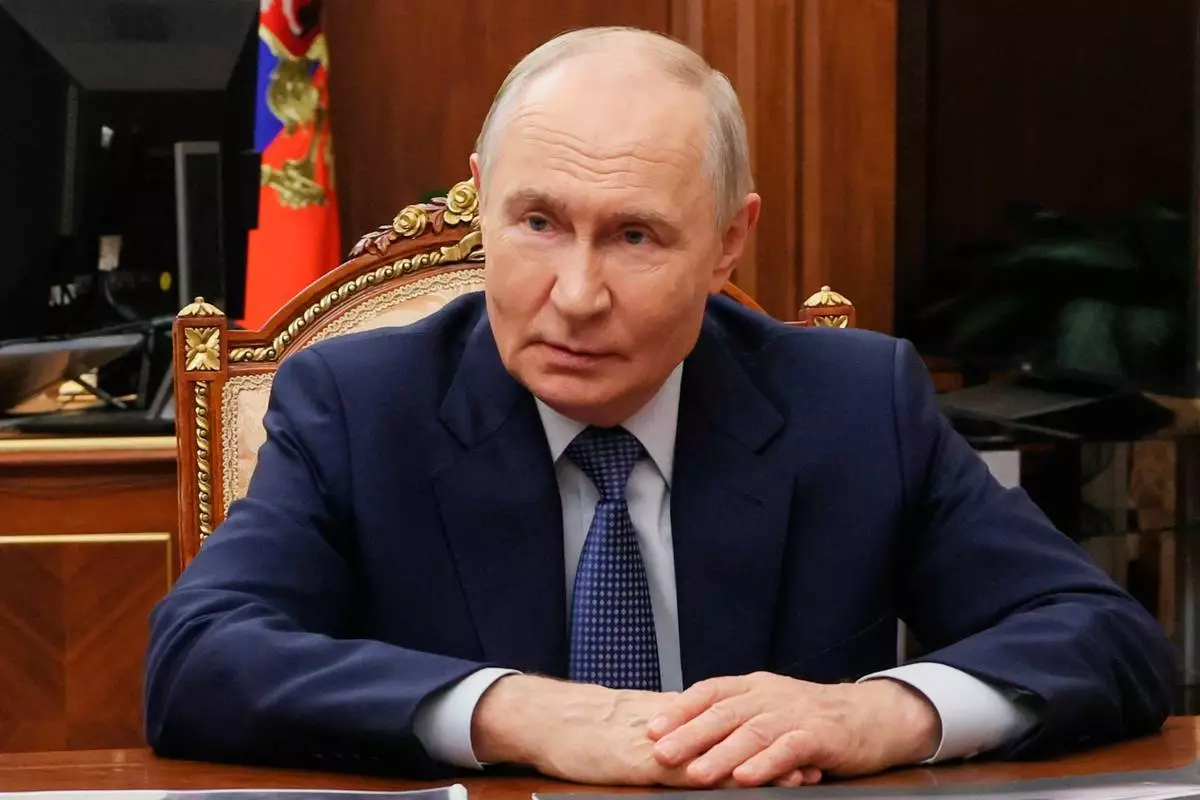
Russian President Vladimir Putin listens to acting governor of Tver region Vitaly Korolyov during their meeting at the Kremlin in Moscow, Tuesday, Sept. 8, 2026. (Mikhail Metzel, Sputnik, Kremlin Pool Photo via AP)
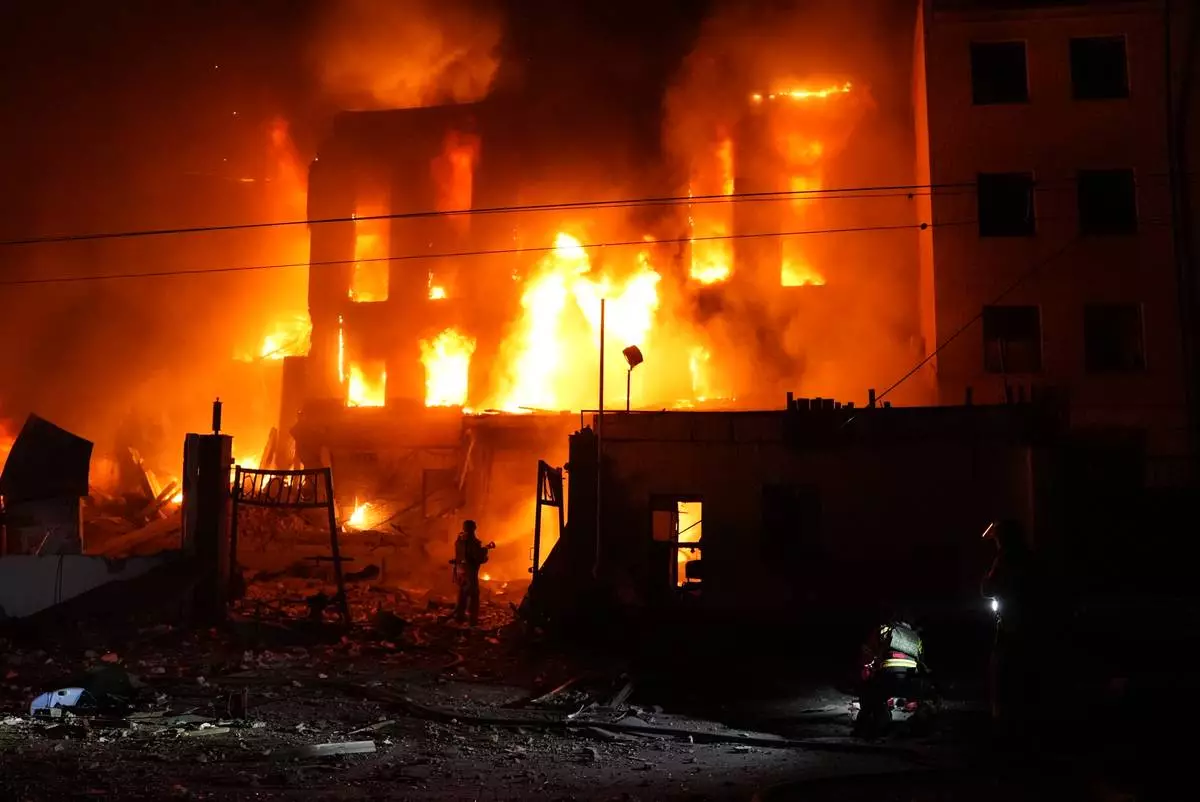
A rescue worker puts out a fire of a building destroyed after a Russian missile attack in Kyiv, Ukraine Tuesday, Sept. 8, 2026. (AP Photo/Alex Babenko)
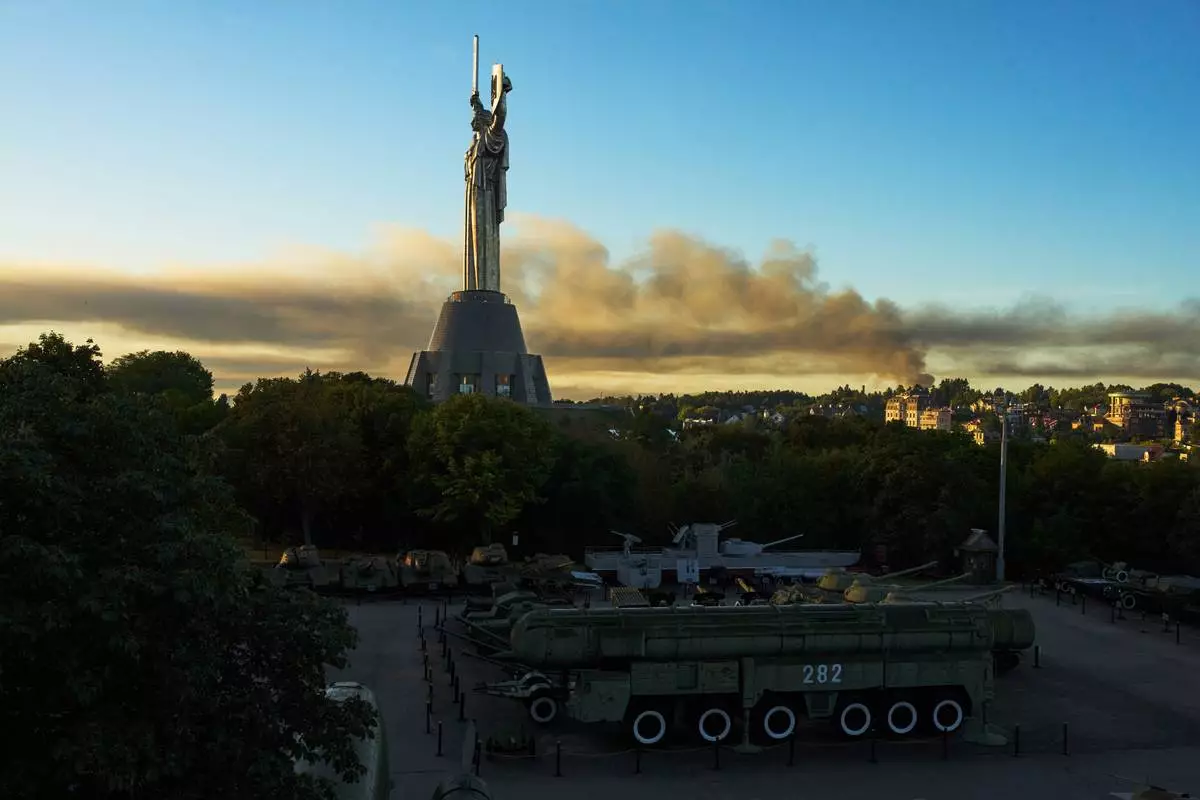
Smoke rises following a Russian missiles attack in Kyiv, Ukraine, early Tuesday, Sept. 8, 2026. (AP Photo/Francisco Seco)
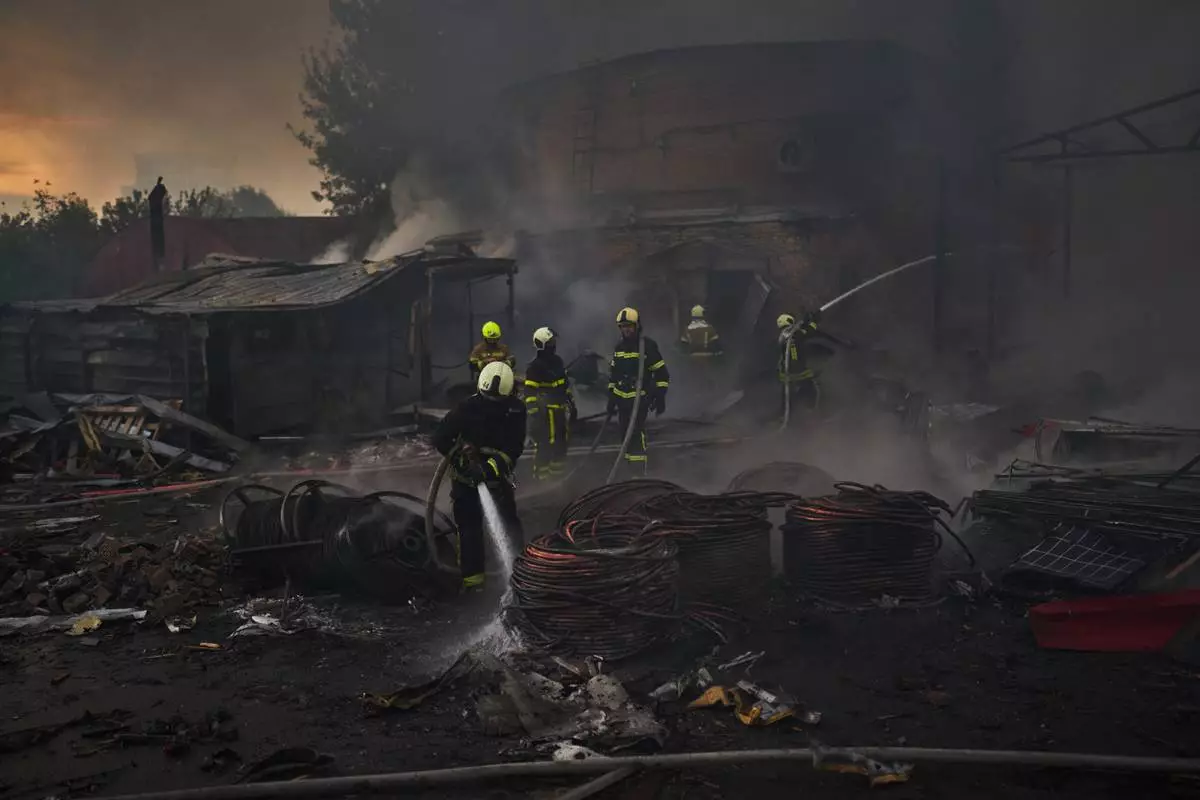
Firefighters try to extinguish a fire following a Russian missile attack in Kyiv, Ukraine, early Tuesday, Sept. 8, 2026. (AP Photo/Francisco Seco)
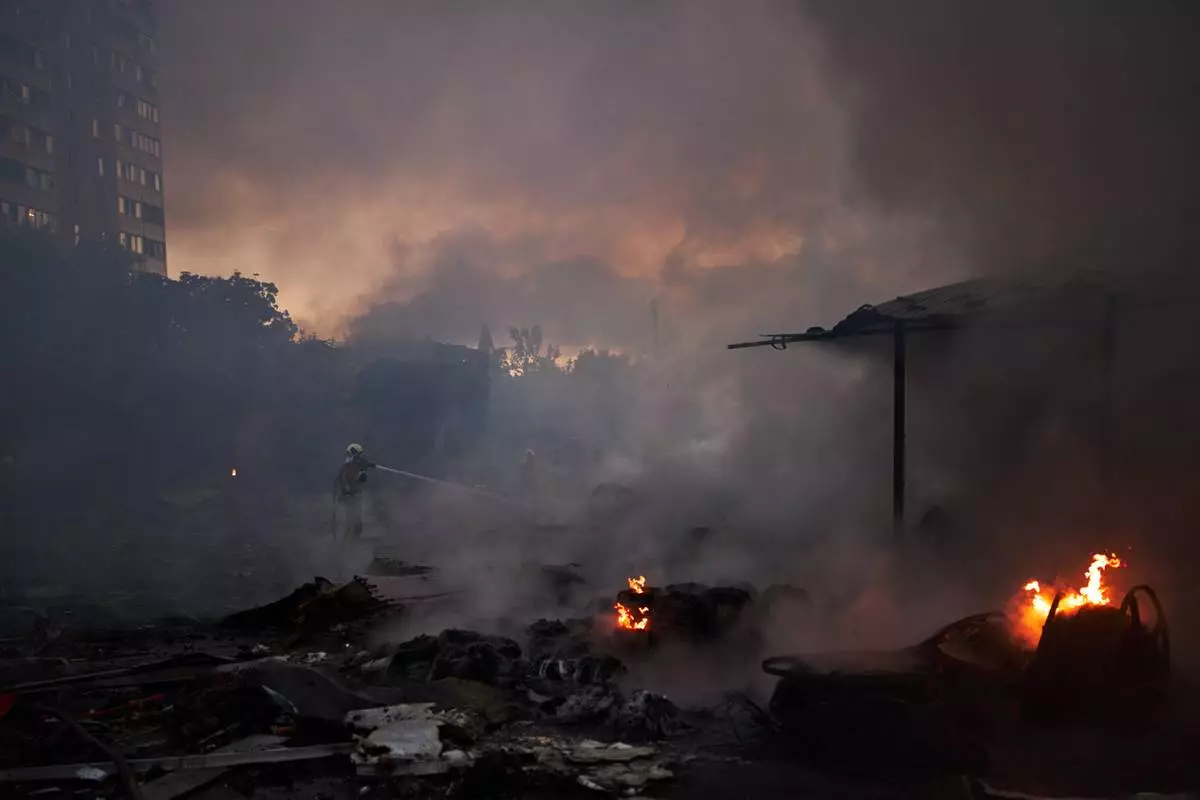
Firefighters try to extinguish a fire following a Russian missile attack in Kyiv, Ukraine, early Tuesday, Sept. 8, 2026. (AP Photo/Francisco Seco)
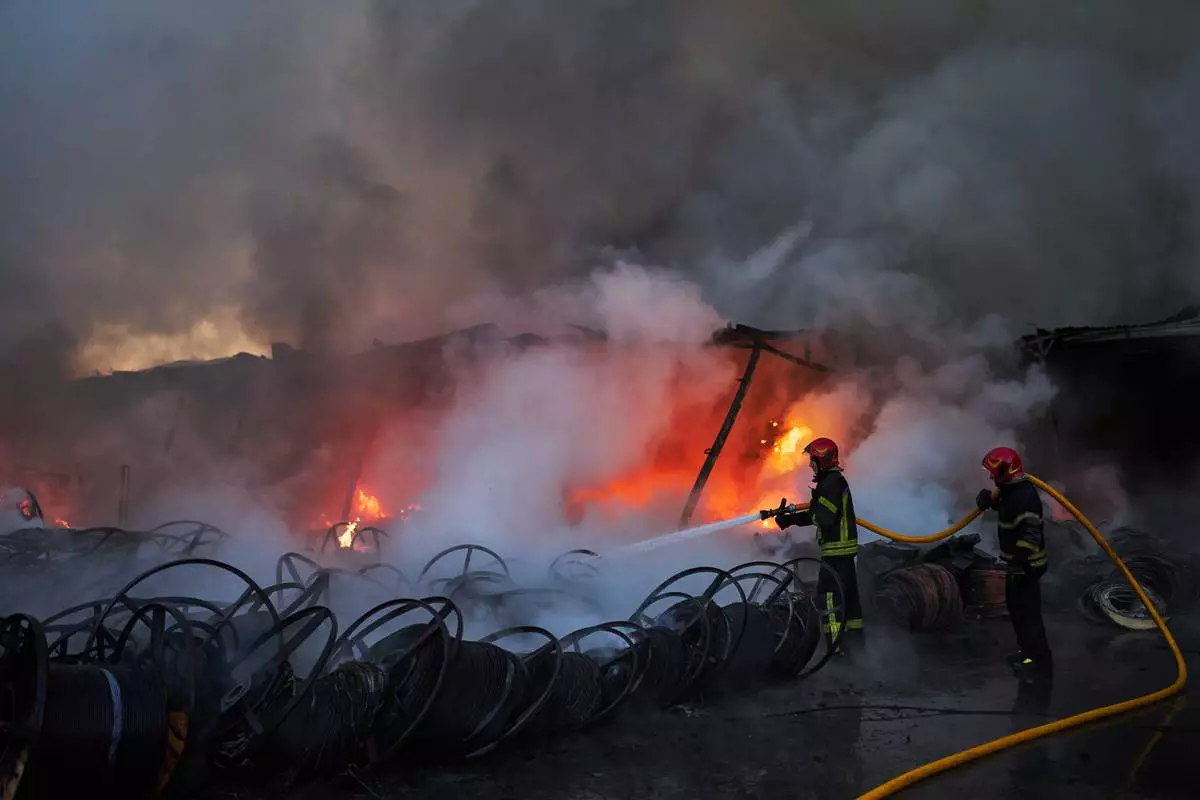
Firefighters try to extinguish a fire following a Russian missile attack in Kyiv, Ukraine, early Tuesday, Sept. 8, 2026. (AP Photo/Francisco Seco)
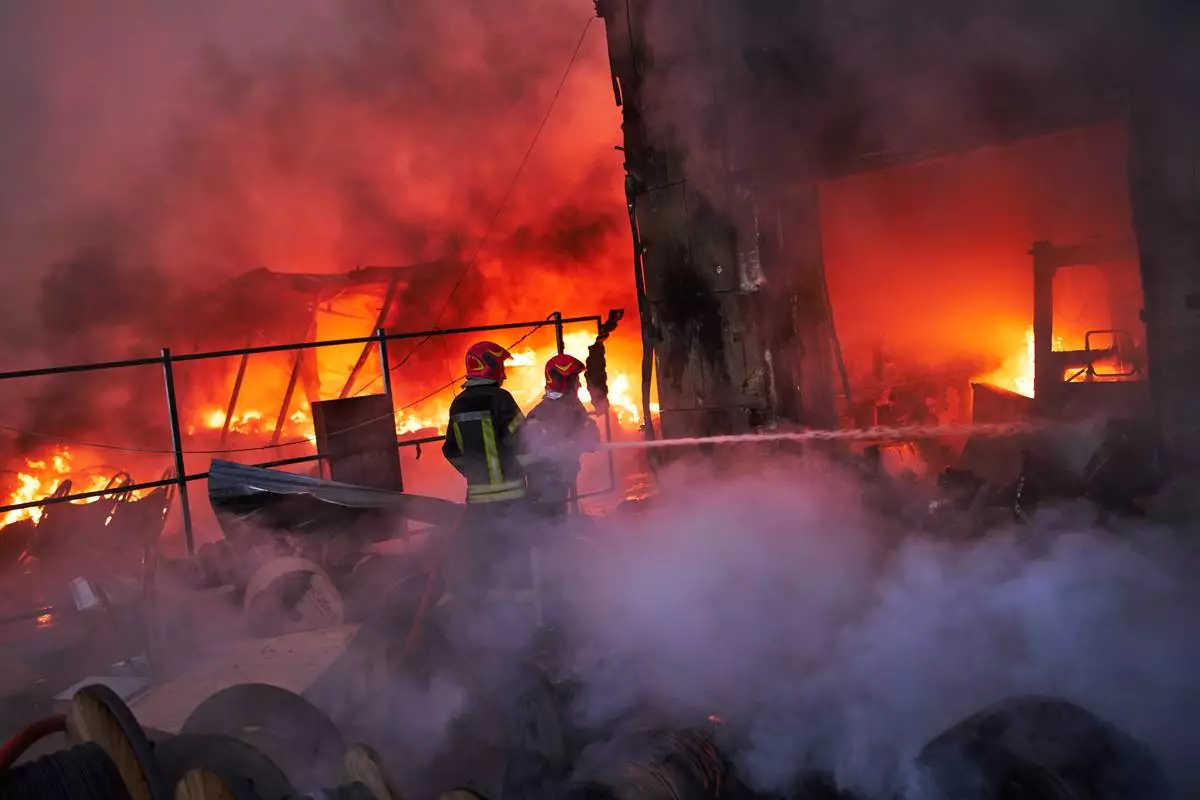
Firefighters try to extinguish a fire following a Russian missile attack in Kyiv, Ukraine, early Tuesday, Sept. 8, 2026. (AP Photo/Francisco Seco)
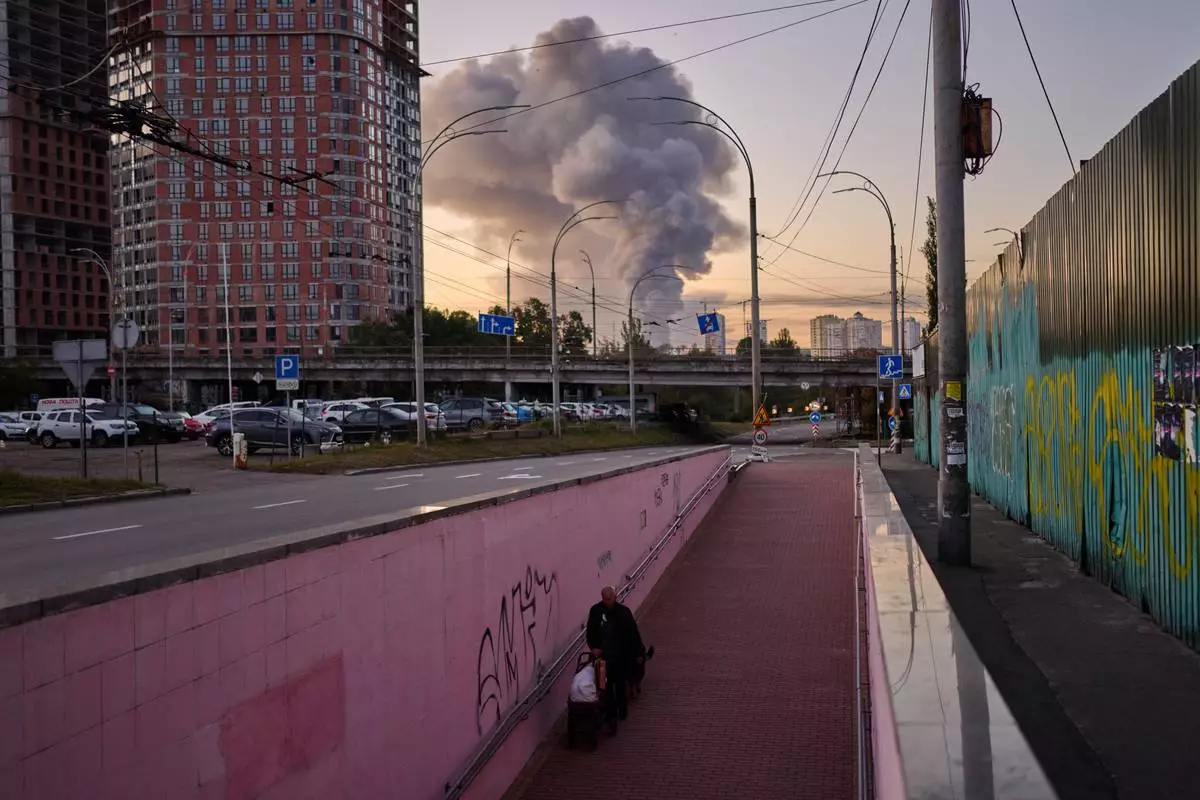
A man walks along an underpass as smoke rises following a Russian missile attack in Kyiv, Ukraine, early Tuesday, Sept. 8, 2026. (AP Photo/Francisco Seco)