BOSTON--(BUSINESS WIRE)--Sep 8, 2026--
Leveragen, Inc., a Boston-based biotechnology company advancing in vivo antibody discovery, today announced the grant of Australian Patent No. 2022271276 on September 3, 2026. Titled "Engineered Non-Human Animals for Producing Antibodies," the patent covers core innovations underlying the Singularity Platform. The grant follows the company's February 25, 2026, announcement of Japan Patent No. JP7799706, extending protection for its proprietary approach to single-domain antibody (sdAb) discovery.
This press release features multimedia. View the full release here: https://www.businesswire.com/news/home/20260908007408/en/
At the center of this approach is Singularity Sapiens: a minimalist humoral immune system dedicated exclusively to heavy-chain-only antibody responses. By eliminating competing conventional antibodies, the model concentrates immune selection on fully human standalone VH binding domains. A broad human V(D)J repertoire integrated precisely at the endogenous mouse immunoglobulin heavy-chain locus provides an in vivo source of fully human sdAbs.
High fidelity begins with native gene regulation and expression. Unlike conventional transgenic systems that place antibody genes outside their native regulatory context, Singularity preserves physiological control at the endogenous locus. High fidelity also extends to the recovered binder: antibodies can be obtained directly from the engineered immune system in their original selected sequences, without artificial downstream sequence engineering or humanization.
This is format-native discovery. The immune system selects and matures the intended standalone binding domain within a heavy-chain-only architecture from the outset. Clonal selection, somatic hypermutation, and affinity maturation act on the domain in vivo, producing compact building blocks for multispecific antibodies, antibody-payload conjugates, mRNA-encoded medicines, targeted delivery, and cell and gene therapies.
High-throughput discovery extends this biological advantage across diverse candidates. Each sdAb variable-domain sequence encodes a complete binding domain, enabling parallel screening without heavy/light-chain pairing ambiguity. Leveragen's sequence-first workflow uses next-generation sequencing to assess repertoire diversity and clonal expansion, infer lineage relationships, and prioritize candidates for display, binding, functional, and developability assays.
The combination of highly diverse binders and simple single-domain structures also offers a useful foundation for AI modeling and de novo antibody design. Linking immune-selected sequences to experimental measurements can provide biologically grounded data for learning sequence-function relationships and evaluating designed candidates.
"We designed a minimalist immune system with a focused purpose: to discover fully human single-domain binders in vivo," said Dr. Weisheng Chen, Founder and Chief Executive Officer of Leveragen. "High fidelity means preserving native gene regulation and expression, then recovering what the immune system selected without artificial downstream sequence engineering. Combined with high-throughput, sequence-first workflows, that design connects biological discovery with next-generation medicines and AI-enabled approaches."
The Australian patent includes claims directed to specified engineered immunoglobulin-locus architectures, methods for producing the animals, and methods for generating heavy-chain and single-domain antibodies. Certain claims include B-cell mRNA sequencing, clonal-type identification, and phylogenetic analysis.
Beyond Singularity Sapiens, based on human VH domains, the Singularity Suite applies the same design principles to human V-kappa, alpaca VHH, shark VNAR, dog VH, cat VH, and mouse VH scaffolds. Across Leveragen's broader portfolio, the Universality Suite pairs diverse heavy chains with a predefined common light-chain for bispecific and multispecific discovery. The Infinity Suite supports conventional full-length antibodies with paired heavy and light chains.
The Australian and Japanese grants strengthen Leveragen's patent estate in the Asia-Pacific region. Leveragen offers its platforms and discovery capabilities through licensing, technology access, and service-based partnerships across therapeutics, diagnostics, and animal health.
About Leveragen
Leveragen is a Greater Boston biotechnology company developing in vivo antibody discovery platforms and sequence-first workflows. Its Singularity, Universality, and Infinity suites match immune-system architecture to single-domain, common light-chain, and conventional antibody formats, respectively.
Leveragen integrates precise genome engineering, native immune regulation, in vivo selection and maturation, and repertoire analysis to support discovery partnerships with pharmaceutical and biotechnology companies worldwide. For more information, please visit www.leveragen.com.

At the center of this approach is Singularity Sapiens: a minimalist humoral immune system dedicated exclusively to heavy-chain-only antibody responses. By eliminating competing conventional antibodies, the model concentrates immune selection on fully human standalone VH binding domains. A broad human V(D)J repertoire integrated precisely at the endogenous mouse immunoglobulin heavy-chain locus provides an in vivo source of fully human sdAbs. The Australian and Japanese grants strengthen Leveragen's patent estate in the Asia-Pacific region. Leveragen offers its platforms and discovery capabilities through licensing, technology access, and service-based partnerships across therapeutics, diagnostics, and animal health.
Houthi attacks on Saudi Arabia have ignited fires at several oil facilities and wounded dozens of people, raising the stakes in renewed fighting between a U.S. ally and an Iranian proxy just days after deadly clashes in Iran, Lebanon and Gaza.
Meanwhile, Britain's government said it is banning goods from Israeli settlements in the occupied West Bank. Israel responded by saying it will close the British consulate in Jerusalem.
Here’s a look at the latest news in the Middle East. Full coverage can be found here.
A wave of Houthi attacks ignited fires at several oil facilities and utilities in Saudi Arabia’s southern region, injuring at least 73 people, officials said.
The attacks early Tuesday marked a major escalation in the renewed conflict between an important U.S. ally and the Iranian-backed rebels in Yemen. They follow weeks of intensifying clashes between the Houthis and Saudi-backed government forces in Yemen, which shattered a four-year truce in the country’s civil war.
The flare-up brings further instability to a region scarred by nearly three years of wars and threatens to squeeze shipping through the Bab al-Mandeb strait, a critical trade route that has helped cushion the blow from Iran's chokehold on the Strait of Hormuz.
The attacks hit “civilian and economic facilities” in the Saudi cities of Abha, Jazan, Najran and Khamis Mushait, said Maj. Gen. Turki al-Malki, a spokesperson for the Saudi-led coalition fighting in Yemen.
The U.K. announced it is banning trade with Israeli settlements in the occupied West Bank, saying an expansion program there is endangering efforts to establish a Palestinian state.
British Foreign Secretary Ed Miliband said that “settler terrorists” are carrying out “ethnic cleansing” of Palestinians. He said the U.K. will ban imports of all goods from the settlements as well as some services.
Israel will close the British consulate in Jerusalem, Israeli Foreign Minister Gideon Sa’ar said on Tuesday. He said Israel will also expel U.K. representatives from a joint military center monitoring the Gaza ceasefire and end U.K. training of the Palestinian Authority’s security forces in the West Bank.
Israeli Prime Minister Benjamin Netanyahu 's government has presided over a surge of settlement construction in the West Bank, which Israel seized in the 1967 Mideast war and which would make up the main part of a future Palestinian state.
The international community considers the settlements illegal or illegitimate, and the Palestinians say they are the main barrier to lasting peace. Netanyahu’s government views the West Bank as the biblical and historical homeland of the Jewish people and opposes the creation of a Palestinian state.
Iran’s navy captured one of the U.S. military’s underwater drones at the entrance to the Strait of Hormuz on Tuesday, Iranian state television reported, saying the unmanned vessel had been “seized as a prize.”
Asked about the report, U.S. Central Command spokesman Capt. Tim Hawkins said that an Anduril Dive-LD drone malfunctioned “more than a day ago” while surveying waters in the region and that the U.S. military no longer had possession of it.
Hawkins said the drone was a defective, older model that “neither collected sensitive data nor carried any classified sonar or radar equipment.”
“It was in a commercially available configuration so we aren’t concerned,” Hawkins said.
A child was among at least two people killed on Tuesday by Israeli troops in Gaza, according to hospital officials.
A 10-year-old boy died after forces opened fire near tents sheltering displaced Palestinians east of Khan Younis, according to Nasser Hospital. It said Israeli fire also killed a 69-year-old man south of Khan Younis.
Hospital officials said both victims died on the Palestinian side of the “yellow line” that separates areas of Gaza occupied by the Israeli military. Palestinians near the dividing line have faced heightened danger from Israeli fire.
Separately, an Israeli strike in Nuseirat refugee camp wounded 10 people, Al-Awda Hospital said.
Residents in several areas said they received evacuation warnings, followed by strikes in Khan Younis, Bureij refugee camp and Gaza City.
The Israeli military did not immediately comment on the attacks.
The Trump administration on Tuesday imposed additional sanctions on Iran’s aviation industry, targeting three dozen commercial and private airlines and foreign cargo service providers in its new push to isolate Tehran from trading partners.
The new penalties are part of the White House's “Operation Economic Outcast” campaign aimed at severing the Iranian government's financial lifelines. They focus on the remaining facets of Tehran’s aviation industry, which Washington has heavily sanctioned for years.
The U.S. accused 36 entities targeted this week of supporting Iran's efforts to use its aviation sector to move weapons, personnel, and illicit cargo.
This report will be updated throughout the day as new developments emerge.
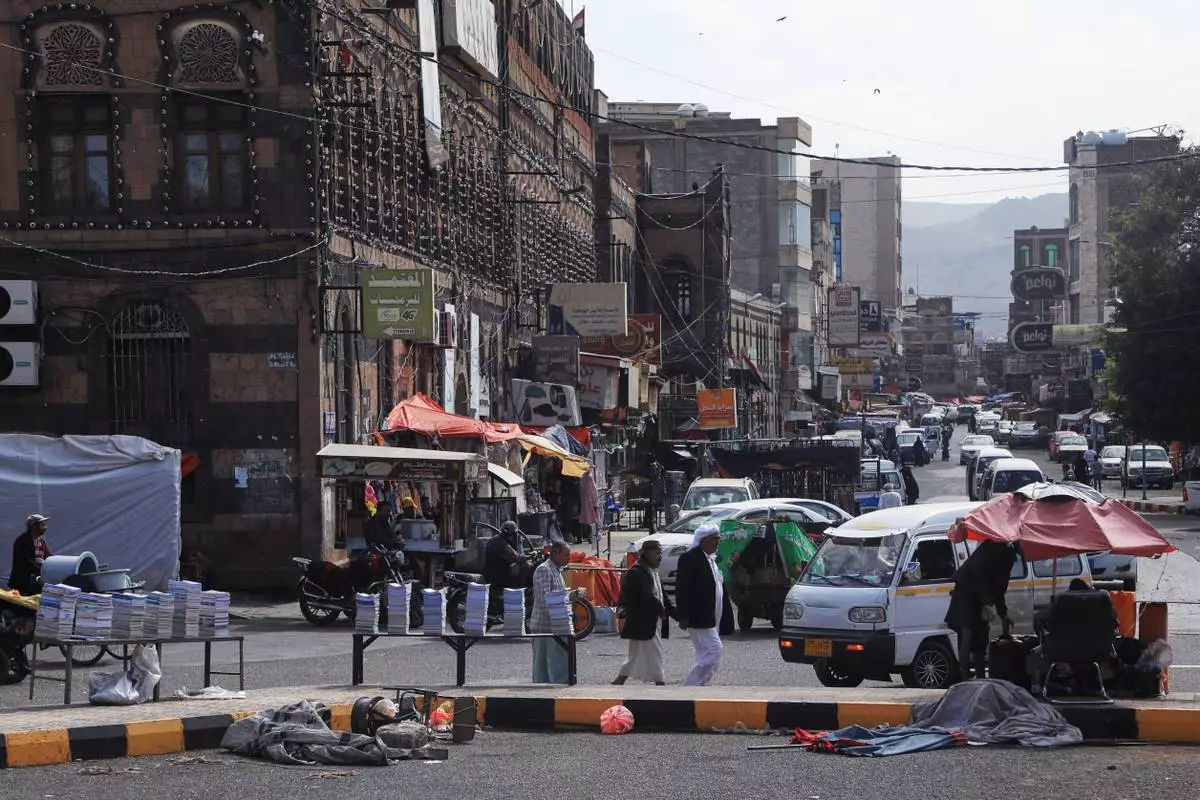
People walk at a street in Sanaa, Yemen, Tuesday, Sept. 8, 2026. (AP Photo/Osamah Abdulrahman)
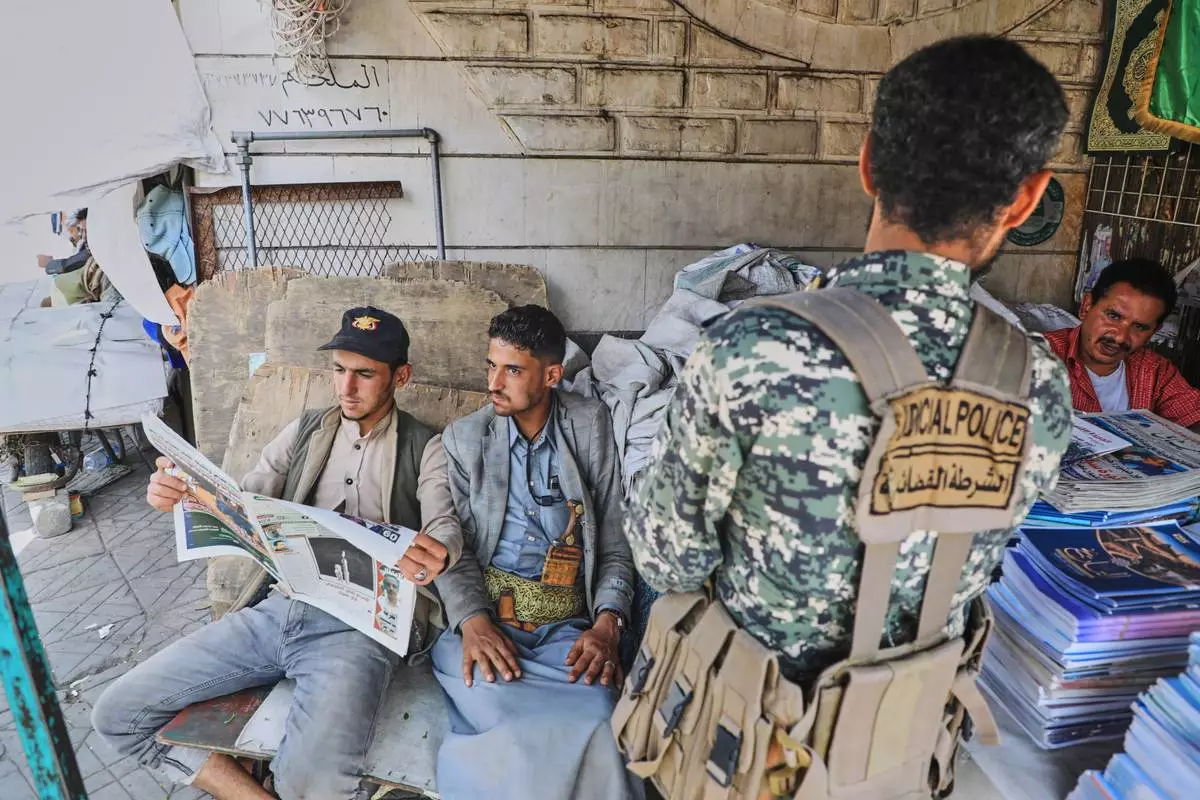
People read a newspaper to follow the war news at a shop in Sanaa, Yemen, Tuesday, Sept. 8, 2026. (AP Photo/Osamah Abdulrahman)
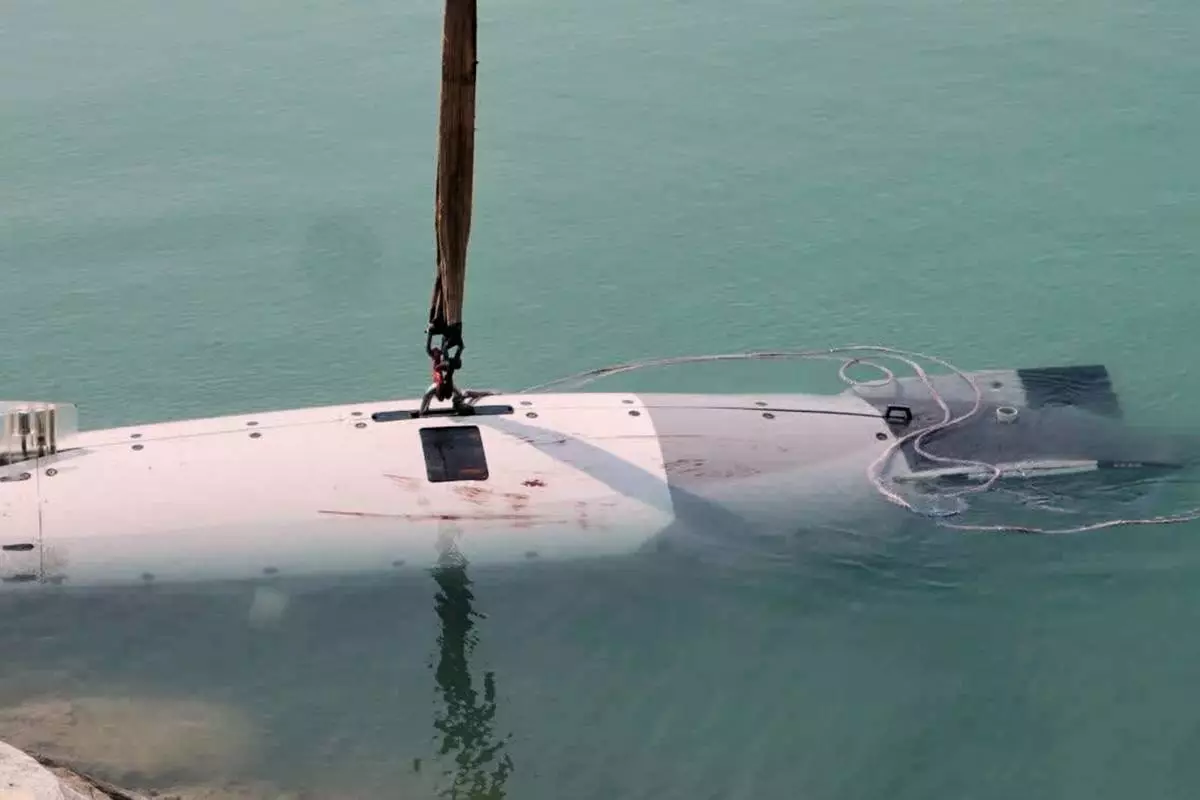
This image provided by Sepahnews, the official website of Iran's Revolutionary Guard, shows what Iran's navy and state television described as a captured U.S. military underwater drone at the entrance to the Strait of Hormuz, Tuesday, Sept. 8, 2026. (Sepahnews via AP)
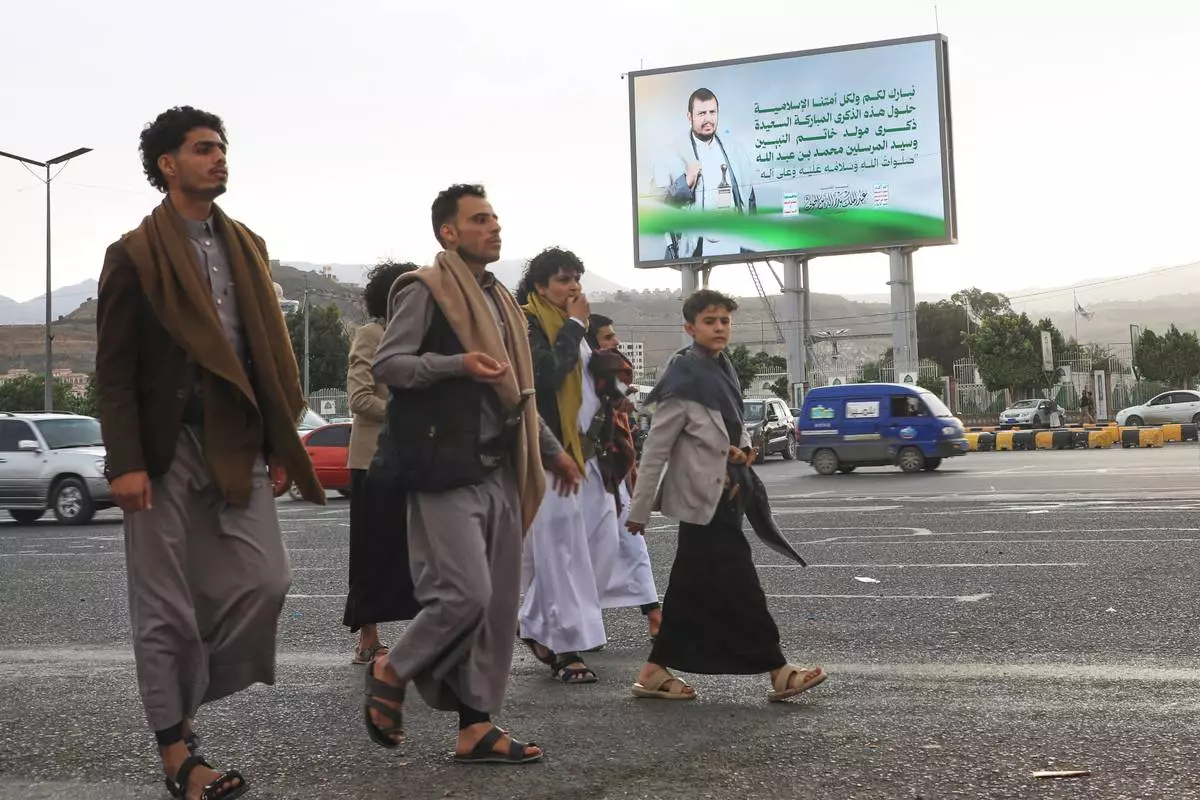
People walk under a billboard showing Houthi leader Abdul Malik al-Houthi with a phrase from the Islamic book Quran that reads in Arabic; "In the bounty of Allah and in His mercy - in that let them rejoice; it is better than what they accumulate" in Sanaa, Yemen, Sunday, Sept. 6, 2026. (AP Photo/Osamah Abdulrahman)