TIRANA, Albania (AP) — Police in Albania blocked protesters from reaching parliament on Tuesday as the latest rally against a luxury development linked to U.S. President Donald Trump’s son-in-law, Jared Kushner turned violent
The march was staged as parliament resumed from a summer recess and after the demonstrations marked their 100th day on Monday. They challenged a police cordon in the center of the capital, Tirana, pelting officers in riot gear with eggs and tomatoes.
Click to Gallery
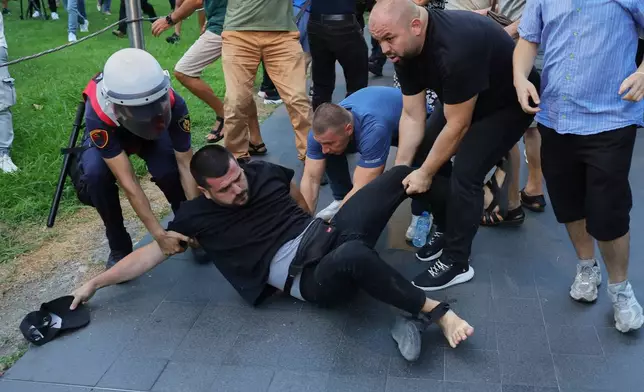
Police officers try to detain a protester during ongoing demonstrations against plans for a luxury resort in a protected coastal area linked to Jared Kushner, U.S. President Donald Trump's son-in-law, in Tirana, Albania, Tuesday, Sept. 8, 2026. (AP Photo/Hameraldi Agolli)
Police officers, most of them in plainclothes, try to detain a protester during ongoing demonstrations against plans for a luxury resort in a protected coastal area linked to Jared Kushner, U.S. President Donald Trump's son-in-law, in Tirana, Albania, Tuesday, Sept. 8, 2026. (AP Photo/Hameraldi Agolli)
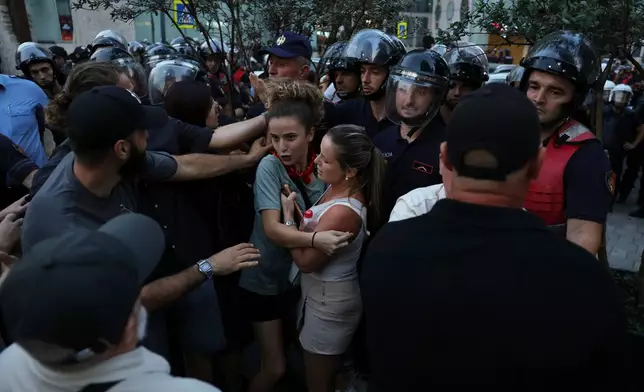
Police officers clash with protesters during ongoing demonstrations against plans for a luxury resort in a protected coastal area linked to Jared Kushner, U.S. President Donald Trump's son-in-law, in Tirana, Albania, Tuesday, Sept. 8, 2026. (AP Photo/Hameraldi Agolli)
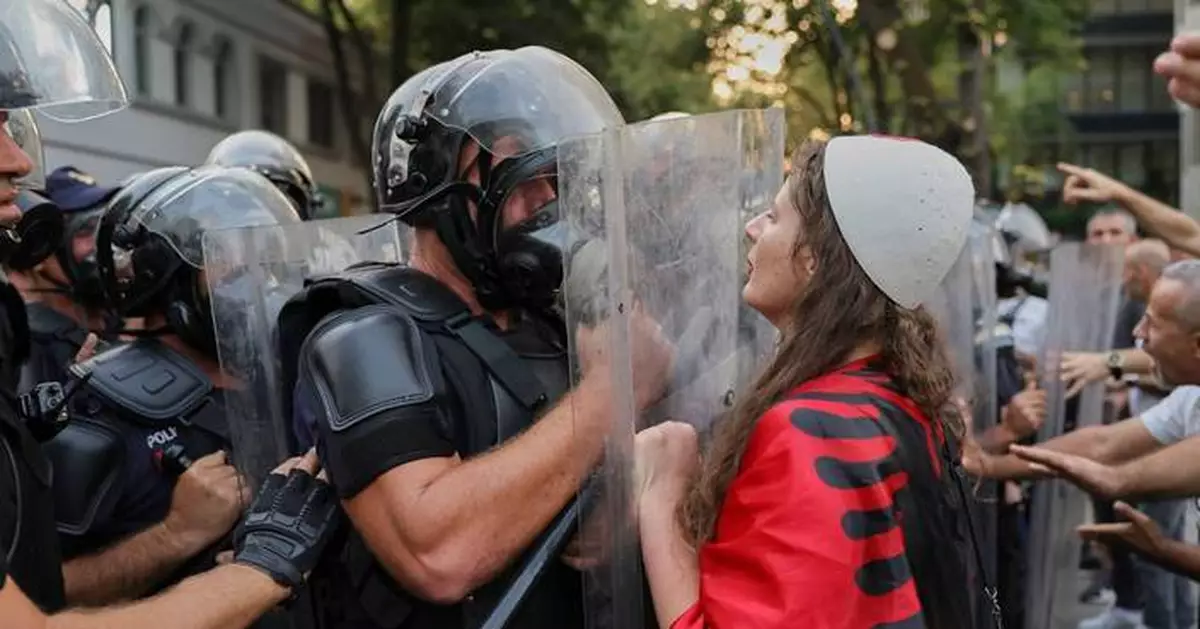
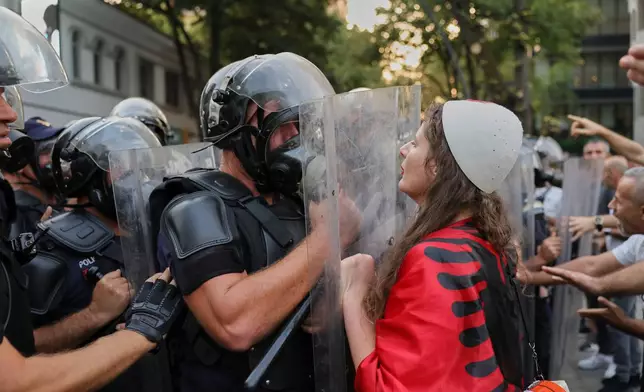
A woman draped in an Albanian flag clashes with police officers during ongoing demonstrations against plans for a luxury resort in a protected coastal area linked to Jared Kushner, U.S. President Donald Trump's son-in-law, in Tirana, Albania, Tuesday, Sept. 8, 2026. (AP Photo/Hameraldi Agolli)
Cars transporting lawmakers to the parliament building were confronted by the crowds and were hit with plastic water bottles before police intervened to let them through.
Dubbed the ‘flamingo revolution’ for protesters’ signs depicting the pink bird that could be harmed by the coastal development, the anti-government protests have rocked Albania.
Although Albanian officials have avoided giving details of Kushner's role in the project, Trump's daughter, Ivanka, has spoken about her family's involvement in the venture, describing it as an “incredible project.”
The protests are aimed at stopping the massive project that critics say would cause environmental damage and limit public access to the coast.
The nightly Tirana protests initially only focused on the development but have since grown into a major challenge to the country's long-ruling Socialist government.
Prime Minister Edi Rama — a target of the demonstrations — strongly supports the investment project, arguing that it would help modernize a country that spent decades in Communist isolation.
“We are here because we want change. Young people are struggling. Life is getting harder, and the government is not listening. We believe Albania can do better,” protester Elidon Mehmetaj said.
“We are not asking for much. We are asking for a better future — for Albanian citizens, for our country, for our future,” he said.
Demonstrators chanted “Arrest Rama!” during the clashes, as police escorted lawmakers to and from the parliament building.
Several protesters were detained, but it was not immediately clear whether any arrests had been made.
—-
Cimili reported from Pristina, Kosovo

Police officers try to detain a protester during ongoing demonstrations against plans for a luxury resort in a protected coastal area linked to Jared Kushner, U.S. President Donald Trump's son-in-law, in Tirana, Albania, Tuesday, Sept. 8, 2026. (AP Photo/Hameraldi Agolli)
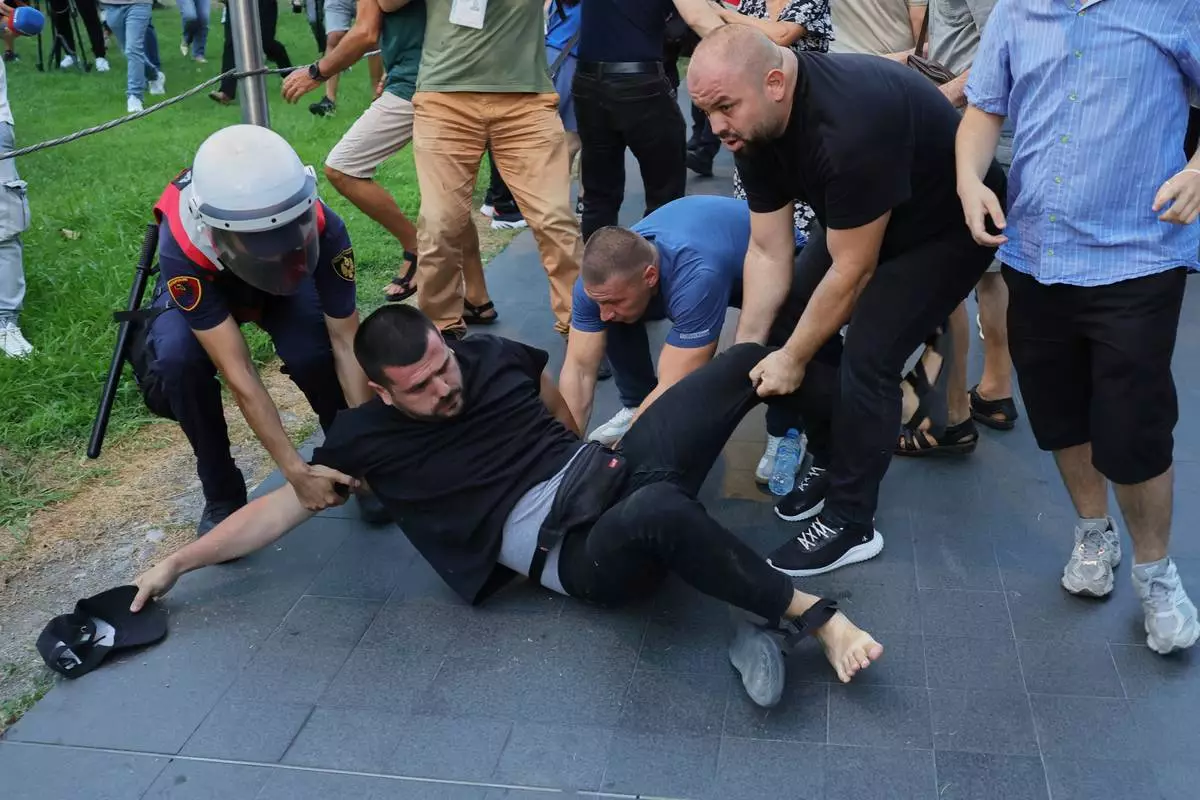
Police officers, most of them in plainclothes, try to detain a protester during ongoing demonstrations against plans for a luxury resort in a protected coastal area linked to Jared Kushner, U.S. President Donald Trump's son-in-law, in Tirana, Albania, Tuesday, Sept. 8, 2026. (AP Photo/Hameraldi Agolli)

Police officers clash with protesters during ongoing demonstrations against plans for a luxury resort in a protected coastal area linked to Jared Kushner, U.S. President Donald Trump's son-in-law, in Tirana, Albania, Tuesday, Sept. 8, 2026. (AP Photo/Hameraldi Agolli)
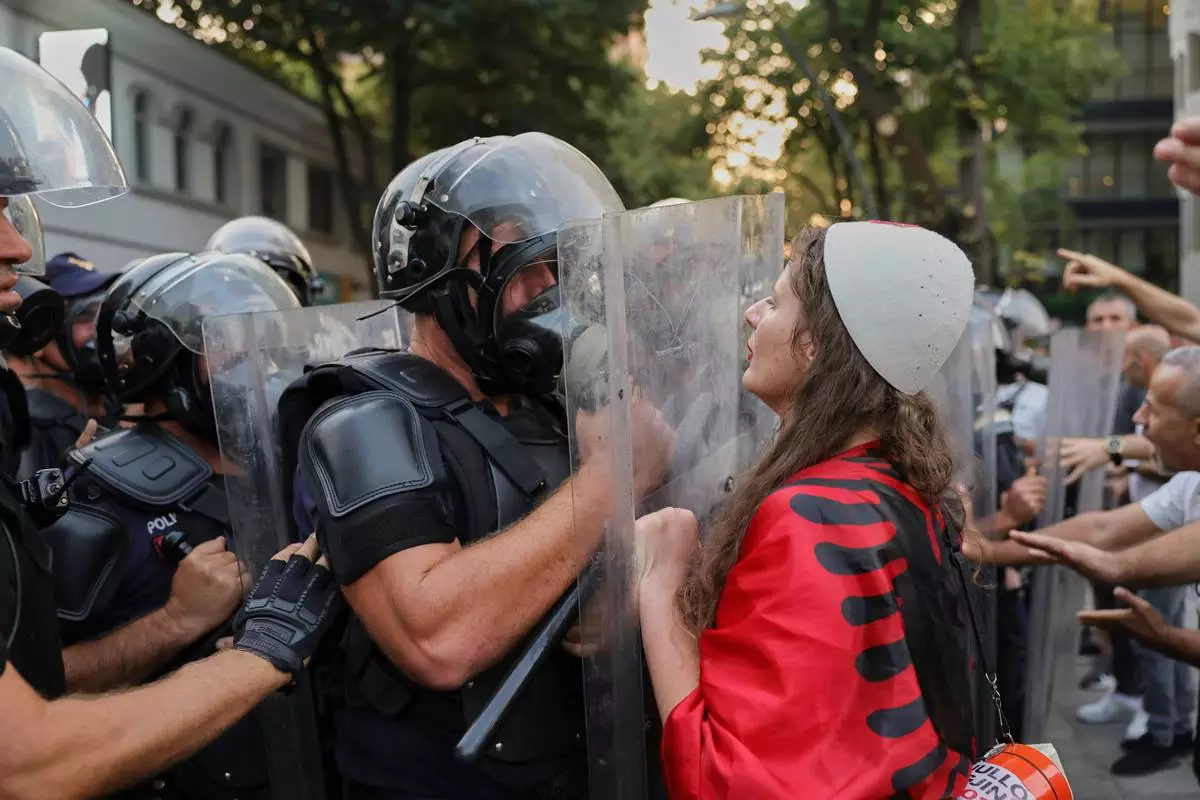
A woman draped in an Albanian flag clashes with police officers during ongoing demonstrations against plans for a luxury resort in a protected coastal area linked to Jared Kushner, U.S. President Donald Trump's son-in-law, in Tirana, Albania, Tuesday, Sept. 8, 2026. (AP Photo/Hameraldi Agolli)
TORONTO (AP) — Canadian Prime Minister Mark Carney said Tuesday that Canada would move faster to reduce its economic reliance on the United States and deepen ties with Europe as retaliatory tariffs took effect on about $20 billion worth of U.S. goods and the country braced for U.S. President Donald Trump’s response.
“In too many areas, they wanted dependency, not a true economic partnership,” Carney said in a prerecorded video outlining his government’s plan to withstand the trade war. The prime minister said four decades of deeper economic integration had left Canada too reliant on the U.S.
Canada is exploring ties with the European Union that could stop just short of membership, a Canadian official familiar with the discussions said.
Options could include expanding existing agreements, negotiating a new treaty or creating other forms of cooperation. The official said Canada is already consulting provinces, territories and labor groups about what a deeper relationship with the EU could look like, but no model has been chosen.
The official spoke on condition of anonymity because they were not authorized to discuss the talks publicly.
Carney is due in Strasbourg, France, next week, where he will attend European Commission President Ursula von der Leyen’s State of the European Union address Sept. 16 and address the European Parliament the following day.
The rupture has upended one of the world’s closest relationships. The countries have deeply integrated economies and close defense and security ties, but Trump has imposed a series of tariffs on Canadian goods despite negotiating and repeatedly praising the North American trade agreement during his first term. Many of those tariffs violate the pact.
Carney acknowledged the trade actions would cause short-term pain but said they would push Canada to move faster on investment, infrastructure and trade diversification. He said the shift would be costly but standing still would cost more.
Carney contrasted Canada’s deteriorating relationship with Washington with its push to deepen ties elsewhere. “For the past year and a half, we have been steering our economy toward trusted partners,” he said.
“It was easy business, but it meant we relied too much on one economic partner,” he said. “That time is over.”
More than 70% of Canadian exports still go to the United States, underscoring the scale of Carney's push to diversify trade. He said Canada’s exports to other countries are rising sharply and are on track to double over the next decade.
Carney defended the retaliation, saying Canada was matching the latest U.S. measures dollar for dollar while supporting affected workers and industries and accelerating efforts to expand trade with other countries.
“We can’t let American goods into Canada tariff-free while they charge our companies to export to them,” he said.
Canada was not seeking to escalate the confrontation, he said, but the tariffs were necessary to protect Canadian workers.
The prime minister also defended Canada’s decision to walk away from the talks, saying Washington sought limits on French-language and cultural protections, influence over future trade deals, and terms that would weaken the auto, steel and forestry sectors.
How the trade war ends could carry consequences far beyond Canada, testing whether a smaller U.S. ally can resist Trump’s economic pressure without being forced to yield.
U.S. Trade Representative Jamieson Greer has suggested Washington could retaliate by blocking some Canadian products from the U.S. market.
The Canadian official said Ottawa does not intend to change course regardless of whether Trump responds with nothing or what the official called a “nuclear response.” The government’s strategy will remain focused on building more at home and diversifying trade abroad, the official said.
The tariffs hit hundreds of American products, including steel, aluminum, cheese, appliances, clothing, cosmetics and farm equipment, at rates of 15%, 25% or 50%. They cover about $20 billion in American goods, roughly 6% of the $333.6 billion the United States exported to Canada last year.
Since Canada-U.S. trade talks collapsed Aug. 21, Trump and his administration have imposed additional tariffs and issued a series of threats and attacks portraying Canada as weak and dependent.
Trump’s trade war and repeated talk of making Canada the 51st state have fueled anger and rallied support for Carney. Canadians have sharply cut travel to the United States and boycotted U.S. goods.
Carney praised those efforts, saying “every time we choose to buy Canadian and travel in Canada, we are sending a message that nobody is in the stands, 40 million of us are on the ice.”
British Columbia Premier David Eby said the province will install new signs at U.S. border crossings reading: “Welcome to British Columbia, Canada. Strong, proud and will NEVER be the 51st state. Sorry!”
“While our kindness is one of our greatest strengths, you should never, ever mistake that kindness for weakness,” Eby said.
Gabriel Brunet, a spokesman for Canada-U.S. Trade Minister Dominic LeBlanc, said officials from both countries remain in contact even though formal negotiations have not resumed.
Former U.S. trade official Wendy Cutler said neither side appeared eager to make the first move.
“With a growing public approval rating now topping 70%, Prime Minister Carney is not in any hurry to reach out to Washington. But importantly, he has not closed the door to talks,” she said. “Clearly, at this point each side does not want to look too anxious to reengage in fear of looking weak.”
Associated Press writer Paul Wiseman in Washington contributed to this report.
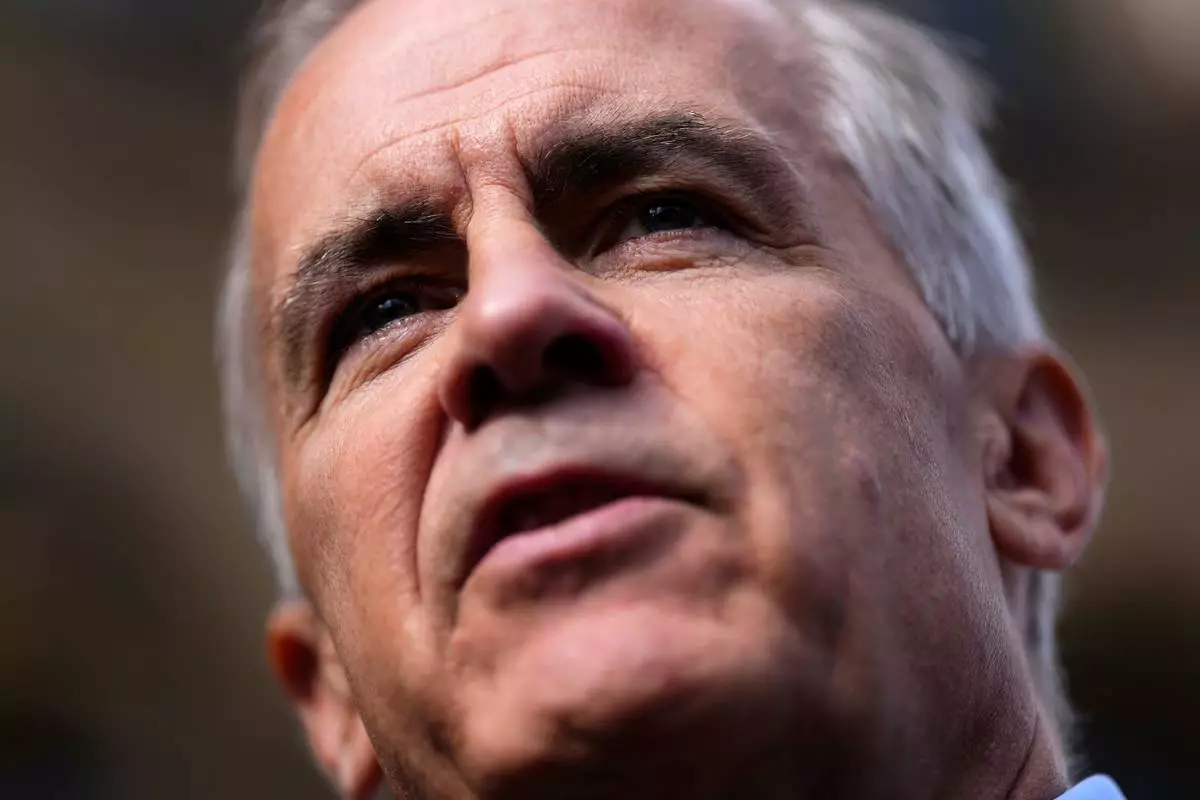
Prime Minister Mark Carney speaks to journalists as he arrives at the Office of the Prime Minister and Privy Council in Ottawa, Canada, Tuesday, Sept. 1, 2026. (Justin Tang/The Canadian Press via AP)