CAIRO (AP) — An additional three dozen health facilities serving more than 400,000 people in Sudan are closing this year due to global aid cuts, worsening a dire humanitarian situation in a country torn by more than three years of war, aid groups said Tuesday.
The cuts come to a health care system that once numbered 6,500 primary healthcare facilities and 300 public hospitals, but that already was decimated in the first year and a half of war. By September 2024, the World Health Organization said that up to 70-80% of facilities in the worst-hit areas were either closed or barely functioning.
Sudan plunged into war in April 2023 when tensions between the army and the paramilitary Rapid Support Forces, or RSF, escalated into full-scale fighting across the country. The war killed at least 59,000 people, displaced some 13 million and pushed parts of the country into famine.
More aid organizations are pulling out as clinics are left without necessary medicine or funding, forcing patients to face costly transportation and dangerous journeys to get treatment, said Doctors Without Borders, or MSF.
“These cuts are stripping away what little capacity remains, closing facilities, sending health workers home, and cutting off supply lines for medicines and nutrition treatment. The system is already stretched past its limit," said Mesfin Teklu Tessema, senior technical health director for the International Rescue Committee, or IRC.
Mohammed Mahdi, IRC director for East Sudan, told The Associated Press that funding cuts are forcing the closure of 36 IRC-supported facilities and sites, cutting off access to essential services for an estimated 473,700 people.
“A small number of facilities are able to keep running for a short period using other funding sources, but this bridge support is only expected to last through the end of September,” Mahdi said of facilities across Sudan.
Healthcare providers couldn’t find alternative funding needed to provide healthcare services after grants to many organizations in Sudan ended in June following the announcement of U.S. aid cuts last year, according to MSF. Some major European donors also decreased their aid spending.
The Um Rakuba camp in Gedaref State in eastern Sudan, which shelters around 17,000 displaced people, is now served by fewer than 10 aid organizations operating in and around the camp, down from about 35 in 2021, according to MSF.
The MSF-supported hospital there “is now the only lifeline left” for refugees and residents, said Fabrizio Locuratolo, MSF humanitarian affairs manager in the statement.
Ali Almohammed, MSF emergency health manager, warned that “serious disease outbreaks are already happening” in several parts of Sudan. He told the AP that measles reached a “major outbreak level” in Darfur, with approximately 75% of measles patients being unvaccinated.
Sudan is also experiencing cholera and malaria outbreaks.
Multiple attempts have been made to end the war, including peace talks. Most recently, the United States urged the U.N. to impose sanctions against the warring parties as a means of pressuring them to negotiate an end to the conflict.
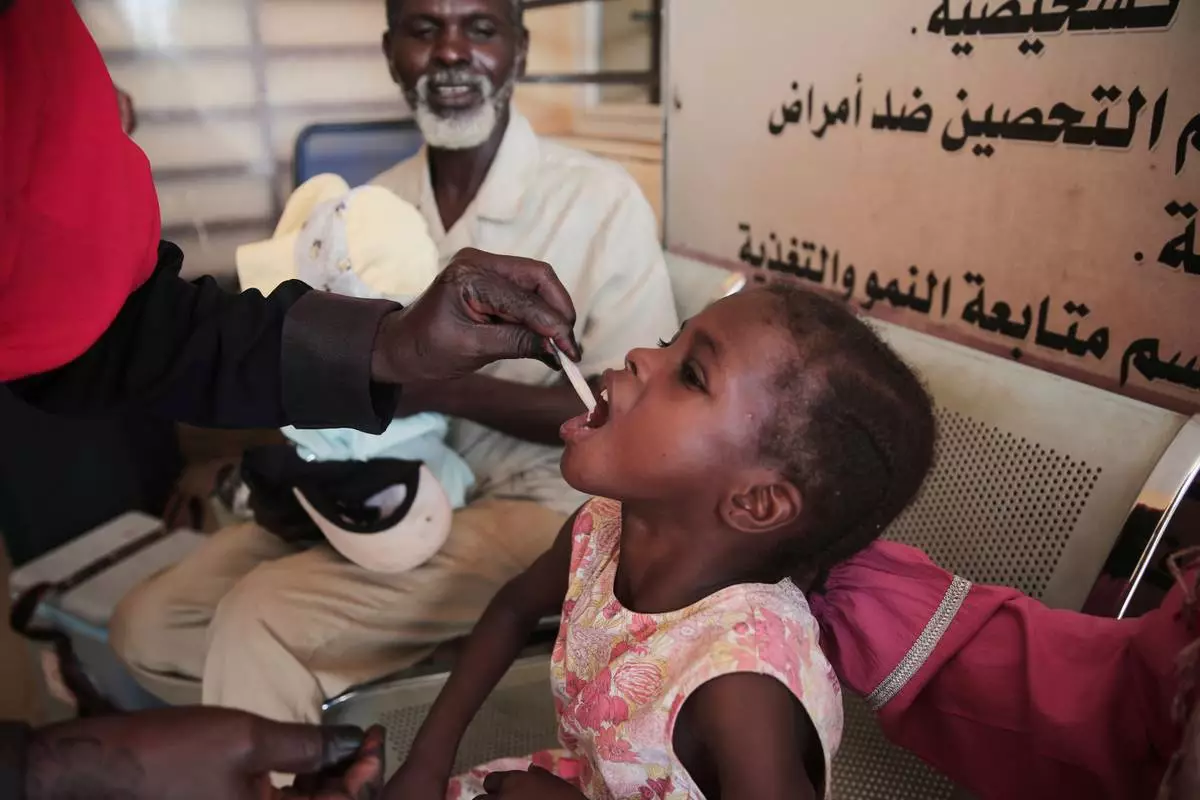
FILE - A Sudanese girl receives an oral cholera vaccine during a vaccination campaign conducted by health ministry workers in Khartoum, Sudan, Aug. 13, 2025. (AP Photo/Marwan Ali, File)
TORONTO (AP) — Canadian Prime Minister Mark Carney said Tuesday that Canada would move faster to reduce its economic reliance on the United States and deepen ties with Europe as retaliatory tariffs took effect on about $20 billion worth of U.S. goods and the country braced for U.S. President Donald Trump’s response.
“In too many areas, they wanted dependency, not a true economic partnership,” Carney said in a prerecorded video outlining his government’s plan to withstand the trade war. The prime minister said four decades of deeper economic integration had left Canada too reliant on the U.S.
Canada is exploring ties with the European Union that could stop just short of membership, a Canadian official familiar with the discussions said.
Options could include expanding existing agreements, negotiating a new treaty or creating other forms of cooperation. The official said Canada is already consulting provinces, territories and labor groups about what a deeper relationship with the EU could look like, but no model has been chosen.
The official spoke on condition of anonymity because they were not authorized to discuss the talks publicly.
Carney is due in Strasbourg, France, next week, where he will attend European Commission President Ursula von der Leyen’s State of the European Union address Sept. 16 and address the European Parliament the following day.
The trade war began after Trump returned to office and imposed a series of tariffs on Canadian goods despite having negotiated and repeatedly praised the North American trade agreement during his first term. Many of those tariffs violate the pact.
The rupture is especially striking because the countries have long shared one of the world’s closest relationships, with deeply integrated economies, close defense and security cooperation, vast cultural ties and, before relations deteriorated, about 400,000 people crossing the border each day.
The latest U.S. trade actions will cause short-term pain, Carney acknowledged, but he said they would push Canada to move faster on investment, infrastructure and trade diversification. He acknowledged the shift would be costly but said standing still would cost more.
Carney contrasted Canada’s deteriorating relationship with Washington with its push to deepen ties elsewhere. “For the past year and a half, we have been steering our economy toward trusted partners,” he said.
“It was easy business, but it meant we relied too much on one economic partner,” he said. “That time is over.”
Carney defended the retaliation, saying Canada was matching the latest U.S. measures dollar for dollar while supporting affected workers and industries and accelerating efforts to expand trade with other countries.
“We can’t let American goods into Canada tariff-free while they charge our companies to export to them,” he said.
Canada was not seeking to escalate the confrontation, he said, but the tariffs were necessary to protect Canadian workers.
The prime minister also defended Canada’s decision to walk away from the talks, saying Washington sought limits on French-language and cultural protections, influence over future trade deals, and terms that would weaken the auto, steel and forestry sectors.
How the trade war ends could carry consequences far beyond Canada, testing whether a smaller U.S. ally can resist Trump’s economic pressure without being forced to yield.
U.S. Trade Representative Jamieson Greer has suggested Washington could retaliate by blocking some Canadian products from the U.S. market.
The Canadian official said Ottawa does not intend to change course regardless of whether Trump responds with nothing or what the official called a “nuclear response.” The government’s strategy will remain focused on building more at home and diversifying trade abroad, the official said.
The tariffs hit hundreds of American products, including steel, aluminum, cheese, appliances, clothing, cosmetics and farm equipment, at rates of 15%, 25% or 50%. They cover about $20 billion in American goods, roughly 6% of the $333.6 billion the United States exported to Canada last year.
Since Canada-U.S. trade talks collapsed Aug. 21, Trump and his administration have imposed additional tariffs and issued a series of threats and attacks portraying Canada as weak and dependent.
Trump’s trade war and repeated talk of making Canada the 51st state have fueled anger and rallied support for Carney. Canadians have sharply cut travel to the United States and boycotted U.S. goods.
Carney praised those efforts, saying “every time we choose to buy Canadian and travel in Canada, we are sending a message that nobody is in the stands, 40 million of us are on the ice.”
Gabriel Brunet, a spokesman for Canada-U.S. Trade Minister Dominic LeBlanc, said officials from both countries remain in contact even though formal negotiations have not resumed.
“Canadian and American officials have maintained ongoing discussions on a range of issues, although formal trade negotiations are not taking place at this stage,” Brunet said.
Former U.S. trade official Wendy Cutler said neither side appeared eager to make the first move.
“With a growing public approval rating now topping 70%, Prime Minister Carney is not in any hurry to reach out to Washington. But importantly, he has not closed the door to talks,” she said. “Clearly, at this point each side does not want to look too anxious to reengage in fear of looking weak.”
Associated Press writer Paul Wiseman in Washington contributed to this report.
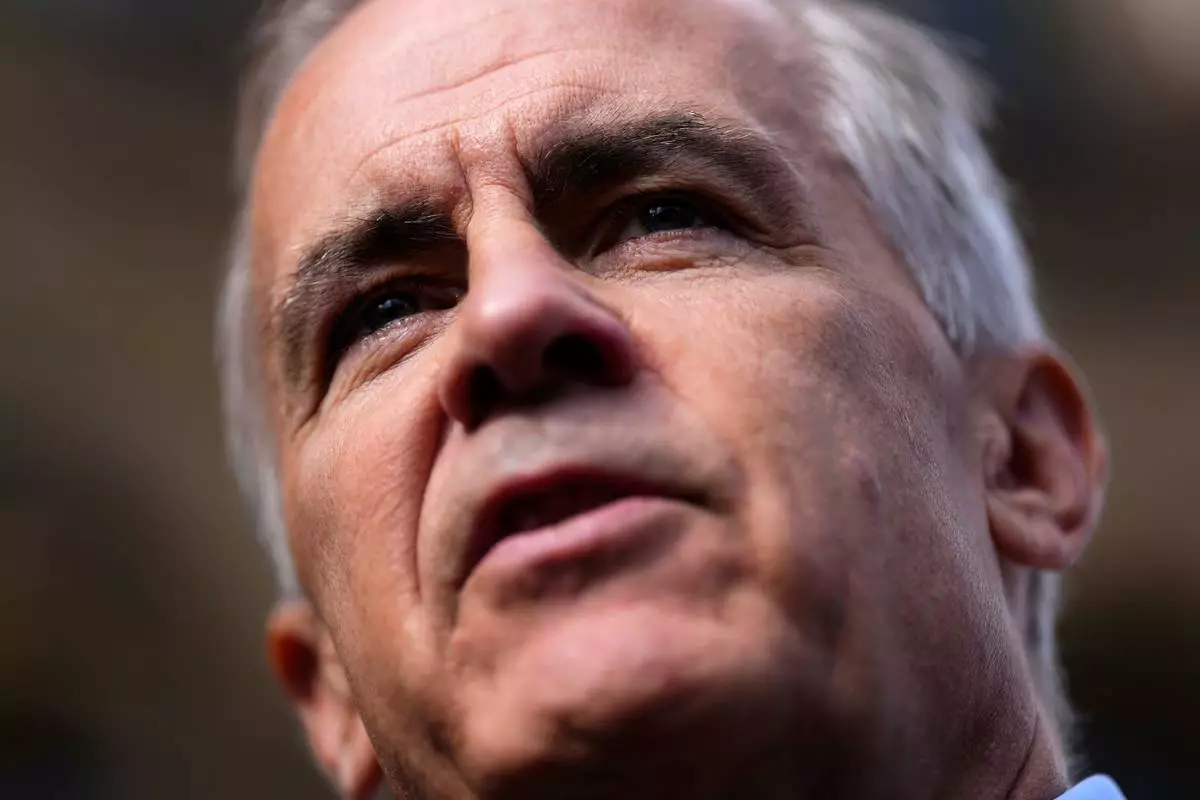
Prime Minister Mark Carney speaks to journalists as he arrives at the Office of the Prime Minister and Privy Council in Ottawa, Canada, Tuesday, Sept. 1, 2026. (Justin Tang/The Canadian Press via AP)