Meta launched on Tuesday a personal artificial intelligence agent, Muse, for people 18 and over who are looking for help with day-to-day tasks like schedules, shopping and, in the company's words, turning “long-term goals into action plans.”
The parent company of Instagram and Facebook is stressing the safety and privacy features of the agent, which for now is only available in the U.S. Muse, Meta said, runs on a dedicated, secure virtual machine that houses both the agent and the user's data.
People can message the agent in a separate app, called Muse, or message it in WhatsApp. It can handle simple tasks like sending an email or booking travel, or bigger, long-term goals like creating a yearlong exercise plan or setting up a new business.
“Once a person shares a goal with Muse, it helps them develop a personalized plan and coordinate their time and resources, then advances the work on its own. It can open a browser, fill out forms, and negotiate on their behalf,” Meta said in a blog post.
Tech companies are touting AI agents as the next step after chatbots, which can answer questions and retrieve information but won't take action on the user's behalf.
At its most basic level, an AI agent works like a traditional, human-crafted computer program that executes a job, like launching an application. Combined with an AI large language model, however, it can search for knowledge that enables it to complete tasks without explicit, step-by-step instructions. That means, instead of just helping you draft the language of an email, it can theoretically handle the whole process — receiving a message from your coworker, figuring out what you might want to say, and firing off the response on its own.
For Meta, the agent fits into CEO Mark Zuckerberg's vision of AI superintelligence that's available to “everyone.” He outlined his vision last month in a 6,500-word essay published online.
In the document derided by critics as fantastical, Zuckerberg said his company is working toward an era where everyone will have the tools to create new businesses, receive Ph.D.-level tutoring and provide personalized lifestyle tips.
“Everyone will have an exceptionally capable personal agent that understands you, your goals, and everything you care about. Your agent will work 24/7 on your behalf to improve your relationships, health, career, finances, home management, hobbies, and more,” Zuckerberg wrote. “It will free up time for the things you enjoy, and help you accomplish more than you could otherwise.”
The question is, will people actually use it?
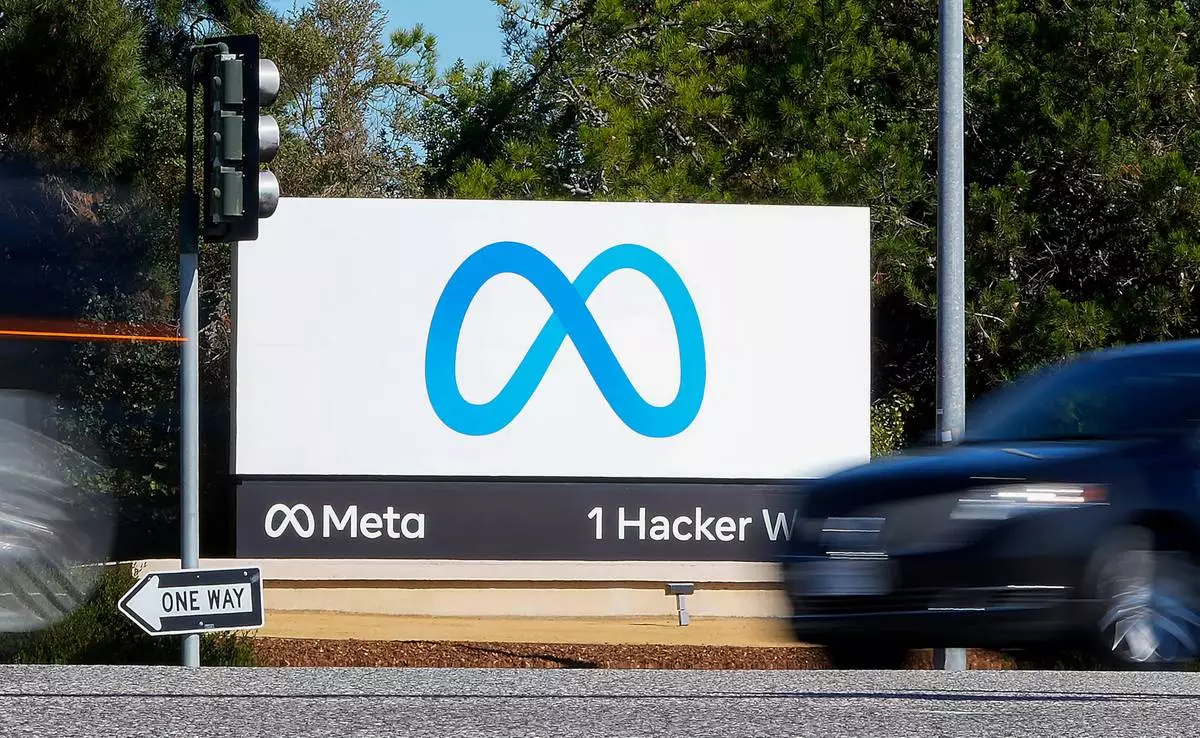
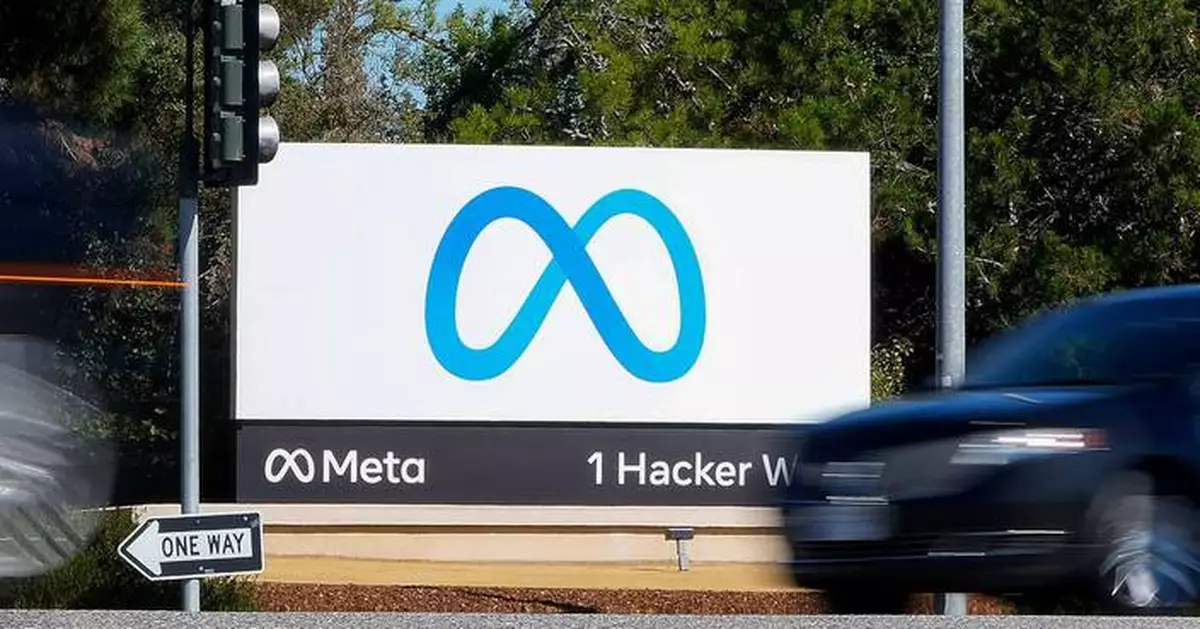
FILE - A car passes Facebook's new Meta logo on a sign at the company headquarters on Oct. 28, 2021, in Menlo Park, Calif. (AP Photo/Tony Avelar, File)
LAS VEGAS (AP) — This was, especially in the first half, the kind of Rams team many expected to see all along.
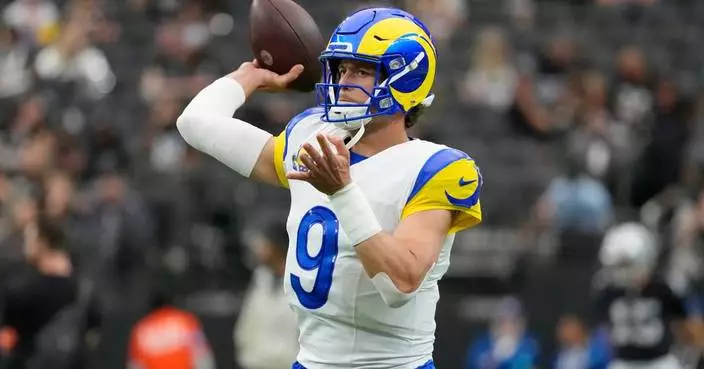
Matthew Stafford threw for 195 yards and three touchdowns to become the Rams' career leader in passing TDs, and Los Angeles resembled the team previously favored to win the Super Bowl, beating the Las Vegas Raiders 35-21 on Sunday.
The Rams (3-4) still have a ways to go to overcome their slow start and numerous injuries, but this victory improves their chances to be a factor in the playoff race. Since the NFL playoffs expanded from 12 to 14 teams in 2020, 10 of 41 clubs have made the postseason after opening 3-4, with just 4 of 33 making it after going 2-5.
At least in the first half, when they took a 28-6 lead, the Rams showed why they entered the season favored to win it all. The Raiders (3-4) made a push in the second half but lost their fourth straight.
“It’s nice feeling a little bit more comfortable in the fourth quarter, and that’s just a testament to how the guys played,” Stafford said. “Great team effort. I thought our coaches did a great job of giving us a plan that we felt great about coming in here to execute. Just proud of the way we worked throughout the week, and I think that showed today. We're going to have to keep doing that and doing it at a high level.”
Stafford has 155 touchdown passes in a Rams uniform, one more than previous team record holder Roman Gabriel. The reigning MVP also became the first player to accomplish that for two teams; Stafford's 282 touchdown passes is Detroit's record.
Las Vegas native Puka Nacua, who had been listed as questionable with a calf injury, caught eight passes for 68 yards and a touchdown for the Rams, and tight end Davis Allen had two TD catches — his first trips to the end zone this season.
Nacua's availability was in question until game day.
“I’m super grateful for everybody in the training room and also the belief in coach (Sean McVay) and everybody for me to be able to go out there and still perform,” Nacua said. “The communication, I think, (for) Matthew is something that he prides himself in, but especially when not being able to get some of those (practice) reps. The time to mentally still (get) a rep and have that conversation so we know where we can be on the same page.”
Kyren Williams and Blake Corum combined to rush for 192 yards and two touchdowns for Los Angeles.
The Raiders' Kirk Cousins passed for 295 yards with touchdowns to Tre Tucker and running back Ashton Jeanty. Tucker finished with five receptions for 103 yards, and Jeanty hauled in eight catches for 61 yards. Cousins leads the NFL with 16 TD passes.
Jeanty and Mike Washington Jr., however, rushed for just 42 yards on 14 carries.
The Raiders gave up 30-plus points for fourth consecutive week.
“Well, no one’s coming to help us,” Las Vegas coach Klint Kubiak said. “We’ve got to figure it out ourselves as a coaching staff, with the players, and we have to complement each other as well because we’ve got to start the game a lot faster offensively.”
McVay, now 4-0 against the Raiders, and the Rams took control from the beginning. They led by 22 points at halftime — the Raiders' largest home deficit after two quarters since trailing Cincinnati 24-0 in 2015 — and maintained that advantage after a scoreless third quarter.
The Raiders tried to rally in the fourth, scoring two touchdowns to get within 28-18, though they failed on both 2-point conversions. Las Vegas also failed to convert two fourth downs in Rams territory.
Los Angeles ended a two-game skid, which included last week's stunning 18-16 defeat to Arizona.
“This league is so humbling,” McVay said. “Humility is only a day away, but I was proud of the way the group prepared and, most importantly, celebrating each other’s success, having the right energy when you’re on the road and it’s just you versus the opponent and their fans.”
Rams: CB Trent McDuffie (groin) did not play for the second week in a row. He was listed as questionable, but was deactivated before kickoff.
Rams: Host their Los Angeles rival, the Chargers, next Sunday.
Raiders: Visit the New York Jets next Sunday.
See AP’s full NFL coverage here
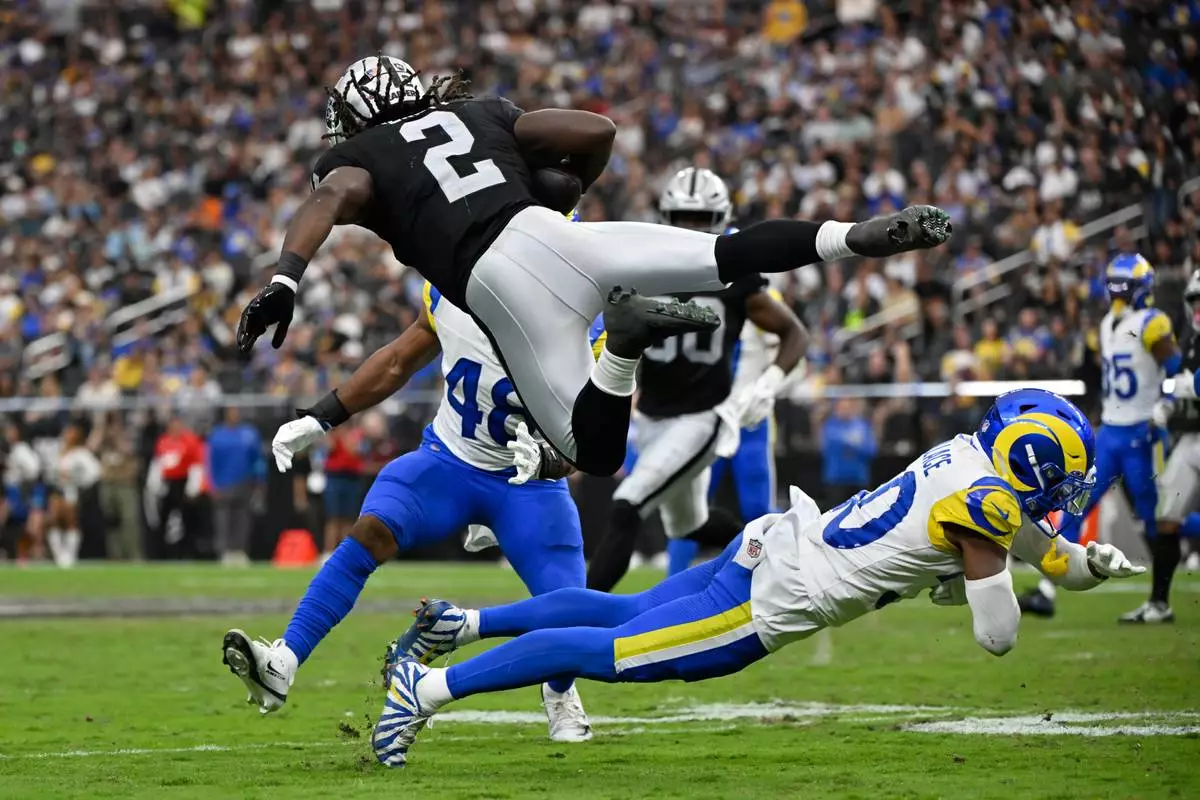
Las Vegas Raiders running back Ashton Jeanty (2) is tripped up by Los Angeles Rams cornerback Josh Wallace during the second half of an NFL football game Sunday, Oct. 25, 2026, in Las Vegas. (AP Photo/David Becker)
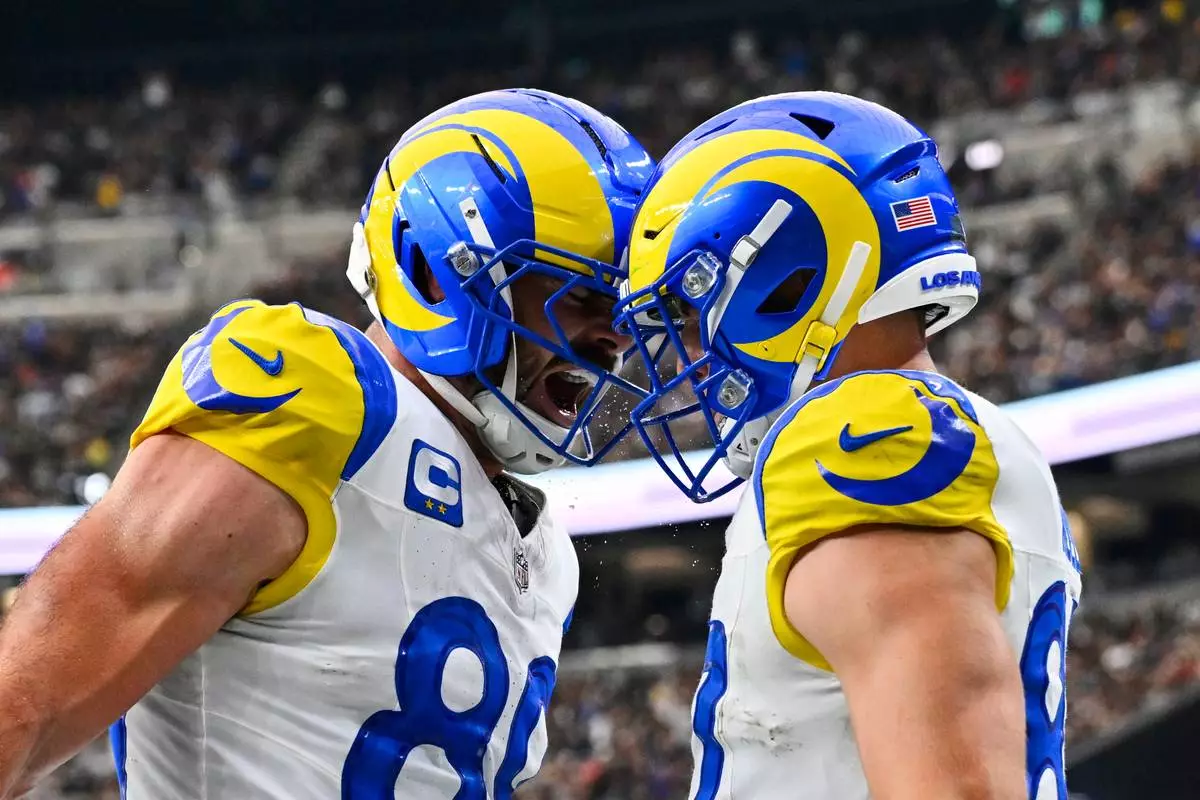
Los Angeles Rams tight end Davis Allen, right, celebrates his touchdown with teammate Tyler Higbee, left, during the first half of an NFL football game against the Las Vegas Raiders Sunday, Oct. 25, 2026, in Las Vegas. (AP Photo/David Becker)
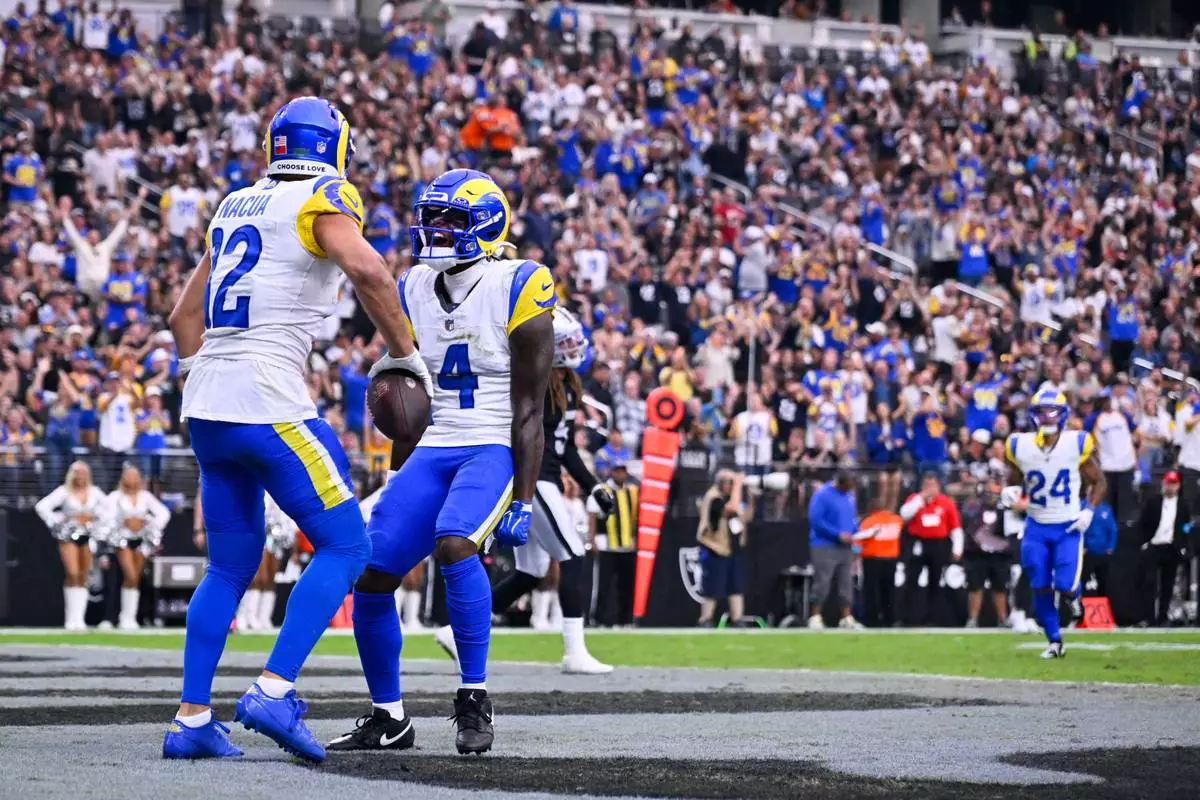
Los Angeles Rams wide receiver Puka Nacua, left, celebrates after scoring a touchdown with teammate Konata Mumpfield during the first half of an NFL football game against the Las Vegas Raiders, Sunday, Oct. 25, 2026, in Las Vegas. (AP Photo/David Becker)
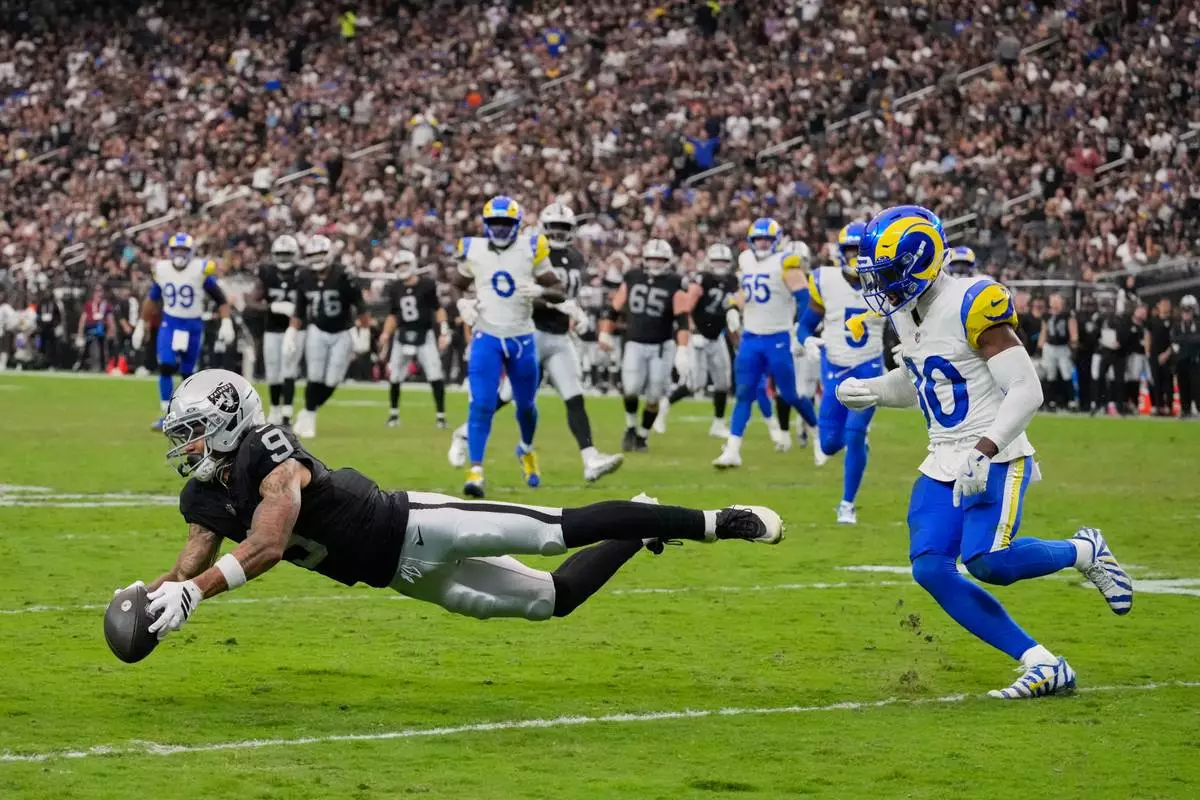
Las Vegas Raiders wide receiver Jalen Nailor, left, attempts to make a catch in front of Los Angeles Rams cornerback Josh Wallace during the second half of an NFL football game Sunday, Oct. 25, 2026, in Las Vegas. (AP Photo/John Locher)
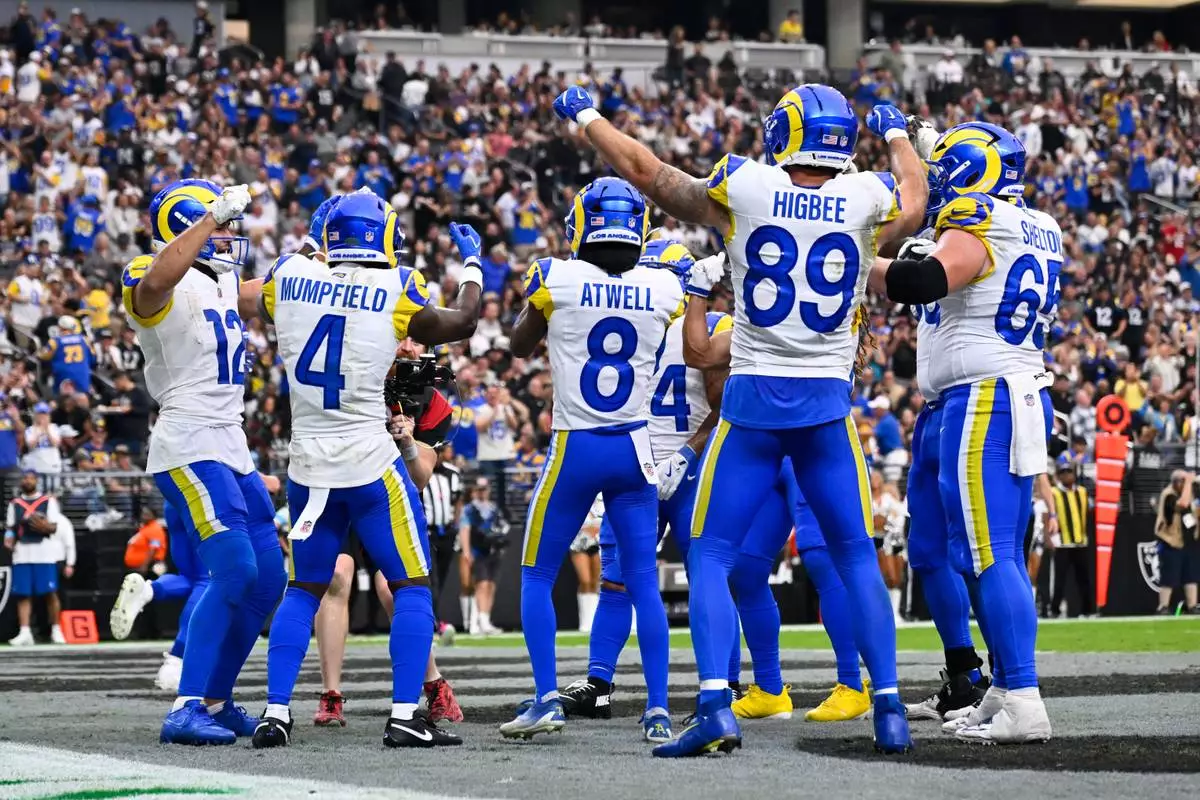
Los Angeles Rams wide receiver Puka Nacua, far left, celebrates after scoring a touchdown with teammates during the first half of an NFL football game against the Las Vegas Raiders, Sunday, Oct. 25, 2026, in Las Vegas. (AP Photo/David Becker)