NEW HYDE PARK, N.Y.--(BUSINESS WIRE)--Sep 8, 2026--
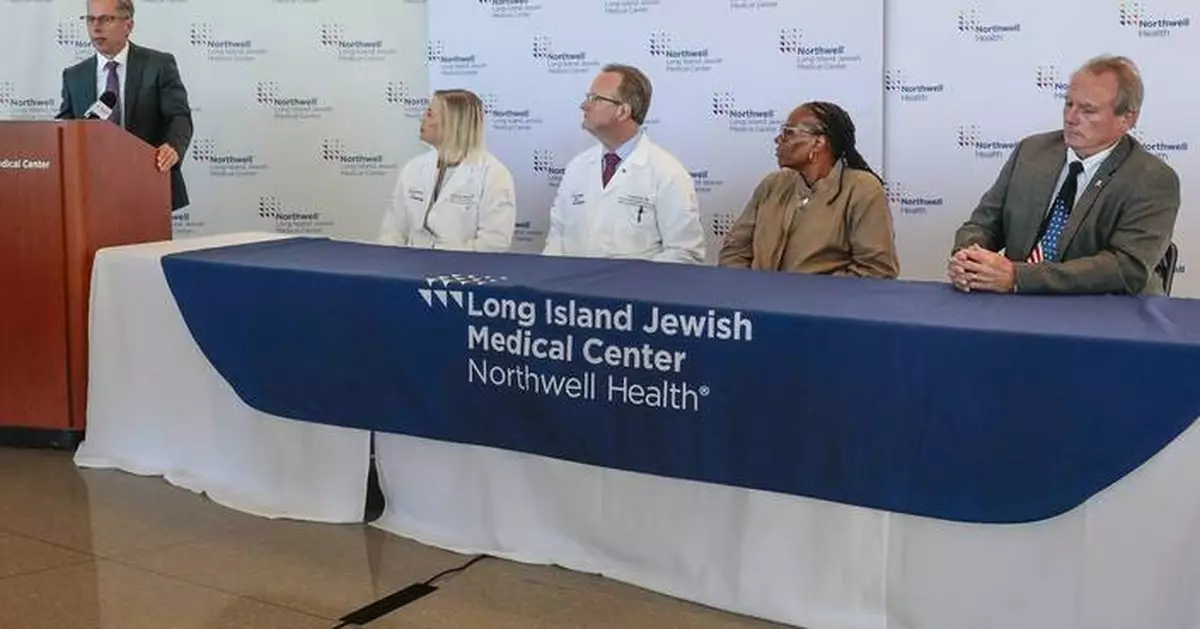
Twenty-five years after the World Trade Center terror attack on September 11, 2001, physicians and patients gathered at Northwell’s Long Island Jewish (LIJ) Medical Center to commemorate the grim anniversary and to sound the alarm to an ongoing health crisis. The past is prologue for a slow-motion health disaster as cancer cases have exploded among some of the approximately 145,000 people currently enrolled in the World Trade Center (WTC) Health Program, which provides free medical monitoring.
This press release features multimedia. View the full release here: https://www.businesswire.com/news/home/20260908221903/en/
Northwell Health is one of seven federally funded New York Metro organizations to treat responders at its clinic in Rego Park, Queens, and by specialists throughout New York’s largest health system. Two thirds of all enrollees are certified for at least one WTC-related health condition and 30 percent of those enrolled through Northwell have battled cancer. That number is expected to rise dramatically over the next decade.
“For over 25 years, we have cared for people who were exposed to the aftermath of September 11th,” said Jacqueline Moline, MD, director of Northwell WTC Health Program. “Hundreds of thousands of people were at risk then and remain at risk for disease now. While we initially saw respiratory disease, we now are faced with increasing numbers of our patients developing cancer. Over 57,000 cases of cancer have been documented, and cancer rates – including rare cancers – are rising. There has been a twofold increase in lung cancer in just five years. Our fear is that cancer diagnoses will only rise as we move into the next 25 years.”
Northwell’s WTC Health Program saw 9/11-certified cancer cases grow from 177 in 2023 to 235 in 2025, a 75 percent jump over three years. Now 132 new cases through the first half of 2026 continues the trend. That’s 811 new cases in 42 months. Prostate and skin cancers were the most common, followed by cancers of the breast and urinary tract. By comparison, the program totaled 1,634 cancer cases over the first decade (2013-22) and 2,445 all-time (through June) among 1,489 people.
Frank Kotnik, 66, of Glendale, Queens, is a cancer survivor. He worked 20-hour shifts in the moonscape around Ground Zero and knew it was only a matter of time before he got sick as one co-worker after another was stricken by cancer in the years afterward. Mr. Kotnik was a blacksmith for NYC DOT on 9/11. The disaster created a sudden, overwhelming demand for the veteran welder’s skills. When his own cancer diagnosis finally arrived decades later it still stunned. “‘You’ve got 9/11 bladder cancer,’ they told me,” said Mr. Kotnik. “I said ‘Really? Twenty-three years later?’”
Felicia Ivey-Toure’s cancer was discovered after a crash on the Verrazzano-Narrows Bridge left her with a concussion that wouldn’t go away. Mrs. Ivey-Toure, 58, of Jamaica, Queens, was told thyroid cancer is typically slow growing, so her care team closely monitored it until November 2024, when surgery was recommended. Like many 9/11-related cancers, she had no family history of thyroid cancer.
A licensed mental health counselor who specializes in substance use disorders, Mrs. Ivey-Toure worked at since-closed St. Vincent’s Hospital in Greenwich Village on 9/11. She offered crisis and grief counseling to responders in the months afterward. Funerals were part of the experience. She joined the WTC Health program 18 months ago. “I didn’t know that I was a candidate, to be quite honest,” said Mrs. Ivey-Toure. “I have a whole cohort of colleagues and friends who now have cancers – including brain tumors. We had no idea that it could be 9/11-related.”
Like thousands of New Yorkers who lived, worked and breathed around Lower Manhattan in the months after 9/11, Mrs. Ivey-Toure and Mr. Kotnik inhaled the toxic, pulverized particulates that floated and coated everything around them and contained 150 different chemicals. It was a toxic brew now known as 9/11 dust, a carcinogen that has sickened and killed more people in the decades since – over 9,000 – than during that initial dark day.
“Twenty-five years later, we must face a hard truth: September 11th was not a one-day event,” said Craig Devoe, MD, system head of Gastrointestinal Medical Oncology at the Northwell Cancer Institute. “The toxic dust cloud of Ground Zero and the grueling recovery work at sites like Fresh Kills created a persistent environmental catastrophe that continues to claim and alter lives. While 9/11-related cancers are on the rise, comprehensive screening offers early discovery and successful treatment at specialized cancer centers.”
Dr. Devoe stressed that medical screening covered by the WTC Health Program is a true life-saver. To apply for benefits, go to: https://www.cdc.gov/wtc/apply.html
Where a variety of lung diseases once defined WTC-related illness, after a decades-long incubation, a range of cancers are taking over. More than 57,000 have battled cancer. Both Mrs. Ivey-Toure (thyroid) and Mr. Kotnik (bladder) underwent complex surgeries at the R.J. Zuckerberg Cancer Hospital at LIJ Medical Center, along with successful chemotherapy and radiation treatments administered by Northwell Cancer Institute experts. While scarred and still recovering, today they are in remission. They also bear witness to the fact that 9/11 is not some distant event. The average age of Northwell’s WTC patients is 63 and a cancer crisis is unfolding in their ranks.
“9/11 is not over,” said Mr. Kotnik. “I’m proof of that.”
While America pauses to remember victims of the World Trade Center attack 25 years later, an entire cohort of people linked by the 9/11 experience are in a fight for their lives.
“Many of us remember that morning – I was a front-line Emergency Department doctor myself,” said John D’Angelo, MD, president and CEO, Northwell Health. “What many of us didn’t anticipate is that the impact of that day would go on for decades and there would be additional victims to that act of terror. I’m very proud that Northwell is front and center in the mission to serve those who suffered consequences from that day. We bring the expertise and infrastructure as well as a full spectrum of health services to victims of 9/11-related illness.”
To learn more about Northwell’s WTC Health Program, call 718-267-2420 or go to: https://www.northwell.edu/occupational-medicine-epidemiology-prevention/northwell-health-queens-world-trade-center-health-program
About Northwell Health
Northwell is the largest not-for-profit health system in the Northeast, serving residents of New York and Connecticut with 28 hospitals, more than 1,000 outpatient facilities, 22,000 nurses and over 20,000 physicians. Northwell cares for more than three million people annually in the New York metro area, including Long Island, the Hudson Valley, western Connecticut and beyond, thanks to philanthropic support from our communities. Northwell is New York State’s largest private employer with over 107,000 employees – including members of Northwell Health Physician Partners and Nuvance Health Medical Practices – who are working to change health care for the better. Northwell, named a TIME100 Most Influential Companies 2025, is making breakthroughs in medicine at the Feinstein Institutes for Medical Research. Northwell is training the next generation of medical professionals at the visionary Donald and Barbara Zucker School of Medicine at Hofstra/Northwell and the Hofstra Northwell School of Nursing and Physician Assistant Studies. For information on our more than 100 medical specialties, visitNorthwell.eduand follow us @NorthwellHealth onFacebook,X,InstagramandLinkedIn.
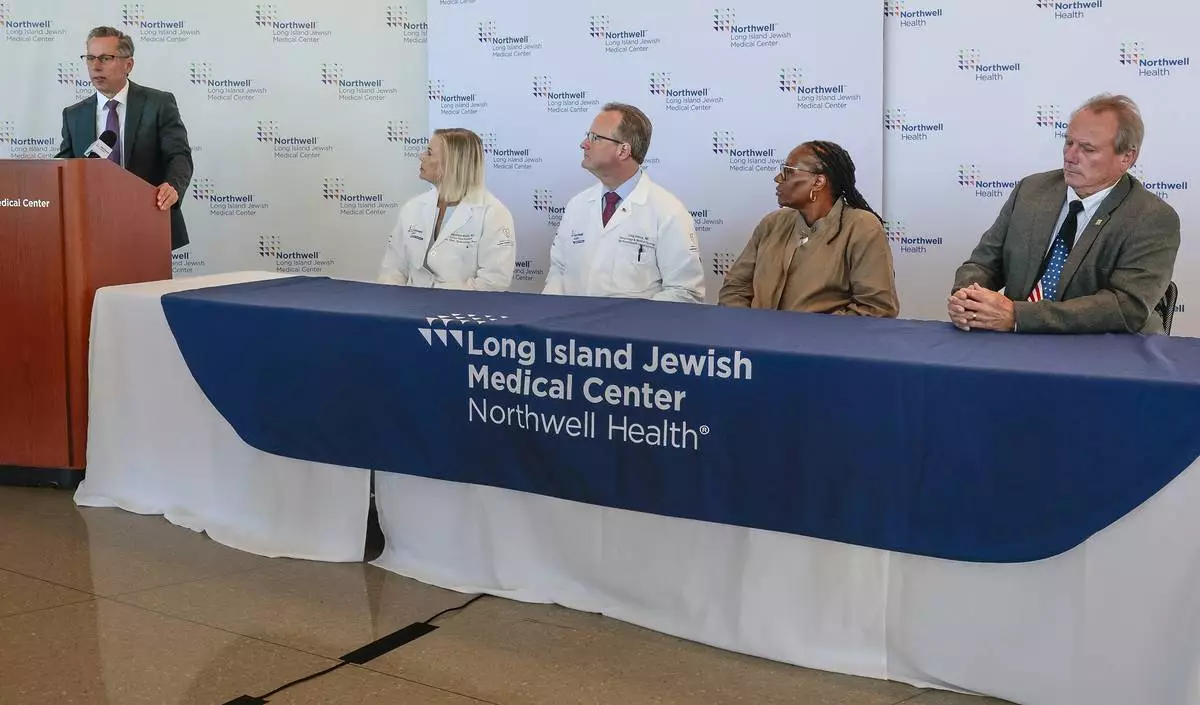
Northwell Health CEO John D’Angelo along with Drs. Jacqueline Moline and Craig Devoe discuss the rise in 9/11-related cancers with cancer survivors Felicia Ivey-Toure and Frank Kotnik. Credit Northwell Health