WASHINGTON (AP) — It's one thing to issue a Declaration of Independence. It's quite another to launch a grand experiment in representative democracy.
Congress isn’t quite yet celebrating its 250th anniversary — the House and Senate as they are recognized today first convened in 1789 — but from the start it has provided an enduring, if imperfect, forum in the country’s pursuit of a more perfect union.
From drafting the Bill of Rights that enshrines for many what it means to be an American — freedom of speech, the right to bear arms — to passing modern-day legislation on taxes, Civil Rights, war and peace, the work of Congress has shaped the nation.
“Congress needs to be the place where we figure out how to live with each other,” said Philip Wallach, a scholar at the American Enterprise Institute in Washington, and author of the book “Why Congress.”
It’s a messy, often broken process. Most of the bills introduced never become laws. Those that do are often challenged anew.
In recent years, Congress has allowed its foundational powers to erode, shrinking when confronted with a powerful executive in President Donald Trump.
Yet as the branch of government closest to the people, Congress holds a unique spot in the system of checks and balances — one that is revived every two years as voters choose their representatives in the midterm elections, including this fall.
Here are five measures that shaped — and are still shaping — America's pursuit of a more perfect union.
The new Congress, established on the revolutionaries' battle cry of no taxation without representation, also needed to pay the bills.
Lawmakers debated how to raise revenues over the years — at times relying heavily on tariffs, then moving briefly toward taxation to handle Civil War debt. But it wasn’t until the 20th century that Congress sought ratification of a constitutional amendment to stand up the modern income tax.
First set at 1%, income taxes now account for about half of all U.S. revenues — "the workhorse of the U.S. tax system,” said Daniel Bunn, president of the nonpartisan Tax Foundation think tank.
But the tax debate is far from finished. Congress approved a sweeping tax cuts package last year that the president signed into law, while Trump himself has sought a new tariffs regime, some blocked by the courts.
It was a Saturday in 1867 when Congress passed one of the early Reconstruction Acts in the aftermath of the Civil War, overcoming a lengthy veto message from then-President Andrew Johnson. The era became a stress test of the system of checks and balances as Congress and the White House sparred — and ultimately led to the president's impeachment.
"Johnson regularly vetoed congressional Reconstruction legislation," according to the House website. “In response Congress overrode his vetoes more than any other president.”
Nearly a century later, Congress passed the Civil Rights Act of 1964 and the Voting Rights Act of 1965, seeking to end the persistent discrimination and racial violence against Black Americans.
More recently, those once-settled issues are being revisited again. The Supreme Court recently struck down part of the Voting Rights Act, unleashing a wave of redistricting battles that threaten to eliminate Black-majority congressional districts particularly in the Southern states.
And as the Trump administration seeks to decrease the number of immigrants in the U.S., it appealed to the Supreme Court to strike down the Reconstruction Era's 14th Amendment, which guarantees birthright citizenship. While the Supreme Court rejected Trump's proposed limits, his court battles continue.
In signing the Social Security bill into law, President Franklin D. Roosevelt said that even if the House and Senate had done nothing else, that session of Congress "would be regarded as historic for all time.” Roosevelt said the Social Security legislation was a “patriotic” bill that would provide seniors some measure of income protection “against poverty-ridden old age.”
Thirty years later, Congress added the Social Security amendments, which stood up the Medicare and Medicaid healthcare programs for seniors and lower-income people. And by 2010, Congress approved the Affordable Care Act, expanding Medicaid and other health care options.
Some 75 million people now receive Social Security. Two in five Americans use the Medicare and Medicaid health care programs. And more than 20 million are enrolled in the ACA, otherwise known as Obamacare.
Republicans in Congress tried to repeal and replace Obamacare during Trump's first term, but those efforts collapsed. More recently, Trump's tax cuts bill required certain adults who use Medicaid to also work, volunteer or go to school, a shift that is expected to save billions of dollars as millions of people are thrown off the program.
Meanwhile, congressional Democrats shut down the government last fall as they tried, and failed, to preserve expiring Obamacare subsidies that help some people purchase health insurance.
While Congress has the authority to declare war, the president as the commander-in-chief executes it. That divide inherent in the Constitution has been called a “’twilight zone’ of concurrent authority,” according to a Congressional Research Service report, referring to an earlier Supreme Court opinion.
During the Vietnam War, Congress had had enough. In 1973, Congress passed the War Powers Act, which requires, among other provisions, that the president seek congressional approval of military action within 60 days of the start of a conflict.
President Richard Nixon promptly vetoed it.
“Saving our Nation from autocracy demands, at the minimum, that Congress begin the process of becoming again a truly coequal branch of Government,” said Republican Sen. Mark Hatfield of Oregon during the debate to override Nixon's veto.
This year, Congress has voted multiple times on war powers resolutions that would stop Trump’s military actions in Iran and Venezuela, and prevent attacks on Cuba. None has made it to the president's desk.
Congress sets many of its own rules and, in the process, sets a tone for the nation.
The House first expelled members in 1861, ousting three representatives who “took up arms for the Confederacy during the Civil War,” according to House history. The Senate notably censured anti-communist crusader, Republican Sen. Joseph McCarthy of Wisconsin.
Once rare, censures and expulsions have become more common, particularly in the House.
In 2023, the House voted to expel Republican Rep. George Santos of New York after Ethics Committee investigators said they found “overwhelming evidence” that he had exploited his public position for his own profit.
More recently, Democratic Rep. Eric Swalwell of California and Republican Rep. Tony Gonzales of Texas resigned their seats rather than face possible reprisals over allegations about their personal conduct.
Lisa Mascaro has been congressional correspondent for The Associated Press since 2018.
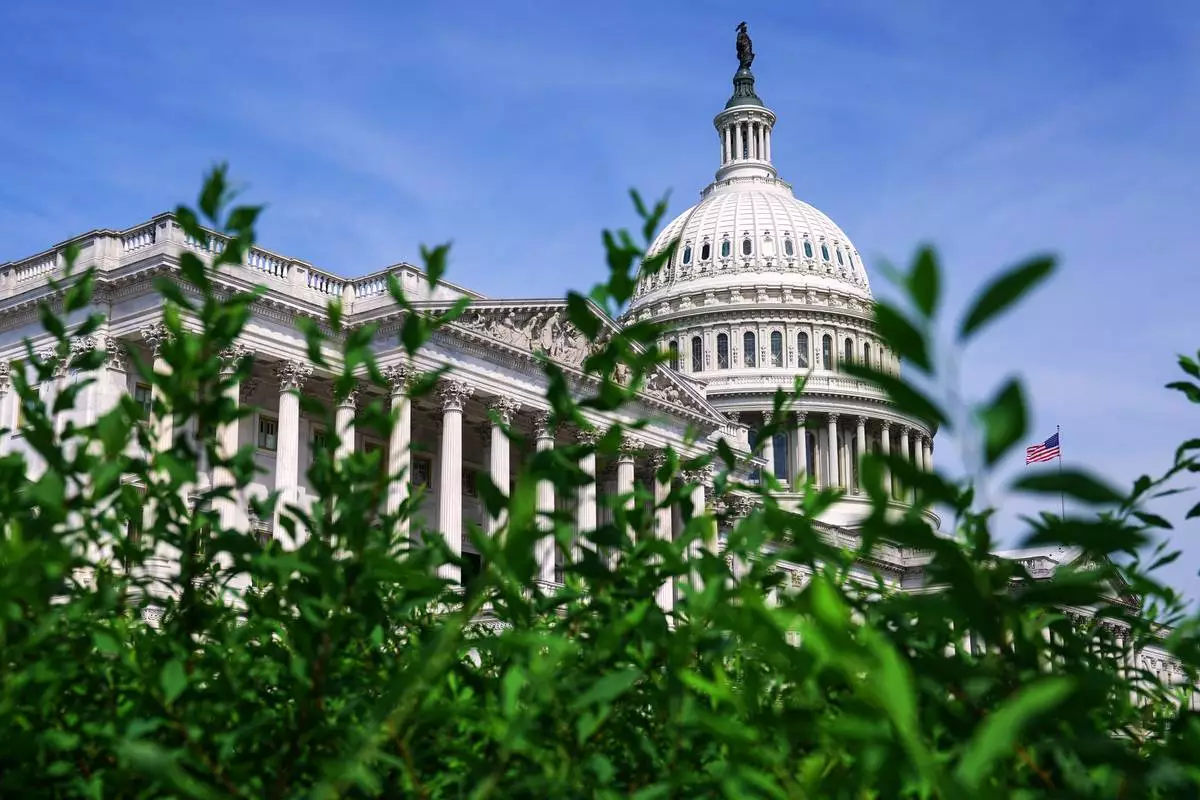
The U.S Capitol photographed, Wednesday, Sept. 2, 2026, in Washington. (AP Photo/Mariam Zuhaib)
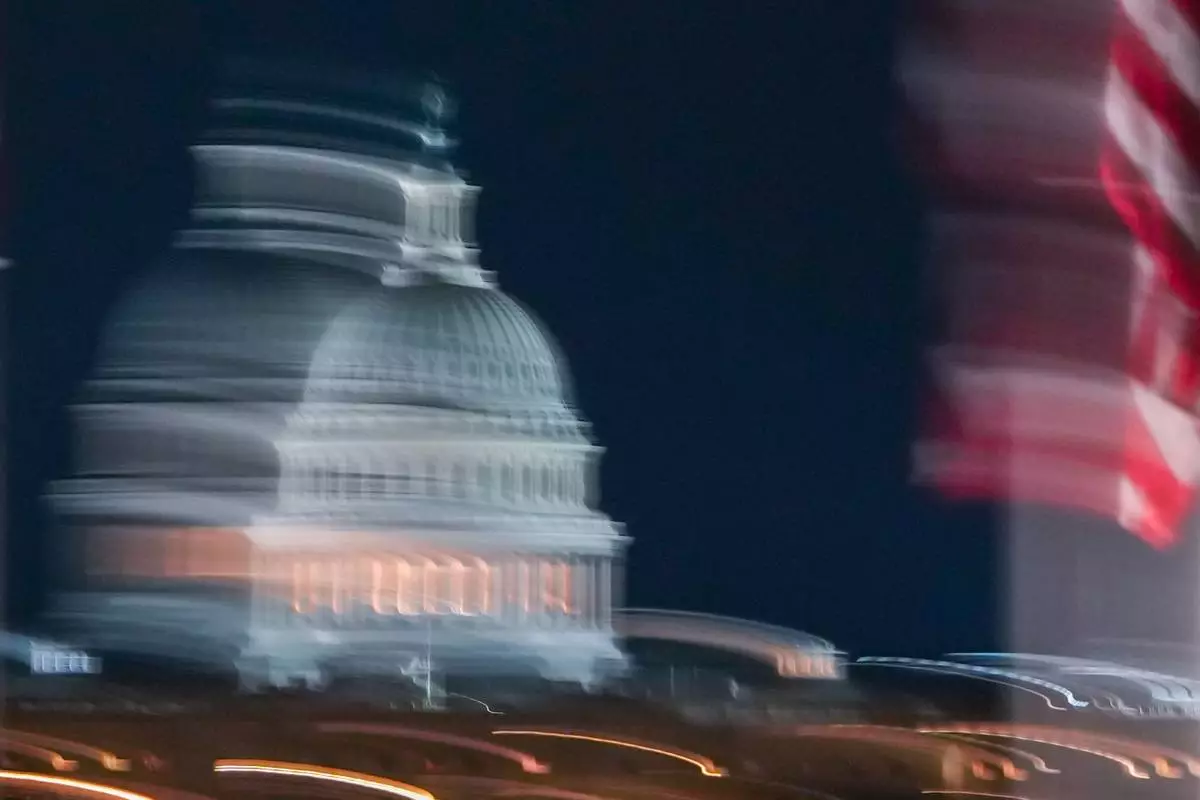
The U.S. Capitol is seen, Friday, Aug. 28, 2026, in Washington. (AP Photo/Julia Demaree Nikhinson)