Stocks on Wall Street lost ground again Wednesday as the price of crude oil climbed back above $100 a barrel amid further escalation in the U.S. war with Iran.
The S&P 500 index fell 0.5%. The Dow Jones Industrial Average dropped 0.8%, and the Nasdaq composite gave up 0.6%. The indexes are each on track for a weekly loss.
Click to Gallery
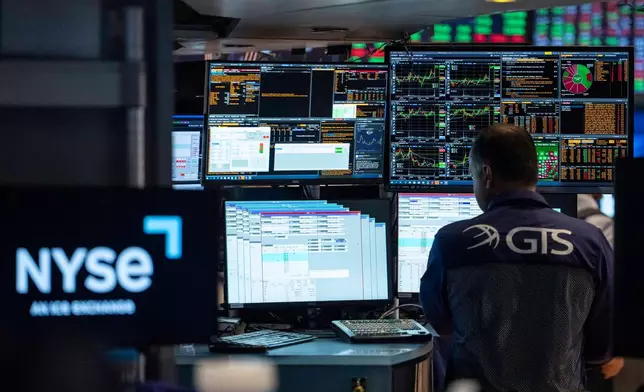
Specialists Dilip Patel works on the floor of the New York Stock Exchange, Thursday, Aug. 27, 2026, in New York. (AP Photo/Yuki Iwamura)
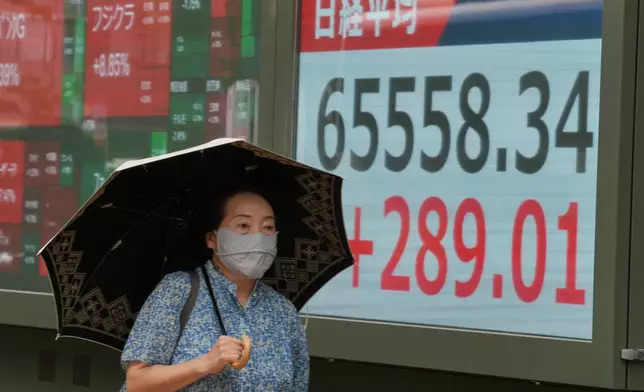
A person walks in front of an electronic stock board showing Japan's Nikkei index at a securities firm Wednesday, Sept. 9, 2026, in Tokyo. (AP Photo/Eugene Hoshiko)
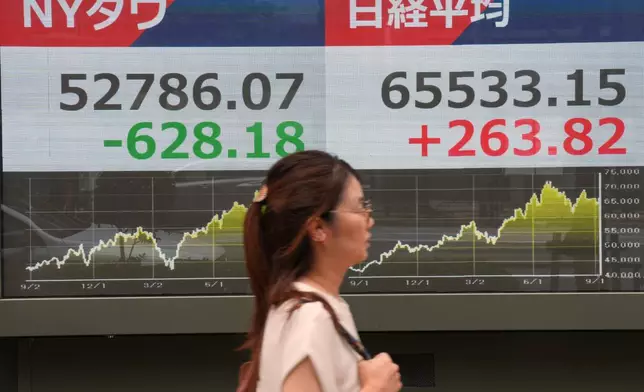
A person walks in front of an electronic stock board showing Japan's Nikkei and New York Dow indexes at a securities firm Wednesday, Sept. 9, 2026, in Tokyo. (AP Photo/Eugene Hoshiko)
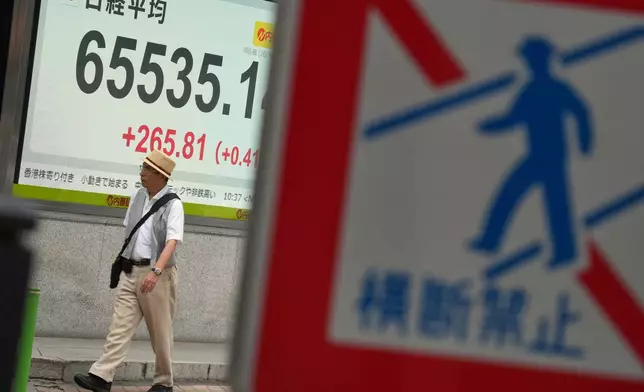
A person walks in front of an electronic stock board showing Japan's Nikkei index at a securities firm Wednesday, Sept. 9, 2026, in Tokyo. (AP Photo/Eugene Hoshiko)
The losses were broad, with retailers among the companies that pulled the market lower. Amazon fell 1.8%, Starbucks lost 1.9% and Home Depot dropped 1%. Every sector within the benchmark S&P 500 declined except for energy, which rose as oil companies notched gains. Exxon Mobil rose 2.2% and Chevron added 1.9%.
Oil prices drove much of the action on Wall Street. The U.S. destroyed five Iranian tankers on Tuesday in a series of attacks between the two nations. The conflict that began in February has essentially shut down traffic in the Strait of Hormuz, where a fifth of the world’s oil supply passed before the war began.
The price of Brent crude, the international standard, rose 3.4% to settle at $101.21 a barrel. It marks the first time the price surpassed $100 a barrel since July.
The Iran war is likely going to keep oil prices elevated at least through the U.S. midterm elections in November, President Donald Trump said Wednesday.
The jump in oil prices over the course of the war has fueled already high inflation. Gasoline prices in the U.S. are up about 32% from a year ago to $4.22 per gallon. Higher fuel prices cut into household budgets directly when it comes to the cost of driving, but they also indirectly raise prices for goods because of higher shipping costs.
The price of diesel, which can have an outsized impact on consumers because it is used in shipping and production, hit an all-time high Friday and has continued to climb since. The average price for a gallon reached $5.94 overnight and is now 9 cents higher than it was Friday.
Inflation was already stubbornly high when the U.S. started its war against Iran because of the ongoing U.S. trade war with much of the world. That trade war is also heating up, especially between the U.S. and its close ally and trade partner Canada.
Wall Street will get more updates this week on inflation, starting with a look at prices at the wholesale level on Thursday with the release of the Producer Price Index for August. It measures prices businesses pay for goods before they reach customers. That report will be followed up Friday with the release of the Consumer Price Index, or CPI, for August, which shows the more direct price impact for households.
The latest reports are expected to show that the rate of inflation remains above 3%. That has been an issue for the Federal Reserve, which is aiming to hold inflation at a target rate of 2%. The central bank has been holding rates steady, but Wall Street is leaning toward a 62% chance that it will raise its benchmark interest rate at its meeting next week, according to data from CME Group.
Higher interest rates make borrowing more expensive. The goal of raising interest rates is to slow the economy and cool inflation.
Rising Treasury yields in the bond market were also weighing down stocks on Wall Street Wednesday.
The U.S. Treasury Department on Wednesday said it would buy back up to $6 billion in long-term debt. That follows an announcement in August previewing plans for an unusually large buyback in an effort to contain rising yields, which make it more expensive for U.S. companies to borrow money and also weigh down other investments, such as stocks.
Bond yields had been holding steady prior to the announcement, but gained ground shortly after.
“The simplest version here is that market interventions have a long history of not working very well,” said Guy LeBas, chief fixed income strategist at Janney Montgomery Scott.
The yield on the 10-year Treasury, which tends to impact mortgage rates, rose to 4.85% — its highest point since late October of 2023 — before easing to 4.84% from 4.80% late Tuesday. The yield on the 2-year Treasury, which tends to track expectations for Fed moves on interest rates, rose to 4.43% from 4.39% late Tuesday.
Bond yields have an inverse relationship to prices. Yields rise as bond prices fall. Rising yields signal that investors are demanding a higher return from Treasurys.
Elsewhere on Wall Street, shares of Meta Platforms rose 6.6% as the parent company of Instagram and Facebook launched a personal artificial intelligence agent, Muse, for people 18 and over who are looking for help with day-to-day tasks like schedules and shopping.
All told, the S&P 500 fell 37.16 points to 7,636.36. The Dow dropped 405.41 points to 52,380.66, and the Nasdaq gave up 168.07 to close at 26,253.34.
Markets in Europe fell while markets in Asia closed mixed.
AP Business Writers Yuri Kageyama and Michelle Chapman contributed to this report.
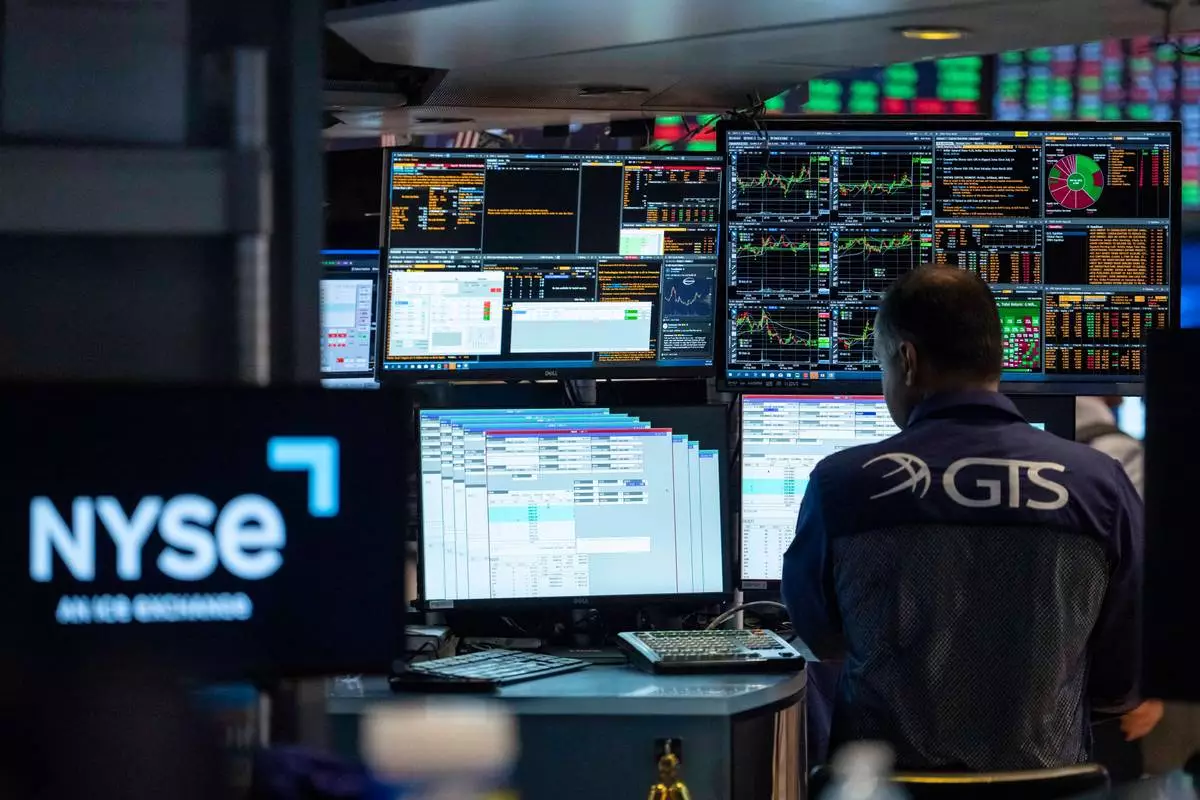
Specialists Dilip Patel works on the floor of the New York Stock Exchange, Thursday, Aug. 27, 2026, in New York. (AP Photo/Yuki Iwamura)
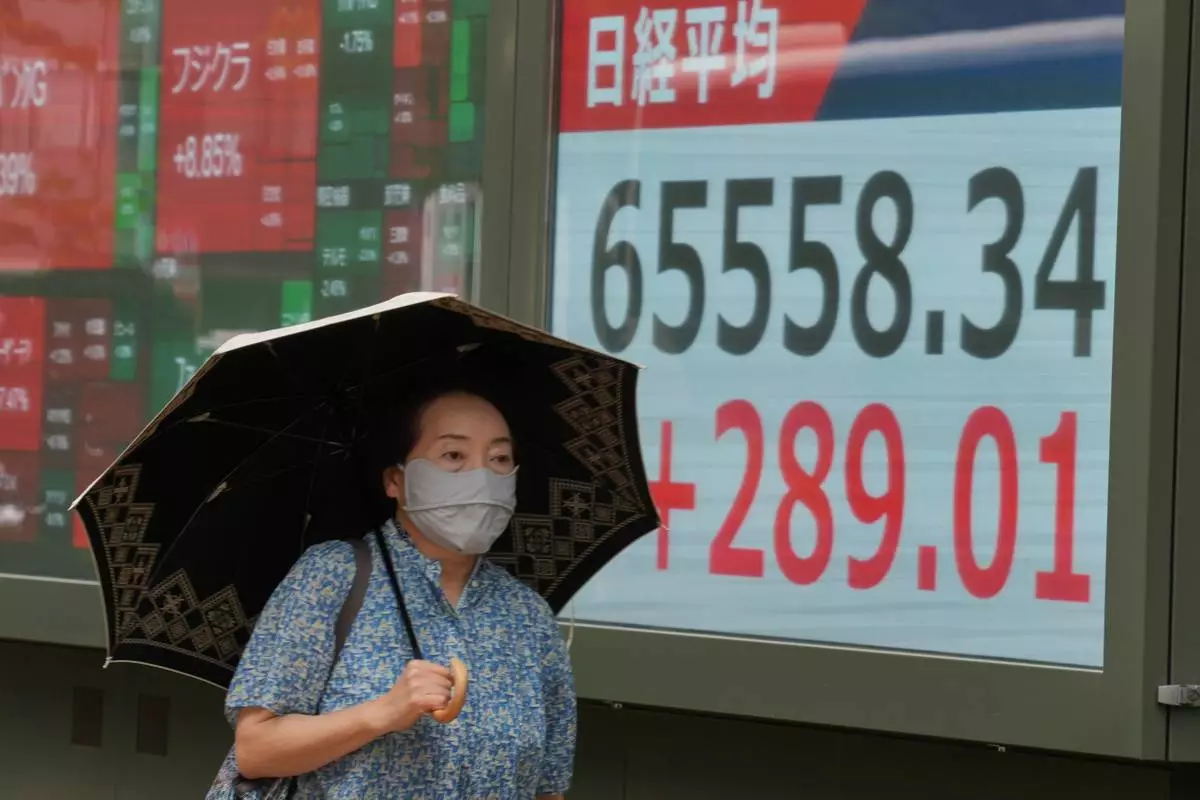
A person walks in front of an electronic stock board showing Japan's Nikkei index at a securities firm Wednesday, Sept. 9, 2026, in Tokyo. (AP Photo/Eugene Hoshiko)
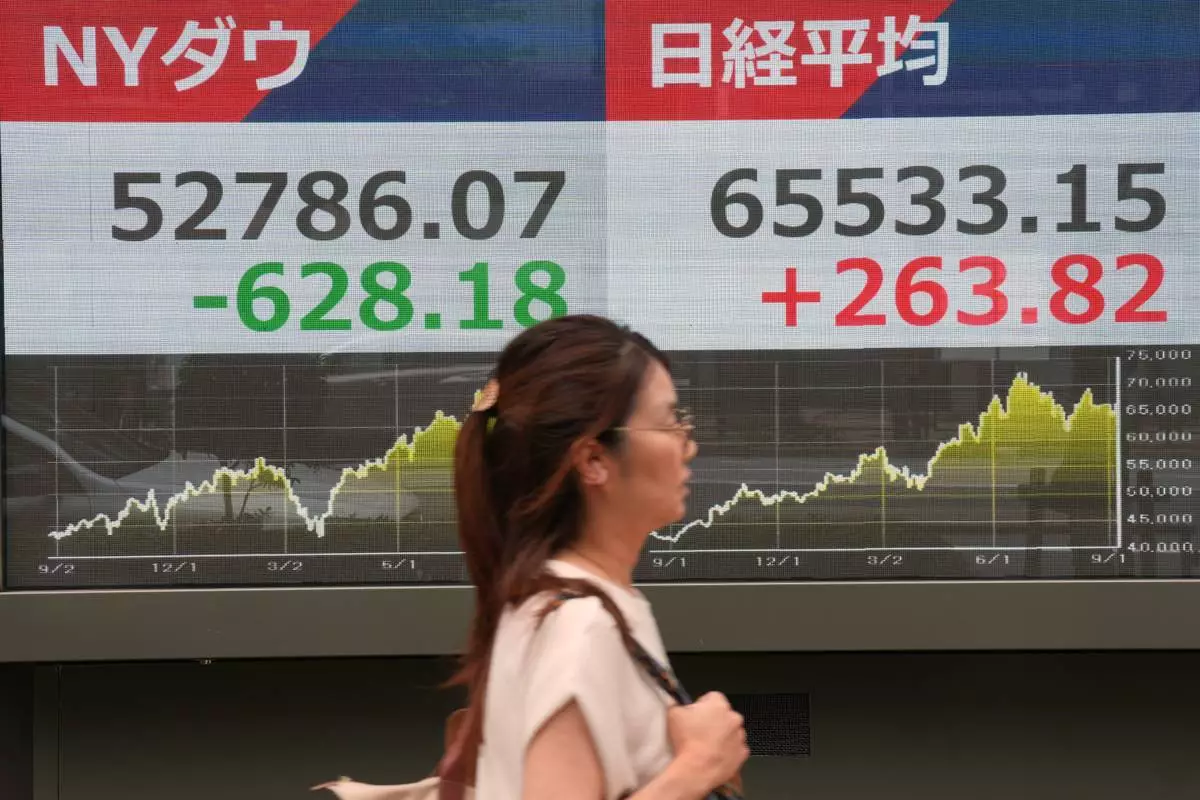
A person walks in front of an electronic stock board showing Japan's Nikkei and New York Dow indexes at a securities firm Wednesday, Sept. 9, 2026, in Tokyo. (AP Photo/Eugene Hoshiko)
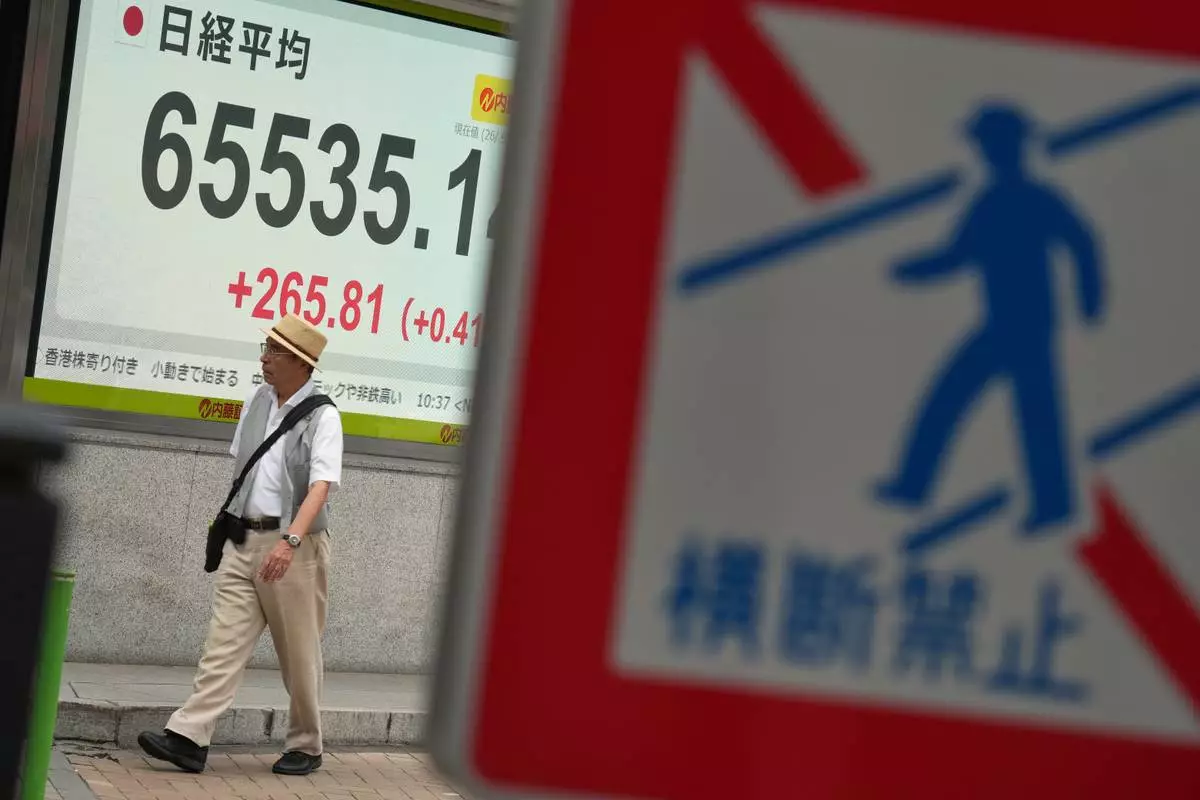
A person walks in front of an electronic stock board showing Japan's Nikkei index at a securities firm Wednesday, Sept. 9, 2026, in Tokyo. (AP Photo/Eugene Hoshiko)
ATLANTA (AP) — He's hardly the first billionaire to promise working-class voters he'll fight for them in public office. Rick Jackson, the Republican candidate for Georgia governor, has even compared himself to the real estate mogul who reached the Oval Office.
But Jackson’s path differs from Donald Trump’s, and the 72-year-old healthcare magnate and investor brings a vastly different persona to his first campaign. Unlike Trump, who was born to wealth, Jackson spent his early years bouncing through foster homes before launching his first company as a young man.
Now, he wants to leverage both his similarities and contrasts with the president, a challenge he's tackling with buckets of his own campaign cash and a personal story that anchors his appeal to voters.
“I have lived in poverty,” Jackson says. “When you have not eaten, you never forget that, and you don’t forget the people that are struggling.”
Democratic nominee Keisha Lance Bottoms, a former Atlanta mayor, disputes Jackson’s altruistic pitch, setting up the Nov. 3 election as a test of whether an alternate, softer version of conservative billionaire politics can complement or even counter Trump’s pugilistic populism in a key swing state.
Jackson joined Trump at a rally Saturday in Perry, marking his second appearance with the president in the closing stretch of the campaign.
“He's an amazing, really an amazing man with an incredible story," Trump said as he introduced Jackson to the crowd. Jackson, for his part, thanked Trump for a new Audi plant set to be built in Georgia, and told the crowd, “I don't have anything to prove, I really don't. But I have a lot to give."
“My father left me at nine months old. My mother was a sixth-grade educated waitress with a severe alcohol problem,” Jackson said in the only debate of their general election campaign. “I had seven stepfathers before I was 12. I lived in the projects, went to 13 different schools, and lived in five different foster homes.”
He left college to start a business at 21. That led to Jackson Healthcare, a behemoth company that provides contract nurses and other workers to hospitals and health systems, including public entities that have helped fuel Jackson’s fortunes with taxpayer money.
At events with supporters, Jackson gets more personal.
“I have, because of my background, severe abandonment issues,” he told hundreds of voters in Cleveland, a conservative enclave in the north Georgia mountains. He turns that acknowledgment into a promise: “Let me tell you one thing: I will never abandon you.”
Rags-to-riches themes are not uncommon in politics, and it’s yielded Jackson’s campaign motto: “From foster care to billionaire.” But the scale is eye-popping, illuminated by the nearly $200 million Jackson has spent personally on the campaign. That puts him among the largest self-funding candidates in the history of American elections.
But on that score, too, Jackson tries to soften the caricature of the billionaire executive.
“It’s not my money,” he said in a northern suburb of Atlanta. Jackson calls his fortune “God’s money” and says that “my job is to have kingdom impact” with it.
“The reason I have spent so much money to do this,” he said, is to “help 11 million Georgians, to keep them from struggling.”
Jackson launched his bid as a relative unknown, though Capitol insiders knew him because of Jackson Healthcare, its lucrative state contracts and his lobbying interest in healthcare, business and tax policy.
The Republican primary field featured a trio of statewide elected officials, including Lt. Gov. Burt Jones, who won Trump’s endorsement in August 2025, before Jackson got in.
During the primary, Jackson embraced the president even though he wasn't Trump's choice. Jackson sometimes promised to “be like Trump, but with Southern tone.” He pledged to “deliver for Georgia the same type of business solutions that President Trump is bringing to our country.”
Largely aligning himself with Trump on immigration, Jackson promised to make Georgia a national leader in deportations.
“I don’t care if you’re Muslim or Mongolian, you don’t have the right to force your culture on our country,” he said in one ad. “Criminal illegals” who “commit sick, violent crimes” would “end up deported or departed,” he promised.
Soon after defeating Jones in a runoff, Jackson shelved the immigration ad, but not before using it as part of a spot featuring his grandchildren. “Granddad, why do you look so mean in these ads?” one asks after watching the “deported or departed” clip on her phone. The children and teenagers then tell their grandfather how he can “look cool” with a pickup truck, a dog and a hipper wardrobe.
“Let’s make Georgia better together,” the redressed Jackson concludes.
He has since circulated an ad with several young adults who benefited from the millions he spent helping foster children who age out of the Georgia system when they turn 18. “I am so proud of you,” he tells them as he chokes up.
As he softens his image, Jackson maintains traditional Republican positions, pledging to cut taxes, regulation and what he describes as waste. If he cannot halve the state income tax in four years, he promises not to seek a second term. He wants a balanced budget and full audits of state spending, without saying state law requires a balanced budget and audits of state agencies have long been standard practice.
He says he will expand healthcare without expanding Medicaid under the 2010 Affordable Care Act. Instead, he argues he can fund broader coverage through partnerships with private insurers. That would require Washington to grant permission and commit a level of financial support that no state has gotten without expanding the traditional Medicaid program.
Jackson says he can do all of that while increasing spending on teacher salaries and vocational education.
At the same time, he has toned down his Trump adulation, reflecting Georgia’s general election math and voters' frustrations with the Iran war and inflation.
In July, Jackson stood with Trump in Marietta and expressed his hope to “be this guy’s favorite governor.” When Trump returned to Dalton on Oct. 16, Jackson did not mention Trump at all in his own speech. Later, when the president called him on stage, Jackson praised Trump — for advocating for foster children. When Trump announced that he would be back to Georgia on Saturday, Jackson's campaign initially planned its own event in metro Atlanta before changing it up so Jackson would again be with the president.
Bottoms says Jackson is “trying to buy this election” so he can be a Trump stooge. And Democrats have seized on the way that Jackson has talked about the economy.
Discussing trade schools, Jackson said on the debate stage that “my plumber drives a Mercedes.” Discussing inflation and crime during his town hall-style debate with Bottoms, he suggested Atlantans felt unsafe “at the gas store” during her tenure. When a citizen in the debate audience asked Jackson about minimum wage and affording basic necessities, Jackson told her, “Hopefully, you’re not the one that is getting the $7.50 an hour.”
Minimum wage is $7.25. Bottoms has proposed doubling it. Jackson has not proposed any increase. “My focus is creating jobs,” he said. “I’ve been creating jobs my entire life.”
Jackson's balancing act is enough for Debbie Satterfield, a 72-year-old who came to a Jackson rally in White County wearing both a Trump shirt and a Jackson sticker.
“When I heard about his harsh upbringing, and to hear how far he had climbed, and starting from nothing,” she said. “It reminds me of my life starting with nothing. You can see his soul.”
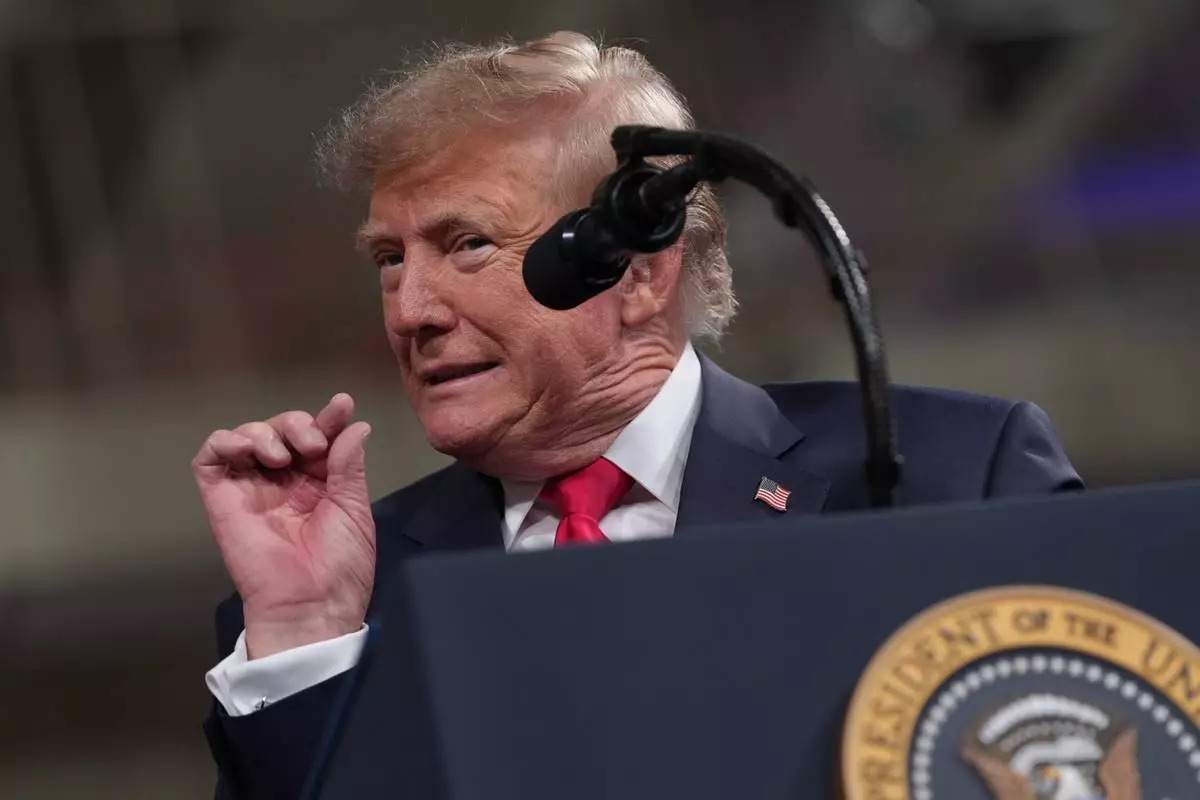
President Donald Trump speaks at a campaign rally at Guardian Centers of Georgia, Saturday, Oct. 24, 2026, in Perry, Ga. (AP Photo/Mark Schiefelbein)
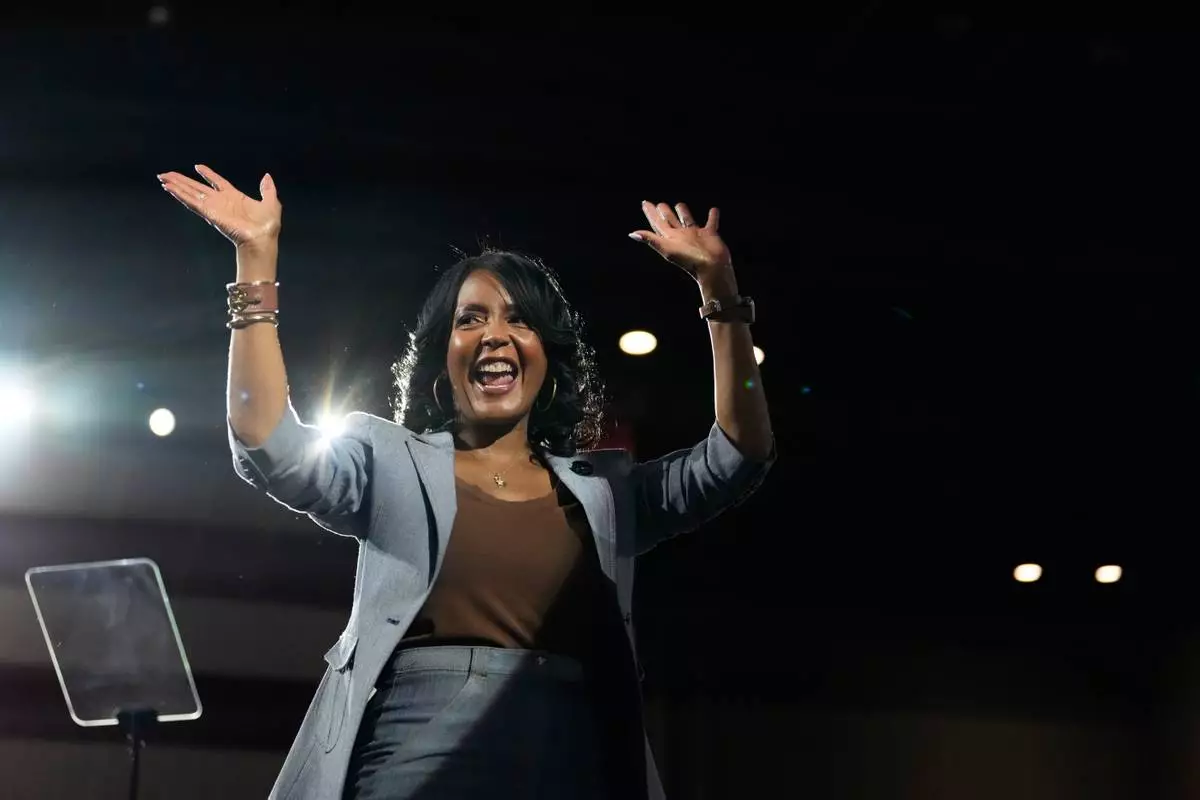
Democratic gubernatorial candidate Keisha Lance Bottoms speaks during a rally ahead of the Georgia Primary Election on Saturday, Oct. 17, 2026, in Atlanta. (AP Photo/Brynn Anderson)
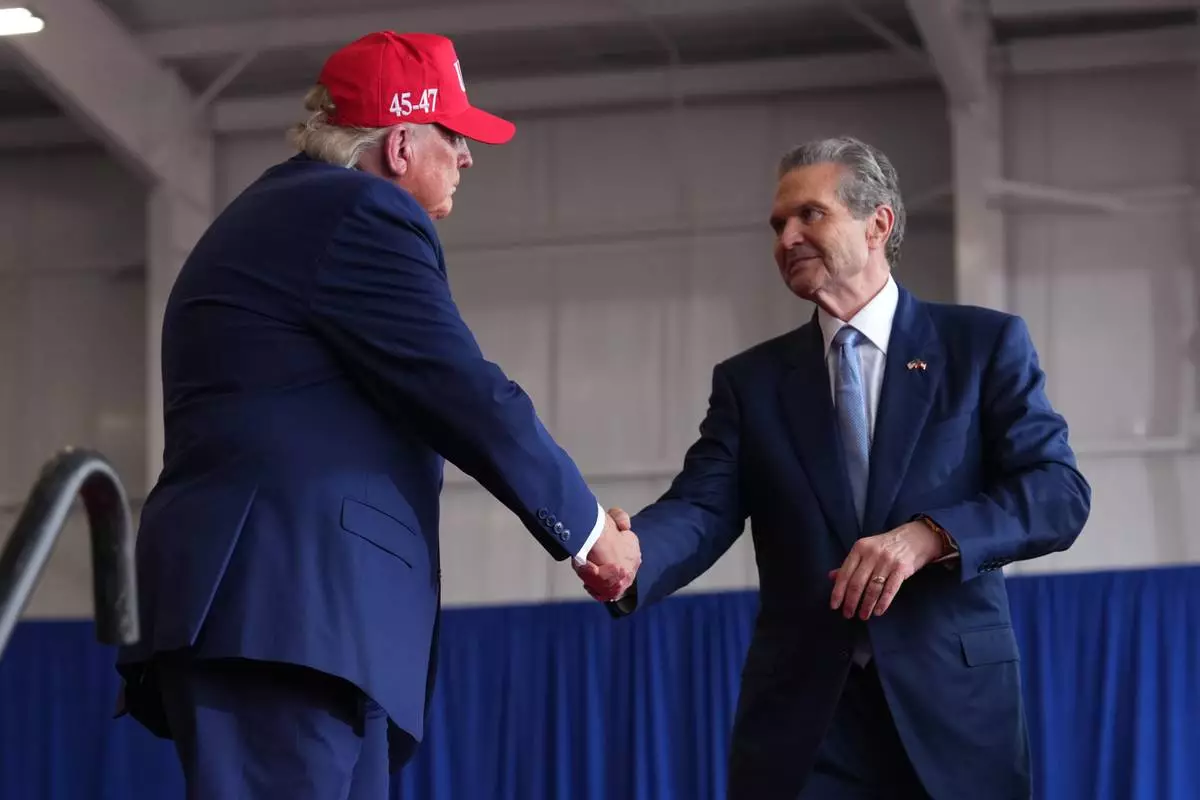
President Donald Trump shakes hands with Georgia gubernatorial candidate Rick Jackson at a campaign rally at Dalton Municipal Airport, Friday, Oct. 16, 2026, in Dalton Ga. (AP Photo/Mark Schiefelbein)
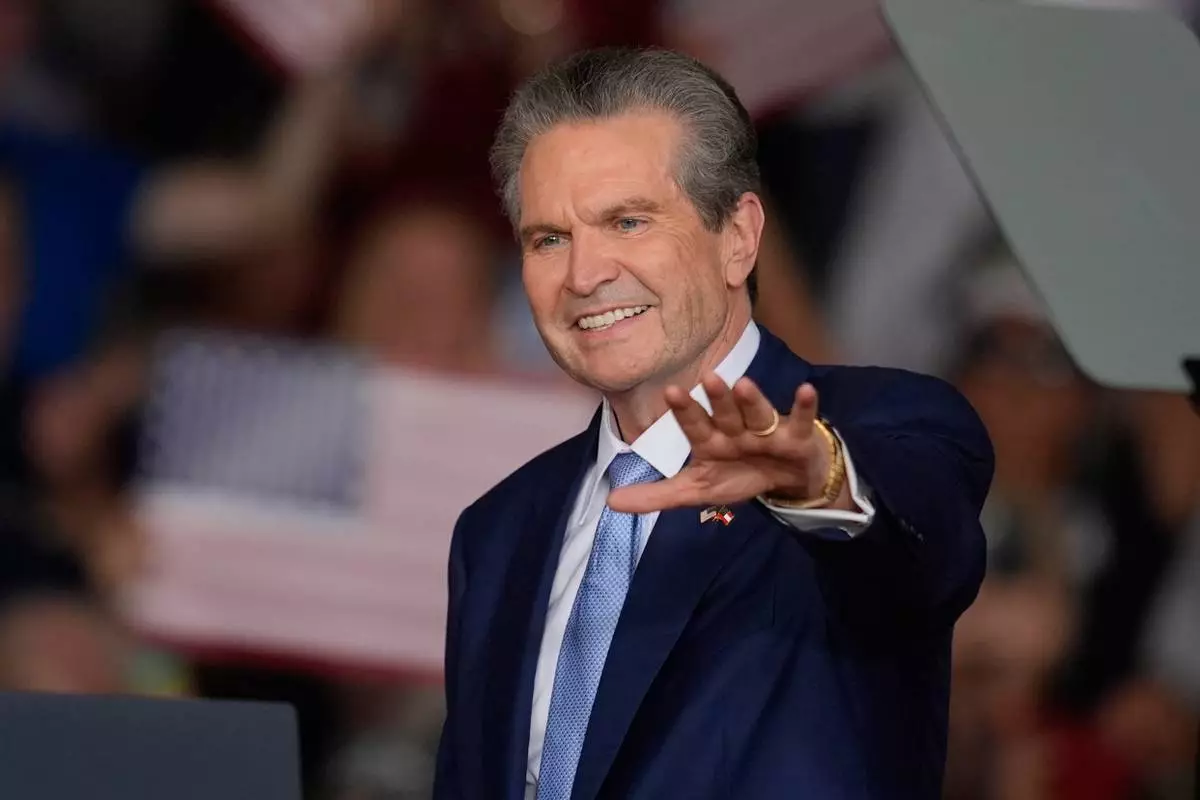
Georgia gubernatorial candidate Rick Jackson speaks before President Donald Trump arrives at a campaign rally at Dalton Municipal Airport, Friday, Oct. 16, 2026, in Dalton Ga. (AP Photo/Mike Stewart)