Speech by FS at 11th Belt and Road Summit Keynote Luncheon
Following is the speech by the Financial Secretary, Mr Paul Chan, at the 11th Belt and Road Summit Keynote Luncheon today (September 9):
Your Excellency Vice President Cosse (Vice President of Uruguay, Ms Carolina Cosse), Your Excellency Secretary-General Dr Kao (Secretary-General of ASEAN (Association of Southeast Asian Nations), Dr Kao Kim-hourn), Fred (Chairman of the Hong Kong Trade Development Council, Professor Frederick Ma), distinguished speakers and guests, ladies and gentlemen,
Good afternoon. It is a pleasure to join you at today's keynote luncheon.
Let me begin by welcoming the Secretary-General of ASEAN, Dr Kao Kim-hourn. Dr Kao and I have met on many occasions, and I had the pleasure of calling on him at the ASEAN Secretariat during my visit to Jakarta last year. He has long championed closer regional co-operation, particularly stronger economic, trade and people-to-people ties between China and ASEAN member states. Dr Kao, thank you for joining us in Hong Kong and sharing your insights today.
Over the past decade, ASEAN has consistently outpaced the global economy. According to the IMF (International Monetary Fund), ASEAN grew by 4.9 per cent last year and is forecast to expand by 4.5 per cent this year - more than a percentage point above the global average in both years. This is more than a cyclical upswing. It reflects a deeper structural shift.
Trade brings that shift into sharper focus. Two-way trade between China and ASEAN surpassed one trillion US dollars last year, and ASEAN has been China's largest trading partner for six consecutive years. But the more revealing change is in what is being traded. Intermediate goods - parts, components and other production inputs - now account for around two-thirds of the total. Among the fastest-growing categories are electronic components, new-energy equipment and smart devices.
Industrial chains are being reshaped across the region. ASEAN's role is evolving beyond production: it is becoming an increasingly important partner in technological advancement and industrial upgrading.
Against this backdrop, three powerful forces are reshaping the region's growth prospects and offering three distinct dividends.
The first is the demographic dividend. The ten ASEAN member states have a combined population of more than 680 million, almost half of whom are under 30. This provides a strong foundation for a substantial workforce over the next 10 to 15 years, together with a growing consumer base. At a time when many advanced economies face rapid population ageing, this is a considerable advantage.
The second is the market dividend. As incomes rise, ASEAN's middle class is expanding rapidly. By some projections, it could account for around two-thirds of its population by 2030. The Regional Comprehensive Economic Partnership and the signing of the China-ASEAN Free Trade Area 3.0 Upgrade Protocol mark important steps towards lower cross-border transaction costs and greater market integration. Together, they open up more room for growth and more opportunities for mutually beneficial development.
The third is the technology dividend - potentially the most transformative of all. Artificial intelligence is changing how economies grow and businesses compete. It does more than improve the efficiency of existing industries. It enables new business models and new forms of collaboration.
In manufacturing, AI-driven predictive maintenance and supply-chain optimisation are already helping factories across the region make better use of their equipment and resources. In services, AI-powered customer support, fraud detection for cross-border payments and traceability systems for agricultural produce are helping small and medium-sized enterprises reach regional markets. These are not distant possibilities. They are already taking shape in ASEAN member states.
The deeper significance of AI, however, lies not in isolated efficiency gains, but in how it changes the way we work together. When data can flow across borders, when models can be trained across jurisdictions, and when standards can be developed jointly, regional co-operation can extend beyond conventional trade and investment. It can encompass the joint development of technology and the sharing of knowledge - creating deeper partnerships in which our strengths reinforce one another.
These dividends will not materialise on their own. Turning these advantages into sustained growth requires three things: deep pools of patient capital; open, well-regulated testing grounds; and a strong talent base, supported by the willingness to give new technologies and industries time to mature.
First, capital.
The region needs a financing hub that connects global investors with its most innovative companies. Last year, Hong Kong ranked first globally for funds raised through IPOs (initial public offerings), while the number of listings from ASEAN and other Belt and Road economies continues to grow.
These companies come to Hong Kong for more than funding. They come to broaden their international shareholder base, strengthen their corporate governance and build their global profile. This, in turn, helps them attract talent and expand into larger markets.
Second, testing grounds.
The Guangdong-Hong Kong-Macao Greater Bay Area offers something few places can match: the ability to develop, test and validate products across different markets and regulatory environments within one closely connected region.
Here, almost everything a business needs is within a couple of hours' reach: frontier research, advanced manufacturing at scale, industries that complement those of ASEAN, commercial rules aligned with international best practices, and a consumer market of 88 million.
The Northern Metropolis, our top development priority, will deepen this collaboration, facilitating the flow of technology, talent and capital across the border and strengthening the connections between research, commercial application and production.
Third, talent - backed by patient capital.
Hong Kong is home to five of the world's top 100 universities. Together with our vibrant innovation ecosystem and international outlook, this helps us attract outstanding scientists, engineers and entrepreneurs from around the world.
This concentration of talent also draws long-term investors, who are increasingly choosing Hong Kong as a base from which to serve the wider region. Patient capital seeks proximity to promising projects, and, above all, to the people behind them. It is willing to give technologies and business models time to prove themselves, with an eye to their potential to scale.
In summary, ladies and gentlemen, by building on our respective strengths and working together, we can turn these assets, capital, testing grounds and talent into greater progress and shared prosperity across the region. That means mobilising finance to support industrial development, establishing common standards to make cross-border collaboration easier, and bringing technology, manufacturing and markets closer together so that innovation in one part of the region also creates opportunities in others.
Ladies and gentlemen, the transformation driven by artificial intelligence is only beginning. So too is the opportunity for deeper regional collaboration.
The choices we make today - how we share knowledge, align standards, develop talent and commit capital for the long term - will help determine not only how fast our region grows over the coming decade, but how widely the benefits are shared.
Hong Kong is ready to play its part: connecting innovators with global markets, mobilising patient capital, and providing a place where talent from across the region can thrive.
Let us turn this shared opportunity into tangible progress for businesses, communities and people throughout the region.
Thank you very much.
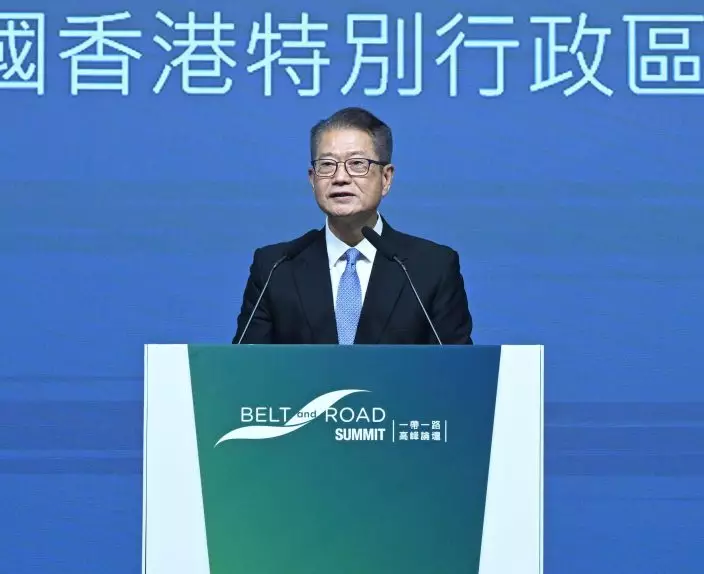
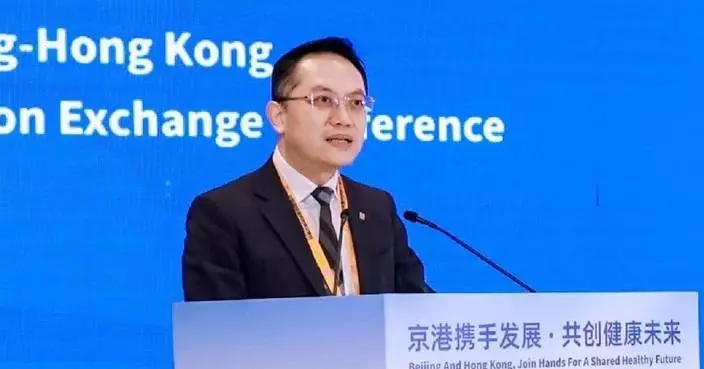
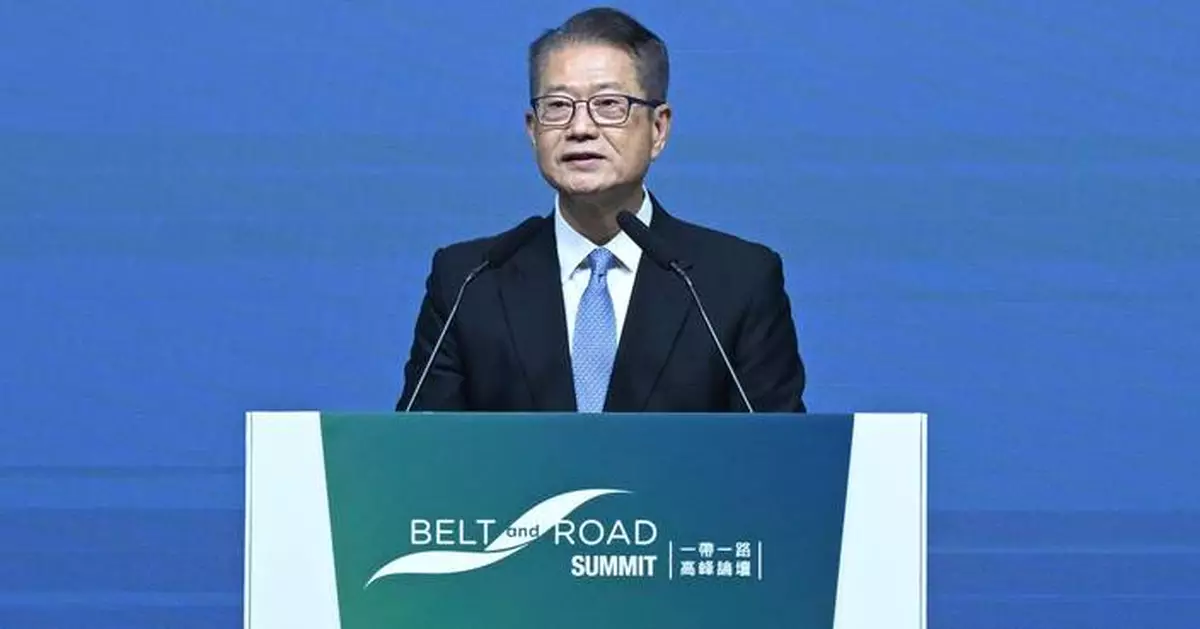
The Financial Secretary, Mr Paul Chan, speaks at the 11th Belt and Road Summit Keynote Luncheon today (September 9). Source: HKSAR Government Press Releases