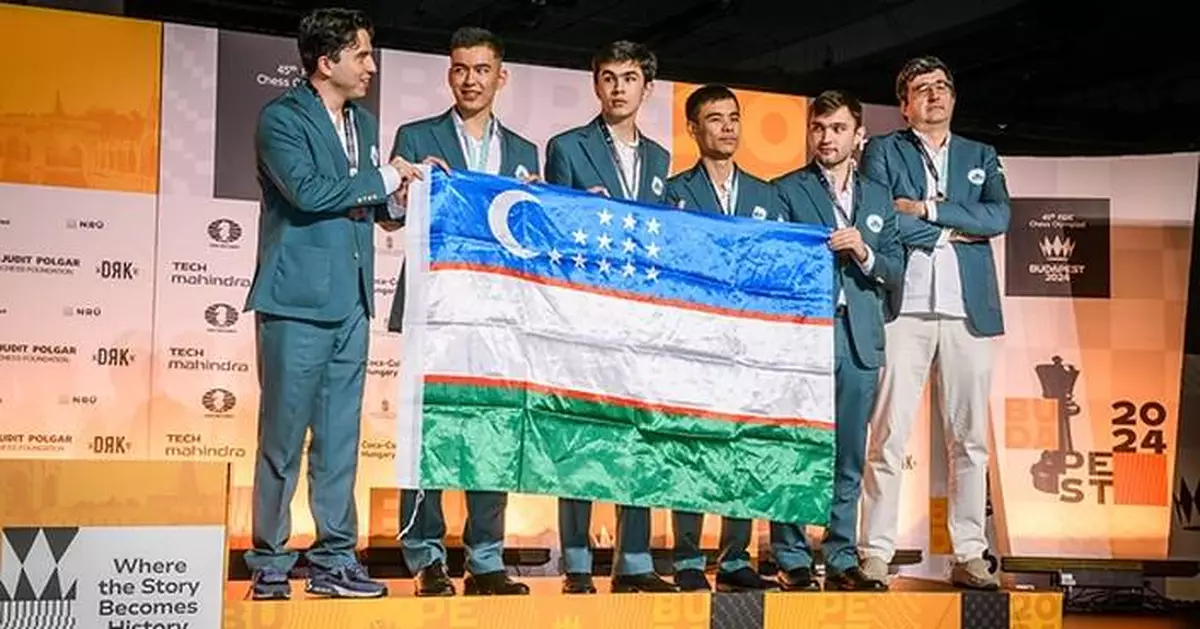
LONDON, Sept. 9, 2026 /PRNewswire/ -- On 15 September this year, the 46th World Chess Olympiad will start at the Silk Road international tourism centre in Samarkand. In the history of the prestigious competition, held since 1927, Central Asia will host the chess world's largest team tournament for the first time.
46th FIDE Chess Olympiad Teaser
A total of 398 teams will compete: 208 in the men's (Open) section and 190 in the women's section. This will break the record of 380 teams set in Budapest in 2024. The competition will consist of 11 rounds and run until 27 September.
From 10 to 18 September, Samarkand will also host the 3rd Chess Paralympiad. 41 teams will take part — the highest figure in its history.
Held in historic Samarkand, a city on the UNESCO World Heritage List and one of the key crossroads of the Great Silk Road, the competition combines sport with a platform for cultural diplomacy and international dialogue.
According to the teams' average rating, the United States is seeded first in the men's (Open) section. Reigning champion India is seeded second, and Uzbekistan third.
The Uzbekistan line-ups reflect the emergence of a new generation of Uzbek chess. In particular, Nilufarkhon Imomkuziyeva and Khumoyun Begmurodov, both aged 16, will make their Olympiad debut.
In the Uzbekistan men's team, Javokhir Sindarov (4th), Nodirbek Abdusattorov (7th), Nodirbek Yakubboev (39th) and Shamsiddin Vokhidov (61st) are among the world's 100 strongest players. That Sindarov and Abdusattorov are among the world's ten strongest clearly demonstrates the competitiveness of the Uzbek chess school.
Compared with 2025, the Uzbekistan men's team has risen 15 places in the FIDE ranking among 204 countries to sixth. The women's team has risen 17 places to 21st.
Alongside the Olympiad, the 97th FIDE Congress will take place in Samarkand from 19 to 28 September. It will also include the FIDE presidential election.
The Olympiad will be another important stage for Uzbekistan's Javokhir Sindarov. Eight weeks after the Olympiad ends, he will face reigning world champion Gukesh Dommaraju for the world chess crown. Both will be 20 at the start of the match, scheduled for Geneva from 22 November to 13 December.
Hosting the 46th World Chess Olympiad, the 3rd Chess Paralympiad and the FIDE Congress simultaneously demonstrates Uzbekistan's capacity to organise major international sporting and intellectual events at a high level.
Full details on the official tournament website: chessolympiad2026.fide.com
** This press release is distributed by PR Newswire through automated distribution system, for which the client assumes full responsibility. **
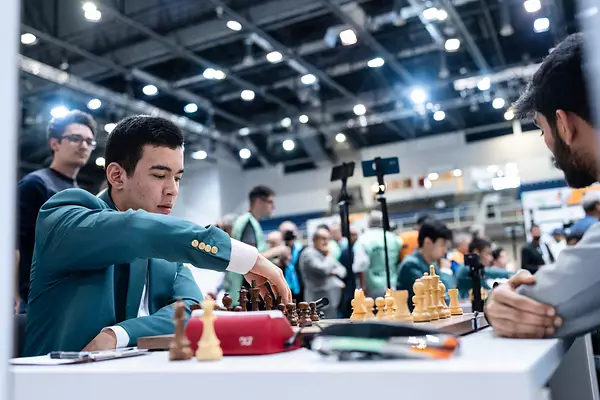
Samarkand to Host the Largest Chess Olympiad in History
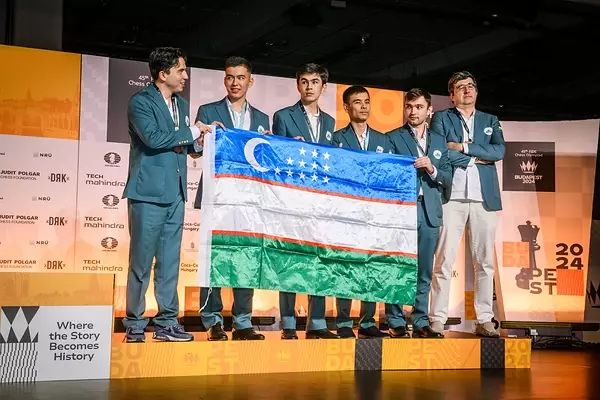
Samarkand to Host the Largest Chess Olympiad in History
The Hyper3D world-generation model expands AI 3D generation from individual objects to complete scenes, combining individual 3D assets, spatial relationships and estimated physical properties for robotics simulation, filmmaking, game development and spatial computing.
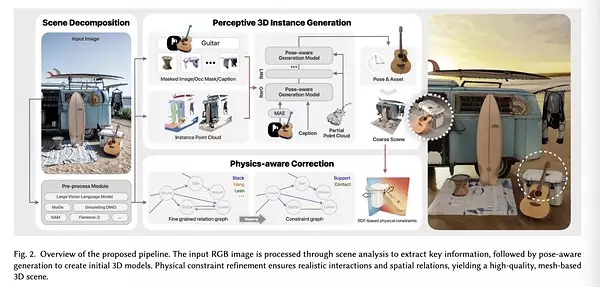
LOS ANGELES, Sept. 9, 2026 /PRNewswire/ -- Hyper3D, an internationally leading 3D generative AI company, recently announced the launch of WorldGen, a world-generation model that turns a single image into a 3D scene composed of independent, editable and interactive objects. The release expands Hyper3D's generative 3D capabilities from standalone assets to complete scenes that can be used in simulation and creative production workflows.
Users can upload a scene image and let WorldGen identify its main objects automatically, or draw bounding boxes to select specific objects for generation. The generated assets can be edited, replaced and moved individually, giving users control over individual assets and the overall scene layout.
Generating 3D Objects, Spatial Relationships and Physical Properties
WorldGen advances CAST (Component-Aligned 3D Scene Reconstruction from an RGB Image), research developed by the Hyper3D team that received a Best Paper Award at SIGGRAPH 2025, the leading international conference on computer graphics and interactive techniques. Following that research, the team continued developing the models, algorithms and engineering systems that underpin WorldGen's multistage generation process.
The system generates object geometry, inferring plausible shapes for portions hidden from view, and builds a graph of relationships such as contact, support and suspension. It estimates each object's position, scale and orientation in a shared 3D space, along with collision geometry, mass and friction.
WorldGen uses a hybrid 3D representation. Objects intended for editing and interaction are generated by Hyper3D's Rodin model as separate mesh assets with complete geometry and estimated physical properties. Background environments use 3D Gaussian splatting to preserve visual detail and immersion.
From photographs to robot-training environments
For robotics teams, WorldGen turns real-world photographs into simulation training environments for embodied AI. Building such environments has traditionally required manual scene modeling, which is slow and costly; WorldGen generates interactive, physically grounded scenes directly from images, giving robot training a faster way to produce diverse, task-ready simulation data.
WorldGen extends Hyper3D's NVIDIA Isaac Sim workflow from individual assets to entire scenes. Hyper3D, a member of NVIDIA Inception, previously introduced Sim-Ready capabilities for Rodin through NVIDIA Omniverse and Isaac Lab, along with an Isaac Sim plug-in.
In July, Hyper3D announced a joint robotics simulation workflow with D-Robotics and Motphys. In the workflow, WorldGen reconstructs interactive scenes from photographs, while Motphys and D-Robotics contribute physics simulation and computing infrastructure respectively, connecting scene generation, simulation, data collection and model training.
Teams can vary lighting, layouts, obstacles and object states to create different environments for the same task. The workflow spans scene reconstruction, simulation, training and policy validation, including deployment to physical robots for testing and iteration. The partners are continuing to refine the solution and expand its use in robot training.
A controllable 3D foundation for AI filmmaking
For filmmakers, WorldGen provides an editable 3D scene for planning compositions, camera angles and object placement. Creators can set camera angles, move objects, replace assets and adjust layouts, then use rendered views or camera sequences from the scene as visual references for AI video generation.
WorldGen can be used in workflows with video-generation models such as Seedance 2.5. WorldGen supplies stable spatial structure, camera relationships and controllable, untextured 3D scenes; the video model adds character performance, materials, lighting and visual style. The approach is designed to improve control and consistency across complex scenes and multiple shots, supporting advertising, concept films and previsualization. Projects using WorldGen are already in production, with releases to follow.
Bringing Generated 3D Assets into Creative Tools and Game Engines
3D assets generated in WorldGen can be brought into Blender, Unity, PlayCanvas, Unreal Engine and Unity's Tuanjie Engine for material editing, rigging, level design and performance optimization. Users can generate their starting scene assets in WorldGen, then continue working in familiar software and production pipelines.
In July, Hyper3D and Unity's Tuanjie Engine announced a collaboration to connect 3D generation with real-time game applications. WorldGen was also demonstrated at the Tuanjie Engine 2.0 launch.
Extending generated scenes into XR
WorldGen-generated scenes can also serve as the basis for experiences on XR devices such as Apple Vision Pro. Users can explore a reconstructed space from different positions and viewpoints and inspect objects up close. Further editing can support changes to layouts, object replacements and interactions with selected assets. Potential applications include interior design, immersive education, spatial presentations and XR content creation.
About Hyper3D
Hyper3D develops generative AI models and tools for creating 3D assets and scenes. Its core products include Hyper3D Rodin for individual 3D assets and WorldGen for scene-level generation, serving nearly ten million users worldwide. Hyper3D supports workflows across gaming, film production, industrial design, embodied AI and more.
Learn more about Hyper3D at https://hyper3d.ai/
** This press release is distributed by PR Newswire through automated distribution system, for which the client assumes full responsibility. **
Hyper3D Launches WorldGen to Turn Single Images into Editable 3D Scenes