Skip to Content Facebook Feature Image

Yemen's Houthi rebels say Saudi-backed forces launched airstrikes, and other key Mideast news

News

Yemen's Houthi rebels say Saudi-backed forces launched airstrikes, and other key Mideast news
News

News

Yemen's Houthi rebels say Saudi-backed forces launched airstrikes, and other key Mideast news

2026-09-09 17:48 Last Updated At:18:00

The Iran-backed Houthi rebels in Yemen said Wednesday that Saudi-backed forces had launched dozens of airstrikes overnight across four Yemeni provinces after rebel attacks on Saudi Arabia ignited fires at several oil facilities and wounded dozens of people.

Separately, Iranian state media said Iranian forces struck several tankers and two U.S. ships in retaliation for U.S. strikes on Iranian ships on Tuesday.

Elsewhere, an Israeli official said the British Consulate in Jerusalem would close within 30 days in response to the U.K.’s decision to ban trade with settlements in the Israeli-occupied West Bank.

Here’s a look at the latest news in the Middle East. Full coverage can be found here.

According to Iran's state media IRIB, the country's forces had struck eight oil tankers and two U.S. vessels in retaliation for U.S. strikes on five Iranian tankers on Tuesday, and that it had also targeted another 10 ships attempting to pass through the Strait of Hormuz.

The United Kingdom Maritime Trade Operations Center, which reports maritime incidents, said it had received a report “involving several merchant vessels” in the northern part of the Persian Gulf and the Gulf of Oman.

Reports indicated the ships “were subject to disabling fire as part of ongoing military activity in the region,” but the UKMTO could not confirm whether there were any casualties.

The U.S. Central Command said in a social media post on Tuesday that it destroyed five Iranian crude oil tankers after Tehran fired missiles at a U.S. warship twice over two days.

U.S. President Donald Trump has taken a dual economic and military approach as he struggles to bring an end to the war.

Houthi spokesman Nasruddin Amer said on X on Wednesday morning that Saudi-backed forces had launched 32 airstrikes overnight across Yemen’s provinces of Taiz, Hodeida, Jawf and Marib. There were no immediate reports of damage or injuries.

Saudi authorities did not immediately respond to a request for comment.

The strikes come a day after Houthi attacks on several oil facilities and utilities in Saudi Arabia wounded 73 people, in a major escalation in the renewed conflict between an important U.S. ally and the Iranian-backed rebels in Yemen. They follow weeks of intensifying clashes between the Houthis and Saudi-backed government forces in Yemen, which shattered a four-year truce in the country’s civil war.

The flare-up brings further instability to the region and threatens to squeeze shipping through the Bab el-Mandeb strait, a critical trade route that has helped cushion the blow from Iran’s chokehold on the Strait of Hormuz, the critical waterway between Iran and Oman through which a fifth of the world’s traded oil passed before the war.

The U.S. Embassy in Yemen said Tuesday that the country’s “legitimate” government, apparently referring to the internationally recognized government, has the right to defend its people and “end the Houthis’ ability to inflict terror.” The embassy also said Saudi Arabia has the right to defend itself.

“The Houthis started this conflict and must bear the consequences of their aggression,” the embassy posted on social media.

U.N. Special Envoy for Yemen Hans Grundberg said the missile and drone attacks by Yemen’s Houthi rebels on Saudi Arabia “threaten to widen the conflict, put civilians at grave risk and undermine efforts toward a political solution.”

Turkey’s Foreign Ministry, in a statement issued late Tuesday, called on the Iran-backed group “to put an end to their aggressive actions immediately.”

Last month, Turkey, Saudi Arabia and Pakistan signed a defense agreement that would treat an attack on one as an attack on all three, solidifying cooperation between them at a time of growing regional security concerns.

“We reiterate our support for the sovereignty and territorial integrity of Saudi Arabia,” the ministry said.

Israel plans to shutter the British Consulate in Jerusalem within a month, an Israeli official told The Associated Press on Wednesday. The consulate will be closed within 30 days, the official said, speaking on condition of anonymity to discuss information from closed-door meetings.

The clock started Tuesday because that’s when Israel’s government announced it would take a series of measures — from closing the consulate to banning certain British officials from the country — in response to the U.K.’s decision to ban trade with settlements in the Israeli-occupied West Bank. The British Consulate did not immediately respond to a request for comment.

-By Julia Frankel

Dozens of protesters rallied in South Korea ’s capital on Wednesday calling on the government to reject any U.S. demand to deploy military assets to the Strait of Hormuz as Seoul faces U.S. calls to help secure the crucial waterway.

Holding signs and letter cards that read “Oppose the deployment” and “Do not join a war of aggression,” the protesters chanted slogans accusing the Trump administration of pressuring Seoul to provide military assistance.

The government of South Korean President Lee Jae Myung has said it sent a team of military investigators to the Middle East to assess the security situation amid the U.S. and Israeli war against Iran, but has stressed that it has not made any decision on whether to deploy military assets to the region.

Trump has openly demanded that South Korea help secure safe passage through the Strait of Hormuz, telling a Fox News interview last week that Seoul was unwilling to help despite a U.S. military presence there to provide security.

Iran has warned of “serious consequences” if South Korea participates in U.S. operations around the waterway.

People march near the U.S. Embassy during a rally to oppose the possible deployment of South Korean troops to the Strait of Hormuz and rejecting a U.S. demand for the deployment, in Seoul, South Korea, Wednesday, Sept. 9, 2026. The letters read, ''Oppose troop deployment.'' (AP Photo/Lee Jin-man)
People march near the U.S. Embassy during a rally to oppose the possible deployment of South Korean troops to the Strait of Hormuz and rejecting a U.S. demand for the deployment, in Seoul, South Korea, Wednesday, Sept. 9, 2026. The letters read, ''Oppose troop deployment.'' (AP Photo/Lee Jin-man)

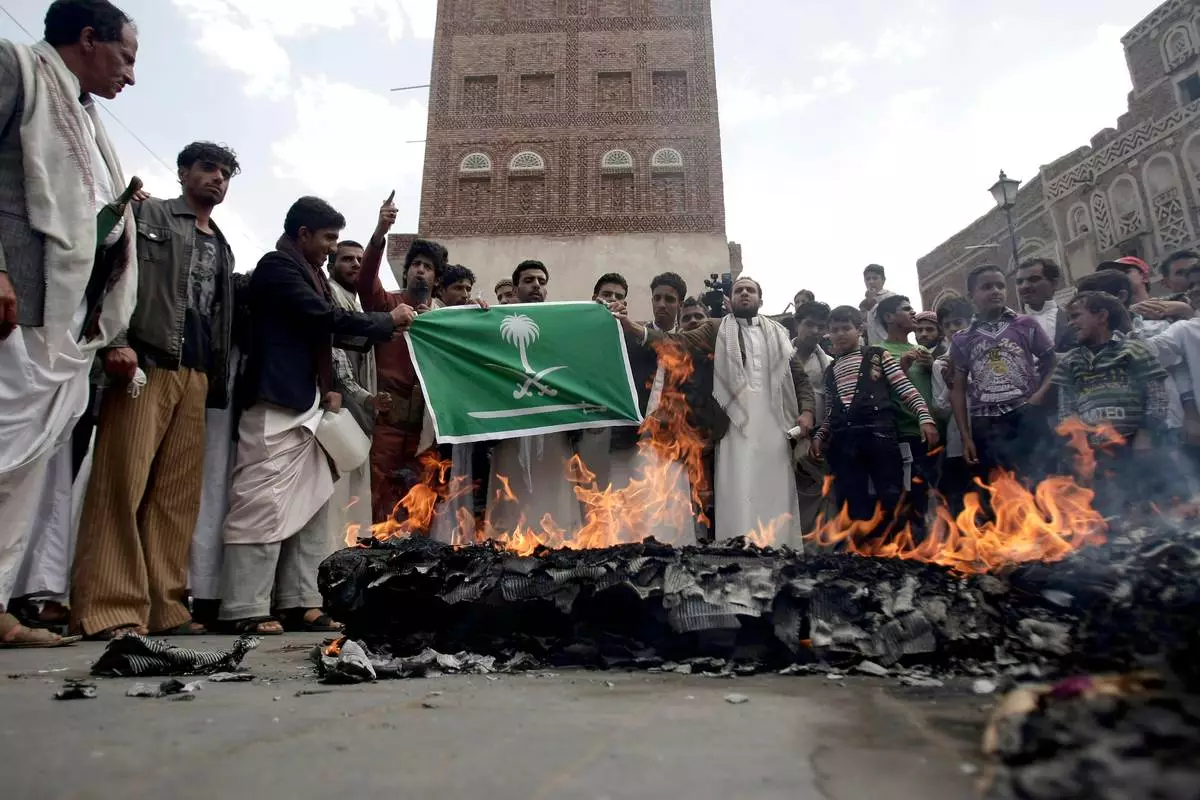
FILE - Members of the Yemeni al-Houthi Shiite rebel group burn an effigy of a U.S. aircraft and a Saudi flag during a demonstration against U.S. and Saudi interference in Yemen, after Friday prayer in Sanaa, Yemen, on April 12, 2013. (AP Photo/Hani Mohammed), File

FILE - Members of the Yemeni al-Houthi Shiite rebel group burn an effigy of a U.S. aircraft and a Saudi flag during a demonstration against U.S. and Saudi interference in Yemen, after Friday prayer in Sanaa, Yemen, on April 12, 2013. (AP Photo/Hani Mohammed), File
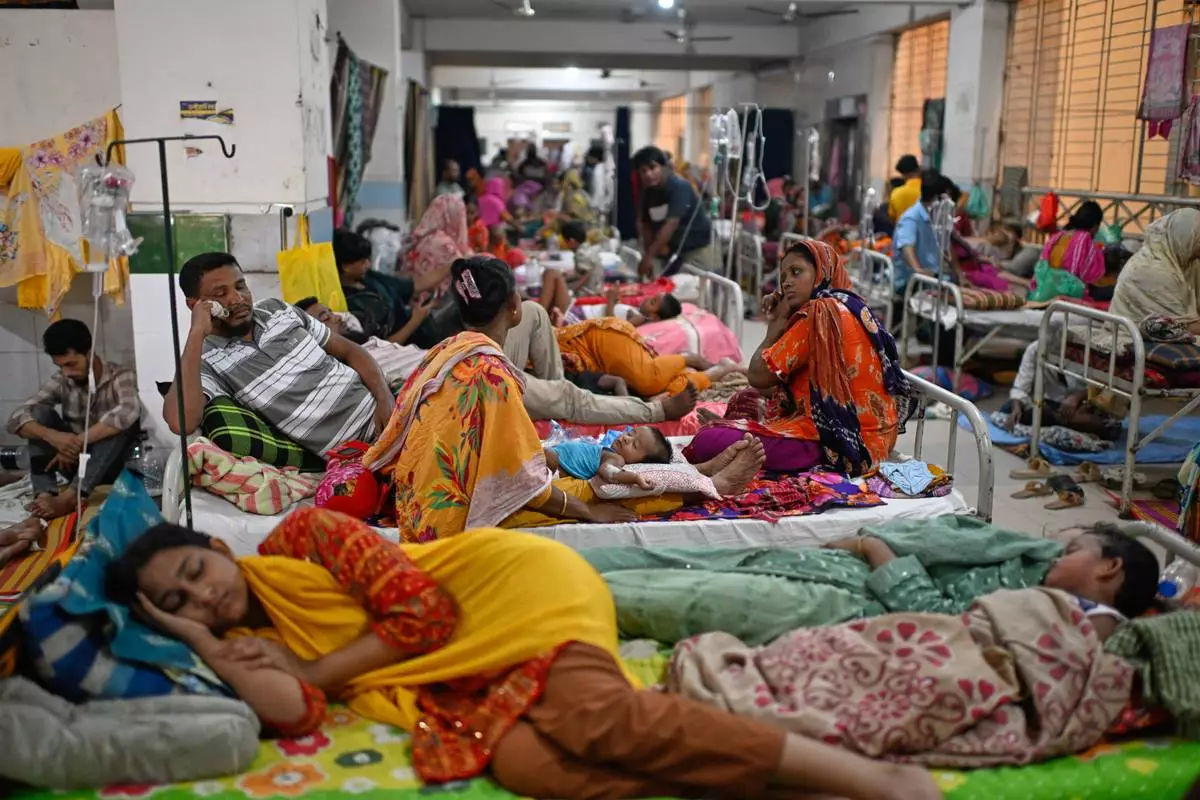
DHAKA, Bangladesh (AP) — Eight-month-old Rojatun Jannat Ramisa is struggling to breathe in a hospital in Bangladesh’s capital as her parents sit helplessly beside her. She's one of thousands of children sickened by a measles outbreak that's sweeping across the country and has killed hundreds of children following setbacks to the country's vaccine program.

Ramisa’s mother Ranu Akhter traveled hundreds of kilometers (miles) after doctors in eastern Bangladesh referred her to a specialized child hospital in Dhaka to seek treatment for the life-threatening condition.

“Fourteen days ago, when we were at the district hospital, there were other children being treated alongside my daughter. I saw that those children also had red rashes on their bodies, sores in their mouths and fevers,” Akhter told The Associated Press at Dhaka Shishu Hospital.

“It made me realize how widespread the measles outbreak is,” she said.

Every day, the death toll is rising.

Bangladesh has been racing to halt the outbreak's spread since March, when more than 100 children died in less than a month. By Tuesday, the death toll from suspected measles cases reached 999 since the start of the year, according to the government’s Directorate General of Health Services.

Since March, the country has recorded more than 166,000 suspected measles cases, including 19,835 laboratory-confirmed infections, according to the Ministry of Health.

The government launched an emergency vaccination drive in March together with the World Health Organization, the U.N. children’s agency and the Gavi vaccine alliance. It began with a focus on children from 6 months to 5 years old and later expanded nationwide in phases.

Measles is a highly contagious airborne disease that causes fever, respiratory symptoms and a characteristic rash. It can sometimes have severe or fatal complications, especially in young children, according to the WHO.

Two doses of a vaccine provide strong protection against measles, but the WHO says 95% of the population has to be vaccinated in order to stop the disease from spreading — which protects children like Ramisa who are too young to be vaccinated as well as immunocompromised people.

A few years ago, Bangladesh had measles largely under control, with a vaccination program that was credited for decades for protecting children and mothers from the deadly diseases of tuberculosis, diphtheria, whooping cough, tetanus, poliomyelitis and measles. Between 2021 and 2025, the country recorded just 100 to 300 cases per year, down from 2,410 cases in 2020.

But in the last few years, disruptions to the vaccine program have left a growing number of children unvaccinated.

First the pandemic interrupted routine vaccinations, and then in 2024 the government largely missed a vaccination campaign previously carried out every four years.

Atiqul Islam, a neonatal and child specialist at Bangladesh Shishu Hospital and Institute, said during the pandemic period in 2021 and 2022, many did not take their children to get vaccinated.

“So, if you look at children who are now four or five years old, many of them missed their vaccinations. That created a gap. During the previous interim government, vaccines were also unavailable at many vaccination centers,” he said.

Bangladesh's current government, headed by Prime Minister Tarique Rahman, said the failures in planning under ousted Prime Minister Sheikh Hasina and interim leader Muhammad Yunus left the country with shortages of vaccines and far behind on coverage.

The 2024 measles vaccination campaign was disrupted during the political upheaval that led to Hasina’s ouster. She left the country in the face of a mass uprising in August 2024, and was followed by Yunus, who led an interim administration that transferred power to an elected government after an election in February.

From exile in India, Hasina blamed the Yunus-led government for the disaster.

At Bangladesh Shishu Hospital, Islam said the situation has improved, but not enough.

The doctor said his colleagues are struggling to treat infected children who often arrive at the hospital with serious complications like pneumonia, diarrhea and encephalitis, or brain swelling.

“For the past six months, we have been treating measles patients continuously, and we are exhausted,” he said.

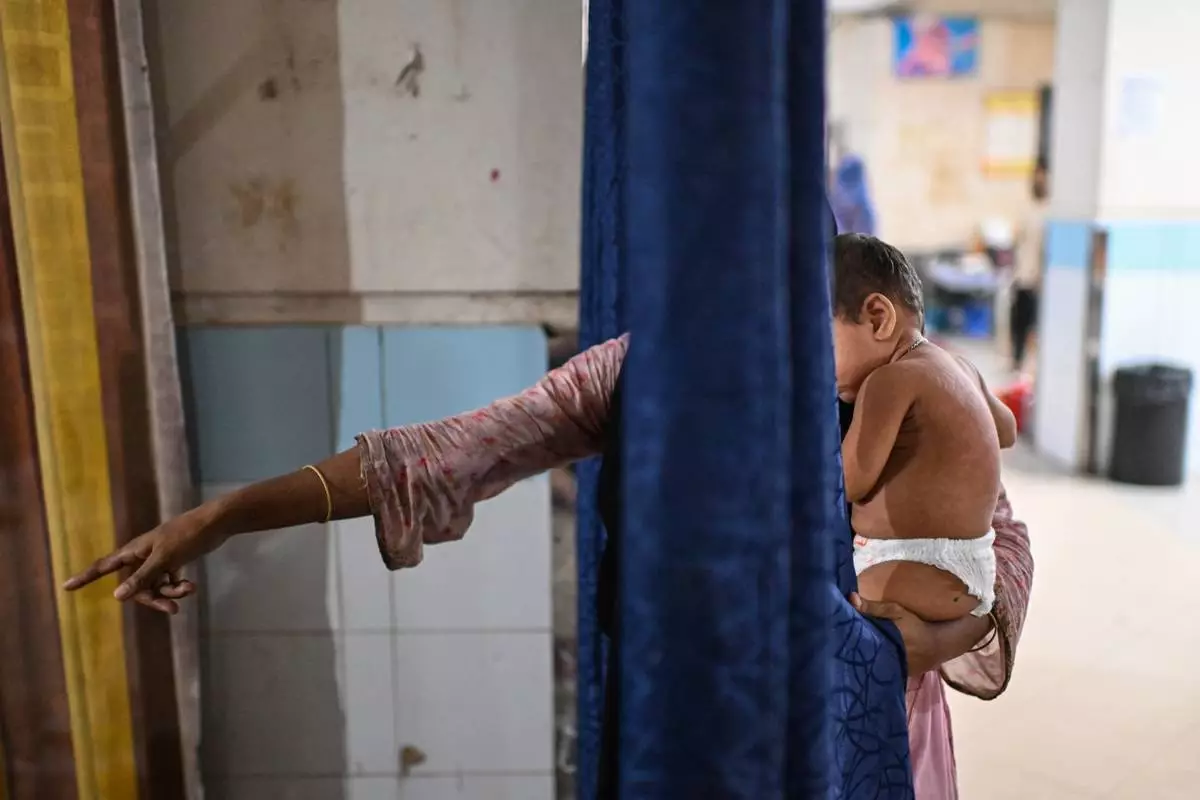
A woman brings her child for treatment of measles outbreak in a hospital in Dhaka, Bangladesh, Tuesday, Sept. 8, 2026. (AP Photo/Mahmud Hossain Opu)

A woman brings her child for treatment of measles outbreak in a hospital in Dhaka, Bangladesh, Tuesday, Sept. 8, 2026. (AP Photo/Mahmud Hossain Opu)

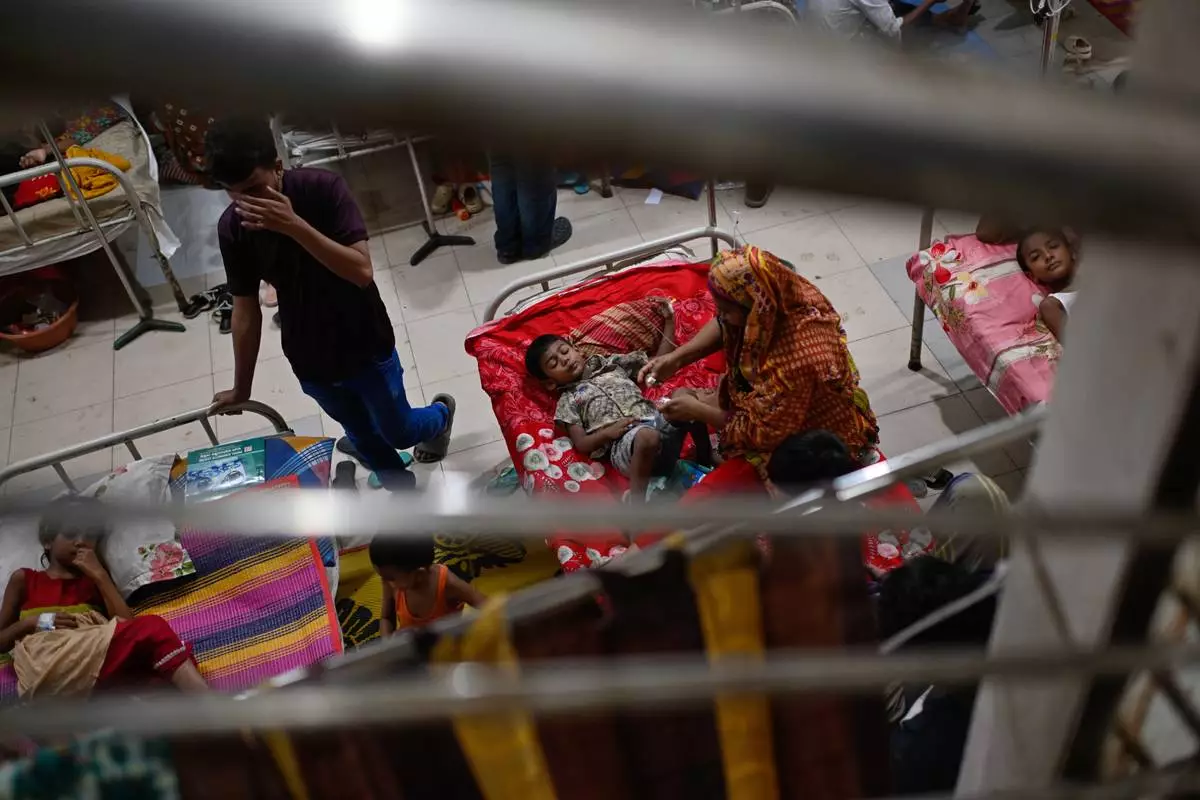
Patients receive treatment during a measles outbreak as family members sit beside them in an overcrowded hospital in Dhaka, Bangladesh, Tuesday, Sept. 8, 2026. (AP Photo/Mahmud Hossain Opu)

Patients receive treatment during a measles outbreak as family members sit beside them in an overcrowded hospital in Dhaka, Bangladesh, Tuesday, Sept. 8, 2026. (AP Photo/Mahmud Hossain Opu)

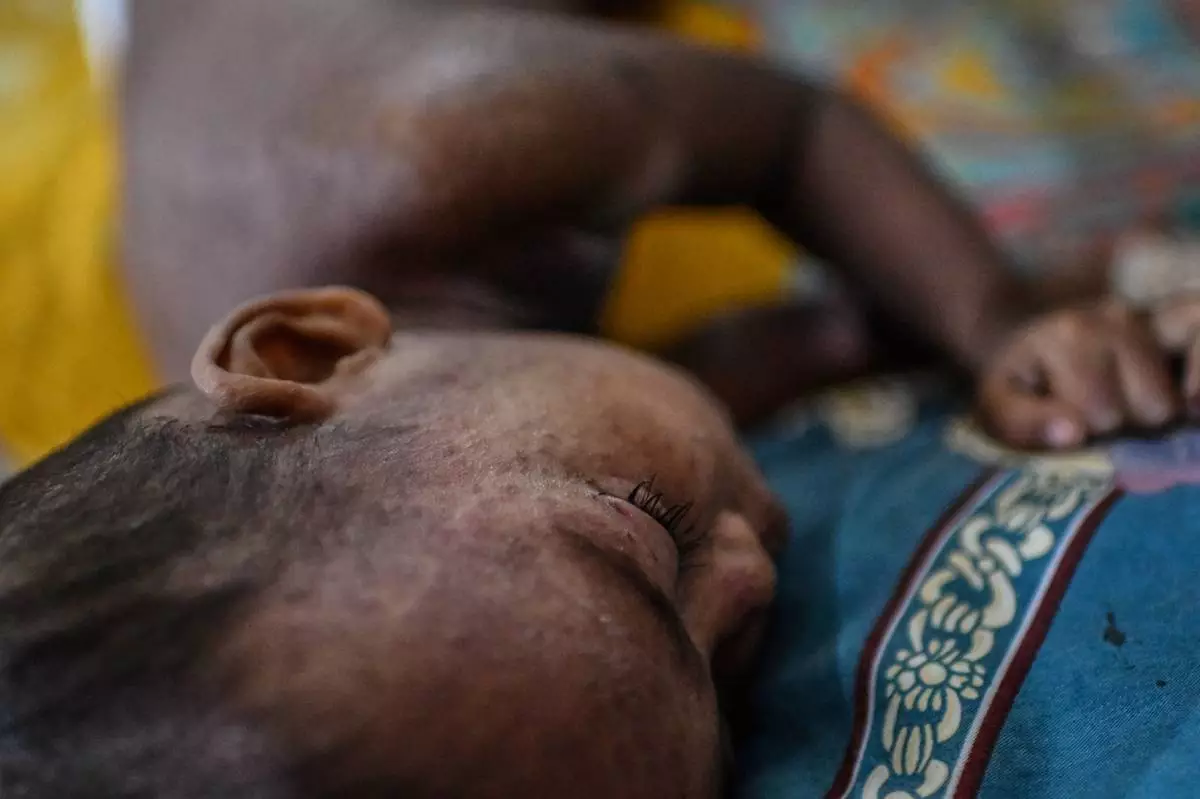
A child rests as he receives treatment during a measles outbreak in a hospital in Dhaka, Bangladesh, Tuesday, Sept. 8, 2026. (AP Photo/Mahmud Hossain Opu)

A child rests as he receives treatment during a measles outbreak in a hospital in Dhaka, Bangladesh, Tuesday, Sept. 8, 2026. (AP Photo/Mahmud Hossain Opu)

Patients receive treatment during a measles outbreak as family members sit beside them in an overcrowded hospital in Dhaka, Bangladesh, Tuesday, Sept. 8, 2026. (AP Photo/Mahmud Hossain Opu)

Patients receive treatment during a measles outbreak as family members sit beside them in an overcrowded hospital in Dhaka, Bangladesh, Tuesday, Sept. 8, 2026. (AP Photo/Mahmud Hossain Opu)

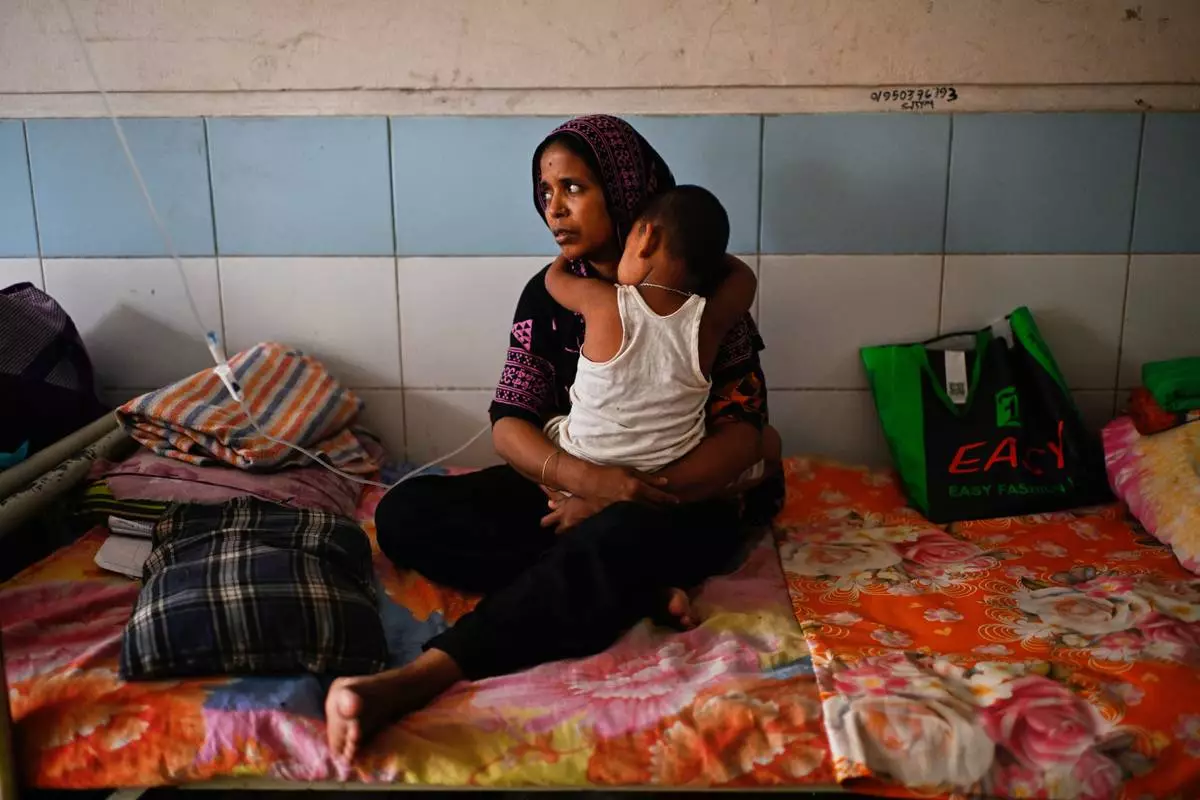
A woman takes care of her child while getting treatment for measles during the outbreak, in a hospital in Dhaka, Bangladesh, Tuesday, Sept. 8, 2026. (AP Photo/Mahmud Hossain Opu)

A woman takes care of her child while getting treatment for measles during the outbreak, in a hospital in Dhaka, Bangladesh, Tuesday, Sept. 8, 2026. (AP Photo/Mahmud Hossain Opu)

Recommended Articles