Skip to Content Facebook Feature Image

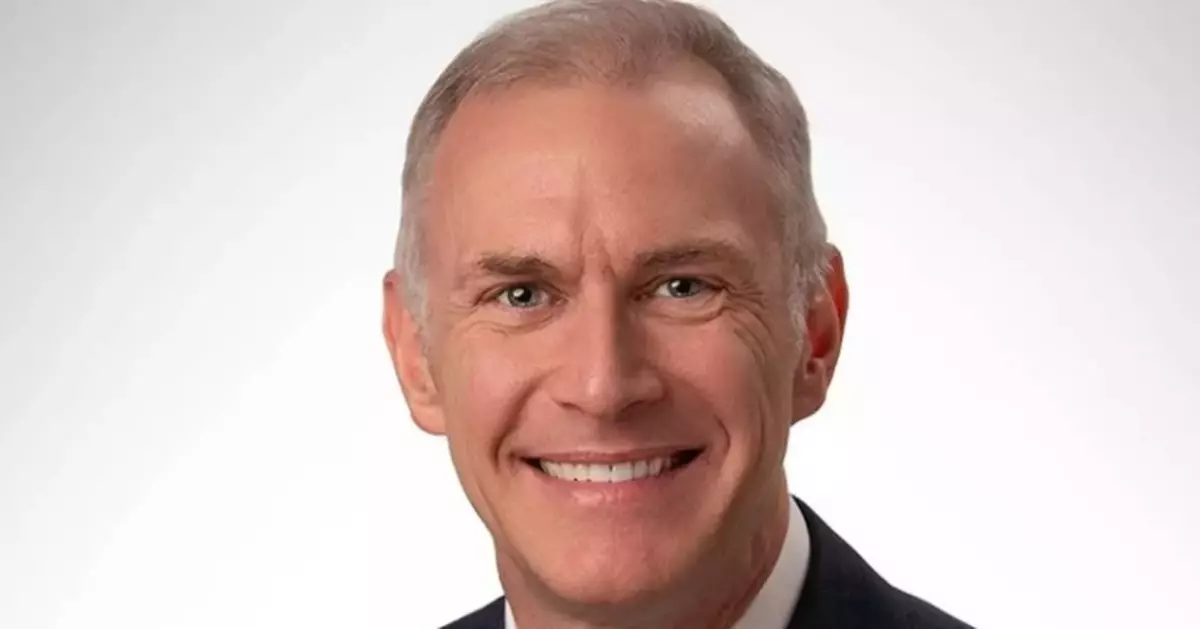
Uniting Wealth Partners Welcomes Ben McLintock, J.D., LL.M., CFP®, CFRE® to Lead Advanced Planning

Business

Uniting Wealth Partners Welcomes Ben McLintock, J.D., LL.M., CFP®, CFRE® to Lead Advanced Planning
Business

Business

Uniting Wealth Partners Welcomes Ben McLintock, J.D., LL.M., CFP®, CFRE® to Lead Advanced Planning

2026-09-09 20:47 Last Updated At:21:00

DENVER--(BUSINESS WIRE)--Sep 9, 2026--

Uniting Wealth Partners is pleased to announce that Ben R. McLintock, J.D., LL.M., CFP ®, CFRE ®, has joined the firm to lead its advanced planning efforts, strengthening the firm's ability to help clients navigate complex wealth, estate, tax, business succession and legacy planning needs.

This press release features multimedia. View the full release here: https://www.businesswire.com/news/home/20260909609199/en/

McLintock brings extensive experience across wealth management, law, tax and estate planning, charitable giving and business succession. Most recently, he served as senior vice president and senior wealth advisor with Arvest Wealth Management, advising affluent and high-net-worth clients on complex financial, investment, tax, estate and asset-protection needs.

“Ben brings exactly the kind of multidisciplinary thinking we want at the center of advanced planning at Uniting Wealth Partners,” said Jay Hummel, managing partner. “The most important financial decisions our clients face rarely fit neatly into one category. They often involve the intersection of investments, taxes, estate planning, family dynamics, business interests and charitable goals. Ben has spent his career working at those intersections, and his ability to assist in turning complexity into clear, actionable strategies will be a tremendous resource for our clients and advisors.”

McLintock has more than two decades of experience working with affluent and high-net-worth clients and in tax and charitable gift planning. He has spent 15 years developing multi-generational legacy and asset-protection strategies and 11 years providing comprehensive planning recommendations to closely held businesses.

“Joining Uniting Wealth Partners is a tremendous opportunity to bring together the disciplines that have shaped my career and apply them in a deeply client-centered environment,” said McLintock. “Advanced planning starts with understanding what matters most to a family or business owner, identifying the issues that could stand in the way of those goals. I'm excited to help expand the resources Uniting Wealth Partners can bring to our clients and their families.”

McLintock holds a Juris Doctor from the University of Arkansas School of Law and an LL.M. in Taxation from the University of Alabama School of Law. He is an Arkansas-licensed attorney, a CERTIFIED FINANCIAL PLANNER™ professional and a Certified Fund Raising Executive (CFRE ® ).

His community involvement has included service on the board of directors for the Arkansas Community Foundation and longstanding involvement with the Northwest Arkansas Chapter of the Association of Fundraising Professionals. In November, he will receive the chapter's Ernie Lawrence Professional Advisor Award in recognition of his work helping clients pursue their charitable giving goals and promoting charitable giving in the community.

About Uniting Wealth Partners: Uniting Wealth Partners, (“UWP”) is a registered investment advisor (RIA) offering a differentiated model designed by and for advisors. Founded by industry professionals, UWP provides advisors with the support and resources needed to grow their practices, enhance enterprise value, and pursue succession planning on their terms. Learn more at unitingwealthpartners.com. UWP provides investment advisory and related services to clients nationwide and maintains all required registrations and licenses in the jurisdictions where it conducts business.
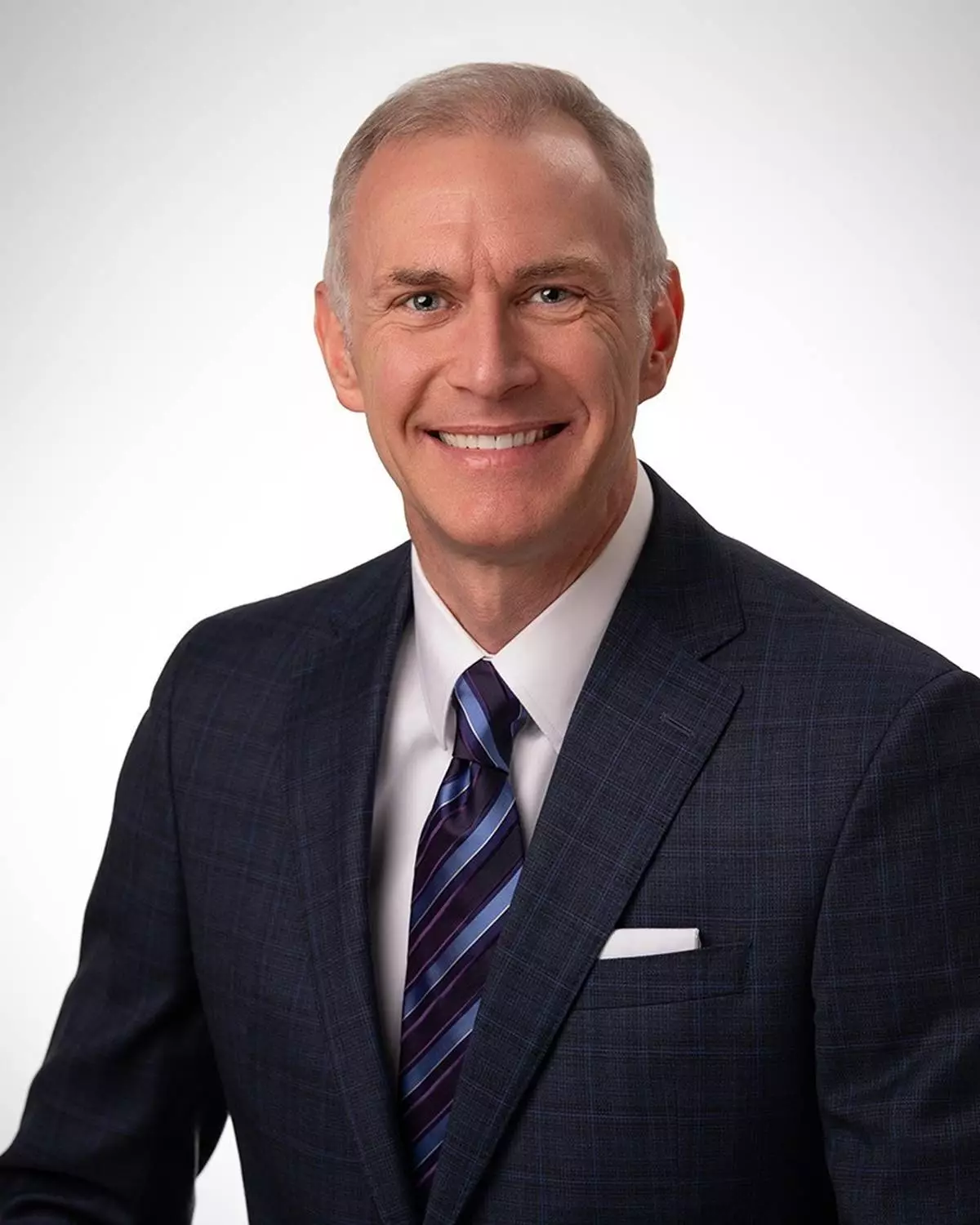
Ben McLintock, J.D., LL.M., CFP®, CFRE® to Lead Advanced Planning at Uniting Wealth Partners

Ben McLintock, J.D., LL.M., CFP®, CFRE® to Lead Advanced Planning at Uniting Wealth Partners
LOS ANGELES (AP) — After her parents went missing under the rubble of their Venezuela apartment building, Kelly Granado Montano spent her days here “lost, worried, on the phone,” her body in one country, her mind in another.

“The desperation, the pain, and the anguish grew — from not knowing” their fate, she said.

She was among the more than one million Venezuelans living in the United States who watched one of the worst disasters to hit the South American country unfold from afar.

The powerful back-to-back earthquakes that struck north-central Venezuela on June 24 killed more than 6,500 people, left an untold number missing and damaged thousands of buildings.

As the news overtook social media feeds and family WhatsApp chats, survivor’s guilt, anger toward Venezuelan authorities and a devastating feeling of powerlessness overcame many in the diaspora, a group whose numbers doubled to 1.2 million between 2019 to 2024, as people sought relief primarily from economic hardship.

More than two months later, some Venezuelans in the U.S. still navigate the earthquakes’ aftermath — confronting loss and leading recovery efforts — against a backdrop of deepening uncertainty in both countries, largely tied to White House policies.

As President Donald Trump tightens his grip on Venezuela’s domestic affairs following the stunning U.S. military operation that deposed then-President Nicolás Maduro in January, his administration is narrowing paths to remain in the U.S., ending programs that allow more than 700,000 Venezuelans to live and work here legally.

Some immigrants feel a responsibility to keep shining light on Venezuela’s ongoing needs and unique challenges. “People think we are fine, but we are not,” said Dariela Merchan, an emergency room nurse in Austin, Texas.

Four Venezuelans living in the U.S. shared how they experienced the last two months, and what their futures might hold. This story is a collaboration with Caplin News in Miami and Phoenix-based Conecta Arizona.

Granado Montano called her parents over and over the evening of June 24, but there was no answer.

Marina, 66, and Jesús, 80, had last been seen in the underground parking of the building where they kept a beach apartment, about to leave from a family vacation. The 10-story building in the coastal state of La Guaira had completely collapsed.

Granado Montano, 43, last saw her parents 11 years ago. Unable to leave the U.S., and with so little help from Venezuelan authorities, looking for her parents alongside relatives and volunteers on the ground became “an odyssey.”

She fundraised for the search efforts and pleaded on social media for more help to reach their building, one of 190 that completely collapsed. A group searching for their loved ones spent thousands hiring a machine to move debris, to little avail. Progress began when someone donated an excavator and a drone operator helped locate missing remains.

In the midst of everything, Granado Montano turned her Los Angeles restaurant, Full Arepas, into a relief hub, filling shipping containers with donations to be sent to Venezuela. “Knowing we are helping people who are going through something similar … it brings me a little relief,” she said.

And so 57 days passed, until the afternoon of Aug. 19. Granado Montano was at work when a cousin sent her a video of her parents' van, covered in rubble.

Inside, volunteers found her mother and father; her cousin and her 9-year-old daughter; her daughter’s friend; her cousin’s boyfriend and his 13-year-old son. Her father had his seat belt on.

Learning they’d been found was “bittersweet,” she said. Her family had been recovered, but "it wasn’t the way we had wanted – alive.”

She processes one day at a time – keeping busy at the restaurant and establishing a foundation to continue helping Venezuelans. Unable to attend the memorial for her parents in Venezuela, Granado Montano and her sister held their own service at a Los Angeles church.

“They were together for 45 years and into eternity,” said Granado Montano. “Because they were found just as I had hoped they would be. Together.”

Dariela Merchan longed to put her medical skills to use on the ground. But an expired Venezuelan passport prevented the emergency room nurse from returning to the country she first left 14 years, a common issue after Venezuelan consulates in the U.S. shuttered years ago.

With her father and sister safe in Venezuela, her concern shifted to overwhelmed and underresourced medical workers, and the patients who badly needed their help. The healthcare system was already so weakened before the earthquakes that medications were scarce and a hospital’s electricity and water could go out at any time.

“They’re trying to survive and trying to work with what they have,” said Merchan, 28. She asked doctor friends in Venezuela what they needed. They told her, “Literally anything.”

A prolific content producer on TikTok whose nursing-related videos sometimes yield millions of views, Merchan called on her network there. She connected healthcare workers with platforms where they could volunteer free telehealth sessions for those affected. A single TikTok post garnered 500 signups, she said.

When Merchan called on brands to contribute, a medical apparel company mailed her 200 sets of new scrubs. Wary of theft by officials or others, she resolved to ship the scrubs door-to-door to a health nonprofit working in the hard-hit state of La Guaira. She crowdfunded part of the $1,200 shipping fee, covering the rest herself.

Between night shifts, Merchan packs more donated supplies for shipment, including packets of electrolyte powder for first responders. She tucks in handwritten notes thanking the health workers, reminding them they’re not alone. “We’re watching and we’re with you,” she wants them to know, “from all over the world.”

One week after his aunt Yolanda died under the rubble of her apartment building, Alejandro Marquina discovered an Instagram message from her, congratulating him on a recent work accomplishment.

He hadn’t seen it and never replied.

The unanswered message is a painful reminder of his grief after the earthquakes killed five of Marquina’s family members in his home state of La Guaira.

“I felt like a really bad person,” said Marquina, 22. “She was really proud of me. And now, she’s gone.”

In the weeks after the earthquakes, recurring nightmares plagued Marquina. He rarely left his house, racked with survivor’s guilt. The Florida International University senior struggled to attend classes and stopped driving – afraid something bad would happen. Going out with friends or his girlfriend sometimes triggered panic attacks.

“I was just feeling like, I’m here having fun, but my family is dying,” he said. “Many people in Venezuela, not even just my family, they’re fighting for their lives.”

Marquina, his parents and sister moved to South Florida in 2015 as his family fled oppression and sought better opportunities outside Venezuela. They landed in Doral, a city in Miami-Dade County with such a large Venezuelan population its nickname became “ Doralzuela.”

Now the faraway tragedy weighs on Marquina as he confronts uncertainties over his future and that of many others as the Trump administration tightens immigration and citizenship policies.

Marquina enrolled in therapy after the earthquakes, which he said helped him begin working through what happened. But it was sending aid that kept him moving forward.

The journalism major used his social media skills to raise awareness. He's collected $2,000 so far for earthquake survivors, including his own displaced family members.

“I needed to do something,” he said. “I couldn’t just stay in my house."

Diana Ramos had trouble reaching her parents and grandmother at first, but they were ok, save some minor damage and shattered sentimental dishware.

Overwhelmed by the flood of GoFundMe campaigns and volunteer drives, Ramos, 27, reflected on how to make a difference from Tucson, Arizona, where she first arrived as a recruited college athlete.

Some of her fondest memories of childhood in Guatire, a city 45 minutes east of Caracas, were from school. She messaged one of her teachers and learned her elementary school was shut down after being badly damaged. Ramos raised $4,000 from friends and family to help repair the building.

But weeks later came a new blow: Another huge earthquake in Colombia, home to 2.8 million Venezuelans, including her sister Duneida. Both of her sister’s workplaces in the hard-hit city of Cali were damaged, one totally destroyed, wiping out part of her income. For a while, Ramos heard less from her sister, who was overwhelmed and upset.

“It just feels like I have my heart in two parts of two different countries,” said Ramos. “So that’s just been sad.”

Ramos wonders how much more her people can take after two decades of political turmoil and economic crisis. “All these things are accumulating without anything being solved,” she said.

The recent deal that gives the U.S. access to roughly a fifth of Venezuela’s oil reserves — which some tout as an economic lifeline, while others criticize it as an affront to Venezuelan sovereignty — didn’t change Ramos’ outlook.

She’s moving forward, clutching to her routine in Tucson and the hope of seeing her family again soon. “The earthquakes put into perspective how life can go within a second.”

——

This story is supported by the AP Fund for Journalism and is a collaboration with Caplin News in Miami and Conecta Arizona in Phoenix.

Associated Press coverage of philanthropy and nonprofits receives support through the AP’s collaboration with The Conversation US, with funding from Lilly Endowment Inc. The AP is solely responsible for this content. For all of AP’s philanthropy coverage, visit https://apnews.com/hub/philanthropy.

Diana Ramos poses for a photo on the University of Arizona campus on Friday, Aug. 21, 2026 in Tucson, Ariz. (Paula Diaz/Conecta Arizona via AP)

Diana Ramos poses for a photo on the University of Arizona campus on Friday, Aug. 21, 2026 in Tucson, Ariz. (Paula Diaz/Conecta Arizona via AP)

Alejandro Marquina shows a photo of his aunt Yolanda Suárez on his phone after the earthquakes killed her and four other members of his family in his home state of La Guaira, on Saturday, Aug. 29, 2026, in Doral, Fla. (AP Photo/David Santiago)

Alejandro Marquina shows a photo of his aunt Yolanda Suárez on his phone after the earthquakes killed her and four other members of his family in his home state of La Guaira, on Saturday, Aug. 29, 2026, in Doral, Fla. (AP Photo/David Santiago)

Alejandro Marquina, seen from behind, looks toward the horizon on Saturday, Aug. 29, 2026, in Doral, Fla. (AP Photo/David Santiago)

Alejandro Marquina, seen from behind, looks toward the horizon on Saturday, Aug. 29, 2026, in Doral, Fla. (AP Photo/David Santiago)

Dariela Merchan, a registered nurse, scrolls through the Instagram profile of an organization she is shipping supplies to in Venezuela for people recovering from June's twin earthquakes, at her home on Friday, Sept. 4, 2026, in Georgetown, Texas. (AP Photo/Joel Angel Juarez)

Dariela Merchan, a registered nurse, scrolls through the Instagram profile of an organization she is shipping supplies to in Venezuela for people recovering from June's twin earthquakes, at her home on Friday, Sept. 4, 2026, in Georgetown, Texas. (AP Photo/Joel Angel Juarez)

Dariela Merchan, a registered nurse, poses for a portrait at her home on Friday, Sept. 4, 2026, in Georgetown, Texas. Merchan is organizing supplies to be shipped to people in Venezuela recovering from June's twin earthquakes. (AP Photo/Joel Angel Juarez)

Dariela Merchan, a registered nurse, poses for a portrait at her home on Friday, Sept. 4, 2026, in Georgetown, Texas. Merchan is organizing supplies to be shipped to people in Venezuela recovering from June's twin earthquakes. (AP Photo/Joel Angel Juarez)

Kelly Granado, whose parents, Marina and Jesús, died in Venezuela's June 24 earthquakes, holds a photo of them at her restaurant in downtown Los Angeles, Tuesday, Aug. 25, 2026. (AP Photo/Jae C. Hong)

Kelly Granado, whose parents, Marina and Jesús, died in Venezuela's June 24 earthquakes, holds a photo of them at her restaurant in downtown Los Angeles, Tuesday, Aug. 25, 2026. (AP Photo/Jae C. Hong)

Kelly Granado, whose parents died in Venezuela's June 24 earthquakes, poses for photos at her restaurant in downtown Los Angeles, Tuesday, Aug. 25, 2026. (AP Photo/Jae C. Hong)

Kelly Granado, whose parents died in Venezuela's June 24 earthquakes, poses for photos at her restaurant in downtown Los Angeles, Tuesday, Aug. 25, 2026. (AP Photo/Jae C. Hong)

Recommended Articles