EAGAN, Minn. (AP) — Considering how the Minnesota Vikings celebrated Harrison Smith, his finish to last season felt like a farewell.
Smith's performance down the stretch and the fun he had along the way kept him from closing the door on his decorated career, though, and he was back at practice on Wednesday as if he never left.
"I feel like I’ve got a little more to give, help some guys out, go make some plays and see what we can do," said Smith, who agreed to a one-year, $12.25 million contract on Saturday to return for a 15th season with the only NFL team he’s ever played for.
Vikings coach Kevin O’Connell took the opportunity during his regular news conference to subtly needle Smith for waiting until September to put the pads back on — and not after one of their regular phone conversations throughout the spring and summer.
“I think I kind of knew it the whole time. I just didn’t know exactly the timing, and sometimes you just find yourself in a helmet,” Smith said with a laugh.
The Vikings listed the six-time Pro Bowl safety as a starter on the depth chart they released for their season opener against the rival Green Bay Packers on Sunday. The coaching and medical staffs will confer this week to make sure Smith is fit for game action, but O'Connell raised no concern.
“I’m in good shape. I’ve been working out, but there’s nothing like playing football. That’s just the reality of it — heart rate, outside factors, thinking a lot while you’re moving,” Smith said. “It’s hard to simulate that. I kind of do it the best I can, but I feel like I’m in a really good place right now.”
Smith has become a confidant of O'Connell since he was hired in 2022, meeting in the coach's office for weekly coffee confabs. He has earned exceptional status between the lines, too, entrusted by defensive coordinator Brian Flores to call the plays himself. For whatever physical skill that might be in decline at age 37, Smith has made up for that with his value as the quarterback of the defense who can extend the coaching staff onto the field.
“I know we got better as a team when you have that guy in your building, in your locker room and on your field with your defense,” O’Connell said.
Having Smith back will allow Flores to use fellow starter Josh Metellus more often as the hybrid player he thrives as, by roaming from safety to linebacker to slot cornerback to edge rusher. Three-time Pro Bowl pick Jamal Adams, who signed right before training camp, was slated for a similar role until he tore his quadriceps in the first exhibition game and needed season-ending surgery.
The Vikings have rookies Jakobe Thomas and Jacob Thomas waiting in the wings at safety and a decent amount of experience with backups Theo Jackson and Jay Ward, and they'll need to concurrently develop some of those players for whenever the post-Smith era in their secondary comes.
“I still think there’s going to be plenty of work for some young talented players that really made this Harry’s decision rather than us feeling like it had to happen for us to have success,” O'Connell said.
The Vikings also made Carson Wentz their No. 2 quarterback, leaving J.J. McCarthy as the third-stringer for now. O'Connell said he would make a weekly decision about the depth chart behind Kyler Murray.
Though this could be construed as a demotion for the 2024 first-round draft pick, the declaration was hardly a surprise given that Wentz has 103 regular-season starts and McCarthy has just 10.
“He’s still a beacon of energy on this team," O'Connell said. “He’s excited to continue to grow and get better.”
See AP’s full NFL coverage here
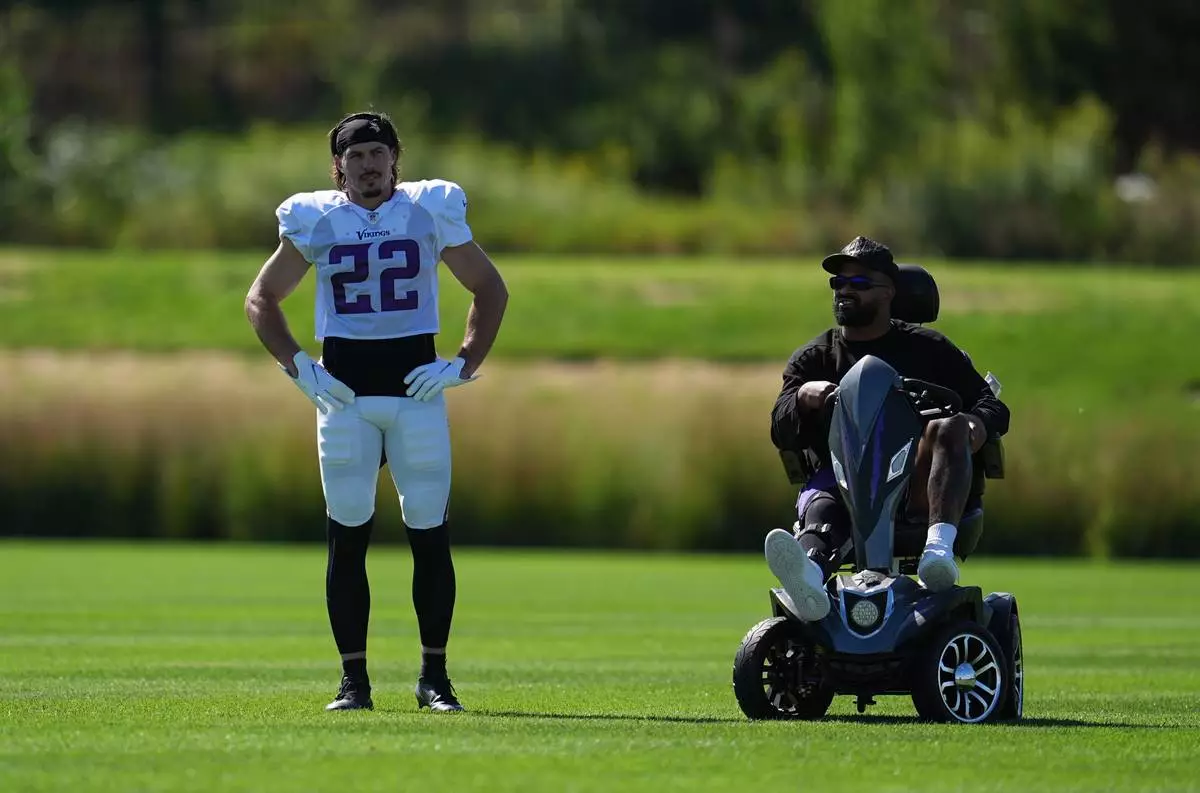
Minnesota Vikings safety Harrison Smith (22) and linebacker Jamal Adams, right, work out on the field during an NFL football practice Wednesday, Sept. 9, 2026, in Eagan, Minn. (AP Photo/Abbie Parr)
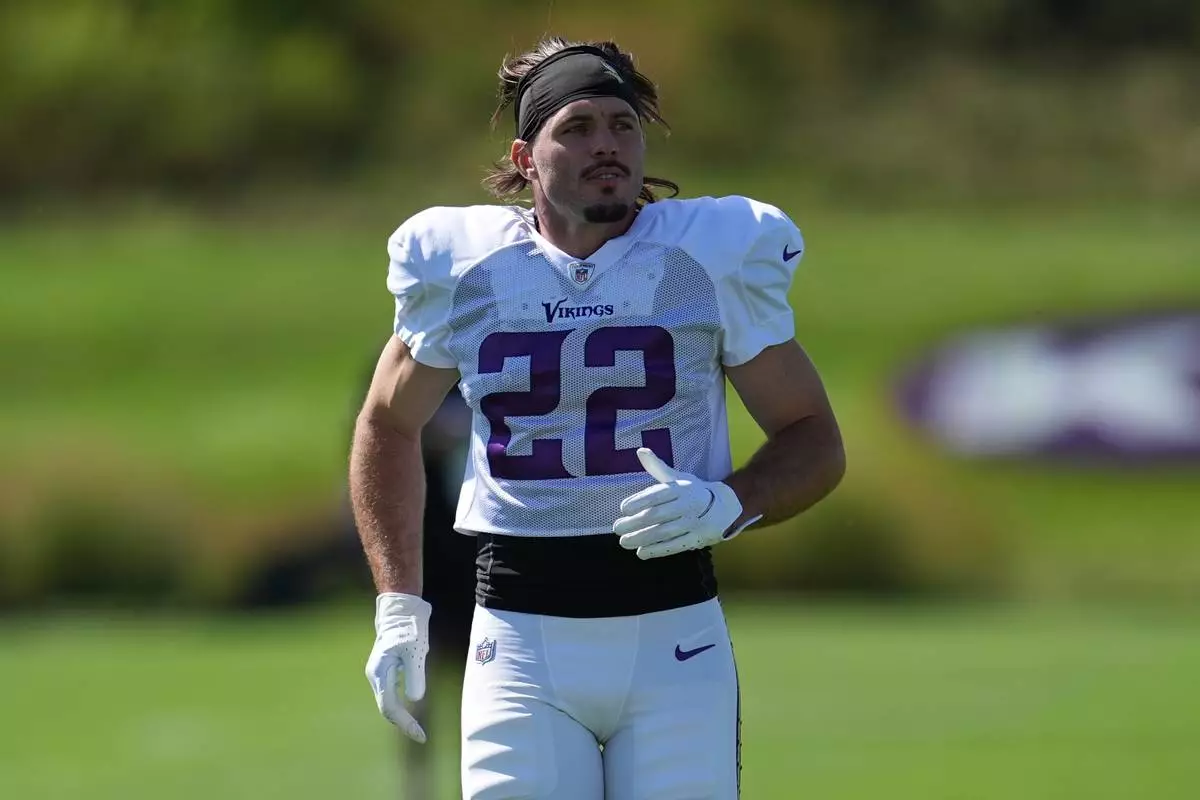
Minnesota Vikings safety Harrison Smith (22) trains during an NFL football practice Wednesday, Sept. 9, 2026, in Eagan, Minn. (AP Photo/Abbie Parr)
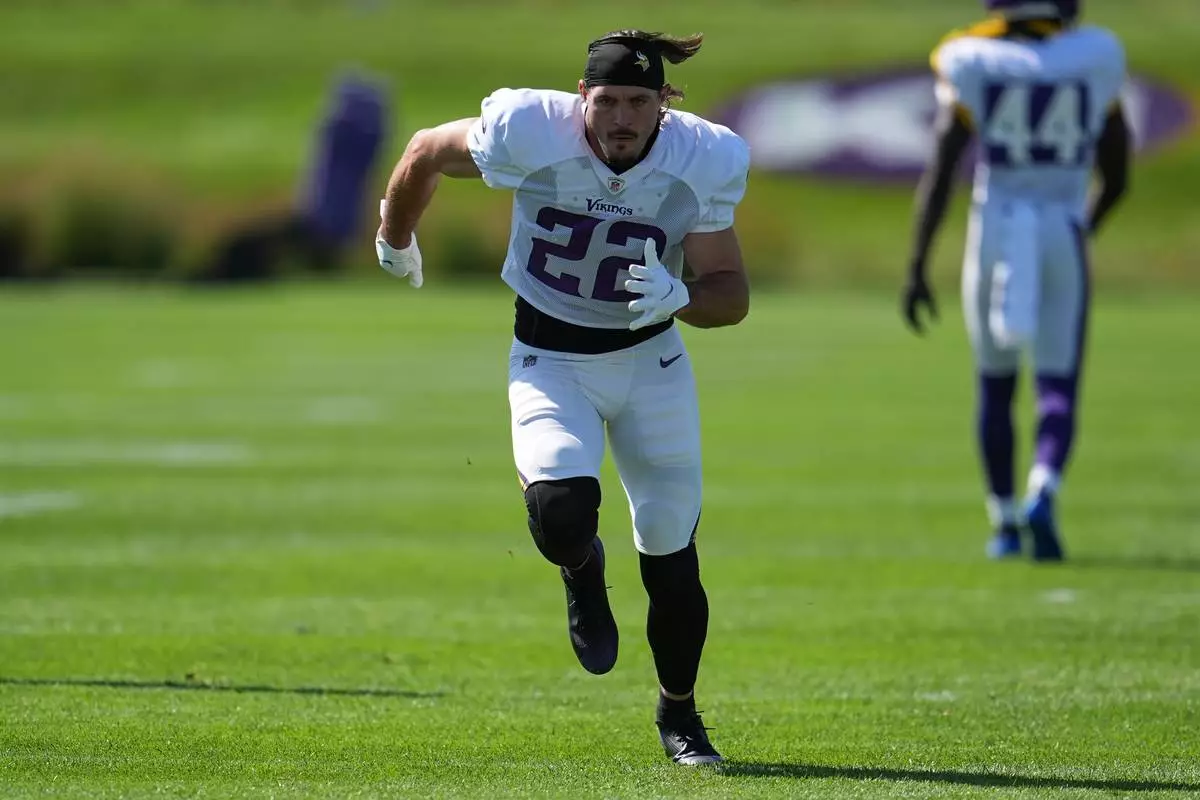
Minnesota Vikings safety Harrison Smith (22) trains during an NFL football practice Wednesday, Sept. 9, 2026, in Eagan, Minn. (AP Photo/Abbie Parr)
JEFFERSON CITY, Mo. (AP) — A battle over Missouri’s congressional districts vaulted back to the U.S. Supreme Court on Wednesday, two months before a pivotal November election that will determine control of Congress and affect the fate of President Donald Trump’s agenda.
A series of conflicting court rulings has left a scar on Missouri — and left voters befuddled and unsure which U.S. House districts they will be voting in and which candidates will appear on their ballots.
A federal appeals court panel on Wednesday sided with Republicans, declining to halt a federal judge’s order favoring a new map backed by Trump. But that decision immediately was appealed to the U.S. Supreme Court, which just a day earlier had let stand a ruling by Missouri's top court against the Trump-backed districts.
Time is rapidly expiring to figure it out. Federal law sets a Sept. 19 deadline to mail absentee ballots to overseas citizens and military voters.
Here's a look at how Missouri arrived at this point and the difficulties it now faces.
Trump urged Republican-led states last year to redraw congressional districts to their advantage ahead of the midterm elections. Texas went first. Missouri was the second GOP state to act. State lawmakers passed new U.S. House districts last September targeting a Kansas City-based seat held by Democratic Rep. Emanuel Cleaver.
The new districts were intended to help Republicans win seven of the state's eight House seats in the midterm elections — a gain of one seat.
Redistricting opponents collected hundreds of thousands of petition signatures seeking to force a statewide vote on the new districts. They submitted the signatures in December. But Republican Secretary of State Denny Hoskins waited until August — on the same day as Missouri's primary — to reject the petition. Hoskins asserted that a referendum petition could not be used for congressional redistricting.
The delay by Hoskins was intentional. It allowed Missouri's new congressional districts to be used in the primaries.
The Missouri Supreme Court said Hoskins was wrong. It ordered him to put the redistricting referendum on the November ballot, which he did. But more than that, the court said the new districts never became law and instead were suspended retroactively to the December petition submission.
The court barred Hoskins from using the new map and said the old map — passed by Republican lawmakers in 2022 after the last census — must be used in the November election. The U.S. Supreme Court on Tuesday declined to hear an appeal.
Mere minutes after the U.S. Supreme Court's action, federal District Judge Stephen Clark of Missouri issued a contradictory decision. He temporarily barred Hoskins from using any map other than the new congressional districts in the November election. Clark said switching districts between the primary and general election could violate voters' federal rights.
Redistricting opponents asked the 8th U.S. Circuit Court of Appeals to reverse Clark's order, but it declined to do so. So they quickly asked the U.S. Supreme Court to intervene.
Redistricting opponents also have asked the Missouri Supreme Court to hold Hoskins in contempt for taking steps to use the new districts in November. The court set a contempt hearing for Thursday.
State attorneys for Hoskins, meanwhile, want the federal judge to block the contempt hearing. They contend Hoskins was merely following orders, arguing that a federal court order — based on the U.S. Constitution — supersedes a state order based on the state constitution.
After a U.S. Supreme Court ruling in April weakened the federal Voting Rights Act, Alabama lawmakers voted to change some of their congressional districts. The high court allowed it to happen, even though voting had occurred in a May primary. Alabama instead held a new primary for the revised districts in August.
A similar scenario unfolded in Texas three decades ago. After Texas held its 1996 primaries, a federal court struck down several congressional districts. The state subsequently held an open primary for those districts in the November election, putting candidates from both parties on the same ballot. If no one got a majority, the top two advanced to a runoff.
In Missouri's case, no court has suggested redoing the primary. Candidates who won in August already have been certified for the November ballot according to the number of the district that they won.
“Here in Missouri, we’ve witnessed a series of unprecedented actions, one after another,” said Travis Crum, a law professor at Washington University in St. Louis, who specializes in election law.
Do voters have a right for congressional district boundaries to stay the same from the primary to the general election? “That is a tough and complicated legal question, and there is no definitive ruling from the Supreme Court that one could point to for an answer,” Crum said.
Candidates knew of the ongoing litigation when they signed up to seek office.
“The fact that the district lines changed, that was a chance that you take when you run,” said Michael Wolff, a former Missouri chief justice who later served as dean of the Saint Louis University Law School.
Over the past year, more than a dozen lawsuits have been filed over Missouri's redistricting. Some voters have rallied against it at the state Capitol and courthouses. Others have winced in confusion when listening to explanations about which district they reside in.
Toby Thacker, who lives on a farm near Sedalia, has shifted from the 4th District, currently held by Republican Rep. Mark Alford, to Cleaver's 5th District under the new map. Thacker said he generally supports Republicans, who redrew the map.
But “I'm not very happy with them for doing that,” Thacker recently told The Associated Press.
Cliff Keith, of Washington, Missouri, recently joined protesters outside the Missouri Capitol.
“They have absolutely no business redrawing the districts right now, just before an election,” Keith said.
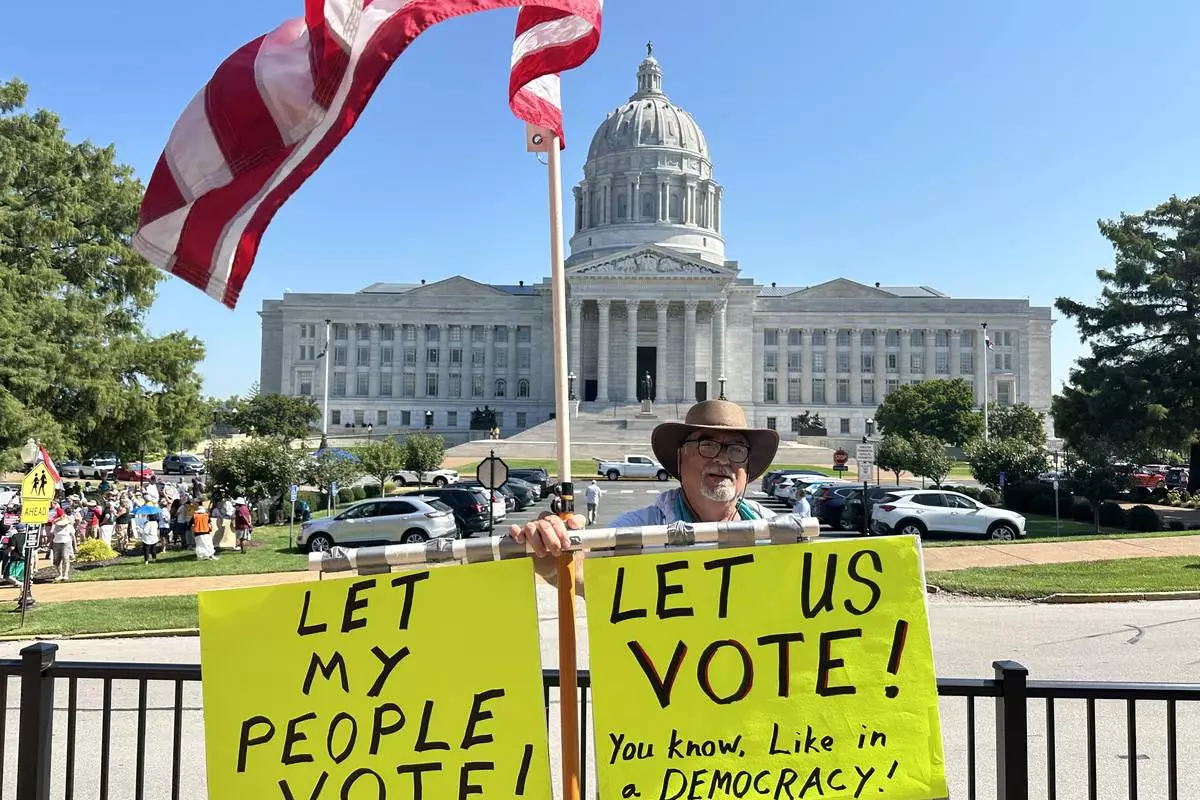
In this photo taken with a smartphone, Steve Dakopolos demonstrates in front of the state Capitol in Jefferson City, Mo., Wednesday, Sept. 2, 2026, in support of a referendum petition seeking a statewide vote on a congressional redistricting plan. (AP Photo/David A. Lieb)