The son of a U.S.-born doctor who journeyed to China and joined the latter part of the Red Army's historic Long March after being inspired by the cause of the Communist Party of China (CPC) has reflected on his father's remarkable tale.
With this year marking the 90th anniversary of the Long March, the story of George Hatem, a U.S. doctor known in China by his Chinese name Ma Haide, remains one of the most enduring episodes of this time period.
In an interview with the China Global Television Network (CGTN), Hatem's son Zhou Youma looked back on his father's experiences and shared what motivated him to work for the CPC.
Hatem was born in 1910 in the United States and came to China to study epidemic diseases when he had just received his medical degree at the age of 23. On the recommendation of Soong Ching Ling, a former honorary president of China and wife of Chinese revolutionary and statesman Sun Yat-sen, he went onwards to northwest China's Shaanxi Province in 1937, where he joined the CPC.
In 1949, Hatem became the first foreigner to gain Chinese nationality. He was appointed as an advisor for China's health ministry one year later. Through his work, Hatem helped build and strengthen the country's public health system until he passed away in Beijing in 1988.
Looking back on his father's life, Zhou spoke of how moved he had been by the plight of the most impoverished people in the early days, which made him wish to contribute to the cause of the CPC.
"My father also suffered a lot, and he knew the taste of hardship for poor people. After meeting Soong Ching Ling, a prominent Chinese political figure, and her friends in Shanghai, he saw what the real poor in China looked like. At a silk factory in Shanghai, he saw 11-or-12-year-old female workers spinning silk in hot alkaline water. Their hands had been soaked in water for years. Some even had broken bones. My father was a doctor, and he felt heartbroken. Why did children suffer so much? My father believed that the country and government at that time should change," he said.
"Soong Ching Ling and her friends told him that there was a kind of people in China who helped the poor. They were called the Communist Party of China. Why did my father stay in the Red Army? He said he was willing to work with the military led by these outstanding leaders to help people live a better life. He walked a long journey, but what he suffered was only a small part of the Long March, or in his words, only one tenth," he added.
Zhou also recalled other aspects of his father's work beyond medicine, noting how he had become a trusted international advisor to the CPC.
"Apart from medical services, my father also did a lot of work on foreign affairs. He translated the news he heard on the radio into English and French, then his Chinese peers translated them into Chinese and published it in newspapers. Every morning, there was a note on the table of Chairman Mao Zedong, which was made with the help of my father," he said.
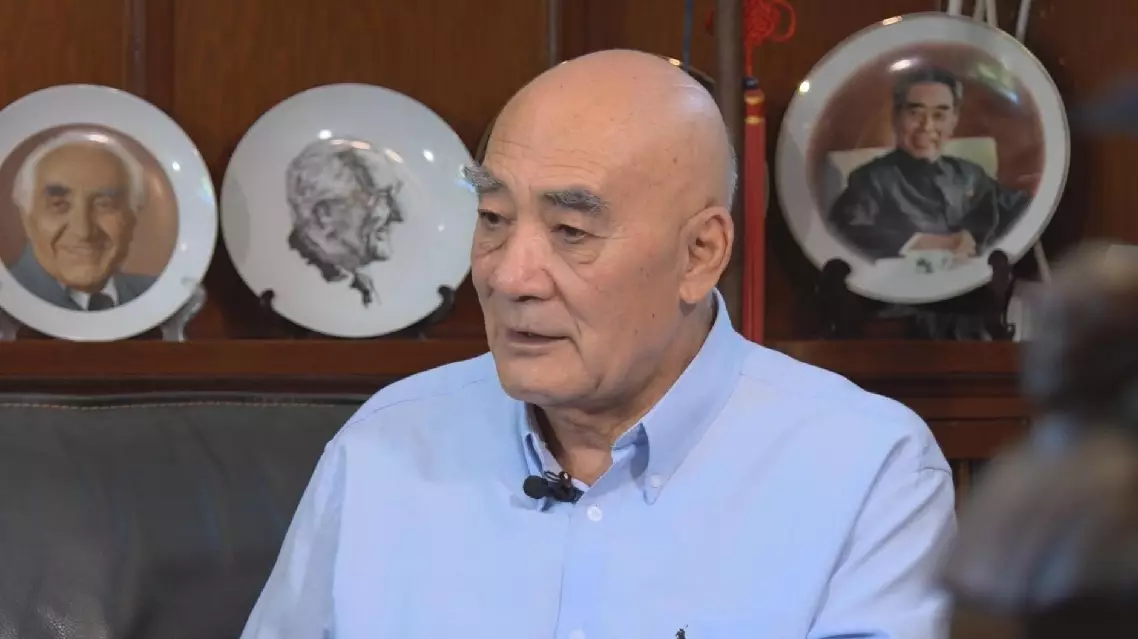
Son of US-born doctor inspired by CPC's dedication to helping poor shares father's story
Trilateral talks between Russia, the United States and Ukraine ended on Wednesday in Abu Dhabi, with Russia and Ukraine reaching an agreement on a "large-scale" prisoner exchange.
Vladimir Medinsky, head of the Russian delegation at the talks, told a press conference that details of the exchange would be announced soon and that negotiations would continue.
He said the delegations had discussed humanitarian issues, with the future of European security being a central focus of the U.S.-mediated talks.
Medinsky added that parties had reached understandings on some issues, without providing further details.
He defended the need to discuss post-war security arrangements at the current stage of negotiations, saying the conflict in Ukraine had exposed shortcomings in Europe's security system.
Medinsky called for the establishment of a fair security framework that takes into account the interests of all countries.
Kremlin spokesman Dmitry Peskov said on Wednesday that Russian President Vladimir Putin had been continuously briefed by the Russian delegation on developments in the trilateral talks.
He said that the Russian delegation did not have any contacts with European representatives in Abu Dhabi, and such contacts had not been planned in the first place.
Meanwhile, Jared Kushner, a member of the U.S. negotiating team, told reporters that a lot of serious issues had been discussed, adding the discussions were thorough and covered all major issues.
He noted that the prisoner exchange deal was one of the positive outcomes of the negotiations, with the exact number of prisoners to be finalized on Thursday.
Kushner said the second day of discussions were "very substantive," describing the negotiations as a good first step forward.
He also said he and U.S. special envoy Steve Witkoff planned to travel to Moscow for further discussions on ending the Ukraine conflict.
Kushner noted that the two would seek progress in Moscow if Russian President Vladimir Putin agreed to U.S. demands to end the war, and would meet Ukrainian President Volodymyr Zelensky afterward.
Kushner added that Russia had its own security concerns and had been asked to put forward proposals to reduce tensions.
On the Ukrainian side, negotiator David Arakhamia, chairman of the Servant of the People parliamentary faction, a Ukrainian political party, said the Abu Dhabi talks had generated "good momentum" toward finding a solution to the conflict before the end of the year.
Rustem Umerov, head of Ukraine's Foreign Intelligence Service and a member of the Ukrainian negotiating delegation, said earlier Wednesday that the Ukrainian team planned to hold separate discussions with European partners following the trilateral session.
"The Russian-Ukrainian war has its implication on the European security structure to begin with. So having the European security structure as part of these trilateral talks is a logical process, because we cannot exclude the effects this war had on Europe's security, on Europe's economy, and it's right on the European border. And that's the whole issue. The main issue that began with is NATO being closer and Europe's security being closer to the Russian border," said Abdulaziz Al-Shehhi, a senior researcher at TRENDS Research and Advisory.
The latest round of Russia-U.S.-Ukraine trilateral talks took place in Abu Dhabi on Tuesday and Wednesday, marking the first meeting among the three countries since February. The first day's discussions lasted nearly four hours, while Wednesday's session concluded in less than two hours.
Although progress was reported on the prisoner exchange, no agreement was announced on a ceasefire, territorial disputes or long-term security guarantees.
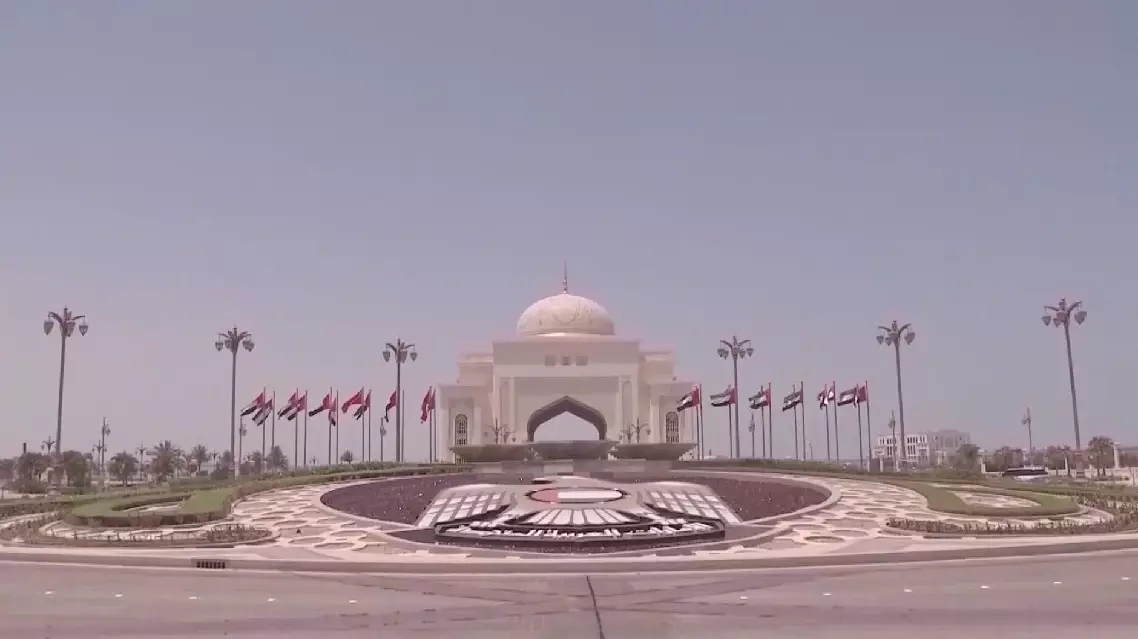
Trilateral talks on settlement of Ukraine crisis conclude in Abu Dhabi