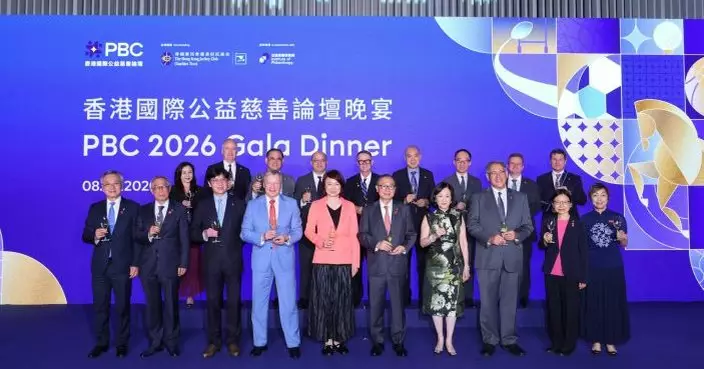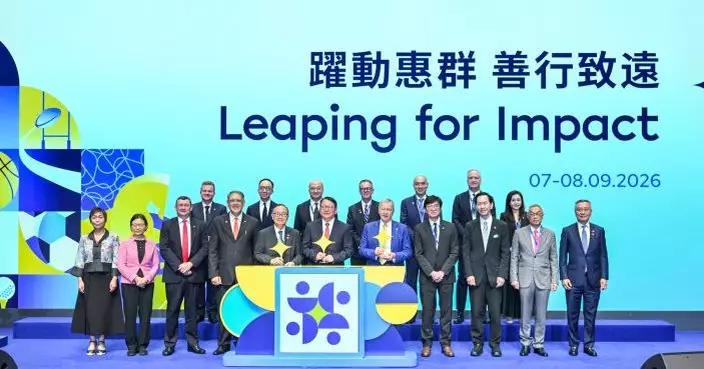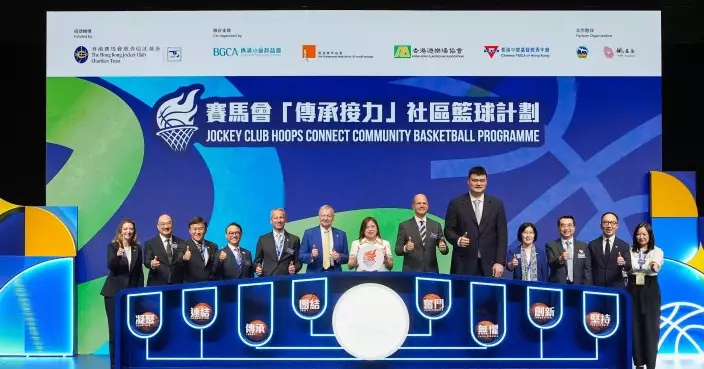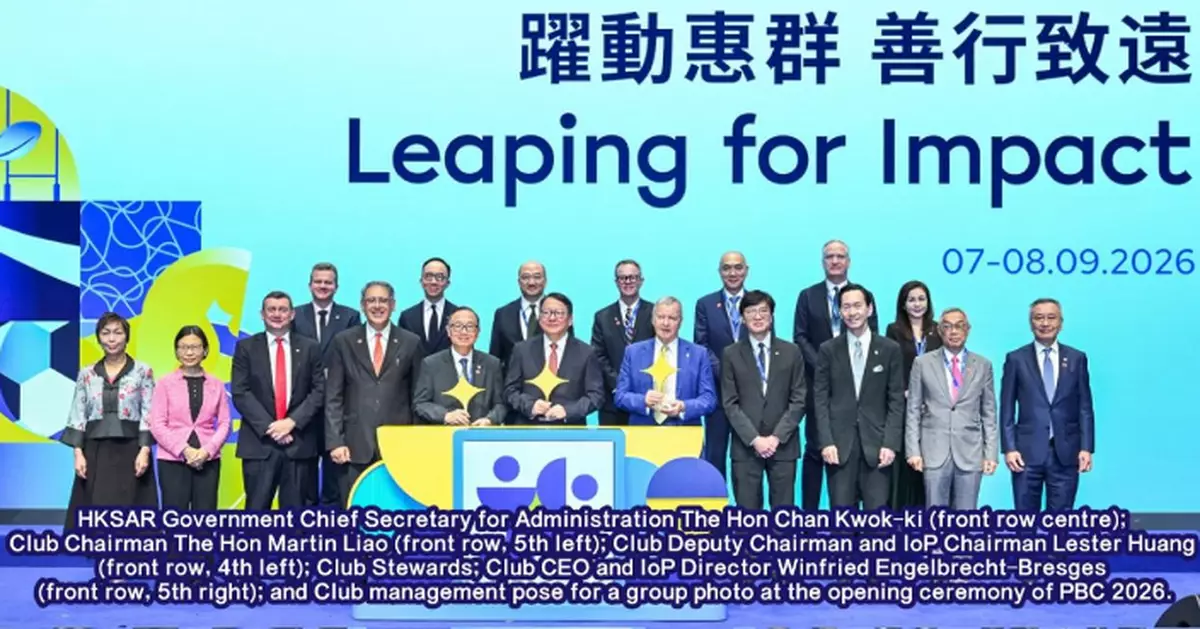
Marking the 10th anniversary of the PBC forum, PBC 2026 took place at West Kowloon Cultural District on September 7 and 8. Convened by The Hong Kong Jockey Club Charities Trust in association with the Institute of Philanthropy (IoP), the two-day event brought together over 2,000 delegates and leaders from the worlds of philanthropy, sport, business, government, academia and the social sector to explore the challenges and opportunities shaping philanthropy.
Officiating at the forum’s opening ceremony was HKSAR Government Chief Secretary for Administration Chan Kwok-ki; the Club’s Chairman The Hon Martin Liao; and Club CEO and IoP Director Winfried Engelbrecht-Bresges.
Click to Gallery
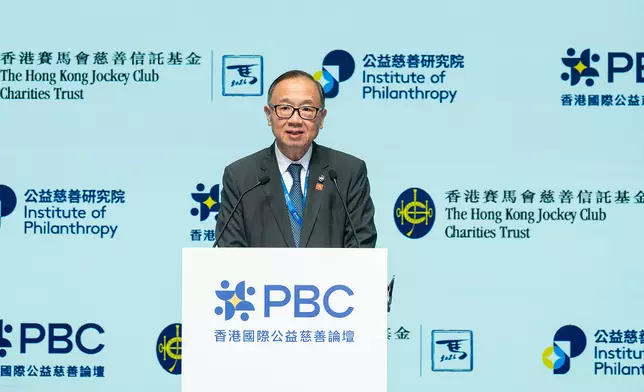
Club Chairman The Hon Martin Liao delivers a speech at the opening ceremony of PBC 2026
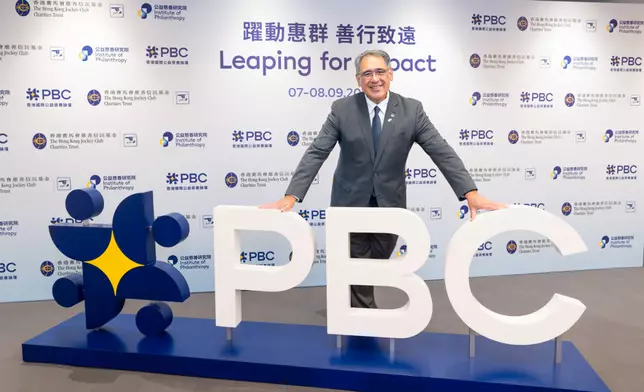
Club Deputy Chairman and IoP Chairman, Lester Huang
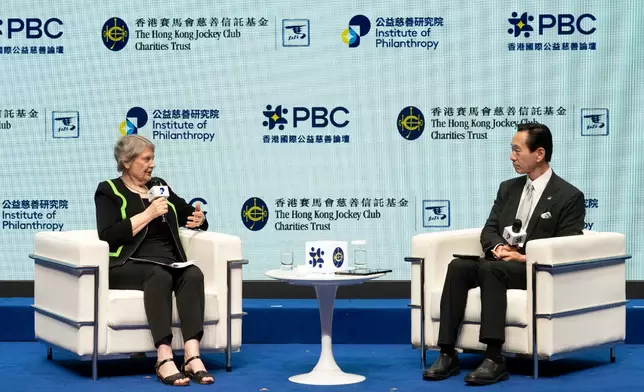
Moderated by Club Steward The Hon Bernard Chan (right), former Prime Minister of New Zealand and former United Nations Development Programme Administrator Helen Clark (left) delivered the opening keynote entitled “A New Era for Philanthropy: Leading Through Complexity”
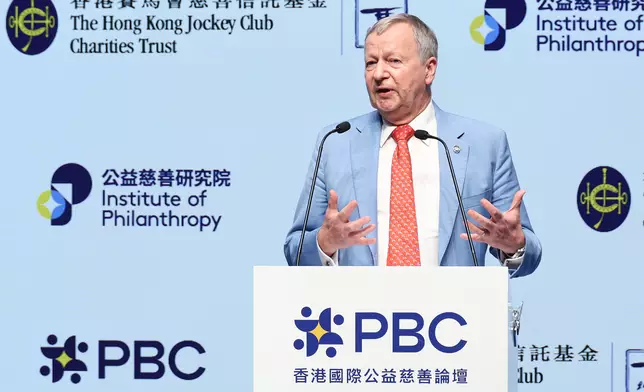
Club Chief Executive Officer and Director of the Institute of Philanthropy, Winfried Engelbrecht-Bresges, delivers closing remarks at PBC 2026
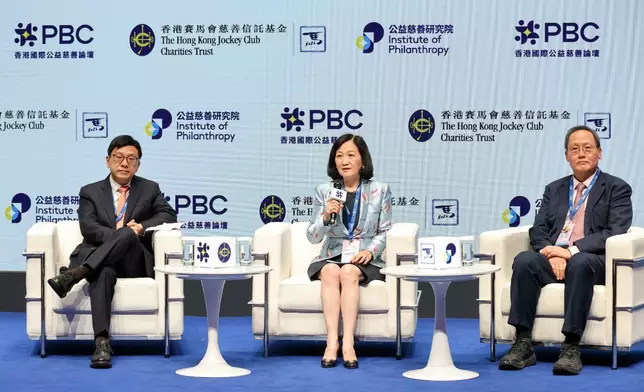
The fourth plenary, entitled “Two Playbooks, One Goal: Navigating Social Mobility in Asia’s Twin Cities”, was moderated by The Hon Mrs Regina Ip, Convenor of the Non-official Members of the Executive Council of the HKSAR (centre). It featured The Hon Chris Sun, Secretary for Labour and Welfare of the HKSAR Government (left), and Tan See Leng, Minister for Trade and Industry (Energy & Industry) and Former Minister for Manpower, Singapore (right)
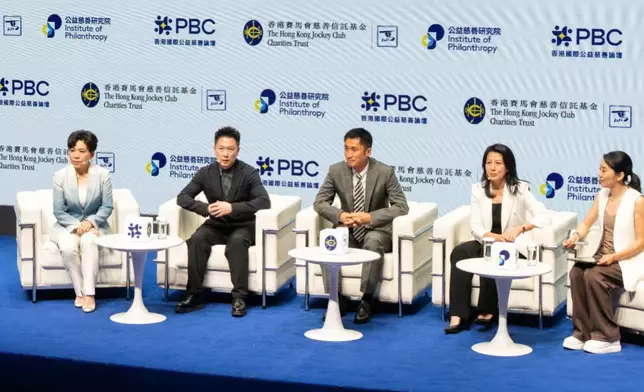
The fifth plenary, entitled “Expanding the Arena: Philanthropy, Leadership, and Pathways Beyond Sport”, featured a discussion between Olympic gold medallists Deng Yaping (1st left), Li Xiaopeng (2nd left), and Yang Yang (2nd right), together with 2026 international football tournament referee Ma Ning (centre)
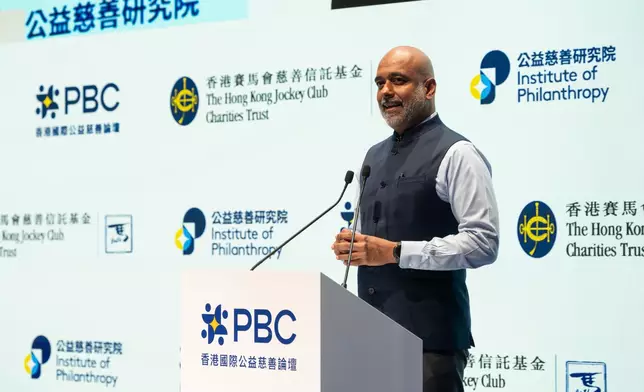
Hari Menon, President of Global Growth & Opportunity at the Gates Foundation, delivers the forum’s opening keynote address on day two in a session entitled “The New Growth Agenda: Philanthropy’s Role in Expanding Opportunity for All”
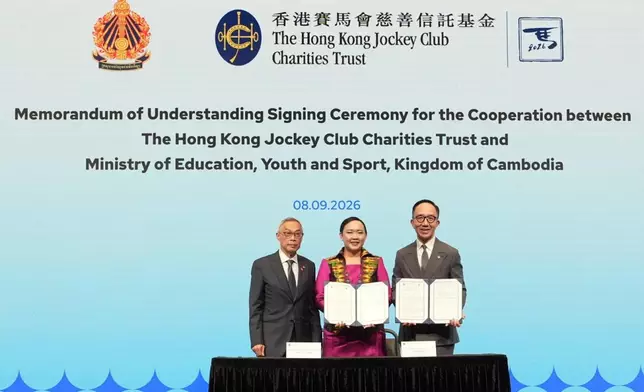
Witnessed by Club Steward Jackson Woo (left), an MOU on early childhood education and development was signed by Dr Gabriel Leung, Club Executive Director, Charities and Community (right), and H.E. Dr Kim Sethany, Permanent Secretary of State of Cambodia’s Ministry of Education, Youth and Sport (centre), reaffirming their shared commitment to strengthening development foundations and better life trajectories for children
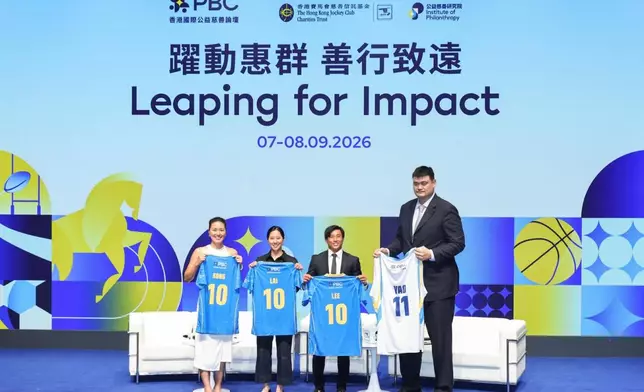
The forum’s closing plenary featured an intergenerational dialogue between a sport leader-turned-philanthropist and aspiring young athletes who want to drive change. The speakers were Yvette Kong, Founder and Chief Executive Officer of Arelyx and Olympic swimmer (1st left); Jacqueline Lai, Hong Kong, China equestrian team rider and Asian Games medallist (2nd left); and Cado Lee, two-time Asian Games gold medallist and a Hong Kong, China Rugby Sevens player (2nd right). The panel was moderated by Yao Ming, Founder and Chairman of the Yao Foundation (1st right)
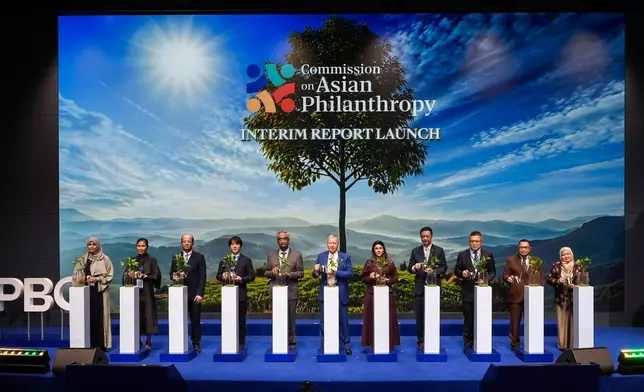
The Commission on Asian Philanthropy launched its Interim Report during the forum. The Club CEO and IoP Director, Winfried Engelbrecht-Bresges (centre), together with Commissioners from The Commission on Asian Philanthropy, pose for a group photo
Club Chairman The Hon Martin Liao said, “Including this year, PBC will have engaged more than 10,000 participants over the past decade and featured more than 380 speakers from over 40 countries and regions – making it one of the world’s largest philanthropic assemblies. PBC 2026 examines the need for systems change, new approaches to capital and the capabilities required to deliver impact. It explores how cross-sector collaboration and multi-stakeholder partnerships can drive sustainable and lasting outcomes. Together, these contributions reflect PBC’s continuing role as a platform for sharing ideas, advancing understanding and connecting leaders around the practical solutions needed to address the challenges of our time.”
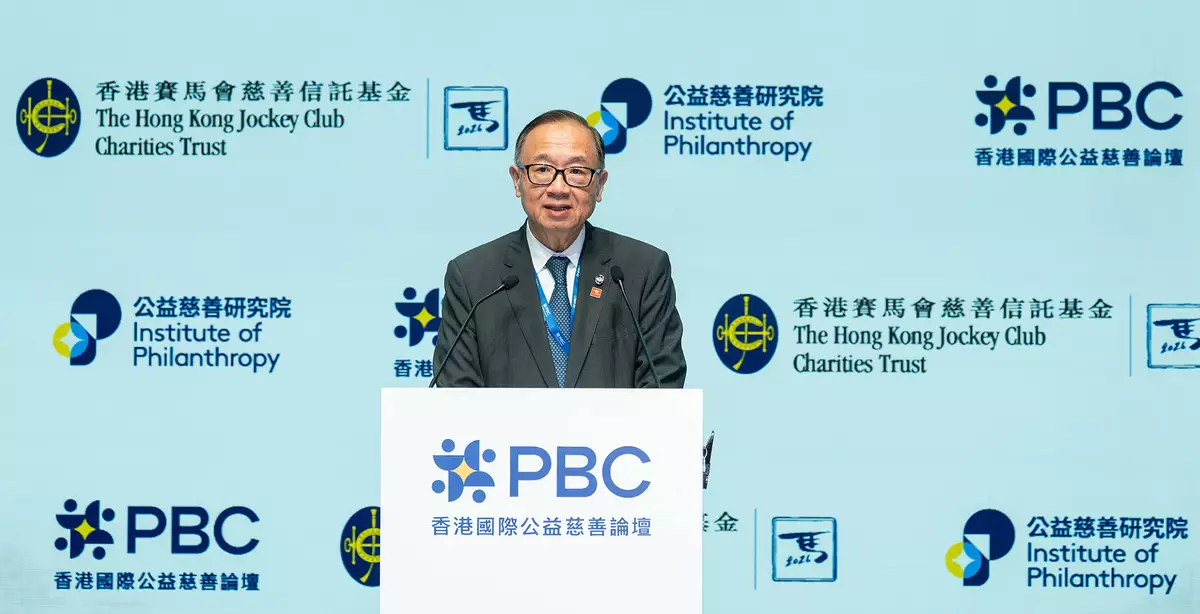
Club Chairman The Hon Martin Liao delivers a speech at the opening ceremony of PBC 2026
Since its first edition in 2016, PBC has grown into one of the world’s largest philanthropy forums. Adopting the theme “Leaping for Impact”, this year’s forum is one of the highlights of the Club’s Year of the Horse campaign. Inspired by the Olympic values of excellence, friendship and respect, and the Paralympic values of courage, determination, inspiration and equality, the forum explored what philanthropy can learn from sport in areas such as discipline, focus, resilience and teamwork.
Thematic discussions over the two days addressed pressing social issues including health, the well-being of older adults, urban poverty alleviation, heritage conservation, youth positive trajectory development, climate resilience and inclusive employment. Through Impact Studios, Co-Learning Workshops and other extended programmes it connected ideas with practical implementation and fostered collaborations that can generate tangible benefits for communities.
Asia-Pacific Philanthropy: Opportunities and Capital in Transition
A key topic of conversation at PBC 2026 was how new capital can be channeled into more catalytic and sustainable solutions. Club Deputy Chairman and IoP Chairman, Lester Huang, said this presents a significant opportunity to transform not only the volume of philanthropic giving, but also how philanthropic capital is deployed. The priority should be to direct capital towards solutions that are evidence-based, outcome-focused and capable of delivering sustainable benefits over the long term.
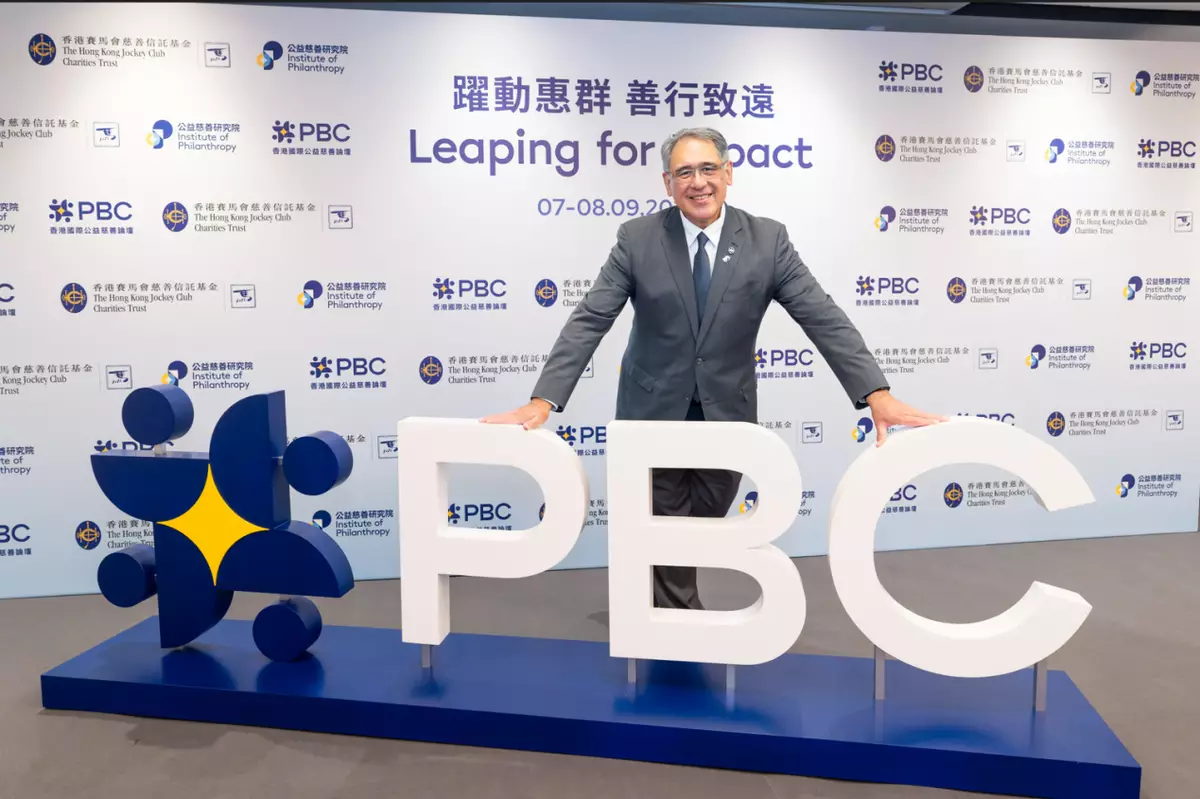
Club Deputy Chairman and IoP Chairman, Lester Huang
Huang added that The Hong Kong Jockey Club Charities Trust has adopted an impact-led approach and initiated its own Trust-initiated Projects working in conjunction with the HKSAR Government, non-governmental organisations (NGOs), academia and community partners. The Trust also supports community partners through charitable donations for projects serving people from all walks of life in Hong Kong.
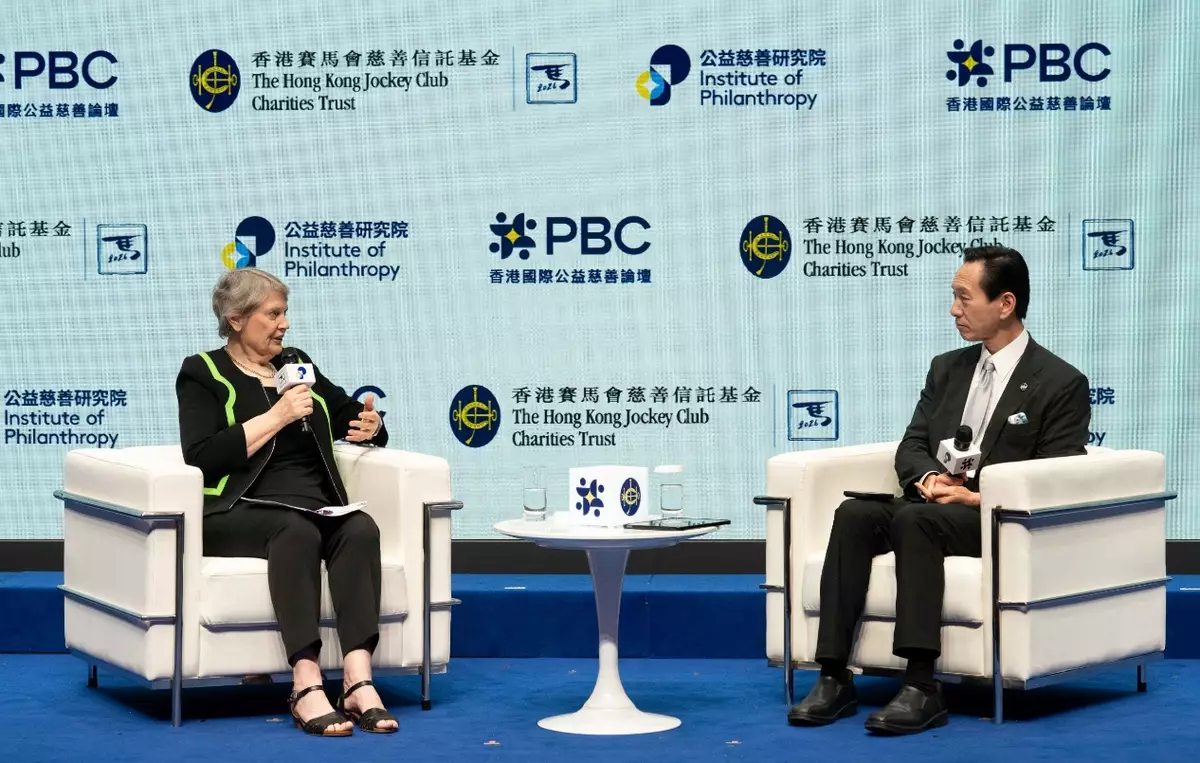
Moderated by Club Steward The Hon Bernard Chan (right), former Prime Minister of New Zealand and former United Nations Development Programme Administrator Helen Clark (left) delivered the opening keynote entitled “A New Era for Philanthropy: Leading Through Complexity”
Winfried Engelbrecht-Bresges, the Club’s CEO and IoP Director, delivered the forum’s closing remarks, echoing insights from forum speakers and reflecting on the sector’s evolving journey. “If there is one lesson that has emerged consistently over the past two days, it is that meaningful impact does not happen by accident. It requires vision, discipline and commitment. But above all, it requires collaboration.” He added: “No organisation, foundation, government or business can address today’s challenges alone. Partnerships are key, but equally important is finding the right partners: those who bring complementary strengths, share our purpose are committed to achieving meaningful outcomes together.”
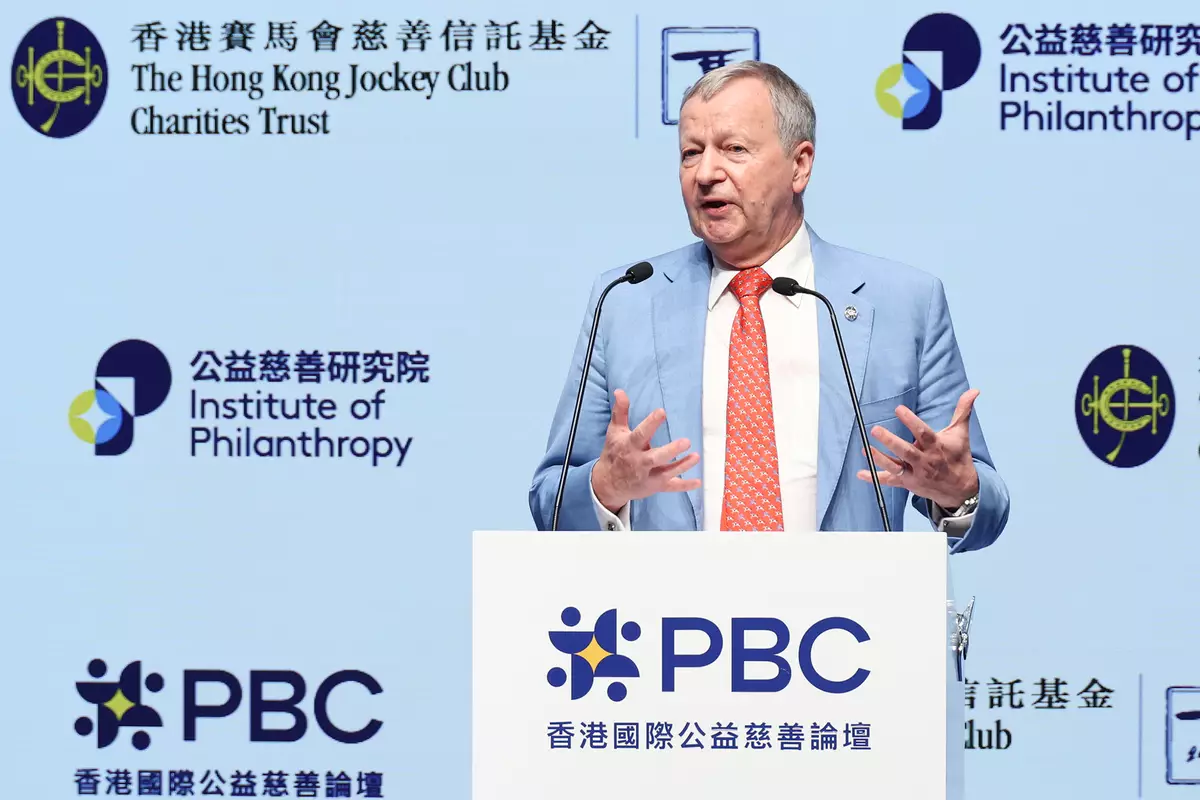
Club Chief Executive Officer and Director of the Institute of Philanthropy, Winfried Engelbrecht-Bresges, delivers closing remarks at PBC 2026
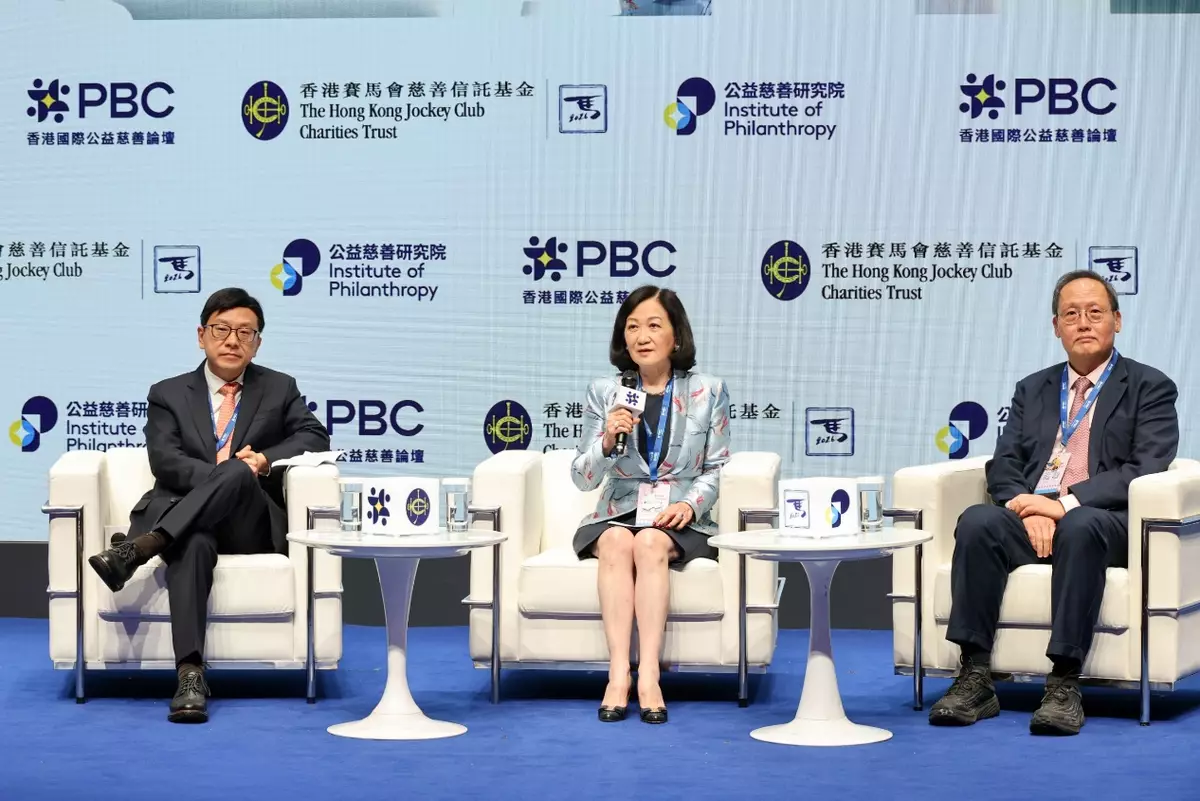
The fourth plenary, entitled “Two Playbooks, One Goal: Navigating Social Mobility in Asia’s Twin Cities”, was moderated by The Hon Mrs Regina Ip, Convenor of the Non-official Members of the Executive Council of the HKSAR (centre). It featured The Hon Chris Sun, Secretary for Labour and Welfare of the HKSAR Government (left), and Tan See Leng, Minister for Trade and Industry (Energy & Industry) and Former Minister for Manpower, Singapore (right)
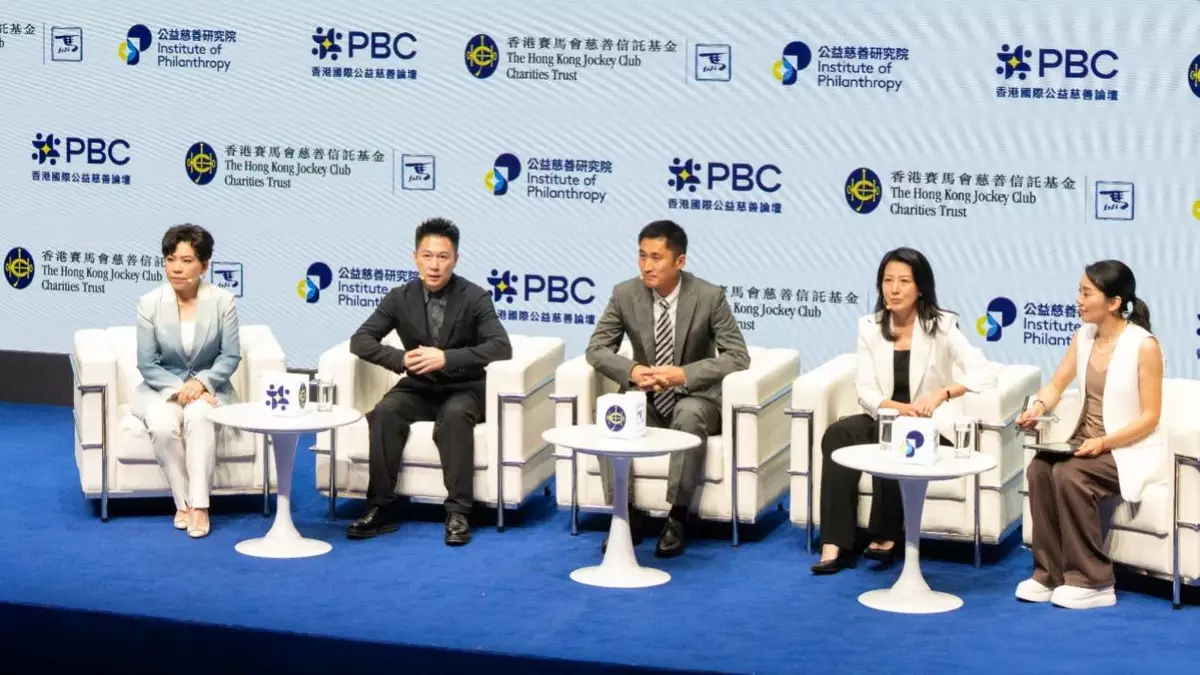
The fifth plenary, entitled “Expanding the Arena: Philanthropy, Leadership, and Pathways Beyond Sport”, featured a discussion between Olympic gold medallists Deng Yaping (1st left), Li Xiaopeng (2nd left), and Yang Yang (2nd right), together with 2026 international football tournament referee Ma Ning (centre)
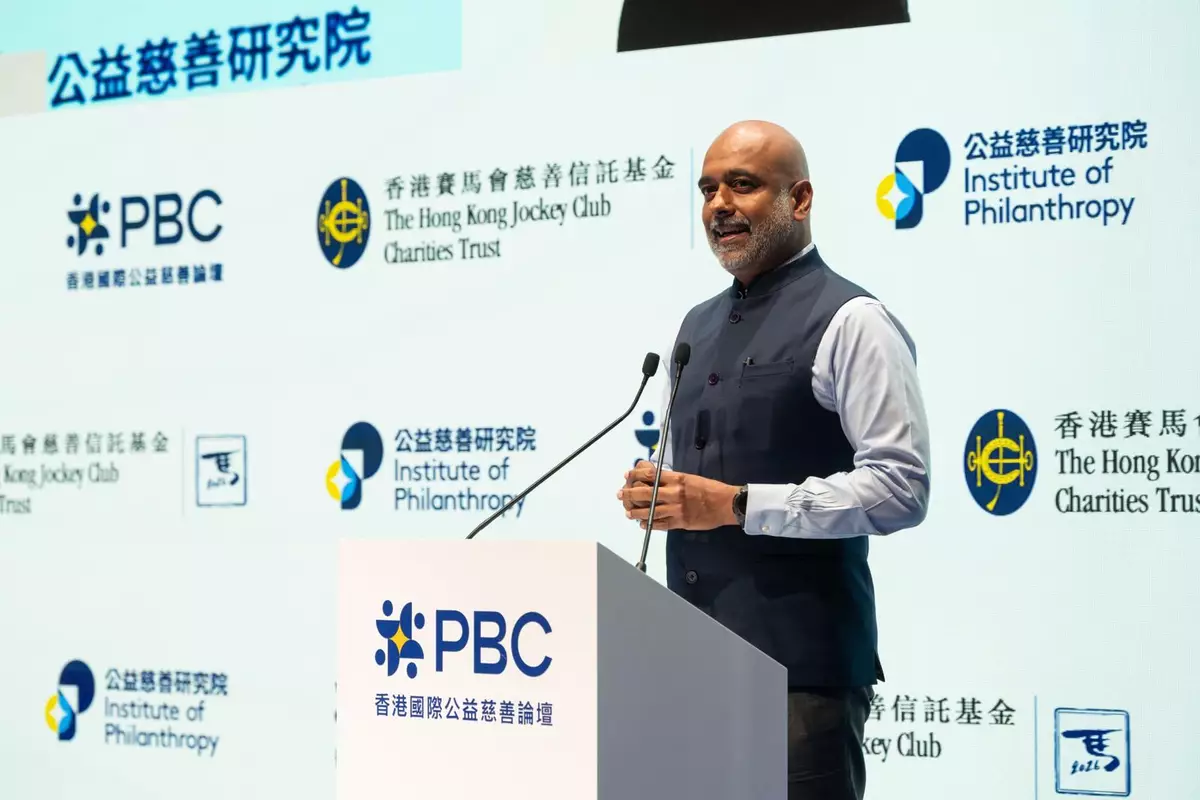
Hari Menon, President of Global Growth & Opportunity at the Gates Foundation, delivers the forum’s opening keynote address on day two in a session entitled “The New Growth Agenda: Philanthropy’s Role in Expanding Opportunity for All”
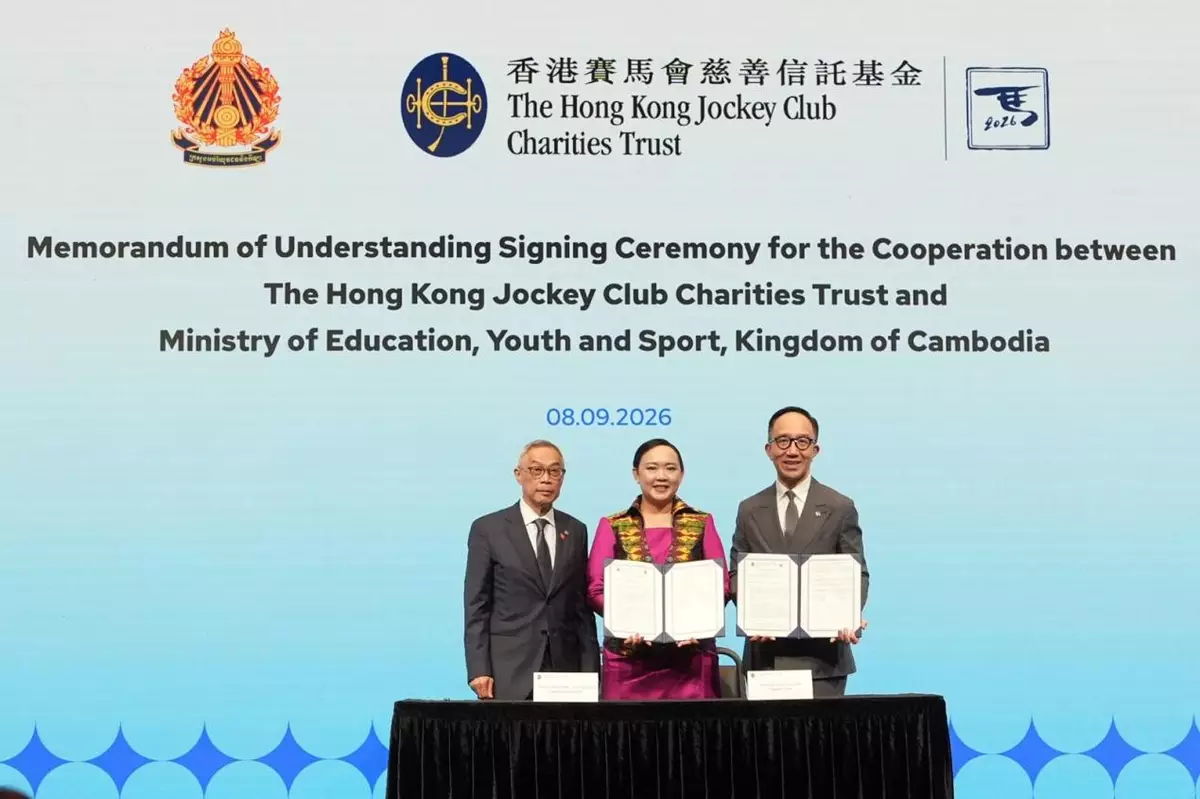
Witnessed by Club Steward Jackson Woo (left), an MOU on early childhood education and development was signed by Dr Gabriel Leung, Club Executive Director, Charities and Community (right), and H.E. Dr Kim Sethany, Permanent Secretary of State of Cambodia’s Ministry of Education, Youth and Sport (centre), reaffirming their shared commitment to strengthening development foundations and better life trajectories for children
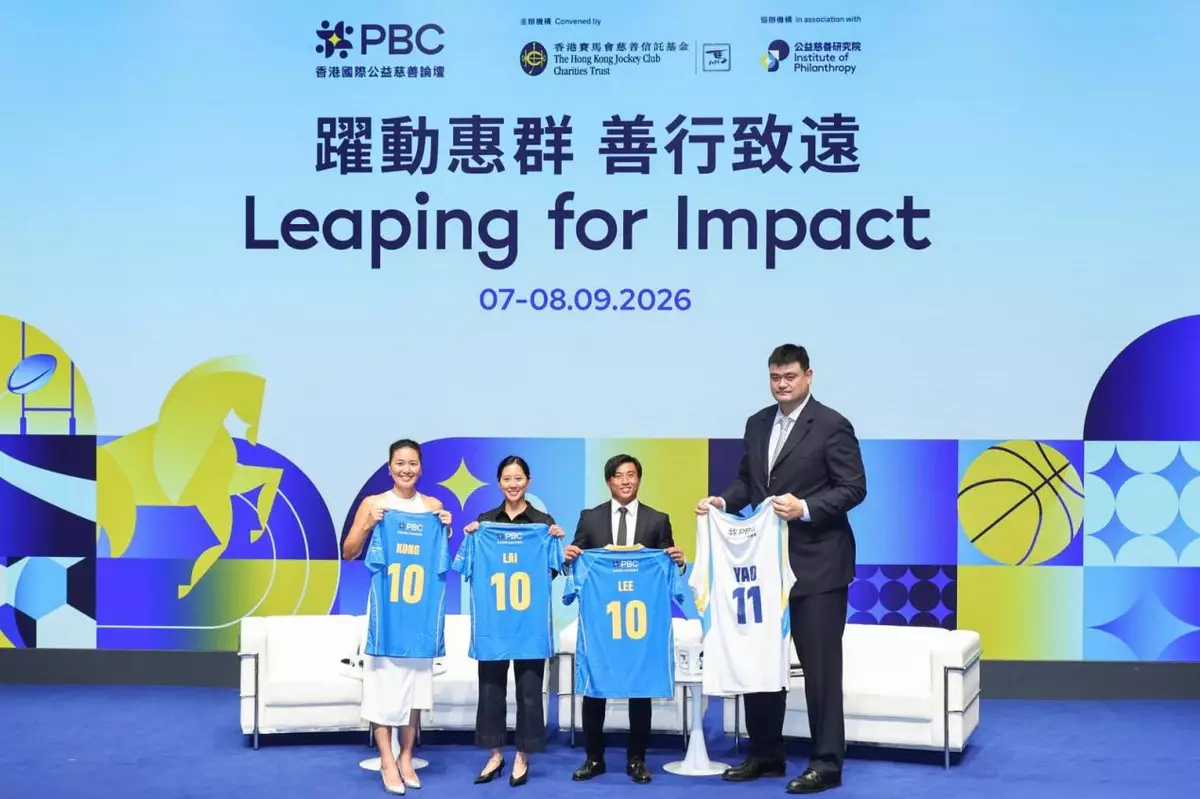
The forum’s closing plenary featured an intergenerational dialogue between a sport leader-turned-philanthropist and aspiring young athletes who want to drive change. The speakers were Yvette Kong, Founder and Chief Executive Officer of Arelyx and Olympic swimmer (1st left); Jacqueline Lai, Hong Kong, China equestrian team rider and Asian Games medallist (2nd left); and Cado Lee, two-time Asian Games gold medallist and a Hong Kong, China Rugby Sevens player (2nd right). The panel was moderated by Yao Ming, Founder and Chairman of the Yao Foundation (1st right)
The Launch of The Hong Kong Jockey Club Charities Trust Impact Report
The Club and its Charities Trust officially released the first edition of The Hong Kong Jockey Club Charities Trust Impact Report on the first day of the forum, detailing the many ways in which the Club has improved lives and strengthened communities since its earliest recorded donation in 1915. The Club has developed a new three-tier hierarchical measurement framework, evaluating impact at project, programme and Trust levels.
The report highlights three key insights. First, resources should be more precisely targeted towards the most marginalised and underserved populations to maximise the impact of philanthropy. Second, initiatives should be designed with long-term sustainability in mind, delivering intensive and sustained interventions that empower beneficiaries to achieve lasting positive behavioural change. Third, impact measurement must incorporate flexible, prolonged follow-up periods tailored to the life cycle of each programme, enabling a more comprehensive assessment of long-term outcomes. The report sets out the Trust’s approach to impact measurement and illustrates the social impact generated by the many initiatives it has created or supported.
The Commission on Asian Philanthropy Launched its Interim Report
The Commission on Asian Philanthropy, co-convened by IoP and the Asian Philanthropy Congress (APHIC), also launched its Interim Report, presenting the first comprehensive research on the scale and scope of philanthropic ecosystems across participating Asian jurisdictions.
Citing the report’s estimates, domestic philanthropic giving across 10 jurisdictions representing 70 percent of Asia’s population and 80 percent of its GDP, reached US$109 billion in 2024, equivalent to more than US$1 trillion over the next decade. The report found that Asia’s philanthropy is shaped by everyday giving, contributions from businesses and public investment, reflecting a model in which community, market and state actors participate in philanthropy together. This broad-based mix of support suggests a philanthropic ecosystem characterised by participation from across society and a strong foundation for collaboration in pursuit of shared national priorities.
Huang said Asia is becoming an increasingly important force in global philanthropy, not only through growing capital but also through ideas, knowledge and leadership. As philanthropic activity continues to expand across the region, Asia has an opportunity to contribute its own perspectives and solutions to shared global challenges. The significance of philanthropic ecosystems cannot be understood through funding alone. Beyond financial resources, they contribute capabilities such as trusted networks, mobilisation around shared values, institutional legitimacy and long-term commitment that can support broader development outcomes.
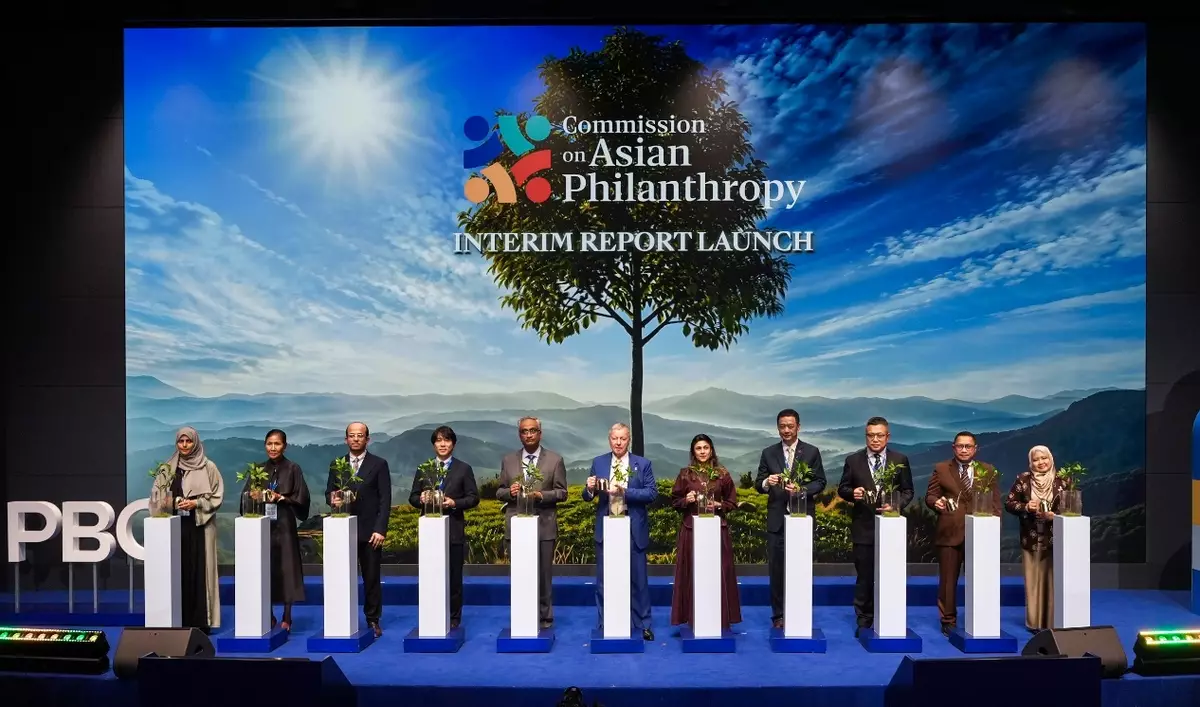
The Commission on Asian Philanthropy launched its Interim Report during the forum. The Club CEO and IoP Director, Winfried Engelbrecht-Bresges (centre), together with Commissioners from The Commission on Asian Philanthropy, pose for a group photo
Key finding of the report: philanthropy in Asia is not dominated by a single model, but by five models that collectively facilitate domestic giving: community-led, faith-based, corporate-led, state-led and ultra-high-net-worth individual-led philanthropy. The report also suggests three priority areas for further development:
1.Improving data visibility on philanthropic resources and capabilities;
2.Cultivating philanthropic models by learning from effective growth playbooks across the region;
3.Integrating philanthropic ecosystems as strategic assets in the planning and coordination of major social and development priorities.
Huang pointed out that the report’s findings can help decision-makers understand the sector’s resources and capabilities more systematically. They also reinforce the need for philanthropy to collaborate more closely, using evidence and impact measurement to direct resources effectively and generate tangible, sustainable outcomes for communities.
HKJC Remains the Leading Corporate Donor
In line with the theme of PBC 2026, The Bridgespan Group unveiled a new report examining what distinguishes family giving in Asia and how the world’s wealthiest families approach philanthropy. Supported by a Funders Council comprising IoP, The Rockefeller Foundation and the Gates Foundation, the research explores the relationship between family, business and philanthropy across the region. Separately, Bridgespan’s latest corporate giving research found that The Hong Kong Jockey Club and its Charities Trust remain the leading corporate donor in Asia and the eighth largest globally, with an annual average of approved donations of US$774 million from 2020 to 2024.
IoP Marks Third Anniversary with Substantive Progress
Established at PBC 2023 and now in its third year, IoP has made substantive progress, said Lester Huang, Club Deputy Chairman and IoP Chairman. Through the three mutually reinforcing pillars of “think”, “fund” and “do”, IoP supports philanthropic thought leadership and professionalising the sector.
Looking forward, he noted that IoP will continue to help advance philanthropy “in Asia, for Asia” by generating research and insights, strengthening sector capabilities, and creating a platform that fosters collaboration among philanthropic leaders and institutions. Through these efforts, IoP seeks to help shape a more connected, confident, and influential Asian philanthropy sector; one that is increasingly able to mobilise resources, share knowledge and address the opportunities and challenges facing the region.
The Club’s support for PBC, like all of its charity and community initiatives, is made possible by its unique value creation model through which the Club generates sustainable economic and social value for the community through tax contributions, charitable donations and employment opportunities.