Russian officials have dismissed once again Japan's demand to remove a newly unveiled monument commemorating the Soviet victory over militarist Japan in World War II, reaffirming that the statue will stay, and urging Japan to face up to its wartime crimes.
The 15-meter-tall monument was unveiled in Russia's far eastern city of Khabarovsk on September 4, featuring a Soviet soldier shattering an imperial-era border stone bearing the chrysanthemum emblem, a symbol of the Japanese emperor.
One day after the unveiling ceremony, Japanese Prime Minister Sanae Takaichi demanded that the statue be taken down, arguing that the Chrysanthemum Crest is widely recognized as a symbol of Japan, and that a monument depicting its destruction is "unacceptable".
In response to the demand, Kremlin Spokesman Dmitry Peskov on Tuesday criticized Japan for ignoring its historical crimes.
"It is difficult to say what they have forgotten and what they remember in Tokyo, but at least we have not forgotten. We have not forgotten Japanese militarism and the victory we achieved over it," he said.
At Wednesday's press briefing, Russian Foreign Ministry Spokeswoman Maria Zakharova once again pointed out that under that same emblem, militarist Japan committed horrendous crimes against other Asian countries and Russia, including the infamous atrocity of the 1937-1938 Nanjing Massacre.
She noted that Japan has never carried out anything resembling the denazification process undertaken in Germany, yet its political elites still regularly visit and pay tribute to the Yasukuni Shrine in Tokyo, where Japanese war criminals convicted after World War II by the International Military Tribunal for the Far East are honored. Such visits, she said, are perceived by neighboring countries as a refusal to acknowledge wartime atrocities.
Japan's demands regarding the monument in Khabarovsk infringe upon Russia's sovereignty and represent yet another attempt to mislead the international community and rewrite the history of Japanese militarism, she added.
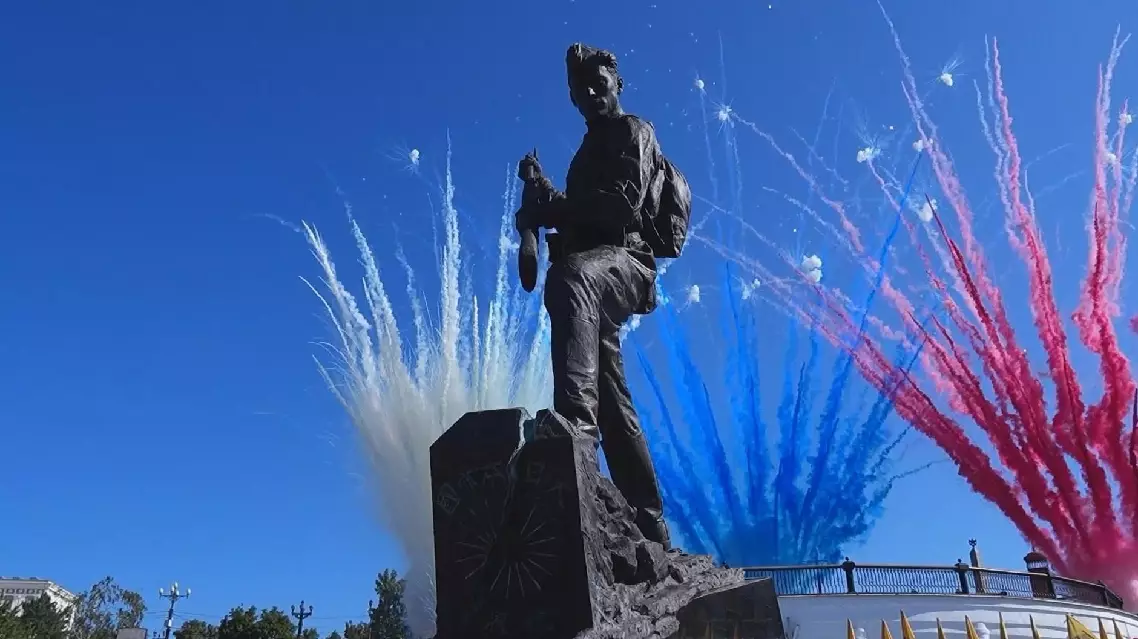
Russian officials reject Tokyo's call to remove WWII monument, urge Japan to face up to militarism crimes