HANGZHOU, China, Sept. 10, 2026 /PRNewswire/ -- The education sector is entering a period of rapid digital transformation, with AI technologies reshaping expectations and amplifying good educational practices across primary, secondary, and higher education establishments. As generative AI and intelligent systems become more widely adopted, institutions are now expected to support in-person, remote, and blended learning simultaneously while maintaining consistency in teaching quality and student engagement. Educators face mounting pressure from heavy preparation workloads, inefficient classroom interactions, and fragmented teaching data. Students, meanwhile, expect increasingly engaging and personalized learning experiences.
A new generation of AI-enabled, education-first designed solutions—such as Hikvision's WonderHub—is beginning to address these challenges. By combining intelligent interactive flat panel displays (IFPDs) with cloud-based collaboration and management platforms, educational institutions can create connected classrooms that support teachers across lesson planning, delivery, and follow-up.
AV Magazine and Hikvision have collaborated to release a new white paper for IT decision-makers and education leaders, providing a strategic overview of how to achieve smart education by transforming the full teaching lifecycle through AI-centered interactive flat panel displays and cloud collaboration.
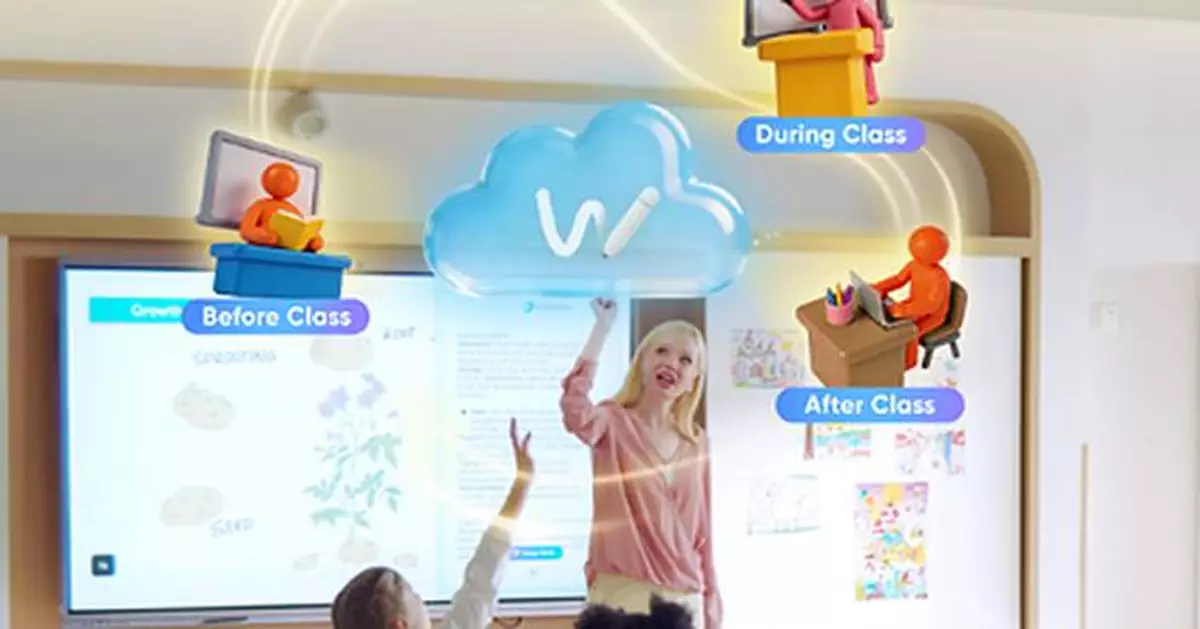
- Before class: how AI streamlines lesson planning and content creation
With AI-powered cloud collaboration and management platforms such as Hikvision's WonderHub Class, AI acts as a creative assistant, generating structured lesson outlines, discovering relevant multimedia resources, and rapidly creating interactive activities such as quizzes and games from simple text prompts. This shifts preparation from a time-consuming manual process to a more efficient, creative workflow, returning valuable time to educators. - During class: how AI enhances real-time teaching and student engagement
AI-powered interactive displays, such as Hikvision's WonderHub IFPDs, combined with the AI voice assistant, enable hands-free voice control, allowing teachers to manage applications and content without disrupting lesson flow. On-screen content recognition provides instant explanations for circled objects or formulas, while real-time collaborative tools and AI-generated multilingual captions create a more inclusive and participatory environment for all students, whether in-person or remote. - After class: how AI automates workflows and delivers data-driven insights
Through the WonderHub Class cloud platform, the system automatically generates structured lesson summaries, including key discussion points and homework tasks, for student revision. It can also assist in creating, distributing, and grading assignments, dramatically reducing the marking burden. Furthermore, the platform synchronizes all materials to the cloud and transforms classroom interaction data into visual analytics, providing educators with evidence-based insights to refine their teaching strategies continuously.
AI-driven smart education transforms the classroom from a collection of disconnected devices into a unified, responsive teaching ecosystem—reducing administrative workload, enhancing accessibility, and turning every lesson into a foundation for continuous improvement.
Download the full white paper to discover how AI-centered education solutions, such as the WonderHub ecosystem, move education from a device-centered model toward an intelligent, workflow-driven experience that supports teachers across the entire learning journey.
** This press release is distributed by PR Newswire through automated distribution system, for which the client assumes full responsibility. **
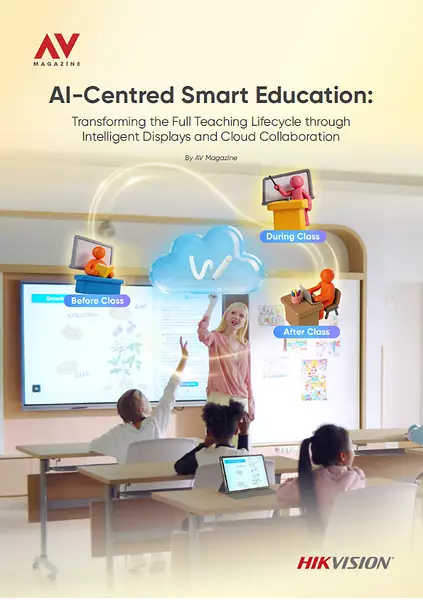
How to effectively leverage AI-powered intelligent displays and cloud collaboration to transform the full teaching lifecycle
Across the conference and exhibition, attention turned from what agentic AI can do to how organisations can control its access, actions and authority.
SINGAPORE, Nov. 19, 2026 /PRNewswire/ -- GovWare Conference and Exhibition 2026 concluded after three days of discussions and demonstrations that reflected a clear shift in the cybersecurity conversation. As AI systems gain the ability to make decisions and take action, organisations are having to consider not only how they use AI, but how they secure it.
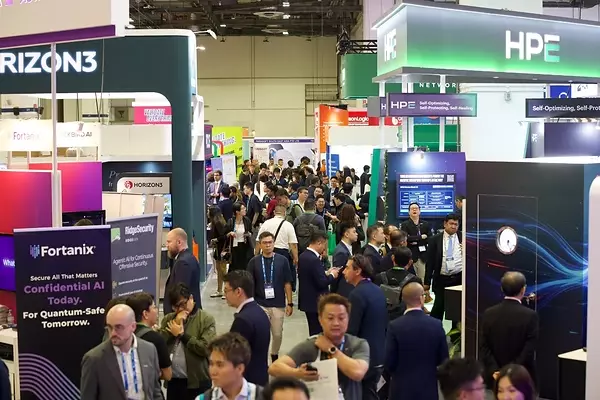
GovWare 2026 brought together more than 15,000 attendees from over 100 countries and regions, including policymakers, business leaders, practitioners and technology innovators. It was held from 13 to 15 October at Sands Expo and Convention Centre as the anchor trade platform of Singapore International Cyber Week (SICW), supported by the Cyber Security Agency of Singapore (CSA).
Under the theme, "Anchored in Unchanging Principles: Cyber at Agentic Velocity," the programme examined how organisations can adopt increasingly autonomous systems while maintaining control over identity, access, permissions, visibility and accountability.
Richard Ireland, CEO of GovWare, said: "The pace of change may be unprecedented, but the principles that underpin effective cybersecurity remain essential. Trust, accountability, resilience and responsible action give us the foundation to navigate what comes next as AI and increasingly autonomous systems reshape how security is understood and practised."
Gwenda Fong, Commissioner of Cybersecurity and Chief Executive of the Cyber Security Agency of Singapore (CSA), said, "Whether dealing with sophisticated cyber threats or the new challenges posed by AI, no single organisation has all the expertise or capabilities needed. Singapore has therefore focused on building the relationships and mechanisms that allow us to work together. With platforms such as Singapore International Cyber Week and GovWare, we can create a place where different perspectives, expertise and capabilities come together — turning conversation into collaboration, and collaboration into action."
From capability to control
Across the conference programme, leaders from government, industry and the cybersecurity community examined how AI is reshaping cyber defence, governance and resilience. Speakers included Yip Hon Weng, Member of Parliament of Singapore, Director at Temasek, Chairman at Government Parliamentary Committee for Defence and Foreign Affairs, and Chairman at DDAS; LTGEN Michelle McGuinness, Australian National Cyber Security Coordinator of the National Office of Cyber Security; Catriona Robinson, Deputy Director-General Cyber Security, National Cyber Security Centre (NCSC) - Government Communications Security Bureau; Keith Leong, Chief Customer Officer, Enterprise, Singtel Singapore; Richard Addiscott, VP Analyst, Gartner; and Gaurav Keerthi, CEO of StrongKeep.
In his opening keynote, David Koh, Deputy Chairman of Ensign InfoSecurity, captured the need to make security an enabler of AI adoption. "If you want to drive fast, you need good brakes. F1 cars have very good brakes and drivers with very good reactions, this allows them to go very fast. In the same way, if you want to adopt AI and innovate fast, then you need good security and good response plans."
That focus extended to GovWare's closed-door Critical Information Infrastructure (CII) Forums for Financial Services and Healthcare, where discussions brought the implications into sectors in which disruption can have wider economic and societal consequences. The Financial Services CII Forum tackled AI governance, post-quantum readiness and concentration risk; the Healthcare CII Forum addressed AI, third-party risk, patient safety and operational continuity.
On the exhibition floor, these issues moved into practice through demonstrations spanning agentic security operations, identity controls, network visibility and AI assurance.
Agentic cybersecurity moves into operations
In his keynote, Goh Eng Choon, President of Cyber at ST Engineering, showed how agentic AI is changing not only the speed of cyber defence, but the role people play in it. ST Engineering's agentic AI security operations centre has cut investigation times from more than an hour to just seconds, with AI agents gathering evidence, analysing findings and recommending actions. With these dramatically accelerated response times, he argued, the focus now lies in determining where human judgement is required and what authority can safely be delegated to AI. As he put it: "We can delegate execution to technology, but we can never delegate accountability for the outcome."
On the show floor, Stellar Cyber demonstrated the use of AI across detection, investigation, triage and response within security operations. Other exhibitors focused on securing AI agents as they gain identities, credentials and access to enterprise systems. ABP Securite demonstrated how Zero Trust principles can be applied to AI agents, with controls over what they can access and which actions they are authorised to take. Gigamon highlighted visibility into AI activity across enterprise networks, citing research that found 76% of CISOs surveyed see limited visibility into AI-driven traffic as a major barrier to securing AI adoption. BNF Singapore demonstrated AI assurance capabilities spanning model backdoor detection, jailbreak testing and AI model testing and accreditation.
The exhibition reflected how the security challenge is developing on both sides. AI is becoming more active in cyber defence, while increasingly autonomous systems require stronger controls around their identities, access and actions.
GovWare 2026 showed agentic velocity in action, and the security foundations needed to sustain it. Across the conference and exhibition, strategic debate met real-world applications, connecting the cyber community around the opportunities and challenges shaping the agentic era.
GovWare will return from 25 to 27 October 2027 at the Sands Expo and Convention Centre, Singapore.
About GovWare Conference and Exhibition
A trusted nexus for over three decades, GovWare unites policymakers, tech innovators and end-users across Asia and beyond, driving pertinent dialogues on the latest trends and critical information flow. We empower growth and innovation through collective insights, partnerships and connections. Our success is rooted in the trust and support from the cybersecurity community that we have had the privilege of serving over the years, as well as our organisational partners who share the same values and mission to enrich the cybersecurity ecosystem.
** This press release is distributed by PR Newswire through automated distribution system, for which the client assumes full responsibility. **

GovWare 2026 closes with a clear focus on securing AI that can act
GovWare 2026 closes with a clear focus on securing AI that can act