New report, authored by GSMA Intelligence in partnership with Huawei, released at UNESCO's Digital Learning Week
PARIS, Sept. 10, 2026 /PRNewswire/ -- More than one in three (38%) people remains offline despite being covered by mobile broadband – and a lack of digital literacy skills is often to blame, according to new research published yesterday.
The new report, "Bridging the Divide: Enhancing Digital Literacy in the AI Era," authored by GSMA Intelligence and produced in collaboration with Huawei, identifies a digital divide impacting 3.1 billion people caused by a shortage of digital skills, user trust and AI literacy.
AI raises both access and risk
Existing industry projections suggest closing the capability gap could add around $3.5 trillion to global GDP by 2030, with more than 90% of those gains flowing to low- and middle-income countries (LMICs). Physical mobile broadband coverage currently reaches 96% of people worldwide.
The report, unveiled at UNESCO's Digital Learning Week, suggests artificial intelligence could act as both a bridge and a barrier for underserved communities. AI-powered voice assistants and applications that work with images, audio and video can all help low-literacy users bypass the need to input text. At the same time, they raise the security and critical-thinking standards required to participate safely. However, the study warns that users must now be able to understand data privacy and identify risks such as fraud and deepfakes.
The research cites World Bank statistics that GenAI literacy represents the highest-value skill category, with wage premiums up to 36%, far exceeding returns for both digital and traditional AI skills.
Without targeted interventions in basic digital training, the authors warn, rapid AI adoption risks entrenching existing inequalities even in areas with full network coverage.
Mobile classrooms build skills in remote areas
Digital inclusion initiatives typically target those most at risk of digital exclusion, including rural and remote communities, children and teachers in rural schools, older people, and women and girls.
The report emphasizes the need for community-based delivery models, citing Huawei's Skills on Wheels initiative as a field-tested example — particularly its solar-powered DigiTruck mobile classrooms, which bring hardware, rural connectivity and hands-on training, including AI literacy, to off-grid regions.
Since 2019, training courses delivered by Skills on Wheels projects have reached more than 130,000 people across 21 countries, with more people benefiting indirectly. DigiTruck trainers encourage trainees to share their new skills, which is shown to occur in practice. A report on DigiTruck by Kenya's Ministry of Information, Communications and Digital Economy shows that 79% of DigiTruck trainees surveyed had passed on their newly acquired digital skills to family members and peers.
Policymakers urged to treat AI literacy as core infrastructure
To bridge the usage gap, the report urges policymakers, telecom operators and technology vendors to work together and focus on four priorities:
- Treating practical AI awareness, online safety and information verification as a baseline national qualification.
- Adopting multilingual voice and conversational interfaces across public services to minimise user-side technical hurdles.
- Scaling up mobile learning units through cross-sector partnerships that combine operator connectivity, vendor technology and local NGO networks.
- Measuring performance by independent task completion and fraud resilience rather than trainee numbers.
"Digital literacy can no longer be defined by static thresholds," said Tim Hatt, head of research and consultancy at GSMA Intelligence. "Connectivity alone is insufficient — capabilities, system design and trust must evolve together. To capture this multi-trillion-dollar opportunity, stakeholders must integrate layered AI literacy directly into daily livelihoods through trusted community channels."
"Mobile classrooms have demonstrated immense value in helping underserved populations break through physical and psychological barriers to technology," said Gavin Allen, Executive Editor-in-Chief at Huawei. "We will continue working alongside local governments and industry partners to drive digital literacy, ensuring that no one is left behind as we transition into the AI economy."
A new DigiTruck program will launch in France this autumn, covering several cities in the Île-de-France region and targeting low-income and underserved communities with digital skills training.
The full report is available on the GSMA Intelligence research portal:
https://www.gsmaintelligence.com/research/research-file-download?reportId=83651&assetId=83691
** This press release is distributed by PR Newswire through automated distribution system, for which the client assumes full responsibility. **

Closing Digital Literacy Gap Could Unlock Trillions of Dollars in Global GDP Growth
HONG KONG, Sept. 10, 2026 /PRNewswire/ -- The 3rd GTI Forum on Digital Intelligence • Hong Kong, themed "Openness, Sharing, Cooperation - Advancing AI Development", was held in Hong Kong, China on September 8.
Gao Tongqing, Chairman of GTI, stated that GTI continues to strengthen global cooperation, foster open exchange and build consensus on development priorities. Working alongside international organizations, regulators, universities and research institutions, GTI deepens cross-domain and cross-regional collaboration, advances in-depth integration of industry, academia and research worldwide, and promotes "network-intelligence integrated innovation for inclusive AI empowerment" as a global consensus. GTI deepens collaborative innovation to address key industry challenges: it has established eight open laboratories across Asia, Europe and North America, built a 6G open testbed, launched a global open innovation challenge with GSMA, and released over 50 white papers and research reports, providing practical guidance for the global industry to tackle common challenges. To contribute development insights and bridge the digital-intelligence divide, GTI put forward the Mobile Intelligence Integration Index (MI³), released the Mobile AI White Paper and the AI Security Governance Initiative, and advances the secure, trustworthy, inclusive and accessible development of AI. Globally, AI is advancing at an accelerated pace, with three core pillars—technological innovation, industrial application and governance practice—continuing to deepen. For this new stage of AI development, he put forward three proposals on behalf of GTI:
First, jointly advance technological innovation to consolidate the foundation of AI development. GTI will rally global innovation forces across industry, academia, research and application, leverage its open laboratories and testbeds to carry out diverse cooperation such as international joint R&D and global open innovation challenges, and jointly overcome key common technical bottlenecks.
Second, jointly expand application scenarios to unlock AI's value potential. Adhering to a demand-driven approach, GTI will continue to identify high-value application scenarios across industries, promote in-depth integration of AI with sectors including healthcare, transportation, education and energy, and empower key links such as R&D, design and manufacturing.
Third, jointly promote trustworthy governance to steer AI toward good. Upholding a people-centered and responsible AI philosophy, GTI will deepen international dialogue and cooperation in areas such as AI standards, security and governance.
Li Huidi, Executive Vice President of China Mobile, pointed out that as a core founding member of GTI, China Mobile will continue to leverage GTI's open cooperation platform to discuss AI technology evolution, industrial applications and governance pathways with all parties. Currently, AI is evolving from isolated tools to general-purpose capabilities, driving all-round transformation of productivity and social governance and reshaping the underlying logic of the information and communications industry: connectivity expands from human-machine-thing interconnection to Agent interconnection, and operation models shift from traffic-based operations to integrated "Byte+Token" operations.
Following this trend, China Mobile continues to advance the deep integration of AI and information and communications technologies, and accelerates the coordinated evolution of communications networks, computing networks and AI networks, so that AI can better embed into networks, empower industries and serve society. As the "AI+" era unfolds, China Mobile stands ready to forge ahead hand in hand with partners from all sectors. On behalf of China Mobile, Li Huidi put forward three proposals:
First, jointly strengthen foundational digital capabilities. The two sides will collaborate on core technologies such as large models, AI computing clusters and integrated cloud-network-compute scheduling, boost efficient coordination of communications, computing, data and models, and build secure, interconnected, open and trustworthy AI infrastructure.
Second, co-create smart application scenarios. China Mobile will deepen efforts in diverse tracks including industry, people's livelihood and urban development, build more benchmark applications with Hong Kong and global partners, leverage Hong Kong's role as an international gateway and "super connector", and advance AI services' industry-wide coverage, inclusive access for all, and global sharing.
Third, foster an open global ecosystem. The two sides will deepen industry-university-research-investment collaboration, build cross-border AI cooperation platforms, and jointly explore rules on cross-border data flows, algorithm security, model trustworthiness and AI Agent governance, to promote the safe, inclusive and sustainable development of artificial intelligence.
China Mobile, together with GTI and over 20 industry partners, jointly released the GTI AI Security Governance Technology White Paper and the Security Capability System; together with GTI and The Hong Kong Polytechnic University, officially launched the AI4S Scientific Workstation • International Edition (TG Science); and, together with GTI, and over 10 industry-university-research partners, jointly released the Achievement of the 6G Open Testbed: Base Station and Terminal Prototype IODT Based on The Latest 3GPP Definitions.
The event also featured two sub-forums: Smart Transportation and Mobile AI. Gathering over 20 experts and executives from sectors including transportation, low-altitude economy, artificial intelligence, the sub-forums explored integrated development and practices of AI across sectors, driving broader and deeper expansion of "AI+" and empowering transformation and upgrading of all industries.
** This press release is distributed by PR Newswire through automated distribution system, for which the client assumes full responsibility. **
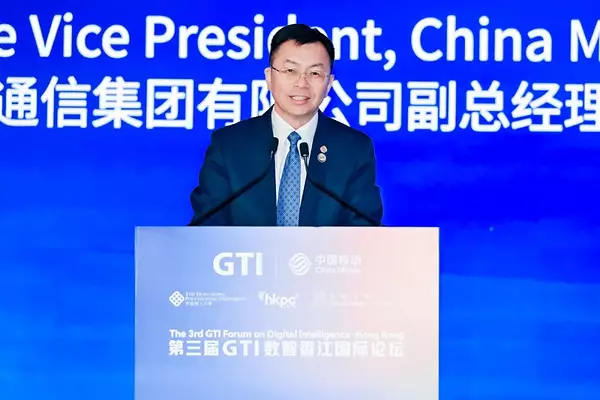
The 3rd GTI Forum on Digital Intelligence, Hong Kong Advances Global Inclusive AI Development
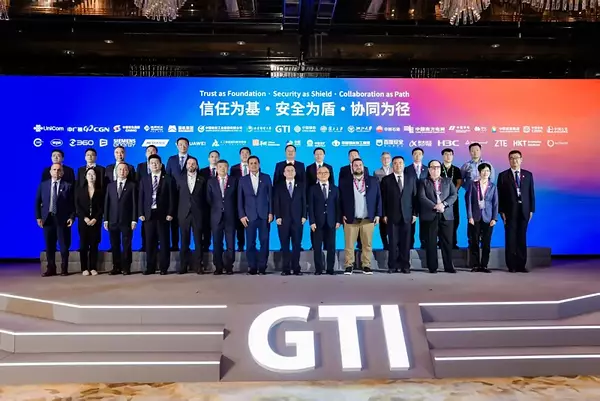
The 3rd GTI Forum on Digital Intelligence, Hong Kong Advances Global Inclusive AI Development
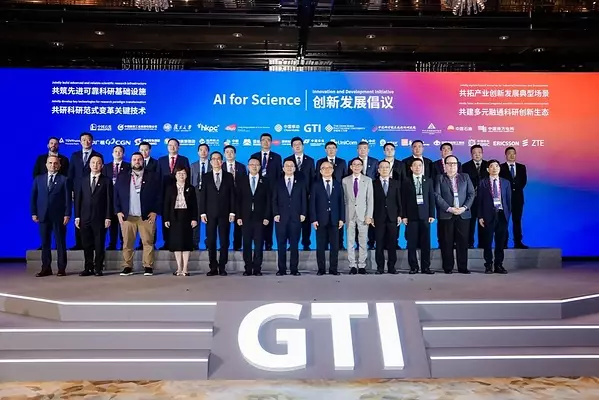
The 3rd GTI Forum on Digital Intelligence, Hong Kong Advances Global Inclusive AI Development
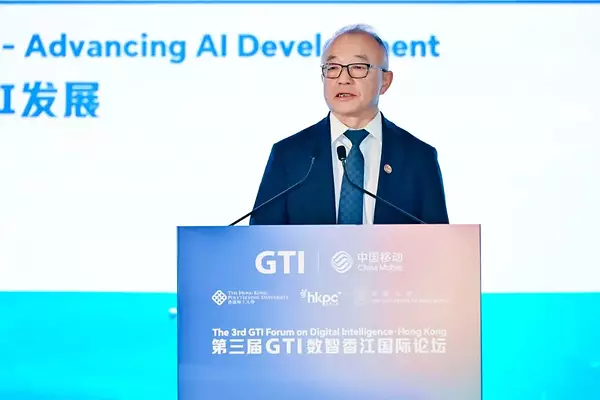
The 3rd GTI Forum on Digital Intelligence, Hong Kong Advances Global Inclusive AI Development