Skip to Content Facebook Feature Image

England pile on the pain by stretching lead over Pakistan to 166 runs on Day 2

Sport

England pile on the pain by stretching lead over Pakistan to 166 runs on Day 2
Sport

Sport

England pile on the pain by stretching lead over Pakistan to 166 runs on Day 2

2026-09-10 20:44 Last Updated At:20:51

BIRMINGHAM, England (AP) — England comfortably extended its lead against Pakistan to an already-imposing 166 runs on the second morning of the Ebdgaston test on Thursday.

England took lunch at 299-6 with Jamie Smith on 47 despite one thumb in a splint and Gus Atkinson on 5.

The wickets taken were Harry Brook and Dan Lawrence — both batters were obviously frustrated — but England added 143 runs in 25 overs in bright conditions to keep the host on track to sweep the three-test series.

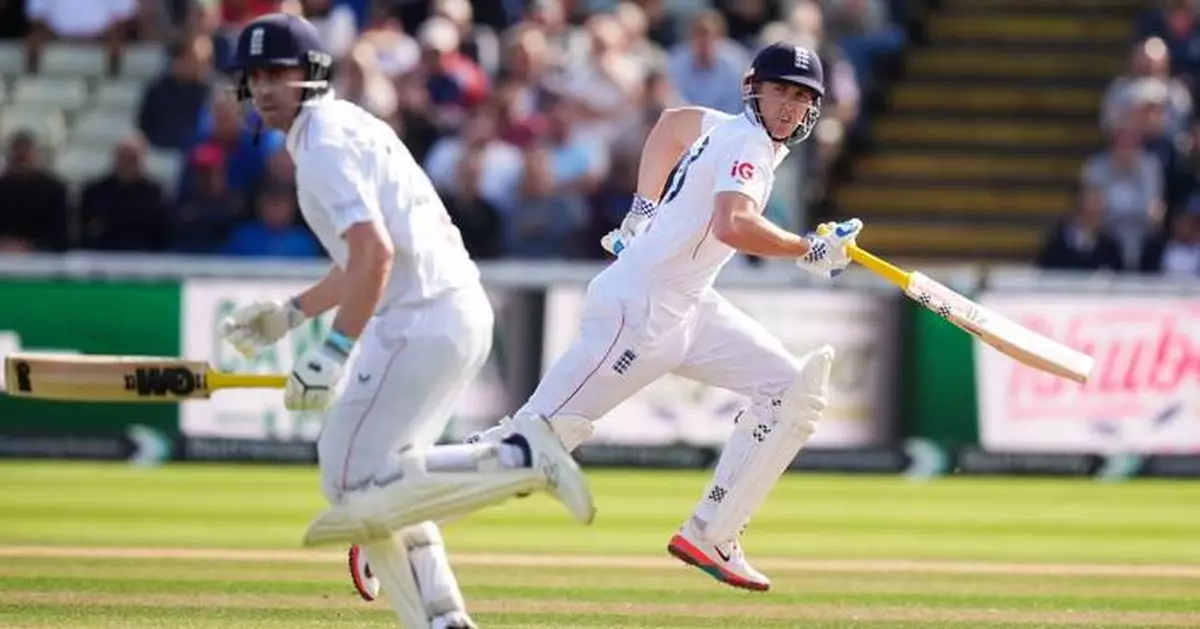
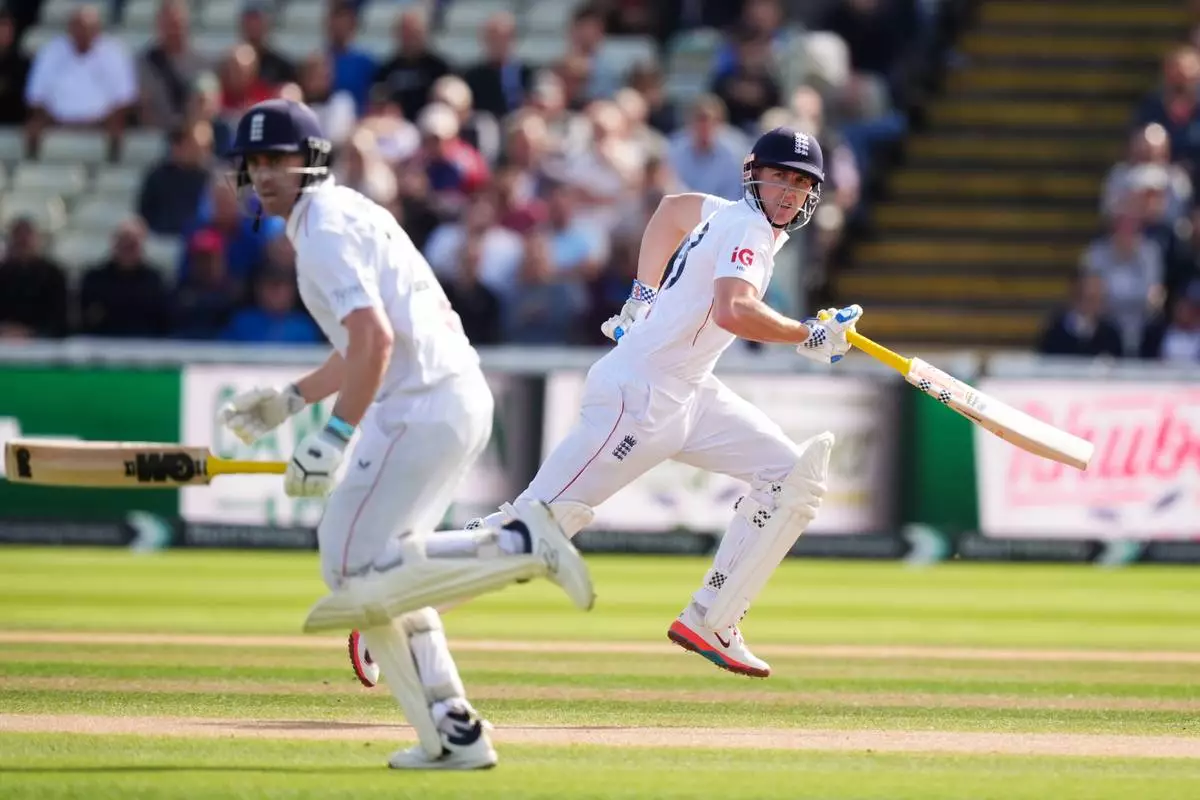
Brook, resuming on 52, and Lawrence, on 5, scored at more than seven runs an over in the first hour until Brook ran himself out on 75.

Brook guided the ball to midwicket where Shan Masood was sharp and his throw beat Brook easily. Brook flipped his bat in frustration with himself. He'd been patient until that 97th and last delivery he faced. But he's been involved in five run outs in tests — only Virat Kohli (6) has been in more.

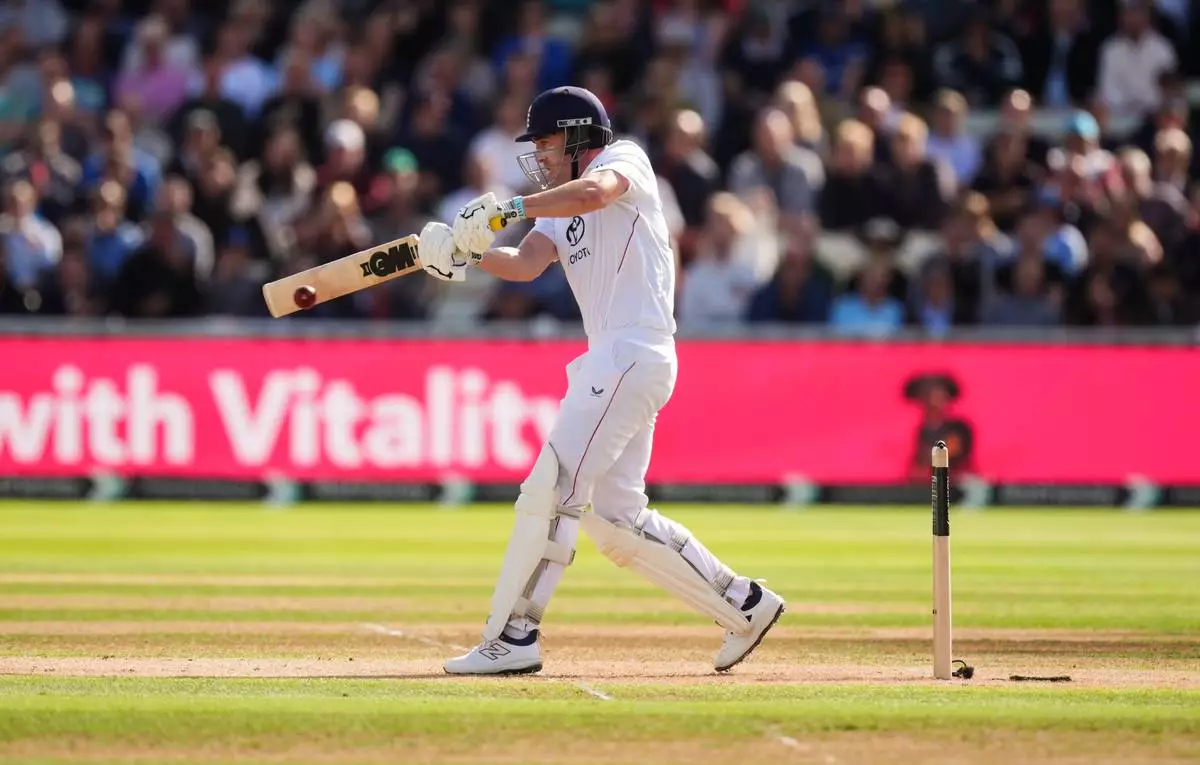
Lawrence was the more proactive of the pair and took only 47 balls to reach a fifty in three straight tests. It was his seventh fifty in 17 tests and a fair pitch offered a shot at his first test hundred.

But he chopped on on 65, yelling “No,” and gave Mohammad Imran his first test wicket. Lawrence hit nine boundaries among 82 balls.

Smith took a blow to his thumb while keeping on Wednesday but England said he'd bat on Thursday but maybe not keep wicket again.

Smith's timing was off while Mohammad Ali found movement but struggled with no balls.

The batter didn't appear to find a groove until he skipped to Saim Ayub and smacked the spinner over long-on for the first six of the match.

Atkinson overturned being given out on 1 when he appeared to be pinned by Razaullah, but UltraEdge showed a faint ball on bat just five minutes before the interval.

See AP’s full cricket coverage here
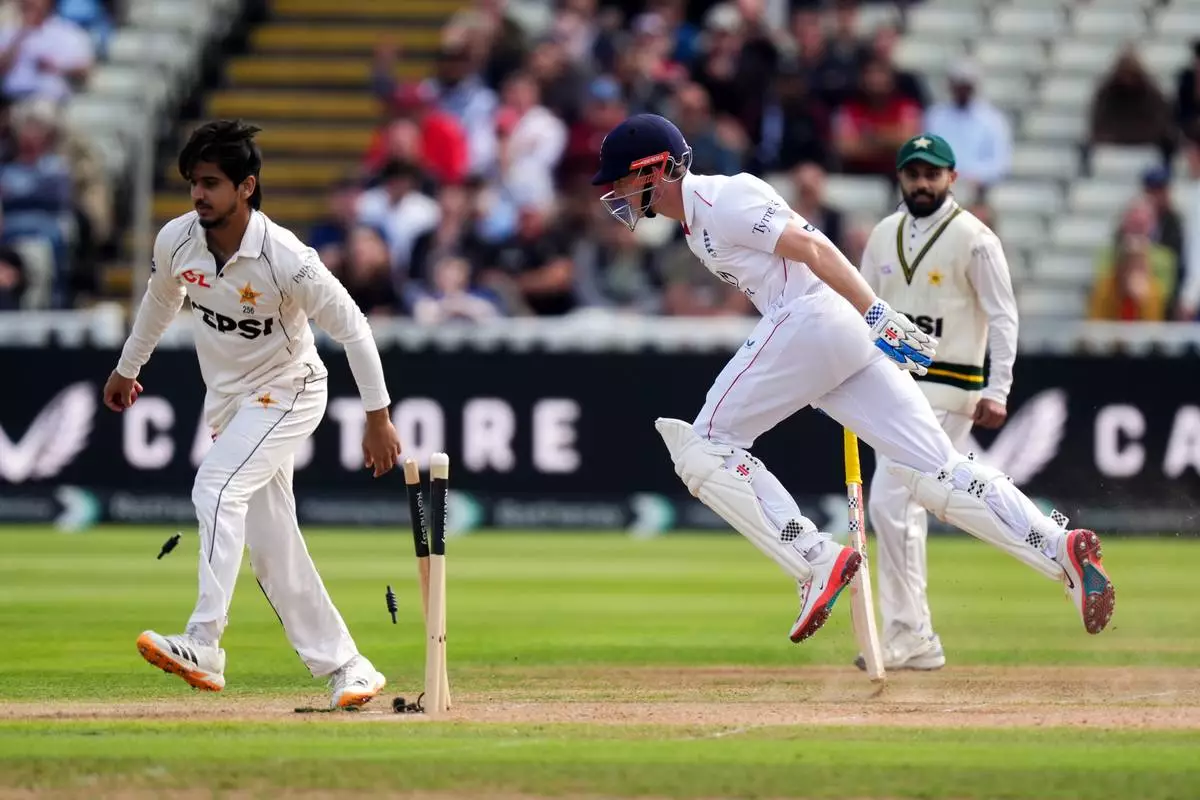
England's Harry Brook, center, is run out by Pakistan's Shan Masood during day two of the third cricket Test between England and Pakistan in Birmingham, England, Thursday Sept. 10, 2026. (Mike Egerton/PA via AP)
England's Harry Brook, center, is run out by Pakistan's Shan Masood during day two of the third cricket Test between England and Pakistan in Birmingham, England, Thursday Sept. 10, 2026. (Mike Egerton/PA via AP)
England's Dan Lawrence bats on day two of the third cricket Test between England and Pakistan in Birmingham, England, Thursday Sept. 10, 2026. (Mike Egerton/PA via AP)

England's Dan Lawrence bats on day two of the third cricket Test between England and Pakistan in Birmingham, England, Thursday Sept. 10, 2026. (Mike Egerton/PA via AP)
England's Harry Brook, right, makes a run during day two of the third cricket Test between England and Pakistan in Birmingham, England, Thursday Sept. 10, 2026. (Mike Egerton/PA via AP)

England's Harry Brook, right, makes a run during day two of the third cricket Test between England and Pakistan in Birmingham, England, Thursday Sept. 10, 2026. (Mike Egerton/PA via AP)
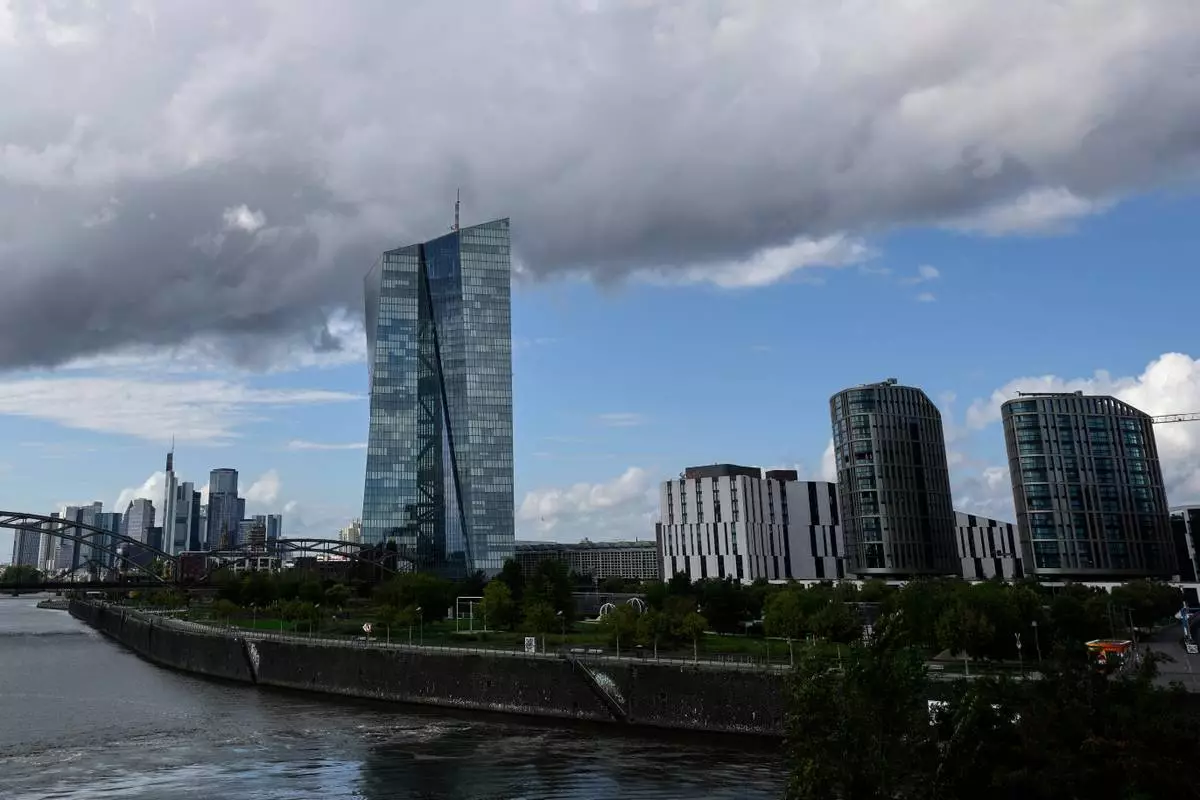
FRANKFURT, Germany (AP) — The European Central Bank raised interest rates Thursday to cool inflation that is being fed by high oil prices from the Iran war. The decision was supported by a stronger-than-expected economy that suggests businesses can weather the higher borrowing costs.

The central bank for the 21 EU member countries that use the euro currency raised its benchmark rate by a quarter percentage point to 2.50% at a meeting held in Berlin, away from the bank’s Frankfurt headquarters.

The bank said in an accompanying statement that “the conflict in the Middle East continues to generate inflation pressures, and inflation is set to remain well above target for an extended period.”

It said that the economic outlook remains “highly uncertain.”

The bank last raised rates at its June 11 meeting, then hit pause at its July 23 session. Remarks by ECB President Christine Lagarde later Thursday will be parsed by market analysts and investors for clues about whether more interest rate increases are coming.

Inflation concerns are also weighing on the U.S. Federal Reserve, whose rate-setters next meet Sept. 15-16. Fed Chair Kevin Warsh has said the bank may have “more work to do” to contain U.S. inflation of 3.7%.

High energy prices are one reason eurozone inflation came in at 3.3% in August, above the bank’s target of 2%. Oil prices have risen above $100 per barrel due to lower tanker traffic through the Strait of Hormuz that are under threat of Iranian attack. Decisions being made about borrowing costs are complicated by the fact that it’s impossible to say how long the shipping restrictions and high oil prices will last.

Higher rates cool inflation by making it more expensive to borrow and buy things, from houses to new factories. That reduces demand for goods and eases pressure on prices. The ECB benchmarks affect banks first, and through them lending rates throughout the economy.

The ECB's move was “a hike to stay ahead of the curve, demonstrating the ECB’s high level of vigilance, and an attempt to prevent higher energy prices from feeding through to the broader economy,” Carsten Brzeski, global head of macro at ING bank, wrote in an email.

FILE - Clouds cover the sky over the headquarters of the European Central Bank in Frankfurt, Germany, Thursday, Sept. 11, 2025. (AP Photo/Michael Probst, File)

FILE - Clouds cover the sky over the headquarters of the European Central Bank in Frankfurt, Germany, Thursday, Sept. 11, 2025. (AP Photo/Michael Probst, File)

Recommended Articles