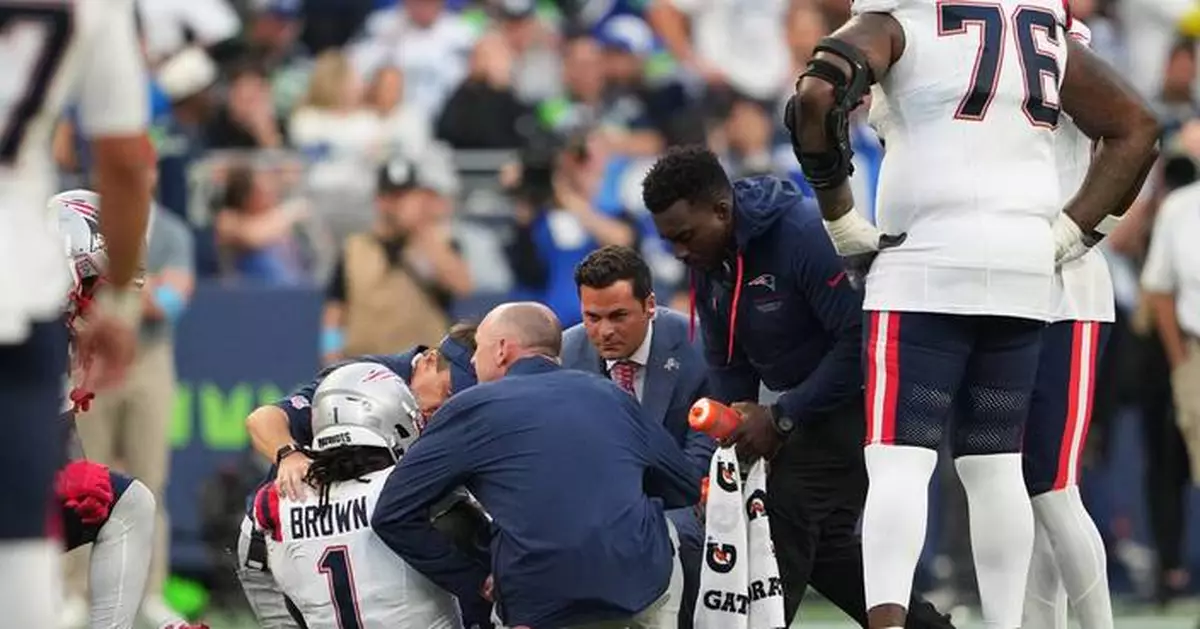
FOXBOROUGH, Mass. (AP) — Patriots coach Mike Vrabel said Thursday that wide receiver A.J. Brown will undergo more testing following a right ankle injury in the second half of New England’s season-opening 13-10 loss at Seattle.
“I don’t know if he’ll be available going forward here for the next week, but we’ll see,” Vrabel said. “Once we get the report, we’ll figure out what the treatment plan is.”
New England's next game is its home opener on Sept. 20 against Pittsburgh.
Brown left Wednesday night's game early in the third quarter following an incomplete pass from Drake Maye. He was falling to the turf as he tried to make the catch, and Seahawks cornerback Nehemiah Pritchett’s knee made contact with Brown’s ankle, pushing it against the ground.
Brown was initially announced as questionable to return before the Patriots ruled him out at the start of the fourth quarter. Brown had three catches for 26 yards before the injury.
The injury is a blow for an offense that was counting on Brown to fill the void created after the team decided not to bring back Stefon Diggs following a productive 2025 season as the offense’s No. 1 receiver.
Brown, 29, was durable during his four seasons in Philadelphia, playing in all 17 regular-season games in 2022 and 2023, dropping to 13 during the Eagles’ 2024 Super Bowl title season, and then 15 in 2025.
See AP’s full NFL coverage here

Seattle Seahawks cornerback Josh Jobe, front, causes pass interference against New England Patriots wide receiver A.J. Brown, behind, during the first half of an NFL football game, Wednesday, Sept. 9, 2026, in Seattle. (AP Photo/Lindsey Wasson)
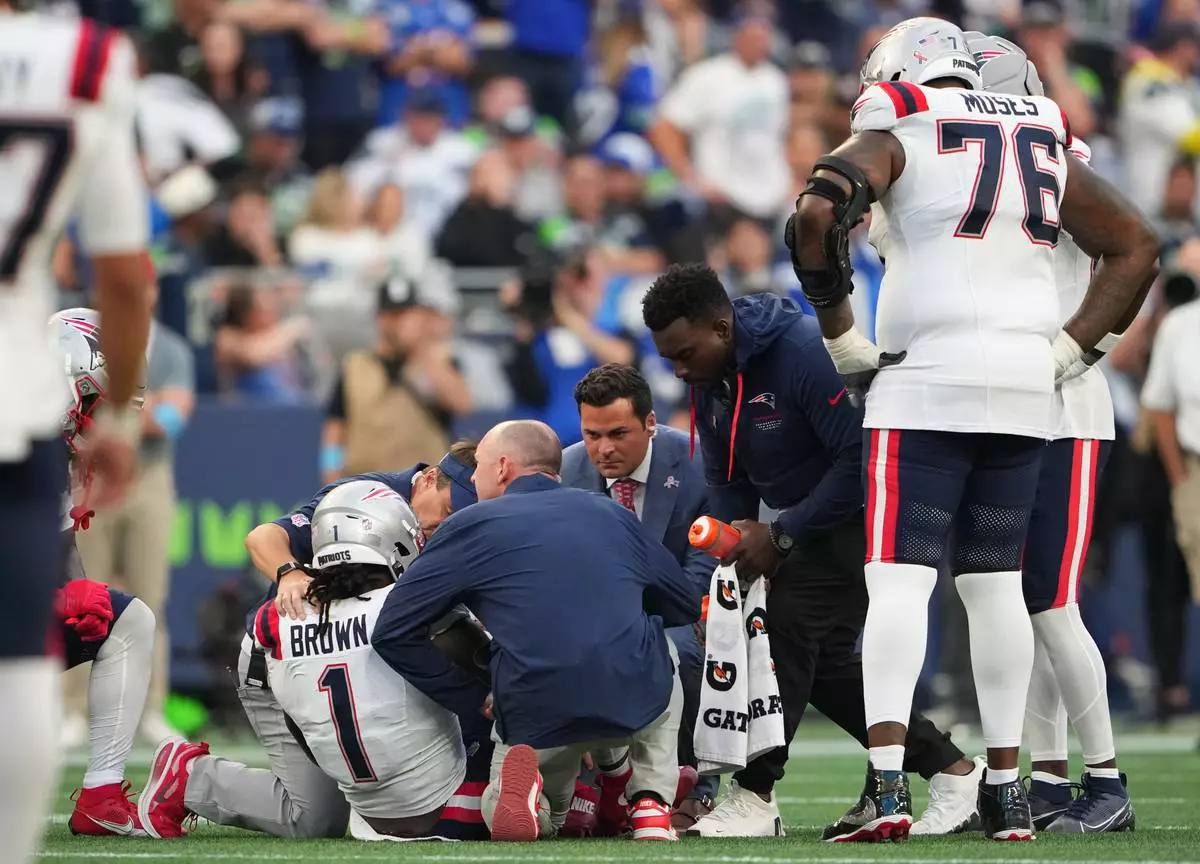
New England Patriots wide receiver A.J. Brown (1) is tended to on the field during the second half of an NFL football game against the Seattle Seahawks, Wednesday, Sept. 9, 2026, in Seattle. (AP Photo/Lindsey Wasson)
MIAMI (AP) — A deadline for the Trump administration to decide whether about 200,000 immigrants from El Salvador can remain protected from deportation has passed without any public announcement, raising hopes among many for another six-month extension while also sowing confusion.
The Department of Homeland Security has been quiet about its plans, leaving attorneys and advocates scrambling to decipher what might happen next to Salvadorans who have been raising families in the U.S. for decades.
On Thursday, Homeland Security issued a statement saying the department would make an announcement “at an appropriate time” and that Temporary Protected Status for El Salvador would stay in effect until then. The department issued the same statement Wednesday.
“Let’s be clear: this is not an official extension or decision by DHS as to the fate of TPS for El Salvador,” Ben Johnson, who directs the American Immigration Lawyers Association, posted Wednesday on social media. The Trump administration is leaving TPS holders, their families and their employers in limbo, he said.
Some attorneys are cautioning that the administration could eliminate the protections without making a public statement, or announce a decision at any time.
The absence of an announcement has raised hopes that Salvadoran immigrants might be spared the fates of hundreds of thousands of immigrants from other countries whose protected status has ended during President Donald Trump’s second term. But the lack of clarity is also harrowing.
“Facing this uncertainty is frustrating and painful," said Doris Landaverde, who was 21 when she crossed the U.S. border illegally in December 2000, seeking better job opportunities. A few months later, she obtained TPS status and has worked legally ever since, mostly cleaning at Harvard University, she said.
Now a 47-year-old single mother, Ladaverde said she and her two U.S.-born daughters all consider this country home. The housing and health care of these American citizens depends on her income, and without TPS she could lose her job, she said.
"We have lived here legally for decades, and that is hard to erase,” she said. “I feel angry; we have done everything we were told to do legally.”
In Trump’s second term, Homeland Security has ended TPS for more than 1 million people from more than a dozen countries, including Venezuela, Haiti, Honduras, Nicaragua, Afghanistan and Syria. In addition to the Salvadorans, about 103,000 people, from Ukraine, Sudan and Lebanon, remain protected from deportation under TPS.
The Trump administration notched a major victory when the Supreme Court ruled in June that it acted within its authority by ending TPS for about 350,000 Haitians and 6,000 Syrians.
Tom Homan, Trump’s “border czar” who has advocated for ending TPS, said Tuesday that the El Salvador decision rests with Homeland Security Secretary Markwayne Mullin.
“If it expires, it’s up to the secretary,” Homan said. “Temporary protected status means temporary. Let’s face it, El Salvador is a much safer country than it’s ever been now with a new president up there.”
TPS was created by Congress in 1990 to prevent deportations to countries suffering from natural disasters or civil strife.
TPS allows people already in the country to remain, with work permits, for renewable periods of up to 18 months, if the homeland security secretary determines conditions are unsafe for their return. Under immigration law, the status is automatically extended for six months if the government takes no action.
It was granted to El Salvador following two devastating 2001 earthquakes that left hundreds of thousands of people homeless. Just before leaving office, President Joe Biden extended it for El Salvador for 18 months, expiring Sept. 9, 2026.
El Salvador, once one of the most violent places in the world due to organized crime, has become one of the safest countries in the Americas since Salvadoran President Nayib Bukele cracked down on gang members in 2022. But human rights advocates have denounced mass and arbitrary arrests, torture, and disappearances in its prison system.
Bukele has supported Trump’s deportation campaign and his government was among the first to receive deportees, holding them in a mega prison known as CECOT. But mass deportations of his own citizens from the U.S. could shock El Salvador's economy. Salvadorans in the U.S. sent home $9.9 billion in remittances last year, representing 24% of El Salvador's gross domestic product, its central bank said.
Trump and Bukele have met twice in Washington since last April. In 2019, during the first Trump administration, Bukele asked Trump to extend TPS. Bukele has not said publicly if he has requested another extension.
Associated Press contributors include Rebecca Santana in Washington and Rodrique Ngowi in Boston.
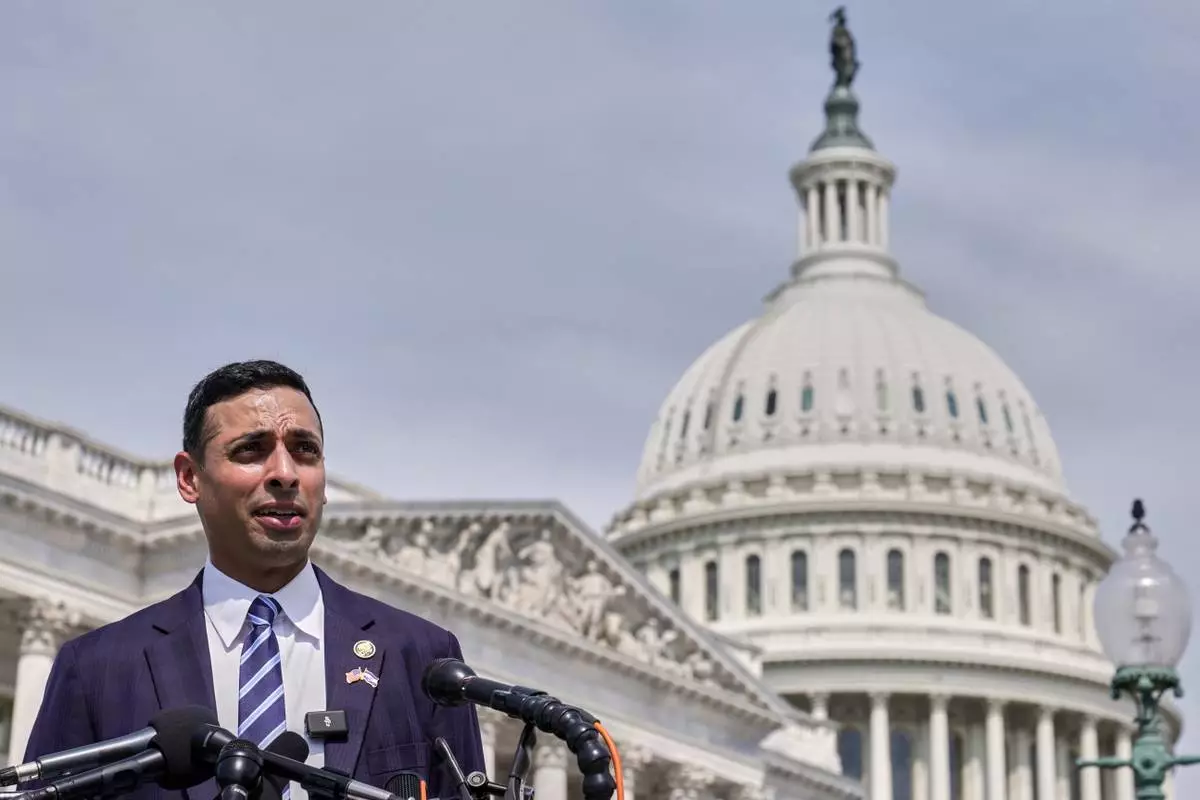
Rep. Suhas Subramanyam, D-Va., speaks during a news conference on the Temporary Protected Status of Salvadorans on Capitol Hill, Wednesday, Sept. 2, 2026, in Washington. (AP Photo/Mariam Zuhaib)
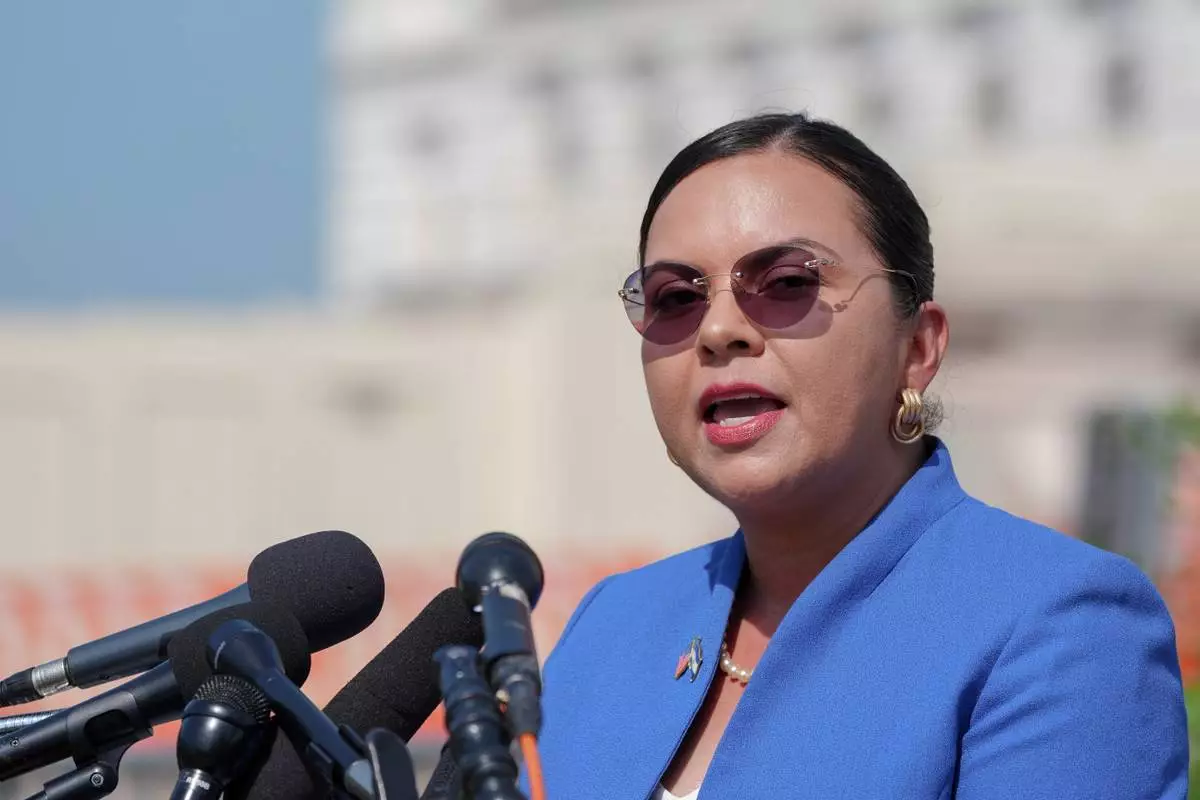
Maria Teresa McPha speaks during a news conference on the Temporary Protected Status of Salvadorans on Capitol Hill, Wednesday, Sept. 2, 2026, in Washington. (AP Photo/Mariam Zuhaib)
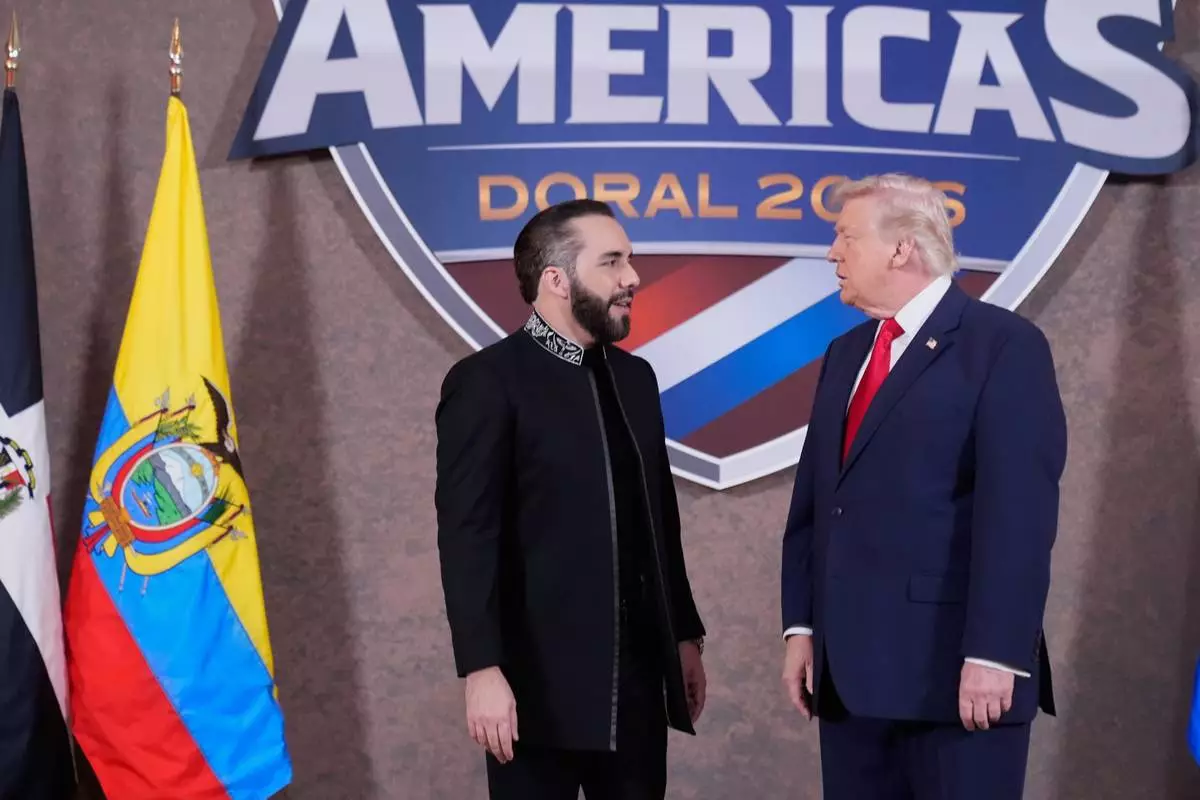
FILE - President Donald Trump greets El Salvador's President Nayib Bukele, left, at the Shield of the Americas Summit, March 7, 2026, at Trump National Doral Miami in Doral, Fla. (AP Photo/Mark Schiefelbein, File)