SACRAMENTO, Calif. (AP) — California Gov. Gavin Newsom signed a sweeping package of laws Thursday aimed at protecting children from the risks of technology, including social media and AI chatbots.
The laws will penalize large social media companies up to $1 million per child if they are found negligent of harming children through their platforms, ban tech businesses from offering addictive feeds to anyone under 16, require operators of AI chatbots to perform risk assessments before rolling them out and allow families to opt out of receiving school-issued laptops.
Click to Gallery
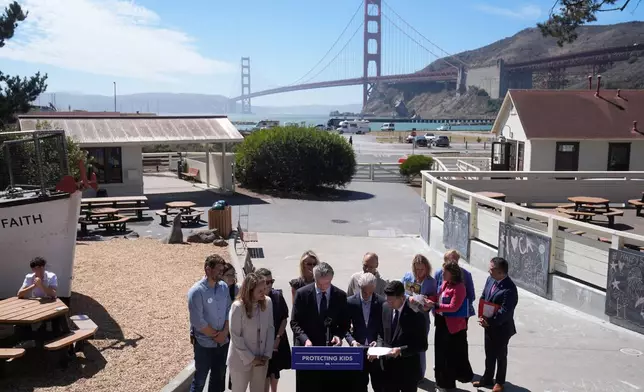
California Gov. Gavin Newsom, bottom center, signs bills at the Bay Area Discovery Museum, Thursday, Sept. 10, 2026, in Sausalito, Calif. (AP Photo/Jeff Chiu)
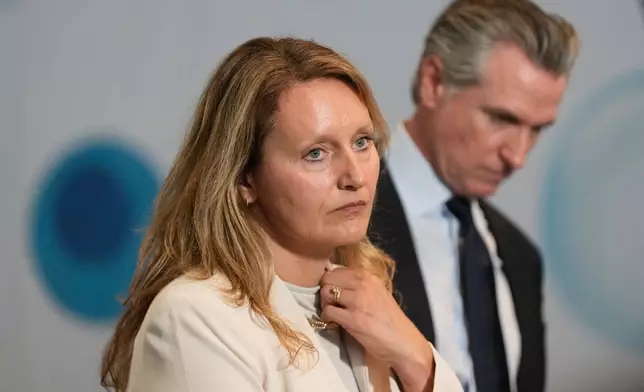
Assemblymember Buffy Wicks, left, listens to speakers next to California Gov. Gavin Newsom during a news conference at the Bay Area Discovery Museum, Thursday, Sept. 10, 2026, in Sausalito, Calif. (AP Photo/Jeff Chiu)
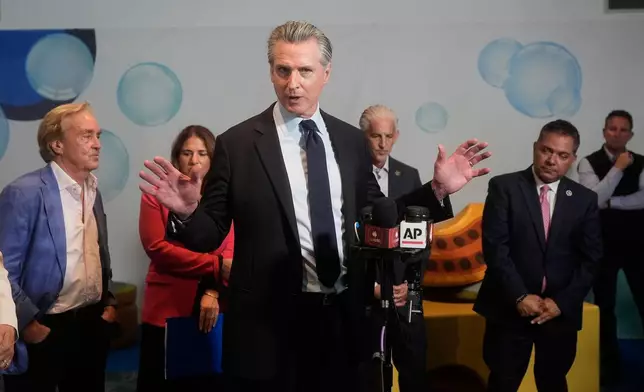
California Gov. Gavin Newsom speaks at a news conference at the Bay Area Discovery Museum, Thursday, Sept. 10, 2026, in Sausalito, Calif. (AP Photo/Jeff Chiu)
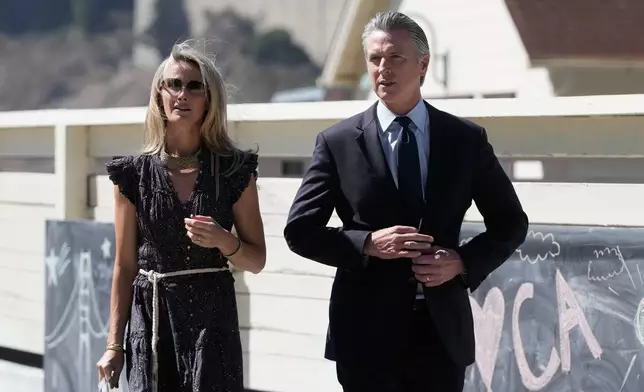
California Gov. Gavin Newsom, right, and his wife, First partner Jennifer Siebel Newsom, arrive at the Bay Area Discovery Museum, Thursday, Sept. 10, 2026, in Sausalito, Calif. (AP Photo/Jeff Chiu)
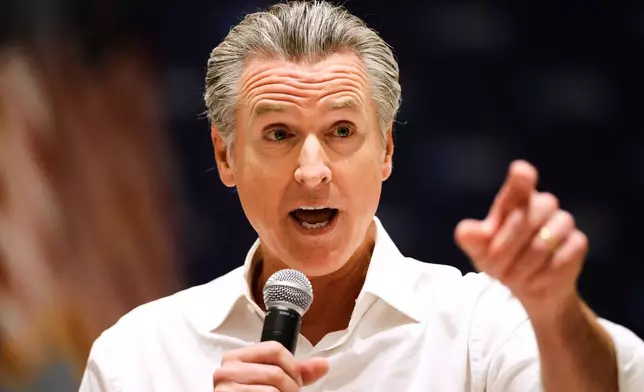
California Gov. Gavin Newsom speaks at a rally for democratic candidates Saturday, Sept. 5, 2026, in Monroe, N.C. (AP Photo/Nell Redmond)
Newsom joined his wife and state lawmakers at a children's museum near San Francisco to stress the importance of protecting kids at a time when they have such easy access to social media and AI chatbots.
“We have designed cribs to be safe, chairs to be safe, car seats,” Assemblymember Rebecca Bauer-Kahan said. “Yet we've allowed technology to be handed to our children and never asked or expected it to be safe.”
Meta reached a settlement with California and 28 other states last month after they alleged in a 2023 lawsuit that the tech giant deliberately designed features to addict children. The company agreed to pay up to $18 billion and strengthen its child safety measures.
EDITOR’S NOTE: This story includes discussion of suicide. If you or someone you know needs help, the national suicide and crisis lifeline in the U.S. is available by calling or texting 988.
Other states have also pushed in recent years for better guardrails to protect children from the potential harms of social media.
Two years ago, New York state approved a law allowing parents to block their children from getting social media posts suggested by a platform’s algorithm, a move to limit feeds that critics argue are addictive. The policy is scheduled to go into effect early next year.
Newsom said the new California laws highlight the state's leadership on the issue.
“It’s a good day for our children,” he said. “It’s a good day for the state of California.”
Jim Steyer, the founder of Common Sense Media, whose brother, Tom Steyer, ran for governor, said the laws were “the most important, comprehensive legislation" on the subject in the history of the U.S.
But Meta raised concerns about some of the bills, saying the law to restrict addictive feeds hinders the company's ability to bring enjoyable content to users on its platforms.
“We believe that delivering a tailored experience is an important part of what makes Facebook and Instagram valuable for teens as they connect with family and friends and explore their interests — safely,” spokesperson Jim Cullinan said in a statement. “Personalization is also how we deliver age-appropriate content for teens that is relevant to them — all with the proper guardrails in place.”
Newsom has walked a fine line on technology policy during his nearly eight years serving as governor in the nation's most populous state, whose status as a global tech hub he has repeatedly touted in speeches.
He signed a law last year requiring platforms to remind users they are interacting with a chatbot and not a human. Hours later, he vetoed a bill that would have banned companies from making AI chatbots available to anyone under 18 years old unless the businesses could ensure the technology couldn’t engage in sexual conversations or encourage self-harm.
Newsom also signed a law in 2024 to restrict student use of smartphones in schools.
Maria Raine, a mother whose teenage son, Adam, died by suicide last year, said he died because he was “coached” by a chatbot. One of the laws Newsom signed, which requires chatbot operators to implement certain safety measures to protect children, was inspired by Adam's story.
“Adam was an early adopter of AI, and so many of us parents did not understand the dangers back then,” Raine said at a news conference. “Now, we are all becoming more aware of the dangers of AI companionship and the need for our government to act to protect our children.”
Newsom also signed laws Wednesday, which are supported by Anthropic, that are aimed at improving oversight of AI companies. One of the measures requires the state to create rules for independent organizations to evaluate the safety risks of AI models, and the other requires the state to create a registry of AI auditors, who'd have to be financially independent from the businesses they are auditing.
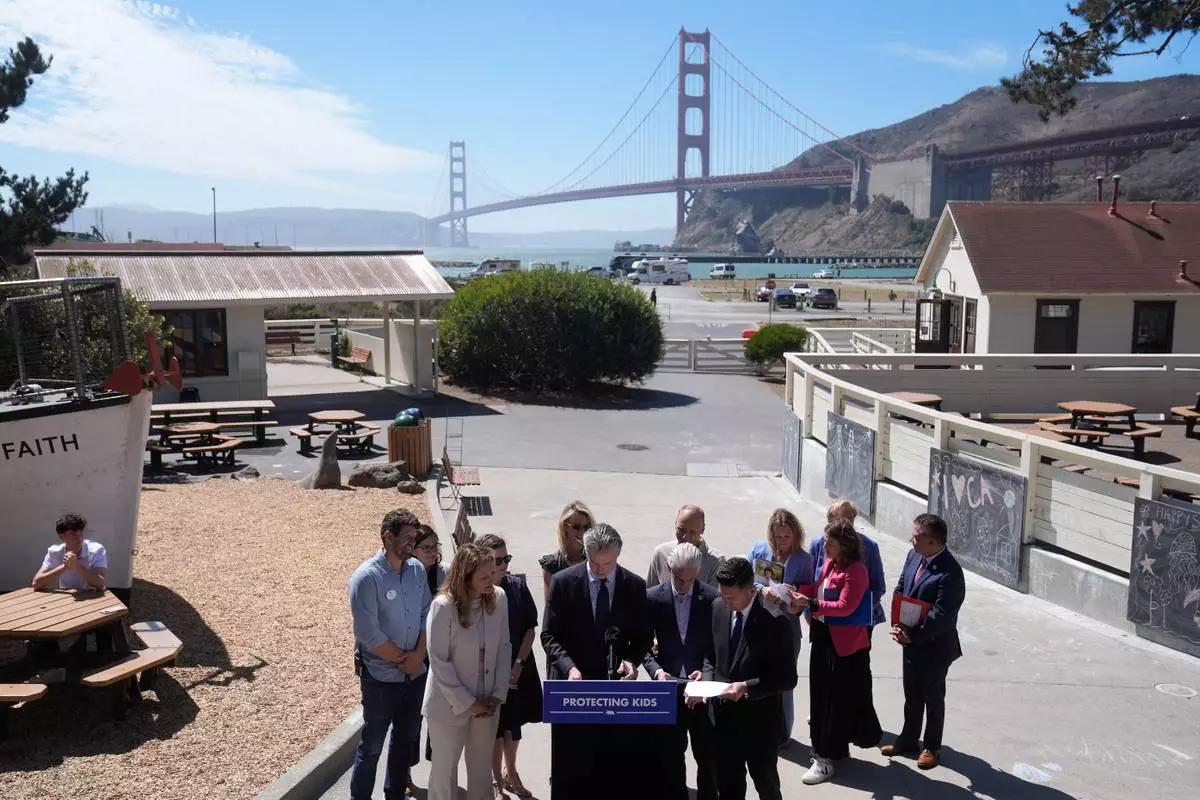
California Gov. Gavin Newsom, bottom center, signs bills at the Bay Area Discovery Museum, Thursday, Sept. 10, 2026, in Sausalito, Calif. (AP Photo/Jeff Chiu)

Assemblymember Buffy Wicks, left, listens to speakers next to California Gov. Gavin Newsom during a news conference at the Bay Area Discovery Museum, Thursday, Sept. 10, 2026, in Sausalito, Calif. (AP Photo/Jeff Chiu)
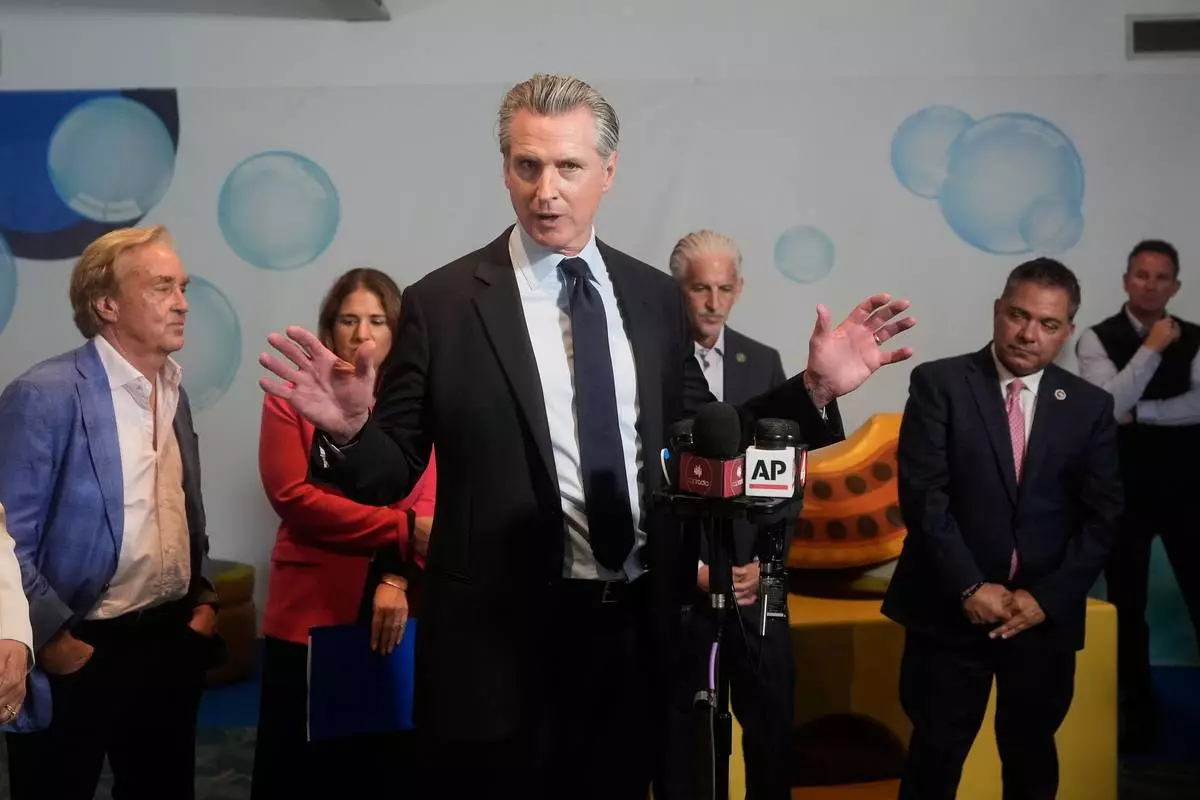
California Gov. Gavin Newsom speaks at a news conference at the Bay Area Discovery Museum, Thursday, Sept. 10, 2026, in Sausalito, Calif. (AP Photo/Jeff Chiu)
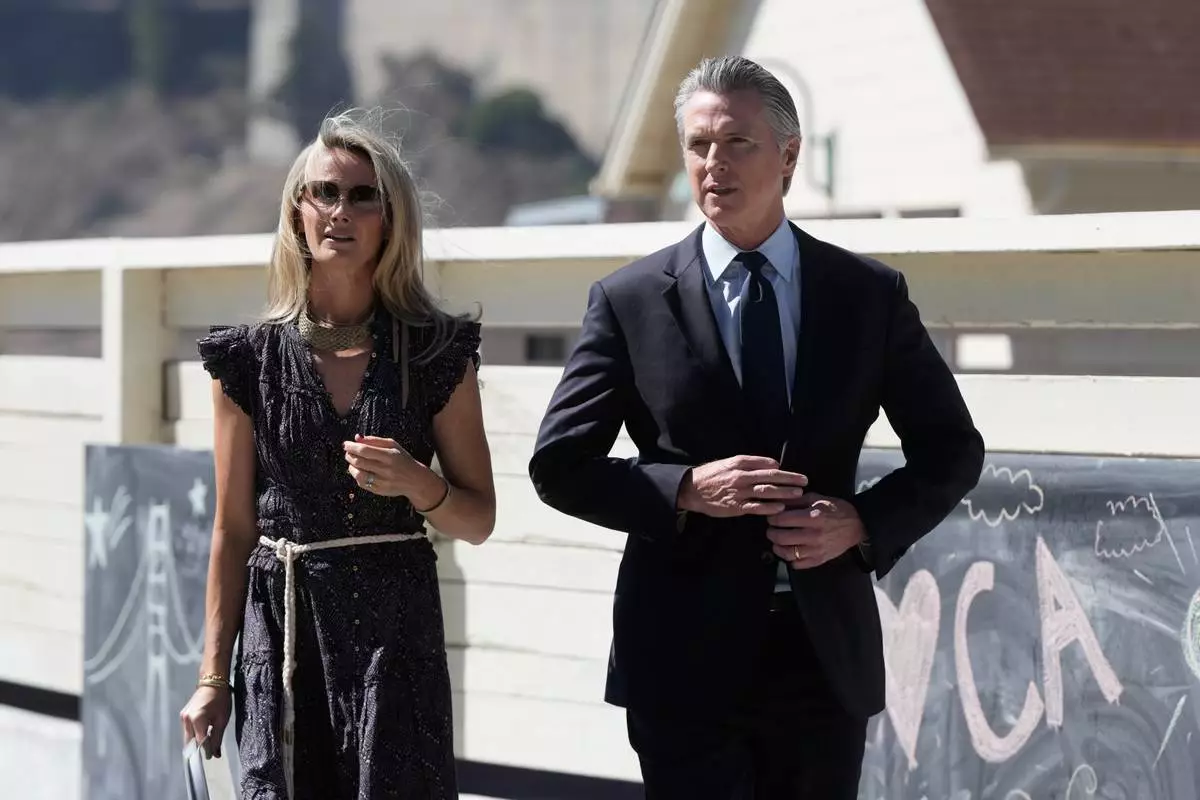
California Gov. Gavin Newsom, right, and his wife, First partner Jennifer Siebel Newsom, arrive at the Bay Area Discovery Museum, Thursday, Sept. 10, 2026, in Sausalito, Calif. (AP Photo/Jeff Chiu)

California Gov. Gavin Newsom speaks at a rally for democratic candidates Saturday, Sept. 5, 2026, in Monroe, N.C. (AP Photo/Nell Redmond)
ADEN, Yemen (AP) — The Iran-backed Houthi rebel group on Thursday took over Yemen’s port city of Mokha, an area vital to controlling shipping through the Red Sea, Houthi and Yemeni officials said.
The takeover gives Iran another potential point of leverage in its war with the U.S., analysts said, if the Houthis use their presence in Mokha to ramp up threats or attacks on shipping in the Red Sea.
Mokha is about 80 kilometers (50 miles) from the Bab el-Mandeb Strait, a waterway that connects the Red Sea and the Gulf of Aden and through which about 12% of the world’s goods are typically shipped.
The Bab el-Mandeb's importance to global oil supplies has grown since shipping through the nearby Strait of Hormuz has been impeded by Iran during its war with the United States and Israel.
The Houthis kept mostly to the sidelines when the Iran war began, but over the summer the rebels increased attacks against Yemen's internationally recognized government and declared a blockade on Saudi Arabia, which supports it. While the Houthis have their own reasons for fighting the Saudis, the conflict also serves Iran’s interests by ramping up pressure on the American-allied oil producer as Tehran seeks leverage against the U.S.
The Houthis' takeover of Mokha was confirmed to The Associated Press by Ahmed Baash, a commander with the National Resistance Forces allied with Yemen’s government, and Hazam al-Assad, a member of the Houthis’ political bureau.
Mokha represents the Houthis' biggest territorial gain since a truce was signed in 2022 to end a civil war that began more than a decade ago. A return to full-scale civil war would be devastating for the Yemeni people and potentially for world energy supplies.
The Houthis have been at war with Yemen’s government since 2014, when the rebels swept down from their mountainous heartland and seized much of northern and central Yemen. Saudi Arabia entered the war the following year on behalf of the government.
Residents of Mokha told AP that Houthi forces could be seen throughout the city Thursday and that markets were shuttered. Mokha was long held by forces aligned with Yemen’s internationally recognized government.
Mokha resident Amin al-Mohammdi said roads from the west coast leading to Mokha were closed and shops were shuttered. Resident Mohamed Salem said he saw vehicles belonging to Houthi forces in the streets.
Three doctors told the AP they fled a Mokha hospital after it was seized by the Houthis. The doctors spoke on condition of anonymity, citing fears for their safety. They said other residents were fleeing south, toward the city of Aden, which is controlled by the Saudi-backed forces.
The Houthis recently made advances in the western province of Taiz, where Mokha is located, according to Ahmed al-Mawazi, a trooper with the Yemeni armed forces, and Abdel Kader al-Sharabi, a member of the Saudi-backed forces supporting the Yemeni government.
Both said the rebels had seized control of the al-Shaqira area in Taiz, an important supply route for Yemeni government forces in south Hodeida.
The mountainous terrain around Taiz gives the Houthis a strategic area overlooking Yemen’s west coast, said Baraa Shiban, an associate fellow at the Royal United Services Institute in London. The Houthis could potentially make shipping in the Red Sea more hazardous by laying mines in the water, similar to what Iran’s Revolutionary Guard did in the Strait of Hormuz, Shiban said.
The Houthis’ advance on Mokha potentially gives Iran leverage in its negotiations with the U.S., said Farea al-Muslimi, a research fellow at Chatham House specializing in Yemen and the Gulf.
Shipping through the Bab al Mandeb has fallen by about 60% since the Houthis began attacking ships there in late 2023, prompting many companies to abandon the route. It briefly increased this year as Saudi Arabia sought alternatives to Hormuz; Saudi oil shipments were redirected via pipeline to the Red Sea port at Yanbu, but “renewed Houthi threats have curtailed” that activity, according to Lloyd’s List Intelligence.
In a letter to the United Nations Security Council, Yemen’s Foreign Minister Afrah al-Zouba said the Houthis’ territorial gains could lead to instability across the country and region, and she called for international action to thwart the rebel group.
That sentiment was echoed by the special envoy for Yemen at an emergency meeting of the U.N. Security Council on Thursday.
“This renewed war should alarm us all. It effectively marks the end of the relative calm that Yemen has experienced for over four years since the U.N.-brokered truce,” said the envoy, Hans Grundberg. He called on the international community to address this “new and more dangerous phase – one whose consequences, if left unchecked, will not stay within Yemen’s borders.”
Saudi U.N. Ambassador Abdulaziz Alwasil said that the kingdom remains supportive of peace in Yemen but that it would “take all measures necessary to deter Houthi attacks.”
Alwasil warned that “the kingdom’s commitment to de-escalation and to supporting a political solution must not be allowed to become an opportunity that this militia exploits to continue its attacks and to threaten the security of the kingdom and the region.”
At the U.N. meeting, U.S. Minister Counselor Jenifer Neidhart warned that those who enable the escalation of Houthi attacks “bear responsibility for its consequences.” Neidhart called for stronger implementation of U.N. sanctions against the militants to cut off "the resources that sustain their acts of terrorism.”
Yemeni government forces have launched airstrikes targeting Houthi reinforcements west of Taiz, several residents of Mokha said, and the Yemeni government military has urged civilians to avoid roads between Taiz and Mokha.
Houthi-controlled Al-Masirah TV claimed that Saudi-backed forces launched 40 airstrikes in recent hours in Taiz, Jawf, Hodeida and Marib provinces. The AP couldn’t independently verify the claim. There was no immediate comment from the government forces.
Khaled reported from Cairo. AP writers David McHugh in Frankfurt, Germany, and Edith M. Lederer at the United Nations contributed to this report.

Yemen's Houthi rebels march during a mobilization campaign in Sanaa, Yemen, Thursday, Sept. 10, 2026. (AP Photo)

A Yemen's Houthi rebel chews Qat as he marches during a mobilization campaign in Sanaa, Yemen, Thursday, Sept. 10, 2026. (AP Photo)

A fighter with Yemen’s Houthi rebels carries a rocket-propelled grenade launcher as they march during a mobilization campaign in Sanaa, Yemen, Thursday, Sept. 10, 2026. (AP Photo)

Yemen's Houthi rebels gather during a mobilization campaign in Sanaa, Yemen, Thursday, Sept. 10, 2026. (AP Photo)