Skip to Content Facebook Feature Image

Saudi airstrikes hit rebel-held Mokha airport in Yemen, Houthi broadcaster says

News

Saudi airstrikes hit rebel-held Mokha airport in Yemen, Houthi broadcaster says
News

News

Saudi airstrikes hit rebel-held Mokha airport in Yemen, Houthi broadcaster says

2026-09-12 05:05 Last Updated At:09-13 23:00

CAIRO (AP) — Saudi airstrikes on Friday hit the airport in the Yemen port city newly seized by Iranian-backed rebels, a Houthi broadcaster reported, a day after the Houthis entered Mokha on the Red Sea, bringing them closer to the strategic Bab el-Mandeb Strait. There was no immediate report of damage or deaths.

The Houthis' advance further threatens commercial shipping on an important alternative to the Strait of Hormuz. But there is “no need for international concern,” Hazam al-Assad, a member of the rebels’ political bureau, told The Associated Press, saying they are responding to Saudi aggression, and “our forces have a bank of big important targets” in case Riyadh keeps up the strikes.

More Images
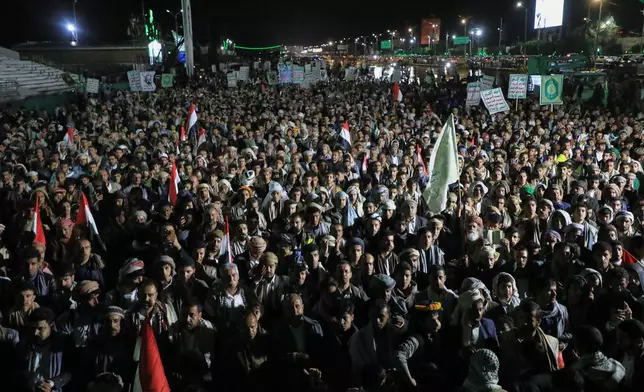
Supporters of Yemen's Houthi rebels gather during a rally organized to celebrate the group's capture of Mayun Island in the strategic Bab el-Mandeb Strait, in Houthi-controlled Sanaa, Yemen, Friday, Sept. 11, 2026. (AP Photo/Osamah Abdulrahman)
Supporters of Yemen's Houthi rebels gather during a rally organized to celebrate the group's capture of Mayun Island in the strategic Bab el-Mandeb Strait, in Houthi-controlled Sanaa, Yemen, Friday, Sept. 11, 2026. (AP Photo/Osamah Abdulrahman)

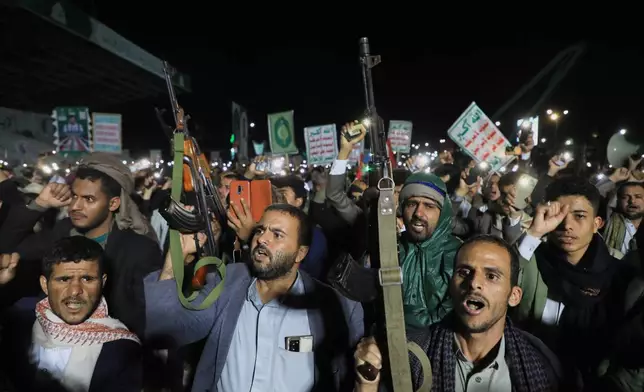
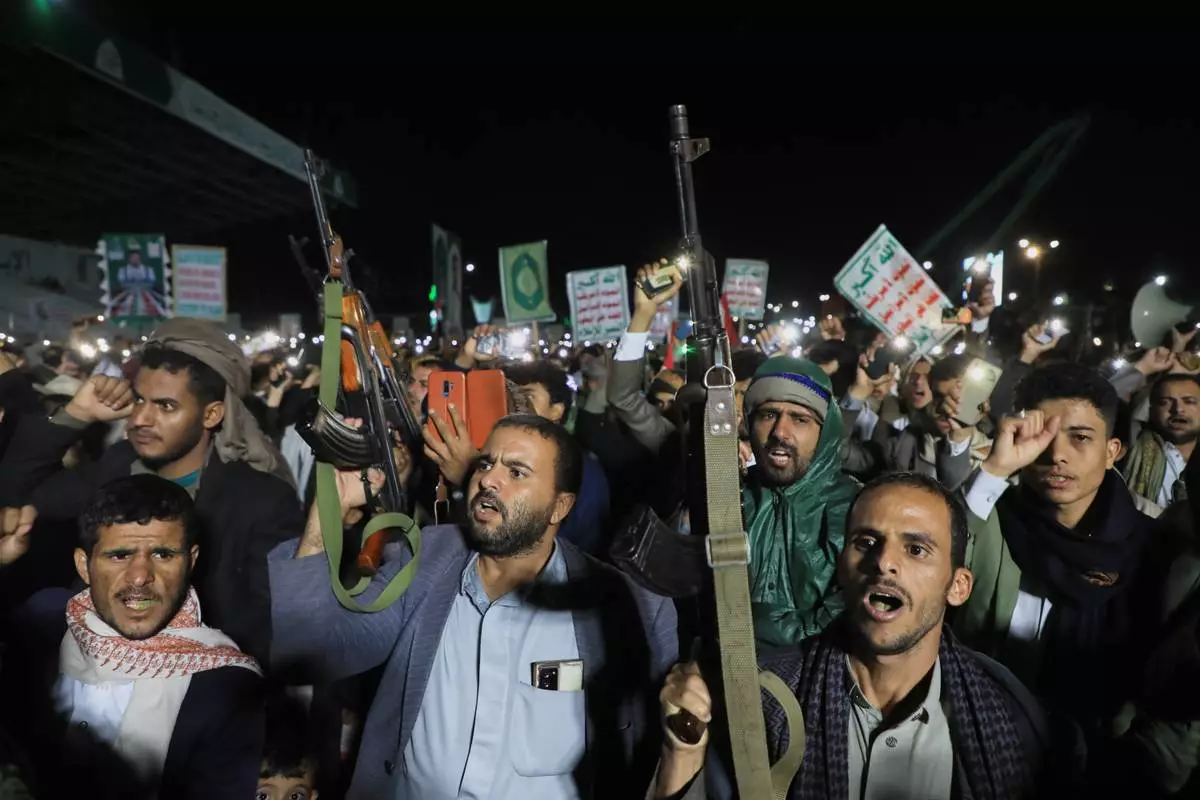
Supporters of Yemen’s Houthi rebels chant and raise rifles during a rally organized to celebrate the group’s capture of Mayun Island in the strategic Bab el-Mandeb Strait, in Houthi-controlled Sanaa, Yemen, Friday, Sept. 11, 2026. (AP Photo/Osamah Abdulrahman)
Supporters of Yemen’s Houthi rebels chant and raise rifles during a rally organized to celebrate the group’s capture of Mayun Island in the strategic Bab el-Mandeb Strait, in Houthi-controlled Sanaa, Yemen, Friday, Sept. 11, 2026. (AP Photo/Osamah Abdulrahman)

Supporters celebrate as they attend a rally organized by Yemen's Houthi rebels to celebrate the group's capture of Mayun Island in the strategic Bab el-Mandeb Strait, in Houthi-controlled Sanaa, Yemen, Friday, Sept. 11, 2026. (AP Photo/Osamah Abdulrahman)

Supporters celebrate as they attend a rally organized by Yemen's Houthi rebels to celebrate the group's capture of Mayun Island in the strategic Bab el-Mandeb Strait, in Houthi-controlled Sanaa, Yemen, Friday, Sept. 11, 2026. (AP Photo/Osamah Abdulrahman)

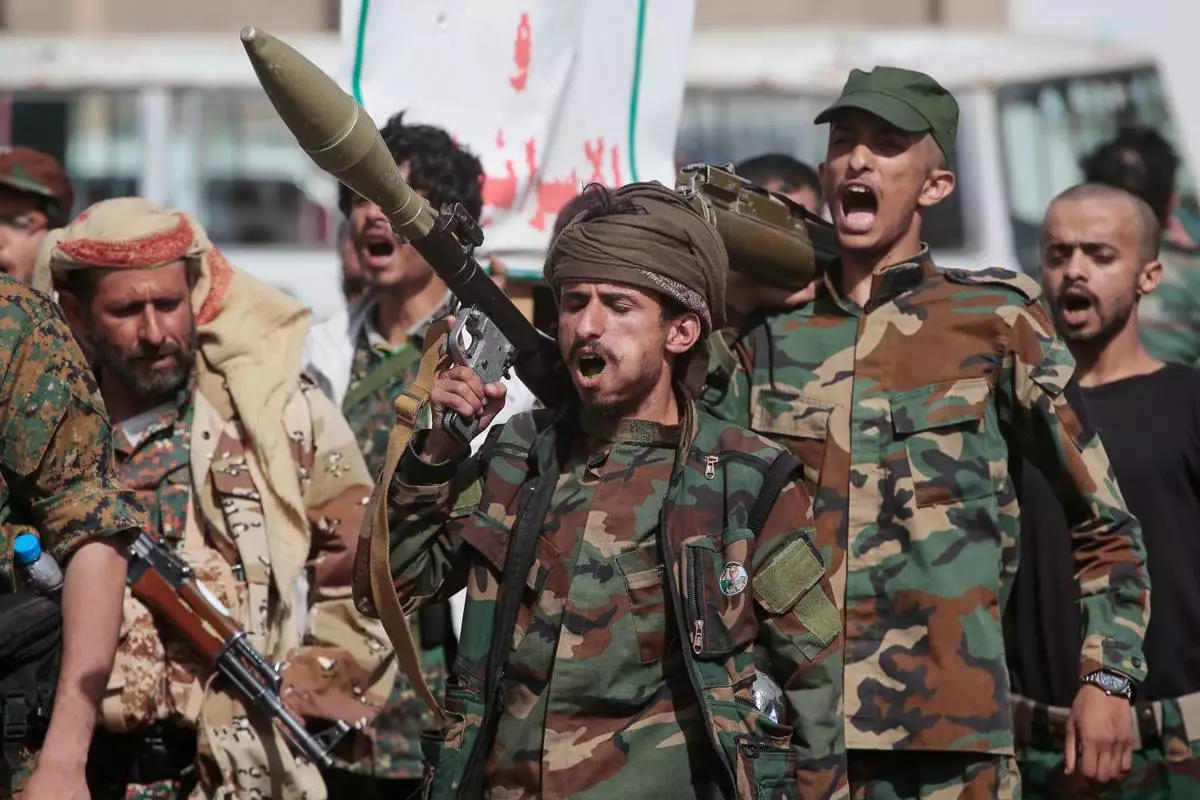
Yemen's Houthi rebels march during a mobilization campaign in Sanaa, Yemen, Thursday, Sept. 10, 2026. (AP Photo)

Yemen's Houthi rebels march during a mobilization campaign in Sanaa, Yemen, Thursday, Sept. 10, 2026. (AP Photo)

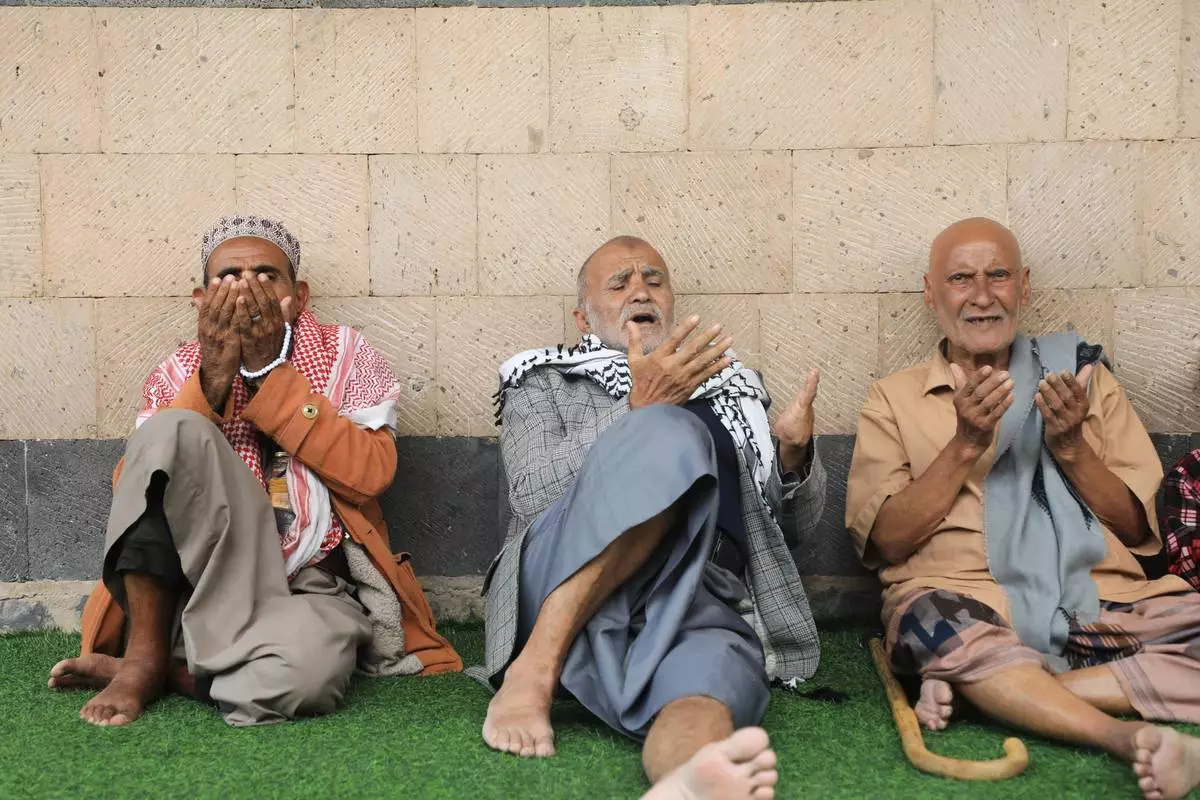
Worshippers pray at Al Shamy mosque in Sanaa, Yemen, Friday, Sept. 11, 2026. (AP Photo/Osamah Abdulrahman)

Worshippers pray at Al Shamy mosque in Sanaa, Yemen, Friday, Sept. 11, 2026. (AP Photo/Osamah Abdulrahman)

A worshipper prays at the Al Shamy mosque in Sanaa, Yemen, Friday, Sept. 11, 2026. (AP Photo/Osamah Abdulrahman)

A worshipper prays at the Al Shamy mosque in Sanaa, Yemen, Friday, Sept. 11, 2026. (AP Photo/Osamah Abdulrahman)

Worshippers greet friends as they enter Al Shamy mosque in Sanaa, Yemen, Friday, Sept. 11, 2026. (AP Photo/Osamah Abdulrahman)

Worshippers greet friends as they enter Al Shamy mosque in Sanaa, Yemen, Friday, Sept. 11, 2026. (AP Photo/Osamah Abdulrahman)

Yemen's Houthi rebels ride a motorbike during a mobilization campaign in Sanaa, Yemen, Thursday, Sept. 10, 2026. (AP Photo)

Yemen's Houthi rebels ride a motorbike during a mobilization campaign in Sanaa, Yemen, Thursday, Sept. 10, 2026. (AP Photo)

Earlier Friday, Iran’s government called for an end to Saudi Arabia’s blockade of Yemen, throwing its support behind its ally, the Houthis. In its first statement since the rebels entered the port, Iran’s Foreign Ministry also called for a return to negotiations between Saudi Arabia and the Houthis.

The rebels’ capture of Mokha, overlooking tanker routes out of the Red Sea, could boost Iran’s strategy of driving up world oil and gas prices to pressure the United States, experts say. It also raises concerns of a new front opening after more than six months of war in the region – one in which Saudi Arabia is forced to respond.

Experts say the developments in Yemen could give Tehran more leverage in any negotiations with the U.S. On Wednesday, the spokesperson for Iran’s powerful Revolutionary Guard called for any negotiated settlement with the U.S. to include Yemen, the first explicit reference to that front.

The Houthis’ entry into Mokha on Thursday was their biggest territorial gain in years against their Saudi-backed Yemeni opponents. It brought them within 50 miles (80 kilometers) of the Bab el-Mandeb, a strait that has become an important alternative for global shipping as Iran targets vessels in the Strait of Hormuz.

A senior military official with Yemen's internationally recognized government told the AP they were stunned that the Saudi air force didn’t strike the Houthis earlier, as they were advancing on Mokha. He assessed that Saudi Arabia didn’t get a green light from the U.S. to embark on a large-scale air campaign.

The official, who spoke on condition of anonymity because he wasn’t allowed to speak to the media, also blamed “lack of coordination” between Yemen's army and allied forces, saying it gave the Houthis “a priceless opportunity.”

The Houthis had already attacked Saudi shipping in the Bab el-Mandeb and Red Sea since declaring a blockade there in July, as well as oil infrastructure inside Saudi Arabia. The Houthis said it was in response to the kingdom’s blockade of Houthi-held parts of Yemen, in place for years.

New disruption to the waterway could mean trouble for all shipping and for the price of crude oil, which has now soared again. Saudi Arabia has increasingly relied on the Red Sea and Bab el-Mandeb to export its crude since Iran has been targeting vessels in the Strait of Hormuz. About 12% of the world’s goods are typically shipped through the strait.

Shipping through the Bab al-Mandeb had fallen by about 60% since the Houthis began attacking some ships there in late 2023 while expressing solidarity with Palestinians in Gaza. Shipping increased this year as Saudi Arabia sought alternatives to the Strait of Hormuz, but renewed Houthi threats have “curtailed” that activity, according to Lloyd’s List Intelligence.

Saudi Arabia, which earlier this week said it had always offered “opportunities for negotiation,” also has said it has the right to defend itself in response to the Houthis’ blockade. The foreign ministers of Iran and Saudi Arabia spoke Thursday about diplomatic efforts to “restore stability” to the region, Iran’s Foreign Minister Abbas Araghchi said on social media.

In a statement released Friday, the National Defense Council of Yemen’s Saudi-backed and internationally recognized government on Thursday strongly condemned the Houthis’ renewed attacks on Saudi Arabia.

The council also acknowledged that Yemen’s government is on the front line of freedom of navigation, and called for international support as the Houthis swept along the Red Sea coast toward the Bab el-Mandeb.

The escalating fighting threatens to end a fragile truce that had largely halted Yemen’s civil war since 2022.

At stake are the 40 million people in the Arab world’s poorest country who fear a return to the conflict that killed 150,000 and brought many others to the brink of famine.

The Houthis have been at war with Yemen’s government since 2014, when the rebels swept from their mountainous heartland and seized much of northern and central Yemen. Saudi Arabia entered the war the following year on behalf of the government.

Anna reported from Jerusalem.
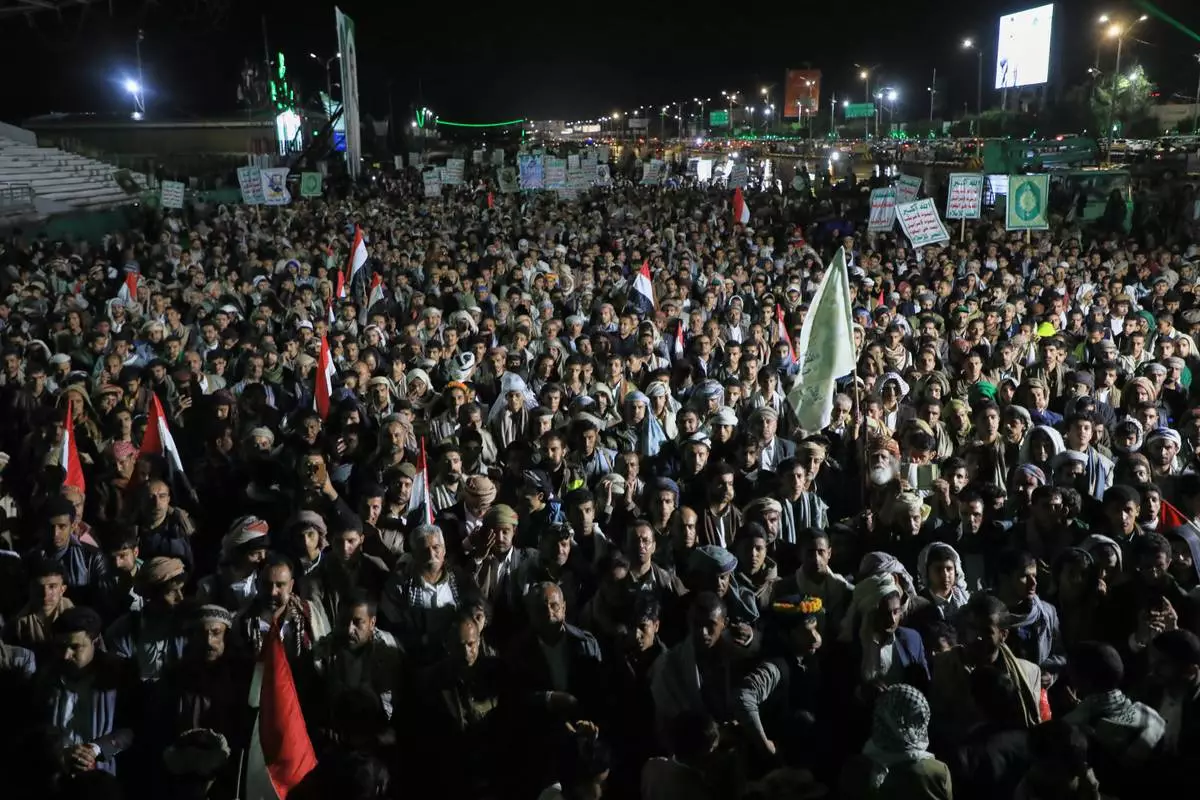
Supporters of Yemen's Houthi rebels gather during a rally organized to celebrate the group's capture of Mayun Island in the strategic Bab el-Mandeb Strait, in Houthi-controlled Sanaa, Yemen, Friday, Sept. 11, 2026. (AP Photo/Osamah Abdulrahman)
Supporters of Yemen's Houthi rebels gather during a rally organized to celebrate the group's capture of Mayun Island in the strategic Bab el-Mandeb Strait, in Houthi-controlled Sanaa, Yemen, Friday, Sept. 11, 2026. (AP Photo/Osamah Abdulrahman)

Supporters of Yemen’s Houthi rebels chant and raise rifles during a rally organized to celebrate the group’s capture of Mayun Island in the strategic Bab el-Mandeb Strait, in Houthi-controlled Sanaa, Yemen, Friday, Sept. 11, 2026. (AP Photo/Osamah Abdulrahman)
Supporters of Yemen’s Houthi rebels chant and raise rifles during a rally organized to celebrate the group’s capture of Mayun Island in the strategic Bab el-Mandeb Strait, in Houthi-controlled Sanaa, Yemen, Friday, Sept. 11, 2026. (AP Photo/Osamah Abdulrahman)

Supporters celebrate as they attend a rally organized by Yemen's Houthi rebels to celebrate the group's capture of Mayun Island in the strategic Bab el-Mandeb Strait, in Houthi-controlled Sanaa, Yemen, Friday, Sept. 11, 2026. (AP Photo/Osamah Abdulrahman)

Supporters celebrate as they attend a rally organized by Yemen's Houthi rebels to celebrate the group's capture of Mayun Island in the strategic Bab el-Mandeb Strait, in Houthi-controlled Sanaa, Yemen, Friday, Sept. 11, 2026. (AP Photo/Osamah Abdulrahman)

Yemen's Houthi rebels march during a mobilization campaign in Sanaa, Yemen, Thursday, Sept. 10, 2026. (AP Photo)
Yemen's Houthi rebels march during a mobilization campaign in Sanaa, Yemen, Thursday, Sept. 10, 2026. (AP Photo)

Worshippers pray at Al Shamy mosque in Sanaa, Yemen, Friday, Sept. 11, 2026. (AP Photo/Osamah Abdulrahman)

Worshippers pray at Al Shamy mosque in Sanaa, Yemen, Friday, Sept. 11, 2026. (AP Photo/Osamah Abdulrahman)

A worshipper prays at the Al Shamy mosque in Sanaa, Yemen, Friday, Sept. 11, 2026. (AP Photo/Osamah Abdulrahman)

A worshipper prays at the Al Shamy mosque in Sanaa, Yemen, Friday, Sept. 11, 2026. (AP Photo/Osamah Abdulrahman)

Worshippers greet friends as they enter Al Shamy mosque in Sanaa, Yemen, Friday, Sept. 11, 2026. (AP Photo/Osamah Abdulrahman)
Worshippers greet friends as they enter Al Shamy mosque in Sanaa, Yemen, Friday, Sept. 11, 2026. (AP Photo/Osamah Abdulrahman)

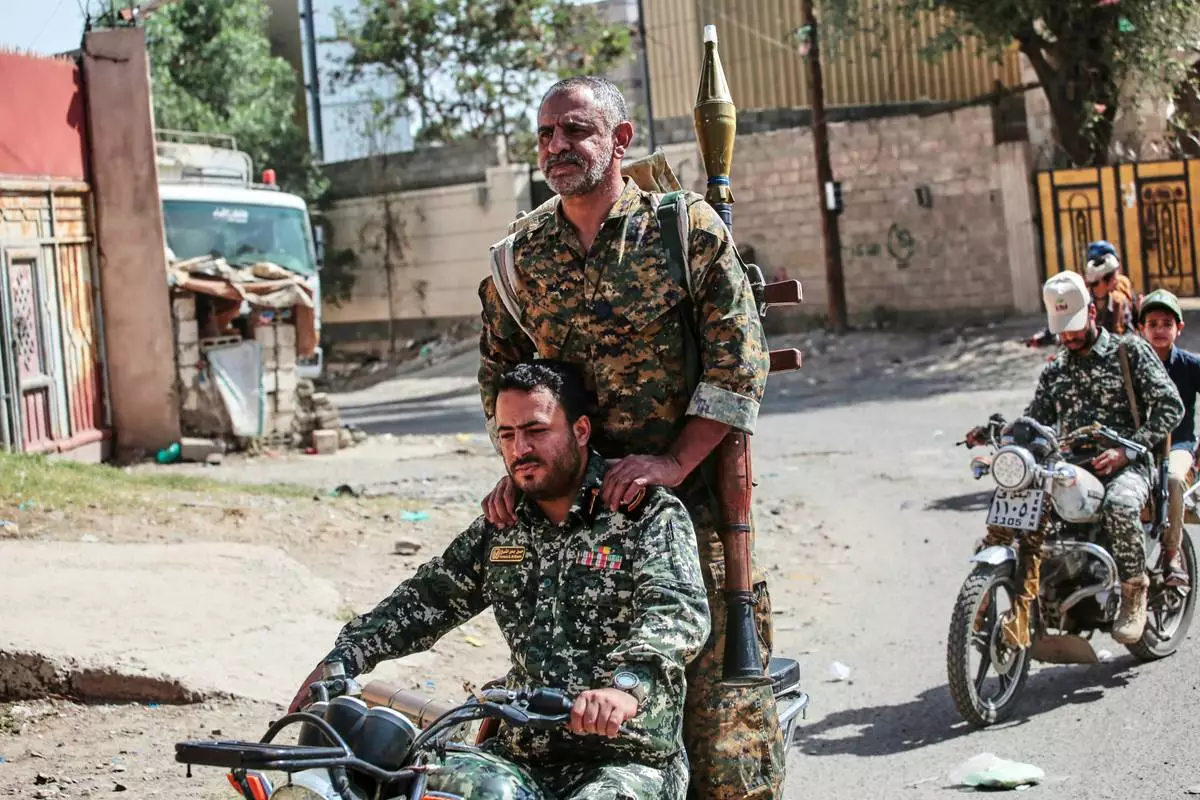
Yemen's Houthi rebels ride a motorbike during a mobilization campaign in Sanaa, Yemen, Thursday, Sept. 10, 2026. (AP Photo)

Yemen's Houthi rebels ride a motorbike during a mobilization campaign in Sanaa, Yemen, Thursday, Sept. 10, 2026. (AP Photo)

President Donald Trump on Monday halted the planned detonation of several tons of degraded bomb-making material at an Iowa ammunition plant, urging a federal appeals court to first sign off on what he called the safest way to handle the situation.

The detonation of 68 barrels of lead azide was initially planned for last Friday, but the Army has since changed the date three times following an outpouring of public concern about potential health and environmental effects. It had planned for a detonation this coming Wednesday, saying the weather was most favorable that day.

The Army had no immediate comment when asked about the president’s social media post.

Environmentalists sued last week to stop the detonation, calling into question an emergency permit approved by the U.S. Environmental Protection Agency that cleared the way for the operation. The court temporarily halted the permit, prompting the Army to argue that it didn’t need authorization after all given that it was an emergency.

An attorney for the environmentalists made clear Monday that the legal challenge centers on the validity of the permit, not the Army’s decision to move forward with the detonation under the emergency provision.

“If they have information that leads them to believe that this is truly an emergency, they should act in the interest of the public,” said Rachel Rintelmann, an attorney with Earthjustice. She added that Trump’s post only adds further confusion to what has been a chaotic time for some residents in Iowa.

“I feel the proper course is to get rid of this longterm problem but, at the same time, have ordered the Military not to do so until such time as the Eighth Circuit agrees that we can go forward," Trump posted.

If incoming Gov.-elect Rob Sand and the court don’t agree, Trump said the administration will have no choice but to not proceed with the planned detonation, adding that he would hold the incoming governor responsible for “any and all death or destruction caused by this very unfortunate, and longterm, situation.”

Sand said in a social media post on Sunday that because of previous decisions that have already been made, “No good options exist and the situation is more dangerous and unpredictable than it ever should have been.”

He questioned why a contract to remove the explosive risk was canceled, why nothing was done and “why we are rushing to demolition now in late November.”

“The safety of Iowans should be the top priority of everyone involved,” he said. “All relevant federal, state and local government resources should be focused on protecting everyone that could be impacted.”

Gov. Kim Reynolds activated the state emergency management office on Friday. The state also created a dedicated website for information about the operation.

Some residents near Middletown, where the ammunition plant is located, have been sealing their windows and doors as a precaution to keep out any lead dust that might result from the detonation. Others who live farther away were raising concern on social media about the possible paths that the plume could take depending on shifts in the wind.

Officials acknowledge that lead is toxic and have recommended that people stay indoors whenever the detonation happens and clean off outdoor surfaces with water afterwards to limit exposure to any lead particles.

Middletown Mayor Rodney Johnson said the detonation must take place “so we can move on with our lives.”

“Improper storage and disposal is where things go wrong,” he said on social media.

Leaders of states that border Iowa also expressed concern. Missouri Gov. Mike Kehoe said authorities don’t believe there will be significant health effects to people and livestock, but state agencies are working to establish additional monitoring of air and water quality, public health and agriculture resources.

"I do join my fellow governors and agency officials in neighboring states in their frustration for how this has been handled," Kehoe said.

Democratic U.S. Sen. Tammy Baldwin, of Wisconsin, sent Army Secretary Adam Telle a letter Monday expressing “alarm and disapproval” over the handling of the material in Iowa.

In court filings over the weekend, Army Col. Aaron Teller, a munitions emergency response specialist, explained that less liquid inside the barrels means the solution inside is more susceptible to freezing, which increases the sensitivity of the crystals that have formed around the inside of the rim and underside of the lids.

“Even a small amount of friction can break the crystal formation, causing an explosive chain reaction,” he said in his declaration to the court.

In March, staff at the Iowa Army Ammunition Plant found several dozen barrels of degraded lead azide, which is used in munitions production. Crystallization of the material created an unstable and dangerous situation, prompting the Army to assemble experts in munitions chemistry, engineering and environmental safety to come up with a plan.

According to EPA documents, alternatives such as neutralizing and decomposing the drums’ contents with other chemicals were considered. But officials said handling the drums would increase the probability of an accidental, fatal detonation.

The environmental groups disagreed, arguing in their court filings that other alternatives were not fully considered. They also criticized officials for not sharing more information with the public.

Officials contend that the risk of an uncontrolled explosion is growing, particularly as temperatures drop. They said there is a risk that the chemicals may explode as temperatures are expected to drop below 30 degrees Fahrenheit (-1 Celsius) in the coming days.

Jimmie Oxley, a professor of chemistry at the University of Rhode Island, said she was contacted by the U.S. Chemical Safety Board in February about the situation and has been in consultation with the military, including on Monday, about what to do about the chemicals.

Oxley said she saw a picture of one barrel that was expanding, which is a worrisome sign. “They really need to be taken care of because the material is capable of going off on its own,” she said.

Oxley supports detonating the barrels and said the risks can be mitigated, including by spraying water on the site to keep lead dust down.

Lead azide is “very sensitive” and also susceptible to heat, freezing, shock, friction and “all sorts of things that could cause an accidental detonation,” said John Goodpaster, a chemistry professor at Indiana University, Indianapolis. It’s also old, which increases the risk because explosives become increasingly unstable as they age, he said.

Add in the environmental threat caused by the lead that will escape into the atmosphere and the challenge is significant, Goodpaster said.

“I do not envy the Army,” Goodpaster said. “They are in a situation where they’ve got a large amount of very dangerous material and not very many good options in terms of trying to dispose of it.”

Associated Press writers Scott Bauer in Madison, Wisconsin, and Jacques Billeaud in Phoenix contributed.

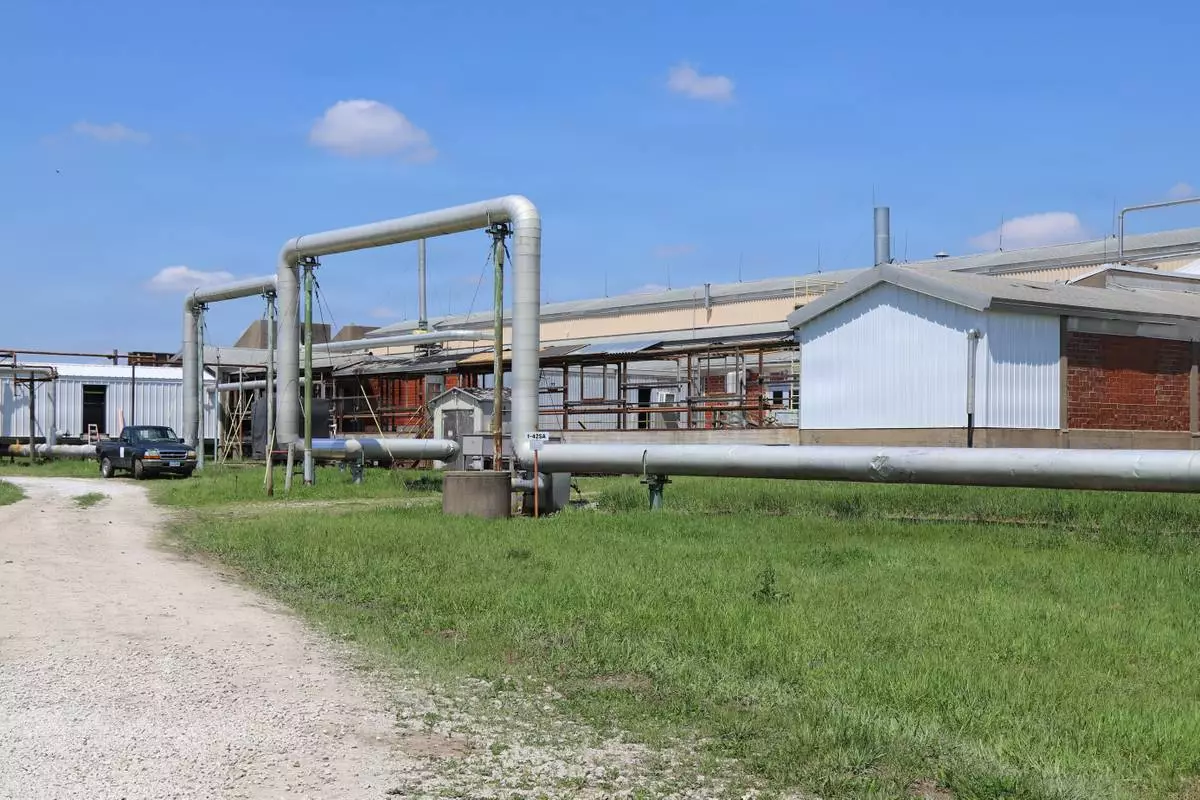
This photo provided by the U.S. Army shows the Iowa Army Ammunition Plant in Middletown, Iowa, on May 14, 2024. (Shawn Eldridge/U.S. Army via AP)

This photo provided by the U.S. Army shows the Iowa Army Ammunition Plant in Middletown, Iowa, on May 14, 2024. (Shawn Eldridge/U.S. Army via AP)

Recommended Articles