Skip to Content Facebook Feature Image

Emma Bonino, leader of the abortion battle that changed Italy, dies at 78

News

Emma Bonino, leader of the abortion battle that changed Italy, dies at 78
News

News

Emma Bonino, leader of the abortion battle that changed Italy, dies at 78

2026-09-12 01:38 Last Updated At:01:40

ROME (AP) — Emma Bonino, who rose to political prominence in the 1970s as a leader of the Radical Party campaign to legalize abortion in heavily Roman Catholic Italy over the objections of the Vatican, has died. She was 78.

Her party of recent years, +Europa, announced her death.

More Images
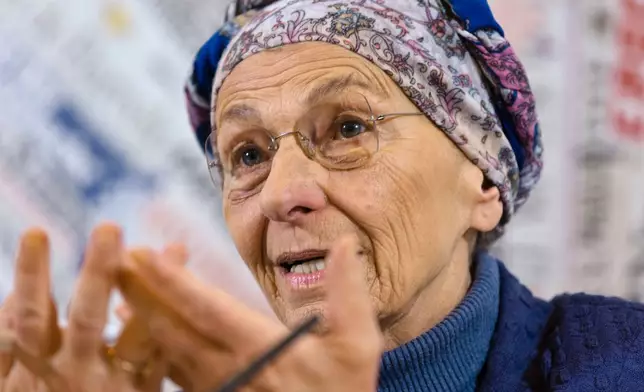
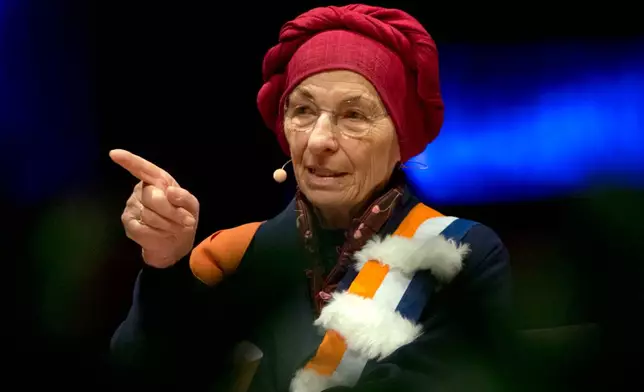
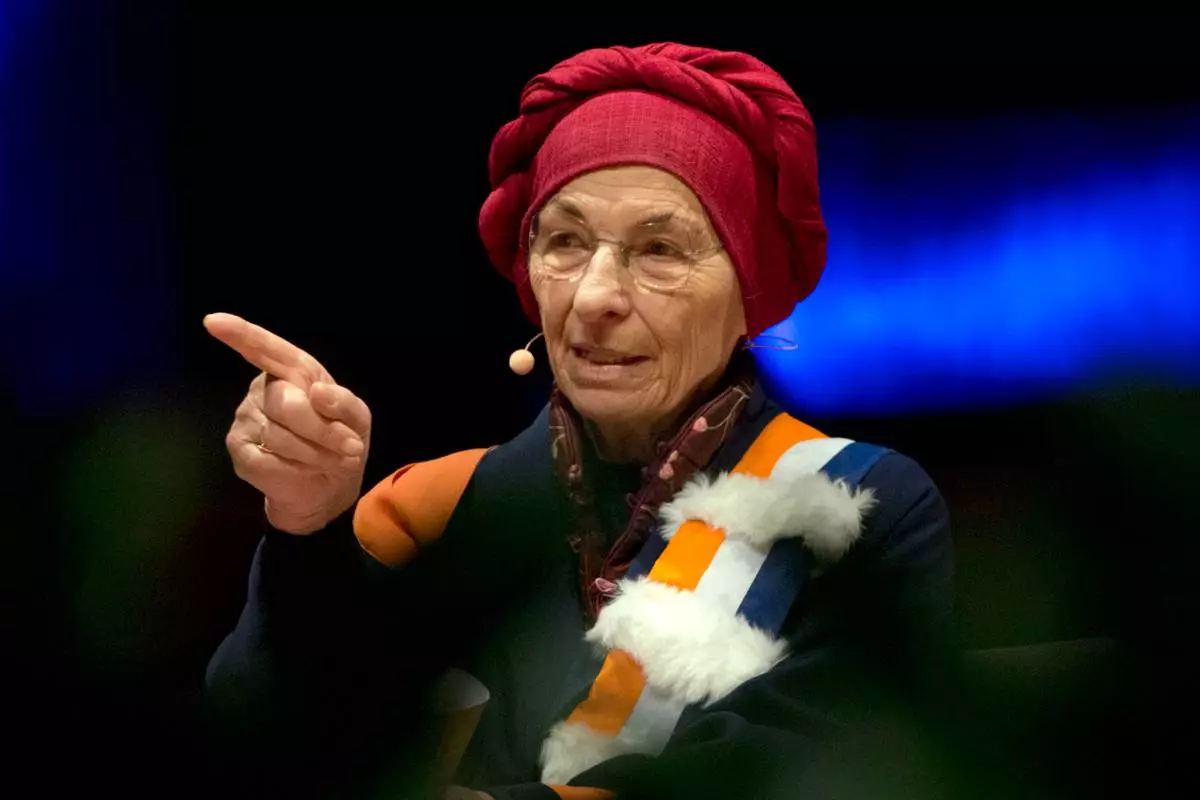
FILE -Emma Bonino, leader of the ' +Europa ' (More Europe) party, speaks ahead of the March 4 Italian political elections during a press conference at the Foreign Press Club in Rome, Friday, Feb. 16, 2018. (AP Photo/Domenico Stinellis, File)
FILE -Emma Bonino, leader of the ' +Europa ' (More Europe) party, speaks ahead of the March 4 Italian political elections during a press conference at the Foreign Press Club in Rome, Friday, Feb. 16, 2018. (AP Photo/Domenico Stinellis, File)

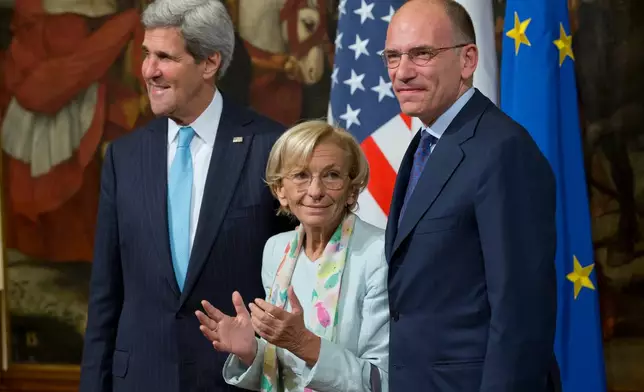
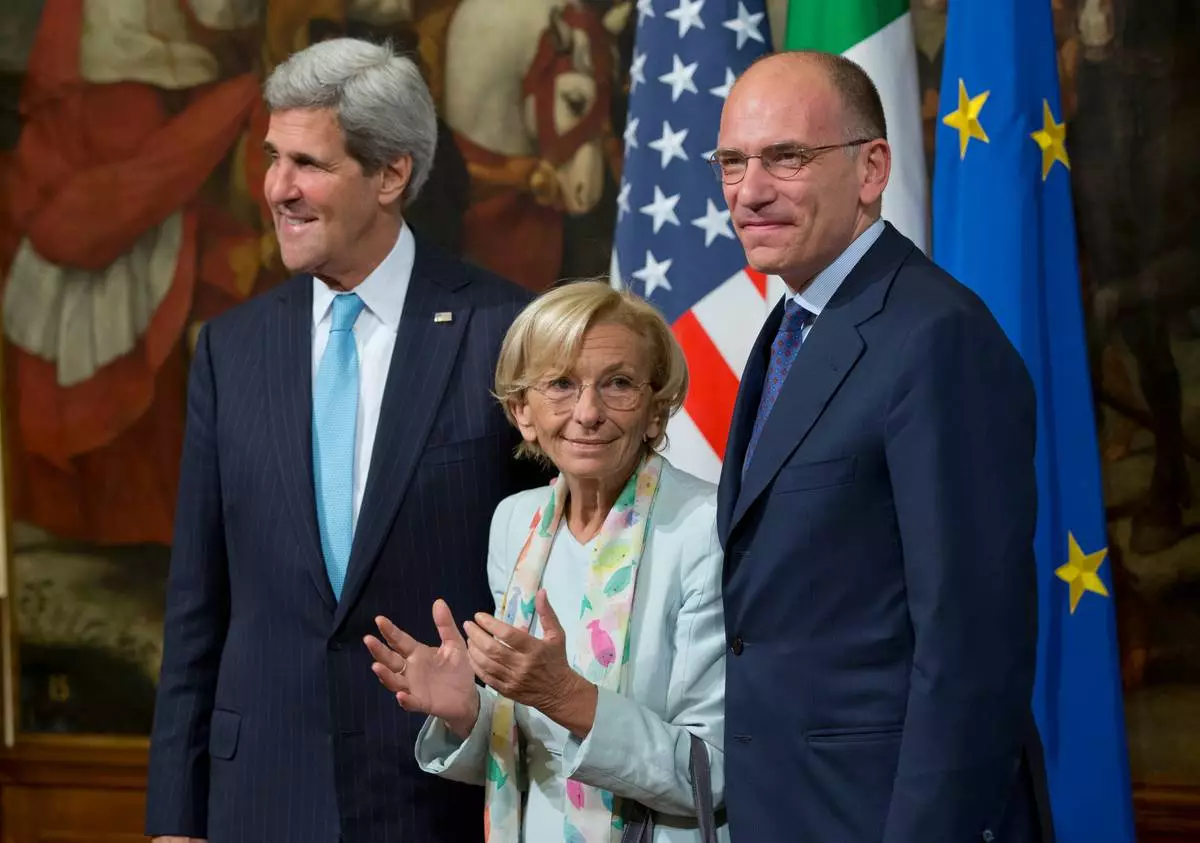
FILE - U.S. Secretary of State John Kerry, left, poses with Italian Foreign Minister Emma Bonino and Italian Premier Enrico Letta ,on the occasion of their meeting at Chigi Palace government office, in Rome, Wednesday, Oct. 23, 2013. (AP Photo/Andrew Medichini, File)
FILE - U.S. Secretary of State John Kerry, left, poses with Italian Foreign Minister Emma Bonino and Italian Premier Enrico Letta ,on the occasion of their meeting at Chigi Palace government office, in Rome, Wednesday, Oct. 23, 2013. (AP Photo/Andrew Medichini, File)

FILE -Italy's Emma Bonino speaks after receiving her honorary doctorate from the University of Brussels during a ceremony at Flagey in Brussels on Wednesday, Nov. 29, 2017. (AP Photo/Virginia Mayo, File)
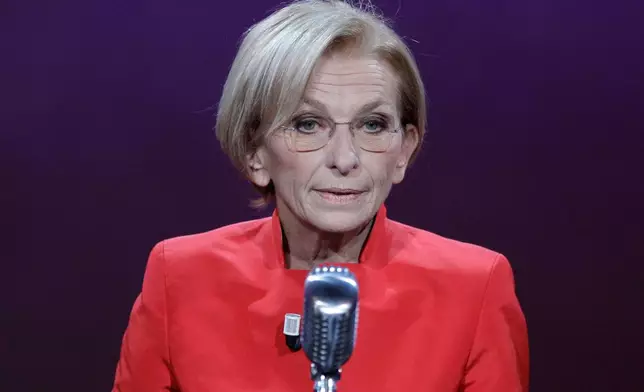
FILE -Italy's Emma Bonino speaks after receiving her honorary doctorate from the University of Brussels during a ceremony at Flagey in Brussels on Wednesday, Nov. 29, 2017. (AP Photo/Virginia Mayo, File)

FILE -Italian politicia Emma Bonino attends the recording of Italian State Television TV show "Vieni via con me" (Come away with me) in Milan, Italy, Monday, Nov. 22, 2010. (AP Photo/Luca Bruno, File)

FILE -Italian politicia Emma Bonino attends the recording of Italian State Television TV show "Vieni via con me" (Come away with me) in Milan, Italy, Monday, Nov. 22, 2010. (AP Photo/Luca Bruno, File)

“Her life was a long struggle against everything that denies freedom: against clandestine abortion, world hunger, the stranglehold of party politics, female genital mutilation, punitive justice, genocide, and every form of authoritarianism,” the party said.

Italy ’s conservative Premier Giorgia Meloni paid tribute to Bonino, saying their different backgrounds and perspectives "never prevented me from acknowledging her significance and her role in our nation’s public life."

“For decades, Emma Bonino has been a strong and recognizable voice in Italian politics, championing her ideas with determination," Meloni wrote on social media.

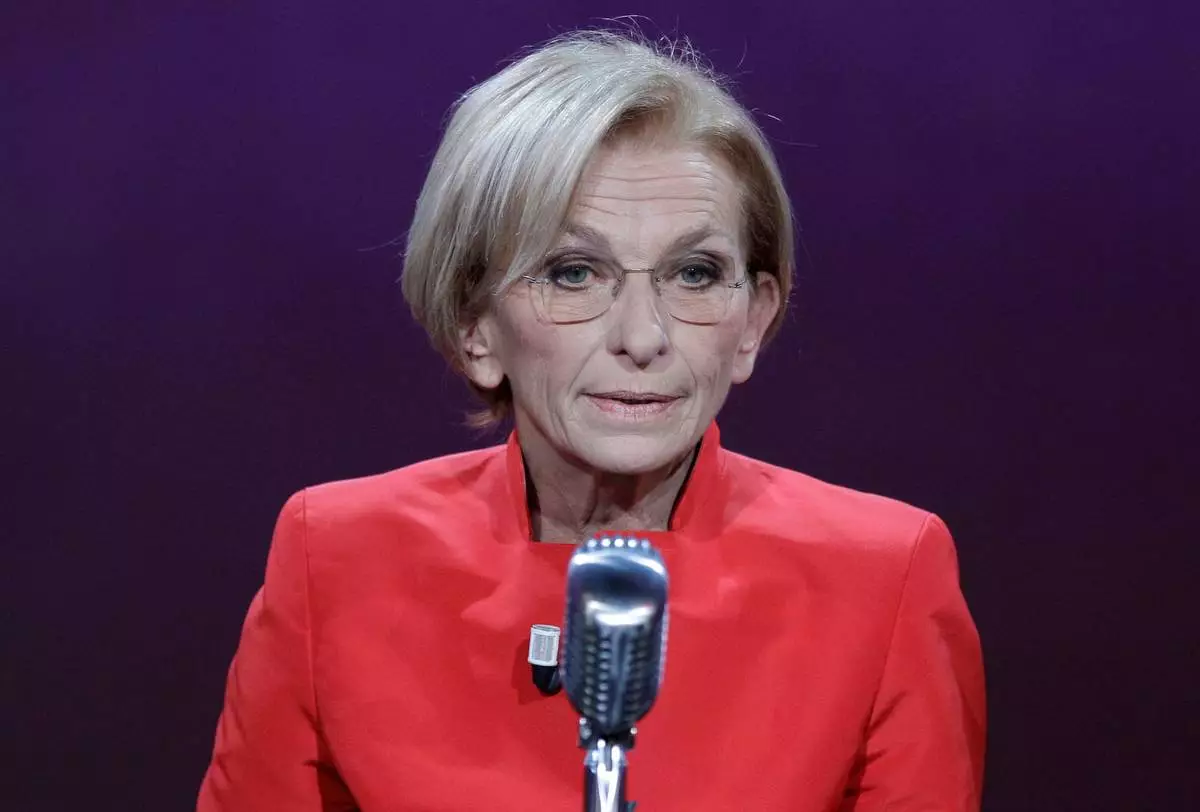
Even after the Radicals’ political star faded, Bonino remained a key political figure and human rights campaigner active in Italy for over five decades. She served as a European commissioner for then-Premier Silvio Berlusconi and was a co-founder of the death penalty watchdog Hands Off Cain. But her bid in 1999 to become Italy’s first female president failed.

She remained known to younger generations as a sought-after political pundit, appearing frequently on Italian TV with her sharp wit and cutting insights. After her cancer diagnosis in 2015, she invariably appeared in public wearing colorful headscarves.

Bonino’s passing follows the recent death of several other feminist heroes, including activist Gloria Steinem and poet Robin Morgan.

Born on March 9, 1948, in Bra — not far from the northwestern Italian city of Turin, where carmaker Fiat’s factory drove the economy — she spent her childhood on a farm, where she was often tasked with pasturing pigs, a lifestyle she described as “deadly boring” in a 2023 TV interview.

Bonino first got involved in Italian politics because she wanted to change the law. At 26, she became pregnant and had an abortion, even though it was illegal at that time.

Recalling the experience as one of the most humiliating of her life, in 1975 she was among the founders of the Information Center for Sterilization and Abortion, an organization that provided information and performed abortions before they were legalized.

The following year she was elected to the Italian parliament for the maverick Radical Party, a bastion of anticlericalism, civil libertarianism, feminism, liberalism and radicalism in Italy.

The party proposed itself as the strongest opposition to the Italian political establishment, seen as corrupt and conservative, and to the Catholic Church’s extensive influence on Italian society.

In 1978 abortion was legalized. That particular campaign may have been over, but Bonino had found her vocation: Politics was her life, and she became one of the most active leaders of the Radical Party and its successors.

A veteran legislator in Italian politics and an activist for various reform policies, she was elected six times as a Lower House lawmaker and two times as a senator. In 2017, she became the leader of +Europa, a liberal, European federalist party slate she launched ahead of the 2018 Italian general election.

An explosive presence in politics during her 50-year-long career, Bonino was one of the few Italian political figures who scored important achievements both at home and internationally.

Bonino won European exposure in a role she owed to then center-right Premier Berlusconi who, in 1995, offered her one of Italy’s two seats in the European Commission.

As a Commissioner she forged the EU’s consumer protection policy and created the European Commission Humanitarian Office, which is now the primary European humanitarian arm. It was this last portfolio, the humanitarian affairs, that she felt most strongly about.

She traveled to war zones — former Yugoslavia, Rwanda, Sudan, Afghanistan — and convinced Europe that humanitarian assistance couldn’t be an excuse for lack of political or military intervention.

In June 1999 she headed a slate named after her — Lista Bonino — at the European elections. It was an overwhelming success: The party got 8.5% of the votes and became Italy’s fourth political force.

Bonino served as foreign minister, trade minister and EU affairs minister in Italian center-left governments of the 2000s and 2010s.

She was one of the strongest advocates for a common European foreign and defense policy. “My passion is humanity,” she said in May 2025, when her hometown Bra granted her honorary citizenship. “I’ve got roots, I’ve got a homeland, a family, but precisely all that allows me to be a citizen of the world.”

She got involved with Arab women’s battle for equality in 2001 and started spending half her time in Cairo. She became fluent in Arabic — she had graduated in foreign languages at Milan’s Bocconi University — and built a network of intellectuals, politicians and prominent civil society figures.

Never married, she maintained strong bonds with her family in Piedmont. “My father died before I could show him I could accomplish something,” she recalled in a 2020 interview with Vanity Fair. “He never understood my restlessness. He used to tell me: Emma, you are like Japanese poetry: beautiful, but I can’t understand it.”

In January 2015, she announced on Radio Radicale that she was suffering from lung cancer and was being treated with chemotherapy but didn’t plan to stop her political activity. In May of the same year, she said her cancer was in complete remission and eight years later appeared on a popular TV interview program announcing she was healed.

Over the years, Bonino cultivated a deep friendship with the late Pope Francis, despite their conflicting views on key ethical issues, including abortion and euthanasia.

In November 2024, Francis paid a home visit to Bonino — who had been just released from the hospital after treatment for respiratory problems — bringing her a bouquet of roses and chocolates.

A photo posted by Bonino on social media showed them both sitting in wheelchairs on her sun-drenched terrace in Rome.

Bonino said that during their conversations Francis always encouraged her to bring forward her humanitarian battles, defending those most in need.

When asked what battles she still needed to fight, Bonino used to say: “Many, too many. Human rights, world hunger, free scientific research ... Ten lives won’t be enough.”

Bonino is survived by her siblings, Domenica and Giovanni, and their children.
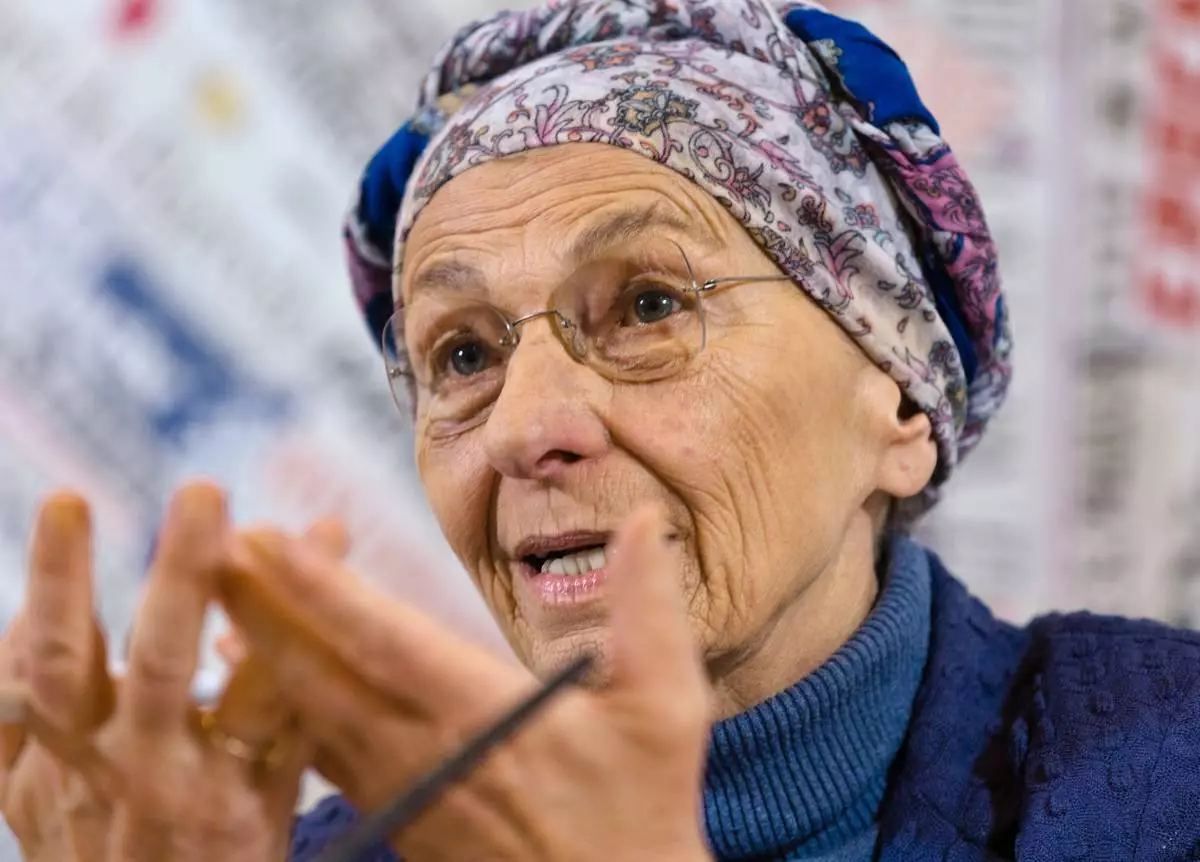
FILE -Emma Bonino, leader of the ' +Europa ' (More Europe) party, speaks ahead of the March 4 Italian political elections during a press conference at the Foreign Press Club in Rome, Friday, Feb. 16, 2018. (AP Photo/Domenico Stinellis, File)
FILE -Emma Bonino, leader of the ' +Europa ' (More Europe) party, speaks ahead of the March 4 Italian political elections during a press conference at the Foreign Press Club in Rome, Friday, Feb. 16, 2018. (AP Photo/Domenico Stinellis, File)

FILE - U.S. Secretary of State John Kerry, left, poses with Italian Foreign Minister Emma Bonino and Italian Premier Enrico Letta ,on the occasion of their meeting at Chigi Palace government office, in Rome, Wednesday, Oct. 23, 2013. (AP Photo/Andrew Medichini, File)
FILE - U.S. Secretary of State John Kerry, left, poses with Italian Foreign Minister Emma Bonino and Italian Premier Enrico Letta ,on the occasion of their meeting at Chigi Palace government office, in Rome, Wednesday, Oct. 23, 2013. (AP Photo/Andrew Medichini, File)

FILE -Italy's Emma Bonino speaks after receiving her honorary doctorate from the University of Brussels during a ceremony at Flagey in Brussels on Wednesday, Nov. 29, 2017. (AP Photo/Virginia Mayo, File)
FILE -Italy's Emma Bonino speaks after receiving her honorary doctorate from the University of Brussels during a ceremony at Flagey in Brussels on Wednesday, Nov. 29, 2017. (AP Photo/Virginia Mayo, File)

FILE -Italian politicia Emma Bonino attends the recording of Italian State Television TV show "Vieni via con me" (Come away with me) in Milan, Italy, Monday, Nov. 22, 2010. (AP Photo/Luca Bruno, File)

FILE -Italian politicia Emma Bonino attends the recording of Italian State Television TV show "Vieni via con me" (Come away with me) in Milan, Italy, Monday, Nov. 22, 2010. (AP Photo/Luca Bruno, File)
WASHINGTON (AP) — Senate Republicans will meet Tuesday for a “robust conversation” on their future and to decide whether to keep South Dakota Sen. John Thune as their leader, just a week after steep losses in the midterm elections that cost them their majority.

Thune is expected to be reelected, given that he remains popular with fellow Senate Republicans and is running unopposed. But some Republicans who returned to Washington on Monday for the first time since the election wipeout that cost them at least seven seats say it's too soon to endorse the status quo.

“We need to have some real soul-searching,” said Wisconsin Sen. Ron Johnson, who has circulated a letter to the conference asking for a delay in the closed-door, secret-ballot leadership elections. “We can't just continue on business as usual — that kind of defeat demands change.”

Still, Johnson conceded that there's no one else on the ballot.

“That's part of our problem, who would want the job?” he said, turning to a reporter and joking, “Do you want it?”

The angst comes as the party is just beginning to reckon with what the election results mean for GOP lawmakers and how soon they can try to rebuild their ranks. Two additional races remain uncalled in Alaska and Mississippi that could further deplete their numbers.

Thune made clear Monday that the leadership is moving ahead with Senate elections, which will include contests for other party leaders as well. But senators could still seek a vote to delay as they gather Tuesday morning.

Thune said they will have a “very fulsome, robust conversation about where we go from here and then we’ll see what the consensus of the conference is.”

“Ultimately that’s a decision made by Republican senators,” Thune said.

Thune, who replaced Sen. Mitch McConnell of Kentucky as leader in early 2025, has spent much of the last two years navigating President Donald Trump, who has often been at odds with the Senate.

While backing up Trump on most policy, Thune has refused to change Senate rules and scrap the filibuster to pass voting legislation that would require proof of citizenship for all voters — a position that frustrated Trump and enraged some in the president's political base.

But Trump hosted Thune and his family at the White House in October. He said Monday that the GOP leader is “a very fine man.” The election is “up to the Senate,” Trump said.

Thune has made it a point to hear out different viewpoints before he makes major decisions and has maintained close relationships with the rank and file — a different approach from his predecessor, McConnell.

Thune “has widespread support” among Republican senators, said Oklahoma Sen. Jim Lankford, who said he supports having the elections on Tuesday when many of the new GOP senators are already in town for freshman orientation.

It is “a pretty complicated role to be able to manage,” Lankford said. “No one wants that job.”

Still, Johnson and others in his conference say Tuesday’s election is too soon.

Pennsylvania Sen. Dave McCormick in a statement over the weekend said Republicans shouldn’t choose a leader until the lessons of the election have been “digested and debated.” Indiana Sen. Jim Banks said Republicans need to “sit down and have a frank conversation about where we fell short.”

Republican Sen. Mike Lee of Utah, one of a few senators who signed Johnson's letter asking for a delay, said any leadership contest should come after the two outstanding Senate elections in Alaska and Mississippi are decided.

Neither of those races has yet been called, so it’s unclear if Republican Sens. Dan Sullivan of Alaska and Cindy Hyde-Smith of Mississippi will be returning to the Senate next year.

The soul-searching comes as lawmakers are trying to wrap up the year’s work — funding the government and seeing if there are some issues where they can work together, including an energy permitting bill that moved forward on a bipartisan vote Monday evening.

Republicans will try to confirm as many of Trump’s nominees as they can before the new Congress begins Jan. 3, and Democrats will strategize on how to best keep up their momentum into next year.

In his first remarks on the Senate floor since the election, which he called a “tough night," Thune previewed his pitch to his colleagues who are looking for answers on how they will navigate the minority.

Republicans will be willing to work with Democrats, Thune said, but “the American people are not looking for socialist government and leftist fantasies.”

Across the aisle, Democrats who could hold as many as 56 seats next year are having private discussions about whether New York Sen. Chuck Schumer is still the right person to lead them.

Schumer has found critics on the left and the right of his caucus as candidates from both sides declined to say in the campaign whether they would support him as leader. Maryland Sen. Chris Van Hollen and Michigan Sen. Elissa Slotkin have both considered challenging Schumer, but neither has announced a run.

Many in the party have said it’s time for generational change after Schumer’s 12 years as leader. Still, Schumer appears to have widespread support from his members after carrying his party to massive wins in Tuesday’s elections.

Sen. Kirsten Gillibrand, Schumer’s New York colleague and the head of the Democratic Senate campaign arm, predicted that he will win enough support. Schumer not only won the Senate back but he “cares deeply, and he understands politics well," she said.

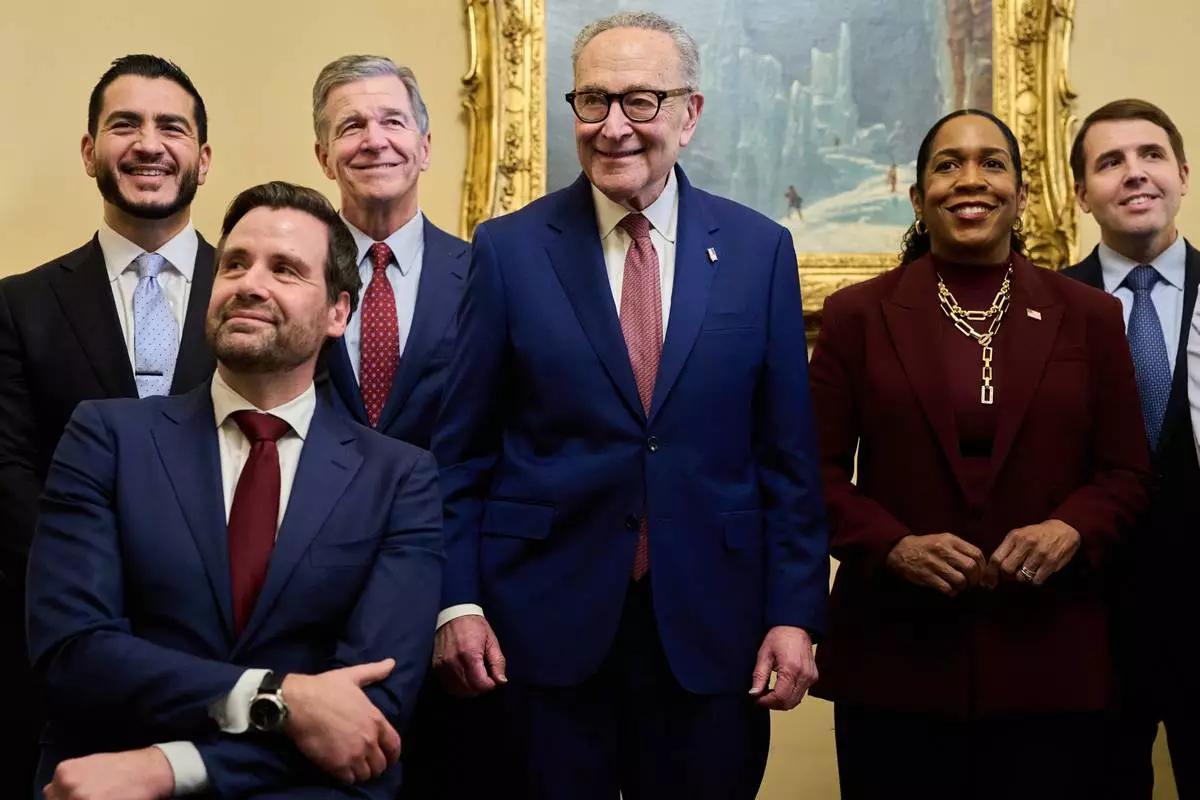
Senate Minority Leader Chuck Schumer, D-N.Y., center, poses for a photograph in his office with Sen.-elects Abdul El-Sayed, D-Mich., Josh Turek, D-Iowa, Roy Cooper, D-N.C., Juliana Stratton, D-Ill., and Chris Pappas, D-N.H., Monday, Nov. 9, 2026, at the U.S. Capitol in Washington. (AP Photo/Julia Demaree Nikhinson)

Senate Minority Leader Chuck Schumer, D-N.Y., center, poses for a photograph in his office with Sen.-elects Abdul El-Sayed, D-Mich., Josh Turek, D-Iowa, Roy Cooper, D-N.C., Juliana Stratton, D-Ill., and Chris Pappas, D-N.H., Monday, Nov. 9, 2026, at the U.S. Capitol in Washington. (AP Photo/Julia Demaree Nikhinson)

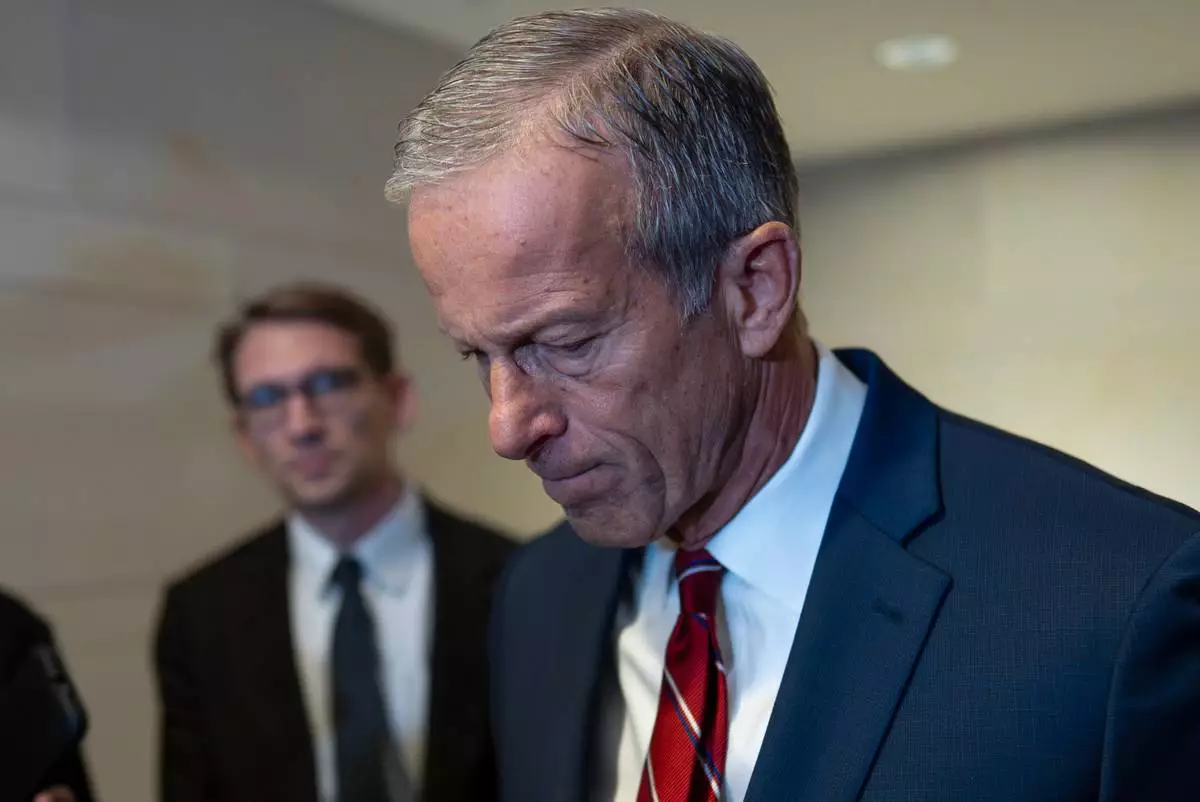
Senate Majority Leader John Thune, R-S.D., heads to an intelligence briefing in a secure room in the basement of the Capitol with the director of national intelligence and other congressional leaders, as Congress returns to work following the midterm elections, at the Capitol in Washington, Monday, Nov. 9, 2026. (AP Photo/J. Scott Applewhite)

Senate Majority Leader John Thune, R-S.D., heads to an intelligence briefing in a secure room in the basement of the Capitol with the director of national intelligence and other congressional leaders, as Congress returns to work following the midterm elections, at the Capitol in Washington, Monday, Nov. 9, 2026. (AP Photo/J. Scott Applewhite)

Recommended Articles