India is expected to advance the Global South agenda at the 18th BRICS Summit in New Delhi on Saturday and Sunday, said a senior executive editor with Indian broadcaster NewsX World in an interview with China Global Television Network (CGTN).
NewsX World Senior Executive Editor Megha Sharma said that building economic resilience is one of the priorities of India in implementing the chairmanship of BRICS this year.
Click to Gallery
18th BRICS Summit to advance Global South agenda: news editor
18th BRICS Summit to advance Global South agenda: news editor
18th BRICS Summit to advance Global South agenda: news editor
18th BRICS Summit to advance Global South agenda: news editor
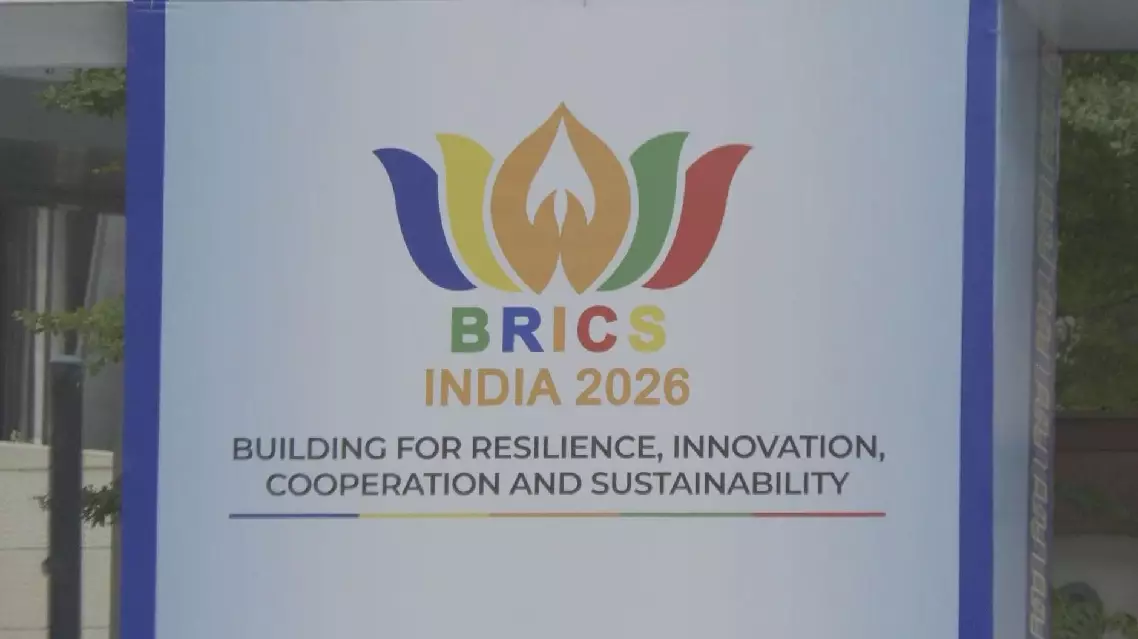
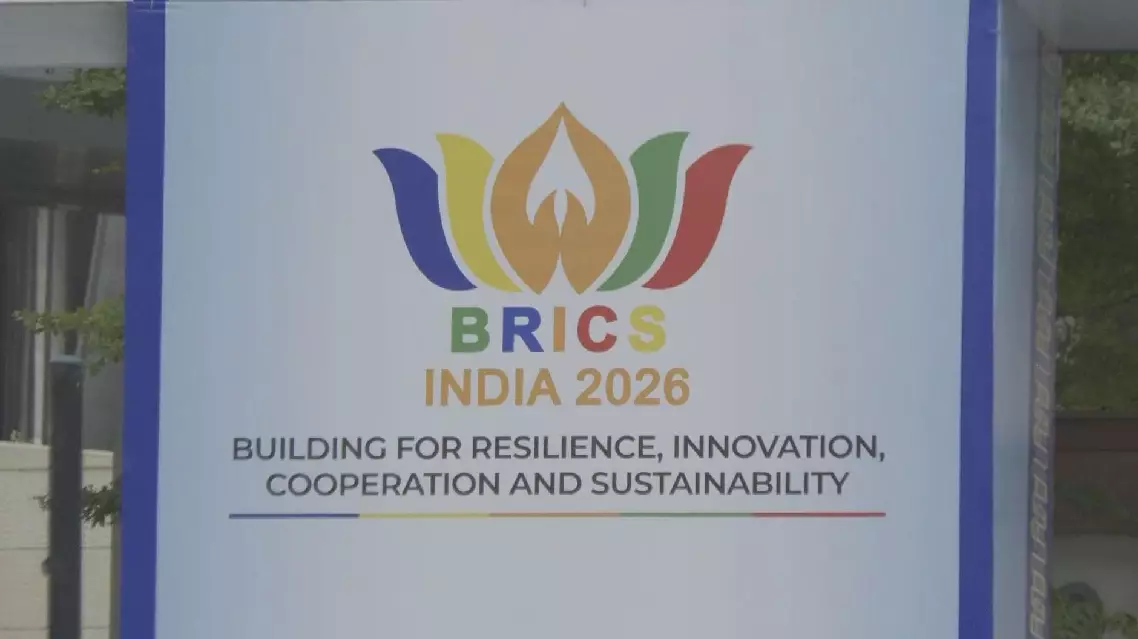
The theme of the forthcoming BRICS Summit is "Building for Resilience, Innovation, Cooperation and Sustainability."
"Building for resilience and innovation, for cooperation and sustainability, to push forward again the Global South agenda. Talking about innovation, we are talking about digital public infrastructure. This is something that India has pushed successively," said Sharma.
She said successful outcomes from the Summit could include progress in counter-terrorism cooperation and digital infrastructure construction.
"Counter-terrorism cooperation. There have been a lot of terrorist attacks that have taken place. Building digital infrastructure, digitally public infrastructure, whether it is about UPI (Unified Payment Interface) that India has been advocating and successfully implementing in countries in the subcontinent, in Southeast Asia and Africa as well," said Sharma.
Launched in 2009, BRICS has grown to 11 full member states and 10 partner countries representing major emerging markets and developing economies across the globe.
18th BRICS Summit to advance Global South agenda: news editor
18th BRICS Summit to advance Global South agenda: news editor
18th BRICS Summit to advance Global South agenda: news editor
18th BRICS Summit to advance Global South agenda: news editor
The 31st United Nations Climate Change Conference (COP31) concluded in Türkiye on Sunday without an overarching deal after nearly 48 hours of overtime talks, indicating that the international community has failed to forge a new, shared political stance on the key course of action required in the current climate situation.
The last time UN climate talks failed to end with a deal adopted by all was in Copenhagen in 2009.
Notably, one version of the draft outcome document discussed during the final stages of the COP31 included an acknowledgment -- for the first time -- that the 1.5 degrees Celsius temperature limit set out in the Paris Agreement would be difficult to achieve.
It further noted that if global warming were to exceed this threshold, the impacts of climate change, such as extreme heat, would likely intensify.
However, the parties remained unable to bridge their differences regarding how to reduce greenhouse gas emissions, advance the energy transition, and provide climate finance to developing nations.
Consequently, the draft failed to secure unanimous approval.
Unresolved issues, such as the transition away from fossil fuels and the provision of climate finance, will be carried over for further discussion at the next UN climate change conference.
Despite the failure to adopt an outcome document at this conference, global climate governance has not come to a standstill.
Decisions and international commitments reached at previous sessions of the Conference of the Parties (COP) to the United Nations Framework Convention on Climate Change (UNFCCC) remain valid. They do not automatically lapse simply because negotiations encountered setbacks during the COP31.
The Paris Agreement continues to serve as the core framework for international climate action.
During the COP31, the international community also recognized the positive role that China has played in addressing climate change.
In an interview with the China Media Group (CMG), Mary Burce Warlick, Deputy Executive Director for Energy Markets and Security at the International Energy Agency (IEA), noted that the rapid development of renewable energy, batteries, and electric vehicles has strengthened China’s resilience against volatility in fuel markets, offering valuable lessons for other nations.
Meanwhile, the U.S.-based National Public Radio (NPR), citing experts, pointed out in a report that China’s clear policy direction and an industrial chain which is built around photovoltaic modules, batteries, wind turbines, and electric vehicles have provided essential support for the growth of the clean energy sector.

Extended COP31 concludes in Türkiye without overarching deal